Taxonomy & Classification
- Kingdom
- Animalia
- Phylum
- Mollusca
- Class
- Cephalopoda
- Order
- Octopoda
- Family
- Octopodidae
- Genus
- Octopus
- Species
- Octopus Vulgaris

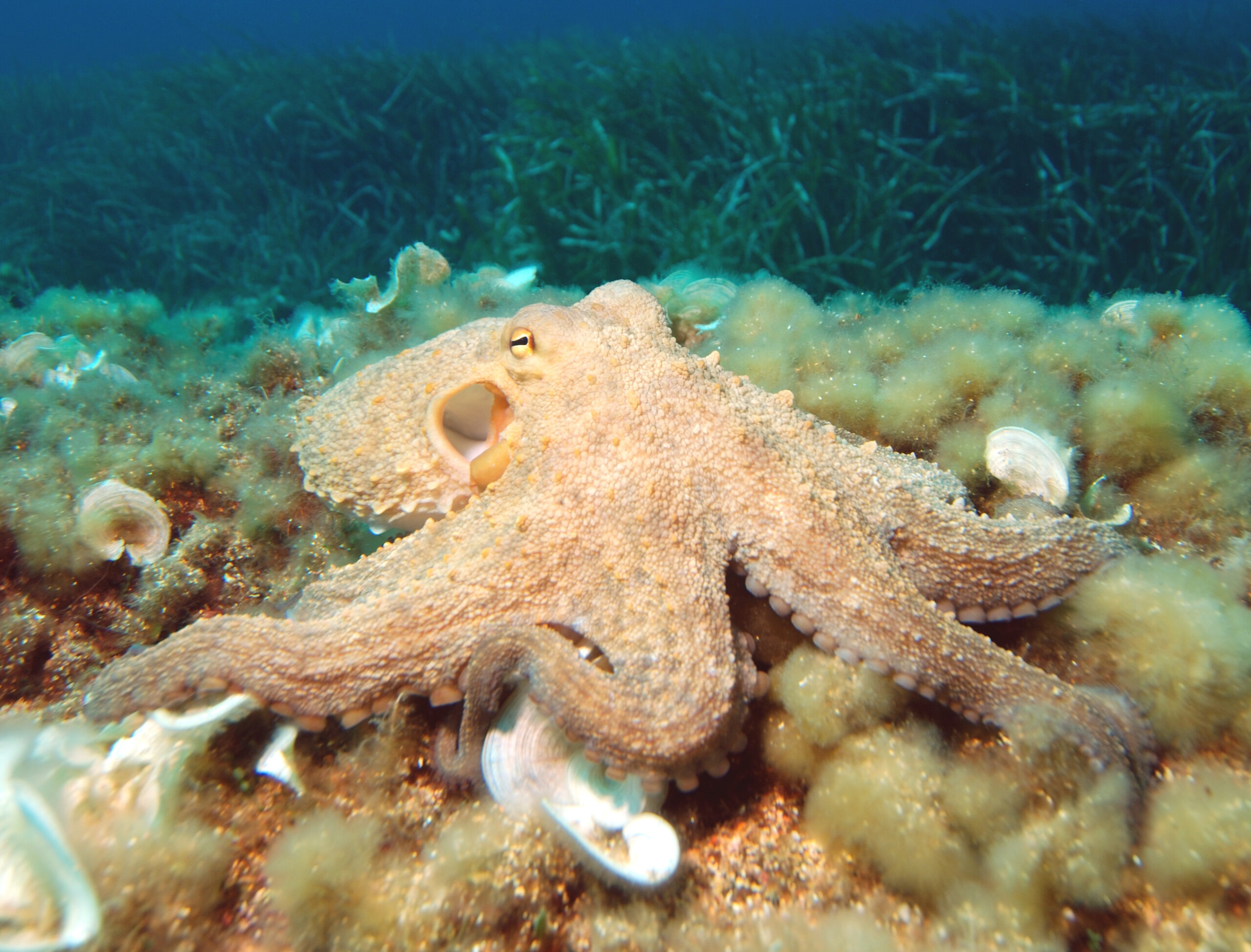 Photo Credit: Albert kok / Wikimedia Commons
In the shimmering depths of the ocean, the octopus, known scientifically as Octopus vulgaris, glides gracefully through its vibrant underwater realm. With its soft, rounded body and eight long, flexible arms, this remarkable creature captivates anyone lucky enough to catch a glimpse. Each arm is lined with hundreds of tiny suckers, allowing the octopus to explore its surroundings and grasp prey with incredible dexterity. Its ability to change color and texture, blending seamlessly into the coral reefs or rocky crevices, adds to its allure, making it a master of disguise in a world filled with both beauty and danger.
Scientists and nature enthusiasts alike are drawn to the octopus not just for its striking appearance but also for its astonishing intelligence. These clever invertebrates are known for their problem-solving skills and playful behavior, often using tools and escaping from enclosures in search of adventure. As they navigate their underwater habitat, they hunt for crabs, fish, and other delicacies, showcasing their adaptability and cunning. The octopus is more than just a fascinating animal; it plays a vital role in the ocean’s ecosystem, acting as both predator and prey. Join us as we dive deeper into the world of the octopus, exploring its unique behaviors, life cycle, and the challenges it faces in our ever-changing oceans.
The octopus is a captivating member of the animal kingdom, sitting within the phylum Mollusca, which includes snails and clams. More specifically, it belongs to the class Cephalopoda, a group known for their intelligence and complex behaviors. This class also includes squids and cuttlefish. What sets octopuses apart is their incredible adaptability, advanced nervous systems, and unique physical features, such as their soft bodies and eight flexible arms lined with sensitive suckers. These traits not only make them masters of camouflage but also allow them to interact with their environment in astonishing ways.
| Taxonomic Rank | Scientific Name | Meaning & Significance |
|---|---|---|
| Kingdom | Animalia | The kingdom of multicellular organisms that are typically motile and consume organic material for energy. |
| Phylum | Mollusca | Derived from the Latin word “mollis,” meaning soft, which refers to the soft-bodied nature of these animals. |
| Class | Cephalopoda | This name comes from the Greek words “kephalē,” meaning head, and “pous,” meaning foot, highlighting how their arms are attached to their heads. |
| Order | Octopoda | From the Greek “okto,” meaning eight, which directly refers to the eight arms that characterize these fascinating animals. |
| Family | Octopodidae | This family name also stems from “octopus,” emphasizing the unique traits of these soft-bodied, intelligent creatures. |
| Genus | Octopus | Derived from the Greek word “oktōpous,” meaning “eight-footed,” a direct reference to their most distinctive feature. |
Understanding the octopus’s classification reveals much about its evolutionary journey. As a member of the Mollusca phylum, it shares a distant ancestry with other soft-bodied animals, but its adaptations have led to a remarkable divergence. The octopus’s advanced nervous system and problem-solving abilities suggest a long history of evolution that has favored intelligence and adaptability in complex environments. This fascinating lineage not only highlights the octopus’s unique place in the tree of life but also invites us to explore the wonders of evolution and the diverse forms of life that inhabit our planet.
The evolutionary journey of the octopus stretches back over 500 million years, making it one of the oldest lineages of animals still thriving today. These intelligent invertebrates belong to the class Cephalopoda, which also includes squids and cuttlefish. The octopus’s ancestors roamed the oceans long before dinosaurs walked the Earth, adapting to a variety of marine environments and evolving remarkable traits that set them apart from other creatures.
The earliest cephalopods were simple, shelled animals that lived in the ocean. Over time, they underwent significant changes, losing their hard shells and developing more complex nervous systems. This transition allowed them to become more agile and intelligent. The octopus, specifically, evolved from these ancestors, gaining features like flexible bodies and the ability to camouflage. These adaptations were crucial for survival, enabling them to evade predators and hunt effectively.
These evolutionary adaptations have allowed octopuses to thrive in diverse marine habitats. Their ability to camouflage helps them avoid predators, while their intelligence enables them to solve problems and navigate complex environments. With their unique locomotion and regenerative capabilities, octopuses continue to be a testament to the wonders of evolution, showcasing how life can adapt and flourish in the ever-changing ocean world.
The octopus is a mesmerizing marvel of the ocean, with a body that seems to flow like water itself. Its soft, bulbous head, known as the mantle, is where all the magic begins. This rounded structure houses vital organs and is often adorned with vibrant colors and patterns that can change in the blink of an eye. The octopus’s eight long, flexible arms extend from its body, each lined with hundreds of tiny suction cups. These appendages are not just for show; they are powerful tools for exploration, hunting, and even communication.
| Feature | Description |
|---|---|
| Weight | 5-75 kg (11-165 lbs) |
| Skin Type | Smooth |
The combination of the octopus’s weight and smooth skin allows it to glide effortlessly through the water, making it a master of stealth. Its ability to change color and texture helps it blend into its surroundings, a skill that is crucial for both hunting and evading predators. With its remarkable arms and intelligent behavior, the octopus is not just a creature of beauty; it is a highly adapted survivor in the ever-changing underwater world.
The octopus thrives in a world that is as diverse as it is enchanting. Picture vibrant coral reefs teeming with life, rocky shorelines where the waves crash, and the mysterious depths of the ocean where sunlight barely reaches. These intelligent mollusks are found in both tropical and temperate waters, making their homes in a variety of underwater landscapes. From sandy seabeds to hidden crevices in rocks, the octopus is a master of disguise, blending seamlessly into its surroundings.
Octopuses prefer environments that offer plenty of shelter and food. They thrive in waters that range from warm tropical temperatures to cooler temperate zones. These creatures are often found at depths where they can find their favorite meals, such as crabs and fish. The water quality is crucial, too; they need clean, oxygen-rich waters to stay healthy and active.
To survive in these varied habitats, octopuses have developed incredible adaptations. Their ability to change color and texture allows them to camouflage perfectly against rocks and corals, making them nearly invisible to predators and prey alike. They also possess remarkable intelligence, using problem-solving skills to navigate their environments and find food. With their soft bodies, they can squeeze into tight spaces, exploring nooks and crannies that many other animals cannot reach. This combination of cleverness and adaptability makes the octopus a true marvel of the ocean.
The daily life of an octopus is a blend of stealth, exploration, and clever problem-solving. As a solitary creature, it spends much of its time hunting for food, which includes crabs, fish, and other small marine animals. With its keen eyesight and remarkable ability to camouflage, the octopus can blend into its surroundings, making it a master of disguise. During the day, it often hides in crevices or under rocks, emerging at dusk to hunt. This nocturnal behavior allows it to take advantage of the cover of darkness, increasing its chances of a successful catch.
While octopuses are primarily solitary, they do exhibit interesting social behaviors during mating season. Males and females come together for a brief period, engaging in elaborate courtship displays. These displays can include color changes and intricate movements, showcasing their vibrant skin patterns. After mating, the female lays thousands of eggs and dedicates herself to guarding them, often refusing to eat until they hatch. This intense focus on reproduction highlights the importance of their brief social interactions, even in an otherwise solitary lifestyle.
| Behavior Type | Description |
|---|---|
| Hunting | Octopuses use their intelligence and camouflage to stalk prey, often ambushing crabs and fish at night. |
| Camouflage | They can change color and texture to blend into their environment, helping them avoid predators and sneak up on prey. |
| Communication | During mating, octopuses communicate through color changes and body language, signaling readiness and attraction. |
| Solitary Behavior | Octopuses prefer to live alone, marking their territory and avoiding competition for food. |
The behaviors of the octopus are finely tuned to ensure its survival in the vast ocean. By being solitary, it reduces competition for resources, allowing it to thrive in its chosen habitat. Its ability to camouflage not only aids in hunting but also protects it from potential threats. The brief social interactions during mating are crucial for the continuation of the species, demonstrating that even in a solitary life, connection plays a vital role in the cycle of life.
The octopus is an omnivore, meaning it enjoys a varied diet that includes both plant and animal matter. This clever cephalopod has developed impressive feeding behaviors to catch its meals. With its keen eyesight and remarkable ability to camouflage, the octopus can sneak up on unsuspecting prey. It primarily feeds on small fish, clams, crabs, and snails, using its dexterous arms to capture and manipulate its food.
| Dietary Aspect | Details |
|---|---|
| Diet Type | Omnivore |
| Favorite Foods | Small fish, clams, crabs, snails |
| Prey Items | Small fish, clams, crabs, snails |
| Hunting/Foraging Strategies | Camouflage, stealth, using arms to capture prey |
This diverse diet plays a crucial role in the octopus’s ecology and daily routine. By consuming a variety of prey, it helps maintain the balance of marine ecosystems. The octopus’s hunting skills not only provide sustenance but also showcase its intelligence and adaptability. Each meal fuels its active lifestyle, allowing it to explore its underwater world and engage in the fascinating behaviors that make it such a captivating inhabitant of the ocean.
When it comes to reproduction, octopuses have some intriguing behaviors that set them apart in the animal kingdom. During the breeding season, which varies by species and location, male octopuses engage in elaborate courtship displays to attract females. These displays can include color changes and intricate movements. Once a male successfully courts a female, he transfers sperm using a specialized arm called a hectocotylus. After mating, the female lays thousands of eggs, often in a safe, hidden spot, ensuring the best chance for her young to survive.
| Reproductive Aspect | Details |
|---|---|
| Gestation Period | About 4 to 6 weeks, depending on the species |
| Litter Size | Average of 80 eggs |
| Age of Maturity | Typically 1 to 2 years |
| Name of Young | Fry |
After laying her eggs, the female octopus dedicates herself to protecting and caring for them. She often stays close to the nest, fanning the eggs with her arms to keep them clean and oxygenated. This intense parental care can last several weeks, during which she may not eat at all. Once the eggs hatch, the tiny fry are independent and must fend for themselves right away. As they grow, they develop into the remarkable adults we see in the ocean, continuing the cycle of life in the deep blue sea.
The octopus plays a vital role in the ocean’s food web, acting as both predator and prey. These intelligent invertebrates are skilled hunters, but they also face numerous threats from larger animals. Their position in the food web means they must constantly be on guard, as they are a tasty meal for many creatures in the sea.
To survive against these dangers, octopuses have developed a range of impressive defensive behaviors. They can change color and texture to blend in with their surroundings, a skill known as camouflage. This helps them hide from predators. Additionally, they can squirt ink to create a smokescreen, allowing them to escape when threatened. With their remarkable intelligence, octopuses also use problem-solving skills to navigate their environment and avoid danger, making them truly fascinating survivors of the deep.
A keystone species is a vital part of its ecosystem, meaning its presence and activities have a significant impact on the environment and other organisms. The octopus qualifies as a keystone species due to its role in maintaining the balance of marine ecosystems. By influencing the population dynamics of various species, the octopus helps shape the community structure of its underwater world.
Octopuses are skilled hunters, preying on a variety of animals such as crabs, fish, and other mollusks. This predatory behavior helps control the populations of these species, preventing any one group from becoming too dominant. For example, if octopuses were to disappear, the number of crabs could explode, leading to overgrazing of seagrass beds. These beds are crucial habitats for many marine creatures, so the octopus indirectly supports a diverse range of life.
Moreover, octopuses are also prey for larger animals, including sharks and seals. This means they play a critical role in the food web, serving as a link between different levels of the ecosystem. Their presence helps sustain the populations of these larger predators, which in turn influences the overall health of the marine environment.
In addition to their role as predators, octopuses contribute to the ecosystem through their unique behaviors. They are known for their ability to camouflage, which not only aids in their hunting but also affects the behavior of other species. When octopuses blend into their surroundings, they can alter the movement patterns of fish and other marine animals, creating a ripple effect throughout the ecosystem.
If octopuses were to vanish from their habitats, the consequences would be profound. The balance of marine ecosystems would be disrupted, leading to overpopulation of certain species and the decline of others. This imbalance could result in the loss of biodiversity, affecting not just the ocean’s health but also the livelihoods of communities that depend on these ecosystems. The octopus, with its remarkable adaptability and intelligence, is not just a fascinating creature; it is a cornerstone of the underwater world.
The octopus occupies a fascinating ecological niche in the ocean, acting as both a predator and prey within its vibrant underwater world. Found in tropical and temperate waters around the globe, these intelligent invertebrates play a crucial role in maintaining the balance of marine ecosystems. Their ability to adapt to various environments and their unique hunting strategies make them key players in the intricate web of life beneath the waves.
| Ecosystem Service | Impact |
|---|---|
| Predation | Controls populations of prey species, such as crabs and fish, helping to maintain a balanced ecosystem. |
| Habitat Creation | Octopuses often use shells and rocks to create dens, providing shelter for other marine organisms. |
| Nutrient Cycling | As omnivores, they contribute to nutrient cycling by breaking down organic matter and recycling nutrients back into the ecosystem. |
| Food Source | Serves as a vital food source for larger predators, including sharks and seabirds, thus supporting higher trophic levels. |
The influence of octopuses on their environment is both direct and indirect. For instance, by preying on crabs and small fish, they help regulate these populations, preventing overgrazing of seagrass beds and coral reefs. This predation is essential for the health of these habitats, as it allows for a diverse range of species to thrive. Additionally, when octopuses create dens using shells and rocks, they provide shelter for smaller fish and invertebrates, fostering a rich community of life. Their role in nutrient cycling is equally important; as they consume various organisms, they break down organic matter, returning vital nutrients to the ecosystem.
The broader ecological importance of octopuses cannot be overstated. As a keystone species, their presence significantly influences the structure and function of marine ecosystems. By maintaining the balance of prey and predator populations, they help ensure the health of coral reefs and other vital habitats. Furthermore, their adaptability and intelligence allow them to thrive in changing environments, making them indicators of ocean health. Protecting octopuses and their habitats is essential for preserving the intricate balance of life in our oceans, reminding us of the interconnectedness of all living things.
In the intricate web of ocean life, symbiosis plays a crucial role in shaping the relationships between different species. Symbiosis refers to the close interactions between organisms, which can be beneficial, harmful, or neutral. These relationships can be mutualistic, where both species gain advantages; parasitic, where one benefits at the other’s expense; or commensal, where one benefits while the other is neither helped nor harmed. The octopus, with its remarkable adaptability and intelligence, engages in various partnerships that highlight the complexity of marine ecosystems.
| Species/Type | Relationship Type | Description |
|---|---|---|
| Cleaner Shrimp | Mutualistic | Cleaner shrimp remove parasites and dead skin from the octopus, benefiting from a food source while keeping the octopus healthy. |
| Coral Reefs | Commensal | Octopuses often hide among coral reefs, gaining protection from predators without affecting the coral. |
| Fish (e.g., small wrasses) | Mutualistic | Some fish help octopuses by alerting them to danger, while the octopus provides a safe habitat for the fish. |
| Sea Urchins | Parasitic | In some cases, octopuses may consume sea urchins, which can lead to a decline in their populations, benefiting the octopus. |
These relationships have evolved over time, shaped by the need for survival and adaptation in the ever-changing marine environment. The mutualistic partnerships, like those with cleaner shrimp, showcase how cooperation can enhance the health and longevity of both species. Meanwhile, the commensal interactions with coral reefs highlight the octopus’s ability to find refuge in complex habitats. Understanding these connections not only reveals the octopus’s role in its ecosystem but also emphasizes the delicate balance of life beneath the waves, where every interaction counts.
Octopuses are truly extraordinary animals, showcasing a range of surprising traits that make them stand out in the underwater world. From their remarkable intelligence to their unique adaptations, these creatures continue to captivate scientists and nature lovers alike.
Throughout history, octopuses have captured the imagination of humans, appearing in ancient myths and folklore across cultures. In many coastal communities, these intelligent creatures have been revered as symbols of mystery and adaptability. From the Greek tales of the Kraken, a giant sea monster, to the Polynesian legends of the octopus as a trickster, these stories reflect humanity’s fascination with the ocean’s depths. Art and literature have also celebrated the octopus, showcasing its unique form and behavior, which often evoke wonder and curiosity.
In modern times, our interactions with octopuses have evolved significantly. As we learn more about their intelligence and complex behaviors, conservation efforts have become increasingly important. Many species of octopus face threats from overfishing and habitat destruction, prompting initiatives to protect their environments. However, conflicts can arise, especially in fishing communities where octopuses are seen as both a resource and a competitor. Some researchers are even exploring the possibility of domestication, studying how these creatures might adapt to life in controlled environments, which raises ethical questions about their welfare and the implications for wild populations.
As we look to the future, the relationship between octopuses and humanity is poised for further exploration and understanding. With advancements in technology and a growing awareness of marine conservation, we have the opportunity to foster a more respectful and sustainable connection with these remarkable animals. By continuing to study their behaviors and habitats, we can ensure that octopuses thrive in our oceans while enriching our own lives with their mysteries. The journey ahead promises to deepen our appreciation for these enigmatic beings and the vital roles they play in the marine ecosystem.
The conservation status of octopuses varies by species, but many are currently classified as “Least Concern” by the International Union for Conservation of Nature (IUCN). This means that, overall, they are not facing immediate threats of extinction. However, population trends can differ significantly among the various species of octopus, with some experiencing declines due to environmental changes and human activities. As we explore the underwater world, it’s essential to keep an eye on these fascinating animals and their habitats.
| Conservation Factor | Status/Details |
|---|---|
| IUCN Status | Least Concern |
| Population Estimates | Varies by species; some populations are stable, while others are declining |
| Trend Direction | Mixed; some species are stable, while others face threats |
One of the main threats to octopuses comes from human activities, particularly overfishing and habitat destruction. As fishing practices become more intensive, the delicate balance of marine ecosystems can be disrupted. Additionally, pollution and climate change are altering ocean temperatures and acidity, which can affect the availability of food and suitable habitats for these intelligent invertebrates. As a result, some octopus populations may struggle to thrive in their changing environments.
Conservation efforts are underway to protect octopuses and their habitats. Marine protected areas (MPAs) are being established to safeguard critical ecosystems, allowing marine life to flourish without the pressures of fishing and pollution. Researchers are also studying octopus populations to better understand their needs and behaviors, which can inform future conservation strategies. With continued awareness and action, there is hope for a bright future for octopuses in our oceans, ensuring that these incredible animals remain a vibrant part of marine life for generations to come.
| Question | Answer |
|---|---|
| Where do octopuses live? | Octopuses can be found in tropical and temperate waters all around the world. They prefer to hide in rocky crevices or coral reefs, where they can easily blend in with their surroundings. |
| What do octopuses eat? | Octopuses are omnivores, which means they eat both plants and animals. Their diet mainly consists of crabs, shrimp, and small fish, but they can also munch on mollusks like clams and snails. |
| How do octopuses behave? | Octopuses are known for their intelligence and problem-solving skills. They can use tools, escape from enclosures, and even change color and texture to communicate or camouflage themselves. |
| How do octopuses reproduce? | During mating, the male octopus uses a special arm called a hectocotylus to transfer sperm to the female. After mating, the female lays thousands of eggs and cares for them until they hatch, often sacrificing her own life in the process. |
| What threats do octopuses face? | Octopuses face threats from overfishing, habitat destruction, and pollution. While their conservation status is currently listed as "Least Concern," their populations can be affected by changes in ocean conditions and human activities. |
| What are some interesting characteristics of octopuses? | Octopuses have three hearts and blue blood! They are also famous for their ability to squirt ink as a defense mechanism, allowing them to escape from predators. |
| Can octopuses change color? | Yes, octopuses can change their color and texture using special cells in their skin called chromatophores. This ability helps them blend into their environment or communicate with other octopuses. |