Taxonomy & Classification
- Kingdom
- Animalia
- Phylum
- Chordata
- Class
- Mammalia
- Order
- Primates
- Family
- Hominidae
- Genus
- Pongo
- Species
- Pongo pygmaeus, Pongo abelii, Pongo tapanuliensis

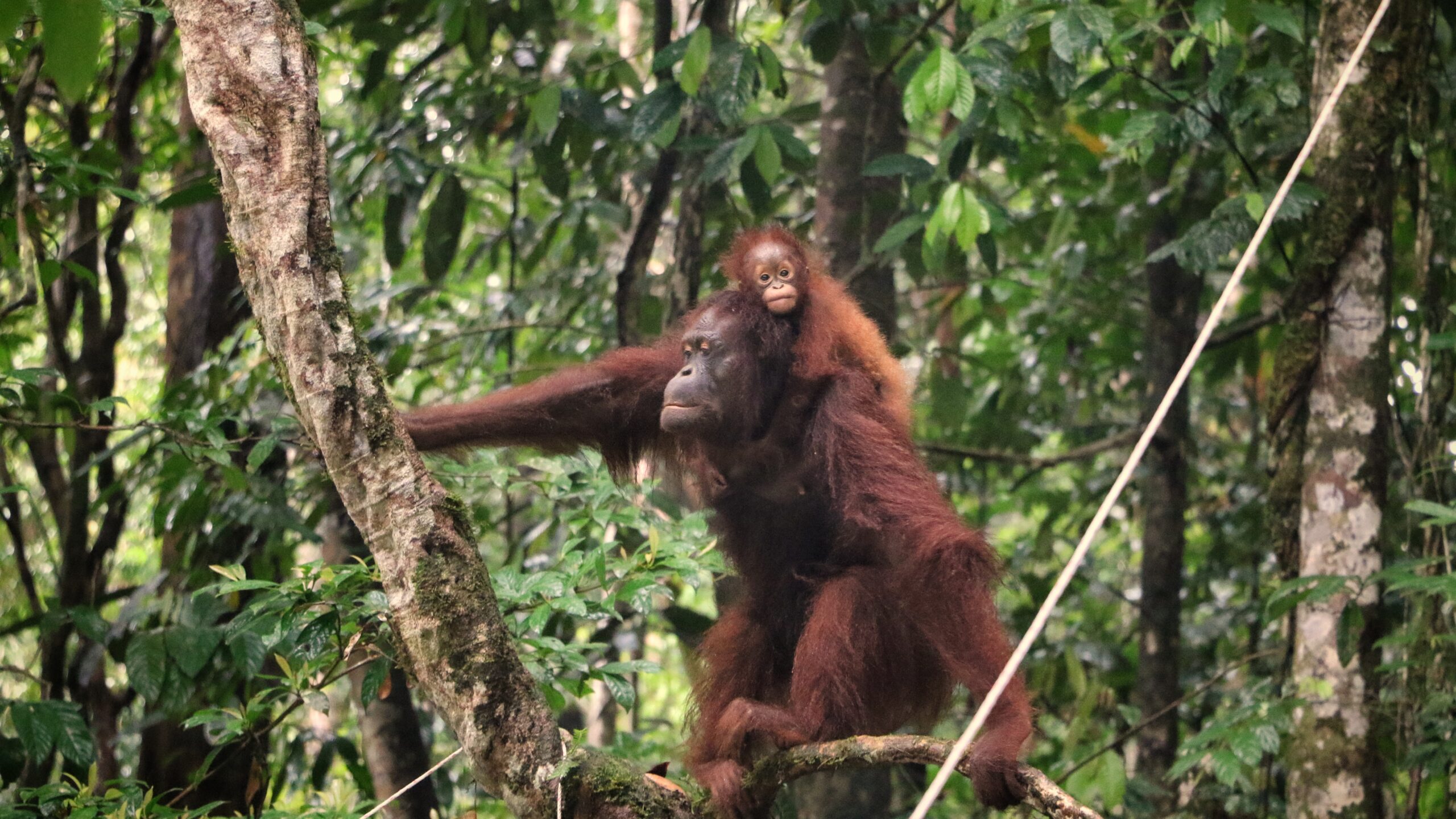 Photo Credit: Sabar Minsyah / Wikimedia
In the heart of Southeast Asia’s lush rainforests, the orangutan, scientifically known as Pongo, swings gracefully from branch to branch, embodying the spirit of the wild. With its striking reddish-brown fur and long, powerful arms, this magnificent primate is often called the “Red Ape” or the “Forest Person.” As it navigates the treetops, its expressive face reveals a blend of curiosity and intelligence that captivates both scientists and nature enthusiasts alike. The orangutan’s ability to use tools, communicate through a variety of sounds, and exhibit complex social behaviors makes it a fascinating subject of study, shedding light on the evolutionary connections between humans and our primate relatives.
Imagine standing beneath the towering trees, where sunlight filters through the thick canopy, casting dappled shadows on the forest floor. The air is alive with the sounds of chirping birds and rustling leaves, creating a symphony of nature. Here, the orangutan thrives, foraging for fruits and leaves, and building cozy nests high above the ground. As a keystone species, the orangutan plays a crucial role in its ecosystem, helping to maintain the balance of the forest by dispersing seeds and supporting the growth of diverse plant life. However, this incredible creature faces significant threats from habitat loss and poaching, making its survival more critical than ever. Join us as we explore the world of the orangutan, uncovering its remarkable adaptations, behaviors, and the urgent conservation efforts needed to protect this extraordinary primate.
The orangutan holds a special place in the tree of life, showcasing a unique blend of characteristics that set it apart from other animals. As a member of the Hominidae family, which includes great apes like gorillas and chimpanzees, orangutans are known for their intelligence and complex social behaviors. They are primarily found in the rainforests of Borneo and Sumatra, where they spend most of their lives in trees, demonstrating remarkable adaptations for an arboreal lifestyle. Their long arms and strong grasping hands allow them to swing gracefully from branch to branch, making them one of the most skilled tree-dwellers in the animal kingdom.
| Taxonomic Rank | Scientific Name | Meaning & Significance |
|---|---|---|
| Kingdom | Animalia | This name signifies that orangutans are part of the vast group of multicellular organisms that are primarily heterotrophic, meaning they consume other organisms for energy. |
| Phylum | Chordata | Chordata refers to animals that have a notochord, a flexible rod that supports the body. In orangutans, this structure is replaced by the backbone, which is crucial for their upright posture. |
| Class | Mammalia | Mammalia indicates that orangutans are warm-blooded animals that possess mammary glands, allowing mothers to nurse their young, a key factor in their social structure. |
| Order | Primates | Primates are characterized by their flexible limbs and large brains. This order includes humans, highlighting the close evolutionary relationship between orangutans and our species. |
| Family | Hominidae | The name Hominidae, or great apes, reflects their advanced cognitive abilities and social behaviors, which are more complex than those of many other mammals. |
| Genus | Pongo | Pongo is derived from the Malay word for orangutan, which means “person of the forest.” This name emphasizes their close connection to the trees and their intelligent, human-like qualities. |
Understanding the taxonomic classification of the orangutan reveals much about its evolutionary journey. As a member of the Hominidae family, orangutans share a common ancestor with humans, which highlights the intricate web of life that connects all primates. Their adaptations for life in the trees not only showcase their physical prowess but also reflect the environmental pressures that have shaped their development over millions of years. This classification underscores the importance of conserving their rainforest habitats, as they are not just unique animals but also vital links in the story of evolution.
The evolutionary journey of the orangutan stretches back millions of years, weaving through the dense forests of Southeast Asia. These incredible primates belong to the family Hominidae, which includes humans, gorillas, and chimpanzees. The story of the orangutan is one of adaptation and survival, marked by significant changes that have allowed it to thrive in its unique environment.
The ancestors of modern orangutans diverged from other great apes around 14 to 16 million years ago. This split set the stage for a series of evolutionary transitions that shaped their development. Early ancestors were likely more terrestrial, spending time on the ground, but as forests expanded, orangutans adapted to a life high in the trees. This shift led to the evolution of longer arms and a more flexible shoulder joint, perfect for swinging from branch to branch. Over time, these adaptations allowed them to become proficient at navigating the complex canopy of their rainforest homes.
These evolutionary adaptations have been crucial for the survival of orangutans in their lush, arboreal world. Their long arms and flexible joints allow them to navigate the treetops with ease, while their strong grip ensures they can hold onto branches securely. Intelligence plays a vital role in their ability to find food and solve problems, making them resourceful foragers. Additionally, their solitary nature helps them avoid competition, allowing them to thrive in the rich but sometimes limited resources of their rainforest homes. As they continue to adapt, orangutans remind us of the intricate connections between evolution and survival in the natural world.
The orangutan is a striking figure in the animal kingdom, with a body that tells a story of adaptation and survival. These primates boast a robust build, with long, powerful arms that often exceed the length of their legs. This unique proportion allows them to swing gracefully through the treetops of their rainforest homes. Their reddish-brown hair, which can appear almost fiery in the sunlight, adds to their captivating presence, making them one of the most recognizable primates on the planet.
| Feature | Description |
|---|---|
| Weight | 30kg – 90kg (66lbs – 200lbs) |
| Skin Type | Hair |
| Most Distinctive Feature | Red hair and longer arms than legs |
These physical traits are not just for show; they play crucial roles in the orangutan’s life. The long arms are perfect for navigating the high branches of trees, allowing them to reach for fruit and leaves, their primary food sources. The thick, reddish hair provides insulation against the tropical climate, while also offering some protection from the sun. Together, these features make the orangutan a master of its arboreal environment, showcasing the beauty of evolution in action.
The orangutan’s home is a lush, vibrant world filled with towering trees and a symphony of sounds. These magnificent primates thrive in lowland tropical forests, where the canopy is thick and the air is rich with humidity. Sunlight filters through the leaves, creating a dappled effect on the forest floor, while vines and branches weave a natural playground for these agile creatures. The forest is alive with the chatter of birds, the rustle of leaves, and the distant calls of other wildlife, making it a bustling hub of biodiversity.
The climate in these regions is warm and humid, with temperatures often reaching between 77°F to 95°F (25°C to 35°C). Rainfall is abundant, with some areas receiving over 100 inches (250 cm) of rain each year. This wet environment is crucial for the growth of the diverse plant life that provides food and shelter for orangutans. The combination of heat and moisture creates a thriving ecosystem, where fruit-bearing trees are plentiful, ensuring that these primates have a steady supply of their favorite foods.
Orangutans have developed remarkable adaptations to their forest homes. Their long arms and strong hands allow them to swing gracefully from branch to branch, while their keen sense of sight helps them spot ripe fruit high in the trees. They are also excellent problem solvers, using tools like sticks to extract insects or honey from hard-to-reach places. These adaptations not only help them find food but also enable them to navigate the complex layers of their forest habitat, making them true masters of the treetops.
Orangutans lead a daily life that is both intriguing and essential for their survival. As diurnal animals, they are most active during the day, spending their time foraging for food, building nests, and engaging in various activities that keep them healthy and alert. Their diet mainly consists of fruits, leaves, and occasionally insects, which they skillfully find among the branches of their forest homes. Each day, they climb high into the trees, using their long arms and strong hands to navigate the complex canopy. As the sun sets, they construct cozy nests made of leaves and branches, ensuring a safe and comfortable place to rest for the night.
While orangutans are often seen as solitary creatures, their social behavior is quite nuanced. Adult males typically roam alone, while females may be seen with their young offspring. This mother-child bond is crucial, as mothers teach their young how to find food and navigate their environment. Communication among orangutans is rich and varied, involving a range of vocalizations, gestures, and facial expressions. These interactions help maintain connections, especially between mothers and their babies, and can even extend to occasional gatherings where individuals may share food or engage in playful activities.
| Behavior Type | Description |
|---|---|
| Activity Patterns | Orangutans are diurnal, meaning they are active during the day, foraging for food and building nests in trees. |
| Social Structure | Generally solitary, adult males live alone, while females often stay with their young, fostering strong maternal bonds. |
| Communication Methods | They use a variety of vocalizations, gestures, and facial expressions to communicate, especially between mothers and their offspring. |
The behaviors of orangutans are finely tuned to ensure their survival in the wild. Their solitary nature allows them to cover large areas in search of food, while the strong bonds between mothers and their young ensure that the next generation learns vital survival skills. By mastering their environment and maintaining social connections, orangutans continue to thrive in the lush forests they call home.
Orangutans are omnivores, which means they eat both plants and animals. Their primary diet consists of a variety of fruits, making them expert foragers in the treetops of their forest homes. These intelligent primates have developed remarkable feeding behaviors, using their long arms to reach for ripe fruits and their strong jaws to crack open tough shells. They are known to spend hours each day searching for food, carefully selecting the best options to sustain their energy and health.
| Dietary Aspect | Details |
|---|---|
| Diet Type | Omnivore |
| Favorite Foods | Fruits, especially figs, as well as bark and leaves |
| Prey Items | Insects |
| Hunting/Foraging Strategies | Using their long arms to reach high branches and selecting ripe fruits; sometimes using tools to extract insects |
This diverse diet plays a crucial role in the ecology of their habitat. By consuming a wide range of fruits and plants, orangutans help to disperse seeds throughout the forest, promoting plant growth and maintaining the health of their ecosystem. Their daily routine revolves around foraging, which not only provides nourishment but also encourages social interactions and learning among individuals. In this way, their feeding habits are intricately linked to the balance of life in the tropical forests they call home.
When it comes to mating, orangutans have a fascinating approach. They typically breed throughout the year, but there are peak seasons when mating is more common. Male orangutans often display impressive behaviors to attract females, such as vocalizing with loud calls known as “long calls.” These calls can travel over long distances, signaling their presence and readiness to mate. Female orangutans are selective partners, often choosing males based on their size and strength, which can indicate good genes for their offspring.
| Reproductive Aspect | Details |
|---|---|
| Gestation Period | 9 months |
| Average Litter Size | 1 |
| Age of Sexual Maturity | 12 – 15 years |
| Name of Young | Infant |
Once an infant is born, the journey of growth and development begins. Orangutan mothers are incredibly devoted, providing extensive care to their young. They carry their infants on their bodies for the first few years, ensuring they are safe and nurtured. This close bond is crucial, as the young learn essential survival skills from their mothers, such as foraging for food and navigating the treetops. As they grow, orangutan infants gradually gain independence, but they often stay with their mothers for several years, learning the ways of the forest before venturing out on their own. This extended period of parental care is vital for their survival in the wild.
Orangutans play a vital role in their ecosystem, often referred to as keystone species. This means they help maintain the structure of their forest habitat, influencing the types of plants and animals that thrive around them. As primarily arboreal creatures, they spend most of their lives in trees, where they forage for fruits and other food. However, despite their position in the food web, orangutans face significant dangers that threaten their survival.
To defend themselves against these threats, orangutans have developed several survival strategies. They are incredibly intelligent and use their problem-solving skills to navigate their environment. For instance, they can create tools, like using sticks to extract insects from tree bark. Additionally, their strong, flexible limbs allow them to swing gracefully through the treetops, making it harder for predators to catch them. By staying high in the canopy and being cautious, orangutans can evade many dangers, but their future remains uncertain as human activities continue to encroach on their homes.
A keystone species is an organism that has a disproportionately large impact on its environment relative to its abundance. In the case of the orangutan, this primate certainly qualifies as a keystone species. Found primarily in the lowland tropical forests of Southeast Asia, orangutans play a crucial role in maintaining the health and balance of their ecosystem. Their activities influence the lives of many other species, making them essential for the overall stability of their habitat.
Orangutans are expert foragers, primarily feeding on fruits, which makes them vital for seed dispersal. When they consume fruit, they often travel long distances, leaving seeds behind in their droppings. This process helps to promote plant diversity and ensures that various tree species can thrive in the forest. For instance, the orangutan’s preference for certain fruits can lead to the growth of specific trees, which in turn provide food and shelter for countless other animals.
Additionally, their nesting behavior contributes to the ecosystem’s structure. By building nests high in the trees, orangutans create safe spaces for themselves and other wildlife. These nests can also serve as habitats for insects and birds, further enriching the biodiversity of the forest. Moreover, their solitary lifestyle means that they interact with a wide range of plants and animals, influencing the entire community of life around them.
If orangutans were to disappear from their environment, the consequences would be profound. The loss of these primates would disrupt the delicate balance of the forest ecosystem. Without their seed dispersal, many tree species could decline, leading to reduced plant diversity. This decline would ripple through the food web, affecting not only the plants but also the animals that rely on them for food and shelter. Ultimately, the absence of orangutans would threaten the very fabric of their forest home, highlighting just how vital they are to the health of their ecosystem.
The orangutan occupies a vital ecological niche in the lowland tropical forests of Southeast Asia. As a keystone species, it plays a crucial role in maintaining the health and balance of its environment. These intelligent primates are not just residents of the forest; they actively shape their ecosystem through their behaviors and interactions with other species. By foraging for food and moving through the trees, orangutans help disperse seeds and promote plant diversity, which is essential for a thriving forest.
| Ecosystem Service | Impact |
|---|---|
| Seed Dispersal | Orangutans eat fruits and then excrete the seeds, helping new plants grow in different areas. |
| Forest Structure Maintenance | By feeding on certain plants, they help control plant populations, allowing for a diverse range of species. |
| Habitat Creation | Their nesting habits create spaces for other animals, contributing to a rich biodiversity. |
| Soil Enrichment | Their waste adds nutrients to the soil, promoting healthy plant growth. |
Orangutans influence their environment in many specific ways. For instance, when they consume fruits from various trees, they not only satisfy their hunger but also ensure that seeds are spread throughout the forest. This process helps maintain a diverse plant community, which in turn supports a wide range of other wildlife. Additionally, their nesting behavior—building large nests high in the trees—creates habitats for smaller animals and birds, enhancing the overall complexity of the ecosystem.
The broader ecological importance of orangutans cannot be overstated. As they interact with their environment, they help sustain the intricate web of life that exists in the tropical forests. Their role as seed dispersers and habitat creators supports not just their own species but countless others, making them essential for the health of their ecosystem. Protecting orangutans means preserving the rich biodiversity of their forest home, ensuring that these vibrant ecosystems continue to thrive for generations to come.
In the intricate web of life, symbiosis refers to the close and often long-term interactions between different species. These relationships can take many forms, including mutualism, where both species benefit, commensalism, where one benefits while the other is neither helped nor harmed, and parasitism, where one species benefits at the expense of the other. In the lush lowland tropical forests where orangutans reside, these ecological relationships are vital for the health of the ecosystem and the survival of its inhabitants.
| Species/Type | Relationship Type | Description |
|---|---|---|
| Fruit Trees | Mutualistic | Orangutans help disperse the seeds of fruit trees through their droppings, promoting forest growth while enjoying the fruits as a food source. |
| Epiphytic Plants | Commensal | These plants grow on the branches of trees, benefiting from the height and sunlight without harming the trees themselves. |
| Parasites (e.g., ticks) | Parasitic | Ticks and other parasites feed on orangutans, gaining nourishment while potentially harming their health. |
These relationships have evolved over time, shaped by the needs and behaviors of the species involved. The mutualistic bond between orangutans and fruit trees is particularly important, as it not only supports the orangutans’ diet but also ensures the survival of the trees, creating a thriving forest ecosystem. Meanwhile, the presence of epiphytic plants highlights the complexity of forest life, where different species coexist and support one another. Understanding these connections helps us appreciate the delicate balance of nature and the role each species plays in maintaining it.
Orangutans are truly captivating primates, known for their intelligence and unique adaptations to life in the trees. Here are some surprising facts that showcase just how extraordinary these creatures are.
Throughout history, orangutans have captivated human imagination and culture. These intelligent primates, native to the rainforests of Borneo and Sumatra, have been featured in folklore and art, symbolizing wisdom and the connection between humans and nature. Early encounters between orangutans and humans often sparked curiosity, leading to a deeper understanding of their behaviors and social structures. As our ancestors roamed the forests, they likely observed these remarkable creatures, drawing parallels between their own lives and the lives of orangutans. This cultural significance has persisted, reminding us of our shared evolutionary roots and the importance of preserving these incredible beings.
In modern times, the relationship between orangutans and humanity has become increasingly complex. As deforestation and habitat destruction threaten their survival, conservation efforts have emerged to protect these primates and their environments. Organizations work tirelessly to rehabilitate orphaned orangutans and reintroduce them into the wild. However, conflicts arise as human activities encroach on their habitats, leading to dangerous encounters. Some orangutans have even been captured for the pet trade, which raises ethical concerns about their welfare and the impact on wild populations. The challenge lies in finding a balance between human development and the preservation of orangutan habitats.
As we look to the future, the relationship between orangutans and humanity holds both promise and challenges. With increased awareness of their plight, more people are advocating for sustainable practices that protect orangutan habitats. The future depends on our ability to coexist with these magnificent primates, ensuring that they thrive in their natural environments. By fostering a sense of stewardship and responsibility, we can help secure a future where orangutans continue to inspire generations to come, reminding us of the beauty and fragility of the natural world.
The orangutan is currently classified as Critically Endangered, a status that highlights the urgent need for conservation efforts. With an estimated population of around 20,000 individuals left in the wild, these incredible primates are facing a steep decline. The numbers reflect a troubling trend, as their populations continue to dwindle due to various threats. This decline is not just a loss of a species; it signifies a deeper disruption in the ecosystems they inhabit.
| Conservation Factor | Status/Details |
|---|---|
| IUCN Status | Critically Endangered |
| Estimated Population Size | Approximately 20,000 |
| Population Trend | Decreasing |
The main threats to orangutans stem from human activities that encroach upon their natural habitats. Deforestation, primarily driven by logging and agricultural expansion, is a significant factor. As forests are cleared for palm oil plantations and other agricultural uses, orangutans lose their homes and food sources. Additionally, illegal hunting and the pet trade pose serious risks, further endangering their survival. These threats not only impact orangutans directly but also disrupt the delicate balance of their forest ecosystems.
Despite these challenges, there is hope for the future of orangutans. Conservation organizations are actively working to protect their habitats and raise awareness about the importance of these primates. Efforts include establishing protected areas, promoting sustainable land-use practices, and rehabilitating orphaned orangutans. With continued dedication and support, there is a chance to reverse the decline and ensure that future generations can witness the beauty and intelligence of orangutans in the wild.
| Question | Answer |
|---|---|
| What is the natural habitat of orangutans? | Orangutans live in lowland tropical forests, which are warm and humid environments. These forests provide them with plenty of trees to climb and fruits to eat, making it an ideal home for these amazing primates. |
| What do orangutans eat? | Orangutans are omnivores, meaning they eat both plants and animals. Their diet mainly consists of fruits, leaves, and flowers, but they also enjoy insects and small animals when available. |
| How do orangutans behave in the wild? | Orangutans are known for their solitary behavior, often spending time alone or with their young. They are highly intelligent and use tools, like sticks, to help them reach food or extract insects from tree bark. |
| How do orangutans reproduce? | Female orangutans typically give birth to one baby every 6 to 8 years after a gestation period of about 8.5 months. The mother is very nurturing, often carrying her baby for several years until it learns to be independent. |
| What are the main threats to orangutans? | Orangutans face several threats, including habitat loss due to deforestation and illegal logging. They are also hunted and captured for the illegal pet trade, which further endangers their populations. |
| What is a unique characteristic of orangutans? | One of the most distinctive features of orangutans is their long arms, which are longer than their legs. This adaptation helps them swing gracefully from tree to tree in their forest homes. |
| Why are orangutans considered critically endangered? | Orangutans are classified as critically endangered due to their rapidly declining populations. Conservation efforts are crucial to protect their habitats and ensure their survival in the wild. |