Taxonomy & Classification
- Kingdom
- Animalia
- Phylum
- Chordata
- Class
- Actinopterygii
- Order
- Perciformes
- Family
- Cichlidae
- Genus
- Astronotus
- Species
- Astronotus ocellatus

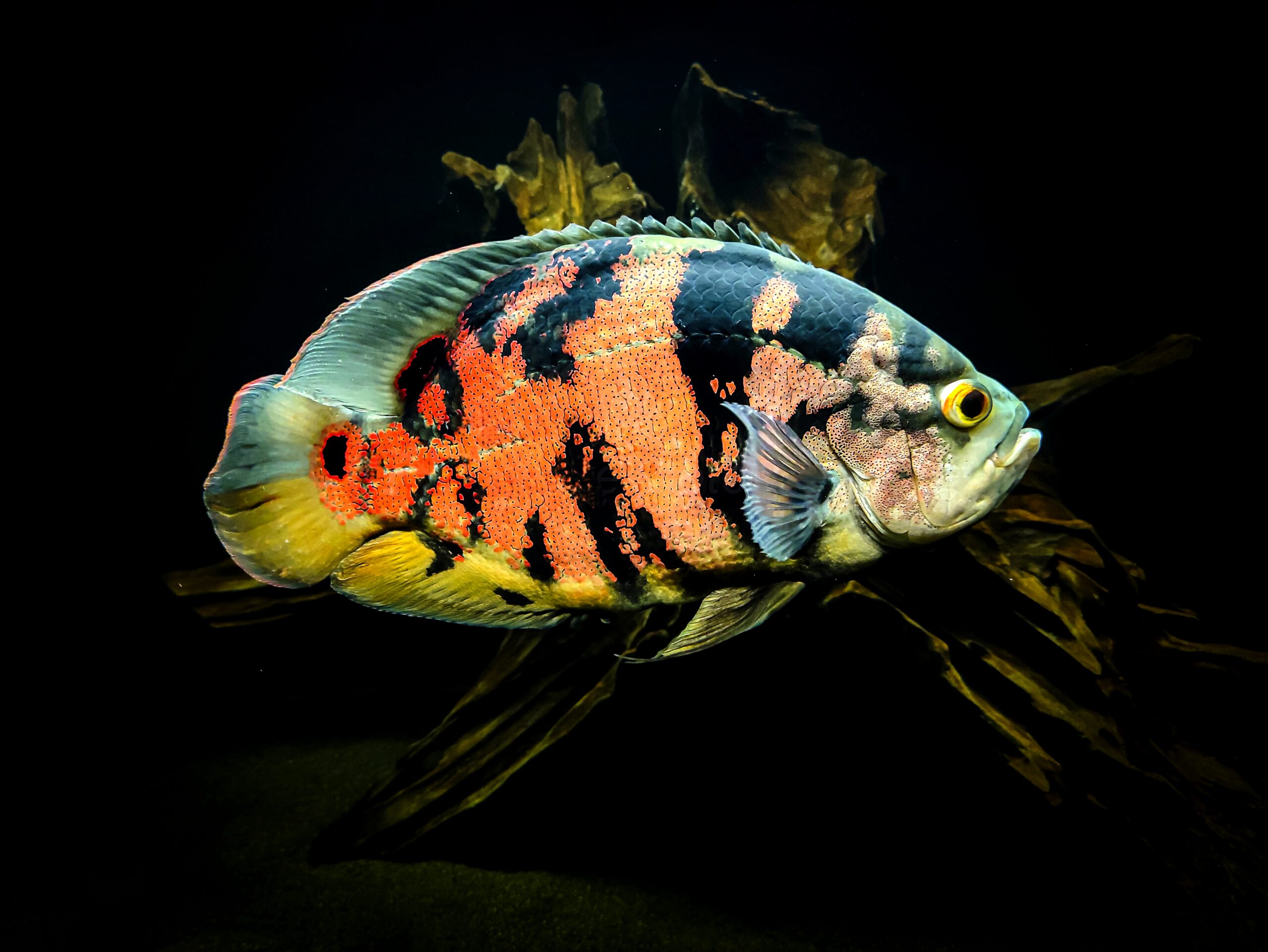 Photo Credit: Lukaso40 / Wikimedia Commons
In the shimmering waters of South America, the Oscar fish, scientifically known as Astronotus, glides gracefully through its lush aquatic home. With its vibrant hues of orange, black, and yellow, this fish is a true spectacle, captivating the eyes of anyone lucky enough to catch a glimpse. The Oscar’s robust, rounded body and expressive personality make it a favorite among both aquarium enthusiasts and scientists alike. Its ability to adapt to various environments and its intriguing behaviors spark curiosity, inviting us to explore the depths of its world.
As the sun filters through the surface, illuminating the muddy riverbeds and dense vegetation, the Oscar fish comes alive. It swims with purpose, darting between plants and rocks, showcasing its intelligence and social nature. Known for its playful interactions, the Oscar often engages with its surroundings, displaying a range of behaviors that hint at its complex personality. Scientists are particularly fascinated by its role in the ecosystem, where it helps maintain the balance of life in its habitat. With a diet that includes both plant and animal matter, the Oscar fish plays a vital part in the food web, making it an essential character in the story of freshwater ecosystems. Join us as we dive deeper into the life of the Oscar fish, uncovering the secrets of its vibrant existence and the challenges it faces in the wild.
The Oscar fish, scientifically known as Astronotus, occupies a fascinating niche in the tree of life. This vibrant freshwater fish belongs to the kingdom Animalia, which includes all animals, and is part of the phylum Chordata, meaning it has a backbone. What sets the Oscar apart is its intelligence and social behavior, often forming bonds with its owners and displaying a range of emotions. This makes it not just a pet, but a companion that can recognize its human friends and even learn tricks!
| Taxonomic Rank | Scientific Name | Meaning & Significance |
|---|---|---|
| Kingdom | Animalia | This name signifies that Oscars are part of the vast group of multicellular organisms that are heterotrophic, meaning they consume other organisms for energy. |
| Phylum | Chordata | Chordata refers to animals with a notochord, a flexible rod that supports the body, which in most vertebrates becomes the spine. |
| Class | Actinopterygii | This class includes ray-finned fishes, characterized by their bony spines and fins, which are supported by thin, bony rays. |
| Order | Perciformes | Perciformes, meaning “perch-like,” is the largest order of fishes, known for their diverse shapes and sizes, including the Oscar’s robust body. |
| Family | Cichlidae | The name Cichlidae comes from the Greek word “kichlos,” referring to a type of fish, highlighting the family’s diverse and colorful members, including Oscars. |
| Genus | Astronotus | Astronotus is derived from Greek, meaning “star ear,” which may refer to the distinctive patterns and colors that resemble stars on their bodies. |
Understanding the Oscar fish’s classification reveals much about its evolutionary journey. As a member of the Cichlidae family, Oscars share a lineage with many other intelligent and adaptive fish species. This evolutionary background has equipped them with unique traits, such as their ability to learn and interact with their environment. The Oscar’s vibrant colors and social behaviors are not just for show; they are adaptations that have helped them thrive in their natural habitats. By studying their place in the tree of life, we gain insight into the complex relationships and adaptations that define the animal kingdom.
The evolutionary journey of the Oscar fish, or Astronotus, stretches back millions of years, tracing its roots to the ancient waters of South America. This captivating fish belongs to the family Cichlidae, a diverse group that has adapted to various freshwater environments. The story of the Oscar is one of survival and adaptation, showcasing how these fish have evolved to thrive in their habitats.
Oscar fish are descendants of early cichlids that emerged during the Eocene epoch, around 56 million years ago. These ancestral forms were likely small, less colorful, and lived in shallow waters. Over time, as the environment changed, so did the Oscar. They developed vibrant colors and patterns, which not only make them visually striking but also play a role in communication and mating. The transition from simple, drab fish to the colorful Oscars we see today reflects a significant evolutionary shift driven by natural selection.
These adaptations have been crucial for the Oscar fish’s survival in the wild. Their vibrant colors not only attract mates but also help them blend into their surroundings, providing camouflage from predators. The social behaviors and parental care strategies ensure that their young have a better chance of survival in a competitive ecosystem. By being flexible in their diet and habitat, Oscars can thrive in various environments, making them resilient to changes in their surroundings. This evolutionary tale is a testament to the power of adaptation in the natural world.
The Oscar fish is a striking presence in the underwater world, boasting a stocky and robust body that commands attention. With its rounded shape and muscular build, this fish can grow to a weight of about 3.5 pounds, making it a substantial inhabitant of freshwater habitats. Its overall form is not just for show; it is designed for agility and strength, allowing it to navigate through its environment with ease.
| Feature | Description |
|---|---|
| Size | Can weigh up to 3.5 pounds and reach lengths of about 12 to 18 inches. |
| Color | Typically features a vibrant mix of orange, yellow, and black, creating a stunning visual display. |
| Skin Type | Covered in smooth, shiny scales that provide protection and a sleek appearance. |
| Body Shape | Stocky and large, which aids in stability and strength while swimming. |
These physical characteristics work together to enhance the Oscar fish’s survival in its natural habitat. The vibrant colors not only make it a beautiful sight but also serve as a form of communication with other fish, signaling health and vitality. Its stocky body allows for powerful movements, helping it evade predators and catch prey. The smooth scales protect against parasites and injuries, ensuring that this fish can thrive in the diverse ecosystems of South America. Together, these features create a well-adapted fish that is both visually captivating and expertly equipped for life in the water.
The Oscar fish thrives in the warm, inviting waters of shallow rivers and river basins, where the sun’s rays dance on the surface. These habitats are often adorned with muddy or sandy bottoms, providing a cozy environment for the fish to explore. The lush greenery along the banks offers shelter and food, creating a vibrant ecosystem teeming with life. Picture a serene river winding through a tropical landscape, where the Oscar fish glides gracefully among submerged plants and driftwood, making its home in this lively underwater world.
To flourish in its habitat, the Oscar fish prefers warm waters, typically ranging from 75 to 80 degrees Fahrenheit. This temperature range is crucial for their health and activity levels. The water is often slightly acidic to neutral, with a pH between 6.0 and 7.5, which helps maintain the delicate balance of their environment. Additionally, these fish enjoy areas with plenty of hiding spots, such as rocks and plants, where they can feel safe from predators and find food.
Over time, the Oscar fish has developed several adaptations to thrive in its specific habitats. Its robust body allows it to navigate through the dense vegetation and muddy bottoms with ease. The Oscar’s keen eyesight helps it spot food and potential threats in the murky waters. Furthermore, its ability to tolerate varying water conditions makes it a resilient inhabitant of the rivers and lakes it calls home. This adaptability not only ensures its survival but also allows it to flourish in the rich biodiversity of South America’s freshwater ecosystems.
The Oscar fish leads a vibrant daily life filled with activity and interaction. As the sun rises, these colorful fish become more active, swimming gracefully through their freshwater homes. They spend their days exploring their surroundings, foraging for food, and engaging in playful behaviors. Oscars are known for their curious nature, often investigating any changes in their environment, whether it’s a new decoration in their tank or a shift in water conditions. Their diet consists mainly of insects, crustaceans, and small fish, which they hunt with precision and agility.
Socially, Oscar fish are quite engaging. They thrive in groups, displaying a range of social behaviors that help them establish a hierarchy. Within their schools, Oscars communicate through body language and subtle movements, signaling their intentions to one another. This social structure is essential for their well-being, as it allows them to bond and cooperate while also establishing dominance among individuals. They often engage in playful sparring, which helps reinforce their social bonds and maintain order within the group.
| Behavior Type | Description |
|---|---|
| Activity Patterns | Oscars are diurnal, meaning they are most active during the day. They spend their time swimming, foraging, and exploring their environment. |
| Social Structure | Oscars form social groups where they establish a hierarchy. Dominant individuals often display more vibrant colors and assertive behaviors. |
| Communication Methods | They communicate through body language, such as fin displays and swimming patterns, as well as through vocalizations like grunts and clicks. |
These behaviors are not just for show; they play a crucial role in the survival of Oscar fish. By living in groups, they can better protect themselves from predators and increase their chances of finding food. Their social interactions help them learn from one another, making them more adept at navigating their environment. In essence, the daily life of an Oscar fish is a blend of exploration, social bonding, and survival strategies, all of which contribute to their thriving existence in the wild.
The Oscar fish is an omnivore, which means it enjoys a varied diet that includes both plant and animal matter. This adaptability allows it to thrive in its natural habitat. Oscars are known for their opportunistic feeding behavior, often hunting for food in the murky waters of their riverine homes. They use their keen eyesight to spot potential prey, which they capture with quick, decisive movements. This combination of agility and awareness makes them effective hunters in their aquatic environment.
| Dietary Aspect | Details |
|---|---|
| Diet Type | Omnivore |
| Favorite Foods | Insects, insect larvae, freshwater clams, snails, shrimp |
| Prey Items | Catfish, various small aquatic creatures |
| Hunting/Foraging Strategies | Opportunistic feeding, using keen eyesight to spot prey |
The Oscar fish’s diverse diet plays a crucial role in its ecology and daily routine. By consuming a wide range of foods, it helps maintain the balance of its ecosystem, controlling insect populations and contributing to the health of its habitat. This adaptability not only supports its survival but also influences its social interactions with other fish. As Oscars forage and hunt, they engage with their environment, showcasing the intricate connections that exist in the underwater world.
Oscar fish are known for their intriguing mating rituals, which often take place during the warmer months of the year. When the breeding season arrives, males become particularly vibrant, showcasing their bright colors to attract females. They engage in elaborate courtship displays, which can include swimming in circles and nipping at each other. Once a pair has formed, they will prepare a suitable nesting site, often choosing flat surfaces like rocks or leaves where the female can lay her eggs.
| Reproductive Aspect | Details |
|---|---|
| Gestation Period | 2-3 days |
| Litter Size | 100-1,000 eggs |
| Age of Maturity | 6-12 months |
| Name of Young | Fry |
After the eggs are laid, both parents take on the role of protectors. They guard the nest fiercely, fending off any potential threats. Once the eggs hatch, the tiny fry emerge, still attached to their yolk sacs, which provide them with essential nutrients. As they grow, the fry begin to explore their surroundings, gradually becoming more independent. The parents continue to watch over them, ensuring they are safe until they reach maturity, which can take anywhere from six to twelve months. This nurturing behavior is crucial for the fry’s survival, helping them develop into vibrant adult Oscars ready to start the cycle anew.
The Oscar fish, or Astronotus, plays a significant role in its aquatic food web. As an omnivore, it occupies a middle position, feasting on a variety of foods while also being a potential meal for larger predators. This balance is crucial for maintaining the health of its ecosystem, as it helps control both plant and animal populations in its habitat.
To defend itself against these threats, the Oscar fish employs a variety of survival strategies. It often seeks shelter among rocks and plants, using its coloration to blend into the environment. This camouflage helps it avoid detection by predators. Additionally, Oscars are known for their aggressive behavior when threatened, displaying their size and strength to ward off intruders. By being both clever and bold, the Oscar fish navigates the challenges of its underwater world, ensuring its survival in the face of danger.
A keystone species is a vital part of its ecosystem, meaning its presence and activities have a significant impact on the environment and other organisms. The Oscar fish, known scientifically as Astronotus, qualifies as a keystone species in its habitat. This colorful fish plays a crucial role in maintaining the balance of its freshwater ecosystem, particularly in the shallow rivers and river basins of South America where it resides.
The Oscar fish influences its ecosystem in several ways. As an omnivore, it consumes a diverse diet that includes both plant matter and smaller animals. This feeding behavior helps control the populations of various organisms, preventing any one species from overwhelming the ecosystem. For example, by eating smaller fish and invertebrates, Oscars help maintain a healthy balance among aquatic life. Additionally, their foraging activities stir up the substrate, which can promote nutrient cycling in the water, benefiting plant life and other organisms.
Moreover, Oscars are social fish that often form groups, which can enhance their protective behaviors against predators. This social structure not only aids in their survival but also influences the dynamics of the community around them. Their interactions with other species, including their role as prey for larger fish, further illustrate their importance in the food web.
If the Oscar fish were to disappear from its ecosystem, the effects could be profound. Without this keystone species, the populations of smaller fish and invertebrates could explode, leading to overgrazing of aquatic plants and a decline in water quality. This imbalance could ripple through the ecosystem, affecting not only the fish but also the plants and other animals that rely on a stable environment. The loss of Oscars would disrupt the intricate web of life in their habitat, highlighting just how essential they are to the health of their ecosystem.
The Oscar fish, known scientifically as Astronotus, plays a crucial role in its ecosystem, particularly in the shallow rivers and river basins of South America. As an omnivore, it helps maintain the balance of its environment by consuming a variety of plant and animal matter. This adaptability not only supports its survival but also influences the populations of other species in its habitat. By foraging through the substrate, Oscars contribute to nutrient cycling, which is essential for the health of aquatic ecosystems.
| Ecosystem Service | Impact |
|---|---|
| Nutrient Cycling | Helps break down organic matter, enriching the sediment and promoting plant growth. |
| Population Control | Regulates the numbers of smaller fish and invertebrates, preventing overpopulation. |
| Habitat Structure | Creates hiding spots and nesting areas for other species through its digging behavior. |
| Food Source | Serves as prey for larger fish and birds, contributing to the food web. |
The Oscar fish’s influence extends beyond its immediate feeding habits. For instance, by digging into the riverbed, it stirs up sediment, which can help aerate the water and promote the growth of beneficial microorganisms. These tiny organisms are vital for breaking down waste and providing food for other aquatic life. Additionally, Oscars often create nesting sites that can be used by other fish, enhancing biodiversity in their habitat. Their presence can even attract larger predators, which helps maintain a balanced food web.
In the grand scheme of its ecosystem, the Oscar fish is a keystone species, meaning its activities have a disproportionate effect on the environment. By shaping the physical landscape and influencing the populations of other organisms, Oscars help sustain the delicate balance of life in their watery homes. Their role highlights the interconnectedness of species and the importance of preserving such vibrant ecosystems for future generations. Understanding the Oscar fish’s impact encourages us to appreciate the intricate web of life that thrives beneath the surface of our rivers and lakes.
In the intricate web of life, many species form partnerships that enhance their survival and well-being. These relationships can be classified into three main types: mutualism, where both species benefit; commensalism, where one benefits while the other is neither helped nor harmed; and parasitism, where one benefits at the expense of the other. The Oscar fish, known for its vibrant colors and engaging personality, participates in various ecological relationships that showcase the beauty of nature’s cooperation.
| Species/Type | Relationship Type | Description |
|---|---|---|
| Cleaner Shrimp | Mutualistic | Oscar fish often host cleaner shrimp, which remove parasites and dead skin from their bodies. In return, the shrimp gain food and protection. |
| Catfish | Commensal | Sometimes, catfish swim alongside Oscar fish, benefiting from the food scraps that fall from the Oscars’ meals without affecting the Oscars. |
| Leeches | Parasitic | Leeches can attach to Oscar fish, feeding on their blood. This relationship harms the Oscars while providing nourishment for the leeches. |
These relationships have evolved over time, shaped by the needs and behaviors of the species involved. Mutualistic partnerships, like that of the Oscar fish and cleaner shrimp, highlight how cooperation can lead to healthier individuals and thriving ecosystems. Meanwhile, commensal relationships allow for a balance where one species benefits without disrupting the other. Parasitic interactions, while less favorable for the host, also play a role in the natural selection process, influencing the health and resilience of populations. Together, these connections illustrate the dynamic and interdependent nature of life in aquatic environments.
The Oscar fish, known scientifically as Astronotus, is a captivating inhabitant of freshwater ecosystems, particularly in South America. With its vibrant colors and engaging behaviors, this fish has much more to offer than meets the eye.
The Oscar fish, or Astronotus, has a long and colorful history intertwined with humanity. Native to the warm waters of South America, these fish have been admired for their striking appearance and engaging behaviors. Indigenous cultures often viewed them as symbols of strength and beauty, incorporating them into their folklore and art. As people began to explore and settle in these regions, they encountered Oscars in their natural habitats, leading to a growing fascination that would eventually extend beyond local communities to aquarists and fish enthusiasts around the world.
Today, the relationship between Oscar fish and humans is multifaceted, encompassing conservation efforts, domestic breeding, and even some conflicts. As their popularity in the aquarium trade has surged, concerns about overfishing and habitat destruction have emerged. Conservationists are working to protect the natural environments where Oscars thrive, ensuring that these vibrant fish can continue to flourish in the wild. Meanwhile, many people keep Oscars as pets, drawn to their intelligence and personality. However, this domestication can lead to challenges, such as the need for proper tank conditions and the potential for aggressive behavior towards other fish.
As we look to the future, the relationship between Oscar fish and humanity holds both promise and responsibility. With increased awareness of environmental issues, there is hope that sustainable practices will prevail, allowing these beautiful fish to thrive in their natural habitats while also being cherished as pets. By fostering a deeper understanding of their ecological role and the challenges they face, we can ensure that Oscar fish continue to inspire wonder and admiration for generations to come.
The Oscar fish, known scientifically as Astronotus, currently holds a conservation status of “Not Evaluated” according to the International Union for Conservation of Nature (IUCN). This means that there hasn’t been enough comprehensive research to determine its population trends or the overall health of its populations in the wild. While Oscar fish are popular in the aquarium trade, their status in natural habitats remains uncertain, leaving scientists and conservationists eager to learn more about their numbers and distribution.
| Conservation Factor | Status/Details |
|---|---|
| IUCN Status | Not Evaluated |
| Population Estimates | Unknown |
| Trend Direction | Unknown |
The main threats to the Oscar fish stem from habitat destruction and pollution. As human activities expand, the natural environments where these fish thrive are often altered or degraded. Deforestation, agricultural runoff, and urban development can lead to changes in water quality and availability, making it difficult for Oscar fish to survive. Additionally, the aquarium trade, while popular, can sometimes lead to overharvesting in certain areas, further stressing local populations.
Conservation efforts for the Oscar fish are still in their infancy, primarily because of the lack of detailed studies on their populations. However, raising awareness about the importance of preserving freshwater ecosystems is crucial. By protecting their natural habitats and promoting sustainable practices, we can help ensure that Oscar fish continue to thrive in the wild. The outlook for this species will improve as more research is conducted, allowing for better-informed conservation strategies that benefit both the fish and their ecosystems.
| Question | Answer |
|---|---|
| What is the natural habitat of Oscar Fish? | Oscar Fish are typically found in shallow rivers and river basins. They prefer areas with muddy or sandy bottoms, which provide them with places to hide and hunt for food. |
| What do Oscar Fish eat? | Oscar Fish are omnivores, meaning they eat both plants and animals. In the wild, their diet includes insects, crustaceans, and small fish, while in captivity, they can be fed pellets, vegetables, and live food. |
| How do Oscar Fish behave in their environment? | Oscar Fish are known for their curious and interactive nature. They can recognize their owners and may even come to the surface when they see someone approaching their tank. |
| How do Oscar Fish reproduce? | Oscar Fish are egg-layers, and they often form pairs during breeding. The female lays eggs on flat surfaces, and both parents help protect the eggs until they hatch, which usually takes a few days. |
| What threats do Oscar Fish face in the wild? | While Oscar Fish are not currently evaluated for conservation status, they can face threats from habitat destruction and pollution. These factors can impact their natural environments and food sources. |
| What is a distinctive feature of Oscar Fish? | One of the most distinctive features of Oscar Fish is their stocky, large body. This robust shape helps them navigate through their river habitats and gives them a strong presence in aquariums. |
| Are Oscar Fish social animals? | Yes, Oscar Fish can be quite social, especially when kept in groups. However, they can also be territorial, so it's important to provide enough space and hiding spots in their tank to reduce aggression. |