Taxonomy & Classification
- Kingdom
- Animalia
- Phylum
- Arthropoda
- Class
- Ostracoda
- Family
- Ostracoda

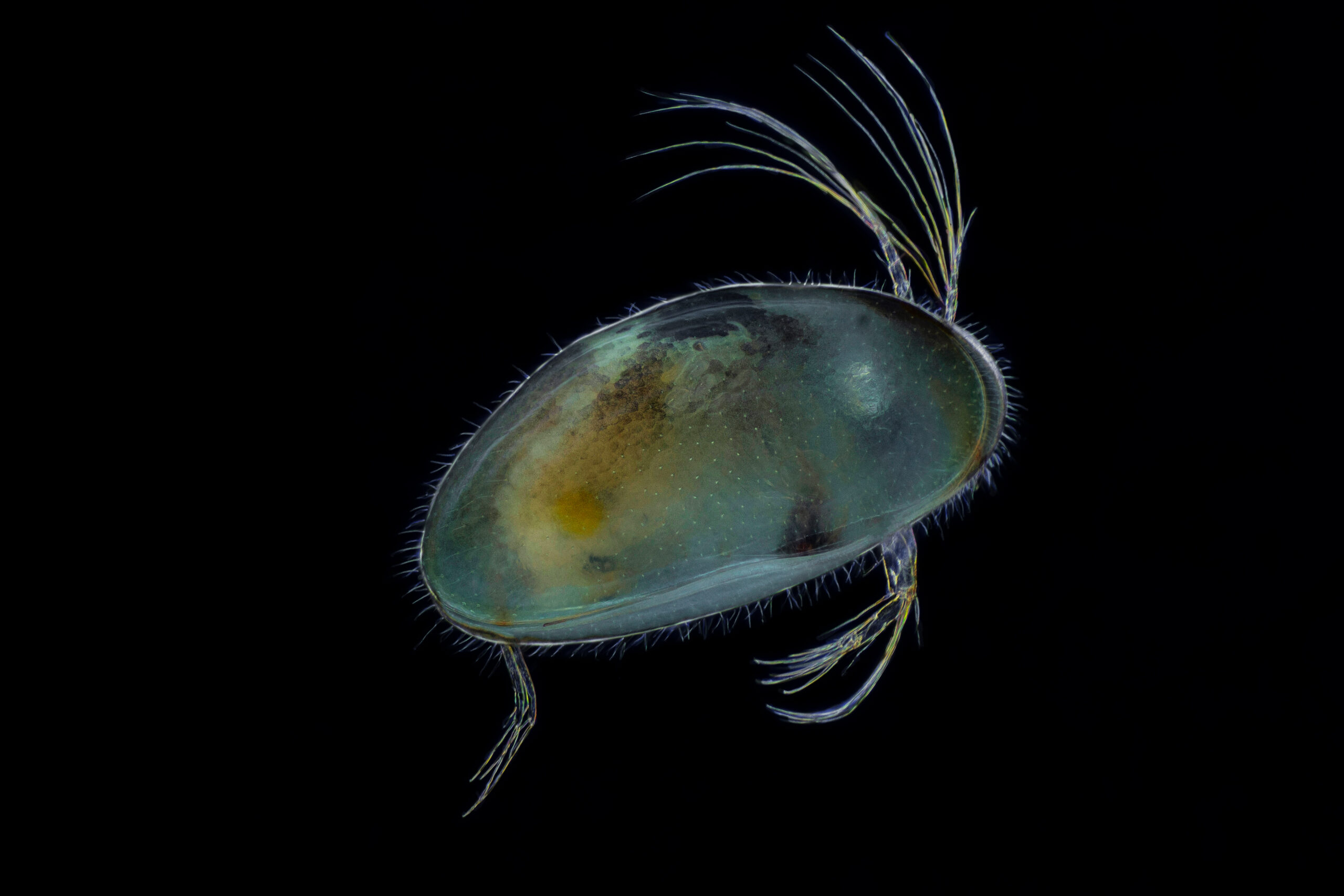 Photo Credit: Janeklass / Wikimedia Commons
In the shimmering depths of lakes and oceans, the ostracod, scientifically known as Ostracoda, dances through the water like a tiny, living jewel. These minuscule crustaceans, often no larger than a grain of sand, are encased in a delicate, bivalve-like shell that glimmers under the sunlight. With their unique appearance, resembling miniature clams or seed-like creatures, ostracods captivate the attention of scientists and nature enthusiasts alike. Their remarkable adaptability allows them to thrive in a variety of habitats, from the salty embrace of the sea to the fresh waters of rivers and even the damp soil of forests.
What makes ostracods particularly intriguing is their ancient lineage; they have been around for over 450 million years, making them one of the oldest groups of crustaceans still roaming our planet. As they swim gracefully or burrow into sediment, these tiny animals play a crucial role in their ecosystems, serving as both prey and scavengers. Their omnivorous diet, which includes both plant and animal matter, showcases their resourcefulness in finding food. With their fascinating behaviors and vital ecological roles, ostracods invite us to explore the hidden wonders of the natural world, reminding us that even the smallest creatures can have a big impact.
Ostracods are tiny, bivalve-like crustaceans that belong to the class Ostracoda within the phylum Arthropoda. These intriguing animals are often referred to as “seed shrimp” due to their small size and the shape of their shells, which resemble seeds. What sets ostracods apart in the animal kingdom is their unique body structure, which includes a two-part shell that can open and close, much like a clam. They inhabit a variety of environments, from deep ocean floors to freshwater ponds, showcasing their adaptability. With over 8,000 known species, ostracods play essential roles in aquatic ecosystems, serving as both prey and indicators of environmental health.
| Taxonomic Rank | Scientific Name | Meaning & Significance |
|---|---|---|
| Kingdom | Animalia | This name comes from the Latin word “animalis,” meaning “having breath,” which highlights the living, breathing nature of these organisms. |
| Phylum | Arthropoda | Derived from the Greek words “arthron,” meaning “joint,” and “pous,” meaning “foot,” this name refers to the jointed limbs that characterize this diverse group of animals. |
| Class | Ostracoda | The name comes from the Greek word “ostrakon,” meaning “shell,” which reflects the distinctive two-part shell that is a hallmark of these creatures. |
The classification of ostracods reveals a rich evolutionary history that dates back over 450 million years, making them one of the oldest groups of crustaceans. Their presence in both marine and freshwater environments indicates their remarkable ability to adapt to changing conditions over time. By studying ostracods, scientists can gain insights into past climates and ecosystems, as these tiny animals have left behind a fossil record that helps us understand the Earth’s history. Their unique position in the tree of life not only highlights their resilience but also underscores the intricate connections among all living organisms.
The evolutionary journey of ostracods stretches back over 450 million years, making them one of the oldest groups of crustaceans still thriving today. These tiny animals first appeared during the Ordovician period, a time when the Earth was teeming with life in the oceans. As the planet evolved, so did ostracods, adapting to various environmental changes and diversifying into thousands of species.
Ancestral forms of ostracods were likely simple and small, resembling modern-day relatives but without the complex features we see today. Over millions of years, they underwent significant transitions, including the development of a more sophisticated shell structure. This shell, made of calcium carbonate, provided protection against predators and environmental hazards. As they evolved, ostracods also adapted to different habitats, from deep-sea environments to freshwater lakes, showcasing their remarkable ability to thrive in diverse ecosystems.
Ostracods’ evolutionary adaptations have been crucial for their survival through the ages. Their hard shells protect them from predators, while jointed appendages enhance their mobility, allowing them to escape danger and find food. The development of diverse reproductive strategies ensures that they can thrive even in challenging environments. Together, these traits have enabled ostracods to persist through mass extinctions and environmental shifts, making them a testament to the resilience of life on Earth.
Ostracods are tiny marvels of the aquatic world, often resembling miniature clams or seed-like creatures. Their bodies are encased in a hard shell, which gives them a bivalve-like appearance. This shell is not just for show; it serves as a protective armor against predators and environmental hazards. With their size typically ranging from just 0.2 to 30 millimeters, these little animals can be found in a variety of aquatic habitats, from oceans to freshwater lakes. Their overall form is compact and streamlined, allowing them to navigate through water with surprising agility.
| Feature | Description |
|---|---|
| Size | Typically ranges from 0.2 to 30 millimeters |
| Color | Varies widely, often translucent or pale, sometimes with hints of color |
| Skin Type | Hard shell that protects their body |
| Most Distinctive Feature | Relatively large gonads, which are important for reproduction |
The combination of their hard shell and small size plays a crucial role in the survival of ostracods. The shell not only shields them from predators but also helps them maintain their shape and buoyancy in the water. Their large gonads indicate a strong reproductive strategy, allowing them to thrive in various environments. This clever design enables ostracods to adapt and flourish, making them a vital part of the aquatic ecosystem. Whether they are scuttling along the ocean floor or drifting in freshwater, these tiny creatures are a testament to the wonders of evolution and adaptation.
Ostracods inhabit a diverse range of environments, showcasing their adaptability and resilience. You can find them in the depths of the ocean, in freshwater lakes and rivers, and even in damp soil on land. These tiny crustaceans thrive in both saltwater and freshwater ecosystems, often hiding among aquatic plants or burrowing into the sediment. Their habitats can be as varied as the vibrant coral reefs of tropical seas or the quiet, muddy bottoms of ponds, making them true survivors in many different settings.
Ostracods prefer environments that provide a stable climate, typically favoring areas with moderate temperatures and specific salinity levels. In marine settings, they often thrive in shallow waters where sunlight penetrates, allowing for the growth of algae, which serves as a food source. Freshwater ostracods are usually found in clean, well-oxygenated waters, while terrestrial species require moist conditions to prevent their delicate bodies from drying out. These environmental factors are crucial for their survival and reproduction.
To flourish in such varied habitats, ostracods have developed remarkable adaptations. Their hard shells not only protect them from predators but also help them retain moisture in terrestrial environments. Some species can even enter a dormant state during dry periods, allowing them to survive until conditions improve. This ability to withstand changes in their surroundings, whether it be salinity in the ocean or moisture in the soil, showcases their incredible resilience and versatility in the face of environmental challenges.
Ostracods lead a life filled with intriguing daily activities, often unnoticed by the casual observer. These tiny crustaceans spend their days swimming through water or burrowing into sediment, searching for food. Their diet mainly consists of algae, detritus, and tiny organic particles, which they filter from the water using specialized appendages. As they navigate their environments, ostracods exhibit a range of behaviors, from foraging to resting, all while adapting to the ever-changing conditions of their habitats.
While ostracods are primarily solitary creatures, they do interact with one another in fascinating ways. When conditions are right, such as during mating season, they may gather in small groups. These gatherings can be a time for courtship displays, where males showcase their physical attributes to attract females. Communication among ostracods is subtle, relying on chemical signals released into the water. This method allows them to convey important information about their reproductive status or the presence of food, even when they are not physically close to one another.
| Behavior Type | Description |
|---|---|
| Foraging | Ostracods swim or burrow to find food, primarily algae and organic particles. |
| Resting | They often settle into the sediment to conserve energy when not actively feeding. |
| Mating | During mating season, males and females may gather to engage in courtship displays. |
| Communication | They use chemical signals to share information about food and reproductive status. |
The behaviors of ostracods are finely tuned to ensure their survival in a variety of environments. By foraging efficiently and communicating effectively, they can find food and mates, even in the vastness of their aquatic homes. Their solitary nature allows them to adapt to changing conditions, while their occasional social interactions help them thrive during critical life stages. In this way, ostracods continue to flourish, showcasing the resilience of life in even the smallest forms.
Ostracods are omnivores, meaning they enjoy a varied diet that includes both plant and animal matter. These tiny crustaceans are skilled foragers, using their specialized appendages to sift through sediment and water in search of food. They consume a mix of organic debris, algae, and small prey like worms and snails. This diverse diet allows them to thrive in various aquatic environments, from oceans to freshwater lakes.
| Dietary Aspect | Details |
|---|---|
| Diet Type | Omnivore |
| Favorite Foods | Organic debris, algae, worms, snails |
| Prey Items | Worms, snails |
| Hunting/Foraging Strategies | Using specialized appendages to sift through sediment and water |
The diet of ostracods plays a crucial role in their ecology and daily routines. By consuming a variety of food sources, they help recycle nutrients in their habitats, contributing to the health of aquatic ecosystems. Their foraging behavior not only sustains them but also influences the distribution of organic materials in the environment, making them important players in the food web. As they go about their daily activities, ostracods help maintain the balance of life in the waters they inhabit.
Ostracods have a fascinating mating ritual that often takes place during specific breeding seasons, which can vary depending on the species and environmental conditions. Males typically display vibrant colors or perform intricate dances to attract females. Once a female selects a mate, the pair engages in a brief courtship before the female lays her eggs. This process can be quite competitive, as males may compete for the attention of females, showcasing their best traits to ensure reproductive success.
| Reproductive Aspect | Details |
|---|---|
| Gestation Period | Varies by species, typically a few weeks |
| Litter Size | Can range from a few to several hundred eggs |
| Age of Maturity | Usually around 2 to 3 months |
| Name of Young | Larvae |
Once the eggs are laid, they develop into larvae, which are tiny and often resemble miniature versions of adult ostracods. These larvae are free-swimming and go through several stages of growth, known as molts, before reaching maturity. Interestingly, ostracods do not provide parental care after the eggs are laid. Instead, the young are left to fend for themselves, relying on their instincts to navigate their environment. As they grow, they gradually develop the hard shells that characterize adult ostracods, allowing them to thrive in their aquatic habitats.
Ostracods play a vital role in the aquatic food web, serving as both prey and scavengers. These tiny crustaceans are a food source for a variety of animals, helping to transfer energy from the microscopic world to larger predators. Their presence in both freshwater and marine ecosystems makes them an important link in the chain of life, but this also means they face numerous dangers from those higher up the food chain.
To defend themselves against these threats, ostracods have developed several clever survival strategies. Their hard shells provide a protective barrier against predators, making it difficult for many to consume them. Some species can also burrow into sediment, hiding from hungry eyes. Additionally, when disturbed, ostracods can swim away quickly, using their specialized appendages to propel themselves through the water. These adaptations help them navigate the challenges of their environment, ensuring they continue to thrive in diverse habitats.
A keystone species is an organism that has a disproportionately large impact on its environment relative to its abundance. This means that if it were removed, the ecosystem would change dramatically. Ostracods, tiny crustaceans often found in marine and freshwater habitats, can indeed be considered keystone species in certain ecosystems. Their role as both prey and scavengers makes them vital players in the intricate web of life.
Ostracods contribute significantly to nutrient cycling in aquatic environments. As omnivores, they feed on a variety of organic materials, including algae and detritus, which helps break down and recycle nutrients back into the ecosystem. This process supports the growth of plants and microorganisms, which are essential for maintaining healthy water systems. For example, in freshwater lakes, ostracods help control algal blooms by consuming excess algae, thus promoting a balanced ecosystem.
Additionally, ostracods serve as a crucial food source for many larger animals, including fish and amphibians. Their small size and abundance make them an easy target for these predators, which rely on them for sustenance. This relationship highlights the importance of ostracods in the food web, as their presence supports the survival of various species. In marine environments, they can also be indicators of environmental health, as changes in their populations often reflect shifts in water quality.
If ostracods were to disappear, the consequences could be severe. Without these tiny crustaceans, nutrient cycling would slow down, leading to imbalances in aquatic ecosystems. Algal blooms could become more frequent, choking out other aquatic life and disrupting food chains. Larger predators that rely on ostracods for food would struggle to find sustenance, potentially leading to declines in their populations. The ripple effects of losing such a small yet vital species could transform entire ecosystems, demonstrating just how interconnected life truly is.
Ostracods occupy a vital ecological niche in various environments, from the depths of the ocean to freshwater lakes and even damp soil. These tiny crustaceans, often resembling miniature clams, play a significant role in their ecosystems. As omnivores, they consume both plant and animal matter, helping to recycle nutrients and maintain the balance of their habitats. Their presence is crucial for the health of aquatic and terrestrial ecosystems, as they contribute to the food web and influence sediment dynamics.
| Ecosystem Service | Impact |
|---|---|
| Nutrient Recycling | Ostracods break down organic matter, returning essential nutrients to the ecosystem. |
| Food Source | They serve as prey for various fish and invertebrates, supporting higher trophic levels. |
| Sediment Aeration | By burrowing into sediments, ostracods help aerate the soil, promoting healthy plant growth. |
| Indicator Species | Changes in ostracod populations can signal shifts in environmental conditions, such as pollution. |
Ostracods influence their ecosystems in several specific ways. For instance, in freshwater lakes, they help control algal blooms by consuming excess organic material, which can otherwise lead to oxygen depletion. In marine environments, their burrowing activities aerate the sediment, allowing for better water flow and nutrient exchange. This not only benefits the ostracods but also supports a diverse range of organisms that rely on healthy sediment for survival. Additionally, their role as a food source for fish and other aquatic animals highlights their importance in maintaining the balance of the food web.
The broader ecological importance of ostracods cannot be overstated. As keystone species, their presence or absence can dramatically alter the structure of their ecosystems. By recycling nutrients, providing food for other animals, and serving as indicators of environmental health, ostracods help sustain the intricate web of life in which they exist. Their resilience and adaptability make them essential players in the ongoing story of our planet’s ecosystems, reminding us of the interconnectedness of all living things.
Symbiosis is a captivating aspect of nature, where different species interact in ways that can be beneficial, harmful, or neutral. These ecological relationships are essential for the survival and thriving of many organisms. In the case of ostracods, these tiny crustaceans engage in various partnerships with other species, showcasing the intricate web of life that connects all living things. From mutualistic relationships, where both parties gain benefits, to parasitic ones, where one organism harms another, ostracods play a role in the delicate balance of their ecosystems.
| Species/Type | Relationship Type | Description |
|---|---|---|
| Coral | Mutualistic | Ostracods often live among coral reefs, where they help clean the coral by consuming algae and detritus, while the coral provides shelter and nutrients. |
| Fish | Commensal | Some ostracods hitch a ride on fish, benefiting from mobility and access to food without affecting the fish. |
| Parasitic Worms | Parasitic | In some cases, ostracods can be hosts to parasitic worms, which can drain nutrients from them, potentially harming their health. |
These relationships have evolved over millions of years, shaped by the needs and adaptations of the species involved. Mutualistic partnerships, like those with coral, highlight how cooperation can enhance survival for both parties. Meanwhile, commensal relationships with fish demonstrate how some species can benefit without causing harm. On the other hand, parasitic interactions remind us that not all relationships are beneficial. Understanding these dynamics helps us appreciate the complexity of ecosystems and the roles that even the smallest creatures, like ostracods, play in maintaining the balance of life on Earth.
Ostracods may be tiny, but they are packed with surprises that can captivate anyone interested in the natural world. These little crustaceans have some remarkable traits and behaviors that make them stand out in the aquatic ecosystem.
Ostracods, often overlooked due to their minuscule size, have a rich history intertwined with human culture and science. These tiny crustaceans have been part of our world for over 450 million years, and their fossilized remains have provided valuable insights into ancient environments. In many cultures, ostracods have been used as indicators of past climates and ecological changes, helping scientists understand how life on Earth has evolved. Their presence in sediment layers tells stories of the planet’s history, making them significant not just in the scientific community but also in the cultural narratives of human understanding of nature.
Today, our interactions with ostracods are multifaceted, ranging from scientific research to environmental conservation efforts. As indicators of water quality, these creatures help scientists monitor the health of aquatic ecosystems. However, they also face threats from pollution and habitat destruction, which can lead to conflicts between human activities and the preservation of their habitats. While ostracods are not domesticated animals, their role in the food web and their sensitivity to environmental changes make them crucial allies in conservation efforts aimed at protecting biodiversity.
Looking ahead, the relationship between ostracods and humanity is poised for further exploration and understanding. As we face challenges like climate change and habitat loss, these tiny crustaceans may offer critical insights into the health of our ecosystems. By studying their responses to environmental shifts, we can better protect not only ostracods but also the larger web of life they support. The future holds promise for a deeper connection with these remarkable organisms, reminding us that even the smallest creatures can have a significant impact on our world.
Ostracods, those tiny yet fascinating crustaceans, currently do not have a specific conservation status listed by the International Union for Conservation of Nature (IUCN). This means they are not classified as endangered or threatened at this time. However, their populations can vary widely depending on environmental conditions and habitat changes. While some species thrive in diverse ecosystems, others may face challenges that could impact their numbers in the future.
| Conservation Factor | Status/Details |
|---|---|
| IUCN Status | Not Listed |
| Population Estimates | Varies by species; some are abundant, while others are less common |
| Trend Direction | Unknown; dependent on environmental factors |
Despite their small size, ostracods face several significant threats that could impact their survival. Habitat destruction is a major concern, as pollution and climate change can alter the delicate ecosystems they inhabit. For instance, changes in water temperature and quality can affect their reproductive cycles and food availability. Additionally, the introduction of invasive species can disrupt local populations, leading to competition for resources and potential declines in native ostracod species.
Conservation efforts for ostracods are still in their infancy, primarily because they are often overlooked in broader environmental initiatives. However, scientists are beginning to recognize their importance in aquatic ecosystems. By studying these tiny creatures, researchers can gain insights into the health of their habitats. Protecting wetlands and maintaining clean water sources are crucial steps in ensuring that ostracods and their ecosystems remain vibrant. As awareness grows, there is hope that more targeted conservation strategies will emerge, helping to safeguard these ancient crustaceans for future generations.
| Question | Answer |
|---|---|
| What is an ostracod? | Ostracods are tiny crustaceans, often referred to as seed shrimp. They have a distinctive two-part shell that protects their soft bodies, making them look a bit like miniature clams. |
| Where do ostracods live? | Ostracods can be found in a variety of habitats, including marine environments, freshwater lakes, and even on land in moist soil. This adaptability allows them to thrive in many different ecosystems around the world. |
| What do ostracods eat? | Ostracods are omnivores, meaning they eat both plant and animal matter. Their diet typically includes algae, detritus (decaying organic material), and tiny microorganisms, which they filter from the water or sediment. |
| How do ostracods reproduce? | Ostracods can reproduce both sexually and asexually. In sexual reproduction, males and females mate, and females often carry fertilized eggs in their brood pouch until they hatch. |
| What are the threats to ostracods? | While ostracods are not currently listed as endangered, they face threats from habitat destruction, pollution, and climate change. Changes in water quality and temperature can significantly impact their populations. |
| What is a unique characteristic of ostracods? | One of the most distinctive features of ostracods is their relatively large gonads, which are often visible through their shells. This characteristic is important for reproduction and can help scientists identify different species. |
| Can ostracods be used in scientific research? | Yes, ostracods are valuable in scientific research, especially in studies of past environments. Their fossilized shells can provide insights into ancient climates and ecosystems, helping scientists understand how life has changed over time. |