Taxonomy & Classification
- Kingdom
- Animalia
- Phylum
- Chordata
- Class
- Reptilia
- Order
- Squamata
- Family
- Pythonidae
- Genus
- Python
- Species
- Python regius

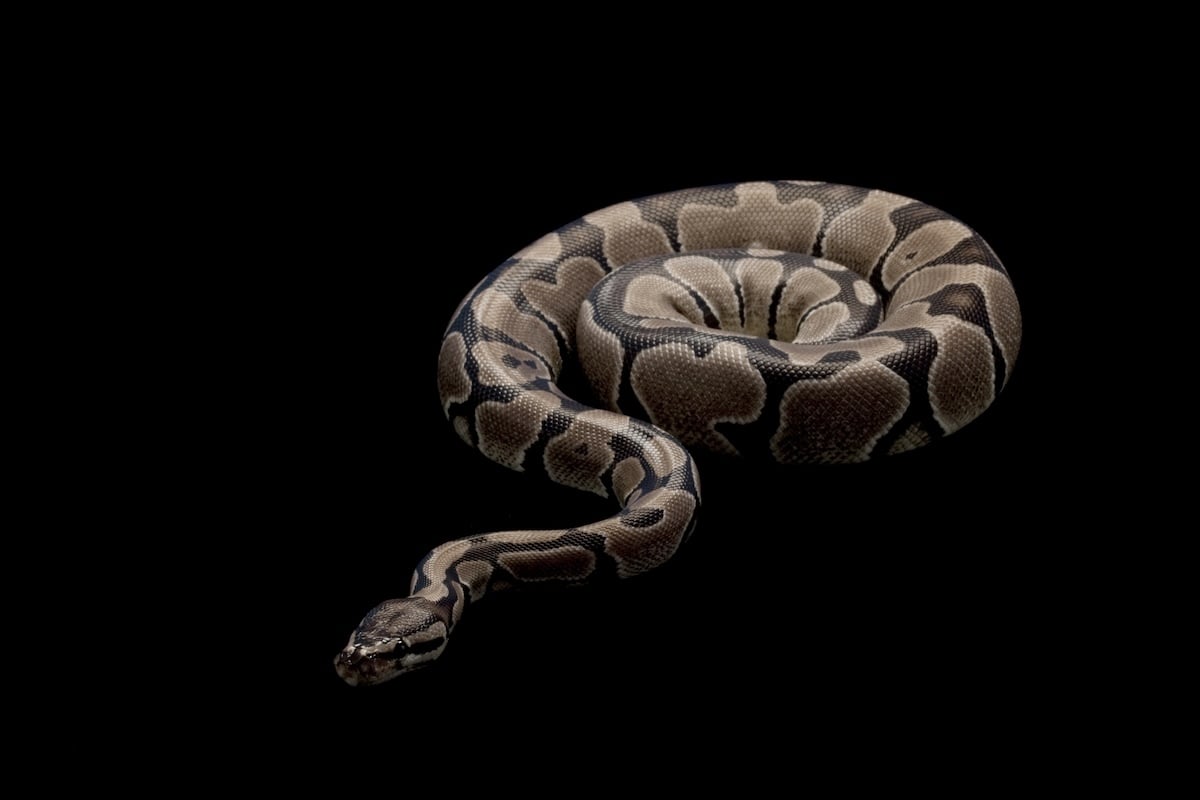 Photo Credit: fivespots at Deposit Photos
In the sun-drenched savannas of West Africa, the Axanthic Ball Python, scientifically known as Python regius, slithers gracefully through the tall grasses, its striking appearance captivating all who catch a glimpse. Unlike its more colorful relatives, this morph of the ball python is distinguished by its unique lack of yellow pigmentation, resulting in a stunning palette of gray and black. This unusual coloration not only makes it a favorite among reptile enthusiasts but also intrigues scientists who study the genetics behind such variations.
As the golden sun dips below the horizon, the Axanthic Ball Python becomes more active, emerging from its hiding spots to explore its surroundings. With a robust body that can reach lengths of up to five feet, this snake is a master of camouflage, blending seamlessly into the shadows of its habitat. Its nocturnal lifestyle adds an air of mystery, as it hunts small mammals like rodents under the cover of night. The Axanthic Ball Python plays a vital role in its ecosystem, helping to maintain the balance of life in the savanna. Join us as we delve deeper into the world of this remarkable snake, exploring its behavior, diet, and the fascinating relationships it forms within its environment.
The Axanthic Ball Python, a captivating morph of the well-known ball python, holds a special place in the animal kingdom. Taxonomically, it belongs to the Kingdom Animalia, which includes all animals, and is classified under the Phylum Chordata, meaning it has a backbone. This snake is part of the Class Reptilia, which encompasses reptiles like lizards and turtles. Within the Order Squamata, known for its scaled members, the Axanthic Ball Python is further categorized in the Family Pythonidae, which includes all pythons. Its Genus, Python, is where it gets its name, and the Axanthic morph is particularly striking due to its lack of yellow pigmentation, giving it a unique gray and black appearance. This absence of yellow is what sets it apart from other ball pythons, making it a favorite among reptile enthusiasts.
| Taxonomic Rank | Scientific Name | Meaning & Significance |
|---|---|---|
| Kingdom | Animalia | This name signifies all animals, highlighting the Axanthic Ball Python’s place among living organisms. |
| Phylum | Chordata | Derived from the Greek word “chordē,” meaning string, it refers to animals with a notochord, or backbone, like this snake. |
| Class | Reptilia | From the Latin “reptilis,” meaning to creep, this class includes cold-blooded animals with scales, such as the Axanthic Ball Python. |
| Order | Squamata | This term comes from the Latin “squamatus,” meaning scaly, which perfectly describes the Axanthic Ball Python’s textured skin. |
| Family | Pythonidae | Named after the mythical serpent Python, this family includes large, non-venomous snakes known for their constricting abilities. |
| Genus | Python | This name is derived from the Greek word for serpent, emphasizing the snake’s identity within the larger group of pythons. |
Understanding the Axanthic Ball Python’s classification reveals much about its evolutionary journey. As a member of the Pythonidae family, it shares a common ancestor with other pythons, which have adapted to various environments over millions of years. The Axanthic morph, with its distinct coloration, showcases how genetic variations can lead to unique adaptations within a species. This highlights the dynamic nature of evolution, where even a single trait can create a ripple effect in the diversity of life. The Axanthic Ball Python is not just a beautiful snake; it is a living testament to the intricate web of life that connects all creatures on our planet.
The Axanthic Ball Python, a striking variation of the ball python, has a rich evolutionary history that stretches back millions of years. The ancestors of modern pythons roamed the Earth during the late Cretaceous period, around 100 million years ago. These early serpents were part of a diverse group of reptiles that adapted to various environments, leading to the wide array of snake species we see today.
The evolutionary journey of the Axanthic Ball Python began with its ancestors, which were likely similar to other pythons in the family Pythonidae. These early pythons were non-venomous constrictors, meaning they captured their prey by wrapping around it and squeezing until it could no longer breathe. Over time, these snakes developed various adaptations that allowed them to thrive in different habitats, from tropical forests to arid savannas. The Axanthic morph, characterized by its lack of yellow pigmentation, emerged through selective breeding, showcasing how human influence can shape the evolution of a species.
The adaptations of the Axanthic Ball Python have played a crucial role in its survival, both in the wild and in captivity. Its ability to camouflage effectively helps it evade predators while also allowing it to ambush prey. The smaller size and docile temperament make it a favorite among reptile enthusiasts, ensuring that this beautiful morph continues to thrive. As we explore the evolutionary story of the Axanthic Ball Python, we see how nature and human influence intertwine, shaping the future of this captivating snake.
The Axanthic Ball Python presents a stunning visual spectacle, captivating anyone who lays eyes on it. With a robust, muscular body that can reach lengths of up to five feet, this snake is both powerful and graceful. Its overall form is thick and cylindrical, allowing it to coil tightly when feeling threatened or when it wants to rest. The Axanthic morph is particularly striking due to its lack of yellow pigmentation, giving it a more muted palette of grays and blacks. This unique coloration enhances its mysterious allure, making it a favorite among reptile enthusiasts.
| Feature | Description |
|---|---|
| Size | Typically reaches lengths of 3 to 5 feet. |
| Color | Predominantly gray and black, lacking the usual yellow hues. |
| Skin Type | Covered in smooth, shiny scales that provide protection and aid in movement. |
| Body Structure | Thick and muscular, allowing for powerful constriction and coiling. |
The Axanthic Ball Python’s distinctive features work together beautifully to enhance its survival in the wild. The muted colors provide excellent camouflage among the rocky terrains and leaf litter of its natural habitat, helping it avoid predators. Its strong, muscular body is not just for show; it allows the snake to constrict its prey effectively, ensuring a successful hunt. The smooth scales not only protect it from the elements but also reduce friction as it moves through its environment. Together, these traits make the Axanthic Ball Python a master of adaptation in the wild.
The Axanthic Ball Python thrives in the warm, sun-drenched landscapes of savannas and grasslands. Picture wide-open spaces dotted with tall grasses and scattered trees, where the golden sun casts long shadows. These habitats are alive with the sounds of chirping insects and rustling leaves, creating a vibrant backdrop for this striking snake. The Axanthic Ball Python blends seamlessly into its environment, using its unique coloration to navigate through the underbrush and remain hidden from predators.
In these regions, the climate is typically warm and dry, with distinct wet and dry seasons. The Axanthic Ball Python prefers temperatures that range from 75 to 95 degrees Fahrenheit, which helps it maintain its body heat. During the rainy season, the landscape transforms, providing ample hiding spots and food sources. This combination of warmth and moisture is essential for the snake’s survival, as it influences its hunting and breeding behaviors.
Adapted to its environment, the Axanthic Ball Python has developed several clever strategies for survival. Its coloration not only helps it camouflage among the grasses but also allows it to regulate its body temperature by basking in the sun or seeking shade when it gets too hot. This remarkable ability to blend in and thrive in its habitat makes the Axanthic Ball Python a true master of its domain, showcasing the wonders of evolution in action.
The Axanthic Ball Python leads a life that is primarily nocturnal, meaning it is most active during the night. As the sun sets, this striking snake emerges from its hiding spots, ready to explore its surroundings. Its daily activities include hunting for food, basking in warm spots, and finding cozy places to rest. With its keen sense of smell and heat-sensing pits, the Axanthic Ball Python navigates the world around it, searching for small mammals and birds to satisfy its hunger. This snake’s routine is a blend of stealth and patience, as it often waits for the perfect moment to strike.
While the Axanthic Ball Python is generally solitary, it does exhibit interesting behaviors when it comes to social interactions, especially during the breeding season. Males may engage in a dance-like ritual, where they intertwine with one another to establish dominance and attract females. Outside of this period, these snakes prefer to keep to themselves, using their camouflage to blend into their environment and avoid potential threats. This solitary lifestyle allows them to conserve energy and reduce competition for food.
| Behavior Type | Description |
|---|---|
| Activity Patterns | Nocturnal hunters that emerge at night to search for food and bask in warmth. |
| Social Structure | Primarily solitary, with social interactions limited to mating rituals. |
| Communication Methods | Use body language and scent marking to communicate, especially during breeding. |
The behaviors of the Axanthic Ball Python are finely tuned to ensure its survival in the wild. By being nocturnal, it avoids the heat of the day and reduces the risk of predation. Its solitary nature allows it to thrive without competing for resources, while its unique communication methods help it find mates when the time is right. Each aspect of its daily life is a testament to the adaptability and resilience of this remarkable snake, ensuring it continues to thrive in its natural habitat.
The Axanthic Ball Python is a carnivore, which means it primarily eats meat. Its diet mainly consists of small mammals, particularly rodents. This snake has developed a fascinating feeding behavior that involves both patience and stealth. When hunting, the Axanthic Ball Python relies on its keen sense of smell and heat-sensing abilities to locate its prey. Once it identifies a target, it strikes with precision, using its powerful jaws to capture and constrict the rodent before swallowing it whole.
| Dietary Aspect | Details |
|---|---|
| Diet Type | Carnivore |
| Favorite Foods | Rodents |
| Prey Items | Small mammals, especially mice and rats |
| Hunting/Foraging Strategies | Uses smell and heat-sensing to locate prey, strikes quickly, and constricts before swallowing |
This diet plays a crucial role in the Axanthic Ball Python’s ecology and daily routine. By preying on rodents, it helps control their populations, which can be beneficial for the environment. Additionally, the need to hunt at night aligns with its nocturnal lifestyle, allowing it to conserve energy during the day while being active when its prey is most vulnerable. This balance of predator and prey is essential for maintaining the health of its ecosystem.
When it comes to reproduction, Axanthic Ball Pythons engage in a captivating courtship ritual. Breeding typically occurs during the cooler months of the year, often from late winter to early spring. Males will seek out females, using their keen sense of smell to detect pheromones, which are chemical signals that indicate a female is ready to mate. Once a male finds a receptive female, he will perform a series of movements, including rubbing his chin against her body and entwining with her. This dance of courtship is not just about attraction; it’s a vital part of ensuring successful mating.
| Reproductive Aspect | Details |
|---|---|
| Gestation Period | Approximately 60 to 70 days |
| Litter Size | Typically 4 to 10 eggs |
| Age of Maturity | About 2 to 3 years |
| Name of Young | Hatchlings |
After the eggs are laid, the female Axanthic Ball Python takes on the role of protector. She coils around her eggs, providing warmth and protection until they hatch. This behavior is known as “incubation,” and it’s crucial for the developing embryos. The hatchlings emerge after about two months, ready to face the world. They are independent from the moment they break free from their eggs, equipped with the instincts needed to hunt and survive. As they grow, these young snakes will shed their skin several times, a process called molting, which allows them to grow and develop into the stunning adults they are destined to become.
The Axanthic Ball Python occupies a crucial role in its ecosystem, primarily as a predator of small mammals like rodents. However, it is not at the top of the food web. This beautiful snake faces various threats from larger predators and environmental challenges that can impact its survival. Understanding these dangers helps us appreciate the delicate balance of nature and the role each species plays within it.
To defend itself against these threats, the Axanthic Ball Python employs several clever survival strategies. When faced with danger, it often curls into a tight ball, hiding its head and protecting its vital organs. This behavior not only makes it less visible to predators but also provides a sense of security. Additionally, its ability to blend into its surroundings helps it avoid detection. By using these tactics, the Axanthic Ball Python can navigate the challenges of its environment and continue to thrive in the wild.
A keystone species is an organism that plays a critical role in maintaining the structure of an ecosystem. Its presence or absence can significantly impact the environment and the species that inhabit it. The Axanthic Ball Python, while a striking and important predator, does not qualify as a keystone species. This is primarily because its role, while influential, is not as pivotal as that of other species that have a broader impact on their ecosystem, such as apex predators or primary producers.
In the savannas and grasslands where the Axanthic Ball Python resides, it serves as a predator of small mammals, particularly rodents. By keeping rodent populations in check, this snake helps maintain a balance in the ecosystem. If rodent numbers were to surge unchecked, they could overconsume vegetation, leading to habitat degradation. This, in turn, would affect other species that rely on those plants for food and shelter. The Axanthic Ball Python’s hunting habits contribute to the overall health of its environment, ensuring that no single species dominates the landscape.
Moreover, the Axanthic Ball Python is part of a larger food web. It provides a food source for larger predators, such as birds of prey and larger snakes. This interconnectedness highlights its role in the ecosystem, even if it is not a keystone species. The presence of the Axanthic Ball Python can also influence the behavior of other animals, as they may alter their foraging patterns to avoid becoming prey.
If the Axanthic Ball Python were to disappear from its habitat, the effects could ripple through the ecosystem. Without this snake to regulate rodent populations, these small mammals could multiply rapidly, leading to overconsumption of plants. This could result in habitat loss for many other species, including birds, insects, and even larger mammals that depend on the same vegetation. The balance of the ecosystem would be disrupted, showcasing how even a non-keystone species like the Axanthic Ball Python plays an essential role in the intricate web of life.
The Axanthic Ball Python occupies a vital ecological niche in its savanna and grassland habitats. As a nocturnal carnivore, this snake plays a significant role in controlling the populations of small mammals, particularly rodents. By preying on these animals, the Axanthic Ball Python helps maintain a balance in the ecosystem, preventing overpopulation that could lead to habitat degradation. Its presence is essential for the health of its environment, showcasing the interconnectedness of species within these ecosystems.
| Ecosystem Service | Impact |
|---|---|
| Population Control | Regulates small mammal numbers, preventing overpopulation. |
| Prey for Larger Predators | Serves as a food source for birds of prey and larger snakes. |
| Soil Health | Contributes to nutrient cycling through its predation and waste. |
| Habitat Structure | Influences the distribution of prey species, affecting vegetation. |
The Axanthic Ball Python’s influence extends beyond just its role as a predator. By keeping rodent populations in check, it indirectly supports the growth of various plant species that might otherwise be overgrazed. For instance, when rodent numbers are high, they can strip vegetation, leading to soil erosion and loss of habitat for other animals. The presence of the Axanthic Ball Python helps ensure that these plants thrive, which in turn supports a diverse array of wildlife, from insects to larger mammals.
In a broader ecological context, the Axanthic Ball Python exemplifies the concept of a keystone species. Its role in the ecosystem highlights how interconnected life forms are, where the health of one species can significantly impact many others. By maintaining the balance of its environment, the Axanthic Ball Python not only supports its own survival but also fosters a thriving community of plants and animals, showcasing the intricate web of life that exists in the savannas and grasslands it calls home.
In the intricate web of life, animals often form partnerships that can be beneficial, harmful, or neutral. These relationships, known as symbiosis, play a crucial role in the survival and thriving of species within their ecosystems. For the Axanthic Ball Python, these interactions can vary widely, influencing not only its own life but also the lives of other creatures in its savanna and grassland habitats. Understanding these connections helps us appreciate the delicate balance of nature and the importance of each species in maintaining ecological harmony.
| Species/Type | Relationship Type | Description |
|---|---|---|
| Rodents | Predatory | The Axanthic Ball Python preys on small mammals like rodents, helping to control their populations and maintain balance in the ecosystem. |
| Birds of Prey | Predatory | Birds such as hawks and owls may hunt the Axanthic Ball Python, showcasing the predator-prey dynamic that exists in its habitat. |
| Parasites (e.g., ticks) | Parasitic | Ticks and other parasites may attach to the Axanthic Ball Python, feeding on its blood and potentially harming its health. |
These relationships have evolved over time, shaped by the needs and behaviors of the species involved. The Axanthic Ball Python’s role as a predator is vital for controlling rodent populations, which, if left unchecked, could lead to overgrazing and habitat degradation. Meanwhile, the presence of predators like birds of prey keeps the python’s population in check, ensuring that no single species dominates the ecosystem. Parasitic relationships, while often harmful, can also drive the evolution of defenses in the Axanthic Ball Python, leading to a more resilient species. Together, these interactions highlight the interconnectedness of life and the importance of each organism in the grand tapestry of nature.
The Axanthic Ball Python is not just a beautiful snake; it also has some surprising traits that make it truly special. This morph of the ball python is known for its unique coloration and fascinating behaviors. Let’s dive into some intriguing facts about this remarkable reptile.
The Axanthic Ball Python has woven itself into the fabric of human culture and history in intriguing ways. Historically, pythons have been revered in various cultures, often symbolizing power and mystery. In some African traditions, these snakes are seen as protectors of the land, embodying the spirit of the wilderness. Their striking appearance and unique patterns have also made them subjects of fascination in art and folklore. As humans have encountered these snakes in their natural habitats, they have sparked curiosity and respect, leading to a complex relationship that continues to evolve.
In modern times, the Axanthic Ball Python has become a popular pet among reptile enthusiasts. This morph, known for its stunning coloration, has been selectively bred for its unique traits, making it a sought-after companion in the exotic pet trade. However, this popularity comes with challenges. While many owners provide excellent care, some snakes face neglect or improper housing. Conservation efforts are underway to ensure that wild populations remain healthy and that their habitats are protected from human encroachment. Additionally, the balance between conservation and the pet trade is delicate, as the demand for these beautiful snakes can sometimes lead to over-collection in the wild.
As we look to the future, the relationship between Axanthic Ball Pythons and humanity holds both promise and responsibility. With increased awareness of conservation and ethical pet ownership, there is potential for a harmonious coexistence. By fostering respect for these remarkable snakes and their ecosystems, we can ensure that future generations will appreciate their beauty and importance. The journey of the Axanthic Ball Python is a reminder of the intricate connections we share with the natural world, urging us to protect and cherish the diversity of life around us.
The Axanthic Ball Python is currently classified as Near Threatened, indicating that it faces certain risks in the wild. While this captivating morph of the ball python is popular in the pet trade, its population trends are concerning. Habitat loss and over-collection for the exotic pet market are significant factors that could lead to a decline in their numbers if not addressed.
| Conservation Factor | Status/Details |
|---|---|
| IUCN Status | Near Threatened |
| Population Estimates | Unknown, but declining in some areas |
| Trend Direction | Decreasing |
The main threats to the Axanthic Ball Python include habitat destruction and illegal poaching. As human activities expand, natural habitats are being altered or destroyed, making it harder for these snakes to find shelter and food. Additionally, the demand for exotic pets has led to over-collection in the wild, which can severely impact local populations. Without careful management, these pressures could push the Axanthic Ball Python closer to extinction.
Conservation efforts are underway to protect the Axanthic Ball Python and its habitat. Organizations are working to raise awareness about the importance of sustainable practices in the pet trade. By promoting responsible breeding and discouraging illegal capture, these initiatives aim to ensure that future generations can enjoy the beauty of this striking snake. With continued efforts, there is hope that the Axanthic Ball Python can thrive in the wild and maintain its vital role in the ecosystem.
| Question | Answer |
|---|---|
| What is the natural habitat of the Axanthic Ball Python? | The Axanthic Ball Python is typically found in savannas and grasslands. These habitats provide the warm temperatures and cover they need to thrive, as they are native to parts of Africa. |
| What does an Axanthic Ball Python eat? | As a carnivore, the Axanthic Ball Python primarily feeds on small mammals and birds. In captivity, they are often fed mice or rats, which provide the necessary nutrients for their growth and health. |
| How does the Axanthic Ball Python behave in the wild? | These snakes are known for their calm demeanor, making them popular pets. In the wild, they are mostly nocturnal, meaning they are active at night, and they often hide in burrows or under rocks during the day. |
| How do Axanthic Ball Pythons reproduce? | Axanthic Ball Pythons are oviparous, which means they lay eggs. A female can lay between 4 to 12 eggs, and she will incubate them by coiling around them to keep them warm until they hatch. |
| What threats do Axanthic Ball Pythons face? | These snakes are considered Near Threatened due to habitat loss and the pet trade. As their natural habitats are destroyed for agriculture and urban development, their populations are declining. |
| What are some interesting characteristics of the Axanthic Ball Python? | The Axanthic Ball Python is known for its unique coloration, which lacks the typical yellow and orange hues found in other ball pythons. This gives them a striking gray and black appearance, making them highly sought after by reptile enthusiasts. |
| Can Axanthic Ball Pythons be kept as pets? | Yes, Axanthic Ball Pythons are popular pets due to their manageable size and gentle nature. They can be a great choice for both beginner and experienced snake owners, as they are relatively easy to care for. |