Taxonomy & Classification
- Kingdom
- Animalia
- Phylum
- Chordata
- Class
- Aves
- Order
- Piciformes
- Family
- Picidae
- Genus
- Dryocopus
- Species
- Dryocopus pileatus

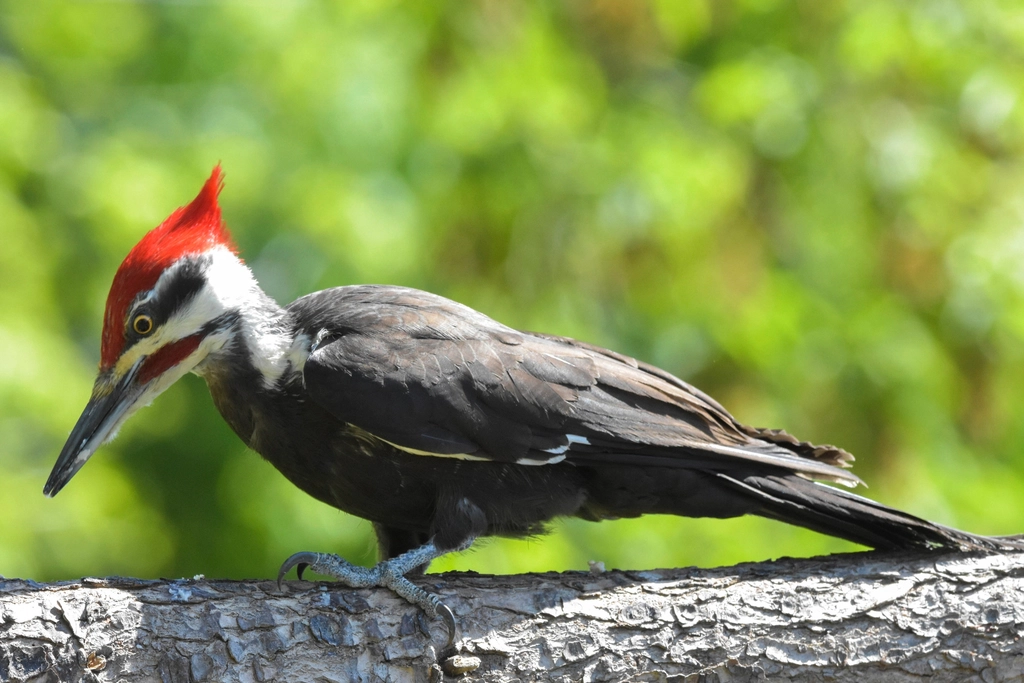 Photo Credit: Rawpixel
In the heart of North America’s lush forests, the Pileated Woodpecker, scientifically known as Dryocopus pileatus, makes its presence known with a series of loud, echoing calls. This magnificent bird, easily recognized by its striking red crest and bold black-and-white plumage, flits among the towering trees, searching for hidden treasures beneath the bark. With a body that can reach up to 19 inches long, it is one of the largest woodpeckers in the region, and its impressive size only adds to its allure. As it hammers away at decaying wood, the Pileated Woodpecker not only reveals its powerful beak but also plays a crucial role in the ecosystem, creating nesting sites for other creatures and helping to control insect populations.
Scientists and nature enthusiasts alike are captivated by the Pileated Woodpecker’s unique behaviors and adaptations. Its long, sticky tongue can extend up to four inches, allowing it to extract ants and beetles from deep within tree crevices. This remarkable feeding technique showcases the bird’s specialized anatomy, which is perfectly designed for its foraging lifestyle. As you watch this vibrant woodpecker dart from tree to tree, you can’t help but feel a sense of wonder at the intricate relationships it maintains within its forest home. From its striking appearance to its vital ecological role, the Pileated Woodpecker invites us to explore the fascinating world of avian life and the delicate balance of nature.
The Pileated Woodpecker is a striking bird that holds a special place in the animal kingdom. It belongs to the class Aves, which means it is part of the diverse group of animals known as birds. This woodpecker is particularly notable for its size, being one of the largest woodpeckers in North America, and its vibrant red crest that makes it easily recognizable. With its strong beak, the Pileated Woodpecker is an expert at chiseling into trees to find insects, especially ants and beetles, which are its favorite snacks. This unique combination of features not only helps it thrive in its forest habitat but also highlights its evolutionary adaptations.
| Taxonomic Rank | Scientific Name | Meaning & Significance |
|---|---|---|
| Kingdom | Animalia | This name signifies that the Pileated Woodpecker is part of the vast group of multicellular organisms that are primarily heterotrophic, meaning they consume other organisms for energy. |
| Phylum | Chordata | Chordata refers to animals that have a notochord, a flexible rod that supports the body. In woodpeckers, this structure is present during development, showcasing their evolutionary lineage. |
| Class | Aves | Aves is the class that includes all birds, characterized by feathers, beaks, and the ability to lay eggs. The Pileated Woodpecker’s feathers are not just for show; they help with insulation and flight. |
| Order | Piciformes | This order includes woodpeckers and their relatives, known for their zygodactyl feet, which means they have two toes facing forward and two backward, perfect for climbing trees. |
| Family | Picidae | Picidae is the family of woodpeckers, which are known for their strong bills and specialized behaviors, like drumming on trees to communicate and establish territory. |
| Genus | Dryocopus | Dryocopus comes from Greek roots meaning “tree cutter,” a fitting name for a bird that spends much of its time pecking at trees to find food. |
The classification of the Pileated Woodpecker reveals much about its evolutionary history. As a member of the Picidae family, it shares common ancestors with other woodpeckers, showcasing adaptations that have allowed these birds to thrive in wooded environments. Its unique physical traits, such as its powerful beak and zygodactyl feet, are not just for show; they are essential tools that have evolved over time to help it survive and flourish in its ecological niche. Understanding where the Pileated Woodpecker fits in the tree of life helps us appreciate the intricate connections between species and the remarkable journey of evolution that has shaped them.
The Pileated Woodpecker, a stunning bird known for its striking red crest and loud calls, has a rich evolutionary history that stretches back millions of years. This woodpecker belongs to the family Picidae, which includes all woodpeckers, and its lineage can be traced to the late Eocene epoch, around 34 to 56 million years ago. During this time, the ancestors of modern woodpeckers began to adapt to life in trees, developing specialized traits that would help them thrive in forested environments.
The early ancestors of the Pileated Woodpecker were likely small, insect-eating birds that lived in wooded areas. Over time, they evolved to become more adept at foraging for food hidden beneath the bark of trees. One major transition in their evolution was the development of a strong, chisel-like bill, perfect for drilling into wood. This adaptation allowed them to access insects and larvae that other birds could not reach. Additionally, their feet evolved to have two toes pointing forward and two backward, a feature known as zygodactyl feet. This unique foot structure provides excellent grip on tree trunks, making it easier for them to climb and forage.
The adaptations of the Pileated Woodpecker have been crucial for its survival in the ever-changing forest ecosystems. Its powerful bill and specialized feet allow it to exploit food sources that many other birds cannot reach, ensuring it has a steady supply of nourishment. The ability to communicate loudly and clearly helps it establish territory and find mates, while its striking appearance aids in camouflage among the trees. Together, these traits have enabled the Pileated Woodpecker to thrive in its environment, making it a true testament to the wonders of evolution.
The Pileated Woodpecker is a true marvel of nature, standing out with its impressive size and striking features. This bird, often seen flitting through the forests of North America, boasts a robust body that can reach up to 19 inches in length. Its long, pointed bill is perfectly designed for chiseling into trees, while its strong legs and sharp claws allow it to cling to vertical surfaces with ease. The overall impression is one of power and agility, making it a master of its woodland domain.
| Feature | Description |
|---|---|
| Weight | 8.8 to 12.3 ounces |
| Color | Black body with white wing stripes and a bright red crest |
| Size | Up to 19 inches in length |
| Bill | Long and pointed, ideal for drilling into wood |
| Skin Type | Feathers, providing insulation and waterproofing |
The combination of these features not only makes the Pileated Woodpecker visually stunning but also perfectly suited for its lifestyle. The bright red crest serves as a signal to other woodpeckers, while the black and white coloration helps it blend into the dappled light of the forest. Its powerful bill allows it to excavate deep into trees, searching for insects and larvae, which are a primary food source. With strong legs and sharp claws, it can navigate the vertical surfaces of trees with agility, ensuring it can find food and evade predators. Each characteristic plays a vital role in the survival of this magnificent bird, showcasing the beauty of evolution in action.
The Pileated Woodpecker thrives in lush, vibrant forests that are alive with the sounds of nature. Picture towering trees, their trunks thick and sturdy, reaching high into the sky. These woodpeckers prefer coniferous forests, where evergreens like pines and spruces dominate, but they also make their homes in mixed and hardwood forests, where a variety of tree species create a rich tapestry of life. The dappled sunlight filters through the leaves, casting playful shadows on the forest floor, while the air is filled with the earthy scent of damp soil and decaying wood.
The Pileated Woodpecker prefers climates that offer a mix of warm summers and cold winters, which is typical of many forested regions in North America. These birds are often found in areas with ample rainfall, as moisture is essential for the health of the trees they rely on for food and nesting. They thrive in environments where decaying wood is plentiful, as this is where they find their favorite meals—ants and beetle larvae hiding beneath the bark.
Adapted to their forest homes, Pileated Woodpeckers have developed impressive skills that help them thrive in these environments. Their strong, chisel-like beaks are perfect for drilling into trees, allowing them to excavate deep holes in search of food. Their large size and powerful wings enable them to navigate through dense foliage with ease. Additionally, their striking plumage not only makes them visually stunning but also helps them blend into the dappled light of the forest, providing a bit of camouflage from potential predators. In this way, the Pileated Woodpecker is perfectly suited to its woodland habitat, showcasing the beauty and complexity of nature’s design.
The Pileated Woodpecker leads a dynamic daily life filled with activity and purpose. As dawn breaks, these large, striking birds emerge from their roosts, ready to explore their forest homes. Their day typically begins with a hearty breakfast, as they search for insects hidden beneath the bark of trees. With their powerful beaks, they drum into the wood, creating distinctive rectangular holes. This foraging behavior not only provides food but also helps keep the forest ecosystem healthy by breaking down decaying wood. Throughout the day, they engage in various activities, including preening their feathers, calling to one another, and defending their territory.
Socially, Pileated Woodpeckers are quite interesting. They often form monogamous pairs, meaning they mate with one partner for life. These pairs work together to find food and raise their young. While they are generally solitary, they can be seen in small family groups, especially during the breeding season. Communication is key in their social interactions. They use a variety of calls, from loud, echoing drumming to sharp, high-pitched notes, to convey messages to each other. This vocalization helps them establish territory and maintain bonds with their mates and offspring.
| Behavior Type | Description |
|---|---|
| Foraging | Searching for insects and larvae under tree bark using their strong beaks. |
| Territorial Drumming | Creating loud drumming sounds on trees to establish and defend their territory. |
| Social Bonding | Pairing with a mate for life and working together to raise their young. |
| Communication | Using a variety of calls and drumming patterns to communicate with each other. |
The behaviors of the Pileated Woodpecker are essential for their survival in the wild. Their foraging techniques not only provide nourishment but also contribute to the health of their forest habitat. By establishing territories through vocalizations and drumming, they ensure that they have access to the resources they need. The strong bonds formed between mates help in raising their young, ensuring the continuation of their lineage. In this way, the daily activities of the Pileated Woodpecker are intricately linked to their survival and the vitality of the ecosystems they inhabit.
The Pileated Woodpecker has a diverse diet that primarily consists of ants and other insects, making it an omnivore. These birds are expert foragers, using their strong beaks to chisel into tree bark and wood. This behavior allows them to uncover hidden insects, larvae, and even some plant materials. Their feeding strategy is not just about pecking; they also use their keen eyesight and sharp hearing to locate food sources, often tapping rhythmically on trees to listen for the sounds of movement beneath the surface.
| Dietary Aspect | Details |
|---|---|
| Diet Type | Omnivore |
| Favorite Foods | Ants, beetles, and other insects |
| Prey Items | Wood-boring beetle larvae, ants, and occasionally fruits or nuts |
| Hunting/Foraging Strategies | Drilling into trees to find insects, listening for sounds of movement, and using their long tongues to extract prey |
The diet of the Pileated Woodpecker plays a crucial role in its ecology and daily routine. By feeding on insects, these woodpeckers help control pest populations in their forest habitats. Their foraging activities also create cavities in trees, which can later be used by other wildlife for nesting or shelter. This interconnectedness highlights the importance of the Pileated Woodpecker in maintaining the health of its ecosystem, showcasing how one species can influence the lives of many others in the vibrant tapestry of the forest.
As spring arrives, the Pileated Woodpecker begins its courtship rituals, which are as lively as they are fascinating. Males attract females through a series of loud calls and impressive displays, showcasing their vibrant plumage and strong beaks. Once a pair forms, they work together to find a suitable nesting site, often choosing a decayed tree or a dead stump. This breeding season typically occurs from late March to early July, when the forest is alive with the sounds of nature and the promise of new life.
| Reproductive Aspect | Details |
|---|---|
| Gestation Period | About 12 to 14 days |
| Litter Size | 2 to 5 eggs |
| Age of Maturity | About 1 year |
| Name of Young | Chicks |
After the eggs hatch, both parents take on the important role of caring for their chicks. They work tirelessly to feed their young, bringing them a diet rich in insects and other protein sources. The chicks grow quickly, developing their feathers and strength as they prepare to leave the nest. By the time they are ready to fledge, or leave the nest, they are equipped with the skills they need to thrive in the wild. Parental care continues even after fledging, as the young woodpeckers learn to forage and navigate their forest home, guided by their attentive parents. This nurturing process ensures that the next generation of Pileated Woodpeckers is well-prepared for life in the vibrant world around them.
The Pileated Woodpecker plays a vital role in its ecosystem, acting as both a forager and a prey species. As it drills into trees to find insects, it helps control pest populations, while also creating nesting sites for other animals. This woodpecker is part of a complex food web, where it interacts with various species, both as a consumer and as a target for predators.
To defend itself against these threats, the Pileated Woodpecker employs several clever strategies. Its loud, distinctive calls can alert other birds to danger, while its impressive flying skills allow it to dart away quickly from potential predators. Additionally, the woodpecker’s ability to blend into the bark of trees provides excellent camouflage, making it harder for cats and other hunters to spot them. By using these tactics, the Pileated Woodpecker continues to thrive in its forest home, showcasing the resilience of wildlife in the face of challenges.
A keystone species is an organism that has a disproportionately large impact on its environment relative to its abundance. In simpler terms, if you remove a keystone species from an ecosystem, it can cause significant changes or even collapse. The Pileated Woodpecker qualifies as a keystone species due to its unique role in forest ecosystems. By creating nesting cavities and foraging for insects, this woodpecker influences the lives of many other species.
The Pileated Woodpecker is a master at excavating tree bark to find its favorite snacks, like ants and beetles. As it drills into trees, it not only feeds itself but also creates holes that serve as homes for other animals. For instance, small mammals and various birds often take advantage of these cavities for nesting. This means that the woodpecker’s foraging behavior directly supports a variety of wildlife, making it a crucial player in maintaining biodiversity.
Moreover, the Pileated Woodpecker helps control insect populations. By feasting on wood-boring beetles and other pests, it keeps these populations in check, which is vital for the health of the forest. A balanced insect population ensures that trees remain healthy and can continue to grow, providing shelter and food for countless other species.
In addition, the woodpecker’s activities contribute to the decomposition process. When it excavates trees, it can help break down dead or dying wood, allowing nutrients to return to the soil. This process is essential for the growth of new plants and trees, which in turn supports the entire ecosystem.
If the Pileated Woodpecker were to disappear, the effects would ripple through the ecosystem. Without its cavity-making abilities, many species would lose their homes, leading to a decline in bird and small mammal populations. Insect populations could surge unchecked, potentially harming tree health and altering the forest structure. This could result in a less diverse ecosystem, where fewer species thrive, ultimately changing the landscape of the forest itself. The absence of this remarkable woodpecker would leave a noticeable void in the intricate web of life that depends on it.
The Pileated Woodpecker occupies a vital ecological niche in North America’s forests. This large, striking bird is not just a beautiful sight; it plays a crucial role in maintaining the health of its environment. By foraging for insects and creating nesting cavities, the Pileated Woodpecker influences the dynamics of its forest habitat, supporting a diverse array of life. Its activities help shape the ecosystem, making it a key player in the intricate web of forest life.
| Ecosystem Service | Impact |
|---|---|
| Pest Control | By feeding on ants and wood-boring beetles, the Pileated Woodpecker helps regulate insect populations, preventing outbreaks that could harm trees. |
| Habitat Creation | When the woodpecker drills into trees to create nesting cavities, it provides homes for other species, such as squirrels and various birds. |
| Soil Enrichment | As the woodpecker forages, it helps break down decaying wood, returning nutrients to the soil and promoting plant growth. |
The influence of the Pileated Woodpecker can be seen in many ways. For instance, when it chisels into a tree, it not only finds its favorite meal but also creates holes that other animals can use for shelter. This behavior is especially important in mature forests, where dead or dying trees provide essential habitats. Additionally, the woodpecker’s foraging helps to aerate the soil, allowing water and nutrients to reach the roots of nearby plants. This process supports a healthier forest ecosystem, benefiting countless other species.
The broader ecological importance of the Pileated Woodpecker cannot be overstated. As a keystone species, its presence is essential for maintaining the balance of its habitat. Without the woodpecker, many other species would struggle to survive, leading to a decline in biodiversity. By shaping their environment through foraging and nesting, Pileated Woodpeckers contribute to a thriving ecosystem that supports a rich tapestry of life. Their role reminds us of the interconnectedness of nature and the importance of every species in sustaining the health of our planet.
In the intricate web of nature, symbiosis refers to the close relationships between different species that can benefit one or both parties involved. These ecological partnerships can take many forms, including mutualism, where both species gain advantages, commensalism, where one benefits while the other is neither helped nor harmed, and parasitism, where one species benefits at the expense of another. The Pileated Woodpecker, with its striking appearance and dynamic behavior, engages in various relationships that highlight the interconnectedness of life in its forest habitat.
| Species/Type | Relationship Type | Description |
|---|---|---|
| Ants | Mutualistic | As Pileated Woodpeckers forage for insects, they help control ant populations, while ants benefit from the woodpeckers’ activity by being able to scavenge leftover food. |
| Woodpecker Mites | Commensal | These tiny mites live on the Pileated Woodpecker, feeding on debris and parasites found on the bird’s feathers, without harming the woodpecker. |
| Tree Cavities | Mutualistic | The woodpecker creates nesting holes in trees, which later serve as homes for other birds and small mammals, benefiting them while the woodpecker raises its young. |
These relationships have evolved over time, shaped by the needs and behaviors of the species involved. The Pileated Woodpecker’s foraging habits not only provide it with food but also create opportunities for other species to thrive. By drilling into trees, it helps maintain a balanced ecosystem, allowing various organisms to coexist. This interconnectedness illustrates the beauty of nature, where every action can ripple through the environment, fostering a rich tapestry of life.
The Pileated Woodpecker is a captivating bird that not only enchants with its striking appearance but also surprises us with its fascinating behaviors and adaptations. Here are some intriguing facts that showcase just how remarkable this bird truly is.
The Pileated Woodpecker has long captured the imagination of people, weaving its way into the cultural fabric of North America. Historically, Native American tribes revered this striking bird, often associating it with strength and resilience. Its loud, echoing calls and impressive drumming on trees have inspired stories and songs, symbolizing the spirit of the forest. As settlers moved into the region, they marveled at the woodpecker’s vibrant plumage and unique behavior, often depicting it in art and literature. This bird has not only been a subject of fascination but also a vital part of the ecosystem, influencing how humans perceive and interact with the natural world.
In modern times, the relationship between Pileated Woodpeckers and humans has evolved, reflecting both cooperation and conflict. As urban areas expand, these woodpeckers often find themselves in closer proximity to human habitats. While they play a crucial role in controlling insect populations and creating nesting sites for other species, their habit of drilling into wooden structures can lead to property damage. Conservation efforts are underway to protect their habitats, especially as deforestation and climate change threaten their forest homes. Many communities are learning to coexist with these birds, appreciating their ecological contributions while finding ways to mitigate any conflicts.
As we look to the future, the relationship between Pileated Woodpeckers and humanity holds promise. With increased awareness of environmental issues, more people are recognizing the importance of preserving natural habitats. By fostering a spirit of coexistence, we can ensure that these magnificent birds continue to thrive alongside us. As we learn more about their behaviors and ecological roles, we can appreciate not just their beauty, but also the vital part they play in maintaining the health of our forests. Together, we can create a world where both humans and Pileated Woodpeckers flourish.
The Pileated Woodpecker is currently classified as “Least Concern” by the International Union for Conservation of Nature (IUCN). This means that, at present, the species is not facing an immediate threat of extinction. With an estimated population size of around 1.9 million individuals, the Pileated Woodpecker is relatively stable, and its numbers have remained consistent in many areas. However, ongoing monitoring is essential to ensure that this vibrant bird continues to thrive in its forest habitats.
| Conservation Factor | Status/Details |
|---|---|
| IUCN Status | Least Concern |
| Estimated Population Size | 1.9 million |
| Population Trend | Stable |
Despite its stable status, the Pileated Woodpecker faces several threats that could impact its future. Habitat loss is a significant concern, primarily due to logging and urban development, which reduce the availability of mature forests where these woodpeckers thrive. Additionally, climate change poses risks by altering the ecosystems that support their food sources. As temperatures rise and weather patterns shift, the insects and trees that Pileated Woodpeckers rely on may also change, potentially disrupting their feeding and nesting habits.
Conservation efforts are underway to protect the Pileated Woodpecker and its habitat. Organizations are working to promote sustainable forestry practices that preserve old-growth forests, which are crucial for the woodpecker’s survival. Public awareness campaigns also help educate communities about the importance of these birds and their role in the ecosystem. With continued efforts and a commitment to preserving their habitats, the outlook for the Pileated Woodpecker remains hopeful, ensuring that future generations can enjoy the sight and sounds of this magnificent bird in the wild.
| Question | Answer |
|---|---|
| What is the habitat of the Pileated Woodpecker? | Pileated Woodpeckers thrive in coniferous, mixed, and hardwood forests. They prefer areas with large trees, which provide both nesting sites and food sources. |
| What do Pileated Woodpeckers eat? | These woodpeckers are omnivores, meaning they eat a variety of foods. Their diet mainly consists of insects, especially wood-boring beetle larvae, as well as fruits and nuts. |
| How do Pileated Woodpeckers behave? | Pileated Woodpeckers are known for their loud calls and distinctive drumming sounds. They are often seen climbing up tree trunks and are quite social, sometimes foraging in pairs or small groups. |
| How do Pileated Woodpeckers reproduce? | During the breeding season, Pileated Woodpeckers create large, rectangular holes in trees for nesting. The female typically lays 3 to 5 eggs, and both parents help care for the chicks after they hatch. |
| What threats do Pileated Woodpeckers face? | While Pileated Woodpeckers are currently classified as Least Concern, they face threats from habitat loss due to logging and urban development. Additionally, competition for nesting sites with other birds can impact their populations. |
| What is a distinctive feature of the Pileated Woodpecker? | The most striking feature of the Pileated Woodpecker is its bright red crest on the top of its head. This vibrant coloration makes them easily recognizable in the forest. |
| Can Pileated Woodpeckers be found in urban areas? | While they prefer forested habitats, Pileated Woodpeckers can sometimes be spotted in urban areas with large trees. They adapt well to environments that provide sufficient food and nesting opportunities. |