Taxonomy & Classification
- Kingdom
- Animalia
- Phylum
- Chordata
- Class
- Mammalia
- Order
- Monotremata
- Family
- Ornithorhynchidae
- Genus
- Ornithorhynchus
- Species
- Ornithorhynchus anatinus

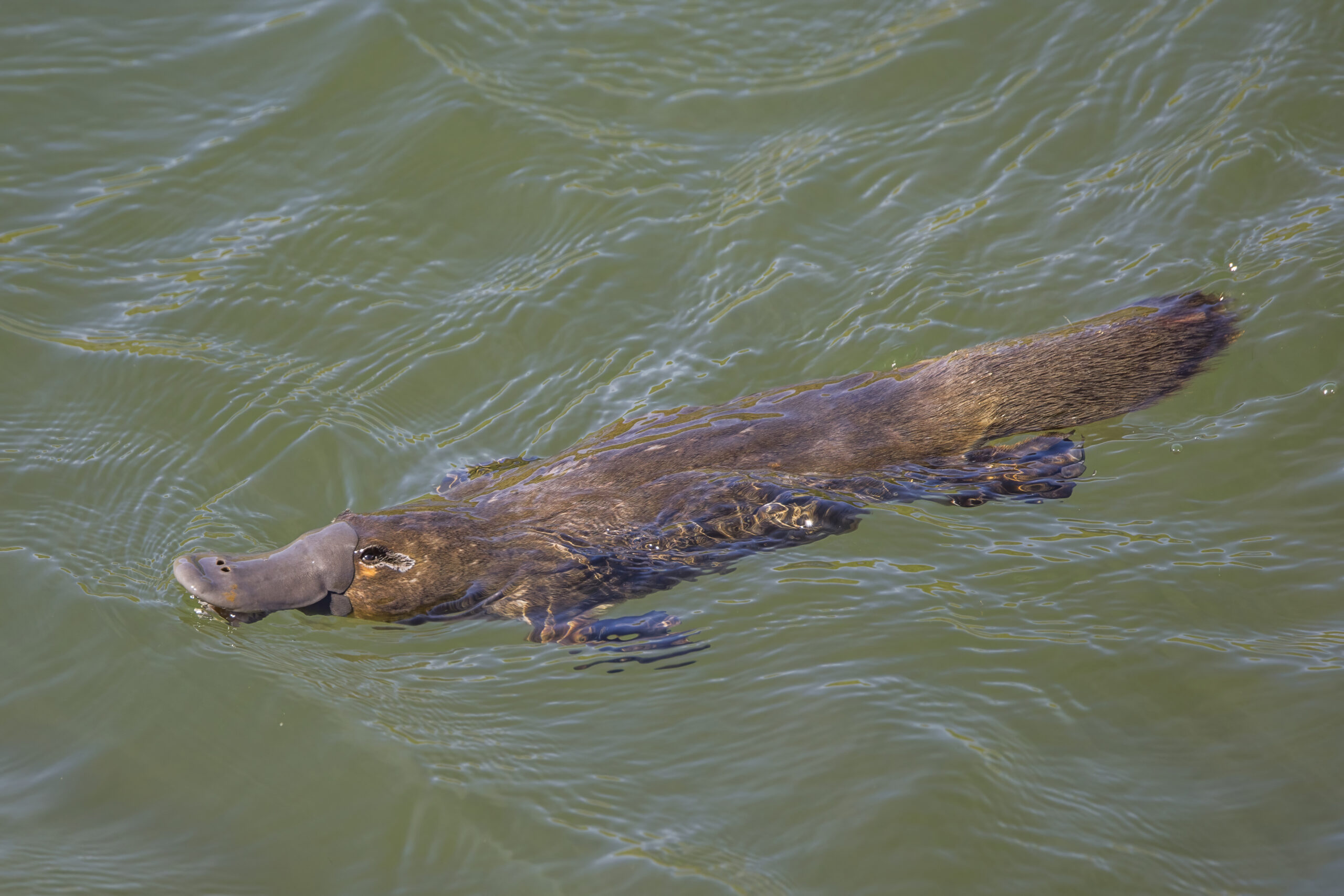 Photo Credit: Charlesjsharp / Wikimedia Commons
In the shimmering waters of eastern Australia and Tasmania, the platypus, or Ornithorhynchus anatinus, glides gracefully through its lush habitat. Imagine a tranquil riverbank, where the sun filters through the leaves of towering eucalyptus trees, casting dappled shadows on the surface of the water. Here, this extraordinary animal emerges, showcasing its most distinctive features: a flat, duck-like bill, webbed feet, and a beaver-like tail. With its unique combination of traits, the platypus is not just a marvel of evolution; it is a living puzzle that has intrigued scientists and nature enthusiasts for centuries.
As a monotreme, which means it lays eggs instead of giving birth to live young, the platypus stands out among mammals. Its soft, dense fur keeps it warm in cool waters, while its sensitive bill is packed with electroreceptors, allowing it to detect the faintest movements of prey beneath the surface. This remarkable adaptation makes the platypus a skilled hunter, foraging for insect larvae and small fish in the twilight hours. With each dive, it reveals the secrets of its world, captivating anyone lucky enough to witness its playful antics. Join us as we explore the life of the platypus, uncovering the mysteries of this enchanting creature and its vital role in the ecosystem.
The platypus is a truly extraordinary animal that occupies a special place in the tree of life. It belongs to the class Mammalia, which includes all mammals, but it stands out as one of the only monotremes—mammals that lay eggs instead of giving birth to live young. This unique reproductive method, along with its duck-bill, webbed feet, and ability to produce milk, makes the platypus a living link to the distant past of mammalian evolution. Its unusual combination of features has puzzled scientists and captivated the public, earning it a reputation as one of nature’s most curious wonders.
| Taxonomic Rank | Scientific Name | Meaning & Significance |
|---|---|---|
| Kingdom | Animalia | This name comes from the Latin word “animalis,” meaning “having breath” or “living.” It signifies all living organisms that are not plants, fungi, or microorganisms. |
| Phylum | Chordata | Derived from the Greek word “chordē,” meaning “string,” this phylum includes animals with a notochord, a flexible rod that supports the body. In vertebrates, this develops into the backbone. |
| Class | Mammalia | This term comes from the Latin “mamma,” meaning “breast.” It highlights the defining feature of mammals: females produce milk to nourish their young. |
| Order | Monotremata | From the Greek “monos,” meaning “single,” and “trema,” meaning “hole,” this order refers to animals that have a single opening for excretion and reproduction, a characteristic of egg-laying mammals. |
| Family | Ornithorhynchidae | This name combines the Greek words “ornithos,” meaning “bird,” and “rhynchos,” meaning “snout.” It reflects the platypus’s distinctive bill, which resembles that of a bird. |
| Genus | Ornithorhynchus | Similar to its family name, this genus also comes from the Greek “ornithos” and “rhynchos,” emphasizing the bird-like features of the platypus. |
The classification of the platypus reveals much about its evolutionary history. As a monotreme, it shares characteristics with both reptiles and mammals, suggesting that it branched off from the main line of mammalian evolution very early on. This unique lineage provides valuable insights into how mammals evolved and adapted over millions of years. The platypus serves as a living reminder of the diverse paths life can take, showcasing the wonders of evolution and the intricate connections among all living beings.
The evolutionary journey of the platypus stretches back millions of years, weaving through a tapestry of time that showcases the wonders of adaptation and survival. This remarkable animal, which first appeared around 100 million years ago during the Cretaceous period, is a living link to a distant past when mammals were just beginning to emerge. As one of the few remaining members of the monotreme group, which are egg-laying mammals, the platypus offers a glimpse into the early stages of mammalian evolution.
The ancestors of the platypus diverged from other mammals long ago, around the time when the first mammals were evolving from reptiles. These early mammals were small and shrew-like, living in a world dominated by dinosaurs. Over time, some of these mammals adapted to a semi-aquatic lifestyle, leading to the development of features that would define the platypus. One major transition was the evolution of a bill resembling that of a duck, which is not only a striking feature but also serves a practical purpose. This bill is packed with sensitive receptors that help the platypus detect electric fields generated by the movements of prey in the water.
The platypus also developed webbed feet, which make it an excellent swimmer, allowing it to navigate through rivers and streams with ease. Another significant adaptation is its ability to produce venom, a rare trait among mammals, which it uses to defend itself against predators. Finally, the platypus retains the ability to lay eggs, a characteristic that connects it to its ancient ancestors and sets it apart from most modern mammals.
These adaptations have been crucial for the platypus’s survival in its environment. The ability to sense prey in murky waters, swim with agility, and defend itself from predators has allowed this extraordinary animal to thrive in the rivers and streams of Australia. As a living fossil, the platypus not only showcases the wonders of evolution but also reminds us of the diverse paths life can take on our planet.
The platypus is a marvel of nature, a creature that seems to have borrowed features from several different animals. With a streamlined body that glides effortlessly through water, it has a soft, dense fur coat that keeps it warm and dry. Its most striking characteristic is its bill, which resembles that of a duck, flat and wide, perfect for foraging in the muddy riverbeds. The platypus also has webbed feet, which act like paddles, allowing it to swim with grace and agility. This combination of features gives the platypus an almost whimsical appearance, making it one of the most intriguing animals on the planet.
| Feature | Description |
|---|---|
| Weight | 0.7kg – 2.4kg (1.5lbs – 5.3lbs) |
| Skin Type | Fur |
| Most Distinctive Feature | Bill that looks like the beak of a duck |
The platypus’s features are not just for show; they serve vital purposes in its daily life. The fur keeps it insulated in chilly waters, while the bill is equipped with sensitive receptors that help it detect prey even in murky conditions. Its webbed feet are perfect for swimming, but they retract to reveal sharp claws for digging burrows on land. Together, these adaptations make the platypus a master of both aquatic and terrestrial environments, showcasing the incredible ways animals evolve to thrive in their habitats.
The platypus calls the lush, vibrant waterways of eastern Australia and Tasmania its home. Picture a serene landscape where freshwater rivers and streams meander through dense forests and grassy banks. These habitats are alive with the sounds of nature, from the rustling leaves to the gentle flow of water. The platypus thrives in this environment, where it can dive and forage for food, using its unique adaptations to navigate the underwater world.
This fascinating animal prefers areas with clean, shallow waters, where it can easily find its favorite meals, like insects and small crustaceans. The climate in these regions is generally mild, with warm summers and cool winters. Platypuses are often found in areas with plenty of vegetation, which provides shelter and protection from predators. They enjoy habitats that are rich in biodiversity, as this abundance supports their diet and lifestyle.
To thrive in these specific habitats, the platypus has developed several remarkable adaptations. Its webbed feet make it an excellent swimmer, allowing it to glide effortlessly through the water while searching for food. The platypus also has a special ability to close its eyes, ears, and nostrils when submerged, helping it to navigate and hunt in murky waters. These adaptations not only enhance its survival but also make it a true master of its aquatic domain.
The platypus leads a life filled with intriguing routines, primarily active during the night. As a nocturnal animal, it spends its evenings foraging for food in the water, using its sensitive bill to detect prey. This bill is equipped with electroreceptors, allowing the platypus to sense the electric fields generated by the movements of small creatures like shrimp and insect larvae. During the day, it rests in burrows dug into the riverbanks, where it can stay safe from predators and conserve energy for its nighttime adventures.
While the platypus is mostly solitary, it does have some interesting social behaviors. These animals are not known for forming large groups, preferring to live alone. However, they may occasionally share a habitat with others, especially during the breeding season. Communication among platypuses is subtle; they use a combination of body language and sounds, such as low-frequency calls, to signal to one another. This helps them maintain their territory and find mates when the time is right.
| Behavior Type | Description |
|---|---|
| Activity Patterns | Nocturnal foraging for food, resting in burrows during the day. |
| Social Structure | Primarily solitary, with occasional interactions during breeding season. |
| Communication Methods | Body language and low-frequency calls to signal territory and attract mates. |
The behaviors of the platypus are finely tuned to ensure its survival in the wild. By being active at night, it avoids many daytime predators and can hunt for food when its prey is most vulnerable. Its solitary nature allows it to maintain a territory without competition, while its unique communication methods help it navigate social interactions when necessary. Together, these traits make the platypus a master of its environment, thriving in the lush waterways of Australia and Tasmania.
The platypus is a carnivore, meaning it primarily eats meat. This fascinating animal has a diet that consists mainly of insect larvae, tadpoles, and small fish. To find its food, the platypus uses its highly sensitive bill, which is packed with electroreceptors. These special sensors help it detect the electric fields generated by the movements of its prey in the water, allowing it to hunt effectively even in murky conditions.
| Dietary Aspect | Details |
|---|---|
| Diet Type | Carnivore |
| Favorite Foods | Insect larvae, tadpoles, small fish |
| Prey Items | Insect larvae, tadpoles, small fish |
| Hunting/Foraging Strategies | Uses sensitive bill to detect prey in water |
This specialized diet plays a crucial role in the platypus’s ecology and daily routine. By feeding on a variety of aquatic organisms, it helps maintain the balance of its freshwater habitat. The platypus’s foraging habits also influence its activity patterns, as it spends significant time hunting at night when its prey is most active. This nocturnal lifestyle, combined with its unique feeding strategies, makes the platypus an essential player in its ecosystem, showcasing the intricate connections between species and their environments.
When it comes to mating, the platypus has a rather intriguing approach. Breeding season typically occurs between June and October, coinciding with the warmer months in Australia. During this time, male platypuses engage in elaborate courtship displays to attract females. They may chase each other in the water, showcasing their agility and strength. Once a pair has formed, they will mate, and the female will prepare to lay her eggs in a burrow near the water’s edge.
| Reproductive Aspect | Details |
|---|---|
| Gestation Period | 1 – 2 Weeks |
| Average Litter Size | 2 |
| Age of Sexual Maturity | 2 Years |
| Name of Young | Baby Platypus |
After laying her eggs, the female platypus incubates them by curling around them in her burrow. This nurturing behavior is essential, as the eggs need warmth to develop properly. Once the eggs hatch, the baby platypuses, known as puggles, are born without fur and are quite helpless. The mother feeds them with her milk, which she secretes from special glands in her skin. As the puggles grow, they begin to develop their characteristic features, eventually becoming independent and ready to explore the world on their own around the age of two. This journey from vulnerable hatchlings to self-sufficient adults is a testament to the resilience and adaptability of these extraordinary animals.
The platypus plays a vital role in its ecosystem, nestled within the food web of eastern Australia and Tasmania. As a carnivore, it helps control populations of insects and small aquatic creatures, while also serving as prey for various predators. This delicate balance is crucial for maintaining the health of its habitat, but the platypus faces several dangers that threaten its survival.
To defend itself against these threats, the platypus has developed some clever survival strategies. Its ability to burrow into riverbanks provides a safe haven from predators. Additionally, the platypus has a venomous spur on its hind legs, which can deliver a painful sting to potential attackers. By being nocturnal, it also avoids many daytime predators, foraging for food under the cover of darkness. These adaptations help the platypus navigate the challenges of its environment, ensuring its continued existence in a rapidly changing world.
A keystone species is an organism that has a disproportionately large impact on its environment relative to its abundance. These species play a crucial role in maintaining the structure of an ecological community. The platypus, with its unique adaptations and behaviors, qualifies as a keystone species in its freshwater habitat. By influencing the populations of other species and the health of the ecosystem, the platypus helps to maintain the balance of its environment.
The platypus contributes to its ecosystem in several significant ways. As a carnivore, it primarily feeds on insect larvae, tadpoles, and small fish. By preying on these organisms, the platypus helps regulate their populations, preventing any one species from becoming too dominant. This balance is essential for the overall health of the aquatic ecosystem, as it allows for a diverse range of species to thrive. Additionally, the platypus’s foraging behavior stirs up sediment in the riverbed, which can enhance nutrient cycling and promote the growth of aquatic plants. These plants, in turn, provide habitat and food for various other species.
Moreover, the platypus serves as an indicator species, meaning its presence or absence can signal the health of the ecosystem. If platypus populations decline, it may indicate problems such as pollution or habitat destruction, prompting conservation efforts. Their unique reproductive strategy, where they lay eggs instead of giving live birth, also adds to the biodiversity of the area, showcasing the variety of life forms that can adapt to similar environments.
If the platypus were to disappear from its ecosystem, the consequences could be profound. Without this remarkable animal, populations of insect larvae and small fish could surge, leading to overpopulation and potential collapse of the aquatic food web. The loss of the platypus would also disrupt nutrient cycling, affecting plant growth and the overall health of the waterways. Additionally, the decline of this indicator species could go unnoticed until significant damage had already occurred, making it harder to address environmental issues. In essence, the platypus is not just a fascinating animal; it is a vital thread in the intricate tapestry of its ecosystem.
The platypus occupies a fascinating ecological niche in the freshwater rivers and streams of eastern Australia and Tasmania. As a keystone species, it plays a crucial role in maintaining the balance of its ecosystem. This unique animal, with its blend of mammalian and aquatic traits, influences the environment in various ways, from controlling prey populations to contributing to nutrient cycling. By foraging at night, the platypus helps shape the dynamics of its habitat, ensuring that both plant and animal life thrive.
| Ecosystem Service | Impact |
|---|---|
| Prey Control | Regulates populations of insect larvae and small fish, preventing overpopulation. |
| Nutrient Cycling | Contributes to the breakdown of organic matter, enriching the ecosystem. |
| Habitat Creation | Burrowing into riverbanks helps aerate the soil and create habitats for other species. |
| Food Source | Serves as prey for larger predators, linking various levels of the food web. |
The platypus influences its environment in specific and significant ways. By feeding on insect larvae and small fish, it helps keep these populations in check, which is essential for maintaining a balanced aquatic ecosystem. When the platypus forages, it stirs up sediment and organic material, promoting nutrient cycling. This process enriches the water and supports the growth of aquatic plants, which in turn provide habitat and food for other animals. Additionally, the burrows it creates along riverbanks not only serve as nesting sites but also help aerate the soil, benefiting the entire ecosystem.
The broader ecological importance of the platypus cannot be overstated. As a keystone species, its presence supports a diverse array of life in its habitat. The health of the platypus population can indicate the overall well-being of freshwater ecosystems, making it a vital indicator species. Protecting the platypus and its environment ensures that the intricate web of life in these waterways continues to thrive, highlighting the interconnectedness of all living things. By understanding and appreciating the role of the platypus, we can better protect the delicate balance of nature.
In the intricate web of life, symbiosis refers to the close and often long-term interactions between different species. These relationships can take many forms, including mutualism, where both species benefit, parasitism, where one benefits at the expense of the other, and commensalism, where one benefits while the other is neither helped nor harmed. The platypus, with its unique lifestyle and habitat, engages in various ecological relationships that highlight the interconnectedness of nature.
| Species/Type | Relationship Type | Description |
|---|---|---|
| Freshwater Invertebrates | Mutualistic | The platypus helps control the population of these invertebrates, while they provide a food source for the platypus. |
| Microorganisms in Fur | Commensal | Microbes living in the platypus’s fur may benefit from the warm environment without affecting the platypus. |
| Fish and Amphibians | Parasitic | While not a direct relationship, the presence of parasites in fish and amphibians can impact the platypus’s food sources. |
These relationships have evolved over time, shaped by the needs and behaviors of the species involved. The platypus, as a carnivore, relies on its environment to provide food, while also playing a role in maintaining the balance of its ecosystem. By controlling populations of freshwater invertebrates, it ensures that no single species dominates, promoting biodiversity. Meanwhile, the microorganisms in its fur illustrate how life can thrive in unexpected places, showcasing the beauty of nature’s partnerships. Each interaction, whether beneficial or neutral, contributes to the rich tapestry of life in the waterways of eastern Australia and Tasmania.
The platypus is a captivating animal that continues to surprise scientists and nature lovers alike. With its blend of features from various species, this creature is a true marvel of evolution. Here are some intriguing facts that showcase just how extraordinary the platypus really is.
The platypus has long captured the imagination of humans, dating back to the first encounters with European explorers in the late 18th century. When scientists first examined this peculiar animal, they were baffled by its combination of features: a duck-like bill, webbed feet, and a beaver-like tail. This led to a flurry of curiosity and speculation, with some even believing it to be a hoax. Over time, the platypus has woven itself into the cultural fabric of Australia, symbolizing the country’s unique wildlife. Indigenous Australians have revered the platypus, incorporating it into their stories and traditions, highlighting its significance beyond mere curiosity.
In contemporary times, the relationship between humans and platypuses has evolved, focusing on conservation and coexistence. As urban development encroaches on their natural habitats, these fascinating creatures face threats from pollution and habitat destruction. Conservation efforts are underway to protect their environments and ensure their survival. However, conflicts can arise when platypuses venture into human-dominated areas, leading to misunderstandings about their behavior. Unlike many animals, the platypus is not suited for domestication, as it thrives in the wild, where it can hunt and forage freely.
As we look to the future, the relationship between humans and platypuses holds both challenges and opportunities. With increased awareness and proactive conservation measures, there is hope for a harmonious coexistence. By valuing the platypus not just as a curiosity but as a vital part of our ecosystem, we can work together to protect this extraordinary animal for generations to come. The journey ahead will require collaboration, understanding, and a commitment to preserving the natural world that we all share.
The platypus, a fascinating blend of mammal and bird-like features, currently holds a conservation status of Near Threatened. This means that while the species is not yet endangered, it faces significant challenges that could lead to a decline in its population. Estimates suggest that there are between 30,000 and 300,000 platypuses in the wild, but this number is not stable. Population trends indicate that certain areas are experiencing declines, raising concerns among conservationists and researchers alike.
| Conservation Factor | Status/Details |
|---|---|
| IUCN Status | Near Threatened |
| Estimated Population Size | 30,000 – 300,000 |
| Population Trend | Declining in some areas |
The main threats to the platypus include habitat loss, pollution, and climate change. As rivers and streams are altered for agriculture and urban development, the natural habitats of these unique animals are shrinking. Pollution from chemicals and waste can contaminate their food sources and water, making survival more difficult. Additionally, climate change is affecting water levels and temperatures, which can disrupt the delicate balance of their ecosystems.
Conservation efforts are underway to protect the platypus and its habitat. Organizations are working to restore river ecosystems, reduce pollution, and raise awareness about the importance of this extraordinary species. By creating protected areas and promoting sustainable practices, there is hope for the platypus to thrive in the wild. With continued support and action, we can help ensure that future generations will marvel at this incredible animal.
| Question | Answer |
|---|---|
| Where do platypuses live? | Platypuses are found in freshwater rivers and streams in eastern Australia, including Tasmania. They prefer habitats with plenty of vegetation and clean water, which provide both food and shelter. |
| What do platypuses eat? | Platypuses are carnivores, meaning they primarily eat meat. Their diet consists mainly of insects, larvae, and small crustaceans, which they hunt underwater using their sensitive bills. |
| How do platypuses behave? | Platypuses are mostly nocturnal, meaning they are active at night. They are excellent swimmers and can stay underwater for up to two minutes while searching for food. |
| How do platypuses reproduce? | Platypuses are one of the few mammals that lay eggs. After mating, the female lays one to three eggs and incubates them by curling around them for about ten days until they hatch. |
| What threats do platypuses face? | Platypuses are currently listed as Near Threatened due to habitat loss, pollution, and climate change. These factors can affect their food supply and nesting sites, making it harder for them to survive. |
| What is a unique characteristic of the platypus? | The most distinctive feature of the platypus is its bill, which resembles that of a duck. This bill is not just for show; it contains sensitive receptors that help the platypus detect prey in murky waters. |
| Can platypuses produce venom? | Yes, male platypuses have venomous spurs on their hind legs. While the venom is not lethal to humans, it can cause severe pain and swelling, making it a fascinating adaptation for defense and competition. |