Taxonomy & Classification
- Kingdom
- Animalia
- Phylum
- Chordata
- Class
- Aves
- Order
- Gruiformes
- Family
- Rallidae
- Genus
- Porphyrio
- Species
- Porphyrio martinicus

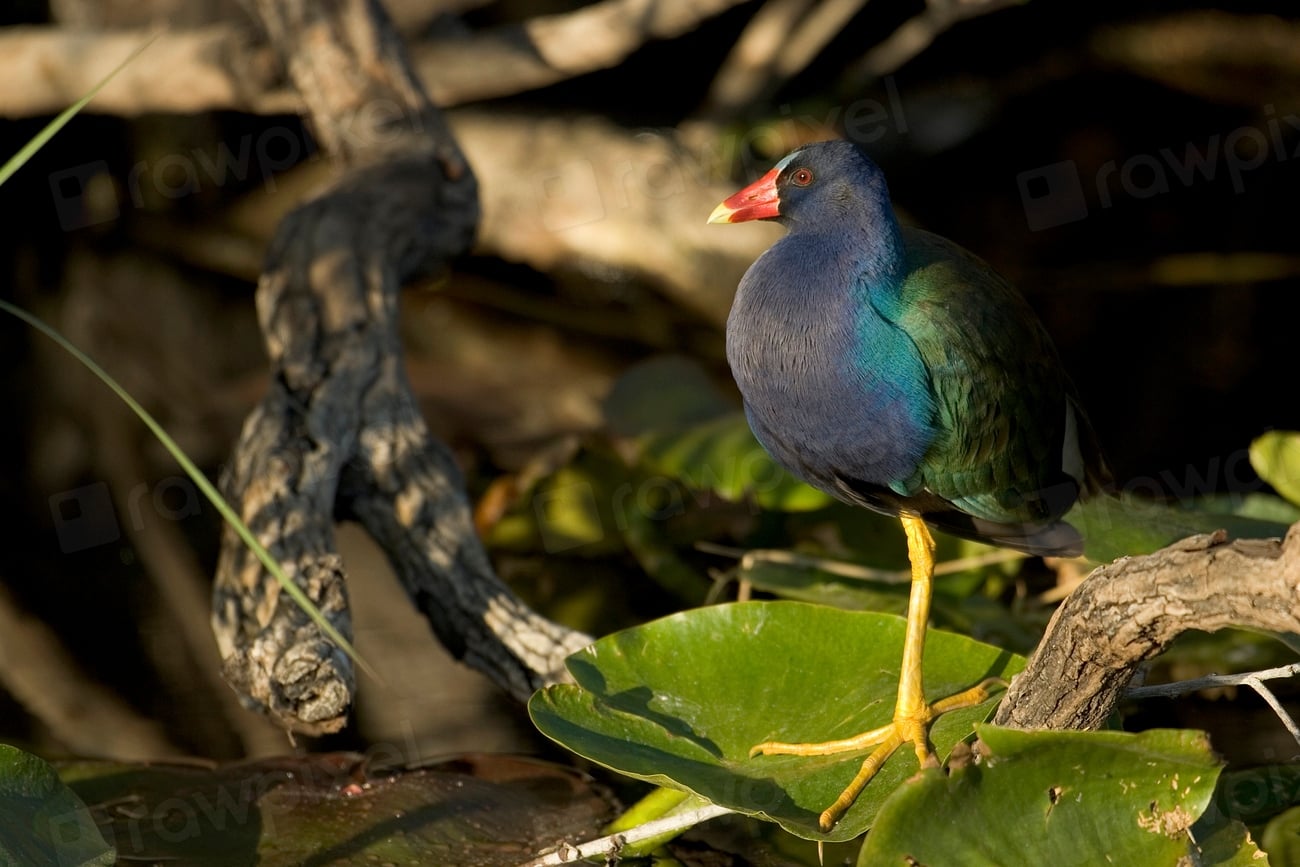 Photo Credit: National Park Service / Rawpixel
In the heart of lush wetlands, where the air is thick with the sounds of chirping insects and the gentle rustle of reeds, the Purple Gallinule, known scientifically as Porphyrio, makes its vibrant presence known. This medium-sized bird is a true spectacle, adorned in a dazzling coat of deep purple and blue, with striking green and yellow accents that catch the sunlight. Its long, slender body glides gracefully over the water’s surface, while its conical bill and short, cocked tail add to its unique charm. Nature enthusiasts and scientists alike are captivated by this bird, not just for its beauty, but also for its intriguing behaviors and vital role in the ecosystem.
As the Purple Gallinule forages among the floating vegetation, it reveals its omnivorous diet, snacking on seeds, fruits, and aquatic plants. This adaptability allows it to thrive in its marshy habitat, where it plays a crucial role in maintaining the balance of its environment. With each step, it navigates the intricate web of life that surrounds it, showcasing the delicate connections between species. The Purple Gallinule is more than just a pretty face; it is a keystone species, meaning its presence significantly impacts the health of the wetlands it inhabits. Join us as we dive deeper into the world of this enchanting bird, exploring its behaviors, life cycle, and the fascinating relationships it forms within its watery realm.
The Purple Gallinule is a captivating bird that occupies a special place in the tree of life. Belonging to the kingdom Animalia, this vibrant avian marvel is classified under the phylum Chordata, which includes all animals with a backbone. As a member of the class Aves, or birds, it showcases the unique adaptations that allow it to thrive in wetland habitats. What sets the Purple Gallinule apart is its striking plumage, a brilliant mix of purple, blue, and green, which not only makes it visually stunning but also plays a role in its mating rituals. This bird is a member of the order Gruiformes, which includes cranes and rails, and the family Rallidae, known for their secretive nature and preference for marshy environments.
| Taxonomic Rank | Scientific Name | Meaning & Significance |
|---|---|---|
| Kingdom | Animalia | From the Latin word “animalis,” meaning “having breath,” highlighting the living nature of these organisms. |
| Phylum | Chordata | Derived from the Greek word “chordē,” meaning “string,” referring to the notochord, a flexible rod that supports the body in early development. |
| Class | Aves | From the Latin word for “bird,” emphasizing the unique characteristics of this group, such as feathers and beaks. |
| Order | Gruiformes | From the Latin “gruidae,” meaning “crane,” indicating the close relationship of these birds to cranes and their shared habitats. |
| Family | Rallidae | From the Latin “raill,” referring to the rail birds, which are often secretive and inhabit wetlands. |
| Genus | Porphyrio | From the Greek word “porphuros,” meaning “purple,” reflecting the bird’s striking coloration. |
The classification of the Purple Gallinule reveals much about its evolutionary journey. As a member of the Rallidae family, it shares a lineage with other marsh-dwelling birds, showcasing adaptations that allow it to navigate through dense vegetation and water. Its vibrant colors and unique behaviors, such as its ability to walk on floating vegetation, highlight the evolutionary pressures that have shaped its existence in wetland ecosystems. Understanding its taxonomic position not only enriches our appreciation of this beautiful bird but also underscores the intricate connections within the animal kingdom.
The evolutionary journey of the Purple Gallinule stretches back millions of years, weaving through the rich tapestry of avian history. This striking bird, known scientifically as Porphyrio, belongs to the Rallidae family, which includes a variety of water-loving birds. The ancestors of the Purple Gallinule began to diverge from other bird lineages during the late Cretaceous period, around 70 million years ago, as the world was changing dramatically.
As the Earth transformed, so did the ancestors of the Purple Gallinule. These early birds adapted to wetland habitats, developing traits that would help them thrive in marshy environments. Over time, they evolved from small, ground-dwelling birds into more specialized forms. The transition from their ancestors to the modern Purple Gallinule involved significant changes in body structure and behavior, allowing them to navigate the dense vegetation of their watery homes with ease.
The adaptations of the Purple Gallinule have been crucial for its survival in the ever-changing landscapes of wetlands. Its colorful plumage not only serves a purpose in attracting mates but also provides essential camouflage. The long toes allow it to traverse delicate surfaces, while its adaptable diet ensures it can find food in various environments. With strong swimming skills and effective vocal communication, the Purple Gallinule has carved out a niche that allows it to thrive in the rich biodiversity of marshes and wetlands. This evolutionary tale is a testament to the resilience and ingenuity of nature, showcasing how life can adapt and flourish in diverse habitats.
The Purple Gallinule is a stunning sight to behold, with its striking colors and graceful form. This medium-sized bird boasts a long, slender body that glides effortlessly over wetlands and marshes. Its long legs are perfectly adapted for wading through shallow waters, while its broad, rounded tail adds to its elegant appearance. The combination of vibrant hues and sleek lines creates an impression of both beauty and agility, making the Purple Gallinule a true gem of the avian world.
| Feature | Description |
|---|---|
| Weight | 7.2 to 10.3 ounces |
| Skin Type | Feathers |
| Most Distinctive Feature | Green and purple coloring |
The Purple Gallinule’s vibrant green and purple feathers are not just for show; they serve important purposes in its survival. The bright colors help the bird blend into the lush vegetation of its wetland habitat, providing excellent camouflage from predators. This clever adaptation allows it to forage for food, such as seeds and insects, while remaining hidden from view. The combination of its lightweight body and long legs also enables the Purple Gallinule to navigate its watery environment with ease, making it a master of its marshy domain.
The Purple Gallinule thrives in the lush embrace of freshwater marshes, where vibrant green reeds and cattails sway gently in the breeze. These wetlands are alive with the sounds of chirping insects and the rustle of leaves, creating a perfect backdrop for this colorful bird. The shallow waters are dotted with lily pads, providing both a place to forage for food and a safe haven from predators. Here, the Purple Gallinule can be seen gracefully moving through the dense vegetation, its striking plumage a vivid contrast against the rich greens and browns of its habitat.
The climate in these regions is typically warm and humid, which is ideal for the Purple Gallinule. These birds prefer areas where the water is shallow, allowing them to wade and search for food like seeds, insects, and small aquatic creatures. The marshes they inhabit often experience seasonal changes, with wet and dry periods that influence the availability of food and nesting sites. The combination of warm temperatures and abundant water sources creates a thriving environment for this avian inhabitant.
To survive in these specific habitats, the Purple Gallinule has developed several clever adaptations. Its long toes are perfectly designed for walking on soft, unstable surfaces like floating vegetation, allowing it to navigate its watery world with ease. The bird’s vibrant colors not only make it a beautiful sight but also help it blend into the colorful surroundings, providing camouflage from potential threats. With its unique behaviors and physical traits, the Purple Gallinule is well-equipped to thrive in the dynamic ecosystems of freshwater marshes.
The Purple Gallinule leads a lively and active daily life, primarily during the daylight hours, as it is a diurnal bird. Each morning, it emerges from its hidden perch among the reeds to forage for food. This bird is known for its agile movements, often seen walking on floating vegetation or wading through shallow waters in search of seeds, fruits, and small invertebrates. As the sun rises, the Purple Gallinule engages in various activities, from preening its vibrant feathers to calling out to its family members. These daily routines are essential for maintaining its health and social bonds.
Socially, Purple Gallinules are quite family-oriented. They often form small family units, which can include parents and their young. These groups work together to navigate their wetland homes, sharing information about food sources and potential dangers. Communication is key in these family dynamics, with a variety of calls and body language used to express different messages. Whether it’s a warning call to alert others of a predator or a soft chirp to call a chick, these vocalizations help maintain harmony within the group.
| Behavior Type | Description |
|---|---|
| Activity Patterns | Foraging for food during the day, preening feathers, and engaging in social interactions. |
| Social Structure | Forms family units that include parents and their young, promoting cooperation and safety. |
| Communication Methods | Uses a variety of calls and body language to convey messages, such as warnings or invitations. |
The behaviors of the Purple Gallinule are finely tuned to ensure its survival in the wild. By foraging during the day, it maximizes its chances of finding food while avoiding nocturnal predators. The strong family bonds and effective communication within these groups not only enhance their ability to find resources but also provide protection against threats. In the vibrant world of wetlands, these social and behavioral patterns are vital for thriving in a dynamic environment.
The Purple Gallinule is an omnivorous bird, meaning it enjoys a varied diet that includes both plant and animal matter. This colorful bird is particularly fond of seeds, fruits, and aquatic plants, which it finds in its wetland habitat. With its long toes and sharp claws, the Purple Gallinule is well-equipped to navigate through dense vegetation, allowing it to forage effectively. It often uses its keen eyesight to spot food, and its agile movements help it reach tasty morsels hidden among the reeds and water.
| Dietary Aspect | Details |
|---|---|
| Diet Type | Omnivore |
| Favorite Foods | Seeds, fruits, aquatic plants |
| Prey Items | Snails, insects, frogs, insect larvae, spiders, earthworms, fish |
| Hunting/Foraging Strategies | Uses keen eyesight and agile movements to navigate through vegetation and find food |
The diverse diet of the Purple Gallinule plays a crucial role in its ecology and daily routine. By consuming a wide range of foods, it helps maintain the balance of its wetland ecosystem, controlling insect populations and dispersing seeds. This adaptability not only supports its survival but also allows the Purple Gallinule to thrive in various habitats, making it a vital part of the vibrant tapestry of life in marshes and wetlands.
As the breeding season approaches, the Purple Gallinule engages in a captivating courtship display. Males perform elaborate dances, showcasing their vibrant plumage and unique vocalizations to attract potential mates. This lively behavior typically occurs in the spring and summer months, when the wetlands are alive with activity. Once a pair forms, they work together to build a nest, often hidden among the dense vegetation of their marshy homes.
| Reproductive Aspect | Details |
|---|---|
| Gestation Period | About 21 to 25 days |
| Litter Size | 4 to 6 eggs |
| Age of Maturity | 2 to 3 years |
| Name of Young | Nestlings, fledglings |
After the eggs hatch, the devoted parents take on the important role of caregivers. The nestlings are born helpless and rely on their parents for food and protection. As they grow, the fledglings begin to explore their surroundings, learning to forage and navigate the wetlands. With time, they develop the skills needed to thrive independently. By the time they reach maturity, these young gallinules are ready to embark on their own adventures, continuing the cycle of life in their vibrant marshy habitats.
The Purple Gallinule plays a vital role in its ecosystem, often found in the wetlands where it forages for food and avoids predators. As an omnivore, it occupies a niche that allows it to interact with various plants and animals, contributing to the balance of its habitat. However, this colorful bird is not at the top of the food chain; it faces several dangers that threaten its survival.
To defend itself against these threats, the Purple Gallinule has developed several survival strategies. It often relies on its excellent camouflage, blending seamlessly into the vibrant greens of its marshy home. When danger approaches, it can quickly dart into dense vegetation, making it hard for predators to spot. Additionally, its ability to swim and dive helps it escape from aerial threats, while its loud calls can alert other birds to potential dangers, creating a community of vigilance in the wetlands.
A keystone species is a vital part of its ecosystem, meaning its presence has a significant impact on the environment and other living things. The Purple Gallinule, with its vibrant colors and unique behaviors, does indeed play a keystone role in its habitat. Found primarily in freshwater marshes, this bird helps maintain the balance of its ecosystem through its foraging habits and interactions with other species.
The Purple Gallinule is an omnivore, which means it eats both plants and animals. By feeding on seeds, fruits, and aquatic plants, it helps control plant growth and promotes biodiversity in its marshy home. This feeding behavior not only supports the health of the marsh but also provides food for other animals. For example, when the gallinule forages, it stirs up the mud, making it easier for smaller creatures like insects and crustaceans to thrive. These creatures, in turn, become food for fish and other birds, creating a web of life that relies on the gallinule’s activities.
Additionally, the Purple Gallinule often forms family units, which can influence the social structure of other species in the marsh. These family groups can help protect their territory and resources, ensuring that the ecosystem remains balanced. Their presence can also attract other birds and wildlife, enhancing the overall biodiversity of the area.
If the Purple Gallinule were to disappear, the effects would ripple through its ecosystem. Without this bird, plant growth could become unmanageable, leading to overgrowth that chokes out other species. The loss of a key forager would disrupt the food web, affecting not only the smaller creatures that rely on the gallinule but also the predators that depend on them. Ultimately, the disappearance of the Purple Gallinule would threaten the delicate balance of the freshwater marshes, highlighting just how crucial this colorful bird is to its environment.
The Purple Gallinule plays a crucial role in its ecosystem, particularly within the freshwater marshes it calls home. This vibrant bird is not just a beautiful sight; it actively shapes its environment through its behaviors and interactions. As an omnivore, it forages for a variety of food, which helps maintain the balance of plant and animal life in its habitat. By feeding on seeds, fruits, and aquatic plants, the Purple Gallinule influences the growth of vegetation and the populations of smaller animals, making it an integral part of the wetland community.
| Ecosystem Service | Impact |
|---|---|
| Seed Dispersal | Helps spread plant species, promoting biodiversity. |
| Prey for Predators | Serves as a food source for larger birds and mammals. |
| Vegetation Control | Feeds on aquatic plants, preventing overgrowth and maintaining habitat balance. |
| Indicator Species | Reflects the health of wetland ecosystems, signaling changes in environmental conditions. |
The Purple Gallinule’s influence extends beyond its immediate actions. For example, as it forages, it helps control the growth of certain aquatic plants, ensuring that no single species dominates the marsh. This balance is vital for the many other creatures that share its habitat, from insects to fish. Additionally, the gallinule’s presence can indicate the overall health of the wetland ecosystem. If these birds thrive, it often means that the environment is in good shape, while a decline in their numbers can signal problems, such as pollution or habitat loss.
In the grand tapestry of nature, the Purple Gallinule is a key player. Its activities not only support the intricate web of life in freshwater marshes but also highlight the importance of preserving these vital ecosystems. By maintaining plant diversity and serving as a food source for other animals, the Purple Gallinule helps ensure that the wetlands remain vibrant and healthy. Protecting this colorful bird and its habitat is essential for the overall health of our planet, reminding us that every species, no matter how small, has a significant role to play in the environment.
In the intricate web of nature, symbiosis refers to the close and often long-term interactions between different species. These relationships can take many forms, including mutualism, where both species benefit, parasitism, where one benefits at the other’s expense, and commensalism, where one benefits while the other is neither helped nor harmed. The Purple Gallinule, a vibrant inhabitant of freshwater marshes, engages in various ecological partnerships that highlight the interconnectedness of life in its habitat.
| Species/Type | Relationship Type | Description |
|---|---|---|
| Water Hyacinth | Mutualistic | The Purple Gallinule often forages among the floating leaves of water hyacinth, which provides cover from predators while the bird helps to control the plant’s growth by feeding on its leaves and flowers. |
| Red-winged Blackbird | Commensal | These blackbirds often nest near Purple Gallinules. While the gallinules do not benefit or suffer from the blackbirds’ presence, the blackbirds gain protection from predators by nesting in the same area. |
| Snakes | Parasitic | While not a direct relationship, snakes can prey on Purple Gallinule chicks. This predation impacts the gallinule population, illustrating the challenges of survival in their ecosystem. |
The evolution of these relationships showcases the dynamic nature of ecosystems. Over time, species like the Purple Gallinule have adapted to thrive alongside other organisms, forming partnerships that enhance their survival. These interactions not only benefit the gallinule but also contribute to the overall health of the marsh environment. By understanding these connections, we gain insight into the delicate balance of life and the importance of preserving these vibrant ecosystems for future generations.
The Purple Gallinule is a dazzling bird that captures the imagination with its vibrant colors and intriguing behaviors. Found in wetlands, this avian wonder is full of surprises that even seasoned nature enthusiasts might not know.
The Purple Gallinule has long been a source of fascination for humans, weaving its way into the cultural fabric of various societies. Historically, this striking bird has been admired for its vibrant plumage and graceful movements. In many cultures, it symbolizes beauty and adaptability, often appearing in folklore and art. Indigenous peoples in the Americas have recognized the Purple Gallinule as a vital part of their ecosystems, sometimes incorporating it into their traditional stories and practices. Its presence in wetlands has made it a subject of interest for birdwatchers and nature enthusiasts alike, who appreciate its colorful appearance and unique behaviors.
In contemporary times, the relationship between the Purple Gallinule and humanity has evolved, particularly in the realms of conservation and habitat protection. As wetlands face threats from urban development and pollution, efforts are underway to preserve these vital ecosystems, which are crucial for the survival of the Purple Gallinule. Conservation organizations work tirelessly to educate the public about the importance of these habitats, fostering a sense of stewardship among local communities. However, conflicts can arise, especially when human activities encroach on the bird’s natural habitat. Understanding these dynamics is essential for finding a balance that allows both humans and wildlife to thrive.
Looking ahead, the future of the relationship between the Purple Gallinule and humanity hinges on our commitment to environmental stewardship. As awareness grows about the importance of wetlands, more people are likely to advocate for their protection. By fostering a deeper understanding of this vibrant bird and its habitat, we can ensure that future generations will continue to marvel at the beauty of the Purple Gallinule. Together, we can create a world where both humans and wildlife coexist harmoniously, celebrating the rich tapestry of life that surrounds us.
The Purple Gallinule, a vibrant inhabitant of wetlands, currently holds a conservation status of “Least Concern” according to the International Union for Conservation of Nature (IUCN). This means that, at present, the species is not facing an immediate threat of extinction. However, the exact population size remains unknown, which makes it challenging to assess trends accurately. While the overall status is stable, ongoing monitoring is essential to ensure that this colorful bird continues to thrive in its natural habitat.
| Conservation Factor | Status/Details |
|---|---|
| IUCN Status | Least Concern |
| Estimated Population Size | Unknown |
| Population Trend | Stable |
Despite its current stable status, the Purple Gallinule faces several threats that could impact its future. Habitat loss is a significant concern, as wetlands are often drained for agriculture or urban development. Pollution from agricultural runoff can also degrade the quality of the water and vegetation that these birds rely on for food and nesting. Additionally, climate change poses a long-term risk, as rising temperatures and changing precipitation patterns can alter the delicate ecosystems where the Purple Gallinule thrives.
Conservation efforts are underway to protect the habitats of the Purple Gallinule and ensure its continued survival. Organizations are working to restore wetlands and promote sustainable land-use practices that benefit both wildlife and local communities. Public awareness campaigns help educate people about the importance of preserving these vital ecosystems. With ongoing efforts and a commitment to conservation, there is hope that the Purple Gallinule will continue to grace our wetlands for generations to come.
| Question | Answer |
|---|---|
| What is the habitat of the Purple Gallinule? | Purple Gallinules thrive in freshwater marshes, which are wetlands filled with shallow water and rich vegetation. These habitats provide the perfect environment for them to forage for food and build their nests. |
| What do Purple Gallinules eat? | As omnivores, Purple Gallinules have a varied diet that includes seeds, fruits, insects, and small aquatic animals. They are known for their ability to forage among the plants in their marshy homes, using their long toes to walk on floating vegetation. |
| How do Purple Gallinules behave? | Purple Gallinules are known for their curious and bold behavior. They often walk around on lily pads and can be seen swimming or diving to escape predators, showcasing their agility in the water. |
| How do Purple Gallinules reproduce? | During the breeding season, Purple Gallinules build nests in dense vegetation near water. The female typically lays 4 to 6 eggs, which both parents help to incubate until they hatch, usually in about three weeks. |
| What threats do Purple Gallinules face? | While Purple Gallinules are currently classified as Least Concern, they face threats from habitat loss due to wetland drainage and pollution. Climate change also poses a risk, as rising water levels can affect their nesting sites. |
| What are some interesting characteristics of the Purple Gallinule? | One of the most distinctive features of the Purple Gallinule is its vibrant green and purple coloring, which makes it stand out in its marshy habitat. Additionally, their long toes allow them to walk on soft, floating vegetation without sinking. |
| Are Purple Gallinules social birds? | Purple Gallinules are generally solitary or found in small groups, especially outside of the breeding season. They can be quite vocal, using a variety of calls to communicate with each other, especially during mating rituals. |