Taxonomy & Classification
- Kingdom
- Animalia
- Phylum
- Arthropoda
- Class
- Insecta
- Order
- Orthoptera
- Family
- Acrididae
- Genus
- Dactylotum
- Species
- Dactylotum bicolor

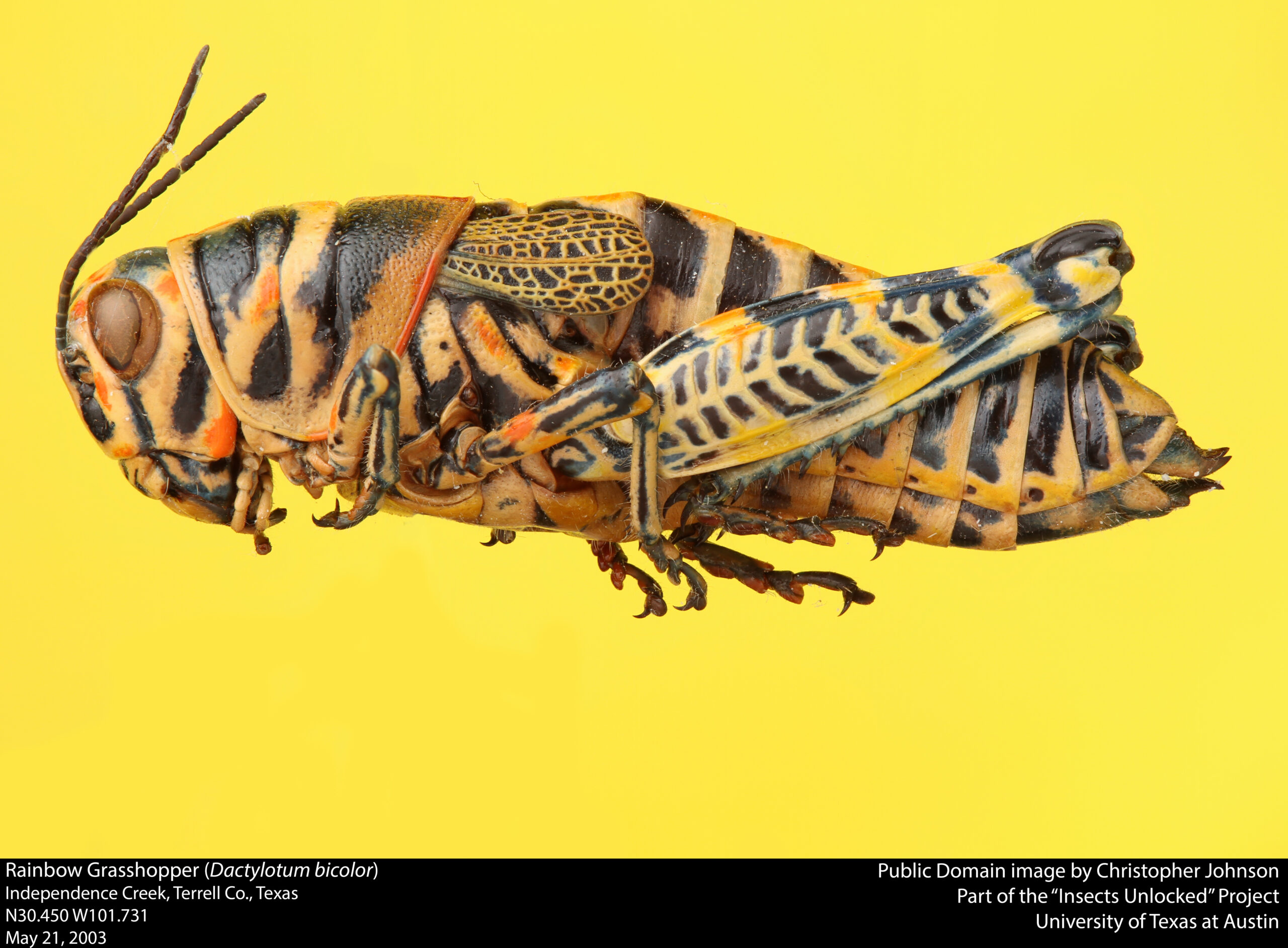 Photo Credit: Insects Unlocked / Wikimedia
In the sun-drenched meadows and open fields of North America, the Rainbow Grasshopper, scientifically known as Dactylotum bicolor, leaps into life with a burst of color and energy. Imagine a warm summer day, where the air is filled with the sweet scent of blooming flowers and the gentle rustle of leaves. Amidst this vibrant backdrop, the Rainbow Grasshopper stands out with its striking hues of green, yellow, and blue, making it a true spectacle of nature. Its elongated body and powerful hind legs allow it to hop gracefully from blade to blade, showcasing not just its agility but also its dazzling appearance.
What makes Dactylotum bicolor particularly captivating to scientists and nature lovers alike is not just its beauty, but its role in the ecosystem. As a herbivore, this grasshopper plays a vital part in its environment, munching on a variety of plants and helping to maintain the balance of its habitat. Its lively behavior and colorful display have sparked curiosity and admiration, leading to a deeper understanding of the intricate relationships within the natural world. Join us as we explore the fascinating life of the Rainbow Grasshopper, uncovering the secrets of its habitat, diet, and the important role it plays in the ecosystem.
The Rainbow Grasshopper, scientifically known as Dactylotum bicolor, occupies a vibrant niche in the tree of life. This colorful insect belongs to the kingdom Animalia, which includes all animals, and is part of the phylum Arthropoda, home to creatures with exoskeletons, segmented bodies, and jointed legs. What sets the Rainbow Grasshopper apart is its dazzling coloration, which can range from bright greens to vivid yellows and reds. This striking appearance not only makes it a visual delight but also serves as a form of camouflage and warning to potential predators.
| Taxonomic Rank | Scientific Name | Meaning & Significance |
|---|---|---|
| Kingdom | Animalia | This name means “animals” in Latin, highlighting the diverse group of living organisms that share characteristics like mobility and complex behaviors. |
| Phylum | Arthropoda | Derived from Greek, meaning “jointed feet,” this term refers to the jointed limbs and segmented bodies that are hallmarks of insects, spiders, and crustaceans. |
| Class | Insecta | This classification comes from the Latin word for “cut,” referring to the segmented body structure of insects, which is divided into three main parts: head, thorax, and abdomen. |
| Order | Orthoptera | From Greek, meaning “straight wings,” this order includes grasshoppers and crickets, known for their distinctive wing structure and ability to produce sounds. |
| Family | Acrididae | This family name comes from the Latin word “acris,” meaning “grasshopper,” emphasizing the group’s close relationship with these familiar insects. |
| Genus | Dactylotum | From Greek, meaning “finger” and “to cut,” this name reflects the unique shape of the grasshopper’s legs, which are adapted for jumping. |
| Species | bicolor | This name means “two colors,” aptly describing the Rainbow Grasshopper’s vibrant and varied coloration. |
Understanding the taxonomic classification of the Rainbow Grasshopper reveals much about its evolutionary journey. Each level of classification tells a story of adaptation and survival, showcasing how this insect has evolved to thrive in its environment. Its colorful appearance not only aids in camouflage but also plays a role in mating and species recognition. By studying its place in the animal kingdom, we gain insights into the intricate web of life and the remarkable ways in which organisms have adapted to their surroundings over millions of years.
The evolutionary journey of the Rainbow Grasshopper, or Dactylotum bicolor, stretches back millions of years, intertwining with the history of grasshoppers and their relatives. These insects belong to the family Acrididae, which has been around since the late Triassic period, over 200 million years ago. As the Earth transformed through various geological epochs, so too did the ancestors of the Rainbow Grasshopper, adapting to changing environments and evolving into the vibrant species we see today.
The ancestors of modern grasshoppers were likely small, drab-colored insects that thrived in lush, prehistoric landscapes. Over time, as they faced new challenges such as predators and shifting climates, they began to develop key adaptations. One major transition was the evolution of powerful hind legs, allowing them to leap great distances to escape danger. This ability to jump not only helped them evade predators but also enabled them to navigate their habitats more effectively in search of food.
Another significant change was the development of colorful exoskeletons, which serve multiple purposes. For the Rainbow Grasshopper, its striking hues of green, yellow, and blue are not just for show; they play a crucial role in camouflage among the vibrant foliage of its environment. This adaptation helps it blend in with the plants, making it harder for predators to spot.
The Rainbow Grasshopper also showcases a remarkable ability to produce sound through stridulation, a process where it rubs its wings together. This communication method is vital for attracting mates and establishing territory, enhancing its chances of reproduction and survival.
These adaptations have been crucial for the survival of the Rainbow Grasshopper in its ever-changing environment. By mastering the art of escape, blending into its surroundings, and communicating effectively, this colorful insect has thrived through the ages. Its evolutionary story is a testament to the resilience and ingenuity of life on Earth, showcasing how even the smallest creatures can adapt and flourish in a complex world.
The Rainbow Grasshopper, or Dactylotum bicolor, is a dazzling spectacle of nature. With its elongated body and powerful hind legs, this grasshopper is built for both agility and showmanship. Its vibrant hues create a striking contrast against the greens and browns of its environment, making it a living piece of art. The combination of its sleek form and vivid colors gives it an almost magical appearance, as if it has stepped out of a storybook.
| Feature | Description |
|---|---|
| Size | Approximately 2 to 3 inches long |
| Color | Brightly colored with shades of green, yellow, and blue |
| Skin Type | Exoskeleton, providing protection and support |
| Distinctive Feature | Vivid coloration that helps in camouflage and mating displays |
The Rainbow Grasshopper’s brilliant colors serve multiple purposes in its life. The bright hues not only help it blend into the colorful foliage of its habitat, providing a clever form of camouflage against predators, but they also play a crucial role in attracting mates. This combination of beauty and functionality makes the Rainbow Grasshopper a true marvel of adaptation, showcasing how nature’s artistry can be both stunning and practical.
The Rainbow Grasshopper, known scientifically as Dactylotum bicolor, thrives in a colorful tapestry of habitats across North America. Picture sun-drenched meadows, open fields, and the edges of woodlands where wildflowers bloom and grasses sway in the breeze. These lively environments provide the perfect backdrop for the grasshopper’s vibrant hues, allowing it to blend in with the colorful flora while also standing out in its own right.
This grasshopper prefers warm, sunny climates where temperatures can rise during the day. It enjoys areas with plenty of vegetation, as these plants not only provide food but also shelter from predators. The Rainbow Grasshopper is often found in regions that experience a mix of dry and moist conditions, allowing it to thrive in diverse environments.
Adaptation is key for the Rainbow Grasshopper’s survival. Its bright colors serve a dual purpose: they can attract mates while also helping it camouflage among flowers and grasses. This clever strategy allows it to evade hungry birds and other predators. Additionally, its powerful legs enable it to leap great distances, making a quick escape when danger approaches. By blending into its surroundings and being quick on its feet, the Rainbow Grasshopper has carved out a successful life in its vibrant habitats.
The Rainbow Grasshopper, or Dactylotum bicolor, leads a lively and active life during the day. As a diurnal insect, it rises with the sun, hopping through its sunlit habitat in search of food and mates. These grasshoppers are known for their impressive agility, using their powerful hind legs to leap great distances. Throughout the day, they munch on a variety of plants, enjoying the fresh greens that fuel their vibrant colors. When the sun sets, they find a cozy spot to rest, blending into their surroundings to avoid nighttime predators.
While Rainbow Grasshoppers are mostly solitary, they do come together during the mating season. This is when their social behavior shines. Males often engage in a colorful display to attract females, showcasing their bright hues and performing energetic jumps. These displays are not just for show; they communicate fitness and vitality, which are crucial for attracting a mate. Once a female chooses a male, they will mate, and the male will often stay nearby to protect her from other suitors. This brief social interaction is vital for the continuation of their species.
| Behavior Type | Description |
|---|---|
| Activity Patterns | Active during the day, foraging for food and resting at night. |
| Social Structure | Primarily solitary, with social interactions limited to mating season. |
| Communication Methods | Males display bright colors and perform jumps to attract females. |
The behaviors of the Rainbow Grasshopper are finely tuned to ensure their survival in a world full of challenges. By being active during the day, they can take advantage of the warm sun while avoiding many nocturnal predators. Their solitary lifestyle helps them conserve energy, but when it’s time to mate, their vibrant displays and agility become essential tools for reproduction. This balance of independence and social interaction allows them to thrive in their colorful habitats, ensuring that the next generation of Rainbow Grasshoppers can leap into life.
The Rainbow Grasshopper, or Dactylotum bicolor, primarily follows a herbivorous diet, meaning it feeds on plants. This colorful insect enjoys munching on a variety of leaves, flowers, and grasses. With its strong mandibles, or jaw parts, it can easily chew through tough plant material. The grasshopper’s feeding behavior is quite interesting; it often uses its keen eyesight to spot the freshest and most nutritious greens, hopping from one plant to another in search of the best bites.
| Dietary Aspect | Details |
|---|---|
| Diet Type | Herbivore |
| Favorite Foods | Leaves, flowers, and grasses |
| Prey Items | None (as a herbivore, it does not eat other animals) |
| Hunting/Foraging Strategies | Uses keen eyesight to locate fresh plants and hops between them |
This plant-based diet plays a crucial role in the Rainbow Grasshopper’s ecology and daily routine. By feeding on various plants, it helps control vegetation growth, contributing to the balance of its ecosystem. Additionally, its foraging habits influence its movement patterns and interactions with other species. As it hops through its habitat, the grasshopper not only sustains itself but also becomes a part of the food web, serving as a potential meal for predators like birds and small mammals.
When it comes to reproduction, the Rainbow Grasshopper, or Dactylotum bicolor, has some intriguing behaviors. Mating typically occurs during the warm months, when the days are long and the sun shines brightly. Males attract females with their vibrant colors and energetic displays, showcasing their strength and vitality. Once a female is ready to mate, she will engage with a male, and together they will begin the process of reproduction.
| Reproductive Aspect | Details |
|---|---|
| Gestation Period | Approximately 2-3 weeks |
| Litter Size | 20-30 eggs |
| Age of Maturity | About 6-8 weeks |
| Name of Young | Nymph |
After the eggs are laid, they hatch into nymphs, which are miniature versions of adult grasshoppers. These nymphs do not have wings and go through several molts, shedding their exoskeletons as they grow. During this time, they rely on their surroundings for food and protection. The nymphs gradually develop into adults, gaining their vibrant colors and impressive wings. Parental care is minimal, as the young are left to fend for themselves, but they benefit from the rich environment that their parents chose for laying eggs, filled with plenty of food and shelter.
The Rainbow Grasshopper, or Dactylotum bicolor, plays a vibrant role in its ecosystem, serving as both a herbivore and a food source for various predators. This colorful insect is an important part of the food web, where it helps maintain the balance of plant life while also providing nourishment for animals higher up the chain. However, like many creatures, it faces numerous dangers that threaten its survival.
To defend itself against these threats, the Rainbow Grasshopper employs a variety of survival strategies. Its bright colors may serve as a warning to potential predators, signaling that it could be toxic or unpalatable. Additionally, when threatened, it can leap away with impressive agility, using its powerful hind legs to escape quickly. By blending into its surroundings and remaining still, it can also avoid detection. These clever tactics help the Rainbow Grasshopper navigate the challenges of its environment, ensuring its place in the natural world.
A keystone species is an organism that has a disproportionately large impact on its environment relative to its abundance. This means that if it were removed, the ecosystem would change dramatically. The Rainbow Grasshopper, or Dactylotum bicolor, does not fit the classic definition of a keystone species, but it plays an important role in its ecosystem, particularly in the habitats it occupies.
As a herbivore, the Rainbow Grasshopper feeds on a variety of plants, including leaves, flowers, and grasses. By consuming these plants, it helps to control their growth and maintain a balance in the ecosystem. This grazing behavior can prevent certain plant species from becoming overly dominant, allowing for a diverse range of flora to thrive. In turn, this diversity supports a variety of other organisms, from insects to larger animals that rely on these plants for food and shelter.
Moreover, the Rainbow Grasshopper serves as a vital food source for many predators, including birds and small mammals. Its bright colors may even serve as a warning to potential predators about its taste or toxicity, a strategy known as aposematism. This relationship highlights the interconnectedness of species within an ecosystem, where the presence of the Rainbow Grasshopper supports the survival of various other animals.
If the Rainbow Grasshopper were to disappear, the effects could ripple through its ecosystem. Without this insect, certain plant species might grow unchecked, leading to a decline in plant diversity. This change could affect the animals that rely on those plants for food and shelter, potentially leading to a decline in their populations as well. The loss of the Rainbow Grasshopper would not only disrupt the balance of its immediate environment but could also have far-reaching consequences for the entire ecosystem.
The Rainbow Grasshopper, known scientifically as Dactylotum bicolor, plays a vital role in shaping its ecosystem. As a herbivore, it primarily feeds on a variety of plants, including leaves, flowers, and grasses. This feeding behavior not only helps control plant populations but also influences the growth patterns of the vegetation in its habitat. By munching on certain plants, the Rainbow Grasshopper creates space for other species to thrive, promoting biodiversity. Its vibrant colors and active lifestyle also attract predators, making it an essential part of the food web.
| Ecosystem Service | Impact |
|---|---|
| Plant Population Control | Helps maintain balance in plant communities by feeding on specific species. |
| Food Source | Serves as a meal for various predators, including birds and small mammals. |
| Soil Aeration | Through its movement and feeding, it helps aerate the soil, promoting healthy plant growth. |
| Pollination | While feeding, it may inadvertently assist in pollinating flowers, aiding plant reproduction. |
The influence of the Rainbow Grasshopper extends beyond its immediate feeding habits. For instance, by consuming certain plants, it can prevent any one species from dominating the landscape, allowing a diverse array of flora to flourish. This diversity is crucial for many other organisms that rely on various plants for food and shelter. Additionally, as it hops around its habitat, the grasshopper contributes to soil health by breaking up the ground, which can enhance water absorption and nutrient cycling.
The broader ecological importance of the Rainbow Grasshopper cannot be overstated. As a keystone species, its presence or absence can significantly alter the dynamics of its ecosystem. By supporting a variety of plant life and serving as a food source for numerous predators, the Rainbow Grasshopper helps maintain the delicate balance of its environment. This colorful insect is not just a beautiful sight in the meadows; it is a key player in the intricate web of life that sustains many other species.
In the intricate web of life, symbiosis refers to the close and often long-term interactions between different species. These relationships can take many forms, including mutualism, where both species benefit, parasitism, where one benefits at the expense of the other, and commensalism, where one benefits while the other is neither helped nor harmed. The Rainbow Grasshopper, or Dactylotum bicolor, engages in various ecological partnerships that highlight the complexity of its interactions within its environment.
| Species/Type | Relationship Type | Description |
|---|---|---|
| Ants | Mutualistic | Rainbow Grasshoppers may benefit from the protection ants provide against predators, while ants can feed on the sugary secretions produced by the grasshoppers. |
| Plants | Commensal | As herbivores, Rainbow Grasshoppers feed on various plants, which may not be harmed by their grazing but can be affected by the loss of leaves. |
| Birds | Parasitic | Birds prey on Rainbow Grasshoppers, benefiting from the energy they gain while the grasshoppers suffer from predation. |
The evolution of these relationships is a testament to the adaptability of the Rainbow Grasshopper and its companions. Over time, these interactions have shaped their behaviors and survival strategies. For instance, the mutualistic bond with ants not only offers protection but also encourages the grasshoppers to thrive in their habitats. Meanwhile, the presence of predators like birds keeps the grasshopper population in check, ensuring a balanced ecosystem. Each partnership plays a crucial role in the survival and success of the species involved, illustrating the interconnectedness of life in the natural world.
The Rainbow Grasshopper, or Dactylotum bicolor, is not just a feast for the eyes with its vibrant colors; it also has some surprising traits that make it truly special. Here are a few intriguing facts that will spark your curiosity about this colorful insect.
The Rainbow Grasshopper, or Dactylotum bicolor, has danced through the pages of human history, captivating our imaginations with its vivid colors and lively behavior. Indigenous cultures in North America have long recognized this striking insect, often associating it with good fortune and the beauty of nature. In some traditions, the grasshopper symbolizes creativity and abundance, inspiring stories and art that celebrate its vibrant presence. As people have encountered these colorful insects in their meadows and fields, they have woven the Rainbow Grasshopper into the rich tapestry of cultural significance, reflecting humanity’s deep connection to the natural world.
Today, the relationship between humans and the Rainbow Grasshopper is evolving. While these insects are not domesticated, they are often studied for their ecological roles and behaviors. Conservation efforts are increasingly important as habitats face threats from urban development and climate change. In some areas, people work to protect the grasshopper’s natural environments, recognizing that preserving these habitats benefits not only the grasshoppers but also the entire ecosystem. However, conflicts can arise when grasshoppers become pests in agricultural settings, leading to challenges in managing their populations while maintaining ecological balance.
As we look to the future, the relationship between humans and the Rainbow Grasshopper holds promise and challenges. With growing awareness of environmental issues, more people are advocating for the protection of diverse species and their habitats. By fostering a deeper understanding of the Rainbow Grasshopper’s role in the ecosystem, we can learn to coexist harmoniously with this colorful insect. Together, we can ensure that future generations will continue to marvel at the beauty and significance of the Rainbow Grasshopper, celebrating its place in both nature and our cultural heritage.
The Rainbow Grasshopper, or Dactylotum bicolor, currently holds a conservation status of “Not Listed” according to the International Union for Conservation of Nature (IUCN). This means that there is not enough information to determine if the species is at risk of extinction. While population estimates are not precisely known, the Rainbow Grasshopper appears to be relatively stable in its natural habitats across North America. However, ongoing monitoring is essential to ensure that any potential threats do not impact its populations in the future.
| Conservation Factor | Status/Details |
|---|---|
| IUCN Status | Not Listed |
| Population Estimates | Not precisely known |
| Trend Direction | Stable |
Despite its current stability, the Rainbow Grasshopper faces several threats that could impact its future. Habitat loss is a significant concern, as urban development and agricultural expansion can reduce the open fields and meadows where these grasshoppers thrive. Additionally, pesticide use in farming can harm not only the Rainbow Grasshopper but also the plants it relies on for food. Climate change poses another challenge, as shifting weather patterns can alter the habitats and food sources that these colorful insects depend on.
Conservation efforts for the Rainbow Grasshopper are still in their early stages, but awareness is growing. Protecting its natural habitats through conservation programs and sustainable land-use practices can help ensure that this vibrant species continues to flourish. Engaging local communities in habitat restoration and monitoring can also play a crucial role in safeguarding the Rainbow Grasshopper’s future. With continued attention and care, there is hope that this dazzling insect will remain a lively part of North America’s ecosystems for generations to come.
| Question | Answer |
|---|---|
| What is the habitat of the Rainbow Grasshopper? | Rainbow Grasshoppers are typically found in grassy areas, meadows, and open fields. They prefer warm climates and can often be seen basking in the sun during the day. |
| What do Rainbow Grasshoppers eat? | These grasshoppers are herbivores, meaning they primarily eat plants. Their diet consists of various grasses and leaves, which provide them with the nutrients they need to thrive. |
| How do Rainbow Grasshoppers behave? | Rainbow Grasshoppers are known for their vibrant colors, which help them blend into their surroundings. They are active during the day and can often be seen jumping around as they search for food or evade predators. |
| How do Rainbow Grasshoppers reproduce? | During the mating season, male Rainbow Grasshoppers attract females with their colorful displays and courtship behaviors. After mating, females lay their eggs in the soil, where they will hatch into nymphs in the spring. |
| What threats do Rainbow Grasshoppers face? | While Rainbow Grasshoppers are not currently listed as endangered, they face threats from habitat loss and pesticide use. These factors can reduce their populations and disrupt their natural habitats. |
| What is the most distinctive feature of the Rainbow Grasshopper? | The most striking feature of the Rainbow Grasshopper is its bright coloration, which can include shades of green, yellow, and blue. This vibrant appearance not only makes them beautiful but also helps them camouflage among the plants. |
| Are Rainbow Grasshoppers social animals? | Rainbow Grasshoppers are generally solitary creatures. They do not form large groups but may be seen in small numbers in areas with abundant food sources. Their solitary nature helps them avoid attracting too much attention from predators. |