Taxonomy & Classification
- Kingdom
- Animalia
- Phylum
- Chordata
- Class
- Reptilia
- Order
- Squamata
- Family
- Pythonidae
- Genus
- Python
- Species
- P. regius

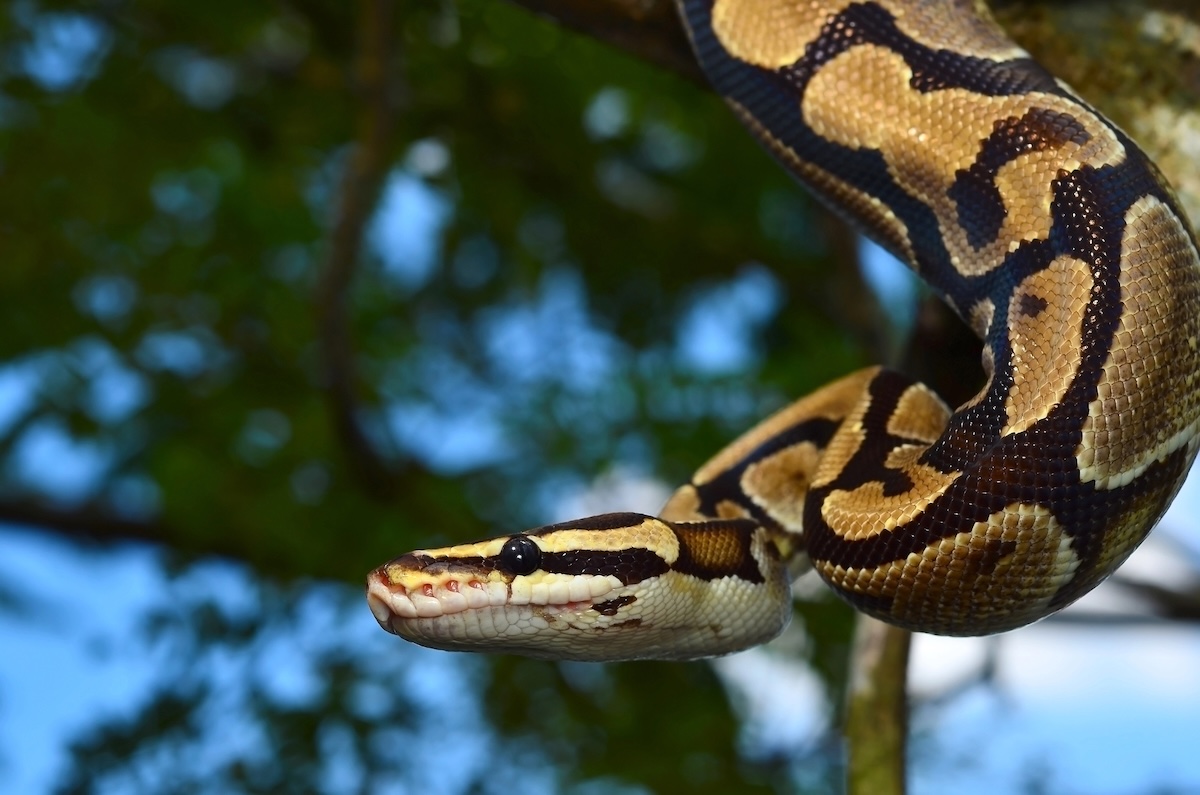 Photo Credit: keringatSENI at Deposit Photos
In the heart of Africa, where the sun casts a warm glow over the savannas and open forests, lives the Ball Python, scientifically known as Python regius. This enchanting snake, with its striking patterns of gold, brown, and black, is not just a feast for the eyes; it is a marvel of nature. Its stout, muscular body can stretch up to five feet long, making it a medium-sized python that captivates both scientists and nature lovers alike. The Ball Python’s ability to curl into a tight ball when threatened adds to its charm, showcasing a unique defense mechanism that has earned it its name.
As the sun dips below the horizon, the Ball Python comes alive, slithering through the underbrush in search of its next meal. With a keen sense of smell and specialized heat-sensing pits, it expertly hunts small mammals like mice and rats. This nocturnal lifestyle allows it to thrive in its warm, inviting habitat, where it plays a vital role in maintaining the balance of its ecosystem. The Ball Python’s presence is crucial, as it helps control rodent populations, making it a key player in the intricate web of life. Join us as we explore the fascinating world of the Ball Python, uncovering its behaviors, habitats, and the unique relationships it shares with the environment and humans.
The Ball Python, scientifically known as Python regius, occupies a special place in the animal kingdom. As a member of the phylum Chordata, which includes all animals with a backbone, this snake is part of the class Reptilia, meaning it is a reptile. What sets the Ball Python apart is its fascinating behavior of curling into a tight ball when threatened, a unique defense mechanism that gives it its common name. This species is not just a captivating pet; it also plays a significant role in its ecosystem as a predator, helping to control populations of small mammals and birds.
| Taxonomic Rank | Scientific Name | Meaning & Significance |
|---|---|---|
| Kingdom | Animalia | This name signifies that Ball Pythons are part of the vast group of multicellular organisms that are capable of movement and responsive to their environment. |
| Phylum | Chordata | Chordata means “having a notochord,” which is a flexible rod that supports the body. In Ball Pythons, this structure is replaced by a backbone as they develop. |
| Class | Reptilia | Reptilia refers to reptiles, which are cold-blooded animals that lay eggs and have scaly skin. This class includes snakes, lizards, and turtles. |
| Order | Squamata | Squamata means “scaly,” highlighting the distinctive scales that cover the skin of snakes and lizards, providing protection and aiding in movement. |
| Family | Pythonidae | This family name indicates that Ball Pythons are part of the group of large, non-venomous snakes known for their constricting behavior, which they use to subdue prey. |
| Genus | Python | The genus name Python is derived from the Greek word for a serpent, emphasizing the snake’s long, slender body and its role in various mythologies. |
| Species | regius | Regius means “royal” in Latin, likely referring to the snake’s regal appearance and its popularity among reptile enthusiasts. |
Understanding the Ball Python’s classification reveals much about its evolutionary journey. As a member of the Pythonidae family, it shares a common ancestor with other constrictor snakes, showcasing adaptations that have allowed it to thrive in diverse habitats across Africa. Its unique behaviors and physical traits, such as its ability to curl into a ball, not only serve as survival strategies but also highlight the intricate connections between species in the natural world. This classification helps us appreciate the rich tapestry of life and the evolutionary processes that shape it.
The evolutionary journey of the Ball Python, or Python regius, stretches back millions of years, weaving through the rich tapestry of life on Earth. This snake belongs to the family Pythonidae, which has ancient roots, with ancestors dating back to the late Cretaceous period, around 100 million years ago. As the world changed, so did these reptiles, adapting to new environments and challenges, ultimately leading to the Ball Python we know today.
The ancestors of the Ball Python were likely larger and more aggressive than their modern descendants. Over time, these snakes evolved to become more specialized in their hunting and survival strategies. One significant transition was the development of constriction as a primary method of subduing prey. Instead of relying solely on venom, these snakes learned to wrap around their meals, squeezing tightly until the prey could no longer breathe. This adaptation allowed them to take down larger animals, enhancing their chances of survival in the wild.
These adaptations have played a vital role in the survival of the Ball Python. Their ability to camouflage helps them evade predators while also allowing them to ambush unsuspecting prey. The manageable size and docile nature make them appealing to humans, which has led to their popularity in the pet trade. Additionally, the heat-sensing pits enhance their hunting efficiency, ensuring they can find food even in low-light conditions. Together, these traits have enabled the Ball Python to flourish in diverse environments, showcasing the wonders of evolution in action.
The Ball Python is a captivating sight, with a body that exudes both elegance and strength. Its stout, muscular form can reach lengths of up to five feet, making it a medium-sized snake. The head is distinctively triangular, tapering into a narrow snout, which gives it a striking profile. Covered in smooth, glossy scales, the Ball Python’s skin glistens under the light, showcasing a beautiful array of colors and patterns that can vary widely among individuals. This snake’s overall appearance is not just for show; it plays a vital role in its survival.
| Feature | Description |
|---|---|
| Size | Typically 3 to 5 feet long, with some individuals reaching up to 6 feet. |
| Color | Varies widely, including shades of brown, black, yellow, and gold, often with intricate patterns. |
| Skin Type | Smooth, shiny scales that help with movement and camouflage. |
| Body Shape | Stocky and muscular, allowing for powerful constriction of prey. |
| Head Shape | Triangular with a narrow snout, aiding in hunting and sensing the environment. |
The combination of these features not only makes the Ball Python visually stunning but also enhances its ability to thrive in the wild. Its coloration provides excellent camouflage among the leaf litter and branches of its natural habitat, helping it avoid predators. The smooth scales reduce friction as it moves, allowing for stealthy approaches to prey. With its strong, muscular body, the Ball Python can constrict its meals effectively, ensuring it gets the nourishment it needs to survive. Each characteristic works in harmony, showcasing the beauty and functionality of this incredible snake.
The Ball Python thrives in a variety of habitats that paint a picture of warm, inviting landscapes. These snakes are often found in grasslands, savannas, and open forests, where the sun filters through the leaves, creating a dappled light effect on the ground. They prefer areas with plenty of hiding spots, such as under rocks, in burrows, or among dense vegetation. This environment not only provides shelter but also offers ample opportunities for hunting small mammals, their primary food source.
The climate in these regions is typically warm and humid, which is ideal for the Ball Python. They thrive in temperatures ranging from 75 to 80 degrees Fahrenheit (about 24 to 27 degrees Celsius) during the day, with a slight drop at night. This temperature range helps them maintain their body heat, as they are endothermic, meaning they generate their own body warmth. The humidity levels are also crucial, as they help the snake shed its skin properly and stay hydrated.
Over time, the Ball Python has developed several adaptations that allow it to flourish in its chosen habitats. Its ability to camouflage with the earthy tones of its surroundings helps it avoid predators and ambush prey. Additionally, its constricting method of hunting allows it to take down animals much larger than its head, making it a skilled predator in the wild. These adaptations not only enhance its survival but also make it a fascinating part of the ecosystem in which it lives.
The daily life of a Ball Python is a blend of calm and calculated movements, shaped by its natural instincts. As a primarily nocturnal creature, this snake comes alive at night, slithering out of its hiding spots to explore its surroundings. During the day, it often seeks refuge in burrows or under rocks, where it can stay warm and safe from potential predators. When the sun sets, the Ball Python embarks on its nightly adventures, searching for food and basking in the moonlight. Its activities are driven by a need to hunt, thermoregulate, and find a suitable mate during the breeding season.
Socially, Ball Pythons are generally solitary animals, preferring to live alone rather than in groups. However, they do exhibit interesting behaviors when it comes to mating. During the breeding season, males may engage in a fascinating ritual of combat, where they wrestle with one another to win the attention of a female. This behavior is not just about strength; it also showcases their fitness and genetic quality. Communication among Ball Pythons is subtle, relying on body language and scent marking rather than vocalizations. They use their keen sense of smell, aided by their forked tongues, to detect pheromones, which are chemical signals that convey important information about potential mates or rivals.
| Behavior Type | Description |
|---|---|
| Activity Patterns | Ball Pythons are primarily nocturnal, hunting and exploring at night while resting during the day in sheltered spots. |
| Social Structure | These snakes are mostly solitary, but males may compete for females during the breeding season through wrestling. |
| Communication Methods | They communicate through body language and scent marking, using their forked tongues to pick up chemical signals in the environment. |
The behaviors of Ball Pythons are finely tuned to ensure their survival in the wild. By being nocturnal, they avoid many daytime predators and can hunt more effectively under the cover of darkness. Their solitary nature helps them conserve energy and reduce competition for food. The unique mating rituals not only allow for reproduction but also help maintain a healthy gene pool. Each of these behaviors plays a crucial role in the life of a Ball Python, allowing it to thrive in its natural habitat.
The Ball Python is a carnivore, which means it primarily eats meat. This snake has a diet that mainly consists of small mammals, such as mice and rats. With its keen sense of smell and heat-sensing abilities, the Ball Python is well-equipped to locate its prey. It often hunts at night, using its stealthy movements to ambush unsuspecting animals. Once it has captured its meal, the Ball Python employs a fascinating technique called constriction, wrapping its powerful body around the prey to subdue it before swallowing it whole.
| Dietary Aspect | Details |
|---|---|
| Diet Type | Carnivore |
| Favorite Foods | Small mammals, particularly mice and rats |
| Prey Items | Rodents, birds, and occasionally small reptiles |
| Hunting/Foraging Strategies | Nocturnal ambush predator, using stealth and constriction |
The diet of the Ball Python plays a crucial role in its ecology and daily routine. By preying on small mammals, it helps control their populations, contributing to the balance of its ecosystem. This snake’s nocturnal habits allow it to avoid many daytime predators while maximizing its hunting efficiency. The ability to consume prey whole means that the Ball Python can go for extended periods without eating, which is particularly advantageous in its natural habitat where food availability can fluctuate.
When it comes to reproduction, Ball Pythons have a fascinating courtship ritual that begins during the breeding season, which typically occurs from November to March. Males engage in a dance of sorts, where they will rub their bodies against females and even engage in combat with other males to win the attention of a mate. This behavior is not just about showing off; it’s a way for males to demonstrate their strength and fitness. Once a female is ready to mate, she will release pheromones, which are chemical signals that attract males. After successful mating, the female will prepare for the next exciting phase: laying eggs.
| Reproductive Aspect | Details |
|---|---|
| Gestation Period | Approximately 30 days |
| Litter Size | 4 to 10 eggs |
| Age of Maturity | 2 to 3 years |
| Name of Young | Hatchlings |
After laying her eggs, the female Ball Python takes on the role of a protective mother. She coils around her eggs to keep them warm, a behavior known as brooding. This is crucial because the eggs need a stable temperature to develop properly. The female will stay with her eggs, occasionally moving to warm them by shivering her muscles, even though she doesn’t eat during this time. After about two months, the eggs hatch, revealing tiny hatchlings that are about a foot long. These young snakes are independent from the moment they emerge, ready to start their own adventures in the wild. As they grow, they will shed their skin several times, a process called molting, which helps them grow into the magnificent adults they are destined to become.
The Ball Python, or Python regius, plays a vital role in its ecosystem, sitting comfortably in the middle of the food web. As a predator, it helps control populations of small mammals, such as rodents, which can otherwise become too numerous. However, this snake is not without its own set of challenges. It faces various threats from both natural predators and human activities, making survival a constant struggle.
To defend itself against these dangers, the Ball Python has developed several clever survival strategies. When threatened, it often curls into a tight ball, hiding its head and protecting its vital organs. This behavior not only makes it less visible to predators but also provides a sense of security. Additionally, its ability to remain motionless for long periods helps it avoid detection. By blending into its surroundings and using its natural camouflage, the Ball Python can evade many of the threats it faces in the wild.
A keystone species is an organism that has a disproportionately large impact on its environment relative to its abundance. This means that if it were removed, the ecosystem would change dramatically. The Ball Python, or Python regius, qualifies as a keystone species in its habitat. By controlling the populations of small mammals, it helps maintain the balance of its ecosystem, ensuring that no single species dominates the landscape.
Ball Pythons are primarily carnivorous, feeding on small mammals like mice and rats. This predation is crucial because it keeps these rodent populations in check. Without the Ball Python, these small mammals could reproduce unchecked, leading to overpopulation. This overabundance can result in the depletion of vegetation, as rodents consume large amounts of plant material. Additionally, the Ball Python serves as prey for larger predators, creating a vital link in the food web. Its presence supports a diverse range of wildlife, from birds of prey to larger snakes.
Moreover, Ball Pythons contribute to nutrient cycling in their ecosystems. When they consume their prey, they help break down organic matter, returning nutrients to the soil through their waste. This process enriches the environment, promoting healthy plant growth and supporting other species that rely on these plants for food and shelter. Their role as both predator and prey illustrates the interconnectedness of life in their habitats.
If Ball Pythons were to disappear from their habitats, the consequences would be significant. Rodent populations would likely surge, leading to overconsumption of plants and destabilizing the ecosystem. This imbalance could trigger a cascade of effects, impacting not only the flora but also the other animals that depend on these plants for survival. The loss of this key predator would disrupt the delicate balance of life, highlighting just how important the Ball Python is to its environment.
The Ball Python, known scientifically as Python regius, plays a crucial role in its ecosystem, primarily as a predator. By controlling the populations of small mammals, such as rodents, it helps maintain a balance in the food web. This balance is essential for the health of its habitat, which includes grasslands, savannas, and open forests. In these environments, the presence of Ball Pythons ensures that no single species becomes too dominant, allowing for a diverse array of plants and animals to thrive.
| Ecosystem Service | Impact |
|---|---|
| Population Control | Regulates small mammal numbers, preventing overpopulation. |
| Prey for Larger Predators | Serves as a food source for birds of prey and larger snakes. |
| Nutrient Cycling | Contributes to nutrient cycling through its waste, enriching the soil. |
| Habitat Structure | Influences the structure of habitats by preying on herbivores. |
The impact of the Ball Python extends beyond just its role as a predator. For instance, by keeping rodent populations in check, it helps protect crops and reduces the spread of diseases that rodents can carry. This is particularly important in agricultural areas where farmers rely on healthy ecosystems for their livelihoods. Additionally, the Ball Python’s presence can attract larger predators, such as hawks and eagles, which rely on these snakes as a food source. This interconnectedness highlights how the Ball Python influences not only its immediate surroundings but also the broader community of species that share its habitat.
The ecological importance of the Ball Python cannot be overstated. As a keystone species, its removal would lead to significant changes in the ecosystem, potentially resulting in overpopulation of prey species and a decline in plant diversity. This ripple effect underscores the delicate balance of nature, where each species, no matter how small, plays a vital role in maintaining the health and stability of its environment. By understanding and appreciating the Ball Python’s contributions, we can better protect the ecosystems that support such fascinating life forms.
In the intricate web of life, animals often form partnerships that can be beneficial, harmful, or neutral. These relationships, known as symbiosis, can take many forms. Some species work together to thrive, while others may exploit one another. Understanding these connections helps us appreciate the delicate balance of ecosystems. For the Ball Python, these relationships can be quite fascinating, showcasing how different species interact in their shared habitats.
| Species/Type | Relationship Type | Description |
|---|---|---|
| Rodents | Predatory | Ball Pythons prey on small mammals like mice and rats, helping to control their populations. |
| Birds of Prey | Predatory | While Ball Pythons are predators, they are also prey for larger birds, creating a balance in the food web. |
| Fungi | Commensal | Fungi may grow in the same habitats as Ball Pythons, benefiting from the organic matter in their environment without affecting the snakes. |
These relationships have evolved over time, shaped by the needs and behaviors of the species involved. The Ball Python’s role as a predator helps maintain the balance of its ecosystem, while its interactions with other species, whether as prey or through neutral relationships, contribute to the overall health of its habitat. By understanding these connections, we can see how every creature, big or small, plays a part in the grand story of life on Earth.
The Ball Python, known for its charming demeanor and striking patterns, is a captivating snake that holds many surprises. Let’s explore some intriguing facts about this fascinating reptile that will surely pique the interest of nature enthusiasts.
The relationship between Ball Pythons and humanity is rich and varied, stretching back through history. These snakes have been admired and feared in different cultures around the world. In ancient Africa, where they are native, Ball Pythons were often associated with royalty and power. Their striking patterns and calm demeanor made them symbols of beauty and strength. In some cultures, they were even revered in folklore, representing wisdom and protection. This historical significance has shaped how people view these snakes today, blending admiration with caution.
In modern times, interactions between Ball Pythons and humans have evolved significantly. Many people keep them as pets due to their manageable size and docile nature. This domestication has led to a booming pet trade, with various color morphs—different patterns and colors created through selective breeding—capturing the hearts of snake enthusiasts. However, this popularity has also raised concerns about conservation. In the wild, habitat loss and poaching threaten their populations. Conservation efforts are underway to protect their natural habitats and ensure that these beautiful snakes continue to thrive in the wild.
Looking ahead, the future of the relationship between Ball Pythons and humanity will likely hinge on our ability to balance admiration with responsibility. As more people become aware of the ecological importance of these snakes, there is hope for increased conservation efforts. By fostering a deeper understanding of their role in the ecosystem, we can ensure that Ball Pythons continue to enchant future generations while thriving in their natural habitats. Together, we can create a world where humans and Ball Pythons coexist harmoniously, celebrating the beauty of nature.
The Ball Python, or Python regius, currently holds a conservation status of Near Threatened according to the International Union for Conservation of Nature (IUCN). This means that while the species is not yet endangered, it faces certain risks that could lead to a decline in its population if not addressed. The population trends indicate that Ball Pythons are experiencing pressures that could affect their numbers in the wild, making conservation efforts increasingly important.
| Conservation Factor | Status/Details |
|---|---|
| IUCN Status | Near Threatened |
| Population Estimates | Unknown, but declining in some areas |
| Trend Direction | Decreasing |
One of the main threats to Ball Pythons comes from habitat loss, primarily due to agricultural expansion and urban development. As forests and grasslands are cleared for farming or building, these snakes lose their natural homes. Additionally, the illegal pet trade poses a significant risk, as many Ball Pythons are captured and sold, often without regard for their well-being. This not only reduces their numbers in the wild but can also disrupt local ecosystems where they play a vital role.
Conservation efforts are underway to help protect the Ball Python and its habitat. Organizations are working to raise awareness about the importance of this species and the threats it faces. By promoting sustainable practices and responsible pet ownership, they aim to ensure that Ball Pythons can thrive in their natural environments. With continued support and effective conservation strategies, there is hope that the population of Ball Pythons can stabilize and even recover in the future.
| Question | Answer |
|---|---|
| What is the natural habitat of a Ball Python? | Ball Pythons are native to the grasslands and forests of West and Central Africa. They prefer warm, humid environments where they can hide in burrows or under rocks, which helps them stay safe from predators. |
| What do Ball Pythons eat? | As carnivores, Ball Pythons primarily eat small mammals, such as mice and rats. They are constrictors, meaning they wrap around their prey to suffocate it before swallowing it whole. |
| How do Ball Pythons behave in the wild? | Ball Pythons are generally shy and prefer to stay hidden. They are nocturnal, which means they are most active at night, and they often curl into a ball when threatened, hence their name. |
| How do Ball Pythons reproduce? | During mating season, male Ball Pythons will seek out females and engage in a courtship dance. After mating, the female lays between 3 to 11 eggs, which she incubates by coiling around them until they hatch. |
| What threats do Ball Pythons face? | Ball Pythons are considered Near Threatened due to habitat loss and the pet trade. Their beautiful patterns make them popular pets, but over-collection can harm wild populations. |
| What are some interesting characteristics of Ball Pythons? | Ball Pythons are known for their stunning color variations and patterns, which can range from browns and yellows to more exotic hues. They can also live for over 30 years in captivity, making them long-term companions for snake lovers. |
| Can Ball Pythons be kept as pets? | Yes, Ball Pythons are one of the most popular pet snakes due to their manageable size and gentle temperament. They typically grow to about 3 to 5 feet long, making them a great choice for both new and experienced snake owners. |