Taxonomy & Classification
- Kingdom
- Animalia
- Phylum
- Arthropoda
- Class
- Arachnida
- Order
- Araneae
- Family
- Araneidae
- Genus
- Nephila

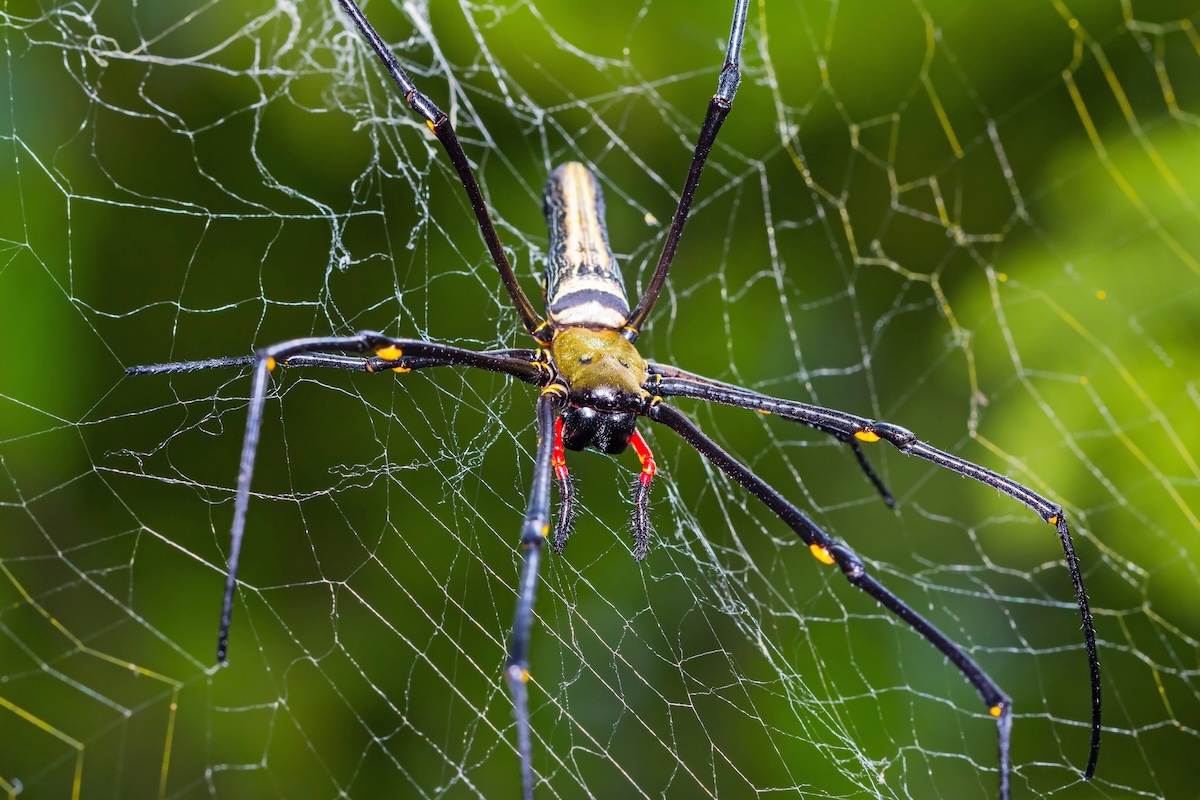 Photo Credit: teptong at Deposit Photos
In the heart of lush, tropical forests, the Banana Spider, scientifically known as Nephila, weaves its intricate web among the vibrant green leaves. This remarkable spider, often called the golden orb weaver, is a true marvel of nature. With its long, slender legs and striking golden silk, it creates webs that shimmer like jewels in the dappled sunlight. These webs can span several feet, showcasing a design that is not only beautiful but also incredibly functional, allowing the spider to catch a variety of insects that flit through its domain.
What makes the Banana Spider particularly captivating to scientists and nature enthusiasts alike is its role in the ecosystem. As a skilled predator, it helps maintain the balance of insect populations, making it a vital player in its habitat. The Banana Spider’s ability to produce silk that is both strong and flexible has fascinated researchers, leading to studies on its potential uses in medicine and technology. With its vibrant colors and impressive web-building skills, the Banana Spider invites us to explore the wonders of the natural world, reminding us of the intricate connections that sustain life in our forests.
The Banana Spider, scientifically known as Nephila, occupies a fascinating niche in the tree of life. This spider belongs to the kingdom Animalia, which includes all animals, and is part of the phylum Arthropoda, known for its jointed limbs and exoskeletons. Within the class Arachnida, which encompasses spiders, scorpions, and ticks, the Banana Spider stands out due to its impressive silk-spinning abilities. These spiders are renowned for their large, intricate webs that can be both beautiful and functional, showcasing their unique adaptations in the animal kingdom.
| Taxonomic Rank | Scientific Name | Meaning & Significance |
|---|---|---|
| Kingdom | Animalia | This name signifies the broadest category of living organisms that are multicellular and heterotrophic, meaning they consume other organisms for energy. |
| Phylum | Arthropoda | Derived from Greek words meaning “jointed feet,” this classification highlights the jointed limbs that are a hallmark of this diverse group, which includes insects and crustaceans. |
| Class | Arachnida | This term comes from the Greek word for spider, emphasizing the eight-legged nature of these animals, which distinguishes them from insects. |
| Order | Araneae | Simply meaning “spider,” this order encompasses all true spiders, showcasing their unique adaptations for predation and silk production. |
| Family | Araneidae | This family name refers to orb-weaving spiders, highlighting their ability to create circular webs that are both functional and visually striking. |
| Genus | Nephila | Derived from the Greek word for “to spin,” this name reflects the spider’s exceptional silk-spinning capabilities, which are among the strongest in the animal kingdom. |
Understanding the Banana Spider’s classification reveals much about its evolutionary journey. As a member of the Araneidae family, it shares a lineage with other orb-weaving spiders, showcasing adaptations that have allowed it to thrive in various environments. Its ability to produce silk that is not only strong but also flexible has evolved over millions of years, enabling it to capture prey effectively and survive in diverse habitats. This evolutionary history highlights the intricate connections between species and their environments, illustrating how adaptations can lead to the remarkable diversity we see in the natural world today.
The evolutionary journey of the Banana Spider, belonging to the genus Nephila, stretches back millions of years, intertwining with the rich tapestry of life on Earth. These spiders are part of the Araneidae family, which has been around since the Jurassic period, over 150 million years ago. As the world changed, so did the ancestors of the Banana Spider, adapting to new environments and challenges, leading to the vibrant species we see today.
The early ancestors of Nephila were likely small, web-weaving spiders that inhabited lush, forested areas. Over time, they developed larger body sizes and more intricate webs, which allowed them to capture bigger prey. This transition was crucial as it enabled them to thrive in diverse habitats, from tropical rainforests to temperate woodlands. The evolution of their silk, which is both strong and elastic, marked a significant leap forward. This silk not only aids in building expansive webs but also serves as a lifeline for these spiders, allowing them to escape predators and navigate their environments.
These evolutionary adaptations have played a vital role in the survival of the Banana Spider. Their size and striking coloration not only help them capture prey but also protect them from predators. The strength and design of their webs allow them to thrive in various environments, ensuring they can catch food efficiently. As they continue to adapt to changing ecosystems, the Banana Spider remains a testament to the power of evolution in shaping life on our planet.
The Banana Spider, or Nephila, presents a striking appearance that captures the imagination. With a body that can reach up to three inches long, this spider boasts long, slender legs that can stretch even further, creating an impressive span. Its exoskeleton, a hard outer shell that protects its body, glistens in the light, often reflecting hues of yellow and gold. This shimmering effect is not just for show; it plays a vital role in the spider’s survival.
| Feature | Description |
|---|---|
| Weight | Up to 0.21 ounces |
| Skin Type | Exoskeleton |
| Most Distinctive Feature | Webs that shimmer like gold in sunlight |
The Banana Spider’s shimmering webs are not only visually stunning but also serve a practical purpose. The golden sheen can attract potential prey, luring insects into their sticky traps. This clever adaptation enhances their hunting success, allowing them to thrive in their environments. Together, the spider’s size, weight, and dazzling web design create a captivating picture of nature’s ingenuity, showcasing how beauty and function often go hand in hand in the animal kingdom.
The Banana Spider thrives in lush, moist forests, where the air is thick with humidity and the sunlight filters through a canopy of vibrant green leaves. These enchanting habitats are often alive with the sounds of chirping birds and rustling leaves, creating a symphony of nature. The Banana Spider weaves its intricate webs among the branches, taking advantage of the dappled light and the abundance of insects that flit about. Sometimes, you might even spot them in backyards, where they can find a cozy corner to spin their silk masterpieces.
To flourish, the Banana Spider requires a warm and humid climate, typically found in tropical and subtropical regions. These spiders prefer environments where temperatures remain consistently mild, often between 70 to 90 degrees Fahrenheit. The moisture in the air is crucial for their survival, as it helps maintain the silk’s strength and elasticity, allowing them to create those stunning webs that can catch even the smallest of insects.
Adaptation is key for the Banana Spider, enabling it to thrive in its chosen habitats. Its long legs and large body are perfectly designed for navigating the dense foliage of forests, while its vibrant coloration helps it blend in with the surrounding environment. This camouflage not only protects it from predators but also makes it an effective hunter, as it can ambush unsuspecting prey that wanders too close to its web. By mastering the art of web-building and adapting to its surroundings, the Banana Spider has carved out a successful niche in the natural world.
The Banana Spider, known scientifically as Nephila, leads a life that is both intriguing and methodical. Each day begins with the spider weaving its intricate web, a masterpiece of silk that can span several feet. This web serves as both a home and a hunting ground, where the spider patiently waits for unsuspecting prey to become ensnared. As the sun rises, the Banana Spider is often seen basking in the warm light, which helps it maintain its body temperature. Throughout the day, it engages in various activities, including repairing its web and occasionally consuming captured insects, ensuring it remains nourished and ready for the next hunt.
While Banana Spiders are primarily solitary creatures, they do exhibit interesting behaviors when it comes to their interactions with others of their kind. These spiders are not known for forming social groups, but they can sometimes be found in close proximity to one another, especially in areas rich in food resources. When they encounter each other, they often display a cautious demeanor, carefully assessing whether to coexist or retreat. Communication among Banana Spiders is subtle, relying on vibrations and the silk threads of their webs to convey messages about territory and readiness to mate.
| Behavior Type | Description |
|---|---|
| Web Building | Banana Spiders create large, intricate webs that serve as both a trap for prey and a protective home. |
| Solitary Living | These spiders prefer to live alone, only interacting with others during mating or when food is abundant. |
| Vibration Communication | They use vibrations in their webs to communicate with potential mates or to signal danger from other spiders. |
| Prey Capture | Banana Spiders are skilled hunters, waiting patiently in their webs for insects to become trapped. |
The behaviors of the Banana Spider are finely tuned to ensure its survival in the wild. By weaving strong webs and maintaining a solitary lifestyle, it minimizes competition for food and reduces the risk of predation. The ability to communicate through vibrations allows it to navigate its environment effectively, whether in search of a mate or avoiding threats. Each of these behaviors plays a crucial role in the spider’s life, helping it thrive in the lush habitats it calls home.
The Banana Spider, or Nephila, is a carnivore, meaning it primarily eats other animals. Its diet mainly consists of insects, which it skillfully captures using its impressive web. These webs are not just ordinary; they are large and strong, designed to ensnare unsuspecting prey that flutters too close. The Banana Spider’s feeding behavior is a blend of patience and precision, as it waits for insects to become trapped before moving in for a meal.
| Dietary Aspect | Details |
|---|---|
| Diet Type | Carnivore |
| Favorite Foods | Mostly insects |
| Prey Items | Flies, moths, beetles, and other small insects |
| Hunting/Foraging Strategies | Uses large, sticky webs to catch prey; waits patiently for insects to get trapped |
The Banana Spider’s diet plays a crucial role in its ecology and daily routine. By preying on insects, it helps control their populations, contributing to the balance of its forest habitat. This spider’s ability to weave such effective webs not only aids in its survival but also showcases the intricate relationships within the ecosystem. Each meal fuels its energy for web-building and reproduction, making its diet essential for both its individual life and the health of its environment.
The mating behavior of the Banana Spider is a captivating spectacle, especially during the breeding season, which typically occurs in warm, humid months. Males often engage in elaborate courtship rituals to attract females, showcasing their vibrant colors and performing intricate movements. Once a female selects a mate, the pair will mate, and the female will begin the process of laying eggs shortly after. This fascinating dance of life ensures the continuation of their species in the lush environments they call home.
| Reproductive Aspect | Details |
|---|---|
| Gestation Period | Three to four weeks, depending on the weather |
| Litter Size | Varies, but can be several hundred eggs |
| Age of Maturity | Between 4th and 6th molt |
| Name of Young | Spiderlings, hatchlings |
After the eggs are laid, the female Banana Spider carefully guards her egg sac, which can contain hundreds of tiny eggs. Once the spiderlings hatch, they emerge as miniature versions of their parents, ready to face the world. These young spiders are independent from the start, relying on their instincts to find food and shelter. As they grow, they will molt several times, shedding their exoskeletons to accommodate their increasing size. This process continues until they reach maturity, transforming from delicate hatchlings into the striking adults that weave their webs high in the trees.
The Banana Spider, or Nephila, plays a vital role in its ecosystem, sitting comfortably in the middle of the food web. As a skilled predator, it helps control insect populations, while also serving as a food source for larger animals. This delicate balance is crucial for maintaining the health of its forest habitat, where every creature has its part to play.
To defend itself against these threats, the Banana Spider employs a variety of clever strategies. Its impressive web not only traps prey but also serves as a protective barrier against predators. When danger approaches, the spider can quickly retreat to a hidden spot or blend into its surroundings, using its natural colors to camouflage itself. Additionally, the Banana Spider’s silk is incredibly strong, allowing it to escape quickly if a predator gets too close. These survival tactics help ensure that this fascinating spider continues to thrive in its vibrant forest home.
A keystone species is an organism that has a disproportionately large impact on its environment relative to its abundance. This means that if it were removed, the ecosystem would change dramatically. The Banana Spider, scientifically known as Nephila, qualifies as a keystone species due to its significant role in controlling insect populations and influencing the structure of its habitat.
The Banana Spider is a masterful predator, primarily feeding on insects. By capturing and consuming these creatures, it helps maintain a balance in the ecosystem. For instance, if the Banana Spider were to disappear, the populations of insects it preys upon could explode, leading to overgrazing of plants and potential harm to other species that rely on those plants for food and shelter. This spider’s webs also provide a unique habitat for smaller organisms, creating microenvironments that support various life forms.
Moreover, the Banana Spider contributes to nutrient cycling in its ecosystem. When it captures and digests its prey, the nutrients from the insects are returned to the soil through the spider’s waste. This process enriches the soil, promoting plant growth and supporting the entire food web. Additionally, the silk produced by the Banana Spider is not only a tool for capturing prey but can also serve as a resource for other animals, such as birds that may use it for nest building.
If the Banana Spider were to vanish from its ecosystem, the consequences could be severe. Insect populations would likely surge, leading to increased competition for resources among other species. This imbalance could result in the decline of plant life, which many animals depend on for food and shelter. Ultimately, the loss of the Banana Spider would ripple through the ecosystem, demonstrating just how vital this seemingly small creature is to the health and stability of its environment.
The Banana Spider, scientifically known as Nephila, plays a crucial role in its ecosystem, particularly in moist forests and even in our backyards. This spider is a master weaver, creating large, intricate webs that not only serve as traps for its prey but also influence the surrounding environment. By controlling insect populations, the Banana Spider helps maintain a balance in the ecosystem, ensuring that no single species overwhelms the habitat. Its presence is a testament to the interconnectedness of life, where each organism contributes to the health of its surroundings.
| Ecosystem Service | Impact |
|---|---|
| Insect Population Control | Reduces the number of pests, benefiting plants and other animals. |
| Food Source | Serves as prey for birds and other predators, supporting the food web. |
| Soil Health | Decomposing prey contributes nutrients back into the soil. |
| Pollination Support | Encourages a healthy insect population that aids in pollination. |
The Banana Spider’s influence extends beyond its immediate surroundings. For instance, by preying on various insects, it helps control populations of pests that might otherwise damage plants. This is especially important in gardens and agricultural areas, where a balance of species can lead to healthier crops. Additionally, the silk produced by these spiders is not just a tool for catching food; it can also provide shelter for smaller creatures and contribute to the overall biodiversity of the area. The webs themselves can catch rainwater, which may benefit nearby plants and animals.
In a broader ecological context, the Banana Spider exemplifies the delicate balance of nature. As a keystone species, its presence is vital for the health of its ecosystem. If the Banana Spider were to disappear, the effects would ripple through the food web, potentially leading to overpopulation of certain insects and a decline in plant health. This highlights the importance of every species, no matter how small, in maintaining the intricate web of life that sustains our planet. By understanding and appreciating the role of the Banana Spider, we can better protect the ecosystems that support us all.
In the intricate web of life, symbiosis refers to the close and often long-term interactions between different species. These relationships can take many forms, including mutualism, where both species benefit, parasitism, where one benefits at the expense of the other, and commensalism, where one benefits while the other is neither helped nor harmed. The Banana Spider, or Nephila, engages in various ecological partnerships that highlight the complexity of nature and the interconnectedness of all living things.
| Species/Type | Relationship Type | Description |
|---|---|---|
| Ants | Mutualistic | Ants protect the Banana Spider’s web from herbivores and other threats, while the spider provides a safe habitat for the ants. |
| Birds | Commensal | Some birds may use the Banana Spider’s web for nesting materials, benefiting from the spider’s work without affecting it. |
| Parasitoid Wasps | Parasitic | These wasps lay their eggs in or on the Banana Spider, and the larvae feed on the spider, ultimately harming it. |
The evolution of these relationships showcases the dynamic nature of ecosystems. Over time, species like the Banana Spider have adapted to form partnerships that enhance their survival and reproductive success. Mutualistic relationships, such as those with ants, demonstrate how cooperation can lead to greater benefits for both parties. Meanwhile, parasitic interactions remind us that not all relationships are beneficial, highlighting the delicate balance of life in the wild. Understanding these connections helps us appreciate the complexity of nature and the roles each species plays in maintaining ecological harmony.
The Banana Spider, known scientifically as Nephila, is a captivating creature that enchants nature lovers with its beauty and intriguing behaviors. Here are some surprising facts that showcase just how remarkable this spider truly is.
The Banana Spider, or Nephila, has woven its way into human history and culture for centuries. In many regions, these spiders are admired for their stunning webs and vibrant colors. Ancient cultures often viewed them as symbols of creativity and patience, reflecting the intricate artistry of their silk structures. Folklore in some areas even attributes mystical qualities to these spiders, believing they bring good luck or protection. As humans have encountered these remarkable arachnids, they have sparked curiosity and wonder, leading to a rich tapestry of stories and beliefs surrounding them.
Today, the relationship between Banana Spiders and humanity is a blend of admiration and caution. While many people appreciate their role in controlling insect populations, some may fear their presence due to misconceptions about their size and venom. Conservation efforts are increasingly important as habitats are threatened by urban development and climate change. In some regions, educational programs aim to dispel myths and promote understanding of these spiders, highlighting their ecological importance. However, conflicts can arise when people inadvertently destroy their webs or habitats, leading to a delicate balance between coexistence and conflict.
As we look to the future, the relationship between Banana Spiders and humanity holds promise. With increased awareness and education, people can learn to appreciate these spiders not just for their beauty, but also for their vital role in maintaining healthy ecosystems. By fostering a sense of stewardship, we can ensure that these fascinating creatures continue to thrive alongside us, weaving their intricate webs in the fabric of our shared environment.
The conservation status of the Banana Spider, scientifically known as Nephila, is currently classified as “Least Concern” by the International Union for Conservation of Nature (IUCN). This means that, overall, these spiders are not facing immediate threats to their survival. With an estimated population size in the millions, the Banana Spider appears to be thriving in its natural habitats. However, while their numbers are stable, ongoing monitoring is essential to ensure that they continue to flourish in the wild.
| Conservation Factor | Status/Details |
|---|---|
| IUCN Status | Least Concern |
| Estimated Population Size | Possibly millions |
| Population Trend | Stable |
Despite their current stable status, Banana Spiders face several threats that could impact their populations in the future. Habitat loss is a significant concern, as deforestation and urban development reduce the lush environments where these spiders thrive. Additionally, climate change poses risks by altering weather patterns and affecting the delicate ecosystems that support their life cycles. Pollution can also harm their habitats, making it crucial to address these challenges to ensure their continued survival.
Conservation efforts for the Banana Spider focus on habitat preservation and raising awareness about the importance of these fascinating arachnids. By protecting their natural environments, we can help maintain the delicate balance of ecosystems where they play a vital role. As long as we remain vigilant and proactive in our conservation strategies, the outlook for the Banana Spider remains positive, allowing future generations to marvel at their beauty and ecological significance.
| Question | Answer |
|---|---|
| Where do Banana Spiders live? | Banana Spiders thrive in moist forests and can often be found in backyards. They prefer warm, humid environments where they can build their intricate webs. |
| What do Banana Spiders eat? | As carnivores, Banana Spiders primarily feast on insects. They use their webs to catch prey, which can include flies, moths, and other small bugs. |
| How do Banana Spiders behave? | Banana Spiders are known for their unique web-building skills. Their webs shimmer like gold in the sunlight, making them not only functional but also beautiful. |
| How do Banana Spiders reproduce? | During mating season, male Banana Spiders will perform a courtship dance to attract females. After mating, the female lays eggs in a silk sac, which she protects until they hatch. |
| What threats do Banana Spiders face? | While Banana Spiders are currently classified as Least Concern, they can face threats from habitat destruction and pesticide use. These factors can reduce their populations and disrupt their ecosystems. |
| What is a unique characteristic of Banana Spiders? | One of the most distinctive features of Banana Spiders is their shimmering webs. The way these webs catch the light can create a stunning golden effect, making them a favorite among nature lovers. |
| Are Banana Spiders dangerous to humans? | Banana Spiders are not typically dangerous to humans. While they can bite if threatened, their venom is not harmful to most people, causing only mild irritation. |