Taxonomy & Classification
- Kingdom
- Animalia
- Phylum
- Chordata
- Class
- Reptilia
- Order
- Squamata
- Family
- Colubridae
- Genus
- Nerodia
- Species
- Nerodia fasciata

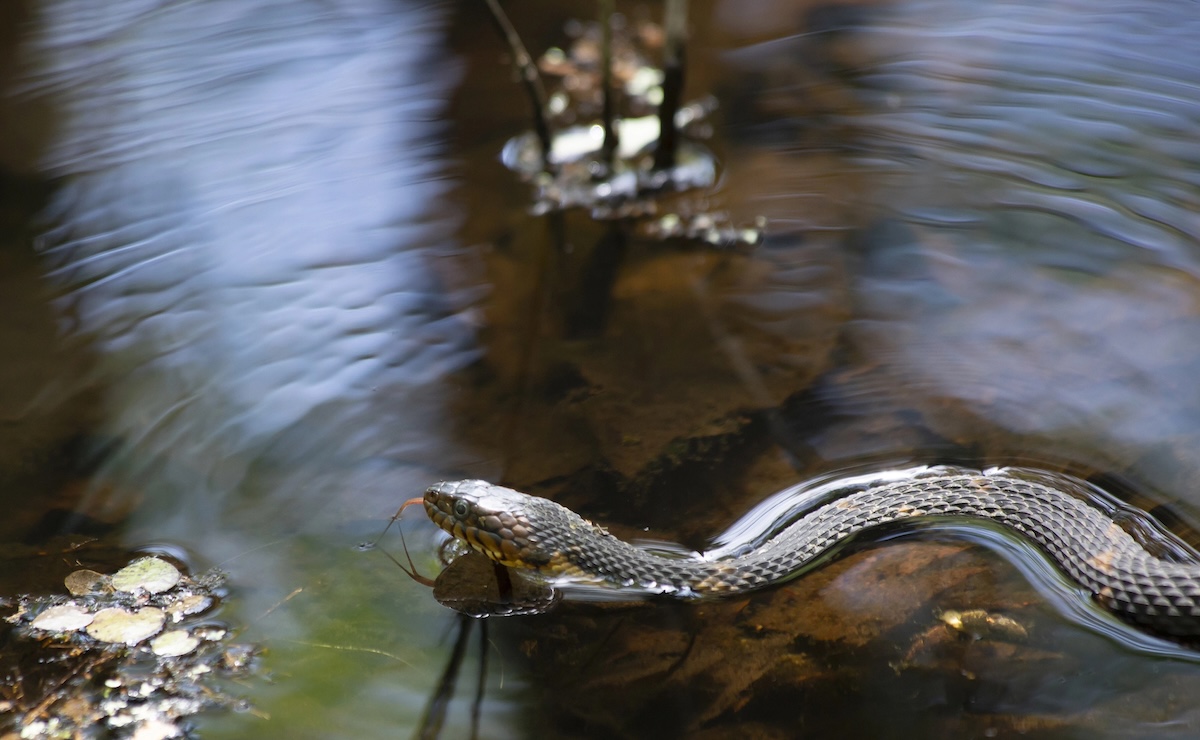 Photo Credit: tornado1998 at Deposit Photos
In the shimmering waters of North America’s rivers and lakes, the Banded Water Snake, or Nerodia fasciata, glides effortlessly through its aquatic realm. With its striking pattern of dark bands against a lighter background, this non-venomous snake is a master of camouflage, blending seamlessly into the sun-dappled shallows. As it navigates the gentle currents, its robust body, which can grow up to four feet long, showcases both strength and grace, captivating the attention of scientists and nature lovers alike.
What makes the Banded Water Snake particularly intriguing is its adaptability to various environments, from slow-moving streams to the edges of tranquil lakes. This snake is not just a passive inhabitant of its watery world; it plays a vital role in the ecosystem, acting as both predator and prey. With a diet that includes frogs, fish, and even birds, the Banded Water Snake helps maintain the balance of life in its habitat. As we dive deeper into the life of this remarkable reptile, we will explore its behaviors, reproductive habits, and the unique relationships it forms within its ecosystem, revealing why this creature continues to fascinate those who seek to understand the wonders of the natural world.
The Banded Water Snake, known scientifically as Nerodia fasciata, occupies a special place in the tree of life. This non-venomous snake is part of the Colubridae family, which includes many of the world’s most common snakes. What sets the Banded Water Snake apart is its remarkable adaptability to aquatic environments, where it thrives in rivers, lakes, and wetlands. With its striking banded pattern, this snake not only blends into its surroundings but also plays a vital role in the ecosystem as both predator and prey.
| Taxonomic Rank | Scientific Name | Meaning & Significance |
|---|---|---|
| Kingdom | Animalia | This name signifies that the Banded Water Snake is part of the vast group of multicellular organisms known as animals, which are characterized by their ability to move and respond to their environment. |
| Phylum | Chordata | Chordata means “having a notochord,” a flexible rod that supports the body. This group includes all animals with a backbone, highlighting the Banded Water Snake’s place among vertebrates. |
| Class | Reptilia | Reptilia refers to reptiles, which are cold-blooded animals that lay eggs and have scaly skin. The Banded Water Snake’s scaly body is a key feature of this class. |
| Order | Squamata | Squamata means “scaly,” a fitting name for this order that includes snakes and lizards. The Banded Water Snake’s smooth, shiny scales help it glide through water with ease. |
| Family | Colubridae | This family includes many harmless snakes. The Banded Water Snake’s non-venomous nature is typical of Colubridae, making it a safe neighbor in its aquatic habitat. |
| Genus | Nerodia | Nerodia is derived from the Greek word for “water,” reflecting the snake’s strong association with aquatic environments, where it hunts and lives. |
Understanding the Banded Water Snake’s classification reveals much about its evolutionary journey. As a member of the Colubridae family, it shares a common ancestry with a diverse group of snakes that have adapted to various habitats. Its aquatic lifestyle and physical adaptations, such as its banded coloration, showcase how evolution shapes species to thrive in specific environments. This snake not only exemplifies the beauty of biodiversity but also highlights the intricate connections within the animal kingdom.
The evolutionary journey of the Banded Water Snake, or Nerodia fasciata, stretches back millions of years, intertwining with the history of its ancestors and the environments they inhabited. This snake belongs to the Colubridae family, a diverse group that has adapted to various habitats across the globe. As we trace its lineage, we find a story of survival and adaptation that reflects the changing landscapes of North America.
The ancestors of the Banded Water Snake were likely semi-aquatic reptiles that roamed the wetlands and rivers of ancient ecosystems. Over time, these early snakes developed traits that allowed them to thrive in aquatic environments. One significant transition was the evolution of a more streamlined body shape, which aids in swimming. This adaptation not only improved their ability to navigate through water but also helped them catch prey more efficiently. As they evolved, they also developed specialized scales that reduce drag, making them agile hunters in their watery domains.
The adaptations of the Banded Water Snake have been crucial for its survival in a world filled with challenges. Its coloration provides effective camouflage, allowing it to ambush prey while avoiding detection by larger predators. The ability to dive and hold its breath enhances its hunting skills and escape tactics. With a flexible diet, it can take advantage of the available food sources in its habitat, ensuring it remains well-fed. Together, these traits illustrate how the Banded Water Snake has successfully navigated the evolutionary landscape, thriving in its aquatic world.
The Banded Water Snake is a striking sight, gliding gracefully through its watery habitat. With a robust body that can reach lengths of up to four feet, this snake is both powerful and agile. Its smooth, shiny scales reflect the sunlight, creating a shimmering effect as it moves. The snake’s head is slightly wider than its neck, giving it a distinctive look that helps it stand out among the reeds and grasses of its environment.
| Feature | Description |
|---|---|
| Size | Up to 4 feet long |
| Color | Dark brown or gray with bold, dark bands |
| Skin Type | Smooth, shiny scales |
| Body Shape | Robust and cylindrical |
| Head Shape | Wider than the neck, slightly flattened |
These physical features are not just for show; they play vital roles in the Banded Water Snake’s survival. The dark bands on its body provide excellent camouflage against the shadows of the water and the muddy banks, helping it avoid predators. Its smooth scales allow for easy movement through water, making it an efficient swimmer as it hunts for fish and amphibians. The robust body shape gives it the strength to capture prey and navigate through dense vegetation. Together, these characteristics make the Banded Water Snake a master of its aquatic domain.
The Banded Water Snake thrives in lush, watery environments that paint a picture of tranquility and life. Imagine winding rivers, slow-moving streams, and the edges of lakes, where the sun glimmers on the surface of the water. These snakes are often found basking on sun-warmed rocks or nestled among the reeds and grasses that line the banks. Their habitat is a vibrant tapestry of aquatic plants, providing both shelter and hunting grounds for this skilled swimmer.
The Banded Water Snake prefers warm, humid climates, which are essential for its survival. These snakes are most commonly found in areas where temperatures are mild to hot, allowing them to remain active throughout the year. They thrive in environments with plenty of water, as they are excellent swimmers and rely on aquatic habitats for hunting and breeding. The presence of vegetation is also crucial, as it provides cover from predators and a place to ambush prey.
Adaptations have finely tuned the Banded Water Snake to its watery world. Its flattened body allows for smooth movement through water, while its coloration helps it blend into the shadows of the riverbank. This camouflage is vital for both hunting and evading larger predators. Additionally, their ability to hold their breath for extended periods enables them to dive and explore underwater, searching for fish and amphibians. These adaptations make the Banded Water Snake a true master of its aquatic domain.
The Banded Water Snake leads a life that is both active and adaptable, primarily engaging in daily activities during the daylight hours. As a diurnal creature, it spends its time basking in the sun, swimming gracefully through the water, and hunting for food. These snakes are skilled swimmers, using their muscular bodies to glide through their aquatic habitats. They often hunt for fish, frogs, and small invertebrates, employing a stealthy approach to catch their prey. When not hunting, they can be seen coiled on branches or basking on rocks, soaking up the warmth of the sun to regulate their body temperature.
Socially, Banded Water Snakes are generally solitary, preferring to roam alone except during the mating season. This means that most of the time, you’ll find them enjoying their own company, exploring their territory without the need for a partner. However, when it’s time to mate, these snakes come together, engaging in a fascinating courtship dance. During this period, males may compete for the attention of females, showcasing their strength and agility. This brief social interaction is crucial for reproduction, ensuring the continuation of their species.
| Behavior Type | Description |
|---|---|
| Activity Patterns | Diurnal, meaning they are active during the day, hunting and basking in the sun. |
| Social Structure | Primarily solitary, with social interactions limited to mating season. |
| Communication Methods | Use body language and scent marking to communicate, especially during mating. |
The behaviors of the Banded Water Snake are finely tuned to ensure their survival in the wild. By being diurnal, they can take advantage of the warmth of the sun to stay active and hunt effectively. Their solitary nature allows them to avoid competition for resources, while their brief social interactions during mating ensure genetic diversity. This combination of behaviors not only helps them thrive in their watery habitats but also plays a vital role in maintaining the balance of their ecosystem.
The Banded Water Snake has a diverse diet that reflects its adaptability to various aquatic environments. As an omnivore, it enjoys a mix of foods, primarily feasting on frogs, fish, and even birds. This snake is a skilled hunter, using its keen eyesight and stealth to ambush prey. It often waits patiently near the water’s edge, ready to strike when an unsuspecting meal comes close.
| Dietary Aspect | Details |
|---|---|
| Diet Type | Omnivore |
| Favorite Foods | Frogs, fish, and birds |
| Prey Items | Small amphibians, various fish species, and nestling birds |
| Hunting/Foraging Strategies | Ambush predator, often waits at water’s edge for prey to approach |
This varied diet plays a crucial role in the Banded Water Snake’s ecology. By consuming different types of prey, it helps maintain the balance of the ecosystems it inhabits. Its hunting habits also influence the populations of frogs, fish, and birds, showcasing the interconnectedness of life in these vibrant habitats. As it navigates its watery world, the Banded Water Snake not only sustains itself but also contributes to the health of its environment, making it an important player in the natural community.
As the warm days of spring arrive, the Banded Water Snake begins its courtship rituals. Mating typically occurs from late spring to early summer, when temperatures rise and food becomes plentiful. During this time, males engage in a fascinating dance, often competing for the attention of females. They may wrap around each other, showcasing their strength and agility. Once a female selects a mate, they will copulate, and the female will store the male’s sperm until she is ready to fertilize her eggs.
| Reproductive Aspect | Details |
|---|---|
| Gestation Period | Approximately 2 to 3 months |
| Litter Size | 10 to 30 young |
| Age of Maturity | 2 to 3 years |
| Name of Young | Hatchlings |
After the gestation period, the female Banded Water Snake gives birth to live young, known as hatchlings. These tiny snakes are fully formed and ready to swim as soon as they are born. Unlike many reptiles that lay eggs, the Banded Water Snake is viviparous, meaning it gives birth to live young. Once born, the hatchlings are on their own, quickly learning to hunt and navigate their watery world. They grow rapidly, reaching maturity in just a few years, and begin the cycle anew, contributing to the vibrant ecosystem they inhabit.
The Banded Water Snake plays a vital role in its ecosystem, sitting comfortably in the middle of the food web. As both predator and prey, it helps maintain the balance of aquatic life. This snake feasts on a variety of small animals, such as fish and amphibians, while also being a target for larger predators. Its presence indicates a healthy environment, showcasing the interconnectedness of species in freshwater habitats.
To defend itself against these threats, the Banded Water Snake employs several clever strategies. When feeling threatened, it may dive underwater, using its swimming skills to escape detection. If cornered, it can flatten its body and hiss loudly, making itself appear larger and more intimidating. Some individuals even mimic the behavior of venomous snakes, like rattlesnakes, by shaking their tails in dry leaves to create a warning sound. These survival tactics help the Banded Water Snake navigate the dangers of its environment, ensuring its continued presence in the wild.
A keystone species is an organism that has a disproportionately large impact on its environment relative to its abundance. In other words, if it were removed, the ecosystem would change dramatically. The Banded Water Snake, or Nerodia fasciata, qualifies as a keystone species in its aquatic habitats. This non-venomous snake plays a crucial role in maintaining the balance of its ecosystem, influencing both the populations of its prey and the overall health of the waterways it inhabits.
The Banded Water Snake primarily feeds on frogs, fish, and even birds, making it an important predator in its environment. By controlling the populations of these animals, it helps prevent any one species from becoming too dominant. For example, if frog populations were to explode unchecked, they could overconsume aquatic plants and disrupt the entire ecosystem. The snake’s presence helps keep these populations in check, ensuring a diverse and balanced habitat.
Additionally, the Banded Water Snake serves as a food source for larger predators, such as birds of prey and larger mammals. This means that it not only influences the species it preys upon but also supports the animals that rely on it for sustenance. Its role in the food web is vital, as it connects various levels of the ecosystem, from the smallest fish to the largest birds.
The Banded Water Snake also contributes to nutrient cycling in its habitat. As it consumes prey and eventually decomposes, it returns essential nutrients to the soil and water, promoting plant growth and supporting the entire aquatic community. This process is crucial for maintaining the health of the ecosystem, as it ensures that energy flows through the food web effectively.
If the Banded Water Snake were to disappear, the consequences could be severe. Without this snake, frog and fish populations might surge, leading to overgrazing of aquatic plants and a decline in water quality. This imbalance could ripple through the ecosystem, affecting not only the plants and animals that share its habitat but also the larger predators that rely on them. Ultimately, the loss of the Banded Water Snake would disrupt the delicate balance of its environment, highlighting just how vital this seemingly simple snake is to the health of its ecosystem.
The Banded Water Snake, or Nerodia fasciata, plays a crucial role in its ecosystem, acting as both a predator and prey within its watery habitat. This adaptable snake thrives in environments like rivers, lakes, and marshes, where it contributes to the balance of aquatic life. By controlling populations of frogs, fish, and other small animals, the Banded Water Snake helps maintain a healthy ecosystem. Its presence indicates a thriving environment, making it an important species for ecological monitoring.
| Ecosystem Service | Impact |
|---|---|
| Population Control | Regulates the numbers of frogs and fish, preventing overpopulation. |
| Prey for Larger Animals | Serves as a food source for birds of prey and larger mammals, supporting the food web. |
| Habitat Indicator | Indicates the health of aquatic ecosystems, as they thrive in clean, well-balanced environments. |
The Banded Water Snake’s influence can be seen in various ways. For instance, by preying on frogs, it helps control their populations, which in turn affects the insect populations that frogs feed on. This creates a ripple effect throughout the ecosystem. Additionally, as a food source for birds like herons and egrets, the Banded Water Snake supports these larger predators, ensuring that energy flows through the food web. Its presence in an area often signals a rich and diverse habitat, making it a key player in maintaining ecological balance.
In a broader sense, the Banded Water Snake is a keystone species, meaning its role is vital for the health of its ecosystem. If this snake were to disappear, the effects would be felt throughout the food web, leading to imbalances that could harm many other species. By understanding and protecting the Banded Water Snake, we also safeguard the intricate web of life that depends on it, highlighting the importance of every creature in our natural world.
In the intricate web of life, symbiosis refers to the close interactions between different species, which can take on various forms. These relationships can be mutualistic, where both species benefit; parasitic, where one benefits at the expense of the other; or commensal, where one benefits while the other is neither helped nor harmed. The Banded Water Snake, known for its adaptability and presence in aquatic environments, engages in several fascinating ecological relationships that highlight the interconnectedness of nature.
| Species/Type | Relationship Type | Description |
|---|---|---|
| Frogs | Mutualistic | The Banded Water Snake preys on frogs, helping to control their populations. In turn, the presence of the snake can encourage frogs to adapt and thrive in safer areas, promoting biodiversity. |
| Fish | Commensal | While the snake hunts fish, it does not directly affect their populations. The fish benefit from the snake’s presence as it helps maintain a balanced ecosystem, which can lead to healthier aquatic environments. |
| Birds | Parasitic | Some birds may nest near the Banded Water Snake, benefiting from the snake’s ability to deter larger predators. However, if the snake gets too close, it can pose a threat to the birds’ young, creating a complex relationship. |
The evolution of these relationships showcases the dynamic nature of ecosystems. Over time, species like the Banded Water Snake have adapted to their environments and the organisms within them, leading to a balance that benefits all involved. By preying on certain species, the snake helps maintain population control, while its interactions with other animals can lead to unexpected advantages or challenges. These partnerships illustrate the delicate dance of life, where every creature plays a role in the grand story of survival and adaptation.
The Banded Water Snake is a captivating inhabitant of North America’s waterways, showcasing a blend of adaptability and intriguing behaviors that make it a true marvel of nature. Here are some surprising facts that will surely pique the interest of nature enthusiasts.
The Banded Water Snake, or Nerodia fasciata, has long been a part of human history, weaving its way into the cultural fabric of communities near its watery habitats. Indigenous peoples often viewed this snake as a symbol of adaptability and resilience, reflecting the importance of water in their lives. Folklore and stories passed down through generations sometimes featured the Banded Water Snake as a guardian of rivers and lakes, emphasizing its role in the ecosystem. These historical encounters highlight a relationship built on respect and recognition of the snake’s ecological significance.
In modern times, interactions between humans and Banded Water Snakes have evolved, often marked by a mix of conservation efforts and conflict. As urban development encroaches on natural habitats, these snakes face threats from habitat loss and pollution. However, many conservationists are working to protect their environments, recognizing the Banded Water Snake’s role in maintaining healthy ecosystems. While some people may fear snakes and view them as pests, education about their non-venomous nature and ecological importance is helping to foster a more positive relationship.
Looking ahead, the future of the relationship between Banded Water Snakes and humanity hinges on our ability to coexist harmoniously. As awareness grows about the importance of biodiversity and the roles different species play in our ecosystems, there is hope for a more respectful and understanding approach to wildlife. By fostering a sense of stewardship and appreciation for these remarkable snakes, we can ensure that they continue to thrive alongside us in the vibrant tapestry of nature.
The Banded Water Snake, known scientifically as Nerodia fasciata, currently holds a conservation status of “Least Concern” according to the International Union for Conservation of Nature (IUCN). This means that, overall, the species is not facing immediate threats that could lead to its extinction. Population trends suggest that the Banded Water Snake remains stable across its range, which includes various freshwater habitats in the southeastern United States. While local populations may experience fluctuations, the species as a whole is doing well.
| Conservation Factor | Status/Details |
|---|---|
| IUCN Status | Least Concern |
| Population Estimates | Stable |
| Trend Direction | Stable |
Despite its stable status, the Banded Water Snake faces several threats that could impact its future. Habitat loss is a significant concern, as wetlands and waterways are often drained or polluted for development and agriculture. Additionally, climate change poses risks by altering water levels and temperatures, which can affect the snake’s breeding and feeding patterns. Human activities, such as fishing and boating, can also disturb their habitats, making it harder for these snakes to thrive.
Conservation efforts are underway to ensure the continued survival of the Banded Water Snake. Organizations and local communities are working to protect wetlands and restore natural habitats, which are crucial for the snake’s well-being. Public education about the importance of this species and its role in the ecosystem is also vital. With ongoing efforts and awareness, the outlook for the Banded Water Snake remains positive, allowing future generations to appreciate this fascinating inhabitant of North America’s waterways.
| Question | Answer |
|---|---|
| What is the habitat of the Banded Water Snake? | The Banded Water Snake is commonly found near freshwater bodies like rivers, lakes, and swamps. They prefer areas with plenty of vegetation, which provides cover and hunting grounds. |
| What does the Banded Water Snake eat? | This snake is an omnivore, meaning it eats both plants and animals. Its diet mainly consists of fish, amphibians, and small invertebrates, making it a skilled hunter in the water. |
| How does the Banded Water Snake behave? | Banded Water Snakes are generally non-aggressive and prefer to escape rather than confront threats. They are excellent swimmers and often bask on rocks or logs near the water's edge. |
| How does the Banded Water Snake reproduce? | This species is ovoviviparous, which means the female gives birth to live young rather than laying eggs. The young snakes are born fully formed and ready to swim away shortly after birth. |
| What threats do Banded Water Snakes face? | While the Banded Water Snake is currently listed as Least Concern, it still faces threats from habitat destruction and pollution. Additionally, they can be harmed by human activities, such as fishing and boating. |
| What are some interesting characteristics of the Banded Water Snake? | One fascinating feature of the Banded Water Snake is its ability to change color slightly based on its environment. They also have a distinctive banded pattern that helps them blend into their surroundings, making them less visible to predators. |
| Are Banded Water Snakes dangerous to humans? | No, Banded Water Snakes are not dangerous to humans. They are non-venomous and typically avoid contact with people, preferring to retreat when threatened. |