Taxonomy & Classification
- Kingdom
- Animalia
- Phylum
- Chordata
- Class
- Mammalia
- Order
- Carnivora
- Family
- Pinnipedia
- Genus
- Phoca
- Species
- Phoca vitulina

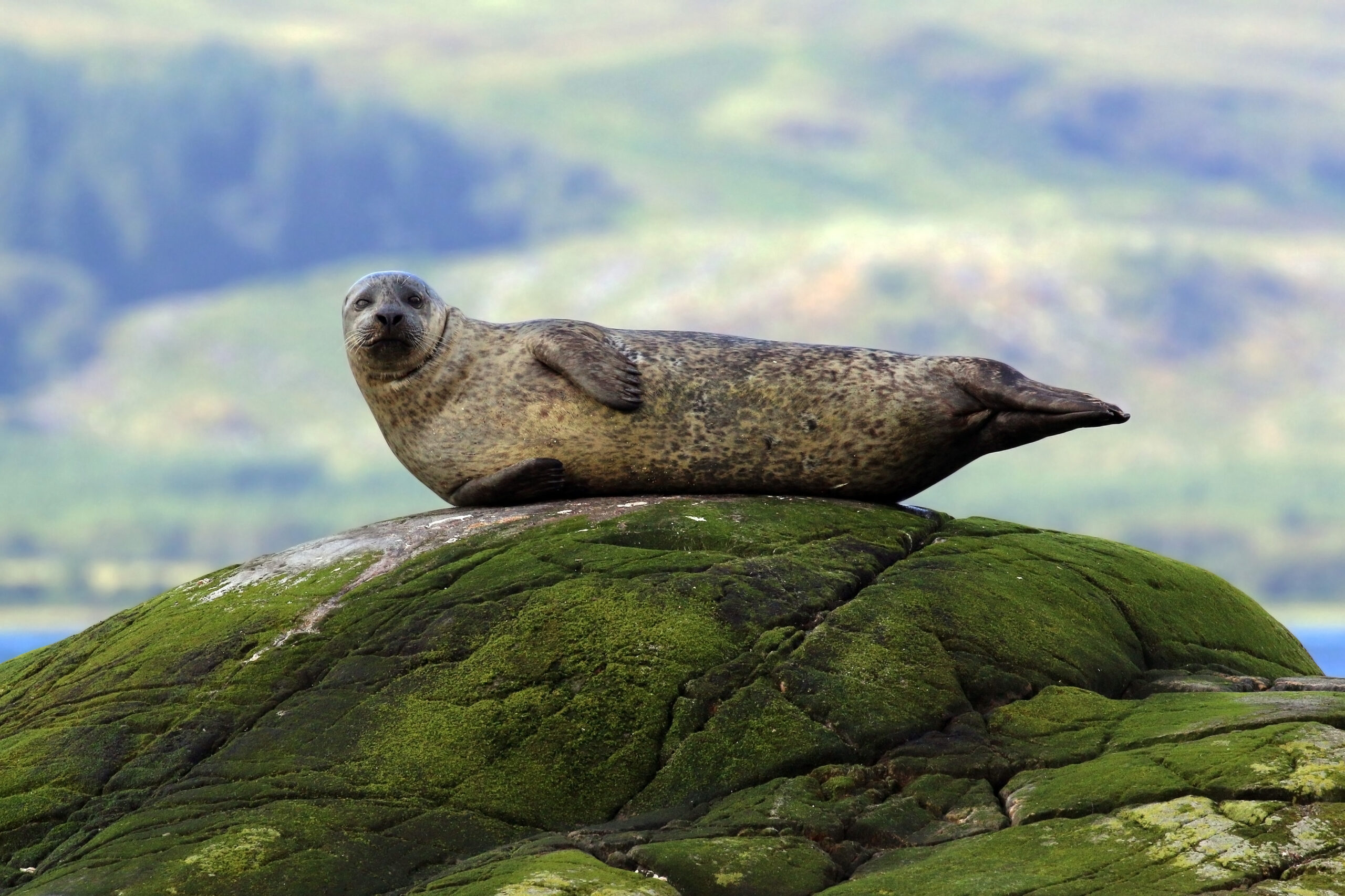 Photo Credit: Charlesjsharp / Wikimedia Commons
In the shimmering waters of the ocean, the harbor seal, known scientifically as Phoca vitulina, glides effortlessly through its aquatic realm. With its sleek, torpedo-shaped body and spotted coat, this marine mammal is a master of camouflage, blending seamlessly with the rocky shores and sun-drenched beaches it calls home. As it basks on the warm rocks, its large, expressive eyes scan the horizon, ever watchful for both predators and playful companions. The harbor seal’s ability to dive deep and hold its breath for up to 30 minutes while hunting for fish and squid showcases its remarkable adaptations to life in the sea.
Scientists and nature enthusiasts alike are captivated by the harbor seal’s playful nature and social behaviors. These seals often gather in groups, creating a lively atmosphere filled with barks and playful splashes. Their unique vocalizations, which can range from soft grunts to loud barks, serve as a form of communication, allowing them to express everything from excitement to alarm. As we explore the world of the harbor seal, we will uncover the secrets of its life cycle, diet, and the vital role it plays in the marine ecosystem, revealing why this charming creature continues to inspire awe and curiosity in all who encounter it.
Seals are captivating members of the animal kingdom, sitting comfortably within the intricate web of life. They belong to the class Mammalia, which means they are warm-blooded animals that nurse their young with milk. What sets seals apart is their unique adaptation to life in the water, with streamlined bodies and flippers that make them agile swimmers. They are part of the order Carnivora, which includes all meat-eating mammals, and the family Pinnipedia, a group that is specially adapted for a semi-aquatic lifestyle. This combination of traits makes seals not only fascinating to observe but also important players in their ecosystems.
| Taxonomic Rank | Scientific Name | Meaning & Significance |
|---|---|---|
| Kingdom | Animalia | This name comes from the Latin word for “animal,” highlighting that seals are part of the vast group of living organisms that are multicellular and capable of movement. |
| Phylum | Chordata | Derived from the Greek word “chordē,” meaning “string,” this classification indicates that seals have a backbone, a key feature of all vertebrates. |
| Class | Mammalia | This term comes from the Latin “mamma,” meaning “breast,” which refers to the mammary glands that allow female seals to nurse their young. |
| Order | Carnivora | From the Latin “carnivorus,” meaning “meat-eater,” this classification reflects the seal’s diet, which primarily consists of fish and other marine animals. |
| Family | Pinnipedia | This name means “fin-footed,” derived from the Latin “pinna” for fin and “pedis” for foot, emphasizing the seals’ specialized limbs that are adapted for swimming. |
| Genus | Phoca | From the Greek word for “seal,” this name is used to describe true seals, which are characterized by their lack of external ear flaps and their ability to move gracefully in water. |
The classification of seals reveals a rich evolutionary history that connects them to both land and marine environments. As members of the Carnivora order, they share a common ancestor with other meat-eating mammals, while their unique adaptations in the Pinnipedia family highlight their transition to a life spent largely in the ocean. This fascinating journey through time showcases how seals have evolved to thrive in their aquatic habitats, making them a vital part of marine ecosystems around the world.
The evolutionary journey of seals is a captivating tale that stretches back millions of years. These marine mammals belong to the family Pinnipedia, which means “fin-footed.” Their ancestors roamed the land before making a remarkable transition to life in the water. This shift began around 20 to 30 million years ago, during the late Oligocene epoch, when early pinnipeds started adapting to a life that blended both terrestrial and aquatic environments.
The story of seals begins with their ancestors, who were land-dwelling mammals resembling modern-day bears and weasels. These early creatures were part of the order Carnivora, which includes all meat-eating mammals. Over time, some of these ancestors ventured into the water, where they faced new challenges and opportunities. As they adapted to their aquatic surroundings, they developed streamlined bodies, which made swimming more efficient. Their limbs transformed into flippers, allowing them to navigate through the ocean with grace. This transition was not just about physical changes; it also involved shifts in behavior and diet, as these animals learned to hunt and thrive in a marine environment.
The adaptations that seals have developed over time have been crucial for their survival in diverse marine habitats. Their streamlined bodies and flippers allow them to swim efficiently, escaping predators and catching prey with ease. The insulating blubber keeps them warm in chilly waters, while their vocalizations help them communicate in the vast ocean. Enhanced eyesight ensures they can hunt effectively, making seals well-equipped to thrive in their aquatic world. This evolutionary journey showcases the incredible resilience and adaptability of life on Earth, reminding us of the wonders of nature’s design.
Seals are truly enchanting animals, gliding gracefully through the water with a streamlined body that seems perfectly designed for life in the ocean. Their overall shape is sleek and torpedo-like, allowing them to swim with incredible speed and agility. With a layer of blubber beneath their smooth skin, seals are not only buoyant but also insulated against the chilly waters they often inhabit. Their limbs have evolved into flippers, which help them navigate effortlessly, while their large, expressive eyes are adapted for seeing in dim underwater light.
| Feature | Description |
|---|---|
| Weight | 105-3,000 kg (230-6,000 lbs) |
| Skin Type | Smooth |
These physical features work together to create a highly efficient marine predator. The smooth skin reduces drag as they swim, allowing them to move swiftly in pursuit of fish and other prey. Their impressive weight range means that different species can adapt to various environments, from the icy waters of the Arctic to temperate coastal regions. The blubber not only provides warmth but also serves as an energy reserve during times when food is scarce. Together, these adaptations make seals well-suited for survival in their aquatic habitats, showcasing the wonders of evolution in action.
Seals thrive in a world where land meets sea, often found lounging on rocky shores or swimming in coastal waters. Picture a sun-drenched beach with waves gently lapping at the shore, where these playful animals bask in the sun, their sleek bodies glistening. They are equally at home in the chilly depths of the ocean, where they dive and frolic among schools of fish. This blend of land and water creates a perfect playground for seals, offering them both a place to rest and a rich hunting ground.
Seals prefer environments that provide a mix of cool to temperate climates, as they are well-adapted to both chilly waters and warmer coastal areas. They often inhabit regions where the water temperature is just right for hunting, typically between 5 to 20 degrees Celsius (41 to 68 degrees Fahrenheit). These marine mammals rely on the availability of fish and other marine life, which thrive in nutrient-rich waters. The rocky shores they favor also offer safe resting spots away from predators and harsh weather.
To survive in these diverse habitats, seals have developed several clever adaptations. Their thick layer of blubber, a type of fat, keeps them warm in cold waters, while their streamlined bodies allow for swift swimming. Their whiskers, or vibrissae, are highly sensitive and help them detect movements in the water, making it easier to find food. Additionally, seals can hold their breath for long periods, allowing them to dive deep in search of fish. These adaptations not only enhance their survival but also make them agile and efficient hunters in their coastal homes.
Seals lead a vibrant daily life that revolves around the rhythm of the ocean. As marine mammals, they spend a significant amount of time in the water, where they hunt for fish, squid, and other tasty treats. Their day often begins with a leisurely bask in the sun on rocky shores or sandy beaches, soaking up warmth before diving into the cool depths. Seals are known for their playful nature, often seen frolicking in the waves or sliding down icy slopes. Their activities are not just for fun; they are essential for maintaining their health and energy levels.
Socially, seals are quite the community-oriented animals. They often gather in large groups, known as herds, which can range from a few individuals to hundreds. This social structure provides safety in numbers, as there is strength in a crowd when it comes to avoiding predators. Within these groups, seals communicate through a variety of sounds, including barks, growls, and even whistles. These vocalizations help them maintain social bonds and coordinate activities, such as hunting or resting. The dynamics of their social interactions are complex, with established hierarchies that dictate behaviors and roles within the herd.
| Behavior Type | Description |
|---|---|
| Activity Patterns | Seals alternate between resting on land and foraging in the water, often diving to depths of up to 600 feet in search of food. |
| Social Structure | Seals form herds that provide safety and social interaction, with established hierarchies influencing their behavior. |
| Communication Methods | They use a range of vocalizations, including barks and growls, to communicate with each other, especially during mating season. |
The behaviors of seals are not just fascinating; they are vital for their survival. By forming herds, they enhance their protection against predators like sharks and orcas. Their playful interactions and vocal communications strengthen social bonds, which can be crucial during breeding seasons. Additionally, their foraging techniques ensure they find enough food to thrive in their oceanic environment. Each aspect of their daily life is intricately connected, showcasing the beauty of nature’s design in ensuring the survival of these remarkable marine mammals.
Seals are carnivorous animals, meaning they primarily eat meat. Their diet mainly consists of fish, crabs, and squid, which they skillfully hunt in the ocean. Seals are excellent swimmers, using their streamlined bodies and powerful flippers to chase down their prey. They often dive deep into the water, sometimes reaching impressive depths, to find their favorite foods. This hunting behavior is not just about speed; seals also rely on their keen eyesight and sensitive whiskers to detect movement in the water, making them effective predators.
| Dietary Aspect | Details |
|---|---|
| Diet Type | Carnivore |
| Favorite Foods | Fish, Crabs, Squid |
| Prey Items | Various species of fish, crustaceans like crabs, and cephalopods such as squid |
| Hunting/Foraging Strategies | Skilled swimmers that use speed, keen eyesight, and sensitive whiskers to locate and catch prey |
This diet plays a crucial role in shaping the seal’s ecology and daily routine. By feeding on a variety of marine life, seals help maintain the balance of their underwater ecosystems. Their hunting activities can influence fish populations and contribute to the health of ocean habitats. Additionally, the need to hunt for food drives their daily movements, as they must venture into the water to find sustenance, making their lives a fascinating dance between land and sea.
During the breeding season, which varies by species, seals engage in fascinating mating behaviors that can include vocalizations, displays of strength, and even elaborate courtship rituals. Males often compete for the attention of females, showcasing their size and agility. Once a female selects a mate, she will typically give birth to her young on land, often on ice or rocky shores, where the pups can be safe from predators and harsh ocean conditions.
| Reproductive Aspect | Details |
|---|---|
| Gestation Period | About 11 months |
| Litter Size | 1 |
| Age of Maturity | 3 to 5 years |
| Name of Young | Pup |
After birth, seal pups are born with a thick layer of blubber, which helps keep them warm in chilly waters. Mothers are incredibly attentive, nursing their pups with rich milk that helps them grow quickly. This bond is crucial, as the pups rely on their mothers for food and protection during their early months. As they grow, pups learn essential skills like swimming and hunting, gradually becoming independent. By the time they reach maturity, they are ready to embark on their own adventures in the vast ocean, continuing the cycle of life in the seal community.
Seals play a vital role in the marine food web, acting as both predators and prey. These agile swimmers feast on fish, squid, and crustaceans, helping to maintain the balance of ocean ecosystems. However, they are also a target for various predators, making their survival a delicate dance between hunting and evading danger.
To defend themselves against these threats, seals have developed several clever survival strategies. They often rely on their speed and agility in the water to escape predators, darting away with impressive bursts of energy. Seals can also use their natural camouflage, blending into the ocean’s surface to avoid detection. When resting on land, they may gather in large groups, providing safety in numbers. These behaviors showcase the resilience of seals as they navigate the challenges of their environment.
A keystone species is a vital part of its ecosystem, meaning its presence has a significant impact on the environment and other living things. Seals can indeed be considered a keystone species in their habitats. Their role is crucial because they help maintain the balance of marine ecosystems, influencing the populations of various species and the overall health of their environment.
Seals are carnivores, primarily feeding on fish, squid, and crustaceans. By preying on these animals, they help regulate their populations, preventing any one species from becoming too dominant. For example, if seals were to disappear, fish populations could explode, leading to overgrazing of algae and other marine plants. This imbalance could harm the entire ecosystem, affecting not just the fish but also the animals that rely on those plants for food and shelter.
Additionally, seals serve as prey for larger predators, such as sharks and orcas. Their presence supports these apex predators, which are essential for keeping the marine food web in check. When seals thrive, they contribute to the health of the ocean by providing a food source for these larger animals, which in turn helps maintain the balance of marine life.
Moreover, seals contribute to nutrient cycling in their habitats. When they haul out on rocky shores, they leave behind waste that enriches the surrounding environment. This nutrient input supports a variety of organisms, from tiny plankton to larger fish, creating a more vibrant ecosystem.
If seals were to vanish from their ecosystems, the consequences would be profound. The balance of marine life would be disrupted, leading to overpopulation of certain fish species and a decline in others. This could trigger a chain reaction, affecting everything from the smallest plankton to the largest predators. The health of coastal waters would suffer, and the rich tapestry of life that depends on seals would unravel, highlighting just how interconnected our natural world truly is.
Seals occupy a crucial ecological niche in marine environments, acting as both predators and prey within their ecosystems. These agile mammals are found in coastal waters and rocky shores, where they thrive in a dynamic interplay with other marine life. By hunting fish, squid, and crustaceans, seals help regulate fish populations, ensuring a balanced ecosystem. Their presence influences the health of marine habitats, making them essential players in the ocean’s intricate web of life.
| Ecosystem Service | Impact |
|---|---|
| Predation | Controls fish and squid populations, preventing overpopulation and promoting biodiversity. |
| Nutrient Cycling | Through their waste, seals contribute nutrients to the marine environment, supporting the growth of algae and other organisms. |
| Prey for Larger Animals | Serves as a food source for larger predators like sharks and orcas, maintaining the balance of the food web. |
| Habitat Formation | When seals haul out on rocky shores, they can influence the physical environment, creating spaces for other species to thrive. |
Seals significantly influence their surroundings in various ways. For instance, by preying on fish and squid, they help maintain healthy populations of these species, which in turn supports the entire marine food web. When seals excrete waste, they release nutrients back into the water, which can stimulate the growth of phytoplankton—tiny plants that form the base of the oceanic food chain. Additionally, their presence attracts larger predators, creating a dynamic ecosystem where different species interact and depend on one another.
The broader ecological importance of seals cannot be overstated. As keystone species, their role extends beyond their immediate environment, affecting the health and stability of entire marine ecosystems. By regulating prey populations and contributing to nutrient cycling, seals help sustain the delicate balance of life in the ocean. Their existence is a reminder of the interconnectedness of all living things, highlighting the need for conservation efforts to protect these remarkable animals and their habitats.
In the intricate tapestry of nature, seals engage in various partnerships with other species, showcasing the beauty of symbiosis. Symbiosis refers to the close interactions between different species, which can be beneficial, harmful, or neutral. These relationships can take many forms, such as mutualism, where both species gain advantages, parasitism, where one benefits at the other’s expense, and commensalism, where one benefits while the other is neither helped nor harmed. Understanding these connections helps us appreciate the delicate balance of ecosystems and the roles that seals play within them.
| Species/Type | Relationship Type | Description |
|---|---|---|
| Remora fish | Mutualistic | Remoras attach themselves to seals, gaining transportation and access to food scraps, while seals benefit from the removal of parasites and dead skin. |
| Sea lice | Parasitic | These tiny crustaceans attach to seals, feeding on their blood and skin, which can cause irritation and health issues for the seals. |
| Seabirds | Commensal | Seabirds often follow seals to feed on fish that are disturbed during the seals’ hunting, benefiting from the seals’ activities without affecting them. |
The evolution of these relationships highlights the adaptability and interconnectedness of life in marine environments. Over time, seals and their partners have developed these interactions to enhance their survival and well-being. Mutualistic relationships, like that with remora fish, demonstrate how cooperation can lead to shared benefits, while parasitic relationships remind us of the challenges that come with living in close quarters. By understanding these dynamics, we can better appreciate the complex web of life that supports seals and the many species that share their habitat.
Seals are not just adorable creatures lounging on the beach; they are fascinating animals with surprising traits and behaviors that make them truly special. Here are some intriguing facts that will captivate nature enthusiasts of all ages.
Throughout history, seals have held a special place in human culture and folklore. Ancient coastal communities often viewed these marine mammals as symbols of abundance and mystery. In many cultures, seals were celebrated in stories and art, representing the connection between land and sea. For instance, the Inuit people have long revered seals, relying on them for food, clothing, and tools. This deep-rooted relationship highlights how seals have not only been a source of sustenance but also a part of the spiritual and cultural fabric of human life.
Today, the interactions between seals and humans are more complex. While some communities continue to hunt seals for traditional purposes, conservation efforts are increasingly important. Many species of seals are threatened due to habitat loss, climate change, and pollution. Organizations around the world are working to protect these animals and their habitats, promoting awareness about their ecological importance. However, conflicts can arise, especially in fishing communities where seals may compete for fish. This delicate balance between conservation and human activity is crucial for the future of both seals and the ecosystems they inhabit.
Looking ahead, the relationship between seals and humanity will likely continue to evolve. As awareness of environmental issues grows, more people are recognizing the importance of protecting these remarkable animals. By fostering a sense of stewardship and understanding, we can work towards a future where seals thrive alongside human communities. This partnership can lead to innovative solutions that benefit both seals and the ecosystems they inhabit, ensuring that future generations can enjoy the beauty and wonder of these incredible marine mammals.
The conservation status of seals varies by species, but many face significant challenges in their natural habitats. Currently, several seal species are classified as Near Threatened, indicating that they are at risk of becoming endangered if current trends continue. Population estimates fluctuate widely, with some species showing stable numbers while others are declining. This complex situation highlights the need for ongoing monitoring and conservation efforts to ensure their survival.
| Conservation Factor | Status/Details |
|---|---|
| IUCN Status | Near Threatened |
| Population Estimates | Varies by species; some stable, others declining |
| Trend Direction | Mixed; some populations increasing, others decreasing |
The main threats to seals stem from human activities and environmental changes. Climate change is altering their habitats, affecting food availability and breeding grounds. Additionally, pollution, such as plastic waste and toxic chemicals, poses serious health risks to these marine mammals. Fishing practices can also lead to accidental entanglement, which can be fatal. As the oceans warm and ecosystems shift, seals must navigate these challenges to survive.
Conservation efforts are underway to protect seals and their habitats. Organizations are working to reduce pollution, promote sustainable fishing practices, and establish marine protected areas where seals can thrive without human interference. Public awareness campaigns are also crucial, as they encourage people to appreciate and protect these incredible animals. With continued dedication and support, there is hope for a brighter future for seals and the ecosystems they inhabit.
| Question | Answer |
|---|---|
| Where do seals live? | Seals are found in coastal waters and rocky shores around the world. They prefer areas where they can easily access the ocean for hunting and have safe places to rest and breed. |
| What do seals eat? | Seals are carnivores, which means they primarily eat meat. Their diet mainly consists of fish, squid, and other marine animals, which they hunt using their keen eyesight and agility in the water. |
| How do seals behave in the wild? | Seals are social animals and often gather in groups called colonies. They communicate with each other through a variety of sounds and body language, and they are known for their playful nature, often seen swimming and playing in the waves. |
| How do seals reproduce? | Seals typically mate in the water, and after a gestation period of about 11 months, females give birth to a single pup. The mother nurses her pup for several weeks, teaching it essential survival skills before it learns to hunt on its own. |
| What threats do seals face? | Seals face several threats, including habitat loss, pollution, and climate change, which affects their food supply. Additionally, they are sometimes hunted for their fur and blubber, and they can become entangled in fishing gear. |
| What are some interesting characteristics of seals? | Seals have a thick layer of blubber that keeps them warm in cold waters, and they can hold their breath for up to 30 minutes while diving for food. Some species, like the harbor seal, can even recognize their human caregivers! |
| How do seals stay warm in cold water? | Seals have a special adaptation called blubber, which is a thick layer of fat beneath their skin. This blubber acts as insulation, keeping their body heat from escaping, allowing them to thrive in icy waters. |