Taxonomy & Classification
- Kingdom
- Animalia
- Phylum
- Arthropoda
- Class
- Insecta
- Order
- Coleoptera
- Family
- Curculionidae
- Genus
- Scolytinae

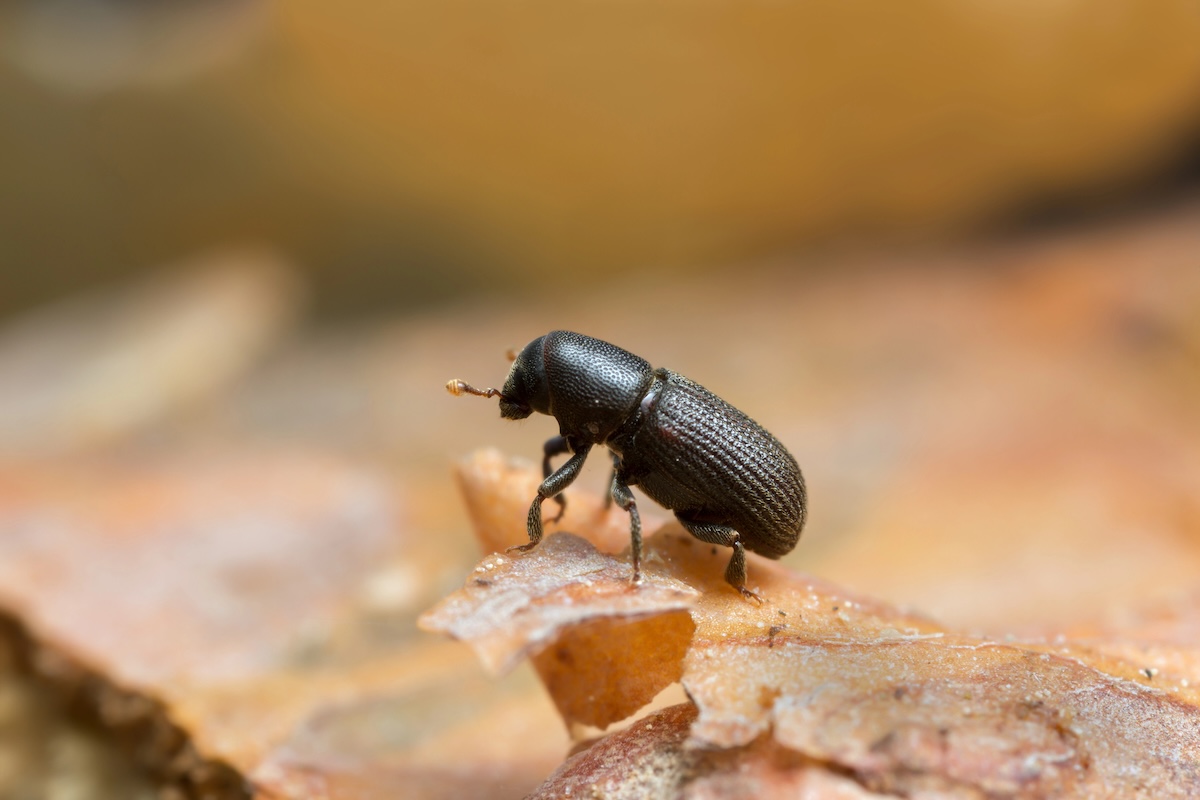 Photo Credit: HenrikL at Deposit Photos
In the heart of a sun-dappled forest, the bark beetle, scientifically known as Scolytinae, scuttles along the rough surface of a towering pine tree. This tiny insect, often no larger than a grain of rice, is a master of camouflage, blending seamlessly with the bark that serves as both its home and its buffet. With its cylindrical body and distinctive hard shell, the bark beetle is a marvel of nature, showcasing a range of colors from deep browns to muted greens. These features not only help it evade predators but also make it a subject of fascination for scientists and nature enthusiasts alike.
As the bark beetle burrows into the tree, it plays a crucial role in the ecosystem, breaking down dead wood and recycling nutrients back into the soil. This process is vital for forest health, as it allows new life to flourish. But the bark beetle’s story is not just about survival; it also involves complex relationships with other organisms. For instance, these beetles often team up with fungi, which help them digest the tough plant material they consume. This partnership highlights the intricate web of life in the forest, where even the smallest creatures can have a big impact. Join us as we explore the fascinating world of bark beetles, uncovering their behaviors, life cycles, and the essential roles they play in our environment.
Bark beetles are intriguing members of the animal kingdom, nestled within the vast and diverse tree of life. These tiny insects belong to the phylum Arthropoda, which includes all invertebrates with jointed legs, like spiders and crabs. What sets bark beetles apart is their specialized lifestyle; they are wood-boring insects that primarily inhabit the bark of trees. This unique behavior not only influences their anatomy but also plays a significant role in forest ecosystems, as they can affect tree health and contribute to nutrient cycling.
| Taxonomic Rank | Scientific Name | Meaning & Significance |
|---|---|---|
| Kingdom | Animalia | The name “Animalia” comes from the Latin word for “animal,” highlighting that these organisms are living beings that can move and respond to their environment. |
| Phylum | Arthropoda | “Arthropoda” means “jointed feet” in Greek, referring to the jointed legs and segmented bodies that are characteristic of this diverse group, which includes insects, arachnids, and crustaceans. |
| Class | Insecta | The term “Insecta” is derived from the Latin word for “cut into sections,” which describes the segmented body structure of insects, including the three main parts: head, thorax, and abdomen. |
| Order | Coleoptera | “Coleoptera” translates to “sheath-wing,” referring to the hard, protective forewings that cover the delicate hind wings, a feature that helps beetles thrive in various environments. |
| Family | Curculionidae | The name “Curculionidae” comes from the Latin word “curculio,” meaning “weevil,” which reflects the family’s association with beetles that have elongated snouts and a distinctive shape. |
| Genus | Scolytinae | “Scolytinae” is derived from the Greek word “skolytos,” meaning “to cut,” which relates to their behavior of boring into wood, creating tunnels that can impact tree health. |
Understanding the taxonomic classification of bark beetles reveals much about their evolutionary journey. As members of the Coleoptera order, they share a lineage with a vast array of beetles, showcasing the incredible adaptability of this group. Their specialized adaptations for life in wood, such as their unique mouthparts for boring and their symbiotic relationships with fungi, highlight how evolution has shaped their role in ecosystems. By studying these tiny insects, we gain insights into the complex interactions within forests and the delicate balance of life that sustains them.
The evolutionary journey of bark beetles stretches back millions of years, tracing their lineage to the ancient forests that once blanketed the Earth. These small but mighty insects belong to the family Curculionidae, which is known for its diverse members, including weevils. The bark beetles, specifically classified under the subfamily Scolytinae, have adapted remarkably to their environments, evolving alongside the trees they inhabit.
Ancestral forms of bark beetles were likely similar to other wood-boring insects, feeding on decaying wood and plant matter. Over time, they developed specialized mouthparts that allowed them to bore into the bark of trees, where they could access the nutritious inner layers. This transition marked a significant evolutionary step, enabling them to exploit a new food source. As they adapted to this lifestyle, bark beetles also evolved a unique relationship with fungi, which they carry in specialized pouches. This symbiotic relationship allows them to cultivate fungi that break down wood, making it easier for the beetles to digest.
Bark beetles’ evolutionary adaptations have been crucial for their survival in a world filled with challenges. Their ability to bore into trees and cultivate fungi not only provides them with food but also helps them thrive in diverse environments. The clever use of camouflage protects them from predators, while their sophisticated reproductive strategies ensure that they can continue to flourish. As they navigate the complex ecosystems of forests, bark beetles play a vital role in the health of these environments, showcasing the wonders of evolution in action.
Bark beetles are small yet captivating insects that often go unnoticed in the grand tapestry of nature. Their bodies are compact and cylindrical, resembling tiny torpedoes that glide effortlessly through the bark of trees. With a hard exoskeleton, they possess a tough outer layer that protects them from predators and environmental challenges. These beetles are equipped with small appendages that can be folded into their bodies, allowing them to navigate the narrow crevices of tree bark with ease.
| Feature | Description |
|---|---|
| Size | Typically range from 1 to 10 millimeters in length |
| Color | Often brown or black, blending seamlessly with tree bark |
| Skin Type | Exoskeleton, providing protection and support |
| Most Distinctive Feature | Small appendages that can be folded into the body |
The combination of their small size and protective exoskeleton allows bark beetles to thrive in their arboreal habitats. Their coloration helps them camouflage against the bark, making it difficult for predators to spot them. The ability to fold their appendages is particularly advantageous, as it enables them to squeeze into tight spaces while searching for food or laying eggs. Together, these features not only enhance their survival but also play a crucial role in their ecological niche as decomposers, helping to break down dead and dying trees.
Bark beetles thrive in a variety of habitats, primarily found in forests where trees provide both shelter and sustenance. Picture a lush woodland, where towering conifers and broadleaf trees create a vibrant ecosystem. The bark of these trees serves as both a home and a buffet for these tiny insects. As they tunnel beneath the bark, they create intricate galleries, which are like tiny highways for their daily activities. This hidden world is bustling with life, as bark beetles play a crucial role in the health of forests.
Bark beetles prefer climates that offer a mix of moisture and warmth, which helps them thrive. They are often found in areas with moderate to high humidity, as this moisture is essential for their survival and reproduction. These beetles are particularly active in the spring and summer months when temperatures rise, allowing them to emerge from their winter dormancy. However, they can also endure colder climates, as some species have adapted to survive freezing temperatures by entering a state of dormancy.
Adaptation is key to the bark beetle’s success in its chosen habitats. Over time, these beetles have developed specialized mouthparts that allow them to bore into tree bark and access the nutritious wood beneath. Their ability to produce pheromones, which are chemical signals that attract other beetles, helps them find mates and establish new colonies. This social behavior is vital for their survival, especially in environments where competition for resources can be fierce. By evolving to thrive in diverse forest ecosystems, bark beetles have become an integral part of the natural world, influencing the health and dynamics of the forests they inhabit.
Bark beetles lead a life that is both simple and essential to the ecosystems they inhabit. As diurnal creatures, they are most active during the day, scuttling along the bark of trees in search of food and mates. Their daily activities revolve around feeding on the inner bark, where they consume the nutritious phloem, a layer of tissue that transports food throughout the tree. This feeding not only sustains the beetles but also plays a crucial role in the health of the forest, as it can lead to the death of trees, creating habitats for other organisms.
While bark beetles are primarily solitary, their interactions can be quite interesting. They communicate through pheromones, which are chemical signals that convey messages to other beetles. When a female bark beetle finds a suitable tree, she releases these scents to attract males. This social behavior, although limited, is vital for reproduction and ensures that the next generation has a chance to thrive. Once a male arrives, they may mate and begin the process of boring into the tree together, marking the start of a new life cycle.
| Behavior Type | Description |
|---|---|
| Feeding | Bark beetles feed on the phloem layer of trees, which provides essential nutrients for their survival. |
| Communication | They use pheromones to signal to other beetles, especially during mating season, to attract partners. |
| Reproduction | After mating, females bore into trees to lay eggs, ensuring the next generation has a suitable habitat. |
| Solitary Behavior | While they may come together for mating, bark beetles generally live alone, focusing on their individual survival. |
The behaviors of bark beetles are finely tuned to their environment, ensuring their survival in the wild. By feeding on trees, they not only sustain themselves but also contribute to the cycle of life in forests. Their ability to communicate through pheromones allows them to find mates and reproduce, ensuring that their species continues. In this way, even solitary creatures like bark beetles play a vital role in the intricate web of life that supports our planet’s ecosystems.
Bark beetles are primarily herbivores, meaning they mainly eat plant material. Their favorite food is the inner bark of trees, which is rich in nutrients. These tiny insects have specialized mouthparts that allow them to chew through the tough outer bark to reach the softer, nutrient-dense layer beneath. By feeding on this inner bark, bark beetles play a crucial role in the ecosystem, helping to break down dead or dying trees and recycle nutrients back into the soil.
| Dietary Aspect | Details |
|---|---|
| Diet Type | Herbivore |
| Favorite Foods | Inner bark of trees |
| Prey Items | None (they do not eat other animals) |
| Hunting/Foraging Strategies | Chewing through outer bark to access inner bark |
The diet of bark beetles significantly influences their role in the environment. By feeding on trees, they help to decompose and recycle organic matter, which is vital for forest health. Their daily routine revolves around finding suitable trees to feed on, which can lead to both beneficial and harmful effects on the forest ecosystem. While they help in nutrient cycling, large populations can also weaken trees, making them more susceptible to disease and other pests. This delicate balance showcases the bark beetle’s important place in nature’s web of life.
Bark beetles have a fascinating mating ritual that takes place during the warmer months, typically in spring and early summer. Males often engage in a competitive display to attract females, using pheromones—chemical signals that can be thought of as nature’s perfume. Once a female chooses a mate, they will tunnel together into the bark of a tree, where they will begin the process of reproduction. This cozy environment provides safety and a food source for their future offspring.
| Reproductive Aspect | Details |
|---|---|
| Gestation Period | Approximately 2 to 4 weeks |
| Litter Size | 20 to 100 eggs |
| Age of Maturity | About 6 to 12 months |
| Name of Young | Larvae |
After the eggs hatch, the larvae emerge and begin to feed on the inner bark of the tree. This is a critical stage in their development, as they rely on the nutrients found in the tree to grow strong. Interestingly, bark beetles do not provide direct parental care after laying their eggs. Instead, the tree itself becomes a nurturing environment, offering both food and shelter. As the larvae mature, they will eventually pupate, transforming into adult beetles ready to continue the cycle of life. This remarkable journey from egg to adult showcases the resilience and adaptability of these tiny insects in their forest homes.
Bark beetles play a crucial role in the food web, serving as both herbivores and prey. These tiny insects feast on the inner bark of trees, helping to decompose dead wood and recycle nutrients back into the ecosystem. However, their position also makes them vulnerable to a variety of predators and environmental threats that can impact their populations.
To defend themselves against these threats, bark beetles have developed several survival strategies. They often burrow deep into the bark, creating tunnels that can be hard for predators to reach. Some species also release chemicals that can deter attackers or even attract their own predators, like woodpeckers, to help control other beetle populations. By adapting to their environment and employing these clever tactics, bark beetles continue to thrive despite the dangers they face.
A keystone species is a vital part of its ecosystem, meaning its presence and activities have a significant impact on the environment and other living things. Bark beetles, though small, can indeed qualify as a keystone species in certain forest ecosystems. Their role is not just about their size; it’s about how they influence the health and structure of the forests they inhabit.
Bark beetles primarily feed on the inner bark of trees, which can lead to tree mortality, especially in stressed or weakened trees. This process, while it may sound harmful, actually opens up the forest canopy, allowing sunlight to reach the forest floor. This sunlight encourages the growth of new plants and provides habitats for various species. For example, when a tree dies, it becomes a home for woodpeckers and other birds that rely on dead trees for nesting and feeding. Additionally, the decaying wood enriches the soil, promoting a diverse array of plant life.
Moreover, bark beetles are part of a larger food web. They serve as a food source for many predators, including birds and small mammals. Their activities also help in the decomposition process, recycling nutrients back into the ecosystem. This nutrient cycling is crucial for maintaining soil health and supporting new plant growth, which in turn supports a variety of other wildlife.
If bark beetles were to disappear, the consequences could be significant. Forests might become denser, leading to increased competition among trees for sunlight and nutrients. This could result in a decline in plant diversity, as only a few species might thrive in the crowded environment. Additionally, the loss of bark beetles would disrupt the food web, affecting the animals that rely on them for food. Without these tiny insects, the balance of the ecosystem could shift dramatically, leading to less resilient forests that struggle to adapt to changes in climate and other environmental pressures.
Bark beetles occupy a crucial ecological niche within forest ecosystems. These small insects are not just simple herbivores; they play a significant role in shaping their environment. By feeding on the inner bark of trees, they help to break down dead or dying trees, which in turn creates space for new growth. This process is essential for maintaining the health and diversity of forests, allowing various plant and animal species to thrive.
| Ecosystem Service | Impact |
|---|---|
| Tree Mortality | Facilitates the decomposition of dead trees, enriching the soil. |
| Habitat Creation | Creates habitats for other species, including birds and fungi. |
| Nutrient Cycling | Recycles nutrients back into the ecosystem, promoting plant growth. |
| Forest Dynamics | Influences forest composition and structure through selective feeding. |
Bark beetles influence their ecosystems in several specific ways. For instance, when they infest a tree, they often target weakened or stressed individuals, which helps to maintain the overall health of the forest. This selective feeding can prevent overcrowding and allows stronger trees to flourish. Additionally, the galleries they create while tunneling through the bark provide nesting sites for other organisms, such as woodpeckers, which rely on these beetles as a food source. The presence of bark beetles can even lead to a richer diversity of fungi, as their activities create openings for fungal spores to enter and thrive.
The broader ecological importance of bark beetles cannot be overstated. As keystone species, their activities have far-reaching effects on forest ecosystems. By promoting tree mortality and facilitating nutrient cycling, they help to sustain a dynamic and resilient environment. This intricate balance supports a wide array of life, from the smallest microorganisms to large mammals. In essence, bark beetles are tiny architects of the forest, shaping the landscape and ensuring that life continues to flourish in their wake.
Symbiosis is a captivating concept in nature, where different species interact in ways that can be beneficial, harmful, or neutral to one another. These ecological relationships are essential for maintaining the balance of ecosystems. In the case of bark beetles, their interactions with other organisms showcase the complexity of life in forests. From fungi to trees, these tiny insects engage in various partnerships that highlight the interconnectedness of all living things.
| Species/Type | Relationship Type | Description |
|---|---|---|
| Fungi (e.g., blue stain fungi) | Mutualistic | Bark beetles often carry fungal spores in their bodies. When they bore into trees, they introduce these fungi, which help decompose the wood and provide nutrients for the beetles. |
| Trees (e.g., conifers) | Parasitic | Bark beetles can harm trees by feeding on their inner bark, disrupting the flow of nutrients and water, which can lead to tree death. |
| Predatory insects (e.g., woodpeckers) | Commensal | Woodpeckers and other predators benefit from the presence of bark beetles, as they feed on them. The beetles are not affected by this relationship, making it commensal. |
These relationships have evolved over time, shaped by the needs and survival strategies of each species involved. The mutualistic bond between bark beetles and fungi is a prime example of how cooperation can lead to greater success in a shared environment. While the beetles may harm trees, their role in breaking down dead wood and recycling nutrients is vital for forest health. Understanding these connections helps us appreciate the intricate web of life that sustains our planet.
Bark beetles may be small, but they are packed with surprises that reveal the wonders of nature. These tiny insects play a significant role in their ecosystems, and their behaviors and adaptations are nothing short of remarkable.
Bark beetles have a long and storied relationship with humanity, woven into the fabric of our history and culture. These tiny insects, often overlooked, have been both a source of fascination and frustration. In many indigenous cultures, bark beetles symbolize the cycle of life and death, representing the natural processes that sustain forests. Their presence in folklore and art highlights their significance in the ecosystems that humans depend on. Historically, these beetles have been seen as harbingers of change, signaling the health of forests and the balance of nature.
In contemporary times, the interaction between bark beetles and humans has become increasingly complex. As climate change alters forest ecosystems, bark beetle populations have surged, leading to widespread tree mortality. This phenomenon has sparked conflict, as dying trees can threaten timber industries and increase wildfire risks. However, there is also a growing movement towards conservation, where scientists and environmentalists study bark beetles to understand their role in forest dynamics. Some communities are even exploring ways to utilize the wood from infested trees, turning a potential disaster into an opportunity for sustainable practices.
Looking ahead, the future of the relationship between bark beetles and humanity will likely hinge on our ability to adapt to changing environmental conditions. As we learn more about these insects and their vital role in forest ecosystems, we may find new ways to coexist with them. By embracing a mindset of stewardship, we can harness the power of bark beetles to promote healthier forests while mitigating the challenges they present. This evolving relationship holds the promise of a more balanced approach to managing our natural resources, ensuring that both humans and bark beetles can thrive together.
Bark beetles currently hold a conservation status of “Not Listed,” which means they are not considered endangered or threatened at this time. However, their populations can fluctuate significantly based on environmental conditions and human activities. While some species of bark beetles thrive in certain areas, others may face challenges that impact their numbers. Understanding these trends is essential for monitoring their health and the ecosystems they inhabit.
| Conservation Factor | Status/Details |
|---|---|
| IUCN Status | Not Listed |
| Population Estimates | Varies by species and region |
| Trend Direction | Fluctuating |
The main threats to bark beetles stem from climate change, habitat loss, and forest management practices. As temperatures rise, bark beetles can reproduce more quickly, leading to population explosions that can devastate forests. Additionally, logging and land development reduce their natural habitats, making it harder for them to find food and shelter. These pressures can disrupt the delicate balance of forest ecosystems, where bark beetles play a vital role.
Conservation efforts for bark beetles focus on maintaining healthy forest ecosystems and understanding their ecological roles. By promoting sustainable forestry practices and protecting natural habitats, we can help ensure that these tiny insects continue to thrive. The outlook for bark beetles is closely tied to the health of the forests they inhabit, making it essential for us to be mindful of our environmental impact. With continued research and conservation initiatives, we can support the resilience of bark beetle populations and the ecosystems they help sustain.
| Question | Answer |
|---|---|
| What is the habitat of Bark Beetles? | Bark Beetles are typically found in forests, where they live under the bark of trees. They prefer coniferous trees, like pines and spruces, which provide both food and shelter. |
| What do Bark Beetles eat? | Bark Beetles are herbivores, meaning they primarily feed on the inner bark of trees. They use their strong jaws to chew through the bark and access the nutritious layer beneath. |
| How do Bark Beetles behave? | Bark Beetles are known for their tunneling behavior, which can damage trees. They often work in groups, creating intricate networks of tunnels that can disrupt the tree's ability to transport water and nutrients. |
| How do Bark Beetles reproduce? | Bark Beetles reproduce by laying eggs in the crevices of tree bark. After a few weeks, the larvae hatch and begin to feed on the tree, continuing the cycle of life. |
| What threats do Bark Beetles face? | While Bark Beetles are not currently listed as endangered, they can be affected by changes in climate and habitat loss. Additionally, natural predators and diseases can impact their populations. |
| What is an interesting characteristic of Bark Beetles? | One of the most distinctive features of Bark Beetles is their small appendages, which can be folded into their bodies. This unique adaptation helps them fit into tight spaces under the bark. |
| How do Bark Beetles impact their environment? | Bark Beetles can have a significant impact on forest ecosystems. While they can harm individual trees, they also play a role in nutrient cycling and can create habitats for other species when trees die. |