Taxonomy & Classification
- Kingdom
- Animalia
- Phylum
- Chordata
- Class
- Mammalia
- Order
- Cimolesta
- Family
- Barylambdidae
- Genus
- Barylambda
- Species
- Barylambda faberi

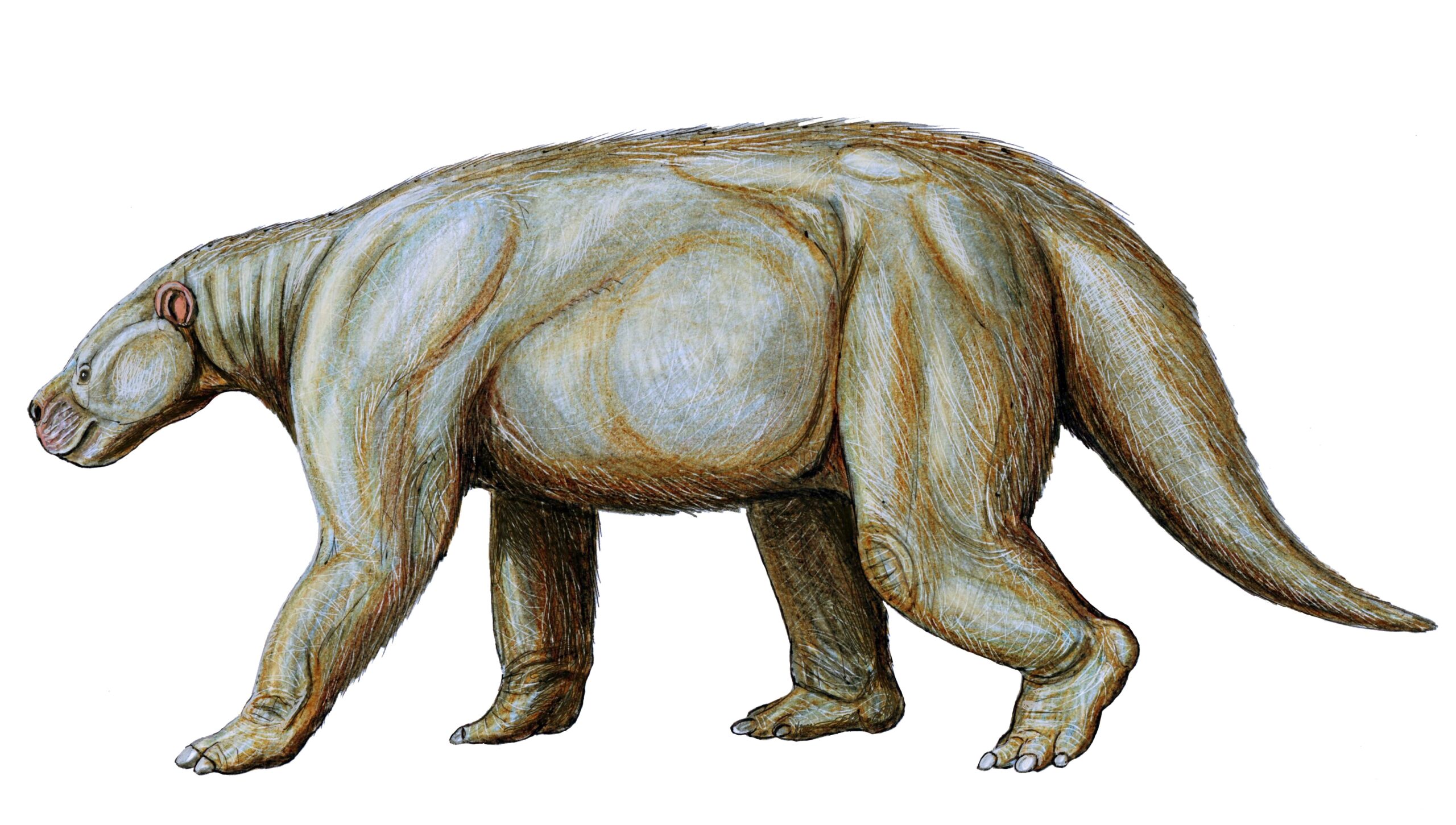 Photo Credit: A. C. Tatarinov / Wikimedia Commons
In the lush, swampy plains of prehistoric North America, Barylambda, a remarkable mammal from the late Paleocene to early Eocene epochs, roamed the earth with an air of gentle majesty. Imagine a creature that stood tall and robust, resembling a giant bear but with its own unique flair. With massive legs and a long, sturdy body, Barylambda was built for life in its verdant habitat, where soft, muddy ground was dotted with tall grasses and scattered trees. This ancient herbivore, with its broad, flat teeth designed for grinding tough plant material, spent its days foraging for a variety of vegetation, embodying the peaceful rhythm of life in a world teeming with vibrant flora and fauna.
What makes Barylambda particularly captivating to scientists and nature enthusiasts alike is its role as a keystone species in its ecosystem. By munching on abundant plants, it helped shape the landscape, promoting the growth of diverse plant life and providing a habitat for other creatures. This fascinating mammal not only offers a glimpse into the past but also highlights the intricate connections within ecosystems. As we explore the life of Barylambda, we uncover the secrets of its behavior, diet, and the environment it thrived in, painting a vivid picture of a time long before humans walked the earth.
Barylambda is an intriguing member of the animal kingdom, nestled within the class Mammalia, which includes all mammals. This ancient mammal lived during the late Paleocene to early Eocene epochs, around 65 to 55 million years ago. What sets Barylambda apart is its unique combination of features that hint at its lifestyle. With a large, robust body and long limbs, it likely resembled a giant, furry sloth or a modern-day tapir. This creature is part of the order Cimolesta, a group of mammals that thrived after the dinosaurs went extinct, showcasing the incredible adaptability of life on Earth.
| Taxonomic Rank | Scientific Name | Meaning & Significance |
|---|---|---|
| Kingdom | Animalia | This name signifies that Barylambda belongs to the broad group of multicellular organisms known as animals, which are characterized by their ability to move and respond to their environment. |
| Phylum | Chordata | Chordata means “having a notochord,” a flexible rod that provides support. In Barylambda’s case, this structure would have been present during its development, marking it as a vertebrate. |
| Class | Mammalia | Mammalia refers to mammals, which are warm-blooded animals that typically have fur or hair and produce milk to feed their young. Barylambda fits this description, showcasing the early evolution of mammalian traits. |
| Order | Cimolesta | The name Cimolesta is derived from the Greek word “kimol,” meaning “to be buried.” This reflects the group’s association with the fossil record, as many members are known primarily from their remains. |
| Family | Barylambdidae | This family name is derived from the genus Barylambda, indicating a close relationship among its members. The suffix “-idae” is commonly used in taxonomy to denote a family. |
| Genus | Barylambda | The name Barylambda combines the Greek words “barys,” meaning “heavy,” and “lambda,” referring to the letter “L.” This likely alludes to its large size and robust build, distinguishing it from smaller mammals. |
Understanding Barylambda’s classification helps us piece together its evolutionary history. As a member of Cimolesta, it represents a branch of mammals that adapted to fill ecological niches left vacant after the dinosaurs’ extinction. This lineage showcases the remarkable resilience and diversity of life, illustrating how mammals evolved and diversified in response to changing environments. Barylambda’s unique features and taxonomic position remind us of the intricate web of life that connects all living beings, past and present.
The story of Barylambda unfolds during a time of great change in Earth’s history, specifically from the late Paleocene to the early Eocene epochs, around 65 to 50 million years ago. This period followed the mass extinction that wiped out the dinosaurs, allowing mammals to diversify and fill ecological niches left vacant. Barylambda, a member of the family Barylambdidae, emerged as a fascinating example of early mammalian evolution, showcasing adaptations that would help it thrive in a rapidly changing world.
Barylambda’s ancestors were likely small, shrew-like mammals that roamed the forests and plains of prehistoric landscapes. As mammals began to evolve, they adapted to various environments, leading to significant changes in size and shape. Barylambda itself was a large, herbivorous mammal, resembling a modern-day tapir or a small rhinoceros. It had sturdy limbs and a robust body, adaptations that allowed it to navigate through dense vegetation. Its evolutionary journey reflects a transition from smaller, insect-eating ancestors to larger, plant-eating forms, showcasing the shift in dietary habits that occurred during this time.
These adaptations played a crucial role in Barylambda’s survival during a time of ecological upheaval. By evolving to be larger and more robust, it could fend off predators while efficiently foraging for food. Its strong limbs allowed it to navigate through dense forests, while its specialized teeth made it adept at processing the tough plants that dominated its environment. Living in groups may have further enhanced its chances of survival, as social structures can provide protection and support. Barylambda’s evolutionary journey is a testament to the resilience and adaptability of life on Earth.
Barylambda presents a striking silhouette that captures the imagination. Imagine a creature that stands tall and robust, reminiscent of a giant bear but with its own unique flair. Its massive legs, built for strength, support a hefty body that could weigh around 1,433 pounds. This ancient mammal had a broad, sturdy frame, allowing it to navigate the lush, prehistoric landscapes with ease. Its five-toed feet, similar to those of modern-day bears, provided stability and grip, making it a formidable presence in its environment.
| Feature | Description |
|---|---|
| Weight | Approximately 1,433 pounds |
| Leg Structure | Massive, bear-like legs with five toes |
| Body Shape | Broad and sturdy, resembling a large mammal |
The combination of Barylambda’s powerful legs and substantial body shape was not just for show; these features were essential for survival. The strong legs allowed it to traverse various terrains, from dense forests to open plains, while the five toes provided excellent traction. This adaptability would have been crucial for foraging and escaping predators in a world filled with challenges. Together, these characteristics painted a picture of a well-equipped survivor in the ever-changing landscape of its time.
Barylambda thrived in lush, swampy plains, a habitat that painted a picture of vibrant life. Imagine wide expanses of soft, muddy ground dotted with tall grasses and scattered trees. These wetlands were alive with the sounds of chirping insects and the gentle rustle of leaves, creating a serene yet bustling environment. The waterlogged soil provided a rich source of nutrients, supporting a diverse array of plants and animals, making it an ideal home for this ancient mammal.
The climate in these swampy regions was typically warm and humid, perfect for fostering a rich ecosystem. Rainfall was abundant, creating a watery landscape that was both inviting and nourishing. The temperatures rarely dipped too low, allowing for a thriving environment where Barylambda could roam freely. This climate supported a variety of vegetation, from thick reeds to leafy trees, which provided both food and shelter.
Barylambda was well-suited to its swampy habitat, having developed adaptations that allowed it to navigate this unique environment. Its sturdy legs were perfect for traversing muddy terrain, while its broad feet helped it maintain balance on soft ground. The creature’s diet likely consisted of the abundant plant life found in its surroundings, allowing it to thrive in a habitat rich in resources. These adaptations not only made Barylambda a master of its swampy domain but also a vital part of the ecosystem during its time.
Barylambda’s daily life was a blend of foraging, socializing, and resting, all set against the backdrop of lush, swampy plains. As a herbivore, it spent much of its time munching on the abundant vegetation that surrounded it. With its strong legs and large body, Barylambda was well-equipped to navigate through the muddy terrain, using its powerful limbs to push through thick underbrush in search of tasty leaves and soft plants. During the hottest parts of the day, it would often seek shade under trees, conserving energy and staying cool.
Socially, Barylambda was likely a creature that enjoyed the company of its peers. These animals may have formed small groups, which provided safety in numbers. Living in a social structure allowed them to communicate effectively, perhaps through a series of low grunts or body movements. This social behavior not only helped them bond but also made it easier to find food and alert each other to potential dangers lurking nearby. The interactions within these groups would have been essential for their survival, as they could share information about food sources and threats.
| Behavior Type | Description |
|---|---|
| Foraging | Barylambda spent a significant part of its day searching for and consuming a variety of plants, using its strong limbs to navigate through dense vegetation. |
| Social Structure | These mammals likely lived in small groups, which provided safety and opportunities for social interaction, enhancing their chances of survival. |
| Communication | Barylambda may have communicated through low grunts and body language, helping to maintain group cohesion and alert others to dangers. |
The behaviors of Barylambda were finely tuned to ensure its survival in a dynamic environment. By foraging in groups, they maximized their chances of finding food while minimizing the risk of becoming prey. Their social interactions not only fostered strong bonds but also created a network of support that was crucial for navigating the challenges of their habitat. In this way, Barylambda thrived, leaving a mark on the ancient landscapes they roamed.
Barylambda was a dedicated herbivore, meaning it primarily fed on plants. This ancient mammal roamed the lush, swampy plains, where it could find a variety of vegetation to munch on. With its strong, sturdy legs and large body, Barylambda was well-equipped to reach and consume a wide range of plant materials. It likely spent its days foraging for leaves, fruits, and other plant parts, using its powerful jaws to chew through tough vegetation.
| Dietary Aspect | Details |
|---|---|
| Diet Type | Herbivore |
| Favorite Foods | Leaves, fruits, and soft plant materials |
| Prey Items | N/A (as a herbivore, it does not hunt prey) |
| Hunting/Foraging Strategies | Foraged for vegetation in swampy habitats |
The diet of Barylambda played a crucial role in shaping its ecology and daily routine. By consuming a variety of plant life, it helped maintain the balance of its environment, promoting healthy plant growth and providing a habitat for other species. Its foraging habits likely influenced the distribution of plants in its habitat, as well as the overall health of the swampy ecosystem. This connection between diet and environment highlights the importance of herbivores like Barylambda in the intricate web of life during the Paleocene and Eocene epochs.
When it comes to mating, Barylambda likely engaged in seasonal courtship rituals during specific times of the year. These rituals would have been essential for attracting mates, as they helped ensure the continuation of their species. During the breeding season, males may have displayed their strength and vitality to impress potential partners. This behavior is common in many animals, where the strongest and healthiest individuals are more likely to reproduce, passing on their genes to the next generation.
| Reproductive Aspect | Details |
|---|---|
| Gestation Period | Approximately 6 to 8 months |
| Litter Size | 1 to 2 young |
| Age of Maturity | About 2 to 3 years |
| Name of Young | Calves |
Once the calves are born, parental care becomes crucial for their survival. Barylambda mothers would have been attentive, nurturing their young and teaching them essential skills for life in their lush, swampy habitat. The calves would rely on their mothers for food and protection during their early months. As they grew, they would learn to forage for plants and navigate their environment, gradually becoming independent. This nurturing phase is vital, as it helps young Barylambda develop into strong adults capable of thriving in their vibrant ecosystem.
Barylambda occupied a significant role in its ancient ecosystem, primarily as a herbivore. This means it fed on plants, which placed it in the middle of the food web. While it enjoyed a diet rich in vegetation, it also faced various dangers from predators and competition. Understanding these threats helps us appreciate the challenges this fascinating mammal encountered in its lush, swampy habitat.
To survive these threats, Barylambda likely relied on a combination of defensive behaviors and strategies. Its size and strength would have been advantageous in deterring smaller predators. Additionally, living in groups may have provided safety in numbers, allowing them to watch for danger together. By staying alert and using their robust bodies to navigate their environment, Barylambda could effectively manage the risks it faced in its prehistoric world.
A keystone species is a vital part of its ecosystem, playing a crucial role in maintaining the structure and balance of that environment. These species have a disproportionately large impact on their surroundings compared to their abundance. Barylambda, an ancient herbivore that roamed the swampy plains during the late Paleocene to early Eocene epochs, can be considered a keystone species. Its presence influenced various aspects of its ecosystem, from plant life to the animals that depended on it.
Barylambda’s diet primarily consisted of a variety of plants, which means it played a significant role in shaping the vegetation of its habitat. By feeding on certain types of plants, it helped control their growth and distribution. This grazing behavior allowed other plant species to thrive, promoting biodiversity in the swampy plains. Additionally, as Barylambda moved through its environment, it likely contributed to seed dispersal. Seeds that passed through its digestive system could be deposited in new locations, helping to spread plant species across the landscape.
Moreover, Barylambda served as a food source for predators in its ecosystem. While it was primarily a herbivore, its size and presence would have attracted carnivorous animals looking for a meal. This relationship created a balance in the food web, where the health of predator populations depended on the availability of prey like Barylambda. If this ancient mammal had not existed, the dynamics of predator-prey relationships would have shifted dramatically, potentially leading to overpopulation of certain species and the decline of others.
If Barylambda had disappeared from its ecosystem, the consequences would have been significant. Without this herbivore, certain plant species could have overgrown, choking out others and reducing overall biodiversity. The absence of Barylambda would also have disrupted the food web, leading to a decline in predator populations that relied on it for sustenance. This ripple effect could have altered the entire ecosystem, demonstrating just how interconnected life is in the natural world.
Barylambda, an ancient herbivore, played a significant role in shaping its ecosystem during the late Paleocene to early Eocene epochs. This fascinating mammal thrived in lush, swampy plains, where it contributed to the balance of its environment. By feeding on a variety of plants, Barylambda helped maintain the health of the vegetation in its habitat. Its presence influenced not only the plant life but also the other animals that shared its world, creating a dynamic web of interactions.
| Ecosystem Service | Impact |
|---|---|
| Vegetation Control | Maintained plant diversity by grazing on specific species. |
| Soil Aeration | Helped improve soil quality through movement and foraging. |
| Seed Dispersal | Facilitated the spread of plant species by consuming and excreting seeds. |
| Food Source | Provided sustenance for predators in the ecosystem. |
Barylambda’s influence on its environment can be seen in several specific ways. By grazing on various plants, it prevented any single species from dominating the landscape, allowing for a rich tapestry of vegetation to flourish. This diversity not only supported other herbivores but also provided essential resources for insects and birds. Additionally, as Barylambda moved through its swampy habitat, it helped aerate the soil, making it more fertile and promoting healthy plant growth. Its role as a food source for predators further illustrates its importance in the food web, connecting different species in a complex network of life.
The broader ecological importance of Barylambda cannot be overstated. As a keystone species, it played a crucial role in maintaining the balance of its ecosystem. The interactions it fostered among plants, herbivores, and predators created a stable environment that supported a wide range of life. Understanding Barylambda’s impact helps us appreciate the intricate relationships that exist in nature, reminding us that every species, no matter how ancient, contributes to the rich tapestry of life on Earth.
In the intricate web of life, symbiosis refers to the close interactions between different species, which can take many forms. These relationships can be mutualistic, where both species benefit, parasitic, where one benefits at the expense of the other, or commensal, where one benefits while the other is neither helped nor harmed. Understanding these connections helps us appreciate how species like Barylambda interacted with their environment and other organisms during their time on Earth.
| Species/Type | Relationship Type | Description |
|---|---|---|
| Plants (various species) | Mutualistic | Barylambda, as a herbivore, relied on plants for food, while the plants benefited from being grazed, as this can promote new growth and seed dispersal. |
| Insects (e.g., pollinators) | Commensal | While Barylambda fed on plants, insects that lived on or around these plants could benefit from the habitat created by Barylambda’s grazing without affecting the mammal. |
| Predatory mammals (e.g., early carnivores) | Parasitic | Though not a direct relationship, Barylambda could have been preyed upon by larger carnivorous mammals, which benefited from its presence in the ecosystem. |
These relationships evolved over millions of years, shaped by the needs and behaviors of the species involved. Barylambda’s role as a herbivore not only provided it with sustenance but also influenced the plant life around it, creating a dynamic ecosystem. The interactions with insects and potential predators highlight the complexity of life in the swampy plains, where every species played a part in the grand story of survival and adaptation. Understanding these connections helps us see how ancient ecosystems functioned and reminds us of the delicate balance that still exists in nature today.
Barylambda is a captivating glimpse into the past, showcasing the diversity of life that once roamed our planet. This ancient mammal, with its unique adaptations and lifestyle, offers a treasure trove of surprises for nature enthusiasts.
Barylambda, an ancient mammal that roamed the Earth millions of years ago, has captured the imagination of scientists and enthusiasts alike. While it lived long before humans walked the planet, its fossils have been unearthed in various locations, providing a window into a world that once was. These discoveries have sparked interest in how this creature might have interacted with its environment and what it can teach us about the evolution of mammals. In many ways, Barylambda serves as a cultural touchstone, reminding us of the rich tapestry of life that has existed on Earth and the connections we share with all living beings.
Today, the relationship between Barylambda and humanity is more about understanding and appreciation than direct interaction. As paleontologists study its fossils, they gain insights into the ancient ecosystems that shaped our planet. This research can inform modern conservation efforts, as understanding past species helps us protect current ones. While Barylambda itself is extinct, the lessons learned from its existence can guide us in preserving biodiversity and maintaining healthy ecosystems. The ongoing quest to uncover the mysteries of ancient life fosters a sense of wonder and responsibility toward the natural world.
Looking ahead, the future of our relationship with the legacy of Barylambda is bright. As we continue to explore the past, we deepen our understanding of the interconnectedness of life on Earth. This knowledge not only enriches our appreciation for ancient species but also inspires us to protect the diverse forms of life that share our planet today. By learning from the past, we can forge a more sustainable future, ensuring that the stories of creatures like Barylambda are not forgotten but celebrated as part of our shared heritage.
Barylambda, a fascinating mammal from the distant past, is classified as extinct. This means that there are no living individuals of this species today. Once roaming the lush, swampy plains during the late Paleocene to early Eocene epochs, Barylambda has left behind a rich fossil record that helps scientists understand its life and environment. However, as with many ancient species, the population trends are no longer applicable since it has vanished from the Earth.
| Conservation Factor | Status/Details |
|---|---|
| IUCN Status | Extinct |
| Population Estimates | None |
| Trend Direction | N/A |
The main threats to Barylambda were likely linked to significant environmental changes and competition with other species. As the climate shifted and habitats transformed, the lush wetlands that supported Barylambda’s herbivorous lifestyle may have diminished. Additionally, the rise of new mammalian species could have led to increased competition for food and resources, further challenging Barylambda’s survival.
While Barylambda itself cannot be conserved, studying its fossils and understanding its role in ancient ecosystems can help scientists learn about the factors that lead to extinction. By examining the past, researchers can better inform current conservation efforts for living species facing similar threats. The story of Barylambda serves as a reminder of the delicate balance in nature and the importance of protecting the biodiversity we still have today.
| Question | Answer |
|---|---|
| What was the habitat of Barylambda? | Barylambda lived in swampy plains, which are low-lying areas that are often wet and marshy. These environments provided plenty of vegetation for them to eat and a suitable place to roam. |
| What did Barylambda eat? | Barylambda was a herbivore, meaning it primarily ate plants. Its diet likely consisted of leaves, fruits, and other vegetation found in its swampy habitat. |
| What were some behaviors of Barylambda? | Barylambda is believed to have been a slow-moving creature, using its strong legs to navigate through its wet environment. It may have spent a lot of time foraging for food and resting in the shade of trees. |
| How did Barylambda reproduce? | Like many mammals, Barylambda likely gave birth to live young. While we don't have direct evidence of their reproductive habits, it is reasonable to assume they cared for their young until they were old enough to fend for themselves. |
| What threats did Barylambda face? | Barylambda is now extinct, but during its time, it may have faced threats from changing climates and habitat loss. Competition for food and predation from larger animals could have also impacted its survival. |
| What is an interesting characteristic of Barylambda? | One of the most distinctive features of Barylambda was its massive bear-like legs with five toes. These strong legs helped it move through its swampy habitat and may have been useful for supporting its large body. |
| When did Barylambda live? | Barylambda lived during the late Paleocene to early Eocene epochs, around 65 to 55 million years ago. This was a time when mammals were beginning to diversify and adapt to various environments after the dinosaurs went extinct. |