Taxonomy & Classification
- Kingdom
- Animalia
- Phylum
- Chordata
- Class
- Reptilia
- Order
- Squamata
- Family
- Corytophanidae
- Genus
- Basiliscus

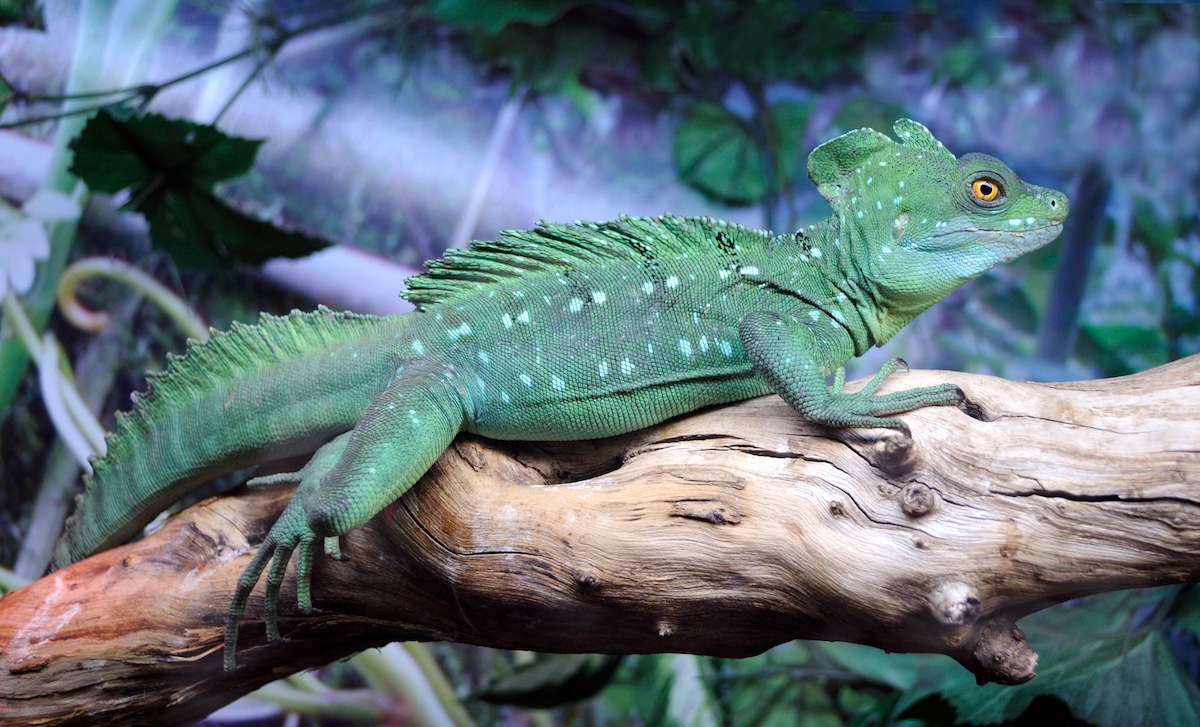 Photo Credit: Belinka at Deposit Photos
In the heart of Central and South America’s lush rainforests, the Basilisk Lizard, scientifically known as Basiliscus, emerges as a true marvel of nature. With its vibrant green body and striking crest along its back, this lizard is not just a feast for the eyes but also a master of survival. Imagine a sun-drenched morning where the air is thick with the scent of damp earth and the sounds of chirping birds fill the canopy. Here, the Basilisk Lizard scurries along the forest floor, its long, whip-like tail trailing behind, ready to leap into action at a moment’s notice.
What truly sets the Basilisk apart is its astonishing ability to run across water, a skill that has earned it the nickname “Jesus Christ Lizard.” This remarkable feat is made possible by its unique foot structure, which allows it to create enough surface tension to sprint across ponds and streams. Scientists and nature enthusiasts alike are captivated by this extraordinary adaptation, as it showcases the incredible ways animals have evolved to thrive in their environments. As we delve deeper into the world of the Basilisk Lizard, we will explore its habitat, diet, and the vital role it plays in the delicate balance of its rainforest ecosystem.
The Basilisk Lizard, often called the “Jesus Christ Lizard” for its incredible ability to run on water, occupies a fascinating position in the tree of life. This remarkable reptile belongs to the Kingdom Animalia, which includes all animals, and is classified under the Phylum Chordata, known for animals with a backbone. Within the Class Reptilia, it falls under the Order Squamata, which encompasses lizards and snakes. The Basilisk is part of the Family Corytophanidae, a group of lizards that are known for their distinctive crests and unique adaptations. Its scientific classification not only highlights its physical traits but also reveals its evolutionary journey through millions of years.
| Taxonomic Rank | Scientific Name | Meaning & Significance |
|---|---|---|
| Kingdom | Animalia | This name signifies that the Basilisk is part of the vast group of multicellular organisms that are heterotrophic, meaning they consume other organisms for energy. |
| Phylum | Chordata | Chordata refers to animals that possess a notochord, a flexible rod that supports the body, at some stage of their development, highlighting the lizard’s vertebrate lineage. |
| Class | Reptilia | Reptilia indicates that the Basilisk is a reptile, characterized by scaly skin and typically laying eggs, which connects it to other cold-blooded animals. |
| Order | Squamata | Squamata means “scaly,” a nod to the lizard’s distinctive skin texture, which is a common feature among lizards and snakes. |
| Family | Corytophanidae | This family name comes from the Greek word for “helmet,” referring to the crest on the Basilisk’s head, which is a defining characteristic of this group. |
| Genus | Basiliscus | The name Basiliscus is derived from the Greek word for “little king,” which may refer to the lizard’s regal appearance and its impressive ability to navigate its environment. |
The classification of the Basilisk Lizard reveals much about its evolutionary history and adaptations. As a member of the Squamata order, it shares common ancestry with other lizards and snakes, showcasing the diverse evolutionary paths within reptiles. Its unique adaptations, such as the ability to sprint across water and its striking crest, illustrate how this lizard has evolved to thrive in its tropical habitats. Understanding its taxonomic position not only highlights its biological traits but also connects it to the broader tapestry of life on Earth, emphasizing the intricate relationships among species over time.
The evolutionary journey of the Basilisk Lizard stretches back millions of years, tracing its lineage through the lush, tropical forests of Central and South America. This captivating reptile belongs to the family Corytophanidae and the genus Basiliscus, which emerged during the late Cretaceous period, around 70 million years ago. As the Earth transformed through dramatic climate changes and shifting landscapes, the ancestors of the Basilisk adapted to thrive in their ever-evolving environments.
The early ancestors of the Basilisk Lizard were likely small, arboreal (tree-dwelling) reptiles that navigated the dense foliage of ancient forests. Over time, these lizards developed several key adaptations that allowed them to exploit their habitats more effectively. One major transition was the evolution of their long, slender bodies and powerful limbs, which enhanced their agility and speed. This adaptation was crucial for escaping predators and pursuing prey. Additionally, the development of specialized toe pads enabled them to grip smooth surfaces, allowing them to climb trees with ease.
The adaptations of the Basilisk Lizard have been vital for its survival in the wild. The ability to run on water not only aids in escaping predators but also allows it to hunt insects and small animals that dwell near the water’s edge. Their camouflage helps them blend into their surroundings, making it harder for both predators and prey to spot them. With a powerful tail for defense and a clever way to manage body temperature, the Basilisk Lizard has successfully navigated the challenges of its environment, showcasing the wonders of evolution in action.
The Basilisk Lizard is a stunning sight to behold, with a body that seems almost designed for adventure. Its slender form is complemented by a long, whip-like tail that can measure up to twice the length of its body. This agile lizard sports vibrant colors that can range from bright greens to striking blues, making it a dazzling presence in its tropical habitat. With a lightweight frame, it can dart through the underbrush and even skim across the surface of water, showcasing its incredible adaptations.
| Feature | Description |
|---|---|
| Weight | 4.8 – 13+ ounces |
| Skin Type | Scales |
| Most Distinctive Feature | Bright colors and whip-like tail |
The Basilisk Lizard’s vibrant colors serve as both a warning to potential predators and a way to blend into the lush foliage of its environment. Its scales provide protection while allowing it to move swiftly and gracefully. The long tail not only aids in balance but also helps it navigate through trees and across water, making it a master of its domain. Together, these features create a creature perfectly adapted to thrive in the wild, showcasing the wonders of evolution in action.
The Basilisk Lizard thrives in the vibrant embrace of tropical rainforests, where the air is thick with humidity and the canopy is alive with the sounds of chirping birds and rustling leaves. These lush environments are filled with towering trees, winding vines, and a rich undergrowth that provides both shelter and food. Sunlight filters through the leaves, creating a dappled effect on the forest floor, where the lizard can often be seen darting between shadows, showcasing its agility and speed.
The climate of the tropical rainforest is warm and wet, with temperatures typically ranging from 70 to 90 degrees Fahrenheit (21 to 32 degrees Celsius). These areas receive abundant rainfall, often exceeding 100 inches (254 centimeters) annually. The high humidity levels create a perfect environment for the Basilisk Lizard, allowing it to thrive among the dense foliage and abundant water sources. This climate supports a diverse array of plant and animal life, making it an ideal home for this agile reptile.
To survive in such a dynamic habitat, the Basilisk Lizard has developed several fascinating adaptations. Its long toes are equipped with specialized pads that help it run swiftly across the surface of water, a skill that not only aids in escaping predators but also allows it to navigate its watery surroundings with ease. Additionally, its vibrant coloration helps it blend into the lush greenery, providing camouflage from both prey and predators. These adaptations make the Basilisk Lizard a true marvel of the rainforest, perfectly suited to its vibrant and challenging environment.
As dawn breaks over the lush rainforests of Central and South America, the Basilisk Lizard begins its day. These agile reptiles are most active during the day, basking in the warm sunlight to raise their body temperature. They spend their mornings hunting for insects and small invertebrates, darting through the underbrush with impressive speed. With their keen eyesight, they spot potential meals from a distance, using their quick reflexes to snatch them up. As the sun climbs higher, they often take breaks, resting on branches or rocks, where they can soak up the sun’s rays and keep an eye out for any approaching predators.
While Basilisk Lizards are primarily solitary creatures, they do have interesting interactions with others of their kind. During the breeding season, males may display their vibrant colors and perform elaborate courtship rituals to attract females. These displays can include head bobbing and push-ups, showcasing their strength and vitality. Although they prefer to live alone, they are not entirely antisocial; they may tolerate the presence of other Basilisk Lizards in their territory, especially if food is abundant. However, conflicts can arise, particularly among males, as they establish dominance and defend their space.
| Behavior Type | Description |
|---|---|
| Activity Patterns | Active during the day, basking in the sun and hunting for insects. |
| Social Structure | Primarily solitary, with interactions mainly during the breeding season. |
| Communication Methods | Use visual displays like head bobbing and push-ups to attract mates and establish dominance. |
In the wild, these behaviors are crucial for survival. By being active during the day, Basilisk Lizards can take advantage of the warm temperatures to hunt effectively. Their solitary nature allows them to avoid competition for food, while their impressive displays during mating season help ensure the continuation of their species. Each interaction, whether it’s a courtship dance or a territorial display, plays a vital role in their life, helping them navigate the challenges of their vibrant rainforest home.
The Basilisk Lizard is a carnivore, which means it primarily eats meat. This agile reptile has a varied diet that includes insects, small lizards, and even tiny mammals. With its keen eyesight and quick reflexes, the Basilisk is an adept hunter, using its speed and agility to catch prey. It often forages among the leaves and branches of its rainforest home, where it can spot potential meals scurrying about.
| Dietary Aspect | Details |
|---|---|
| Diet Type | Carnivore |
| Favorite Foods | Insects, small lizards, and spiders |
| Prey Items | Snails and crawfish |
| Hunting/Foraging Strategies | Uses speed and agility to catch prey, often foraging in trees and on the ground |
This diet plays a crucial role in the Basilisk Lizard’s ecology and daily routine. By preying on a variety of small animals, it helps maintain the balance of its ecosystem, controlling insect populations and providing food for larger predators. The need to hunt for food also influences its behavior, as it must be vigilant and quick to avoid becoming a meal itself. This constant dance of predator and prey shapes the vibrant life of the rainforest, where every creature plays its part in the grand tapestry of nature.
As the warm rains of the breeding season arrive, Basilisk Lizards engage in a captivating courtship ritual. Males display their vibrant colors and perform elaborate movements to attract females. This often includes head bobbing and push-ups, showcasing their strength and vitality. Once a female is impressed, she will mate with the male, and the couple will prepare for the arrival of their young.
| Reproductive Aspect | Details |
|---|---|
| Gestation Period | 8-10 weeks |
| Litter Size | Typically 10-20 eggs |
| Age of Maturity | 10-15 months |
| Name of Young | Hatchlings |
After the eggs are laid, the female Basilisk Lizard buries them in the warm, moist soil, providing a safe environment for the developing hatchlings. Once the eggs hatch, the tiny Basilisk lizards emerge, ready to face the world. These hatchlings are independent from the moment they break free from their eggs, relying on their instincts to find food and avoid predators. As they grow, they will develop the skills needed to thrive in their lush rainforest habitat, eventually maturing into the striking adults that captivate our imaginations.
The Basilisk Lizard plays a crucial role in its ecosystem, sitting comfortably in the middle of the food web. As a carnivore, it helps control insect populations and serves as prey for larger animals. This balance is vital for maintaining the health of its tropical rainforest habitat, where every creature has a part to play.
To survive these dangers, the Basilisk Lizard has developed some impressive defensive behaviors. When threatened, it can sprint across water, creating a splash that confuses predators. Additionally, its ability to blend into the foliage helps it avoid detection. By using these clever strategies, the Basilisk Lizard continues to thrive in its vibrant, yet perilous, rainforest home.
A keystone species is an organism that has a disproportionately large impact on its environment relative to its abundance. This means that if it were removed, the ecosystem would change dramatically. The Basilisk Lizard, with its unique adaptations and role in the food web, qualifies as a keystone species in its tropical rainforest habitat. Its presence helps maintain the balance of the ecosystem, influencing both predator and prey dynamics.
The Basilisk Lizard plays a vital role in controlling insect populations. As a carnivore, it primarily feeds on insects, small lizards, and even tiny mammals. By keeping these populations in check, the Basilisk helps prevent overpopulation, which can lead to resource depletion and habitat degradation. For example, if insect numbers were to surge unchecked, they could damage plant life, disrupting the entire food chain that relies on those plants for survival.
Additionally, the Basilisk serves as prey for larger predators, such as birds of prey and snakes. This makes it an important link in the food web, connecting various levels of the ecosystem. When Basilisk Lizards thrive, they provide a steady food source for these predators, which in turn helps regulate their populations. This balance is crucial for maintaining the health of the rainforest ecosystem.
Moreover, the Basilisk Lizard’s unique ability to run on water allows it to escape predators and access food sources that other animals might not reach. This behavior not only showcases its adaptability but also highlights its role in the ecosystem as a forager that can exploit different niches.
If the Basilisk Lizard were to disappear, the effects would ripple through the ecosystem. Insect populations could explode, leading to increased competition for food among other species. Larger predators that rely on the Basilisk as a food source would struggle to find enough to eat, potentially leading to their decline. This imbalance could ultimately result in a less diverse and less resilient rainforest, highlighting just how crucial the Basilisk Lizard is to its environment.
The Basilisk Lizard plays a vital role in its tropical rainforest habitat, where it occupies a unique ecological niche. As a carnivore, it helps maintain the balance of the ecosystem by controlling insect populations and serving as prey for larger predators. This dynamic interaction not only supports the food web but also contributes to the overall health of the rainforest environment. By fulfilling its role, the Basilisk Lizard ensures that various species can thrive, creating a rich tapestry of life.
| Ecosystem Service | Impact |
|---|---|
| Insect population control | Prevents overpopulation of insects, which can damage plant life. |
| Prey for larger animals | Provides a food source for birds, snakes, and mammals, supporting biodiversity. |
| Seed dispersal | Indirectly aids in plant reproduction by consuming fruits and spreading seeds. |
The influence of the Basilisk Lizard extends beyond its immediate actions. For instance, by preying on insects, it helps protect the foliage of the rainforest, allowing plants to flourish. This, in turn, creates a habitat for countless other species, from colorful birds to elusive mammals. Additionally, as it scurries across the water’s surface, the Basilisk Lizard not only showcases its incredible adaptations but also stirs the water, which can help aerate it and support aquatic life. Each of these interactions highlights the lizard’s integral role in maintaining the delicate balance of its ecosystem.
The broader ecological importance of the Basilisk Lizard cannot be overstated. As a keystone species, its presence is crucial for the stability of the rainforest ecosystem. If the Basilisk Lizard were to disappear, the ripple effects would be felt throughout the food web, potentially leading to overpopulation of insects and a decline in plant health. This fascinating reptile exemplifies how interconnected life is in the rainforest, reminding us that every species, no matter how small, plays a significant part in the grand story of nature.
In the intricate web of life within tropical rainforests, the Basilisk Lizard engages in various ecological relationships with other species. These interactions can be classified into three main types: mutualism, parasitism, and commensalism. Each relationship plays a vital role in the ecosystem, showcasing how different species can depend on one another for survival, protection, or resources. Understanding these connections helps us appreciate the delicate balance of nature and the importance of every creature within it.
| Species/Type | Relationship Type | Description |
|---|---|---|
| Ants | Mutualistic | Basilisk Lizards may benefit from the presence of ants, which help control insect populations that could otherwise become pests. In return, the lizards may provide a source of food for the ants when they shed skin or leave behind waste. |
| Birds | Commensal | Some birds may follow Basilisk Lizards to catch insects that are disturbed as the lizard moves through the underbrush. The lizard is unaffected by the birds’ presence, while the birds gain an easy meal. |
| Parasites (like ticks) | Parasitic | Ticks and other parasites can latch onto Basilisk Lizards, feeding on their blood. This relationship is harmful to the lizard, as it can lead to health issues and weakened immunity. |
These relationships have evolved over time, shaped by the needs and behaviors of the species involved. Mutualistic partnerships, like that with ants, highlight how cooperation can enhance survival for both parties. Commensal relationships, such as those with birds, demonstrate how one species can benefit without harming another. On the other hand, parasitic interactions remind us that not all relationships are beneficial. Understanding these dynamics helps us see the Basilisk Lizard not just as a solitary creature, but as an integral part of a larger community, where every interaction contributes to the rich tapestry of life in the rainforest.
The Basilisk Lizard is a captivating reptile that showcases some truly astonishing adaptations. Known for its vibrant colors and remarkable abilities, this lizard is a true marvel of nature.
Throughout history, the Basilisk Lizard has captured the imagination of many cultures, often appearing in folklore and mythology. In some tales, this lizard is said to possess magical powers, including the ability to kill with its gaze. This legendary status has made it a symbol of mystery and intrigue, often representing the untamed aspects of nature. As explorers ventured into the lush rainforests of Central and South America, they encountered these remarkable reptiles, further embedding them into the cultural fabric of the regions they inhabit. The Basilisk’s unique ability to run on water has only added to its allure, inspiring stories and legends that continue to fascinate people today.
In modern times, the relationship between humans and Basilisk Lizards has evolved, focusing more on conservation and coexistence. As deforestation and habitat loss threaten their populations, efforts are underway to protect their natural environments. Conservationists work tirelessly to raise awareness about the importance of these lizards in maintaining the balance of their ecosystems. However, conflicts can arise when human activities encroach on their habitats, leading to misunderstandings and fear. While domestication of Basilisk Lizards is not common, some people keep them as exotic pets, which can lead to challenges in care and understanding their needs.
As we look to the future, the relationship between humans and Basilisk Lizards holds both challenges and opportunities. With increasing awareness of environmental issues, there is hope that more people will appreciate the role these lizards play in their ecosystems. By fostering a sense of stewardship and respect for wildlife, we can ensure that future generations will continue to marvel at the Basilisk Lizard’s incredible abilities and the rich stories that surround it. Together, we can create a world where humans and these extraordinary reptiles coexist harmoniously, celebrating the wonders of nature.
The Basilisk Lizard currently holds a conservation status of “Least Concern,” according to the International Union for Conservation of Nature (IUCN). This means that, at present, the species is not facing any immediate threat of extinction. Population estimates suggest that these lizards are relatively stable across their range in Central and South America, where they thrive in lush tropical environments. While their numbers are not declining, ongoing monitoring is essential to ensure they remain safe in their habitats.
| Conservation Factor | Status/Details |
|---|---|
| IUCN Status | Least Concern |
| Population Estimates | Stable |
| Trend Direction | Stable |
Despite their current stable status, Basilisk Lizards face several threats that could impact their future. Habitat destruction is a significant concern, as deforestation for agriculture and urban development reduces the lush rainforests they call home. Additionally, climate change poses risks by altering their environment, affecting food availability and breeding patterns. These factors can lead to localized declines, even if the overall population remains stable.
Conservation efforts are underway to protect the habitats of the Basilisk Lizard and ensure their continued survival. Organizations are working to promote sustainable land use and raise awareness about the importance of preserving tropical ecosystems. By protecting these vibrant environments, we not only safeguard the Basilisk Lizard but also countless other species that share its home. With ongoing efforts and public support, the outlook for this captivating lizard remains hopeful, allowing future generations to marvel at its extraordinary abilities.
| Question | Answer |
|---|---|
| Where do Basilisk Lizards live? | Basilisk Lizards are found in tropical rainforests of Central and South America. They thrive in warm, humid environments where they can easily find food and shelter among the trees and underbrush. |
| What do Basilisk Lizards eat? | These lizards are carnivores, meaning they primarily eat other animals. Their diet consists of insects, small mammals, and even small birds, which they catch with their quick reflexes and sharp eyesight. |
| How do Basilisk Lizards behave? | Basilisk Lizards are known for their unique ability to run on water, thanks to their long toes and lightweight bodies. They are also quite social and can often be seen basking in the sun or climbing trees in groups. |
| How do Basilisk Lizards reproduce? | During the breeding season, female Basilisk Lizards lay eggs in nests dug into the ground. After about 10 to 15 weeks, the eggs hatch, and the baby lizards emerge, ready to fend for themselves almost immediately. |
| What threats do Basilisk Lizards face? | While Basilisk Lizards are currently listed as Least Concern, they still face threats from habitat destruction due to deforestation and human encroachment. Additionally, they can fall prey to larger predators, including birds of prey and snakes. |
| What is a unique characteristic of Basilisk Lizards? | One of the most distinctive features of Basilisk Lizards is their bright colors and whip-like tail. These traits not only help them blend into their vibrant rainforest surroundings but also aid in communication with other lizards. |
| Can Basilisk Lizards swim? | Yes, Basilisk Lizards are excellent swimmers! They can dive into the water to escape predators and are known to swim with their bodies flat, using their long tails to propel themselves efficiently. |