Taxonomy & Classification
- Kingdom
- Animalia
- Phylum
- Chordata
- Class
- Chondrichthyes
- Order
- Lamniformes
- Family
- Cetorhinidae
- Genus
- Cetorhinus
- Species
- Cetorhinus maximus

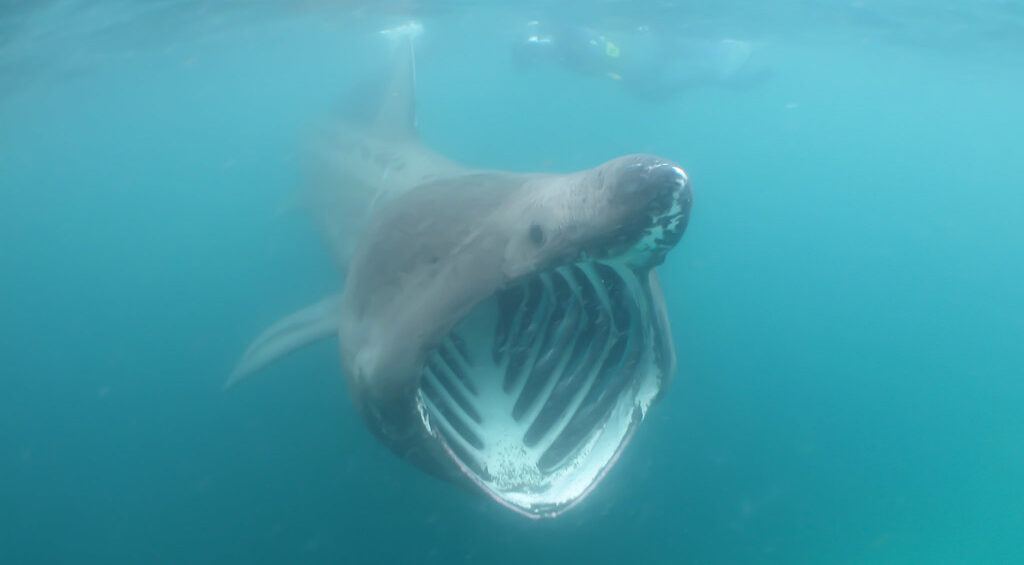 "Basking Shark" by yohancha is licensed under CC BY-ND 2.0
In the shimmering blue expanse of the ocean, the basking shark, scientifically known as Cetorhinus maximus, glides gracefully through the water, embodying the serene beauty of marine life. This gentle giant, which can grow up to 33 feet long, is often seen near the surface, its massive dorsal fin slicing through the waves like a sail. With a wide, gaping mouth that can stretch nearly four feet across, the basking shark is not a fearsome predator but a filter feeder, sifting through the water for tiny plankton. Its unique feeding method and impressive size make it a captivating subject for scientists and nature lovers alike.
As it swims through temperate waters, basking sharks play a vital role in their ecosystem, helping to maintain the balance of marine life. Their presence indicates healthy ocean conditions, as they thrive in nutrient-rich areas where plankton blooms occur. Despite their size and somewhat intimidating appearance, these sharks are harmless to humans, often swimming alongside boats and divers, inviting curiosity and admiration. The basking shark’s gentle nature and ecological importance highlight the wonders of the ocean, reminding us of the intricate connections that sustain life beneath the waves.
The basking shark, a gentle giant of the ocean, holds a special place in the tree of life. It belongs to the Kingdom Animalia, which includes all animals, and is classified under the Phylum Chordata, meaning it has a backbone. This magnificent fish is part of the Class Chondrichthyes, which encompasses all cartilaginous fish, like sharks and rays. What sets the basking shark apart is its impressive size, reaching lengths of up to 40 feet, and its unique feeding behavior. Unlike many of its predatory relatives, the basking shark is a filter feeder, using its gaping mouth to strain tiny plankton from the water. This peaceful approach to feeding makes it a fascinating subject of study in marine biology.
| Taxonomic Rank | Scientific Name | Meaning & Significance |
|---|---|---|
| Kingdom | Animalia | This name signifies that basking sharks are part of the vast group of multicellular organisms known as animals. |
| Phylum | Chordata | Chordata means “having a notochord,” which is a flexible rod that supports the body, a feature present in all vertebrates, including basking sharks. |
| Class | Chondrichthyes | This term translates to “cartilage fish,” highlighting that basking sharks have skeletons made of cartilage instead of bone, making them lighter and more agile in the water. |
| Order | Lamniformes | Lamniformes means “shark-like,” indicating that basking sharks share characteristics with other sharks, such as a streamlined body and a powerful tail. |
| Family | Cetorhinidae | This family name comes from the Greek word “ketos,” meaning whale, and “rhinos,” meaning nose, referring to the shark’s large mouth that resembles a whale’s feeding mechanism. |
| Genus | Cetorhinus | The genus name also derives from “ketos,” emphasizing the shark’s size and its filter-feeding habits, similar to those of some whale species. |
The classification of the basking shark reveals much about its evolutionary journey. As a member of the Chondrichthyes class, it shares a lineage with ancient fish that have thrived in the oceans for hundreds of millions of years. This lineage showcases the adaptability of these creatures, allowing them to evolve unique feeding strategies and physical traits suited for life in the open sea. The basking shark’s gentle nature and impressive size not only highlight its role in marine ecosystems but also remind us of the diverse paths life can take in the vast tapestry of evolution.
The evolutionary journey of the basking shark stretches back millions of years, tracing its lineage to a time when the oceans were teeming with diverse marine life. This gentle giant, known scientifically as Cetorhinus maximus, is part of a lineage that has adapted to the changing conditions of the Earth’s waters. The basking shark is a member of the family Cetorhinidae, which has existed since the late Cretaceous period, around 100 million years ago.
Ancestral forms of the basking shark were likely smaller and more agile, resembling their relatives, the mackerel sharks. Over time, these ancestors underwent significant changes, adapting to a filter-feeding lifestyle. This transition allowed them to thrive in open waters, where food sources like plankton were abundant. As they evolved, basking sharks developed larger bodies and wider mouths, enabling them to gulp vast amounts of water and filter out tiny organisms. Their streamlined shape and powerful tails also helped them navigate the ocean’s currents with ease.
These evolutionary adaptations have played a crucial role in the basking shark’s survival. By developing a filter-feeding mechanism, they can thrive in nutrient-rich waters, ensuring a steady food supply. Their impressive size and streamlined bodies not only help them evade predators but also allow them to cover vast distances in search of food. As they continue to navigate the oceans, basking sharks remind us of the incredible power of evolution and the delicate balance of marine ecosystems.
The basking shark is an awe-inspiring sight in the ocean, often gliding gracefully through the water. With its enormous size and streamlined body, it can reach lengths of up to 33 feet (10 meters) or more. This gentle giant has a wide, flat head that gives it a distinctive profile, and its mouth can open to an impressive three feet wide, allowing it to filter-feed on tiny plankton. Its smooth skin, often a muted gray or brown, helps it blend into the ocean depths, making it a master of camouflage in its watery realm.
| Feature | Description |
|---|---|
| Weight | 8,500 lbs (3,900 kg) |
| Length | Up to 33 feet (10 meters) |
| Skin Type | Smooth |
| Color | Muted gray or brown |
The basking shark’s impressive features are not just for show; they play vital roles in its survival. Its massive size deters potential predators, while its smooth skin reduces drag as it swims through the water. The wide mouth is perfectly designed for its feeding strategy, allowing it to efficiently filter plankton from the ocean. Together, these characteristics enable the basking shark to thrive in its environment, showcasing the beauty and ingenuity of nature’s designs.
The basking shark calls the temperate waters of the world’s oceans its home, often found gliding gracefully along the continental shelves. These areas are rich in nutrients, providing a perfect environment for the plankton that make up the shark’s diet. Picture a vast expanse of blue, where sunlight filters through the water, creating a shimmering dance of light. Here, the basking shark swims slowly, its enormous mouth wide open, filtering the tiny organisms that drift by.
The basking shark thrives in waters that are not too warm and not too cold, typically preferring temperatures between 50°F and 70°F (10°C to 21°C). These gentle giants are often found near the surface, where they can easily access the abundant plankton. The continental shelves provide a shallow habitat that is rich in food, making it an ideal spot for these massive fish to feed and grow.
To adapt to its specific habitat, the basking shark has developed a unique feeding strategy. Its large mouth acts like a net, allowing it to filter vast amounts of water for plankton. This adaptation is crucial for survival in the nutrient-rich waters of the continental shelves. Additionally, basking sharks are known to migrate seasonally, following the blooms of plankton, which ensures they always have a plentiful food supply. This remarkable ability to navigate and thrive in their environment showcases the basking shark’s connection to the ocean’s ecosystems.
The basking shark leads a life that is both tranquil and purposeful. Each day, it swims through the ocean’s temperate waters, often near the surface, where it can filter-feed on plankton. This gentle giant spends much of its time gliding slowly, using its enormous mouth to take in water and capture tiny organisms. As it moves, the basking shark can cover vast distances, sometimes traveling hundreds of miles in search of food. Its daily routine is a blend of feeding, swimming, and occasionally breaching the surface, creating a mesmerizing spectacle for those lucky enough to witness it.
Socially, basking sharks are known for their solitary nature, but they can also be found in small groups, especially in areas rich in food. When they gather, it’s often a casual affair, with individuals swimming alongside one another without forming tight-knit bonds. This loose social structure allows them to take advantage of abundant plankton blooms while still maintaining their independence. Communication among basking sharks is subtle; they rely on body language and perhaps even changes in swimming patterns to signal their presence to one another.
| Behavior Type | Description |
|---|---|
| Feeding | Basking sharks filter-feed by swimming with their mouths wide open, capturing plankton and small fish in the water. |
| Social Structure | They are primarily solitary but can form loose groups when food is plentiful. |
| Communication | They use body language and swimming patterns to interact with each other, though their communication methods are not well understood. |
The behaviors of basking sharks are finely tuned to ensure their survival in the vast ocean. By filtering large amounts of water for food, they efficiently gather the nutrients they need to thrive. Their ability to swim alone or in small groups allows them to adapt to changing conditions, whether that means seeking out new feeding grounds or avoiding potential threats. This blend of independence and opportunism is key to their success in the ever-changing marine environment.
The basking shark is a carnivore, meaning it primarily eats meat, but its diet is quite special. Unlike many other sharks that hunt actively for their prey, basking sharks are filter feeders. They swim with their mouths wide open, allowing water to flow in and trapping tiny organisms like plankton, small fish, and invertebrates in their gill rakers. These gill rakers are comb-like structures that help them sift through the water, catching food while letting the water flow back out. This feeding behavior allows them to consume large amounts of food with minimal effort, making their daily routine both efficient and energy-saving.
| Dietary Aspect | Details |
|---|---|
| Diet Type | Carnivore |
| Favorite Foods | Plankton, small fish, and invertebrates |
| Prey Items | Various species of plankton, small fish, and marine invertebrates |
| Hunting/Foraging Strategies | Filter feeding by swimming with mouth open to capture food |
This unique diet shapes the basking shark’s role in the marine ecosystem. By feeding on plankton, they help regulate these populations, ensuring a balanced environment. Their gentle feeding habits also mean they spend a lot of time near the surface, where they can be seen gliding gracefully through the water. This not only makes them a fascinating sight for divers and boaters but also highlights their importance in maintaining the health of oceanic food webs.
The mating behavior of basking sharks is a captivating aspect of their life cycle. These gentle giants typically breed in the warmer months, often between late spring and early summer. During this time, males engage in a fascinating courtship ritual, which can involve swimming closely alongside females and displaying their size and strength. This dance of sorts is not just for show; it helps establish dominance and attract potential mates. After mating, the female basking shark embarks on a lengthy gestation period, which can last anywhere from 2.5 to 3 years, a remarkable duration for such a large animal.
| Reproductive Aspect | Details |
|---|---|
| Gestation Period | Estimated at 2.5 – 3 years |
| Litter Size | Unknown, but likely a small number of pups |
| Age of Maturity | 12 – 16 years |
| Name of Young | Pups |
Once the pups are born, they are left to fend for themselves right away. Unlike some other species that provide extensive parental care, basking sharks do not nurture their young after birth. The pups are born fully formed and must quickly learn to navigate the vast ocean. They rely on their instincts to find food and avoid predators. As they grow, these young basking sharks will gradually develop into the magnificent adults they are destined to become, often taking many years to reach their full size and maturity. This journey from pup to adult is a testament to the resilience and adaptability of these incredible marine animals.
The basking shark occupies a unique position in the ocean’s food web. As a filter feeder, it primarily consumes tiny organisms like plankton, which are abundant in nutrient-rich waters. While basking sharks are not aggressive and pose no threat to humans, they are still vulnerable to various dangers that can impact their survival.
To defend themselves against these threats, basking sharks rely on their size and elusive nature. They often swim in deeper waters or near the surface, making them less visible to potential dangers. Additionally, their slow, graceful movements help them avoid fast-moving boats. While they do not have the sharp teeth or aggressive behaviors of other sharks, their sheer size can deter some predators. By using these strategies, basking sharks continue to navigate the challenges of their ocean home.
A keystone species is an organism that plays a critical role in maintaining the structure of its ecosystem. Its presence or absence can significantly impact the environment and the other species that inhabit it. The basking shark, with its unique feeding habits and ecological interactions, qualifies as a keystone species in its marine habitat.
Basking sharks are filter feeders, meaning they consume tiny organisms like plankton by swimming with their mouths wide open. This feeding behavior helps regulate plankton populations, which are essential for the health of marine ecosystems. By keeping these populations in check, basking sharks contribute to the balance of the food web. For example, when basking sharks thrive, they help ensure that plankton levels remain stable, which in turn supports a variety of other marine life, including fish and larger predators that rely on these smaller organisms for food.
Moreover, basking sharks also play a role in nutrient cycling. As they filter feed, they excrete waste that enriches the surrounding water with nutrients. This process can stimulate the growth of phytoplankton, the microscopic plants that form the base of the oceanic food chain. Healthy phytoplankton populations are vital for oxygen production and serve as food for countless marine species, creating a ripple effect throughout the ecosystem.
If basking sharks were to disappear from their ecosystems, the consequences could be dire. Without these gentle giants to control plankton populations, certain species might overpopulate, leading to imbalances that could disrupt the entire marine food web. Additionally, the decline in nutrient cycling could result in reduced phytoplankton growth, affecting oxygen levels and the overall health of the ocean. The loss of basking sharks would not only impact their immediate environment but could also have far-reaching effects on global marine biodiversity.
The basking shark occupies a vital ecological niche in the marine environment, acting as a key player in the health of ocean ecosystems. As one of the largest fish in the sea, it primarily feeds on plankton, tiny organisms that drift in the water. By filtering these microscopic creatures from the ocean, basking sharks help regulate plankton populations, which are crucial for maintaining the balance of marine food webs. This gentle giant not only contributes to the health of its immediate surroundings but also supports a diverse array of life in the ocean.
| Ecosystem Service | Impact |
|---|---|
| Plankton Regulation | Controls plankton populations, preventing overgrowth and maintaining balance in the food web. |
| Nutrient Cycling | Facilitates the movement of nutrients through the ecosystem by feeding on plankton and excreting waste that enriches the water. |
| Habitat for Other Species | Provides a habitat for smaller fish and marine organisms that thrive in areas where basking sharks feed. |
| Tourism and Education | Attracts ecotourism, promoting awareness and conservation efforts for marine ecosystems. |
Basking sharks influence their environment in several specific ways. For instance, by consuming vast amounts of plankton, they help keep these populations in check, which is essential for the survival of other marine species that rely on plankton as a food source. Additionally, their feeding habits contribute to nutrient cycling in the ocean. When basking sharks filter-feed, they excrete waste that enriches the surrounding water, promoting the growth of phytoplankton, the foundation of the marine food web. This process not only supports the health of the ocean but also benefits countless other organisms, from tiny fish to larger predators.
The broader ecological importance of basking sharks cannot be overstated. As a keystone species, their presence helps maintain the structure and function of marine ecosystems. Without them, the balance of plankton populations could be disrupted, leading to cascading effects throughout the food web. Furthermore, basking sharks play a role in promoting biodiversity by supporting various marine life that depends on healthy ecosystems. By understanding and protecting these magnificent creatures, we can help ensure the vitality of our oceans for generations to come.
In the intricate web of life beneath the waves, symbiosis plays a crucial role in shaping the relationships between different species. Symbiosis refers to the close interactions between organisms, which can be beneficial, harmful, or neutral. These relationships can be classified into three main types: mutualism, where both species benefit; parasitism, where one species benefits at the expense of another; and commensalism, where one species benefits while the other is neither helped nor harmed. The basking shark, a gentle giant of the ocean, engages in various ecological partnerships that highlight the interconnectedness of marine life.
| Species/Type | Relationship Type | Description |
|---|---|---|
| Remoras | Commensalism | Remoras, small fish that attach themselves to the basking shark, benefit by getting a free ride and access to leftover food, while the shark is largely unaffected. |
| Cleaner Wrasse | Mutualism | These small fish clean parasites and dead skin off the basking shark, providing a service that keeps the shark healthy, while they gain a meal. |
| Barnacles | Commensalism | Barnacles attach to the basking shark’s skin, gaining a place to live and access to food particles in the water, while the shark remains unharmed. |
These relationships have evolved over time, showcasing the adaptability and resilience of species in the ocean. The basking shark, by allowing certain species to thrive on its body, creates a micro-ecosystem that benefits both itself and its companions. The cleaner wrasse, for instance, not only helps maintain the shark’s health but also ensures its own survival through a steady food source. Such partnerships illustrate the delicate balance of marine ecosystems, where cooperation and coexistence can lead to thriving communities in the vast ocean.
The basking shark is one of the ocean’s most intriguing inhabitants, often overshadowed by its more famous relatives like the great white shark. Despite its massive size and fearsome appearance, this gentle giant plays a vital role in the marine ecosystem. Here are some surprising facts that showcase the basking shark’s unique characteristics and behaviors.
The relationship between basking sharks and humanity has evolved over centuries, marked by both awe and misunderstanding. Historically, these gentle giants have captured the imagination of coastal communities, often appearing in folklore and maritime tales. In some cultures, they were seen as symbols of strength and mystery, while in others, they were feared due to their size. Early sailors sometimes mistook basking sharks for sea monsters, leading to a mix of reverence and trepidation. As knowledge of these creatures grew, so did their cultural significance, with many people recognizing their role in the marine ecosystem.
Today, interactions between basking sharks and humans are more complex, involving both conservation efforts and ongoing challenges. As awareness of their ecological importance has increased, many organizations are working to protect these magnificent animals from threats like overfishing and habitat loss. However, conflicts still arise, particularly in areas where fishing and tourism intersect. While basking sharks are not a target for fishing, they can become entangled in nets or collide with boats. Efforts to educate the public about their gentle nature and the need for conservation are crucial in fostering a harmonious relationship.
Looking ahead, the future of the relationship between basking sharks and humanity hinges on our ability to balance conservation with human activity. As we continue to learn more about these incredible creatures, it is essential to foster a sense of stewardship and respect. By protecting their habitats and promoting sustainable practices, we can ensure that basking sharks remain a vital part of our oceans for generations to come. Together, we can create a world where humans and basking sharks coexist peacefully, celebrating the wonders of the natural world.
The basking shark is currently classified as Endangered, a status that reflects the challenges it faces in the wild. With an estimated population size of over 20,000 individuals, these gentle giants are experiencing a concerning decline. This trend is alarming, as it indicates that their numbers are not stable and may continue to decrease if threats are not addressed.
| Conservation Factor | Status/Details |
|---|---|
| IUCN Status | Endangered |
| Estimated Population Size | Likely more than 20,000 |
| Population Trend | Declining |
The main threats to basking sharks include overfishing, habitat loss, and entanglement in fishing gear. These majestic creatures are often caught accidentally in nets, which can lead to injury or death. Additionally, as human activities continue to impact marine environments, the availability of their food sources, like plankton, may also be affected. Climate change poses another significant risk, as it alters ocean temperatures and currents, further disrupting the delicate balance of their ecosystems.
Conservation efforts are underway to protect basking sharks and their habitats. Various organizations are working to raise awareness about their plight and promote sustainable fishing practices. Marine protected areas are being established to provide safe havens for these sharks, allowing their populations a chance to recover. With continued dedication and support, there is hope that basking sharks can thrive once more in the oceans they call home.
| Question | Answer |
|---|---|
| Where do Basking Sharks live? | Basking Sharks are found in temperate waters along continental shelves. This means they prefer areas that are not too hot or too cold, often near coastlines where the ocean is shallower. |
| What do Basking Sharks eat? | These gentle giants are carnivores, meaning they eat meat, but their diet mainly consists of tiny creatures called plankton. They filter these small organisms from the water by swimming with their mouths wide open. |
| How do Basking Sharks behave? | Basking Sharks are known for their calm and slow swimming style. They often swim near the surface of the water, basking in the sun, which is how they got their name! |
| How do Basking Sharks reproduce? | Basking Sharks are ovoviviparous, which means that the eggs hatch inside the female's body, and she gives birth to live young. This process can result in a small number of pups, usually around 6 to 12 at a time. |
| What threats do Basking Sharks face? | These sharks are currently classified as endangered, facing threats from fishing, habitat loss, and climate change. Their slow reproduction rate makes it difficult for their populations to recover. |
| What is an interesting fact about Basking Sharks? | One fascinating characteristic of Basking Sharks is their enormous size; they can grow up to 40 feet long! Despite their size, they are harmless to humans and are often seen swimming peacefully in the ocean. |
| How do Basking Sharks help the ocean ecosystem? | By feeding on plankton, Basking Sharks play a crucial role in maintaining the balance of marine ecosystems. They help control plankton populations, which can affect the health of the ocean. |