Taxonomy & Classification
- Kingdom
- Animalia
- Phylum
- Annelida
- Class
- Polychaeta
- Order
- Aciculata
- Family
- Amphinomidae
- Genus
- Hermodice
- Species
- Hermodice carunculata

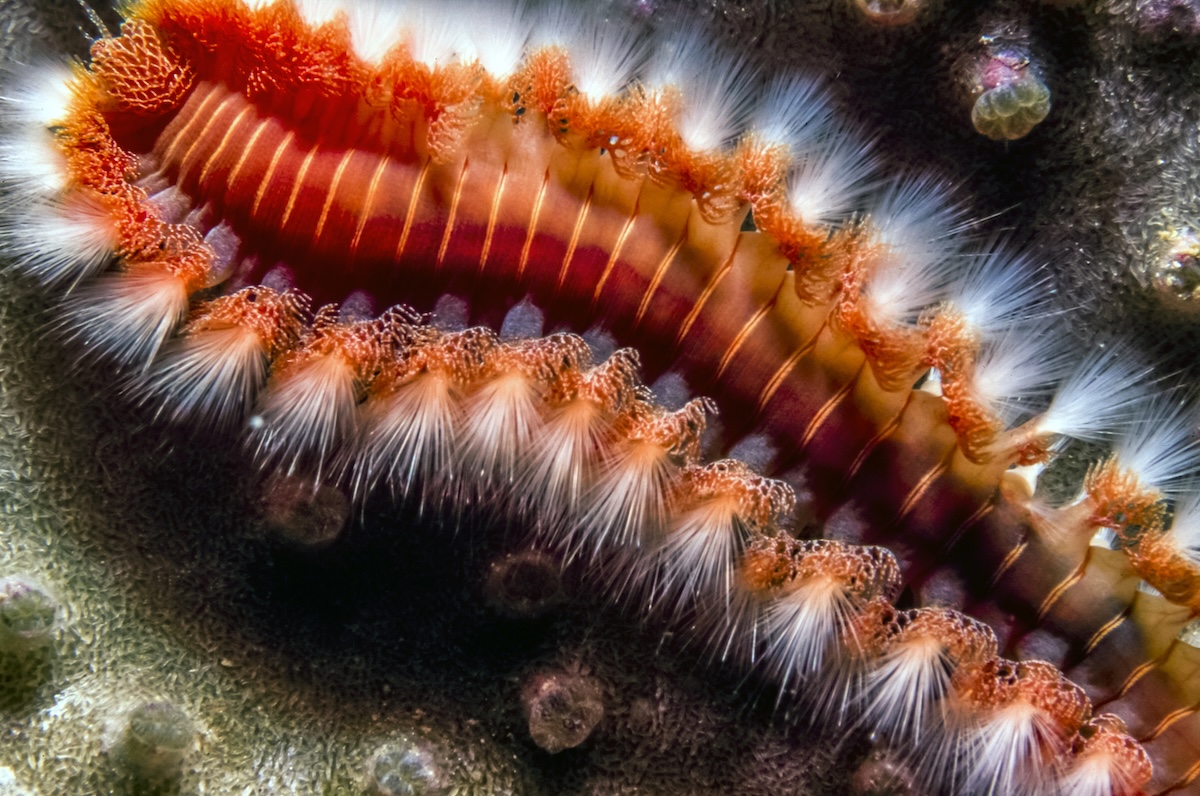 Photo Credit: johnanderson at Deposit Photos
In the vibrant underwater world of coral reefs, the Bearded Fireworm, scientifically known as Hermodice carunculata, weaves its way through the colorful landscape. With its long, slender body stretching up to 10 inches, this marine worm is a sight to behold. Its most distinctive feature is the tuft of bristles that adorns its segments, giving it a fuzzy appearance that resembles a beard. These bristles are not just for show; they contain tiny, stinging cells that can deliver a painful sting to anyone who dares to touch them. This unique adaptation helps the Bearded Fireworm defend itself against predators, making it a fascinating subject for scientists and nature enthusiasts alike.
As the sun sets and the ocean begins to darken, the Bearded Fireworm comes to life, emerging from its hiding spots among the coral and rocks. It is a carnivore, feasting on a diet of coral, anemones, and small crustaceans, playing a vital role in the delicate balance of its ecosystem. The Bearded Fireworm’s presence is crucial; it helps maintain the health of coral reefs by consuming dead and decaying material. This remarkable creature not only captivates those who explore its underwater realm but also serves as a reminder of the intricate connections that sustain life beneath the waves. Join us as we dive deeper into the world of the Bearded Fireworm, exploring its behaviors, habitat, and the important role it plays in the ocean’s ecosystem.
The Bearded Fireworm, scientifically known as Hermodice carunculata, occupies a distinctive position in the tree of life. This marine worm belongs to the kingdom Animalia, which includes all animals, and is classified under the phylum Annelida, known for its segmented bodies. What sets the Bearded Fireworm apart is its vibrant bristles, or setae, that can deliver a painful sting. These bristles are not just for show; they serve as a defense mechanism against predators, making this worm a striking example of how evolution shapes survival strategies in the animal kingdom.
| Taxonomic Rank | Scientific Name | Meaning & Significance |
|---|---|---|
| Kingdom | Animalia | This name signifies that the Bearded Fireworm is part of the vast group of multicellular organisms that are heterotrophic, meaning they consume organic material for energy. |
| Phylum | Annelida | Derived from the Latin word “annellus,” meaning “little ring,” this name reflects the worm’s segmented body structure, which is a key characteristic of this phylum. |
| Class | Polychaeta | This term comes from Greek roots meaning “many bristles,” highlighting the numerous setae that cover the Bearded Fireworm’s body, aiding in movement and defense. |
| Order | Aciculata | From the Latin word “acicula,” meaning “small needle,” this name refers to the needle-like bristles that are a defining feature of this order. |
| Family | Amphinomidae | This family name is derived from the Greek word “amphinomos,” meaning “two names,” which may refer to the dual nature of these worms as both predators and prey in their ecosystems. |
| Genus | Hermodice | This name honors the Greek god Hermes, known for his speed and cunning, reflecting the worm’s agile movements and clever adaptations for survival. |
| Species | carunculata | This species name comes from the Latin word “caruncula,” meaning “little horn,” which describes the fleshy, horn-like structures on the worm’s head that are used for sensory perception. |
Understanding the Bearded Fireworm’s classification reveals much about its evolutionary journey. As a member of the Annelida phylum, it shares a common ancestry with other segmented worms, showcasing the diversity of life forms that have adapted to marine environments. Its unique adaptations, such as the stinging bristles and sensory structures, highlight the intricate ways in which species evolve to thrive in their habitats. This classification not only helps scientists understand the Bearded Fireworm’s role in the ecosystem but also illustrates the broader patterns of evolution that connect all living organisms.
The Bearded Fireworm, or Hermodice carunculata, has a captivating evolutionary history that stretches back millions of years. This marine worm is part of the family Amphinomidae, which has adapted to life in the ocean’s diverse environments. The story of the Bearded Fireworm is one of survival and adaptation, showcasing how life evolves in response to changing conditions.
Ancestral forms of the Bearded Fireworm can be traced to early polychaete worms, which emerged over 500 million years ago. These ancestors were simple, segmented creatures that thrived in marine habitats. As time passed, significant evolutionary transitions occurred, leading to the development of specialized features. The Bearded Fireworm’s vibrant bristles, or chaetae, evolved to serve multiple purposes, including locomotion and defense. These adaptations allowed it to navigate through complex underwater landscapes and evade predators.
The adaptations of the Bearded Fireworm have been crucial for its survival in the competitive marine ecosystem. Its bright bristles deter predators, while its regenerative abilities ensure it can recover from injuries. By being able to thrive on various food sources and finding refuge in complex habitats, the Bearded Fireworm continues to flourish in the vibrant underwater world. This evolutionary journey highlights the resilience of life and the intricate connections that bind all creatures in the ocean.
The Bearded Fireworm is a striking marine inhabitant that captures attention with its vibrant appearance. This segmented worm can grow up to 10 inches long, showcasing a long, slender body that undulates gracefully through the water. Its most eye-catching feature is the array of white bristles that protrude from its sides, giving it a bearded look. These bristles not only add to its visual appeal but also serve important functions in its underwater world.
| Feature | Description |
|---|---|
| Size | Up to 10 inches long |
| Color | Brightly colored body with white bristles |
| Skin Type | Bristled hairs |
| Most Distinctive Feature | White bristles that resemble a beard |
The combination of its length, vibrant colors, and striking bristles not only makes the Bearded Fireworm visually captivating but also plays a crucial role in its survival. The bristles can deter predators, acting as a warning that this worm is not a tasty snack. Additionally, these bristles help the worm navigate through its coral reef habitat, allowing it to blend in with the colorful surroundings while it hunts for food. Together, these features create a perfect balance of beauty and practicality in the underwater realm.
The Bearded Fireworm thrives in vibrant underwater landscapes, where coral reefs and rocky areas create a bustling habitat. These colorful ecosystems are alive with activity, providing shelter and food for a variety of marine life. The worm often makes its home among the nooks and crannies of these reefs, where it can find both safety and sustenance. Seagrass beds and muddy bottoms also serve as important environments, offering a rich tapestry of nutrients that support its lifestyle.
This fascinating worm prefers warm, tropical waters, where temperatures typically range from 20 to 30 degrees Celsius (68 to 86 degrees Fahrenheit). It thrives in areas with plenty of sunlight, which helps support the growth of the algae and other organisms that make up its diet. The Bearded Fireworm is also found in regions with moderate water movement, as this helps to bring in fresh nutrients and keep its habitat clean.
Adapted to its specific environments, the Bearded Fireworm has developed a few clever strategies for survival. Its bristly, colorful appendages not only make it look striking but also serve as a defense mechanism against predators. These bristles can deliver a painful sting, deterring would-be attackers. Additionally, its ability to blend into the vibrant coral and rocky surroundings helps it avoid detection, allowing it to thrive in the bustling underwater world.
As the sun rises over the shimmering ocean, the Bearded Fireworm begins its daily routine in the warm, shallow waters of coral reefs. This marine worm is most active at night, emerging from its hiding spots among rocks and corals to hunt for food. With its long, segmented body and vibrant bristles, it glides gracefully through the water, searching for small prey like algae and detritus. During the day, it often retreats into crevices to avoid predators, making the most of its camouflage and the protection offered by its colorful surroundings.
Socially, Bearded Fireworms are quite interesting. While they are primarily solitary creatures, they can sometimes be found in small groups, especially in areas rich in food. These gatherings are not permanent; rather, they occur when conditions are favorable. When they do come together, they communicate through subtle movements and the release of chemical signals in the water. This helps them navigate their environment and find mates, ensuring that they can reproduce successfully when the time is right.
| Behavior Type | Description |
|---|---|
| Feeding | Active at night, Bearded Fireworms hunt for algae and detritus, using their bristles to capture food. |
| Social Structure | Primarily solitary but can form small groups in food-rich areas, allowing for temporary social interactions. |
| Communication | Utilizes subtle movements and chemical signals to interact with others, especially during mating. |
The behaviors of the Bearded Fireworm are finely tuned to ensure its survival in a dynamic underwater world. By being active at night, it reduces the risk of predation while maximizing its chances of finding food. Its ability to communicate and occasionally gather in groups allows for successful reproduction and adaptation to changing environments. These strategies highlight the intricate balance of life in the ocean, where every creature plays a role in the vibrant tapestry of marine ecosystems.
The Bearded Fireworm is a carnivorous marine worm that has a taste for a variety of delectable underwater treats. Its diet primarily consists of coral, anemones, and small crustaceans. This worm is not a picky eater; it uses its specialized bristles to help capture and consume its prey. As a nocturnal forager, the Bearded Fireworm ventures out at night, when it can hunt more effectively in the dim light of the ocean depths.
| Dietary Aspect | Details |
|---|---|
| Diet Type | Carnivore |
| Favorite Foods | Coral, anemones, small crustaceans |
| Prey Items | Coral polyps, sea anemones, tiny shrimp |
| Hunting/Foraging Strategies | Uses bristles to capture prey; forages at night |
The Bearded Fireworm’s diet plays a crucial role in its ecological niche. By feeding on coral and anemones, it helps maintain the balance of these vibrant ecosystems. Its nightly foraging routine not only supports its own survival but also influences the health of the reef, as it contributes to the natural cycle of life in these underwater habitats. This fascinating relationship highlights the interconnectedness of marine life and the importance of each species in maintaining the delicate balance of ocean ecosystems.
The Bearded Fireworm has a fascinating mating ritual that takes place during the warmer months, typically in late spring and summer. During this breeding season, males and females engage in a dance-like display, where they release their gametes—sperm and eggs—into the water. This synchronized release increases the chances of fertilization, as the currents help carry the sperm to the waiting eggs. The spectacle is a vibrant part of the underwater world, showcasing the natural rhythm of life in the ocean.
| Reproductive Aspect | Details |
|---|---|
| Gestation Period | Not applicable; fertilization occurs externally |
| Litter Size | Thousands of eggs |
| Age of Maturity | Approximately 6 months |
| Name of Young | Larvae |
Once the eggs are fertilized, they develop into larvae, which are tiny and free-swimming. These larvae drift in the ocean currents, feeding on plankton and other microscopic organisms. As they grow, they undergo a transformation, eventually settling on the ocean floor and developing into juvenile Bearded Fireworms. Interestingly, these young worms do not receive any parental care; instead, they rely on their instincts and the rich resources of their environment to thrive. Over time, they mature into adults, ready to join the vibrant dance of life in the coral reefs.
The Bearded Fireworm, known scientifically as Hermodice carunculata, plays a vital role in its underwater ecosystem. As a carnivorous marine worm, it occupies a niche in the food web, feeding on coral, anemones, and small crustaceans. However, this vibrant creature is not just a predator; it also serves as prey for various marine animals, making it an important link in the cycle of life beneath the waves.
To defend itself against these threats, the Bearded Fireworm has developed some clever survival strategies. Its body is covered in bristles that can deliver a painful sting, deterring many would-be predators. When threatened, it can also burrow into the sand or hide among coral, making it harder for predators to spot. By combining these defensive behaviors with its ability to blend into its colorful surroundings, the Bearded Fireworm skillfully navigates the dangers of its vibrant underwater world.
A keystone species is an organism that has a disproportionately large impact on its environment relative to its abundance. This means that if it were removed, the ecosystem would change dramatically. The Bearded Fireworm, or Hermodice carunculata, qualifies as a keystone species in its habitat, particularly in coral reefs. Its role in the ecosystem is crucial, influencing both the structure of the reef and the dynamics of various marine communities.
The Bearded Fireworm plays a significant role in maintaining the health of coral reefs. By feeding on coral and anemones, it helps control the growth of these organisms, preventing any one species from dominating the ecosystem. This grazing behavior promotes biodiversity, allowing various marine species to thrive. Additionally, the fireworm serves as a food source for larger predators, such as fish and sea turtles, linking different levels of the food web. Its presence helps sustain a balanced ecosystem where many species can coexist.
Moreover, the Bearded Fireworm contributes to nutrient cycling within its environment. As it consumes coral and other marine life, it breaks down organic material, which releases nutrients back into the water. These nutrients are essential for the growth of phytoplankton and other primary producers, forming the foundation of the marine food web. Without the fireworm’s activity, nutrient levels could drop, affecting the entire ecosystem.
If the Bearded Fireworm were to disappear, the consequences could be severe. Coral reefs might become overgrown with certain species, leading to a decline in overall biodiversity. This imbalance could disrupt the food web, affecting not only the predators that rely on the fireworm but also the myriad of species that depend on a healthy reef ecosystem. The loss of this keystone species would ripple through the marine environment, highlighting the interconnectedness of life beneath the waves.
The Bearded Fireworm, known scientifically as Hermodice carunculata, plays a crucial role in shaping its underwater ecosystem. Found primarily in coral reefs and rocky areas, this vibrant marine worm is a carnivore that feeds on a variety of organisms, including coral and small crustaceans. By doing so, it helps maintain the balance of these ecosystems, ensuring that no single species dominates. This balance is essential for the health of coral reefs, which are among the most diverse and productive ecosystems on the planet.
| Ecosystem Service | Impact |
|---|---|
| Coral Grazing | Controls coral growth and promotes biodiversity by preventing overgrowth of certain species. |
| Food Source | Serves as prey for various marine animals, contributing to the food web. |
| Habitat Structure | Influences the physical structure of the reef by interacting with other organisms. |
| Nutrient Cycling | Helps recycle nutrients through its feeding habits, supporting overall ecosystem health. |
The Bearded Fireworm’s influence extends beyond its immediate feeding habits. By grazing on coral, it prevents certain species from overwhelming the reef, allowing for a diverse array of marine life to thrive. This grazing behavior not only supports the health of the coral but also creates spaces for other organisms to settle and grow. Additionally, as a food source for larger predators, such as fish and sea turtles, the Bearded Fireworm is an integral part of the marine food web, linking various species together in a complex network of life.
The broader ecological importance of the Bearded Fireworm cannot be overstated. As a keystone species, its presence helps maintain the delicate balance of coral reef ecosystems. If this worm were to disappear, the consequences could be dire, leading to overgrowth of certain coral species and a decline in biodiversity. By understanding the role of the Bearded Fireworm, we gain insight into the intricate relationships that sustain marine environments, reminding us of the interconnectedness of all life in our oceans.
In the intricate web of life beneath the ocean’s surface, symbiosis plays a vital role in shaping ecosystems. Symbiosis refers to the close and often long-term interactions between different species. These relationships can be mutualistic, where both species benefit, parasitic, where one benefits at the other’s expense, or commensal, where one benefits while the other is neither helped nor harmed. The Bearded Fireworm, known scientifically as Hermodice carunculata, engages in various ecological partnerships that highlight the complexity and interdependence of marine life.
| Species/Type | Relationship Type | Description |
|---|---|---|
| Coral | Mutualistic | The Bearded Fireworm feeds on dead coral and helps to break it down, which can promote new coral growth and improve the overall health of the reef. |
| Small Crustaceans | Parasitic | While the fireworm feeds on crustaceans, it can sometimes harm them, especially if they are already weakened or injured. |
| Sea Anemones | Commensal | The Bearded Fireworm may inhabit areas near sea anemones, gaining protection without affecting the anemones. |
The evolution of these relationships showcases the adaptability of the Bearded Fireworm and its companions. Over time, these interactions have developed to enhance survival and reproductive success. For instance, the mutualistic relationship with coral not only benefits the fireworm by providing food but also supports the health of the reef ecosystem. As species adapt to their environments, these partnerships become essential for thriving in the diverse and often challenging underwater world. Understanding these connections helps us appreciate the delicate balance of marine ecosystems and the importance of preserving them.
The Bearded Fireworm, or Hermodice carunculata, is a captivating marine worm that thrives in the vibrant ecosystems of coral reefs. With its striking appearance and intriguing behaviors, this creature is full of surprises that will delight nature enthusiasts of all ages.
The Bearded Fireworm, known scientifically as Hermodice carunculata, has a rich history of encounters with humans that dates back centuries. In various cultures, this striking marine worm has been both admired and feared. Its vibrant colors and unique appearance have inspired artists and storytellers, while its painful bristles have led to cautionary tales among divers and fishermen. In some coastal communities, the Bearded Fireworm has even been used in traditional medicine, showcasing its cultural significance beyond mere observation.
Today, interactions between the Bearded Fireworm and humanity are complex and multifaceted. As coral reefs face threats from climate change and pollution, conservation efforts have become increasingly important. The Bearded Fireworm plays a vital role in these ecosystems, helping to maintain the health of coral by feeding on algae and detritus. However, conflicts arise when human activities, such as overfishing and habitat destruction, disrupt these delicate environments. While there are no widespread efforts to domesticate this marine worm, researchers are studying its behaviors and ecological roles to better understand how to protect its habitat.
Looking ahead, the future of the relationship between humans and the Bearded Fireworm will depend on our commitment to preserving marine ecosystems. As awareness of the importance of biodiversity grows, there is hope that conservation efforts will strengthen. By understanding the role of the Bearded Fireworm in coral reefs, we can foster a more harmonious coexistence, ensuring that this vibrant species continues to thrive in the oceans for generations to come.
The Bearded Fireworm, or Hermodice carunculata, currently holds a conservation status of “Not Listed” according to the International Union for Conservation of Nature (IUCN). This means that there is not enough information to determine if the species is at risk of extinction. While population estimates are not precisely known, the Bearded Fireworm is generally considered to be widespread in its natural habitats, which include coral reefs and rocky areas. However, ongoing environmental changes could impact its future.
| Conservation Factor | Status/Details |
|---|---|
| IUCN Status | Not Listed |
| Population Estimates | Not precisely known |
| Trend Direction | Unknown |
Despite its current status, the Bearded Fireworm faces several significant threats. One of the primary dangers is habitat degradation, particularly due to coral reef destruction caused by climate change, pollution, and overfishing. As these vibrant ecosystems decline, the Bearded Fireworm’s home and food sources become increasingly compromised. Additionally, ocean acidification, a result of increased carbon dioxide levels, can affect the health of coral reefs, further threatening the delicate balance of life in these underwater environments.
Conservation efforts for the Bearded Fireworm are still in their infancy, largely because of its current status as “Not Listed.” However, protecting coral reefs and promoting sustainable fishing practices can indirectly benefit this species. Organizations and researchers are working to raise awareness about the importance of marine ecosystems and the species that inhabit them. By fostering healthier ocean environments, we can help ensure that the Bearded Fireworm continues to thrive in its colorful underwater world. The outlook for this species largely depends on our collective efforts to safeguard its habitat and the intricate web of life it supports.
| Question | Answer |
|---|---|
| What is the habitat of the Bearded Fireworm? | The Bearded Fireworm is commonly found in coral reefs, rocky areas, seagrass beds, and muddy bottoms. These environments provide the right conditions for them to thrive, as they are rich in food sources and offer protection from predators. |
| What does the Bearded Fireworm eat? | This fascinating creature is a carnivore, meaning it primarily eats other animals. Its diet mainly consists of small invertebrates, such as mollusks and crustaceans, which it captures using its bristly appendages. |
| How does the Bearded Fireworm behave? | The Bearded Fireworm is known for its unique and sometimes aggressive behavior. It can be quite territorial, using its bristles to defend itself against threats, which can deliver a painful sting if touched. |
| How does the Bearded Fireworm reproduce? | Reproduction in Bearded Fireworms typically occurs through a process called external fertilization. During this process, males and females release their eggs and sperm into the water, where fertilization takes place, leading to the development of larvae. |
| What are the threats to the Bearded Fireworm? | While the Bearded Fireworm is not currently listed as endangered, it faces threats from habitat destruction and pollution. Changes in water quality and temperature can also impact their populations, as they rely on healthy ecosystems to survive. |
| What is an interesting characteristic of the Bearded Fireworm? | One of the most distinctive features of the Bearded Fireworm is its white bristles, which can be quite striking. These bristles not only help in capturing prey but also serve as a defense mechanism, deterring potential predators with their sting. |
| Can Bearded Fireworms be found in aquariums? | Yes, Bearded Fireworms can sometimes be found in marine aquariums, but they require specific conditions to thrive. Aquarists need to ensure that the tank mimics their natural habitat, providing plenty of hiding spots and a suitable diet. |