Taxonomy & Classification
- Kingdom
- Animalia
- Phylum
- Chordata
- Class
- Actinopterygii
- Order
- Acripenseriformes
- Family
- Acipenseridae
- Genus
- Huso
- Species
- Huso huso

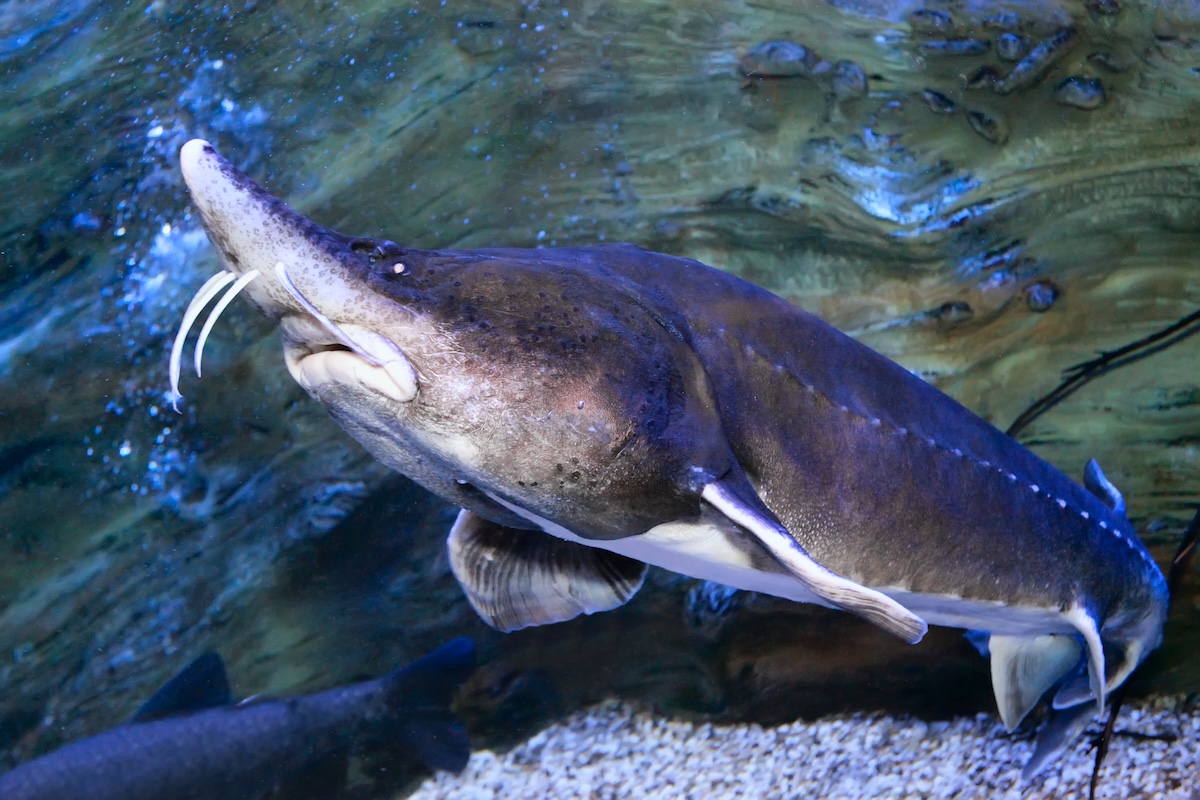 Photo Credit: geniuslady at Deposit Photos
In the shimmering waters of the Caspian and Black Seas, the Beluga Sturgeon, or Huso huso, glides gracefully through its aquatic realm. This ancient fish, one of the largest in the world, can grow up to 20 feet long, making it a true giant of the freshwater and brackish environments it calls home. With its elongated body and distinctive, smooth skin, the Beluga is not just a sight to behold; it is a living testament to the Earth’s evolutionary history, having swum through our waters for over 200 million years. Its impressive size and the luxurious caviar it produces have captivated both scientists and nature enthusiasts alike, sparking curiosity about its life and the ecosystems it inhabits.
Imagine a vast river, where the gentle current carries the Beluga Sturgeon as it searches for food, using its keen sense of smell to detect prey in the murky depths. This magnificent fish plays a vital role in its ecosystem, helping to maintain the balance of aquatic life. However, the Beluga’s story is not just one of grandeur; it is also a tale of survival. Once abundant, this species now faces critical threats, making its conservation a pressing concern. As we dive deeper into the world of the Beluga Sturgeon, we will explore its fascinating behaviors, the challenges it faces, and the efforts being made to protect this remarkable creature for future generations.
The Beluga Sturgeon, a magnificent fish known for its impressive size and valuable caviar, occupies a special place in the tree of life. Scientifically classified within the Kingdom Animalia, this ancient species is a member of the phylum Chordata, which includes all animals with a backbone. What sets the Beluga Sturgeon apart is its lineage; it belongs to the class Actinopterygii, the ray-finned fishes, and is one of the oldest surviving species, dating back over 200 million years. This long history makes it a living link to the past, showcasing the evolutionary journey of fish.
| Taxonomic Rank | Scientific Name | Meaning & Significance |
|---|---|---|
| Kingdom | Animalia | From the Latin word “animalis,” meaning “having breath” or “living.” This classification includes all living organisms that are not plants, fungi, or bacteria. |
| Phylum | Chordata | Derived from the Greek word “chorde,” meaning “string” or “cord,” referring to the notochord, a flexible rod that supports the body in the early stages of development. |
| Class | Actinopterygii | From the Greek words “aktis,” meaning “ray,” and “pteron,” meaning “wing” or “fin.” This class includes fish with fins supported by bony rays, which are crucial for swimming. |
| Order | Acripenseriformes | From the Greek “a-” meaning “without,” and “cripenser,” referring to the sturgeons. This order is characterized by its unique body structure and ancient lineage. |
| Family | Acipenseridae | Named after the genus Acipenser, which means “sturgeon” in Latin. This family includes various sturgeon species known for their elongated bodies and bony scutes. |
| Genus | Huso | Derived from the Latin word for “sturgeon,” this genus includes the largest sturgeon species, highlighting their impressive size and significance in aquatic ecosystems. |
Understanding the Beluga Sturgeon’s classification reveals much about its evolutionary history. As a member of the ancient lineage of sturgeons, it showcases adaptations that have allowed it to thrive in diverse aquatic environments for millions of years. Its unique physical features, such as a streamlined body and specialized reproductive strategies, reflect the evolutionary pressures it has faced. This remarkable fish not only tells the story of its own survival but also serves as a reminder of the rich tapestry of life that has evolved on our planet.
The evolutionary journey of the Beluga Sturgeon is a tale that stretches back over 200 million years, making it one of the oldest fish species still swimming in our waters today. This ancient fish has witnessed the rise and fall of dinosaurs, the shifting of continents, and the changing climates of Earth. As a member of the Acipenseridae family, the Beluga Sturgeon has adapted through countless environmental changes, showcasing a remarkable ability to survive in various aquatic habitats.
The ancestors of the Beluga Sturgeon first appeared during the late Triassic period, a time when the world was dominated by reptiles. These early fish were quite different from their modern descendants, possessing bony structures rather than the cartilaginous skeletons we see today. Over millions of years, they transitioned to a more streamlined body shape, which allowed for better movement through water. The development of a unique rostrum, or snout, helped them forage for food along the riverbeds, while their ability to tolerate a range of salinities enabled them to thrive in both freshwater and brackish environments.
These evolutionary adaptations have played a crucial role in the survival of the Beluga Sturgeon. Their cartilaginous skeleton allows for agile movement, while electroreception gives them an edge in hunting. With a long lifespan, they can reproduce multiple times, ensuring the continuation of their species. Their impressive size deters many potential threats, and their migratory behavior helps them find the best conditions for spawning. Together, these traits have enabled the Beluga Sturgeon to endure through the ages, a living testament to the resilience of life on Earth.
The Beluga Sturgeon is a true giant of the freshwater world, captivating all who encounter it with its impressive size and ancient lineage. With a body that can reach lengths of up to 20 feet, this fish is not just long but also robust, boasting a powerful, streamlined shape that allows it to glide gracefully through the water. Its skin, covered in bony plates, gives it a prehistoric appearance, reminiscent of the dinosaurs that roamed the Earth millions of years ago. The Beluga’s large, rounded snout and wide mouth add to its distinctive look, making it a striking presence in rivers and lakes.
| Feature | Description |
|---|---|
| Weight | 75-3500 lbs |
| Skin Type | Boney Plates |
| Length | Up to 20 feet |
| Snout | Large and rounded |
The combination of these features not only makes the Beluga Sturgeon a remarkable sight but also serves important survival functions. Its massive size helps deter predators, while the bony plates provide protection against potential threats in its environment. The streamlined body allows for efficient swimming, enabling it to navigate through rivers with ease. Together, these characteristics have helped the Beluga Sturgeon thrive in its aquatic habitat for millions of years, showcasing the wonders of evolution and adaptation in the natural world.
The Beluga Sturgeon thrives in a variety of aquatic environments, painting a picture of life in both freshwater and brackish waters. Imagine vast, flowing rivers and expansive inland seas where the water is rich with nutrients. These habitats are often characterized by sandy or muddy bottoms, providing the perfect playground for this ancient fish. The Beluga Sturgeon glides gracefully through these waters, navigating the depths with ease, while the sunlight dances on the surface above.
This magnificent fish prefers areas where the water is relatively calm and not too turbulent. It thrives in regions that experience a mix of fresh and saltwater, known as brackish environments. The temperature of these waters can vary, but the Beluga Sturgeon is generally found in cooler climates. These conditions are essential for its growth and reproduction, as they provide the right balance of oxygen and nutrients that the fish needs to flourish.
Over millions of years, the Beluga Sturgeon has developed remarkable adaptations to its habitat. Its streamlined body allows it to swim efficiently through the water, while its sensitive barbels—small, whisker-like structures on its snout—help it detect food on the riverbed. This fish has also evolved to tolerate a range of salinity levels, enabling it to thrive in both freshwater rivers and the brackish waters of seas. These adaptations not only enhance its survival but also highlight the incredible resilience of life in diverse aquatic environments.
The daily life of a Beluga Sturgeon is a blend of quiet solitude and purposeful movement. These ancient fish glide through the waters of rivers and seas, often spending their time searching for food. They are bottom feeders, using their sensitive barbels—whisker-like structures on their snouts—to detect tasty morsels hidden in the sediment. As they swim, they may cover large distances, exploring their environment in search of small fish, crustaceans, and other aquatic delicacies. Their days are marked by a rhythm of feeding, resting, and navigating the currents, all while remaining alert to their surroundings.
While Beluga Sturgeons are primarily solitary creatures, they do exhibit interesting social behaviors during certain times of the year, especially during spawning seasons. These fish may gather in groups to mate, creating a temporary community that allows for successful reproduction. Communication among them is subtle, relying on body language and perhaps even vibrations in the water. This social interaction is crucial for ensuring that they can find mates and continue their lineage, even if they prefer to roam alone for most of their lives.
| Behavior Type | Description |
|---|---|
| Feeding | Beluga Sturgeons use their barbels to sense food on the riverbed, primarily consuming small fish and crustaceans. |
| Social Structure | Generally solitary, they form temporary groups during spawning seasons to mate. |
| Communication | They communicate through body movements and possibly vibrations in the water, especially during mating. |
The behaviors of the Beluga Sturgeon are finely tuned to ensure their survival in a world that has changed dramatically over millions of years. Their solitary feeding habits allow them to efficiently search for food, while their ability to gather during spawning seasons ensures the continuation of their species. By adapting to their environment and utilizing both solitary and social behaviors, these ancient fish navigate the challenges of their aquatic world, showcasing the delicate balance of life in our rivers and seas.
The Beluga Sturgeon is a carnivore, meaning it primarily eats other fish. This impressive fish has a keen sense of smell, which helps it locate its prey in the murky waters where it often resides. As it glides through rivers and seas, the Beluga uses its long snout to sift through the substrate, searching for tasty morsels. Its diet is not just about survival; it plays a crucial role in maintaining the balance of its aquatic ecosystem.
| Dietary Aspect | Details |
|---|---|
| Diet Type | Carnivore |
| Favorite Foods | Other fish |
| Prey Items | Smaller fish species |
| Hunting/Foraging Strategies | Uses keen sense of smell and long snout to search for prey |
The diet of the Beluga Sturgeon not only influences its own health and growth but also impacts the aquatic community around it. By preying on smaller fish, it helps regulate their populations, ensuring a balanced ecosystem. This ancient fish’s feeding habits shape its daily routine, as it spends significant time foraging and navigating its environment, showcasing the intricate connections within its habitat.
As the seasons change and the waters warm, Beluga Sturgeons embark on a remarkable journey to reproduce. During the breeding season, which typically occurs in spring, these majestic fish migrate upstream to shallow, gravelly areas of rivers. Here, males and females engage in a captivating courtship dance, where they swim together in swirling patterns. This ritual not only strengthens their bond but also prepares them for the important task of spawning.
| Reproductive Aspect | Details |
|---|---|
| Gestation Period | A few days |
| Litter Size | Varies, often thousands of eggs |
| Age of Maturity | 6 to 25 years |
| Name of Young | Fry |
Once the eggs are laid, the female Beluga Sturgeon can produce thousands of them, which are then fertilized by the male. After a short gestation period of just a few days, the eggs hatch into tiny fry. These young sturgeons are independent from the moment they emerge, relying on their instincts to navigate the waters. As they grow, they face various challenges in their environment, but with time, they develop into the magnificent adults that continue the cycle of life in their aquatic world. The journey from fry to full-grown Beluga Sturgeon is a testament to the resilience and adaptability of this ancient species.
The Beluga Sturgeon plays a crucial role in its aquatic ecosystem, often found at the top of the food web. As a large predator, it helps maintain the balance of fish populations in its habitat. However, this ancient fish faces numerous dangers that threaten its survival, making it a species of concern in today’s world.
To defend itself against these threats, the Beluga Sturgeon employs several survival strategies. Its sheer size can deter potential predators, while its tough, armored skin provides a layer of protection. Additionally, this fish is known for its ability to navigate through murky waters, using its keen sense of smell to find food and avoid danger. By adapting to its environment and utilizing its natural defenses, the Beluga Sturgeon continues to swim through the challenges it faces in the wild.
A keystone species is an organism that has a disproportionately large impact on its environment relative to its abundance. In the case of the Beluga Sturgeon, this ancient fish does indeed play a keystone role in its ecosystem. By influencing the structure and health of its aquatic habitat, the Beluga Sturgeon helps maintain the balance of life in the rivers and seas it inhabits.
Beluga Sturgeons are carnivores, primarily feeding on smaller fish. This predatory behavior is crucial for controlling fish populations, ensuring that no single species dominates the ecosystem. By keeping these populations in check, the Beluga Sturgeon helps maintain biodiversity, which is vital for a healthy environment. Additionally, as they forage for food, they stir up sediment on the riverbed, which can promote the growth of aquatic plants. These plants provide shelter and food for various other species, creating a rich tapestry of life.
Moreover, the Beluga Sturgeon is a significant source of nutrients for the ecosystem. When they spawn, their eggs and the nutrients from their bodies contribute to the food web, supporting a variety of organisms, from tiny invertebrates to larger fish. This nutrient cycling is essential for the overall health of the aquatic environment, making the Beluga Sturgeon a key player in its ecosystem.
If the Beluga Sturgeon were to disappear, the consequences would ripple through the ecosystem. Without this apex predator, smaller fish populations could explode, leading to overgrazing of aquatic plants. This imbalance would reduce habitat quality for many species, ultimately threatening the entire aquatic community. The loss of the Beluga Sturgeon would not only diminish biodiversity but could also disrupt the delicate nutrient cycles that sustain life in these waters. In essence, the disappearance of this magnificent fish would create a cascade of negative effects, highlighting its vital role in the ecosystem.
The Beluga Sturgeon is a fascinating inhabitant of freshwater and brackish environments, playing a vital role in its ecosystem. As a keystone species, it helps maintain the balance of aquatic life. This ancient fish not only influences the populations of other fish but also contributes to the health of its habitat. By being both a predator and a prey, the Beluga Sturgeon shapes the dynamics of its ecosystem in ways that are essential for the survival of many other species.
| Ecosystem Service | Impact |
|---|---|
| Predation | Controls fish populations, preventing overpopulation and promoting biodiversity. |
| Nutrient Cycling | Contributes to nutrient distribution in the water through its feeding habits and waste. |
| Habitat Structure | Influences the physical environment by creating spaces for other organisms through its movements. |
| Food Source | Serves as prey for larger predators, supporting the food web. |
The Beluga Sturgeon’s predatory nature helps regulate the populations of smaller fish, ensuring that no single species dominates the ecosystem. For instance, by feeding on various fish species, it allows for a diverse range of aquatic life to thrive. Additionally, as it swims through rivers and lakes, it stirs up sediments and nutrients, which can benefit plant life and other organisms in the water. This nutrient cycling is crucial for maintaining a healthy aquatic environment, as it supports the growth of algae and aquatic plants that form the base of the food web.
The broader ecological importance of the Beluga Sturgeon cannot be overstated. As a keystone species, its presence or absence can significantly alter the structure and function of its ecosystem. When Beluga Sturgeons thrive, they help create a balanced environment that supports a variety of life forms, from tiny microorganisms to larger predators. Protecting this ancient fish is essential not only for its survival but also for the health of the entire aquatic ecosystem it inhabits. By understanding and valuing the role of the Beluga Sturgeon, we can better appreciate the intricate connections that sustain life in our waters.
In the intricate web of life, symbiosis refers to the close relationships between different species that can benefit one or both parties involved. These ecological partnerships can take many forms, including mutualism, where both species gain advantages; commensalism, where one benefits while the other is neither helped nor harmed; and parasitism, where one species benefits at the expense of another. Understanding these relationships helps us appreciate the delicate balance of ecosystems and the roles that various organisms play within them.
| Species/Type | Relationship Type | Description |
|---|---|---|
| Remora Fish | Mutualistic | Remora fish attach themselves to the Beluga Sturgeon, gaining protection and transportation while helping to keep the sturgeon’s skin clean by eating parasites. |
| Leeches | Parasitic | Leeches may attach to the Beluga Sturgeon, feeding on its blood, which can weaken the fish but does not usually lead to its death. |
| Water Plants | Commensal | Water plants provide shelter and breeding grounds for smaller fish and invertebrates, benefiting from the sturgeon’s presence without affecting it. |
These relationships have evolved over time, shaped by the needs and behaviors of the species involved. The Beluga Sturgeon, with its solitary nature, often interacts with other organisms in ways that enhance its survival and health. For instance, the partnership with remora fish not only helps keep the sturgeon clean but also provides the remoras with a safe haven. Meanwhile, the presence of leeches, while detrimental, is a natural part of the ecosystem, reminding us that every interaction plays a role in the grand tapestry of life. Understanding these connections deepens our appreciation for the complexity of nature and the importance of preserving these relationships in our changing world.
The Beluga Sturgeon is not just a fish; it’s a living piece of history that has swum through our planet’s waters for millions of years. This ancient creature is full of surprises that can captivate anyone interested in the natural world.
The Beluga Sturgeon has long been intertwined with human history, captivating cultures across the globe. Known for its impressive size and the luxurious caviar it produces, this ancient fish has been a symbol of wealth and status for centuries. In many regions, particularly in Eastern Europe and Central Asia, the Beluga Sturgeon has been celebrated in folklore and art. Its majestic presence in rivers and seas has inspired stories and traditions, making it a significant part of local heritage. As people have sought to catch this magnificent fish, they have also developed a deep respect for its role in the ecosystem.
Today, the relationship between humans and Beluga Sturgeon is complex and often fraught with challenges. Overfishing and habitat loss have led to significant declines in their populations, prompting conservation efforts to protect this species. Organizations and governments are working together to create sustainable fishing practices and restore habitats. However, conflicts arise as communities balance their economic needs with the necessity of preserving this ancient fish. Some regions have even begun to explore the domestication of Beluga Sturgeon, raising them in controlled environments to reduce pressure on wild populations.
Looking ahead, the future of the Beluga Sturgeon and humanity hinges on our ability to adapt and collaborate. As we learn more about this ancient fish and its vital role in aquatic ecosystems, we can foster a relationship that honors both its historical significance and its ecological importance. By embracing sustainable practices and supporting conservation efforts, we can ensure that future generations will continue to marvel at the Beluga Sturgeon, a living testament to the wonders of our natural world.
The Beluga Sturgeon is currently classified as Critically Endangered, a status that highlights the urgent need for conservation efforts. Once abundant in the rivers and seas of Europe and Asia, its population has dramatically declined due to various human activities. Today, the number of Beluga Sturgeons is alarmingly low, with estimates suggesting that only a few thousand individuals remain in the wild. This decline is a stark reminder of the fragility of our natural world and the impact of human actions on wildlife.
| Conservation Factor | Status/Details |
|---|---|
| IUCN Status | Critically Endangered |
| Population Estimates | Fewer than 10,000 individuals |
| Trend Direction | Decreasing |
The main threats to the Beluga Sturgeon are primarily linked to human activities. Overfishing, particularly for its highly prized caviar, has severely impacted its numbers. Additionally, habitat loss due to dam construction and pollution in rivers has further diminished their natural environments. These factors create a challenging situation for the Beluga Sturgeon, as they struggle to survive in a world that is rapidly changing.
Despite these challenges, there are ongoing conservation efforts aimed at protecting the Beluga Sturgeon and its habitat. Organizations and governments are working together to implement stricter fishing regulations and restore river ecosystems. Breeding programs in captivity are also being developed to help boost population numbers. While the outlook remains uncertain, these dedicated efforts provide hope for the future of this ancient fish, reminding us that with commitment and action, we can make a difference in the fight for wildlife conservation.
| Question | Answer |
|---|---|
| What is the habitat of the Beluga Sturgeon? | Beluga Sturgeons are found in a variety of freshwater environments, including streams, ponds, and inland seas. They prefer large rivers and estuaries where they can find plenty of food and space to swim. |
| What do Beluga Sturgeons eat? | Beluga Sturgeons are carnivores, meaning they primarily eat other animals. Their diet consists of fish, crustaceans, and other small aquatic creatures, which they hunt using their keen sense of smell. |
| How do Beluga Sturgeons behave? | Beluga Sturgeons are known for their gentle and curious nature. They often swim alone or in small groups, and they can be quite social during breeding seasons, showing interesting interactions with one another. |
| How do Beluga Sturgeons reproduce? | Beluga Sturgeons reproduce by laying eggs in freshwater rivers. Females can produce millions of eggs, which are fertilized by males in the water. This process usually occurs in the spring when water temperatures rise. |
| What threats do Beluga Sturgeons face? | Beluga Sturgeons are critically endangered due to overfishing, habitat loss, and pollution. Their populations have drastically declined, primarily because of the demand for their roe, or eggs, which are used to make caviar. |
| What are some interesting characteristics of Beluga Sturgeons? | Beluga Sturgeons are one of the largest freshwater fish in the world, with some individuals growing over 20 feet long! They have a unique, elongated body and a distinctive snout that helps them detect food on the riverbed. |
| How long can Beluga Sturgeons live? | Beluga Sturgeons are known for their impressive lifespan, often living over 100 years. This long life allows them to grow to massive sizes and reproduce multiple times throughout their lives. |