Taxonomy & Classification
- Kingdom
- Animalia
- Phylum
- Chordata
- Class
- Actinopterygii
- Order
- Polypteriformes
- Family
- Polypteridae
- Genus
- Polypterus

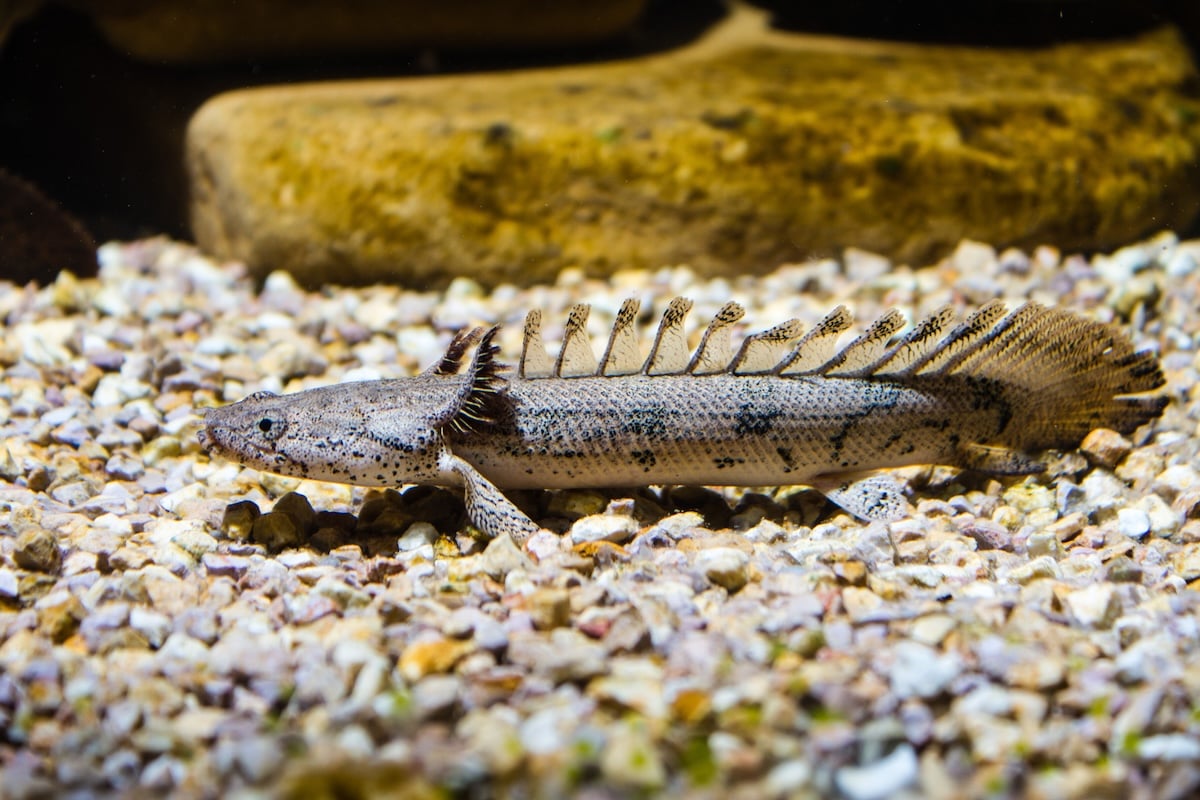 Photo Credit: nagatsuki.hikaru at Deposit Photos
In the shimmering waters of Africa’s rivers and lakes, the Bichir, scientifically known as Polypterus, glides gracefully through its lush habitat. With its elongated body and distinctive, armored scales, this ancient fish resembles a living fossil, a reminder of a time when the world was very different. Its unique appearance, complete with a pair of fleshy, lobed pectoral fins that allow it to navigate both water and land, captivates scientists and nature enthusiasts alike. The Bichir’s ability to breathe air, thanks to its modified swim bladder, adds to its allure, making it a remarkable example of evolution’s creativity.
As the sun dips below the horizon, the Bichir comes alive, hunting in the twilight hours. It prowls the underwater vegetation, using its keen sense of smell to locate prey like crustaceans and small fish. This fascinating behavior not only showcases its adaptability but also highlights its role in the ecosystem as both predator and prey. With a lineage that stretches back over 400 million years, the Bichir is not just a fish; it is a living testament to the resilience of life on Earth, inviting us to explore the mysteries of its world and the delicate balance of the ecosystems it inhabits.
The Bichir, a captivating fish found in the freshwater rivers and lakes of Africa, holds a special place in the tree of life. Taxonomically, it belongs to the Kingdom Animalia, Phylum Chordata, Class Actinopterygii, Order Polypteriformes, Family Polypteridae, and Genus Polypterus. What sets the Bichir apart is its ancient lineage, tracing back to the time when fish first began to evolve into the diverse forms we see today. With its distinctive elongated body, paired with a series of dorsal finlets that resemble a dragon’s back, the Bichir is not just a survivor; it’s a living link to the past, showcasing features that have persisted for millions of years.
| Taxonomic Rank | Scientific Name | Meaning & Significance |
|---|---|---|
| Kingdom | Animalia | This name comes from the Latin word for “animal,” highlighting that Bichirs are part of the vast group of living organisms that are multicellular and capable of movement. |
| Phylum | Chordata | Derived from the Greek word “chordē,” meaning “string,” this classification indicates that Bichirs possess a notochord, a flexible rod that supports their bodies during development. |
| Class | Actinopterygii | This term means “ray-finned fish,” referring to the bony spines that support their fins, a feature that distinguishes them from other fish classes. |
| Order | Polypteriformes | From the Greek “polypterus,” meaning “many fins,” this name reflects the Bichir’s unique fin structure, which is both functional and visually striking. |
| Family | Polypteridae | This family name is derived from the same Greek roots as the order, emphasizing the multiple finlets that characterize these ancient fish. |
| Genus | Polypterus | The name “Polypterus” translates to “many fins,” again highlighting the Bichir’s distinctive fin structure, which is a key feature of its identity. |
The classification of the Bichir reveals much about its evolutionary journey. As one of the oldest groups of fish still swimming today, Bichirs have retained many primitive traits that offer insights into the early stages of vertebrate evolution. Their unique adaptations, such as the ability to breathe air through a modified swim bladder, showcase how these fish have thrived in their environments for millions of years. By studying the Bichir, scientists can better understand the evolutionary pathways that led to the diverse array of fish we see today, making it a vital piece of the puzzle in the story of life on Earth.
The evolutionary journey of the Bichir stretches back over 400 million years, placing it among the ancient lineages of vertebrates. This fish, belonging to the family Polypteridae, is a living testament to the remarkable adaptations that have allowed it to thrive in the freshwater habitats of Africa. As we explore its ancestry, we uncover a story of survival that intertwines with the very development of land-dwelling animals.
Bichirs are often considered “living fossils,” meaning they have retained many primitive features that were present in their ancestors. Their lineage can be traced back to the early bony fish, which emerged during the Devonian period, a time when the first vertebrates began to explore life beyond the water. Over millions of years, these fish underwent significant changes, adapting to various environments. One major transition was the development of lungs, allowing them to breathe air when oxygen levels in the water were low. This adaptation was crucial for survival in the shallow, often stagnant waters they inhabit.
Another important evolutionary step was the formation of their distinctive, elongated bodies and paired fins, which resemble the limbs of land animals. This adaptation not only aids in swimming but also provides the ability to maneuver through dense vegetation and navigate complex underwater terrains. As Bichirs continued to evolve, they developed a unique set of scales that offer protection while also allowing for flexibility and movement.
These adaptations have been vital for the Bichir’s survival in diverse habitats. By developing the ability to breathe air, they can thrive in waters that may not support other fish. Their agile bodies and specialized fins allow them to navigate through complex environments, avoiding predators and finding food. The combination of these traits has enabled Bichirs to persist through changing climates and ecosystems, making them a fascinating example of evolutionary resilience.
The Bichir is an intriguing fish that captures the imagination with its elongated body and ancient lineage. Its form is reminiscent of a prehistoric creature, with a streamlined shape that allows it to glide gracefully through the water. The Bichir’s body is covered in tough, protective scales, giving it a rugged appearance. Small, ray-like fins run along its back, adding to its unique silhouette and providing stability as it navigates its aquatic environment.
| Feature | Description |
|---|---|
| Weight | 5 – 10 lbs |
| Skin Type | Scales |
| Most Distinctive Feature | Small, ray-like fins along an elongated back |
These physical characteristics work together to enhance the Bichir’s survival in its natural habitat. The scales not only protect it from predators but also help it maintain buoyancy in the water. The elongated body allows for swift movements, while the ray-like fins provide the necessary support for agile swimming. This combination of features makes the Bichir a master of its environment, perfectly adapted to thrive in the rivers and lakes of Africa.
The Bichir thrives in the lush, vibrant waters of Africa, where it calls freshwater rivers and lakes its home. These habitats are often teeming with life, surrounded by dense vegetation and rich ecosystems. The waters are typically slow-moving, providing the perfect environment for this ancient fish to navigate. With its unique adaptations, the Bichir can often be found lurking among submerged plants and rocky crevices, where it feels safe and can hunt for food.
The climate in these regions is generally warm and humid, with temperatures often ranging from 20 to 30 degrees Celsius (68 to 86 degrees Fahrenheit). Bichirs prefer shallow waters where sunlight can penetrate, allowing aquatic plants to flourish. These plants not only provide shelter but also contribute to the oxygen levels in the water, which is essential for the Bichir’s survival. The environmental conditions are crucial, as they need a habitat that supports both their physical needs and their hunting strategies.
Adapted to their specific habitats, Bichirs have developed several fascinating traits. Their ability to breathe air through a specialized lung-like structure allows them to survive in oxygen-poor waters. This adaptation is particularly useful in stagnant ponds or during dry seasons when water levels drop. Additionally, their elongated bodies and strong pectoral fins enable them to maneuver skillfully through dense vegetation, making them effective hunters. These remarkable adaptations ensure that Bichirs not only survive but thrive in their watery homes.
The Bichir leads a life that is both active and intriguing, primarily during the twilight hours of dawn and dusk. These fish are known for their unique hunting strategies, often gliding through the water with a graceful, serpentine motion. They use their sensitive barbels—small, whisker-like structures on their faces—to detect vibrations and scents in the water, helping them locate prey. Their diet mainly consists of smaller fish and invertebrates, which they capture with quick, snapping jaws. During the day, Bichirs tend to rest in the cover of aquatic plants or submerged logs, conserving energy for their evening hunts.
Socially, Bichirs exhibit fascinating group dynamics. They are known to form schools, which are groups of fish that swim together. This behavior not only provides safety in numbers but also enhances their hunting efficiency. When in a school, Bichirs communicate through subtle movements and body language, allowing them to coordinate their actions while hunting. This social structure helps them navigate their environment more effectively, as they can rely on the collective awareness of the group to spot potential threats or food sources.
| Behavior Type | Description |
|---|---|
| Activity Patterns | Bichirs are primarily active during twilight, hunting for food in the early morning and late evening. |
| Social Structure | They form schools, which provide safety and improve hunting success by working together. |
| Communication Methods | These fish communicate through body language and movements, allowing them to coordinate while swimming and hunting. |
The behaviors of the Bichir are finely tuned to ensure their survival in the wild. By being active during twilight, they can avoid many predators that hunt during the day. Their schooling behavior not only protects them but also increases their chances of finding food. Through effective communication within their groups, Bichirs can respond quickly to changes in their environment, making them adept at navigating the challenges of their aquatic homes. This blend of social interaction and strategic hunting is key to their success in the vibrant ecosystems of Africa.
The Bichir is a carnivorous fish that thrives on a diet rich in protein. It primarily feeds on a variety of prey, including crustaceans, insects, small fish, and even other vertebrates. This fish is an opportunistic hunter, meaning it takes advantage of whatever food is available in its environment. With its keen senses and agile movements, the Bichir is well-equipped to catch its meals, often using stealth and surprise to snatch up unsuspecting prey.
| Dietary Aspect | Details |
|---|---|
| Diet Type | Carnivore |
| Favorite Foods | Crustaceans, insects, small fish, and other vertebrates |
| Prey Items | Crayfish, shrimp, small frogs, and various fish species |
| Hunting/Foraging Strategies | Stealthy gliding through water, ambushing prey, and using keen senses to detect movement |
The Bichir’s diet plays a crucial role in its ecological niche, influencing not only its own health and growth but also the balance of its habitat. By preying on various organisms, it helps control populations of smaller species, contributing to the overall health of the aquatic ecosystem. Its feeding habits also dictate its daily routine, as it becomes active during twilight hours to hunt, ensuring it maximizes its chances of finding food while avoiding larger predators. This fascinating interplay between diet and behavior highlights the Bichir’s important role in its environment.
When it comes to reproduction, Bichirs have a fascinating courtship ritual that takes place during the breeding season, typically in the warmer months. Males often display their vibrant colors and perform elaborate swimming patterns to attract females. This dance is not just for show; it helps the female choose a healthy mate. Once a pair has formed, they engage in a unique spawning behavior, where the female lays her eggs in a safe, hidden spot, and the male fertilizes them shortly after.
| Reproductive Aspect | Details |
|---|---|
| Gestation Period | 3-4 days |
| Litter Size | Varies, typically dozens of eggs |
| Age of Maturity | 1-2 years |
| Name of Young | Fry |
After the eggs hatch, the young Bichirs, known as fry, begin their journey into the world. These tiny fish are initially vulnerable and rely on their surroundings for protection. Interestingly, Bichir parents do not provide direct care for their young after spawning, but the fry are equipped with instincts that help them find food and shelter. As they grow, they develop the ability to hunt and navigate their environment, gradually transforming into the remarkable adults they are destined to become. This journey from fry to mature Bichir is a testament to the resilience and adaptability of these ancient fish.
The Bichir occupies a crucial role in its aquatic ecosystem, serving as both predator and prey. As a carnivorous fish, it helps control populations of smaller creatures, while also being a food source for larger animals. This delicate balance places the Bichir in the middle of the food web, where it must navigate various dangers to survive.
To defend itself against these threats, the Bichir employs several clever strategies. Its ability to breathe air allows it to escape predators by hiding in shallow waters or among dense vegetation. Additionally, its tough, armored scales provide a layer of protection against attacks. When faced with danger, the Bichir can also use its agility to dart away quickly, making it a slippery target for hungry hunters. These adaptations help ensure that this ancient fish continues to thrive in its vibrant, yet perilous, environment.
A keystone species is an organism that plays a critical role in maintaining the structure of its ecosystem. Its presence or absence can significantly impact the environment and the other species that inhabit it. The Bichir, a fascinating fish found in the freshwater rivers and lakes of Africa, qualifies as a keystone species due to its unique position in the food web and its influence on the aquatic ecosystem.
Bichirs are carnivorous fish that primarily feed on smaller creatures like crustaceans, insects, and even small fish. By preying on these organisms, they help regulate their populations, preventing any one species from becoming too dominant. This balance is essential for maintaining biodiversity, which is the variety of life in a particular habitat. Additionally, Bichirs are known to school, meaning they often swim together in groups. This behavior not only enhances their safety from predators but also influences the movement and distribution of other fish species in their habitat.
Moreover, Bichirs serve as a food source for larger predators, such as birds and larger fish. Their role as both predator and prey creates a dynamic balance in the ecosystem. When Bichirs thrive, they contribute to a healthy aquatic environment, supporting a diverse range of life forms. Their hunting strategies also help to keep the populations of their prey in check, ensuring that the ecosystem remains vibrant and productive.
If Bichirs were to disappear from their habitats, the consequences could be severe. Without these fish, the populations of their prey could explode, leading to overgrazing of aquatic plants and a decline in water quality. This imbalance would ripple through the ecosystem, affecting not only the fish but also the birds and other animals that rely on them for food. Ultimately, the loss of Bichirs would threaten the health and stability of their entire aquatic environment, highlighting just how vital they are to the ecosystems they inhabit.
The Bichir occupies a vital ecological niche in the freshwater ecosystems of Africa, particularly in rivers and lakes. As a carnivorous fish, it plays a significant role in maintaining the balance of its environment. By preying on smaller fish, crustaceans, and insects, the Bichir helps regulate these populations, ensuring that no single species dominates the ecosystem. This balance is crucial for the health of aquatic habitats, as it allows for a diverse range of organisms to thrive alongside one another.
| Ecosystem Service | Impact |
|---|---|
| Population Control | Regulates the numbers of smaller fish and invertebrates, preventing overpopulation. |
| Nutrient Cycling | Contributes to the breakdown of organic matter through its feeding habits, enriching the ecosystem. |
| Habitat Structure | Influences the physical environment by creating spaces for other species through its movement and nesting. |
The Bichir’s influence extends beyond just its role as a predator. For instance, by feeding on various invertebrates, it helps maintain the health of aquatic plants, which rely on a balanced ecosystem to flourish. Additionally, the Bichir’s nesting behavior can create small depressions in riverbeds, providing shelter for other fish and invertebrates. This interaction fosters a rich community of life, where different species can coexist and support one another.
The broader ecological importance of the Bichir cannot be overstated. As a keystone species, its presence is essential for the stability of its habitat. When Bichirs thrive, they help sustain a diverse array of life, from tiny insects to larger fish. Conversely, if their populations decline, the ripple effects can lead to imbalances that threaten the entire ecosystem. By understanding the Bichir’s role, we gain insight into the intricate web of life that exists in our planet’s freshwater environments, reminding us of the delicate balance that sustains all living things.
In the intricate web of life, symbiosis refers to the close and often long-term interactions between different species. These relationships can take many forms, including mutualism, where both species benefit, parasitism, where one benefits at the expense of the other, and commensalism, where one benefits while the other is neither helped nor harmed. Understanding these ecological relationships helps us appreciate the delicate balance of ecosystems, where every creature plays a role in the survival of others.
| Species/Type | Relationship Type | Description |
|---|---|---|
| Water Hyacinth | Mutualistic | The Bichir benefits from the cover provided by the dense roots of the water hyacinth, which offers protection from predators. In return, the Bichir helps keep the water clear by feeding on small organisms that might otherwise clog the plant’s growth. |
| Leeches | Parasitic | Leeches can attach to Bichirs, feeding on their blood. This relationship is harmful to the Bichir, as it can lead to stress and health issues. |
| Small Fish | Commensal | Small fish may swim alongside Bichirs, benefiting from the larger fish’s presence, which can scare away potential predators. The Bichir, however, is largely unaffected by their presence. |
These relationships have evolved over time, shaped by the needs and behaviors of the species involved. The mutualistic bond between the Bichir and water hyacinth illustrates how species can work together for mutual benefit, enhancing their chances of survival. Meanwhile, the parasitic relationship with leeches highlights the challenges that come with living in a shared environment. Understanding these dynamics not only enriches our knowledge of the Bichir but also emphasizes the importance of preserving the ecosystems they inhabit, where every interaction counts.
The Bichir is a captivating fish that not only boasts an ancient lineage but also exhibits some truly surprising traits that make it stand out in the aquatic world. Here are some intriguing facts that will surely pique the interest of nature enthusiasts.
The Bichir, a fascinating fish with a lineage that stretches back over 400 million years, has had a long and storied relationship with humanity. Historically, these ancient creatures have been part of local folklore and cultural practices in various African communities. In some regions, they are seen as symbols of strength and resilience, often featured in traditional stories and art. Their unique appearance and behaviors have sparked curiosity and admiration, making them a subject of interest for both fishermen and naturalists alike.
In modern times, interactions between Bichirs and humans have evolved significantly. While they are still appreciated for their cultural significance, conservation efforts have become increasingly important as their habitats face threats from pollution and overfishing. Some communities have begun to recognize the ecological role of Bichirs, advocating for their protection to maintain the health of freshwater ecosystems. However, conflicts can arise when fishing practices disrupt their populations, leading to a delicate balance between human needs and wildlife conservation. Interestingly, Bichirs have also found their way into the aquarium trade, where they are kept as exotic pets, further intertwining their fate with human activities.
As we look to the future, the relationship between Bichirs and humanity holds both challenges and opportunities. With increasing awareness of environmental issues, there is hope that more people will recognize the importance of preserving these ancient fish and their habitats. By fostering a deeper understanding of the Bichir’s role in the ecosystem, we can work together to ensure that future generations can appreciate and learn from these remarkable creatures. The journey ahead will require collaboration, respect for nature, and a commitment to sustainable practices that benefit both humans and wildlife alike.
The conservation status of the Bichir is currently not listed by the International Union for Conservation of Nature (IUCN). This means that there is not enough information to determine whether the species is at risk of extinction. While specific population estimates are unavailable, the Bichir is known to inhabit various freshwater ecosystems across Africa. However, ongoing changes in these environments could impact their numbers in the future.
| Conservation Factor | Status/Details |
|---|---|
| IUCN Status | Not Listed |
| Estimated Population Size | Unavailable |
| Population Trend | Unknown |
The main threats to the Bichir arise from habitat degradation and pollution. As human activities expand, freshwater habitats are often altered or destroyed. Deforestation, agricultural runoff, and urban development can lead to water quality issues, which may harm the delicate ecosystems where Bichirs thrive. Additionally, overfishing and the introduction of invasive species can disrupt their natural populations, making it harder for them to survive.
Conservation efforts for the Bichir are still in their infancy, primarily due to the lack of detailed research on their populations and habitats. However, raising awareness about the importance of preserving freshwater ecosystems is crucial. By protecting these environments, we can help ensure that the Bichir and other aquatic species continue to thrive. The outlook for the Bichir depends on our commitment to safeguarding their habitats and understanding the challenges they face in a rapidly changing world.
| Question | Answer |
|---|---|
| What is the natural habitat of the Bichir? | Bichirs are typically found in rivers and lakes across Africa. They prefer slow-moving waters with plenty of vegetation, which provides them with hiding spots and hunting grounds. |
| What do Bichirs eat? | Bichirs are carnivores, meaning they primarily eat meat. Their diet consists of small fish, crustaceans, and other aquatic animals, which they catch using their keen sense of smell and quick movements. |
| How do Bichirs behave in the wild? | Bichirs are generally nocturnal, meaning they are most active at night. During the day, they often hide among plants or in the mud to avoid predators and conserve energy. |
| How do Bichirs reproduce? | Bichirs are known to be egg-layers, with females laying hundreds of eggs in shallow waters. The male fertilizes the eggs, and after a few days, the young Bichirs hatch and begin their journey in the water. |
| What threats do Bichirs face in their environment? | While Bichirs are not currently listed as endangered, they face threats from habitat destruction and pollution. Overfishing and the introduction of invasive species can also impact their populations. |
| What is a unique characteristic of Bichirs? | One of the most distinctive features of Bichirs is their small, ray-like fins that run along their elongated backs. These fins help them maneuver through the water and can also be used for stability when they are on land. |
| Can Bichirs breathe air? | Yes, Bichirs have a unique ability to breathe air. They possess a modified swim bladder that functions like a lung, allowing them to gulp air at the surface when oxygen levels in the water are low. |