
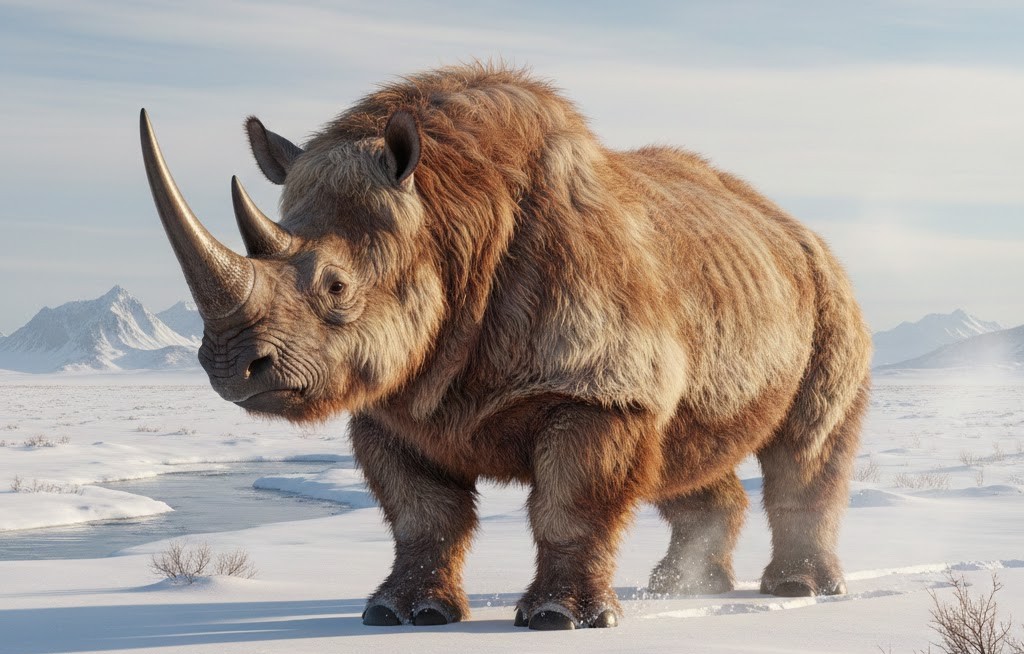

The discovery of a mummified wolf cub in Siberia has opened a new chapter in understanding the extinction of the woolly rhinoceros. This ancient cub, found with a piece of woolly rhino in its stomach, has provided scientists with a unique opportunity to study the genetic makeup of this Ice Age giant.
By sequencing the rhino’s genome, researchers hope to uncover the reasons behind its rapid disappearance.
The Discovery of the Mummified Wolf Cub
In 2011, researchers unearthed the remains of a two-month-old female wolf cub near the village of Tumat in northeastern Siberia. The cub, believed to have died 14,400 years ago, was preserved in the permafrost, keeping its stomach contents intact.
Among these contents was a chunk of woolly rhino, a large herbivore that vanished around 14,000 years ago. This find was significant because it offered a rare glimpse into the diet and environment of the time.
The discovery was described as a rare opportunity by Dr. Camilo Chacón-Duque, a researcher at the Centre for Palaeogenetics. He noted that obtaining the rhino’s genetic makeup from the partially digested meat could reveal the state of the species as it neared extinction.
Sequencing the Woolly Rhino Genome
Sequencing the genome of an Ice Age animal from the stomach of another animal is unprecedented. “Sequencing the entire genome of an Ice Age animal found in the stomach of another animal has never been done before.” said Camilo Chacón-Duque from Uppsala University.
The process involved decoding the woolly rhino’s genome from the matted piece of meat found in the wolf cub’s stomach. This achievement marked the first time such a feat had been accomplished for an Ice Age creature.
Researchers analyzed the woolly rhino muscle tissue and compared it with older specimens to investigate the species’ population size and level of inbreeding just before its extinction.
Insights Into Woolly Rhino Extinction
The genome analysis revealed surprising insights. Scientists expected to find signs of “genomic erosion,” where a species loses genetic diversity due to population bottlenecks and inbreeding. However, the woolly rhino’s DNA showed a stable population before its rapid extinction. “Whatever killed the species was relatively fast.” said Dr. Chacón-Duque. The researchers concluded that the woolly rhino population remained large and stable until it disappeared quickly, likely within 300 to 400 years before its extinction.
Love Dalén, a professor of evolutionary genomics, explained that the woolly rhinos had a viable population for 15,000 years after humans arrived in northeastern Siberia. This suggests that climate change, rather than human hunting, was the primary cause of their extinction. “Our results show that the woolly rhinos had a viable population for 15,000 years after the first humans arrived in northeastern Siberia, which suggests that climate warming, rather than human hunting, caused the extinction.” said Dalén.
The Role of Climate Change
The extinction of the woolly rhino coincided with a period of abrupt climate warming known as the Bølling-Allerød Interstadial. This warming event, which occurred between 14,700 and 12,900 years ago, transformed the landscape and likely contributed to the rhino’s rapid decline.
The warmer climate may have wiped out the cold-adapted herbivore’s favored foods, leading to its extinction. The disappearance of the woolly rhino aligns with this period of climate change, highlighting the impact of environmental shifts on species survival.
Future Implications of the Research
The successful sequencing of the woolly rhino genome from the wolf cub’s stomach opens new possibilities for studying extinction events. This research demonstrates that it is possible to recover the DNA of one animal from inside another, paving the way for future genomic analysis of animal tissues from unexpected sources.
The findings not only shed light on the woolly rhino’s extinction but also offer a broader understanding of how climate change can impact species survival. As researchers continue to explore these ancient mysteries, they hope to gain further insights into the factors that drive extinction and the resilience of species in the face of environmental change.
