Taxonomy & Classification
- Kingdom
- Animalia
- Phylum
- Chordata
- Class
- Mammalia
- Order
- Artiodactyla
- Family
- Bovidae
- Genus
- Tragelaphus
- Species
- Tragelaphus eurycerus

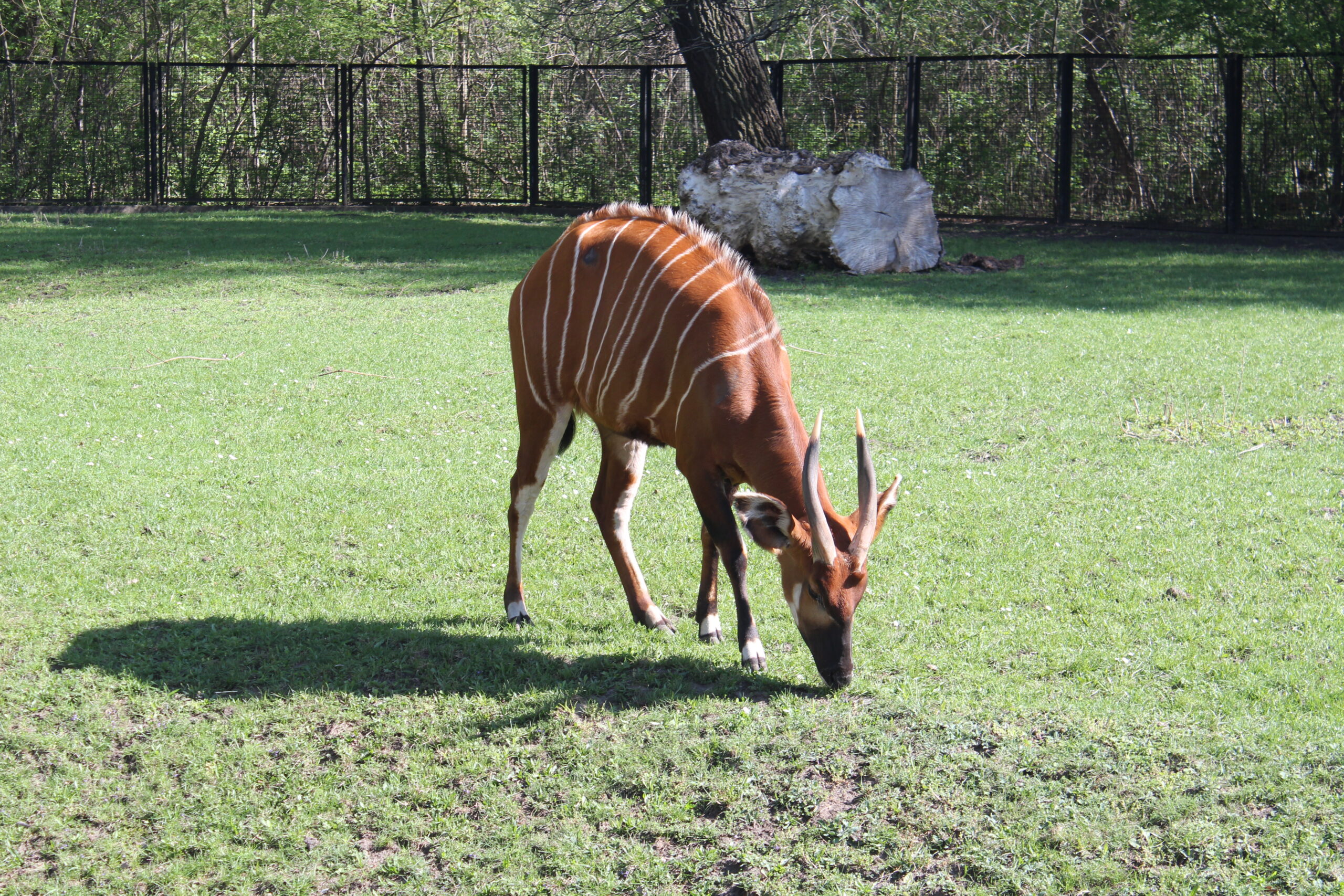 Photo Credit: Przemek P / Wikimedia
In the heart of Africa’s lush, dense forests roams the bongo, scientifically known as Tragelaphus eurycerus. This magnificent antelope captivates all who catch a glimpse of its striking orange-brown coat adorned with bold white stripes. As sunlight filters through the thick canopy above, it creates a dappled dance of light and shadow on the forest floor, where the bongo gracefully navigates its habitat. With its long, spiraled horns and large, expressive eyes, the bongo is not just a feast for the eyes; it is a marvel of evolution, perfectly adapted to thrive in its verdant surroundings.
Scientists and nature enthusiasts alike are drawn to the bongo for its elusive nature and vital role in the ecosystem. As a herbivore, it plays a crucial part in maintaining the health of its forest home by foraging on leaves, bark, and grasses. This gentle giant, weighing between 500 to 900 pounds, is more than just a beautiful creature; it is a keystone species, meaning its presence significantly impacts the environment around it. The bongo’s fascinating behaviors, from its unique courtship rituals to its social structures, offer endless opportunities for discovery, making it a true gem of the animal kingdom.
The bongo, a striking antelope known for its vibrant orange-brown coat and white stripes, occupies a special place in the animal kingdom. Taxonomically, it belongs to the Kingdom Animalia, which includes all animals, and is classified under the Phylum Chordata, meaning it has a backbone. Within the Class Mammalia, or mammals, the bongo is part of the Order Artiodactyla, which consists of even-toed ungulates like deer and pigs. Its family, Bovidae, includes animals such as cows and goats. The bongo’s genus, Tragelaphus, highlights its unique characteristics, including its long, spiraled horns and the ability to thrive in dense forest habitats. This combination of traits makes the bongo not only visually stunning but also an important part of its ecosystem.
| Taxonomic Rank | Scientific Name | Meaning & Significance |
|---|---|---|
| Kingdom | Animalia | This name signifies that bongos are part of the vast group of living organisms known as animals, which are characterized by their ability to move and respond to their environment. |
| Phylum | Chordata | Chordata means “having a cord,” referring to the notochord, a flexible rod that supports the body. This is a key feature of all vertebrates, including bongos. |
| Class | Mammalia | Mammalia indicates that bongos are mammals, which are warm-blooded animals that have fur or hair and typically give live birth and nurse their young with milk. |
| Order | Artiodactyla | This term means “even-toed,” describing animals that have an even number of toes on each foot, which helps them run swiftly and navigate their forest homes. |
| Family | Bovidae | Bovidae refers to the family of animals that includes many hoofed species, known for their grazing habits and social structures, which bongos also exhibit. |
| Genus | Tragelaphus | This name is derived from Greek, meaning “goat-antelope,” highlighting the bongo’s antelope-like features and its close relation to other species within this genus. |
The bongo’s classification reveals much about its evolutionary journey. As a member of the Bovidae family, it shares a common ancestor with other hoofed mammals, showcasing adaptations that have allowed it to thrive in the dense forests of Central and West Africa. Its unique physical traits, such as its striking coloration and impressive horns, not only serve as adaptations for survival but also reflect the rich tapestry of life that has evolved over millions of years. Understanding where the bongo fits in the tree of life helps us appreciate the intricate connections between species and the importance of conserving their habitats for future generations.
The evolutionary journey of the bongo, a captivating antelope, stretches back millions of years. This timeline reveals a rich tapestry of adaptations and changes that have allowed the bongo to thrive in the dense forests of Africa. As part of the Bovidae family, which includes animals like cows and goats, the bongo’s ancestors roamed the earth during the Miocene epoch, around 23 to 5 million years ago. Over time, these early relatives evolved into the bongo we recognize today, showcasing a series of remarkable transformations.
The bongo’s ancestors were likely more generalized herbivores, adapting to a variety of habitats. As forests expanded and changed, these early antelopes began to develop traits suited for life in thick, wooded areas. One major transition was the development of their long, spiral horns, which not only serve as a defense mechanism against predators but also play a role in social interactions among males. Additionally, their striking coloration evolved as a form of camouflage, helping them blend into the dappled light of their forest homes. This adaptation is crucial for avoiding detection by both predators and prey.
These adaptations have been vital for the bongo’s survival in a challenging environment. The combination of their camouflage and agility allows them to evade predators like leopards and hyenas, while their social structures help them thrive in the wild. As they continue to navigate the complexities of their forest habitat, the bongo stands as a testament to the power of evolution, showcasing how life can adapt and flourish in the face of change.
The bongo is a stunning antelope that captures the eye with its graceful form and vibrant colors. With a robust body that can weigh between 500 to 900 pounds, it stands tall and proud in its forest habitat. Its long, slender legs are built for agility, allowing it to navigate through dense underbrush with ease. The bongo’s most striking feature is its rich orange-brown fur, adorned with 10 to 15 bold white stripes that run vertically along its sides. This unique pattern not only enhances its beauty but also serves a purpose in the wild.
| Feature | Description |
|---|---|
| Weight | 500 – 900 lbs |
| Skin Type | Fur |
| Most Distinctive Feature | 10 – 15 white stripes on body |
The bongo’s striking coloration and patterns are not just for show; they play a crucial role in its survival. The white stripes help to break up its outline in the dappled light of the forest, making it harder for predators to spot. This clever form of camouflage allows the bongo to blend seamlessly into its surroundings, providing a vital advantage in the wild. Together, its powerful build and eye-catching markings create a perfect balance of beauty and functionality, ensuring that the bongo thrives in its lush, green home.
The bongo calls the lush, dense forests of Africa its home, where sunlight filters through a thick canopy of leaves, creating a mosaic of light and shadow on the forest floor. These vibrant habitats are often interspersed with bamboo thickets, providing both shelter and food for this magnificent antelope. The air is filled with the sounds of chirping birds and rustling leaves, making it a lively and enchanting environment.
To thrive in these habitats, bongos require a warm and humid climate, typically found in tropical regions. They prefer areas with plenty of rainfall, which supports the growth of the dense vegetation they rely on for food and cover. The combination of moisture and warmth creates an ideal environment for the bongo, allowing it to flourish in the underbrush where it can find both safety and sustenance.
Bongos have developed several adaptations to navigate their forest homes effectively. Their striking coloration helps them blend into the dappled light of the forest, making it harder for predators to spot them. Additionally, their long legs and agile bodies allow them to move gracefully through thick undergrowth, while their keen sense of hearing helps them detect any potential threats. These adaptations ensure that bongos can thrive in their unique and challenging habitats.
The bongo’s day begins with the soft light of dawn filtering through the dense forest canopy. As a diurnal animal, it is most active during the day, spending its time foraging for food. Bongos are herbivores, which means they primarily eat plants, including leaves, fruits, and grasses. They use their keen sense of smell to locate tasty treats hidden among the foliage. Throughout the day, they may also engage in activities like resting in the shade to escape the heat and grooming themselves to keep their striking coats clean and healthy.
Socially, bongos exhibit a mix of solitary and herd behaviors. While they can often be found alone, they also form small groups, especially females with their young. These groups provide safety in numbers, allowing them to watch for predators together. Communication among bongos is subtle yet effective. They use a variety of sounds, such as low grunts and snorts, to convey messages to one another. This social structure helps them maintain bonds and coordinate their movements in the forest.
| Behavior Type | Description |
|---|---|
| Activity Patterns | Bongos are diurnal, meaning they are active during the day, foraging for food and resting in the shade. |
| Social Structure | They can be solitary or form small groups, particularly females with their young, to enhance safety. |
| Communication Methods | Bongos communicate through low grunts and snorts, allowing them to stay connected while foraging. |
The behaviors of bongos are finely tuned to ensure their survival in the wild. By being active during the day, they can take advantage of the abundant food sources available in their forest habitat. Their social dynamics, whether solitary or in small groups, provide a balance between independence and safety from predators. Through effective communication, they can alert each other to danger, ensuring that they thrive in their lush, vibrant environment.
The bongo is a dedicated herbivore, meaning it primarily eats plants. This elegant antelope has a particular fondness for leaves, bark, and grasses, which it finds in its lush forest habitat. Bongos are skilled foragers, using their keen sense of smell and sharp eyesight to locate tasty morsels hidden among the dense foliage. They often browse on the lower branches of trees, stretching their long necks to reach the freshest leaves. Their strong, curved horns also help them navigate through thick underbrush as they search for food.
| Dietary Aspect | Details |
|---|---|
| Diet Type | Herbivore |
| Favorite Foods | Leaves, Bark, Grasses |
| Prey Items | None (as a herbivore, it does not hunt) |
| Foraging Strategies | Uses keen sense of smell and eyesight to locate food; browses on lower branches and underbrush |
The bongo’s diet plays a crucial role in its ecology and daily routine. By consuming a variety of plant materials, it helps maintain the health of its forest habitat, promoting new growth and supporting the ecosystem. This foraging behavior also influences the bongo’s social structure, as they often gather in small groups to feed, allowing them to stay alert for potential predators. Thus, the bongo’s eating habits not only sustain its own life but also contribute to the vibrant tapestry of life in the forests of Africa.
When it comes to mating, bongos have a fascinating courtship ritual. During the breeding season, which typically occurs in the rainy months, males engage in displays of strength and agility to attract females. They may engage in vocalizations and physical posturing, showcasing their impressive horns and robust bodies. This competition helps females choose the strongest and healthiest mates, ensuring that their offspring have the best chance of survival.
| Reproductive Aspect | Details |
|---|---|
| Gestation Period | 9 months |
| Average Litter Size | 1 |
| Age of Sexual Maturity | 20 – 24 months |
| Name of Young | Calf |
After a gestation period of about nine months, a single calf is born. This young bongo is vulnerable at first, but the mother is highly attentive. She keeps her calf hidden in dense vegetation to protect it from predators. As the calf grows, it begins to follow its mother, learning essential survival skills. By the time it reaches sexual maturity at around 20 to 24 months, the young bongo is well-equipped to navigate the forest and thrive in its environment, continuing the cycle of life in the lush habitats they call home.
The bongo plays a vital role in its ecosystem, serving as both a herbivore and a prey species. As it grazes on leaves and shrubs, it helps maintain the health of its forest habitat. However, this beautiful antelope is not at the top of the food web. Instead, it finds itself in a precarious position, constantly aware of the dangers lurking in the shadows of its lush surroundings.
To survive these threats, bongos have developed several clever strategies. Their striking coloration helps them blend into the dappled light of the forest, making it harder for predators to spot them. When danger approaches, they often freeze in place, relying on their camouflage to remain unseen. Additionally, bongos are known for their agility and speed, allowing them to dart away quickly if they sense danger. By staying alert and using their natural defenses, these graceful antelopes navigate the challenges of their environment, striving to thrive in a world filled with risks.
A keystone species is an organism that has a disproportionately large impact on its environment relative to its abundance. This means that if it were removed, the ecosystem would change dramatically. The bongo, a striking antelope found in the dense forests of Africa, qualifies as a keystone species due to its significant role in maintaining the health of its habitat.
Bongos are herbivores, meaning they primarily eat plants, and they have a particular taste for leaves, bark, and grasses. By grazing on these plants, they help control vegetation growth, which in turn allows sunlight to reach the forest floor. This process encourages the growth of a variety of plant species, creating a more diverse ecosystem. Additionally, as bongos move through their habitat, they help disperse seeds from the fruits they consume, promoting plant regeneration and diversity.
Moreover, bongos serve as prey for larger predators, such as leopards and lions. Their presence supports the food web, providing sustenance for these carnivores. The health of predator populations is closely linked to the availability of prey species like the bongo. Without them, these predators might struggle to find enough food, leading to a decline in their numbers and further disrupting the balance of the ecosystem.
If bongos were to disappear from their habitat, the consequences would be profound. The unchecked growth of certain plants could lead to a decline in biodiversity, as some species might outcompete others for resources. This shift could also affect the predators that rely on bongos for food, potentially leading to their decline as well. In essence, the loss of the bongo would ripple through the ecosystem, highlighting just how crucial this beautiful antelope is to the health and balance of its forest home.
The bongo, a striking antelope native to the dense forests of Africa, plays a crucial role in shaping its ecosystem. As a herbivore, it forages on a variety of plants, including leaves, bark, and grasses. This feeding behavior not only sustains the bongo but also influences the growth and health of the forest. By selectively grazing, bongos help control plant populations, allowing for a diverse range of species to thrive. Their presence in the ecosystem is vital, as they contribute to the balance of plant life and provide food for predators.
| Ecosystem Service | Impact |
|---|---|
| Plant Grazing | Controls plant growth and promotes biodiversity |
| Seed Dispersal | Helps in the spread of various plant species |
| Prey for Predators | Supports the food web by providing sustenance for carnivores |
| Soil Health | Contributes to nutrient cycling through waste |
Bongos are not just passive participants in their environment; they actively shape it. For instance, as they graze, they help maintain the balance of plant species in their habitat. This selective feeding allows certain plants to flourish while keeping others in check, which is essential for a healthy ecosystem. Additionally, when bongos move through the forest, they inadvertently help disperse seeds through their droppings, promoting the growth of new plants. This process is vital for maintaining the diversity of the forest, ensuring that various species can coexist and thrive.
The broader ecological importance of the bongo cannot be overstated. As a keystone species, their presence is essential for the health of their forest ecosystem. If bongos were to disappear, the balance of plant life would be disrupted, leading to a decline in biodiversity. This ripple effect could impact other species, including predators that rely on bongos for food. By understanding the role of the bongo, we gain insight into the intricate web of life that sustains our planet, reminding us of the delicate connections that bind all living things together.
In the intricate web of life, symbiosis plays a vital role in shaping the relationships between different species. Symbiosis refers to the close interactions between organisms, which can be beneficial, harmful, or neutral. These ecological relationships can be classified into three main types: mutualism, where both species benefit; parasitism, where one benefits at the expense of the other; and commensalism, where one species benefits while the other is neither helped nor harmed. Understanding these connections helps us appreciate the delicate balance of ecosystems and the roles that various species play within them.
| Species/Type | Relationship Type | Description |
|---|---|---|
| Oxpecker Birds | Mutualistic | Oxpeckers perch on bongos, feeding on ticks and parasites found on their skin. This helps keep the bongo healthy while providing food for the birds. |
| Forest Trees | Commensal | Bongos often feed on the leaves and bark of trees, which can benefit the trees by promoting new growth. However, the trees are not significantly affected by the bongo’s feeding. |
| Leopards | Parasitic | Leopards prey on bongos, which can be harmful to the bongo population. This relationship highlights the predator-prey dynamic in the forest ecosystem. |
These relationships have evolved over time, shaped by the needs and behaviors of the species involved. Mutualistic partnerships, like that of the bongo and oxpecker birds, demonstrate how cooperation can enhance survival for both parties. In contrast, the predator-prey relationship with leopards illustrates the natural checks and balances that maintain population dynamics. Each interaction, whether beneficial or harmful, contributes to the rich tapestry of life in the bongo’s forest home, showcasing the interconnectedness of all living things.
The bongo is not just a beautiful antelope; it is a creature full of surprises that can captivate anyone interested in the wonders of nature. Here are some intriguing facts about this remarkable animal that showcase its unique adaptations and behaviors.
The bongo, with its striking appearance and elusive nature, has long captured the imagination of humans. Historically, these magnificent antelopes have been featured in African folklore and art, symbolizing grace and strength. Indigenous cultures often regard the bongo as a spirit animal, representing the connection between the physical and spiritual worlds. Their vibrant coats and unique markings have made them a subject of fascination, inspiring stories and traditions that celebrate the beauty of the natural world.
In contemporary times, the relationship between bongos and humans has evolved significantly. While these animals are still admired for their beauty, they face increasing threats from habitat loss and poaching. Conservation efforts are underway to protect their dwindling populations, with organizations working to preserve their forest habitats and raise awareness about their plight. However, conflicts can arise when human activities encroach on bongo territories, leading to challenges in coexistence. Unlike domesticated animals, bongos remain wild and elusive, making them difficult to study and protect.
As we look to the future, the relationship between bongos and humanity holds both challenges and opportunities. With continued efforts in conservation and education, there is hope for a harmonious coexistence. By fostering a deeper understanding of these magnificent animals and their role in the ecosystem, we can work together to ensure that future generations will also marvel at the beauty of the bongo in the wild. The journey ahead requires commitment and collaboration, but the rewards of preserving such a remarkable species are immeasurable.
The bongo, a stunning antelope known for its striking appearance, is currently classified as Critically Endangered. This alarming status indicates that the bongo faces an extremely high risk of extinction in the wild. With an estimated population of around 28,000 individuals, the numbers have been declining due to various threats, making conservation efforts more crucial than ever.
| Conservation Factor | Status/Details |
|---|---|
| IUCN Status | Critically Endangered |
| Estimated Population Size | 28,000 |
| Population Trend | Declining |
The main threats to the bongo’s survival stem from habitat loss and poaching. As forests are cleared for agriculture and urban development, the bongo’s natural habitat shrinks, leaving them with fewer places to live and find food. Additionally, illegal hunting poses a significant danger, as these beautiful animals are targeted for their meat and horns. This combination of factors has led to a troubling decline in their population.
Conservation efforts are underway to protect the bongo and its habitat. Various organizations are working to establish protected areas and promote sustainable land use practices. Education and awareness campaigns are also vital, helping local communities understand the importance of preserving this magnificent species. With continued dedication and support, there is hope that the bongo can recover and thrive once again in its lush forest home.
| Question | Answer |
|---|---|
| What is the natural habitat of the Bongo? | Bongos are found in dense forests and bamboo thickets, primarily in Central and West Africa. These environments provide them with the cover they need to hide from predators and the foliage they rely on for food. |
| What do Bongos eat? | Bongos are herbivores, which means they primarily eat plants. Their diet consists of leaves, shoots, and fruits, allowing them to thrive in their forest habitats where such vegetation is abundant. |
| How do Bongos behave in the wild? | Bongos are generally shy and elusive animals, often found alone or in small groups. They are most active during the early morning and late afternoon, which helps them avoid the heat of the day. |
| How do Bongos reproduce? | Bongos have a gestation period of about 9 months, after which a single calf is born. The mother usually hides her calf in dense vegetation to protect it from predators during its early weeks of life. |
| What are the main threats to Bongos? | Bongos are critically endangered, facing threats from habitat loss due to deforestation and hunting. As their forest homes disappear, their populations decline, making conservation efforts crucial for their survival. |
| What is a distinctive feature of the Bongo? | One of the most striking characteristics of Bongos is their beautiful coat, which is marked by 10 to 15 white stripes. These stripes help them blend into the dappled light of their forest environment, providing camouflage from predators. |
| Are Bongos social animals? | Bongos are not highly social and prefer to live in small groups or alone. However, they may come together during the mating season or when a mother is raising her calf, showcasing a bit of social behavior. |