Taxonomy & Classification
- Kingdom
- Animalia
- Phylum
- Chordata
- Class
- Aves
- Order
- Strigiformes
- Family
- Strigidae
- Genus
- Athene
- Species
- Athene cunicularia

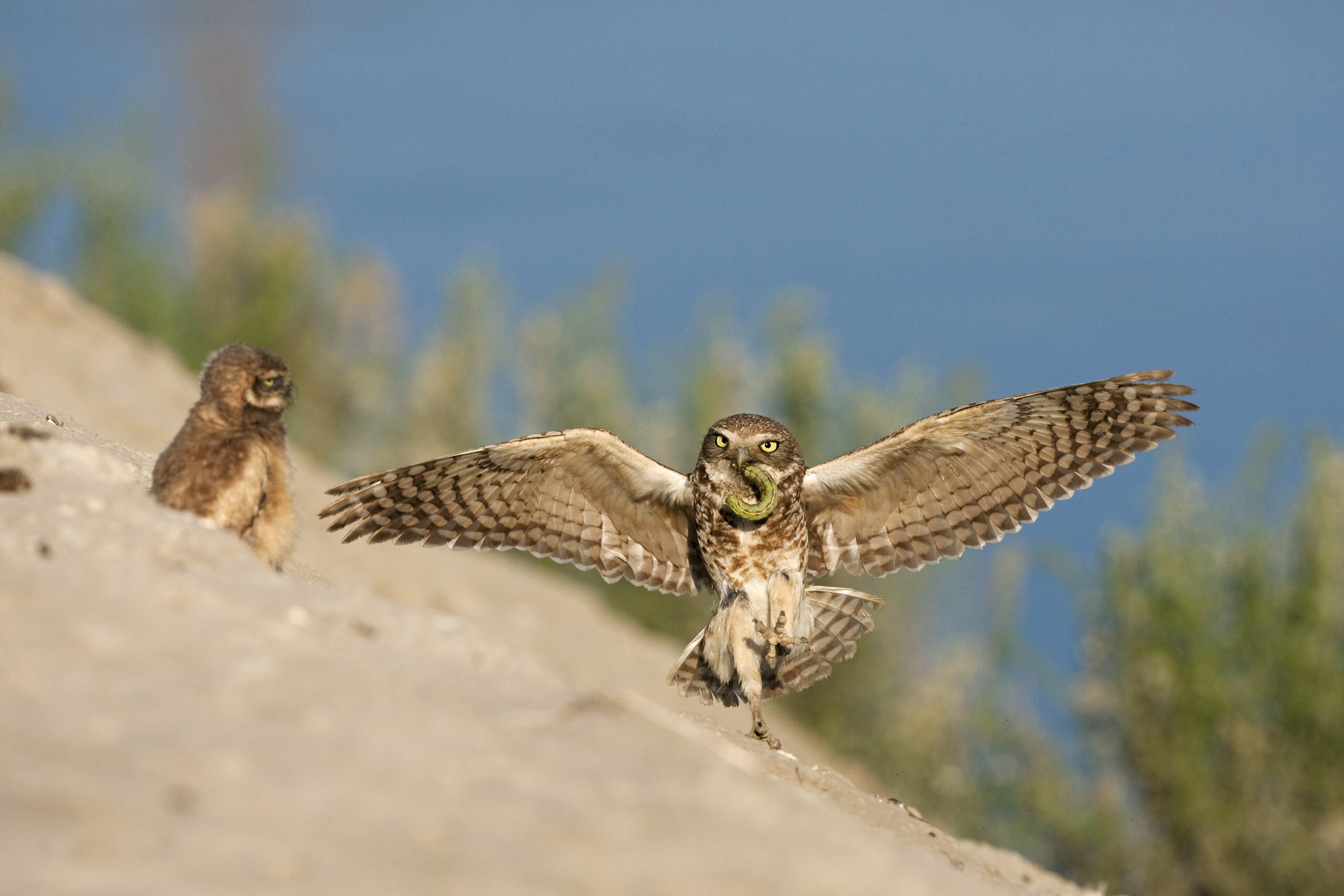 Photo Credit: Kevin Cole / Wikimedia
In the sun-drenched grasslands and arid deserts of North America, the Burrowing Owl, or Athene cunicularia, emerges as a delightful surprise. This small bird, standing only 7 to 10 inches tall, is easily recognized by its round head, bright yellow eyes, and speckled brown feathers that blend seamlessly with the earth. Unlike most owls that prefer the cover of night, the Burrowing Owl is a daytime adventurer, often seen perched on low fences or darting across open fields. Its unique lifestyle, which includes living in underground burrows, sets it apart from its more reclusive relatives, captivating the hearts of scientists and nature lovers alike.
As the sun rises, the Burrowing Owl begins its day with a series of lively activities. It emerges from its cozy burrow, which it often shares with prairie dogs or other small mammals, to hunt for insects, rodents, and even small reptiles. This owl’s playful demeanor and social nature make it a joy to observe, as it flits about its territory, calling out with a series of cheerful hoots. The Burrowing Owl plays a vital role in its ecosystem, helping to control pest populations while also serving as a food source for larger predators. With its charming personality and fascinating behaviors, this little owl invites us to explore the wonders of the natural world, reminding us of the intricate connections that bind all living things together.
The Burrowing Owl, a small but captivating bird, occupies a special place in the tree of life. Scientifically classified within the kingdom Animalia, it belongs to the phylum Chordata, which includes all animals with a backbone. As a member of the class Aves, or birds, the Burrowing Owl is part of the order Strigiformes, which encompasses all owls. What sets this owl apart is its unique behavior of nesting underground, often in abandoned burrows of other animals. This adaptation not only provides protection from predators but also allows it to thrive in open grasslands and deserts, showcasing its remarkable ability to blend into various habitats.
| Taxonomic Rank | Scientific Name | Meaning & Significance |
|---|---|---|
| Kingdom | Animalia | This term means “animals” in Latin, highlighting the Burrowing Owl’s status as a living organism that moves and feeds on organic matter. |
| Phylum | Chordata | Derived from the Greek word “chordē,” meaning “string,” this classification refers to animals with a spinal cord, emphasizing the Burrowing Owl’s vertebrate structure. |
| Class | Aves | From the Latin word for “bird,” this classification signifies the Burrowing Owl’s feathered body and ability to fly, traits that define all birds. |
| Order | Strigiformes | This name comes from the Latin “strix,” meaning “owl,” and it groups together all owls, known for their nocturnal habits and distinctive calls. |
| Family | Strigidae | Also derived from “strix,” this family includes typical owls, highlighting the Burrowing Owl’s close relatives and their shared characteristics. |
| Genus | Athene | This name is linked to the Greek goddess Athena, who is often associated with wisdom and is depicted with an owl, symbolizing the bird’s intelligence. |
The classification of the Burrowing Owl reveals much about its evolutionary journey. As a member of the Strigiformes order, it shares a lineage with other owls, showcasing adaptations that have allowed it to thrive in diverse environments. Its unique burrowing behavior not only sets it apart from its relatives but also illustrates the incredible ways animals can adapt to their surroundings. This fascinating bird is a testament to the rich tapestry of life on Earth, reminding us of the intricate connections that bind all living beings.
The evolutionary journey of the Burrowing Owl stretches back millions of years, intertwining with the history of birds and their ancestors. This small, ground-dwelling owl belongs to the family Strigidae, which includes many of the world’s owls. The lineage of these birds can be traced to the late Cretaceous period, around 70 million years ago, when the first true birds began to emerge. Over time, these early avian ancestors adapted to various environments, leading to the diverse species we see today, including the Burrowing Owl.
The Burrowing Owl’s ancestors were likely tree-dwelling birds, similar to other owls that still inhabit forests. As the environment changed, some of these birds began to explore open grasslands and savannas. This transition marked a significant evolutionary shift, as these owls adapted to a life spent on the ground rather than in trees. Their ability to dig and use burrows, often created by other animals, allowed them to find shelter and raise their young safely. This adaptation not only provided protection from predators but also helped them thrive in open habitats where food sources like insects and small mammals were abundant.
The adaptations of the Burrowing Owl have been crucial for its survival in a world filled with challenges. By nesting in burrows, they not only protect their young but also create a safe haven from harsh weather and predators. Their long legs allow for quick movement, which is vital in open habitats where they must evade danger. The ability to communicate effectively ensures that they can coordinate with their mates and defend their territory. Lastly, their camouflage helps them remain hidden, making it easier to hunt and avoid becoming prey themselves. Together, these traits have enabled the Burrowing Owl to thrive in diverse environments, showcasing the wonders of evolution in action.
The Burrowing Owl is a small, enchanting bird that captures the imagination with its charming appearance. Standing at a height of just 7 to 10 inches, it has a compact body that is both sturdy and agile. Its round head, adorned with bright yellow eyes, gives it an inquisitive expression, while its short, stocky legs are perfectly designed for life on the ground. The owl’s feathers are a warm, earthy brown, speckled with lighter shades, allowing it to blend seamlessly into its surroundings. This clever camouflage is essential for evading predators and sneaking up on unsuspecting prey.
| Feature | Description |
|---|---|
| Height | 7-10 inches |
| Weight | 122-255 grams |
| Skin Type | Feathers |
| Most Distinctive Feature | Barred chest patterns |
The Burrowing Owl’s physical features work together beautifully to enhance its survival in the wild. Its small size allows it to navigate through burrows and grasslands with ease, while the barred patterns on its chest not only add to its visual appeal but also serve as effective camouflage against the dappled light of its habitat. The combination of its keen eyesight and agile body makes it a skilled hunter, able to spot insects and small mammals from a distance. Together, these traits create a bird that is not only delightful to observe but also perfectly adapted to thrive in its environment.
The Burrowing Owl makes its home in a variety of open landscapes that are as diverse as the bird itself. Picture vast grasslands swaying gently in the breeze, arid deserts with their sun-baked earth, and expansive prairies dotted with wildflowers. These environments provide the perfect backdrop for the Burrowing Owl, which prefers areas with low vegetation where it can easily spot potential prey and avoid predators. Agricultural lands also serve as a suitable habitat, where the owl can find plenty of insects and small mammals to munch on.
The climate in these regions varies widely, but the Burrowing Owl thrives in areas that offer a mix of sunny days and cooler nights. It enjoys dry conditions, which help keep its burrows—underground homes it digs or takes over from other animals—free from flooding. These owls are often found in places where the temperature can swing from warm to cool, allowing them to adapt to different weather patterns while still having access to their favorite hunting grounds.
To survive in these specific habitats, the Burrowing Owl has developed some clever adaptations. Its long legs allow it to run quickly across open terrain, while its keen eyesight helps it spot movement from a distance. The owl’s burrowing behavior not only provides shelter from harsh weather but also offers protection from predators. By nesting underground, it can raise its young in safety, ensuring that the next generation of these fascinating birds can continue to thrive in their chosen environments.
The Burrowing Owl leads a lively and engaging daily life, filled with a mix of foraging, socializing, and resting. As daylight breaks, these small owls emerge from their underground burrows, which they often share with prairie dogs or other small mammals. Their day typically begins with a hearty breakfast of insects, small rodents, and even the occasional lizard. With keen eyesight and quick reflexes, they hunt and scavenge, making the most of the warm sun and open spaces. As the sun sets, they retreat back into their burrows, ready to rest and recharge for another day of adventure.
Social behavior is a key aspect of the Burrowing Owl’s life. These owls are known for their gregarious nature, often living in small colonies. They communicate with a variety of vocalizations, from soft coos to sharp whistles, which help them maintain contact with their neighbors. This social structure not only fosters a sense of community but also enhances their ability to defend against predators. When danger approaches, they often engage in alarm calls, alerting others to take cover. Their cooperative behavior extends to nesting, where they may share burrows and help each other raise young.
| Behavior Type | Description |
|---|---|
| Foraging | Burrowing Owls hunt for insects, small mammals, and reptiles during the day, using their sharp eyesight to spot prey. |
| Social Structure | They often live in colonies, sharing burrows and forming strong bonds with neighbors, which helps in predator defense. |
| Communication | These owls use a range of vocalizations, including coos and whistles, to communicate with each other and signal danger. |
The behaviors of the Burrowing Owl are finely tuned to ensure their survival in the wild. By foraging during the day, they take advantage of the sunlight to find food, while their social interactions provide safety in numbers. Their ability to communicate effectively helps them alert one another to threats, making it easier to evade predators. Together, these daily activities and social dynamics create a vibrant community that thrives in the open landscapes they call home.
The Burrowing Owl is a carnivore, which means it primarily eats meat. This little owl has a diverse diet that includes insects, rodents, reptiles, amphibians, birds, and even earthworms. To find its food, the Burrowing Owl uses a combination of keen eyesight and clever hunting strategies. It often hunts during the day, which is a bit unusual for owls, allowing it to spot its prey more easily in the bright sunlight. With its agile movements and quick reflexes, it swoops down to catch its meal, making it a skilled predator in its open habitat.
| Dietary Aspect | Details |
|---|---|
| Diet Type | Carnivore |
| Favorite Foods | Insects, rodents, reptiles, amphibians, birds, earthworms |
| Prey Items | Grasshoppers, mice, lizards, small snakes, and other small animals |
| Hunting/Foraging Strategies | Daytime hunting, using keen eyesight, and quick movements to catch prey |
The Burrowing Owl’s diet plays a crucial role in its ecology and daily routine. By feeding on a variety of small animals, it helps control their populations, which is important for maintaining a balanced ecosystem. Its unique hunting habits also allow it to thrive in open landscapes, where it can easily spot and catch its food. This adaptability not only shapes its survival but also influences the dynamics of the habitats it occupies, making the Burrowing Owl an essential player in its environment.
As the sun begins to warm the earth in spring, Burrowing Owls engage in a lively courtship dance. Males perform a series of charming displays, including vocalizations and aerial acrobatics, to attract a mate. Once paired, these devoted partners work together to prepare their nesting site, often using abandoned burrows made by other animals. The breeding season typically runs from March to July, during which the female lays her eggs and the couple begins their journey into parenthood.
| Reproductive Aspect | Details |
|---|---|
| Gestation Period | 28 to 30 days |
| Litter Size | 4 to 12 eggs |
| Age of Maturity | About 10 weeks |
| Name of Young | Owlet |
After the eggs hatch, the young owlets are born helpless and rely entirely on their parents for survival. The mother stays close to the nest, providing warmth and food, while the father takes on the role of protector, watching for potential threats. As the owlets grow, they begin to develop their feathers and learn to fly, gradually gaining independence. By the time they reach maturity, these young birds are ready to leave the nest and explore the world on their own, continuing the cycle of life for the Burrowing Owl.
The Burrowing Owl plays a vital role in its ecosystem, sitting near the middle of the food web. As a small carnivore, it helps control populations of insects and small mammals, while also serving as prey for larger predators. This delicate balance is crucial for maintaining the health of its environment, but it also means that the Burrowing Owl faces various dangers that threaten its survival.
To defend against these threats, Burrowing Owls have developed several clever survival strategies. They often choose to nest in burrows that they dig themselves or take over from other animals, providing them with a safe haven from predators. When danger approaches, these owls can freeze in place, blending into their surroundings, or they may use distraction tactics, such as feigning injury, to lead predators away from their young. By being resourceful and adaptable, the Burrowing Owl continues to navigate the challenges of its environment, showcasing the resilience of wildlife in the face of adversity.
A keystone species is an organism that has a disproportionately large impact on its environment relative to its abundance. In other words, if it were removed, the ecosystem would change dramatically. The Burrowing Owl, with its unique behaviors and ecological interactions, qualifies as a keystone species in its habitat. This small owl not only influences the populations of its prey but also affects the overall health of the ecosystems it inhabits.
Burrowing Owls play a crucial role in controlling the populations of insects and small mammals. By preying on these animals, they help maintain a balance in the ecosystem. For instance, their diet includes rodents and insects, which, if left unchecked, could overpopulate and lead to significant damage to vegetation and crops. Additionally, the presence of Burrowing Owls can indicate a healthy environment, as they thrive in areas with rich biodiversity. Their burrowing habits also create homes for other animals, such as snakes and small mammals, contributing to the complexity of the ecosystem.
Moreover, Burrowing Owls are a food source for larger predators, such as hawks and foxes. This means they are an integral part of the food web, linking various species together. Their nesting sites, often abandoned burrows of prairie dogs or other animals, provide shelter for many other creatures, enhancing the habitat’s overall biodiversity.
If Burrowing Owls were to disappear, the effects would ripple through their ecosystem. Without these owls, populations of insects and small mammals could surge, leading to overgrazing and a decline in plant life. This imbalance could ultimately affect other species that rely on those plants for food and shelter. The loss of Burrowing Owls would not only disrupt the food web but also diminish the overall health and diversity of their habitats, showcasing just how vital these small birds are to their ecosystems.
The Burrowing Owl plays a crucial role in shaping its ecosystem, acting as both a predator and a prey. This small, ground-dwelling bird thrives in open landscapes like grasslands, deserts, and agricultural lands. By nesting in burrows, often created by other animals, it not only finds shelter but also contributes to the health of the soil and the surrounding environment. Its presence indicates a balanced ecosystem, where various species interact harmoniously.
| Ecosystem Service | Impact |
|---|---|
| Prey Control | Regulates populations of insects and small mammals, preventing overpopulation. |
| Soil Aeration | Burrowing activities help aerate the soil, improving its quality and promoting plant growth. |
| Seed Dispersal | As it forages, the Burrowing Owl inadvertently spreads seeds, aiding in plant diversity. |
| Indicator Species | Its presence signals a healthy ecosystem, reflecting the overall environmental quality. |
The Burrowing Owl’s influence extends beyond its immediate surroundings. For instance, by preying on insects and small rodents, it helps maintain a balance in the food web. This control prevents certain species from becoming too dominant, which can lead to habitat degradation. Additionally, as these owls dig their burrows, they aerate the soil, allowing water and nutrients to penetrate deeper, which benefits plant life. This interaction creates a thriving habitat for various organisms, from grasses to larger mammals.
The broader ecological importance of the Burrowing Owl cannot be overstated. As a keystone species, its role is vital for maintaining the health of its ecosystem. If these owls were to disappear, the balance of their environment would shift dramatically, leading to potential overpopulation of certain species and a decline in plant diversity. By understanding and protecting the Burrowing Owl, we also safeguard the intricate web of life that depends on it, ensuring a vibrant and resilient ecosystem for generations to come.
In the intricate web of life, symbiosis refers to the close interactions between different species, which can take many forms. These relationships can be mutualistic, where both species benefit, parasitic, where one benefits at the expense of the other, or commensal, where one benefits while the other is neither helped nor harmed. The Burrowing Owl, with its unique lifestyle and habitat preferences, engages in various ecological partnerships that highlight the interconnectedness of nature.
| Species/Type | Relationship Type | Description |
|---|---|---|
| Prairie Dogs | Mutualistic | Burrowing Owls often share burrows with prairie dogs. The owls benefit from the ready-made homes, while the prairie dogs gain protection from predators, as the owls alert them to danger. |
| Insects (like beetles) | Commensal | As Burrowing Owls hunt for food, they disturb the ground, which can expose insects. The owls benefit from easier access to prey, while the insects are simply caught in the crossfire. |
| Ticks | Parasitic | Ticks can latch onto Burrowing Owls, feeding on their blood. This relationship is harmful to the owls, as it can lead to health issues and stress. |
These relationships have evolved over time, shaped by the needs and behaviors of the species involved. The mutualistic bond with prairie dogs is particularly fascinating, as it showcases how two different animals can thrive together in a shared environment. The Burrowing Owl’s ability to adapt to its surroundings and form these partnerships not only enhances its survival but also contributes to the overall health of the ecosystem. By understanding these connections, we gain insight into the delicate balance of nature and the importance of every species within it.
The Burrowing Owl is a small but captivating bird that surprises many with its unique behaviors and adaptations. Here are some intriguing facts that showcase just how remarkable this little owl truly is.
The Burrowing Owl has long captured the imagination of humans, weaving its way into various cultures and histories. Ancient Native American tribes revered this small bird, often associating it with wisdom and protection. In some regions, the Burrowing Owl was seen as a guardian of the land, a symbol of good fortune. Its distinctive calls and curious behavior have inspired stories and folklore, making it a beloved figure in many communities. As people began to settle in the open landscapes that the Burrowing Owl calls home, encounters between the species and humans became more frequent, leading to a complex relationship that continues to evolve.
Today, the interactions between Burrowing Owls and humans are a mix of conservation efforts and challenges. As urban development expands, these owls face habitat loss, which threatens their populations. However, many communities are stepping up to protect them. Conservationists work tirelessly to create awareness about the importance of preserving their habitats and even establish artificial burrows to help them thrive. Yet, conflicts can arise, especially when owls nest in areas where people want to build or develop. This delicate balance between protecting wildlife and meeting human needs is a crucial part of the ongoing story of the Burrowing Owl.
Looking ahead, the future of the Burrowing Owl and its relationship with humanity hinges on our ability to coexist. As awareness grows about the ecological roles these owls play, more people are likely to advocate for their protection. By fostering a sense of stewardship and understanding, we can ensure that the Burrowing Owl continues to thrive alongside us. The journey of this small bird is a reminder of the interconnectedness of all life and the responsibility we share in preserving the natural world for generations to come.
The Burrowing Owl is currently classified as “Least Concern” by the International Union for Conservation of Nature (IUCN). This means that, overall, the species is not facing an immediate threat of extinction. However, its population is estimated to be around 2 million individuals, and while this number seems stable, local populations can vary significantly. In some areas, Burrowing Owls are experiencing declines due to habitat loss and other pressures.
| Conservation Factor | Status/Details |
|---|---|
| IUCN Status | Least Concern |
| Estimated Population Size | About 2 million |
| Population Trend | Stable in some areas, declining in others |
Despite their overall stable status, Burrowing Owls face several significant threats. One of the primary challenges is habitat destruction, often caused by urban development and agricultural expansion. As humans build homes and farms, they encroach on the open spaces that these owls rely on for nesting and hunting. Additionally, pesticide use can reduce the availability of their prey, such as insects and small mammals, further impacting their survival. Predation by domestic animals, like cats and dogs, also poses a risk to these small birds.
Conservation efforts are underway to help protect the Burrowing Owl and its habitats. Organizations are working to raise awareness about the importance of preserving open spaces and creating safe environments for these owls. Some initiatives include habitat restoration and the establishment of protected areas where Burrowing Owls can thrive. With continued support and effective conservation strategies, there is hope that this charming little owl will maintain its presence in our ecosystems for generations to come.
| Question | Answer |
|---|---|
| What is the natural habitat of Burrowing Owls? | Burrowing Owls thrive in grasslands, deserts, prairies, and agricultural lands. They prefer open areas where they can easily spot predators and hunt for food. |
| What do Burrowing Owls eat? | As carnivores, Burrowing Owls primarily feed on insects, small mammals, and even some reptiles. Their diet can vary based on what is available in their environment, making them adaptable hunters. |
| How do Burrowing Owls behave? | Burrowing Owls are known for their unique behavior of living in burrows, which they often dig themselves or take over from other animals. They are social creatures and can often be seen in groups, especially during the breeding season. |
| How do Burrowing Owls reproduce? | During the breeding season, female Burrowing Owls lay about 6 to 12 eggs in their burrows. Both parents take turns incubating the eggs and caring for the chicks once they hatch, which usually occurs after about 28 days. |
| What threats do Burrowing Owls face? | Burrowing Owls face several threats, including habitat loss due to urban development and agriculture. They are also vulnerable to predation from larger birds and mammals, as well as pesticide use that reduces their food supply. |
| What is a distinctive feature of Burrowing Owls? | One of the most distinctive features of Burrowing Owls is their barred chest patterns, which help them blend into their surroundings. This camouflage is essential for avoiding predators and sneaking up on prey. |
| Are Burrowing Owls endangered? | Currently, Burrowing Owls are classified as "Least Concern" by conservation organizations. However, their populations are declining in some areas, prompting conservation efforts to protect their habitats. |