Taxonomy & Classification
- Kingdom
- Animalia
- Phylum
- Chordata
- Class
- Reptilia
- Order
- Squamata
- Family
- Viperidae
- Genus
- Agkistrodon
- Species
- A. bilineatus, A. howardgloydi, A. russeolus, A. taylori

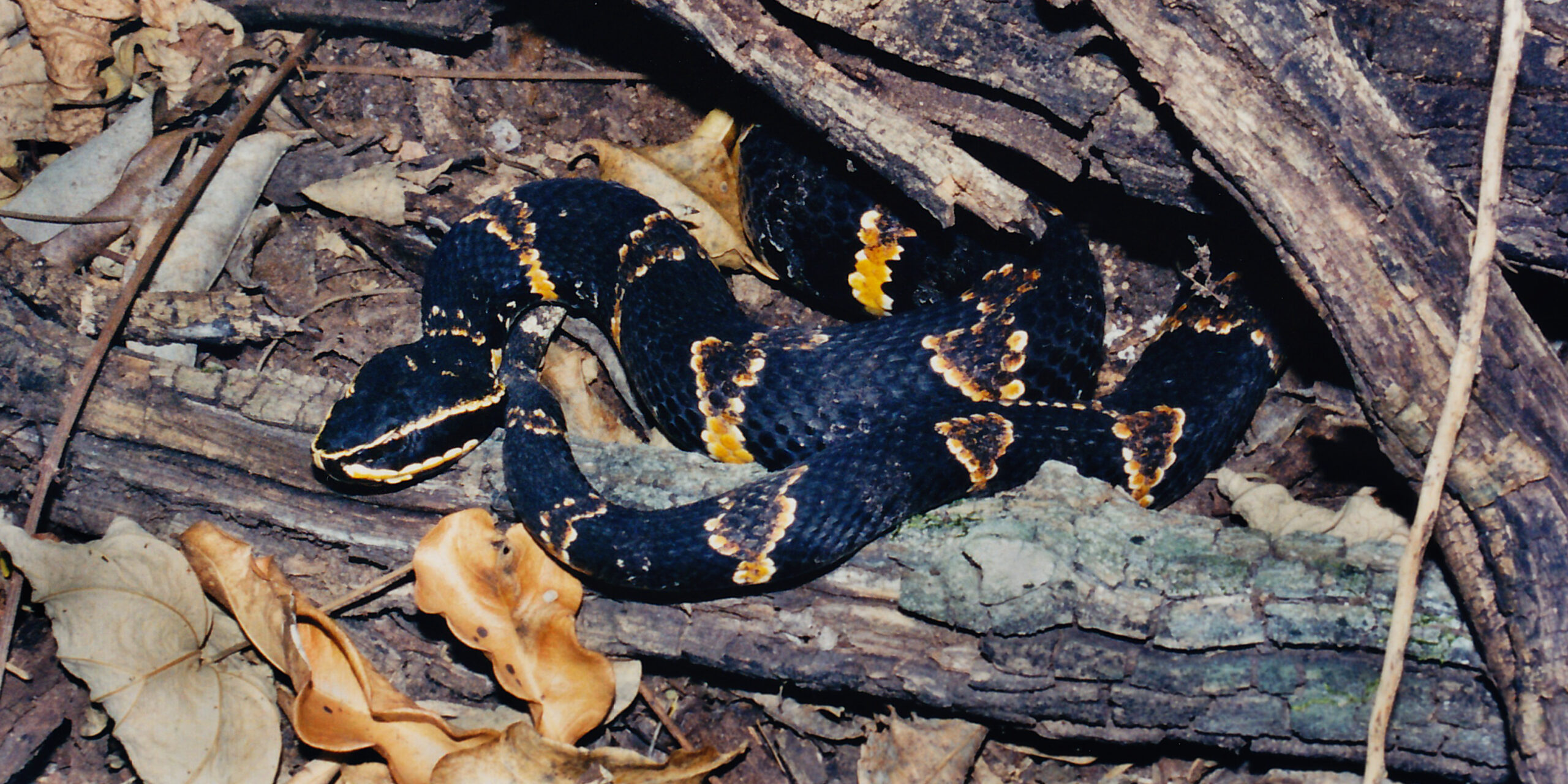 Photo Credit: William L. Farr / Wikimedia
In the heart of lush forests and sun-drenched grasslands, the Cantil, scientifically known as Agkistrodon, slithers through its vibrant habitat with an air of quiet confidence. This striking snake, often reaching lengths of up to four feet, boasts a robust body adorned with intricate patterns that blend seamlessly into the dappled shadows of its surroundings. Its scales shimmer in hues of brown and gray, allowing it to remain hidden from both predators and prey. The Cantil’s fascinating ability to camouflage itself makes it a master of stealth, captivating the attention of scientists and nature enthusiasts alike.
As dusk descends, the Cantil comes alive, emerging from its daytime refuge to hunt under the cover of night. This nocturnal lifestyle adds an element of mystery to its already intriguing persona. With a keen sense of smell and heat-sensing pits located on its face, the Cantil is perfectly equipped to track down small mammals, birds, and amphibians. Its role in the ecosystem is vital, as it helps maintain the balance of life in its environment. The Cantil is not just a predator; it is also prey for larger animals, making it an essential part of the food web. As we explore the life of the Cantil, we will uncover the secrets of its behavior, diet, and the unique adaptations that make it a remarkable inhabitant of our planet.
The Cantil, scientifically known as Agkistrodon, occupies a significant position in the tree of life, showcasing the incredible diversity of the animal kingdom. This snake belongs to the family Viperidae, which includes many of the world’s most well-known venomous snakes. What sets the Cantil apart is its unique adaptations and behaviors, particularly its ability to thrive in various habitats across Central America and parts of Mexico. With its striking appearance and potent venom, the Cantil is a prime example of nature’s ingenuity in survival and adaptation.
| Taxonomic Rank | Scientific Name | Meaning & Significance |
|---|---|---|
| Kingdom | Animalia | This name signifies that the Cantil is part of the vast group of multicellular organisms that are primarily heterotrophic, meaning they obtain their food by consuming other organisms. |
| Phylum | Chordata | Chordata refers to animals that possess a notochord, a flexible rod that supports the body. In the case of the Cantil, this structure is present during its early development. |
| Class | Reptilia | Reptilia indicates that the Cantil is a reptile, characterized by scaly skin and the ability to lay eggs on land, which is crucial for its survival in various environments. |
| Order | Squamata | Squamata means “scaly,” highlighting the Cantil’s distinctive skin covered in scales, which helps protect it and retain moisture. |
| Family | Viperidae | This family name is derived from the Latin word for “viper,” emphasizing the Cantil’s venomous nature and its role in the ecosystem as both predator and prey. |
| Genus | Agkistrodon | Agkistrodon comes from Greek roots meaning “hook-tooth,” referring to the snake’s unique fangs that are specially adapted for delivering venom. |
Understanding the Cantil’s classification reveals much about its evolutionary journey. As a member of the Viperidae family, it shares a common ancestry with other venomous snakes, showcasing adaptations that have allowed it to thrive in diverse environments. The Cantil’s unique features, such as its specialized fangs and habitat preferences, reflect millions of years of evolution, illustrating how species adapt to their surroundings and ecological niches. This fascinating lineage not only highlights the Cantil’s role in the ecosystem but also emphasizes the intricate connections that bind all living organisms together in the tapestry of life.
The evolutionary journey of the Cantil, or Agkistrodon, stretches back millions of years, weaving through the complex tapestry of life on Earth. This snake, part of the Viperidae family, has adapted and thrived in various environments, showcasing the power of evolution in shaping species to meet the challenges of their habitats. As we explore its lineage, we uncover a story of survival, adaptation, and the intricate relationships between organisms and their ecosystems.
The ancestors of the Cantil likely roamed the Earth during the late Cretaceous period, around 70 million years ago. These early serpents were simple in structure, but over time, they underwent significant changes. One major transition was the development of venom, a powerful adaptation that allowed them to subdue prey more effectively. This venom evolved from saliva, gradually becoming more potent and specialized for immobilizing various animals. As the Cantil lineage continued to evolve, they adapted to diverse habitats, from wetlands to forests, leading to variations in size, coloration, and behavior that enhanced their survival.
The adaptations of the Cantil have been crucial for its survival in a world filled with challenges. The development of venom not only aids in hunting but also provides a defense mechanism against predators. Camouflage allows these snakes to remain hidden from both prey and threats, while heat-sensing pits enhance their hunting prowess. Their flexible diet ensures they can find food in various habitats, and their robust bodies enable them to thrive in diverse environments. Together, these traits illustrate the remarkable journey of the Cantil through the ages, showcasing the wonders of evolution in action.
The Cantil, a striking member of the snake family, presents an impressive and somewhat intimidating figure. With a robust body that can reach lengths of up to four feet, this snake is both powerful and agile. Its head is distinctly triangular, a shape that not only adds to its fierce appearance but also helps it to strike with precision. The Cantil’s body is adorned with a pattern of dark bands against a lighter background, creating a beautiful yet cryptic camouflage that allows it to blend seamlessly into its surroundings.
| Feature | Description |
|---|---|
| Size | Typically 2 to 4 feet long |
| Color | Dark bands on a lighter background, often brown or gray |
| Skin Type | Scaly, smooth texture that aids in movement |
| Head Shape | Triangular, which helps in striking and sensing |
| Eyes | Vertical slit pupils, enhancing night vision |
These physical features work together to create a highly effective predator. The Cantil’s coloration provides excellent camouflage, allowing it to hide among leaves and rocks while waiting for unsuspecting prey. Its triangular head not only gives it a menacing look but also houses specialized sensory organs that can detect heat, making it easier to locate warm-blooded animals. With its smooth scales, the Cantil can glide effortlessly through its environment, whether it’s slithering through dense underbrush or navigating rocky terrain. Each characteristic plays a vital role in its survival, showcasing the intricate design of nature.
The Cantil, a fascinating snake, thrives in a variety of habitats that paint a vivid picture of its life. Typically, it can be found in regions characterized by dense vegetation, such as forests, grasslands, and even wetlands. These environments provide ample cover and hunting opportunities, allowing the Cantil to blend seamlessly into its surroundings. The interplay of sunlight filtering through leaves and the cool shade of underbrush creates a perfect setting for this snake to thrive.
The Cantil prefers climates that are warm and humid, which are essential for its survival. These snakes are often found in areas where temperatures range from mild to hot, as they are ectothermic, meaning they rely on external heat sources to regulate their body temperature. The presence of water sources, like rivers or ponds, is also crucial, as it helps maintain the humidity levels that the Cantil needs to thrive.
Adaptation is key to the Cantil’s success in its chosen habitats. Its coloration, often a mix of browns and greens, allows it to camouflage effectively among leaves and soil, making it less visible to both predators and prey. Additionally, its ability to remain still for long periods helps it ambush unsuspecting animals. The Cantil’s keen sense of smell, aided by its forked tongue, allows it to detect scents in the air, enhancing its hunting skills in the lush environments it calls home.
The Cantil, a captivating snake, leads a life that is primarily nocturnal, meaning it is most active during the night. As dusk falls, this snake emerges from its hiding spots, ready to hunt and explore its surroundings. During the day, it often seeks refuge in dense vegetation or under rocks, where it can stay hidden from predators and the heat of the sun. Its daily activities revolve around searching for food, which typically includes small mammals and amphibians. The Cantil uses its keen sense of smell and heat-sensing pits to locate prey, making it a skilled nocturnal hunter.
While the Cantil is generally solitary, it does exhibit interesting behaviors when it comes to social interactions. These snakes prefer to live alone, which helps them avoid competition for food and territory. However, during the mating season, males may engage in displays of dominance to attract females. This can involve a series of movements and postures that showcase their strength and fitness. Communication among Cantils is subtle, often relying on body language and scent marking rather than vocalizations. This solitary lifestyle allows them to thrive in their environments, as they can focus on their own survival without the complexities of group dynamics.
| Behavior Type | Description |
|---|---|
| Activity Patterns | Nocturnal foraging for food, primarily at night. |
| Social Structure | Solitary, with interactions mainly during mating season. |
| Communication Methods | Body language and scent marking to convey information. |
The Cantil’s behaviors are finely tuned to ensure its survival in the wild. By being nocturnal, it avoids many daytime predators and can hunt when its prey is most active. Its solitary nature reduces competition for resources, allowing it to thrive in its habitat. The ability to communicate through subtle cues helps maintain its territory and find mates when the time is right. All these behaviors work together, creating a lifestyle that has allowed the Cantil to adapt and flourish in various environments.
The Cantil, known scientifically as Agkistrodon, is a carnivore, which means it primarily eats other animals. This snake has developed a keen set of skills for hunting, often relying on its excellent sense of smell and heat-sensing abilities to locate prey. As a nocturnal hunter, the Cantil is most active at night, using the cover of darkness to its advantage. It typically ambushes its prey, waiting patiently for the right moment to strike with its venomous fangs.
| Dietary Aspect | Details |
|---|---|
| Diet Type | Carnivore |
| Favorite Foods | Small mammals, birds, and amphibians |
| Prey Items | Rodents, lizards, and frogs |
| Hunting Strategies | Ambush predator, using stealth and patience |
The Cantil’s diet plays a crucial role in its ecological niche, helping to control populations of small mammals and other prey species. By keeping these populations in check, the Cantil contributes to the balance of its ecosystem. Its hunting habits also influence its daily routine, as it must find the right spots to hide and wait for unsuspecting prey. This fascinating interplay between diet and behavior showcases the Cantil’s important role in the natural world.
The mating behavior of the Cantil, or Agkistrodon, is a captivating spectacle that unfolds during the warmer months, typically in spring. Males engage in a series of courtship rituals, which may include displays of strength and agility as they compete for the attention of females. Once a female selects a mate, the pair will engage in copulation, which can last several hours. This breeding season is crucial for the continuation of their species, as it sets the stage for the next generation of these intriguing snakes.
| Reproductive Aspect | Details |
|---|---|
| Gestation Period | Approximately 3 to 4 months |
| Litter Size | 1 to 21 |
| Age of Maturity | About 2 to 3 years |
| Name of Young | Neonates, snakelets |
After the gestation period, the female Cantil gives birth to live young, known as neonates or snakelets. These tiny snakes are fully formed and ready to fend for themselves almost immediately. Parental care is minimal, as the mother does not stay with her young after birth. Instead, the neonates must quickly learn to navigate their environment and hunt for food. As they grow, they undergo several molts, shedding their skin to accommodate their increasing size. Over the course of two to three years, these young snakes develop into mature adults, ready to continue the cycle of life in their vibrant ecosystems.
The Cantil, or Agkistrodon, plays a crucial role in its ecosystem, sitting comfortably within the food web as both a predator and prey. This snake primarily hunts small mammals, birds, and amphibians, helping to control their populations. However, it is not without its own set of dangers. Various predators and environmental threats loom large, reminding us that survival in the wild is a constant challenge.
To defend itself against these threats, the Cantil has developed several survival strategies. Its cryptic coloration allows it to blend seamlessly into its surroundings, making it harder for predators to spot. When threatened, it may adopt a defensive posture, coiling its body and displaying its fangs, which can deliver a potent venom. This venom not only aids in hunting but also serves as a deterrent against potential attackers. By using these clever tactics, the Cantil navigates the dangers of its environment, showcasing the resilience of life in the wild.
A keystone species is an organism that has a disproportionately large impact on its environment relative to its abundance. This means that if it were removed, the ecosystem would change dramatically. The Cantil, or Agkistrodon, qualifies as a keystone species due to its role in controlling populations of other animals and maintaining the balance of its habitat.
The Cantil plays a vital role in its ecosystem primarily as a predator. By hunting small mammals, birds, and amphibians, it helps regulate these populations. For instance, if the Cantil were to disappear, the number of rodents could skyrocket, leading to overgrazing of vegetation. This overpopulation can cause a ripple effect, impacting other species that rely on those plants for food and shelter. Additionally, the Cantil serves as prey for larger predators, such as birds of prey, which rely on it as a food source. This connection highlights the Cantil’s importance in the food web, where it supports both predator and prey dynamics.
Moreover, the Cantil contributes to nutrient cycling in its habitat. When it consumes its prey, it helps break down organic matter, returning nutrients to the soil through its waste. This process is essential for plant growth, which in turn supports a variety of other species. The Cantil’s presence ensures that the ecosystem remains healthy and vibrant, showcasing the interconnectedness of life.
If the Cantil were to vanish from its ecosystem, the consequences could be severe. Without this snake to keep populations of small mammals in check, these animals could multiply unchecked, leading to habitat degradation. Overgrazing would diminish plant life, which many other species depend on for food and shelter. The loss of the Cantil would not only disrupt the food web but could also lead to a decline in biodiversity, showcasing just how crucial this snake is to the health of its environment.
The Cantil, or Agkistrodon, plays a vital role in its ecosystem, acting as both a predator and a prey species. This snake thrives in various habitats, including forests and grasslands, where it contributes to the balance of life. By hunting small mammals, birds, and amphibians, the Cantil helps regulate these populations, ensuring that no single species dominates the environment. Its nocturnal lifestyle allows it to interact with other creatures in unique ways, influencing the dynamics of the ecosystem during the night.
| Ecosystem Service | Impact |
|---|---|
| Population Control | Regulates the numbers of small mammals and birds, preventing overpopulation. |
| Food Source | Serves as prey for larger predators, contributing to the food web. |
| Nutrient Cycling | Through its predation, it helps recycle nutrients back into the soil. |
| Habitat Structure | Influences the distribution of other species by its presence in various habitats. |
The Cantil’s impact can be seen in specific examples throughout its habitat. For instance, by preying on rodents, it helps keep their populations in check, which in turn affects the plants those rodents might otherwise overgraze. This balance is crucial for maintaining healthy vegetation, which provides shelter and food for countless other species. Additionally, as a nocturnal predator, the Cantil interacts with other nighttime creatures, such as owls and larger snakes, creating a complex web of relationships that enriches the ecosystem.
The broader ecological importance of the Cantil cannot be overstated. As a keystone species, its presence is essential for maintaining the health and stability of its environment. If the Cantil were to disappear, the ripple effects would be felt throughout the ecosystem, leading to imbalances that could threaten the survival of many other species. By understanding the role of the Cantil, we gain insight into the intricate connections that sustain life on our planet, reminding us of the delicate balance that exists in nature.
In the intricate web of life, symbiosis refers to the close and often long-term interactions between different species. These relationships can take many forms, including mutualism, where both species benefit, parasitism, where one benefits at the expense of the other, and commensalism, where one species benefits while the other is neither helped nor harmed. Understanding these ecological relationships helps us appreciate the delicate balance of ecosystems and the roles that various organisms play within them.
| Species/Type | Relationship Type | Description |
|---|---|---|
| Birds (e.g., oxpeckers) | Mutualistic | Oxpeckers feed on ticks and parasites found on the Cantil’s skin, providing relief to the snake while enjoying a meal. |
| Small mammals | Parasitic | While the Cantil preys on small mammals, these animals can also carry parasites that may affect the snake’s health. |
| Plants (e.g., shrubs) | Commensal | The Cantil often uses dense vegetation for cover, benefiting from the protection it offers without affecting the plants. |
These relationships have evolved over time, shaped by the needs and behaviors of the species involved. The mutualistic bond between the Cantil and birds like oxpeckers showcases how cooperation can lead to benefits for both parties. Meanwhile, the parasitic interactions with small mammals highlight the challenges of survival in the wild. Understanding these dynamics not only enriches our knowledge of the Cantil but also emphasizes the importance of preserving the habitats where these interactions occur, ensuring that all species can thrive together.
The Cantil, also known as Agkistrodon, is a captivating snake that holds many secrets within its scales. Here are some surprising facts that will intrigue nature enthusiasts of all ages.
The Cantil, known scientifically as Agkistrodon, has a long and storied relationship with humanity that dates back centuries. Indigenous cultures in regions where the Cantil resides often viewed this snake with a mix of reverence and fear. In some traditions, it was seen as a symbol of strength and resilience, while in others, it represented danger and caution. Historical encounters between humans and Cantils have shaped folklore and cultural narratives, highlighting the snake’s significant role in the natural world and its impact on human life.
Today, interactions between Cantils and people are complex and multifaceted. On one hand, conservation efforts are underway to protect their habitats and ensure their survival, as many species face threats from habitat loss and climate change. On the other hand, conflicts can arise when these snakes venture into human-populated areas, leading to fear and misunderstandings. Some communities have even attempted to domesticate or manage Cantils, but this often proves challenging due to their wild nature and specific habitat needs.
Looking ahead, the future of the relationship between Cantils and humanity will depend on mutual understanding and respect. As we learn more about these fascinating snakes and their ecological roles, we can work towards solutions that benefit both species. By fostering a sense of stewardship and promoting coexistence, we can ensure that Cantils continue to thrive alongside us in the rich tapestry of life on Earth.
The Cantil, or Agkistrodon, currently holds a conservation status of “Least Concern” according to the International Union for Conservation of Nature (IUCN). This means that, at present, the species is not facing an immediate threat of extinction. Population estimates suggest that the Cantil is relatively stable, with no significant declines reported. However, ongoing monitoring is essential to ensure that this status remains positive as environmental changes occur.
| Conservation Factor | Status/Details |
|---|---|
| IUCN Status | Least Concern |
| Population Estimates | Stable |
| Trend Direction | Stable |
Despite its current stable status, the Cantil faces several threats that could impact its future. Habitat loss due to urban development and agricultural expansion poses a significant risk, as these activities can destroy the natural environments where the Cantil thrives. Additionally, pollution and climate change can alter the delicate balance of ecosystems, potentially affecting food sources and breeding grounds. Human encounters, often resulting in fear or misunderstanding, can also lead to unnecessary killings of these snakes.
Conservation efforts are underway to protect the Cantil and its habitats. Organizations are working to raise awareness about the importance of this species in the ecosystem and promote coexistence with humans. Habitat restoration projects aim to preserve the natural environments that support the Cantil’s population. With continued efforts and public education, the outlook for the Cantil remains hopeful, ensuring that future generations can appreciate this fascinating snake in the wild.
| Question | Answer |
|---|---|
| What is the habitat of the Cantil? | The Cantil, a type of snake, is commonly found in arid and semi-arid regions. They prefer habitats like deserts, scrublands, and grasslands, where they can easily hide among rocks and vegetation. |
| What does the Cantil eat? | Cantils are carnivores, meaning they primarily eat other animals. Their diet mainly consists of small mammals, birds, and lizards, which they hunt using their keen sense of smell and quick strikes. |
| How does the Cantil behave in the wild? | Cantils are generally solitary creatures, spending most of their time hidden or basking in the sun. They are known for their defensive behavior, often coiling up and displaying their distinctive coloration when threatened. |
| How do Cantils reproduce? | Cantils are ovoviviparous, which means they give birth to live young rather than laying eggs. The female typically gives birth to a small number of offspring, usually in late summer or early fall, after a gestation period of several months. |
| What threats do Cantils face? | While Cantils are currently classified as Least Concern, they still face threats from habitat destruction and human activities. Road construction and urban development can lead to population declines as their natural habitats are altered or destroyed. |
| What are some interesting characteristics of the Cantil? | Cantils are known for their striking coloration, which can vary from browns to vibrant yellows and blacks. This coloration helps them blend into their surroundings, making them effective ambush predators. |
| Are Cantils dangerous to humans? | Cantils are venomous, but they are not typically aggressive towards humans. If threatened, they may bite, but they usually prefer to retreat rather than confront a potential danger. |