Taxonomy & Classification
- Kingdom
- Animalia
- Phylum
- Chordata
- Class
- Mammalia
- Order
- Rodentia
- Family
- Caviidae
- Genus
- Hydrochoerus
- Species
- Hydrochoerus hydrochaeris

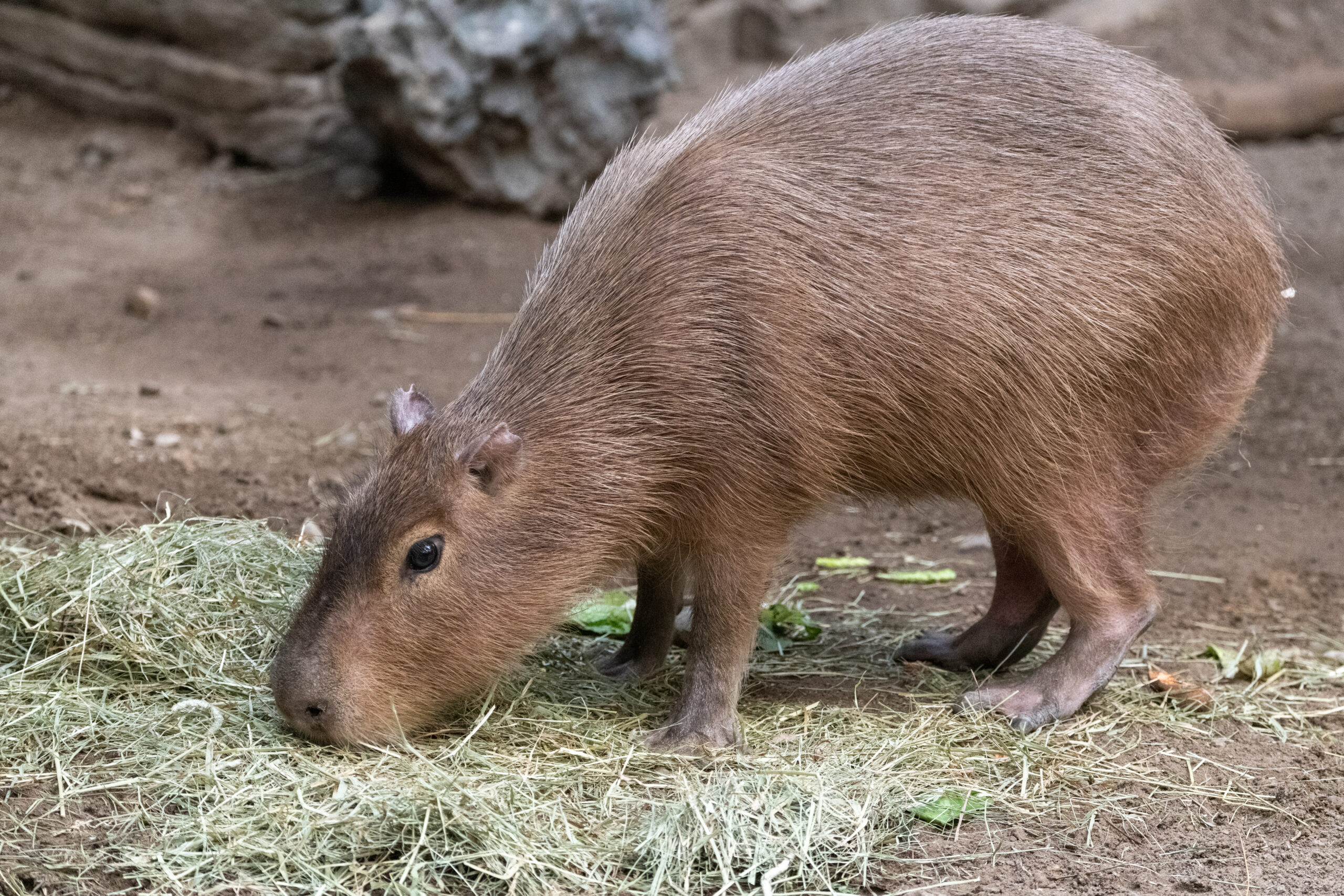 Photo Credit: Eric Kilby / Wikimedia
In the lush wetlands of South America, the capybara, scientifically known as Hydrochoerus hydrochaeris, reigns as the largest rodent on the planet. Imagine a serene landscape where rivers meander through dense greenery, and the air is filled with the sounds of chirping birds and rustling leaves. Here, capybaras can be seen lounging by the water’s edge, their sturdy bodies glistening in the sunlight. With their short legs, webbed feet, and a face that seems to wear a perpetual smile, these gentle giants are not just a sight to behold; they are a marvel of nature that captivates both scientists and animal lovers alike.
What makes the capybara so intriguing? For starters, their social nature sets them apart. These animals often gather in groups, sometimes numbering up to 20 individuals, creating a lively community that thrives on cooperation and companionship. Their diet consists mainly of grasses and aquatic plants, which they munch on with their ever-growing teeth. This herbivorous lifestyle not only keeps them healthy but also plays a crucial role in their ecosystem, as they help maintain the balance of plant life in their habitat. As we dive deeper into the world of capybaras, we will explore their fascinating behaviors, their vital role in the environment, and the unique relationships they form with other species, including humans. Join us on this adventure to uncover the secrets of these remarkable creatures!
The capybara, a gentle giant of the rodent world, holds a special place in the animal kingdom. As the largest rodent on Earth, it belongs to the family Caviidae, which includes other familiar faces like guinea pigs. Capybaras are semi-aquatic mammals, often found lounging by rivers and lakes in South America. Their unique adaptations, such as webbed feet and a social nature, make them stand out among their rodent relatives. These traits not only help them thrive in their habitats but also highlight their evolutionary journey through time.
| Taxonomic Rank | Scientific Name | Meaning & Significance |
|---|---|---|
| Kingdom | Animalia | This name signifies that capybaras are part of the vast group of multicellular organisms known as animals, which are characterized by their ability to move and respond to their environment. |
| Phylum | Chordata | Chordata means “having a notochord,” a flexible rod that supports the body. This group includes all animals with a backbone, highlighting the capybara’s place among vertebrates. |
| Class | Mammalia | Mammalia refers to mammals, which are warm-blooded animals that have fur or hair and typically give live birth. Capybaras, like all mammals, nurse their young with milk. |
| Order | Rodentia | Rodentia comes from the Latin word “rodere,” meaning “to gnaw.” This order includes animals with continuously growing incisors, perfect for their herbivorous diet. |
| Family | Caviidae | Caviidae is derived from “cavia,” the genus name for guinea pigs. This family includes social rodents that often live in groups, just like capybaras. |
| Genus | Hydrochoerus | Hydrochoerus means “water pig” in Greek, reflecting the capybara’s affinity for aquatic environments and its pig-like appearance. |
Understanding the capybara’s classification reveals much about its evolutionary history. As a member of the order Rodentia, it shares common ancestors with other rodents, showcasing the diverse adaptations that have emerged over millions of years. The capybara’s semi-aquatic lifestyle and social behavior are not just quirks; they are traits shaped by its environment and interactions with other species. This classification helps us appreciate the intricate web of life and the evolutionary paths that have led to the capybara’s unique existence today.
The evolutionary journey of the capybara stretches back millions of years, weaving through the rich tapestry of life on Earth. This remarkable rodent, known scientifically as Hydrochoerus, is a member of the Caviidae family, which has its roots in South America. The story of the capybara is one of adaptation and survival, showcasing how this species has thrived in diverse environments over time.
Capybaras are descendants of ancient rodents that roamed the Earth during the late Miocene epoch, around 10 million years ago. Their ancestors were smaller and less specialized, but as the climate and landscapes of South America changed, these rodents began to adapt. Over time, they evolved to become larger and more social, traits that would serve them well in their watery habitats. The transition from solitary living to forming groups allowed capybaras to better protect themselves from predators and find food more efficiently.
These adaptations have been crucial for the capybara’s survival in the wild. Their size not only provides a physical advantage but also allows them to thrive in environments where food is plentiful. The ability to swim and their social nature help them navigate the challenges of their habitats, from avoiding predators to finding mates. As a result, capybaras have become a symbol of resilience in the ever-changing landscapes of South America, showcasing the power of evolution in shaping life on our planet.
The capybara is an impressive sight, embodying a blend of strength and gentleness. With a robust body that can weigh between 30 to 70 kilograms, or about 66 to 154 pounds, this large rodent has a sturdy frame that supports its semi-aquatic lifestyle. Its short legs and barrel-shaped body give it a unique silhouette, while its smooth, brownish fur helps it blend into its natural habitat of wetlands and grasslands. The most striking aspect of the capybara is its face, where its eyes, ears, and nostrils are positioned on the top of its head. This clever arrangement allows it to stay alert while mostly submerged in water, making it a master of both land and aquatic environments.
| Feature | Description |
|---|---|
| Weight | 30kg – 70kg (66lbs – 154lbs) |
| Skin Type | Fur |
| Most Distinctive Feature | Eyes, ears, and nostrils on top of the head |
These physical traits are not just for show; they serve vital purposes in the capybara’s daily life. The positioning of its sensory organs allows it to remain vigilant against predators while enjoying the safety of the water. Its sturdy body and strong legs enable it to navigate both land and water with ease, making it an adept forager. The capybara’s fur, which is water-resistant, helps keep it warm and dry, even when it spends long hours swimming or lounging in the sun. Together, these features create a well-adapted animal that thrives in its environment, showcasing the beauty of nature’s design.
The capybara thrives in lush environments where water and greenery abound. Picture a serene landscape dotted with rivers, lakes, and marshes, surrounded by dense vegetation. These gentle giants are often found lounging in the shade of tall grasses and reeds, enjoying the coolness of their watery homes. Their habitat is a vibrant tapestry of life, where the sounds of chirping birds and rustling leaves create a symphony of nature.
Capybaras prefer warm climates, typically found in regions that experience a tropical or subtropical environment. They enjoy areas with plenty of rainfall, which helps maintain the wetlands they call home. These habitats provide not only the water they need for swimming and cooling off but also an abundance of food sources, such as grasses and aquatic plants. The combination of warmth and moisture creates a perfect setting for these social animals to thrive.
Adapted to their watery surroundings, capybaras have developed several traits that help them survive. Their webbed feet make them excellent swimmers, allowing them to glide through the water with ease. They can even hold their breath for up to five minutes while submerged, a handy skill for evading predators. Additionally, their thick fur helps keep them warm and dry, while their social nature means they often gather in groups, providing safety in numbers. These adaptations ensure that capybaras not only survive but flourish in their vibrant habitats.
As the sun begins to set, the capybara’s day is just getting started. These fascinating animals are primarily nocturnal, meaning they are most active during the twilight hours of dawn and dusk. During the day, they often relax in the shade, conserving energy and staying cool. When evening falls, capybaras emerge to graze on grasses and aquatic plants, their favorite foods. They are excellent swimmers, so you might spot them taking a dip in the water to stay hydrated and escape the heat. Their daily routine is a blend of foraging, socializing, and enjoying the refreshing waters of their habitat.
Capybaras are incredibly social animals, often found in groups called herds. These herds can range from a few individuals to as many as 20 or more. Living in such close-knit communities helps them stay safe from predators, as there are more eyes to watch for danger. Communication is key in these groups, and capybaras use a variety of sounds, including barks, whistles, and purrs, to express their feelings and alert others. Grooming each other is also a common behavior, strengthening their bonds and ensuring everyone stays clean and healthy.
| Behavior Type | Description |
|---|---|
| Activity Patterns | Capybaras are nocturnal and crepuscular, meaning they are most active during dawn and dusk, foraging for food and socializing. |
| Social Structure | They live in herds, which can include a few to over twenty individuals, providing safety in numbers against predators. |
| Communication Methods | Capybaras communicate through a range of sounds, such as barks and whistles, and engage in grooming to strengthen social bonds. |
These behaviors are not just for fun; they play a crucial role in the survival of capybaras. By living in groups, they can better protect themselves from threats like jaguars and caimans. Their social interactions help them stay alert and aware of their surroundings. Additionally, their grazing habits ensure they have access to the nutrients they need to thrive. In the wild, every action counts, and the capybara’s daily life is a perfect example of how cooperation and communication can lead to a successful existence in the natural world.
The capybara is a dedicated herbivore, which means it primarily eats plants. This large rodent has a special fondness for grasses, aquatic plants, and even the bark of certain trees. With its strong, chisel-like teeth, the capybara can easily munch through tough vegetation. It spends a good part of its day foraging for food, often grazing in groups. This social behavior not only helps them find food more efficiently but also provides safety in numbers from potential predators.
| Dietary Aspect | Details |
|---|---|
| Diet Type | Herbivore |
| Favorite Foods | Grasses, aquatic plants, and tree bark |
| Prey Items | None, as they do not eat meat |
| Hunting/Foraging Strategies | Grazing in groups, using strong teeth to chew tough plants |
The capybara’s diet plays a crucial role in its ecology and daily routine. By consuming large amounts of vegetation, these animals help maintain the health of their habitats, promoting new plant growth. Their foraging habits also create open spaces in dense vegetation, which can benefit other species. As they graze together, capybaras not only find food more effectively but also strengthen their social bonds, making their daily lives as enriching as their diets.
When it comes to mating, capybaras are social animals that often form strong bonds with their partners. The breeding season typically occurs during the rainy months, which can vary depending on their location in South America. During this time, males will engage in displays of dominance, such as vocalizations and scent marking, to attract females. Once a pair has formed a bond, they will mate, and the female will carry the young for about five months.
| Reproductive Aspect | Details |
|---|---|
| Gestation Period | 150 days |
| Average Litter Size | 5 |
| Age of Sexual Maturity | 17 – 19 months |
| Name of Young | Pup |
After the pups are born, they are surprisingly well-prepared for life outside the womb. Capybara mothers are attentive and protective, often leading their young to water sources shortly after birth. The pups are born with their eyes open and can even swim almost immediately. As they grow, they stay close to their mother, learning essential survival skills. This nurturing environment helps them develop into strong adults, ready to join the social groups that define capybara life. With their playful nature and strong family bonds, capybaras ensure that their young thrive in the wild.
The capybara occupies a crucial role in the food web of its habitat, serving as both a grazer and a prey species. As the largest rodent on the planet, it finds itself in a delicate balance, munching on grasses and aquatic plants while also being a target for various predators. This dual role highlights the interconnectedness of life in the wetlands and savannas of South America, where capybaras thrive.
To defend themselves against these threats, capybaras have developed several survival strategies. They are social animals, often found in groups that can number up to 20 individuals. This social structure provides safety in numbers, allowing them to keep a watchful eye for danger. When a predator approaches, capybaras can quickly dive into the water, where they are excellent swimmers. Their eyes and nostrils are positioned high on their heads, enabling them to stay submerged while keeping a lookout. Additionally, their calm demeanor helps them avoid drawing attention, making them less likely to become a meal.
A keystone species is an organism that plays a critical role in maintaining the structure of its ecosystem. Its presence and activities have a disproportionately large impact on the environment compared to its abundance. The capybara, the largest rodent in the world, qualifies as a keystone species due to its significant influence on the habitats it occupies, particularly in the wetlands and grasslands of South America.
Capybaras are herbivores, meaning they primarily eat plants, and they have a special affinity for grasses and aquatic vegetation. By grazing on these plants, they help control plant growth, which in turn supports a diverse range of other species. For example, their feeding habits create open spaces in dense vegetation, allowing sunlight to reach the ground and promoting the growth of various plant species. This not only benefits the plants but also provides habitats for insects, birds, and other small animals that rely on these areas for shelter and food.
Moreover, capybaras are social animals that live in herds, which can range from 10 to 20 individuals. Their group behavior helps to maintain the balance of their ecosystem. When they gather near water sources, they create a dynamic environment that attracts other wildlife. Birds, such as the cattle egret, often follow capybaras to catch insects disturbed by their movement. This relationship highlights how capybaras serve as a living resource for other species, enhancing biodiversity in their habitats.
If capybaras were to disappear from their ecosystems, the effects would be profound. Without these gentle giants, plant overgrowth could occur, leading to a decline in plant diversity. This change would ripple through the food web, affecting not only the plants but also the many animals that depend on them for food and shelter. The loss of capybaras would disrupt the delicate balance of their habitats, potentially leading to a decline in overall biodiversity and altering the landscape in ways that could take years to recover.
The capybara occupies a vital ecological niche in its habitat, primarily found in regions with dense vegetation near freshwater sources like rivers and lakes. As the largest rodent on Earth, it plays a significant role in shaping its environment. By grazing on grasses and aquatic plants, capybaras help maintain the health of their ecosystems. Their feeding habits not only control plant growth but also create open spaces that benefit other species. This gentle giant is more than just a herbivore; it is a keystone species, meaning its presence is crucial for the stability and diversity of its ecosystem.
| Ecosystem Service | Impact |
|---|---|
| Grazing | Controls plant growth and promotes biodiversity. |
| Seed Dispersal | Helps in the spread of various plant species through its droppings. |
| Habitat Creation | Creates open areas that benefit other wildlife. |
| Water Regulation | Maintains wetland health by influencing water levels through grazing. |
Capybaras influence their ecosystems in several specific ways. By grazing on grasses and aquatic plants, they prevent overgrowth, which can choke waterways and reduce habitat for other animals. Their droppings are rich in nutrients, acting as natural fertilizers that promote plant growth. This not only supports the capybara’s diet but also encourages a diverse range of flora, which in turn attracts various insects, birds, and other wildlife. Additionally, the open spaces created by their grazing habits provide safe areas for smaller animals to thrive, enhancing the overall biodiversity of their environment.
The broader ecological importance of capybaras cannot be overstated. As a keystone species, their activities help maintain the balance of their ecosystems. Without capybaras, the structure of their habitats could change dramatically, leading to a decline in plant and animal diversity. Their role in seed dispersal and habitat creation supports a wide array of life, making them essential players in the intricate web of nature. By understanding and protecting these remarkable rodents, we can help preserve the health of the ecosystems they inhabit.
In the intricate web of life, symbiosis plays a vital role, connecting different species in various ways. Symbiosis refers to the close and often long-term interactions between different biological species. These relationships can be mutualistic, where both species benefit, parasitic, where one benefits at the other’s expense, or commensal, where one benefits while the other is neither helped nor harmed. Capybaras, the largest rodents on Earth, engage in several fascinating partnerships with other animals, showcasing the beauty of ecological relationships.
| Species/Type | Relationship Type | Description |
|---|---|---|
| Birds (e.g., Cattle Egrets) | Mutualistic | Capybaras often host birds like cattle egrets on their backs. The birds eat ticks and other parasites off the capybara’s skin, providing a cleaning service while getting a meal. |
| Fish (e.g., Piranhas) | Commensal | While capybaras swim in water, piranhas may follow them. The fish benefit from the disturbance caused by the capybara, which stirs up food particles, but the capybara is unaffected. |
| Fleas and Ticks | Parasitic | These tiny pests live on capybaras, feeding on their blood. This relationship harms the capybara, as it can lead to discomfort and health issues. |
The evolution of these relationships highlights the interconnectedness of life in ecosystems. Over time, capybaras have developed partnerships that enhance their survival and well-being. Mutualistic relationships, like those with birds, not only help capybaras stay healthy by reducing parasites but also provide food for their feathered friends. Meanwhile, the presence of fish like piranhas demonstrates how species can coexist in ways that benefit one without causing harm to the other. Understanding these dynamics helps us appreciate the delicate balance of nature and the importance of every species in maintaining healthy ecosystems.
Capybaras are not just the largest rodents on Earth; they are also full of surprises that make them truly captivating. Here are some intriguing facts that showcase their unique traits and behaviors.
The capybara has long been intertwined with human culture, especially in South America, where it is native. Historically, these gentle giants have been a source of food and materials for indigenous peoples. Their meat is considered a delicacy, and their hides have been used for clothing and tools. In some cultures, capybaras are even celebrated in festivals, symbolizing abundance and community. This deep-rooted connection highlights the capybara’s significance beyond mere survival; it has become a part of local traditions and stories, enriching the cultural tapestry of the regions they inhabit.
Today, the relationship between capybaras and humans is evolving. As urban areas expand into their natural habitats, conflicts can arise. Capybaras sometimes wander into agricultural lands, leading to disputes with farmers who see them as pests. However, there are also positive interactions, such as conservation efforts aimed at protecting their habitats and populations. In some places, capybaras are domesticated, kept as pets, and even featured in social media posts, showcasing their friendly demeanor. This blend of conflict and cooperation illustrates the complex dynamics of human-animal relationships in a changing world.
As we look to the future, the relationship between capybaras and humanity holds both challenges and opportunities. With increasing awareness of conservation and the importance of biodiversity, there is hope for a more harmonious coexistence. By understanding and respecting these remarkable animals, we can foster a relationship that benefits both capybaras and people. As we navigate the complexities of urbanization and environmental change, the capybara may serve as a symbol of our ability to adapt and thrive alongside the natural world.
The capybara, the largest rodent on the planet, currently holds a conservation status of “Least Concern” according to the International Union for Conservation of Nature (IUCN). This means that, for now, capybaras are not facing immediate threats of extinction. Their population is estimated to be stable, allowing these gentle giants to continue thriving in their natural habitats across South America. However, while their numbers are currently healthy, ongoing monitoring is essential to ensure they remain safe in the wild.
| Conservation Factor | Status/Details |
|---|---|
| IUCN Status | Least Concern |
| Estimated Population Size | Stable |
| Trend Direction | Stable |
Despite their stable status, capybaras face several threats that could impact their future. Habitat loss is a significant concern, as wetlands and grasslands are increasingly converted for agriculture and urban development. Additionally, hunting for meat and skin poses risks in some regions, while climate change can alter their habitats, affecting food availability and water sources. These challenges highlight the importance of protecting their natural environments.
Conservation efforts are underway to safeguard capybara populations and their habitats. Protected areas and wildlife reserves play a crucial role in providing safe spaces for these animals to thrive. Education and awareness programs help local communities understand the importance of capybaras in their ecosystems. With continued efforts and a commitment to preserving their habitats, the outlook for capybaras remains positive, allowing future generations to appreciate these fascinating creatures.
| Question | Answer |
|---|---|
| Where do capybaras live? | Capybaras are found in South America, particularly in countries like Brazil, Venezuela, and Colombia. They prefer habitats with dense vegetation close to freshwater sources like rivers, lakes, and swamps, which provide them with food and safety from predators. |
| What do capybaras eat? | Capybaras are herbivores, meaning they primarily eat plants. Their diet consists mainly of grasses, aquatic plants, and sometimes fruits and vegetables. They have a special digestive system that helps them break down tough plant material. |
| How do capybaras behave in the wild? | Capybaras are social animals that live in groups, often consisting of 10 to 20 individuals. They communicate with each other through a variety of sounds, including barks, whistles, and purrs. These friendly creatures enjoy sunbathing and swimming, often seen lounging together in the water. |
| How do capybaras reproduce? | Capybaras typically breed once a year, with a gestation period of about 150 days. A female can give birth to a litter of 2 to 8 pups, which are born fully furred and can swim almost immediately. The young stay close to their mother for protection and learn important survival skills from her. |
| What are the main threats to capybaras? | While capybaras are currently listed as Least Concern in terms of conservation status, they face threats from habitat loss due to agriculture and urban development. Additionally, they are hunted for their meat and skin in some regions, which can impact local populations. |
| What is a unique characteristic of capybaras? | One of the most distinctive features of capybaras is that their eyes, ears, and nostrils are located on the top of their heads. This adaptation allows them to see and breathe while mostly submerged in water, helping them stay safe from predators. |
| Can capybaras be kept as pets? | While capybaras can be kept as pets, they require a lot of space and social interaction, as they are very social animals. It's important to check local laws and regulations, as keeping them may not be allowed in some areas. They thrive best in environments that mimic their natural habitat. |