Taxonomy & Classification
- Kingdom
- Animalia
- Phylum
- Chordata
- Class
- Aves
- Order
- Psittaciformes
- Family
- Psittacidae
- Genus
- †Conuropsis
- Species
- †Conuropsis carolinensis

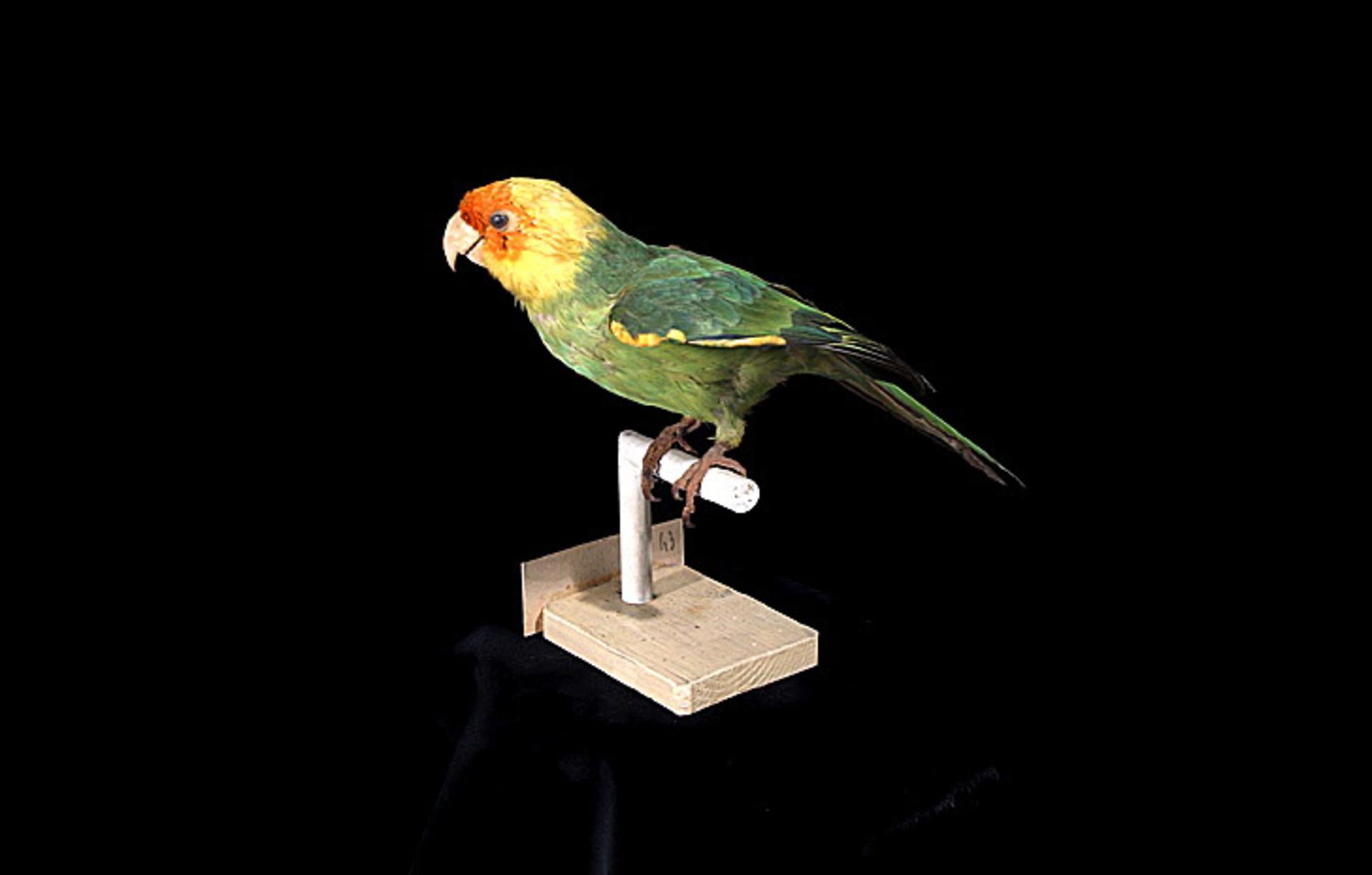 Photo Credit: Hansmuller / Wikimedia Commons
In the lush woodlands of the southeastern United States, the Carolina Parakeet, or †Conuropsis carolinensis, once danced through the trees, a burst of color against the green backdrop. With its vibrant green feathers, accented by splashes of yellow and orange on its head, this small parrot was a sight to behold. Imagine a lively group of these birds flitting from branch to branch, their cheerful calls echoing through the forest as they foraged for seeds and fruits. Their social nature made them a joy to observe, as they often gathered in flocks, creating a lively atmosphere filled with chatter and movement.
Scientists and nature lovers alike are captivated by the Carolina Parakeet not just for its beauty, but also for its intriguing role in the ecosystem. As an omnivore, it helped to spread seeds, playing a vital part in the growth of various plants. Sadly, this colorful bird is now extinct, a poignant reminder of the delicate balance of nature and the impact of human activity on wildlife. In exploring the life of the Carolina Parakeet, we uncover a story of vibrant ecosystems, social bonds, and the importance of conservation, inviting us to reflect on the wonders of the natural world and our responsibility to protect it.
The Carolina Parakeet, scientifically known as †Conuropsis carolinensis, holds a special place in the tree of life. This vibrant bird was once a common sight in the southeastern United States, known for its striking green plumage and social behavior. What makes the Carolina Parakeet particularly intriguing is its status as the only parakeet native to North America, a distinction that sets it apart in the vast avian world. Sadly, this colorful bird is now extinct, but its legacy continues to captivate those interested in the rich tapestry of life on our planet.
| Taxonomic Rank | Scientific Name | Meaning & Significance |
|---|---|---|
| Kingdom | Animalia | This name signifies that the Carolina Parakeet belongs to the broad group of multicellular organisms that are heterotrophic, meaning they consume organic material for energy. |
| Phylum | Chordata | Chordata refers to animals that have a notochord, a flexible rod that supports the body. In birds, this structure is replaced by a backbone, which is crucial for their flight capabilities. |
| Class | Aves | Aves is the class that includes all birds. This classification highlights the Carolina Parakeet’s feathers, beak, and ability to lay eggs, all key characteristics of birds. |
| Order | Psittaciformes | This order encompasses parrots and parakeets, known for their strong, curved beaks and vibrant colors. The Carolina Parakeet’s playful nature and social behavior fit perfectly within this group. |
| Family | Psittacidae | Psittacidae is the family of true parrots, which emphasizes the Carolina Parakeet’s close relatives, showcasing its intelligence and ability to mimic sounds. |
| Genus | †Conuropsis | The genus name Conuropsis means “cone-headed,” referring to the bird’s distinctive head shape, which is a notable feature among its relatives. |
| Species | carolinensis | This species name directly connects to its native region, Carolina, highlighting its historical range and the cultural significance it held in early American history. |
Understanding the Carolina Parakeet’s classification reveals much about its evolutionary journey. As a member of the Psittaciformes order, it shares a lineage with other intelligent and colorful birds, showcasing adaptations that allowed it to thrive in its environment. The extinction of the Carolina Parakeet serves as a poignant reminder of the fragility of ecosystems and the importance of conservation efforts. By studying its place in the animal kingdom, we gain insights into the complex relationships that shape biodiversity and the ongoing story of life on Earth.
The evolutionary journey of the Carolina Parakeet, known scientifically as †Conuropsis carolinensis, spans millions of years, tracing back to a time when lush forests and open fields flourished across North America. This colorful bird, once abundant in the southeastern United States, is a testament to the dynamic processes of evolution that shape life on our planet. Its story is one of adaptation, survival, and ultimately, extinction, reflecting the ever-changing relationship between species and their environments.
The ancestors of the Carolina Parakeet belonged to a group of birds known as Psittacidae, which includes modern parrots. These early parakeets evolved in the warm climates of South America, where they developed traits that would later help them thrive in North America. As they migrated northward, they adapted to various habitats, from dense forests to open grasslands. Over time, they developed vibrant plumage, which not only made them visually striking but also played a role in social interactions and mating. Their ability to mimic sounds, a skill that is still celebrated in modern parrots, likely emerged as a means of communication within flocks.
These adaptations were crucial for the Carolina Parakeet’s survival in a changing world. Their bright colors and social structures allowed them to thrive in flocks, providing safety in numbers. The flexibility in their diet meant they could exploit various food sources, which was vital during times of scarcity. However, as habitats changed and human activities increased, these once-adaptive traits could not save them from extinction. The story of the Carolina Parakeet serves as a poignant reminder of the delicate balance between species and their environments, highlighting the importance of conservation efforts for the wildlife that remains.
The Carolina Parakeet was a dazzling sight, a small parrot that brought a splash of color to the landscapes it inhabited. With a body length of about 12 to 14 inches, this bird was compact yet striking. Its rounded head and short, square tail gave it a charming appearance, while its strong, curved beak was perfectly designed for cracking seeds and fruits. The overall impression of the Carolina Parakeet was one of vibrancy and liveliness, a true embodiment of the lush environments it once called home.
| Feature | Description |
|---|---|
| Weight | 9.9 ounces |
| Skin Type | Feathers |
| Most Distinctive Feature | Brightly colored plumage |
The Carolina Parakeet’s vivid feathers were not just for show; they played a crucial role in its survival. The bright greens and yellows helped the bird blend into the lush foliage of its habitat, providing camouflage from predators. This colorful plumage also served as a way to communicate with other parakeets, signaling health and vitality. Together, these features made the Carolina Parakeet a beautiful and well-adapted inhabitant of its environment, showcasing the intricate relationship between appearance and survival in the wild.
The Carolina Parakeet thrived in a vibrant tapestry of woodlands, where the sun filtered through the leaves, casting playful shadows on the forest floor. These lively birds were often found flitting among the branches of tall trees, their bright green feathers blending beautifully with the foliage. The sounds of rustling leaves and chirping insects filled the air, creating a lively backdrop for their playful antics. This habitat provided not only shelter but also a rich source of food, including fruits and seeds, which were essential for their diet.
The climate in these regions was typically warm and humid, with plenty of rainfall to nourish the lush vegetation. Carolina Parakeets preferred areas where the temperature rarely dipped too low, as they were not built for extreme cold. The combination of mild winters and hot summers created an ideal environment for these birds, allowing them to thrive in the abundant food sources provided by the diverse plant life.
Over time, the Carolina Parakeet adapted beautifully to its woodland home. Their strong, curved beaks were perfectly designed for cracking open seeds and fruits, while their agile bodies allowed them to navigate through the dense branches with ease. These adaptations not only helped them find food but also provided protection from predators. Their social nature meant they often traveled in flocks, which offered safety in numbers as they explored their vibrant habitat.
The daily life of the Carolina Parakeet was a lively blend of foraging, socializing, and communicating. These colorful birds typically began their day at dawn, emerging from their roosts in trees to search for food. Their diet mainly consisted of seeds, fruits, and flowers, which they skillfully extracted using their strong, curved beaks. Throughout the day, they would engage in playful activities, such as chasing each other through the branches or bathing in shallow water. As the sun set, they would gather back in their roosts, creating a cacophony of chirps and whistles that filled the air.
Social behavior was a cornerstone of the Carolina Parakeet’s life. These birds were highly social, often forming flocks that could number in the hundreds. Within these groups, they established a complex social structure, with strong bonds formed between mates and family members. Communication was key to their interactions, as they used a variety of calls and body language to convey messages. Whether warning of danger or signaling the location of food, their vocalizations were essential for maintaining group cohesion and ensuring everyone was on the same page.
| Behavior Type | Description |
|---|---|
| Foraging | Carolina Parakeets searched for seeds, fruits, and flowers, using their strong beaks to extract food from hard-to-reach places. |
| Social Structure | They lived in large flocks, forming strong bonds with mates and family members, which helped them navigate their environment together. |
| Communication | These birds used a variety of calls and body language to communicate, helping them warn each other of predators and share food locations. |
The behaviors of the Carolina Parakeet were not just for fun; they played a crucial role in their survival. By foraging in groups, they could find food more efficiently and protect each other from predators. Their social bonds ensured that they could raise their young together, sharing the responsibilities of feeding and protecting the next generation. In a world filled with challenges, these vibrant birds relied on their social nature and communication skills to thrive in their environment.
The Carolina Parakeet had a diverse diet that reflected its omnivorous nature, meaning it enjoyed a mix of plant and animal foods. This lively bird primarily foraged for seeds, fruits, and nuts, which were abundant in its forested and open habitats. It was particularly fond of the seeds from various trees, including the sweet fruits of the hackberry and the berries of the black gum tree. The parakeet’s strong, curved beak was perfectly designed for cracking open tough seeds and nuts, allowing it to access the nutritious morsels inside.
| Dietary Aspect | Details |
|---|---|
| Diet Type | Omnivore |
| Favorite Foods | Seeds, fruits, nuts, and berries |
| Prey Items | Insects and small invertebrates |
| Hunting/Foraging Strategies | Foraging in flocks, using strong beaks to crack seeds |
The Carolina Parakeet’s diet played a crucial role in its ecology and daily routine. By feeding on a variety of seeds and fruits, it helped to disperse plant seeds throughout its environment, contributing to the growth of new plants. This not only supported the parakeet’s own habitat but also benefited other wildlife that relied on those plants for food and shelter. The parakeet’s social foraging behavior, often seen in flocks, allowed it to efficiently locate food sources while also strengthening social bonds within its group.
As the days grow longer and warmer, the Carolina Parakeet enters its breeding season, a time filled with vibrant displays and courtship rituals. Males often engage in elaborate aerial displays, showcasing their bright plumage to attract potential mates. These social birds typically form monogamous pairs, meaning they choose one partner for the breeding season. Nesting usually occurs in tree cavities, where they create a cozy home for their future chicks.
| Reproductive Aspect | Details |
|---|---|
| Gestation Period | About 24 days |
| Litter Size | 2 to 5 eggs |
| Age of Maturity | 1 year |
| Name of Young | Chicks |
Once the eggs hatch, the devoted parents take on the important role of caregivers. Both the male and female share the responsibility of feeding and protecting their chicks. The young parakeets are born helpless, with their eyes closed and covered in downy feathers. As they grow, they begin to develop their colorful plumage, which is essential for their social interactions and camouflage in the wild. After several weeks of nurturing, the chicks fledge, or leave the nest, ready to explore the world around them. With the guidance of their parents, they learn to forage and socialize, gradually becoming independent adults.
The Carolina Parakeet, once a vibrant part of the southeastern U.S. ecosystem, occupied a unique position in the food web. As an omnivorous bird, it played a role in seed dispersal, helping plants grow by spreading their seeds. However, like all creatures, it faced dangers that threatened its survival, both from predators and human activities.
To defend itself against these threats, the Carolina Parakeet employed several survival strategies. These birds often traveled in flocks, which provided safety in numbers, making it harder for predators to target an individual. Their bright colors, while beautiful, also served as a warning to potential threats, signaling that they were not easy prey. Additionally, they were known to be quite vocal, using their calls to communicate with each other about dangers in their environment. Despite these adaptations, the pressures from hunting and habitat destruction ultimately led to their decline, reminding us of the delicate balance in nature.
A keystone species is a vital part of its ecosystem, meaning its presence has a significant impact on the environment and other living things. The Carolina Parakeet, once a lively inhabitant of the southeastern United States, is considered a keystone species due to its unique role in the woodlands it called home. By influencing the structure and health of its ecosystem, this colorful bird helped maintain the balance of life around it.
The Carolina Parakeet was an omnivore, which means it ate both plants and animals. This diverse diet allowed it to play a crucial role in seed dispersal. As the parakeets feasted on fruits and seeds, they would travel from tree to tree, dropping seeds in new locations. This behavior helped various plant species grow in different areas, promoting biodiversity. For example, when they consumed the seeds of native fruits, they not only enjoyed a tasty meal but also ensured that those plants could thrive in new spots, creating a richer habitat for other animals.
Additionally, the Carolina Parakeet was a social bird, often found in flocks. This social structure contributed to the dynamics of the woodland ecosystem. Their vocalizations and interactions with one another could alert other species to potential dangers, such as predators. This behavior helped maintain a balance in the food web, where various animals relied on each other for survival. The parakeets also served as prey for larger birds of prey, linking them to the broader food chain.
If the Carolina Parakeet were to disappear, the effects would ripple through its ecosystem. Without these birds to disperse seeds, many plant species could struggle to reproduce and spread, leading to a decline in plant diversity. This loss would affect other animals that rely on those plants for food and shelter, creating a domino effect that could destabilize the entire woodland community. The vibrant tapestry of life that once thrived in the presence of the Carolina Parakeet would be significantly diminished, reminding us of the importance of every species in maintaining the balance of nature.
The Carolina Parakeet, a vibrant bird once found in the woodlands of the southeastern United States, played a crucial role in its ecosystem. As an omnivore, it fed on a variety of seeds, fruits, and nuts, which allowed it to interact with many plant species. This interaction helped shape the environment around it, making the Carolina Parakeet an important player in maintaining the balance of its habitat. By foraging and feeding, these birds contributed to the health of their ecosystem, influencing plant growth and the overall biodiversity of their surroundings.
| Ecosystem Service | Impact |
|---|---|
| Seed Dispersal | Helps spread plant species, promoting forest growth and diversity. |
| Food Source | Serves as prey for larger birds and mammals, supporting the food web. |
| Pollination | While primarily seed eaters, they may inadvertently assist in pollination. |
| Social Structure | Encourages community dynamics among other species through its presence. |
The Carolina Parakeet’s influence on its environment can be seen in its role as a seed disperser. When these birds consumed fruits and seeds, they often traveled considerable distances before excreting the seeds, allowing new plants to grow in different areas. This behavior not only helped maintain the health of the woodlands but also supported a variety of other wildlife that depended on those plants for food and shelter. Additionally, the parakeet’s vibrant social interactions and communal living created a lively atmosphere in the forest, which could attract other species and enhance biodiversity.
The broader ecological importance of the Carolina Parakeet extends beyond its immediate actions. As a keystone species, its presence was vital for the stability of its ecosystem. The loss of such a species can lead to significant changes in the environment, affecting everything from plant populations to the animals that rely on those plants. Understanding the role of the Carolina Parakeet reminds us of the intricate connections within ecosystems and the importance of every species in maintaining the balance of nature.
In the intricate web of nature, symbiosis refers to the close relationships between different species that can benefit one or both parties involved. These ecological partnerships can take various forms, including mutualism, where both species gain advantages; commensalism, where one benefits while the other is neither helped nor harmed; and parasitism, where one species benefits at the expense of another. The Carolina Parakeet, once a lively inhabitant of the southeastern United States, engaged in several of these relationships, showcasing the interconnectedness of life in its woodland habitat.
| Species/Type | Relationship Type | Description |
|---|---|---|
| Fruit-bearing trees | Mutualistic | The Carolina Parakeet helped disperse seeds from the fruits it consumed, promoting the growth of new trees while benefiting from the food source. |
| Insects | Commensal | While foraging, the parakeet may have disturbed insects, which could attract other birds that feed on them, benefiting those birds without affecting the parakeet. |
| Predatory birds | Parasitic | In some cases, the presence of Carolina Parakeets could attract larger predatory birds, which might hunt them, illustrating a parasitic relationship where the parakeets are at risk. |
These relationships evolved over time, shaped by the needs and behaviors of the species involved. The mutualistic bond between the Carolina Parakeet and fruit-bearing trees highlights how both can thrive together, with the parakeet aiding in seed dispersal while enjoying a nutritious meal. Meanwhile, the commensal interactions with insects demonstrate the complexity of ecosystems, where one species can inadvertently support another. However, the risk posed by predatory birds reminds us that nature is a delicate balance of cooperation and competition. Understanding these connections helps us appreciate the rich tapestry of life that once flourished alongside the Carolina Parakeet.
The Carolina Parakeet, once a vibrant resident of the southeastern United States, is a fascinating bird with a rich history and unique traits that captivate nature enthusiasts. Here are some surprising facts that showcase its remarkable story.
The Carolina Parakeet, once a lively and colorful inhabitant of the southeastern United States, has a rich history intertwined with humanity. Early encounters between these birds and people were often marked by admiration and cultural significance. Native American tribes revered the parakeet for its vibrant plumage, incorporating it into their art and folklore. European settlers, too, were captivated by the bird’s beauty, often depicting it in paintings and writings. However, as human populations expanded, the Carolina Parakeet faced increasing challenges, leading to a complex relationship that would ultimately change the course of its existence.
In modern times, the interactions between the Carolina Parakeet and humanity have shifted dramatically. While the species is now extinct, its legacy continues to influence conservation efforts aimed at protecting other parrot species and their habitats. The story of the Carolina Parakeet serves as a cautionary tale about the impact of habitat destruction and hunting. Although there are no current conflicts involving this bird, its extinction has sparked discussions about the importance of preserving biodiversity and the delicate balance between human activity and wildlife conservation. Efforts to educate the public about the consequences of extinction are crucial in preventing similar fates for other species.
Looking ahead, the relationship between humans and wildlife is at a crossroads. The extinction of the Carolina Parakeet serves as a poignant reminder of the fragility of nature and the responsibilities we hold as stewards of the environment. By learning from the past, we can foster a future where humans and animals coexist harmoniously. Through education, conservation efforts, and a commitment to protecting natural habitats, we can ensure that the vibrant stories of species like the Carolina Parakeet are not lost to time, but instead inspire future generations to cherish and protect the wonders of the natural world.
The Carolina Parakeet, once a lively and colorful resident of the southeastern United States, is now classified as extinct. This vibrant bird, known for its striking plumage and social behavior, has not been seen in the wild since the early 20th century. The loss of this species is a poignant reminder of the fragility of our natural world and the impact of human activities on wildlife.
| Conservation Factor | Status/Details |
|---|---|
| IUCN Status | Extinct |
| Estimated Population Size | None |
| Trend Direction | Declining |
The main threats that led to the extinction of the Carolina Parakeet were habitat destruction and hunting. As forests were cleared for agriculture and urban development, the parakeet lost its natural home. Additionally, these birds were often hunted for their feathers and captured for the pet trade. The combination of these pressures created a perfect storm that the Carolina Parakeet could not survive.
Despite its extinction, there are ongoing conservation efforts aimed at protecting other parrot species and their habitats. Organizations are working to raise awareness about the importance of biodiversity and the need to preserve natural ecosystems. By learning from the past, conservationists hope to prevent similar fates for other birds and wildlife. The story of the Carolina Parakeet serves as a powerful lesson in the importance of stewardship for our planet’s diverse inhabitants.
| Question | Answer |
|---|---|
| What was the habitat of the Carolina Parakeet? | The Carolina Parakeet thrived in woodlands, particularly in areas with plenty of trees and open spaces. They preferred habitats near rivers and swamps, where they could find food and nesting sites. |
| What did the Carolina Parakeet eat? | This colorful bird was an omnivore, meaning it ate both plants and animals. Its diet included fruits, seeds, and nuts, as well as insects and small animals, which provided a balanced source of nutrition. |
| How did the Carolina Parakeet behave in the wild? | Carolina Parakeets were social birds, often seen in flocks that could number in the hundreds. They were known for their playful antics and vocalizations, which included a variety of chirps and whistles. |
| How did Carolina Parakeets reproduce? | These birds typically nested in tree cavities, where they laid their eggs. The female would incubate the eggs, while both parents helped care for the chicks once they hatched, showcasing a strong family bond. |
| What threats did the Carolina Parakeet face? | The Carolina Parakeet faced several threats, including habitat destruction due to logging and agriculture. Additionally, they were hunted for their feathers and captured for the pet trade, which contributed to their decline. |
| What are some interesting characteristics of the Carolina Parakeet? | One of the most distinctive features of the Carolina Parakeet was its brightly colored plumage, which included vibrant greens, yellows, and oranges. They were also unique for being one of the few parakeet species native to the United States. |
| Why is the Carolina Parakeet considered extinct? | The Carolina Parakeet was declared extinct in the early 20th century, primarily due to habitat loss and hunting. The last confirmed sighting was in the 1910s, marking the end of this once-thriving species. |