Taxonomy & Classification
- Kingdom
- Animalia
- Phylum
- Chordata
- Class
- Chondrichthyes
- Order
- Chimaeraformes
- Family
- Chimaeridae
- Genus
- Chimaera

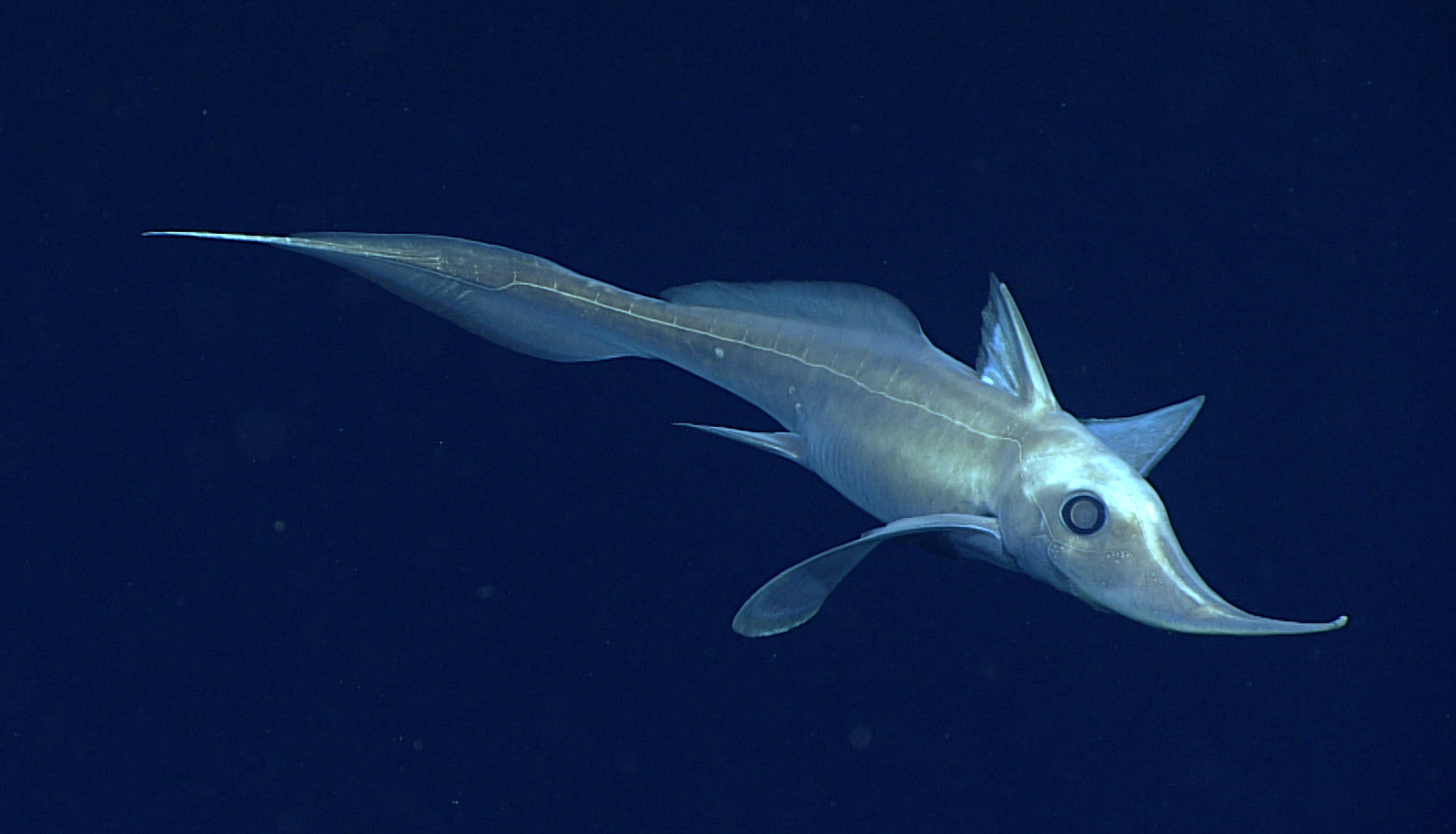 Photo Credit: NOAA Ocean Exploration / Wikimedia
In the shadowy depths of the ocean, where sunlight barely reaches and the water is a cool, dark blue, lives the Chimaera, scientifically known as Chimaera monstrosa. Often referred to as ghost sharks, these enigmatic fish glide gracefully through their underwater realm, captivating the imagination of scientists and nature enthusiasts alike. With their smooth, streamlined bodies and large, expressive eyes, Chimaeras possess an otherworldly charm that sets them apart from other marine life. Their unique features, such as a long, whip-like tail and a distinctive, flat head, make them look like something out of a fantasy tale, yet they are very much a part of our planet’s rich biodiversity.
Chimaeras are not just visually striking; they also hold a treasure trove of secrets about the ocean’s past. These ancient fish have been swimming the seas for over 400 million years, making them one of the oldest lineages of vertebrates still in existence. Their ability to thrive in the deep sea, where few creatures dare to venture, speaks to their remarkable adaptations. As we dive deeper into the world of Chimaeras, we will explore their fascinating behaviors, diet, and the vital role they play in maintaining the balance of marine ecosystems. Join us on this adventure to uncover the mysteries of these ghostly guardians of the deep!
Chimaeras, often called ghost sharks, occupy a fascinating niche in the animal kingdom. They belong to the class Chondrichthyes, which includes all cartilaginous fish like sharks and rays. What sets chimaeras apart is their unique combination of features: they have a cartilaginous skeleton, a long, slender body, and a distinctive flat head. Unlike their more famous relatives, chimaeras have a single gill opening on each side of their head, which gives them a ghostly appearance. This unusual anatomy and their deep-sea habitat make them a captivating subject for scientists and nature enthusiasts alike.
| Taxonomic Rank | Scientific Name | Meaning & Significance |
|---|---|---|
| Kingdom | Animalia | This name signifies that chimaeras are part of the vast group of multicellular organisms known as animals, which are characterized by their ability to move and respond to their environment. |
| Phylum | Chordata | Chordata means “having a notochord,” a flexible rod that supports the body. In chimaeras, this structure is replaced by a backbone made of cartilage, which is a key feature of vertebrates. |
| Class | Chondrichthyes | This term translates to “cartilaginous fish,” highlighting that chimaeras, like sharks and rays, have skeletons made of cartilage instead of bone. |
| Order | Chimaeraformes | This order groups together chimaeras and their relatives, emphasizing their unique evolutionary path within cartilaginous fish. |
| Family | Chimaeridae | The name Chimaeridae is derived from “Chimaera,” reflecting the mythical creature known for its blend of different animal features, much like the diverse adaptations seen in this family. |
| Genus | Chimaera | This genus name directly references the ghostly appearance of these fish, reminiscent of the mythical chimaera, which was said to be a blend of different animals. |
The classification of chimaeras reveals a rich evolutionary history that dates back over 400 million years. As members of the Holocephali subclass, they represent a lineage that diverged from other cartilaginous fish early on. This ancient lineage has allowed chimaeras to develop unique adaptations suited for life in the deep sea, where they navigate the dark waters with their specialized features. Understanding their place in the tree of life not only highlights their distinct characteristics but also sheds light on the evolutionary processes that have shaped the diversity of marine life we see today.
The evolutionary journey of Chimaera, often known as ghost sharks, stretches back over 400 million years, placing them among the ancient lineages of vertebrates. These enigmatic fish have survived multiple mass extinctions and significant environmental changes, adapting to life in the deep, dark ocean. Their story is one of resilience and transformation, showcasing how life can evolve in unexpected ways.
Chimaeras are part of a group called Holocephali, which diverged from their more famous relatives, the sharks and rays, during the late Devonian period. This split marked a significant evolutionary transition, leading to the development of unique features that distinguish Chimaera from other cartilaginous fish. One of the most notable changes was the evolution of their flat, broad heads, which help them navigate the ocean floor and hunt for prey. Over time, they also developed specialized teeth that are perfect for crushing the hard shells of their favorite snacks, like mollusks and crustaceans.
These adaptations have been crucial for Chimaera’s survival in the often harsh and competitive environment of the deep sea. Their unique head shape and specialized teeth allow them to thrive in a niche where few other predators can compete. The ability to sense their surroundings through electric fields gives them an edge in locating prey, while their lightweight skeletons enable them to maneuver gracefully through the water. Together, these features illustrate the incredible ways life can adapt and flourish, even in the most challenging habitats.
The Chimaera, often referred to as a ghost shark, presents an otherworldly appearance that captivates the imagination. With a streamlined body that glides through the ocean depths, it has a smooth, almost ethereal quality to its skin. Its most striking features are its dead eyes, which seem to gaze into the abyss, and its fleshy snout that gives it a curious, almost whimsical expression. This combination of traits creates an impression of a creature that is both ancient and mysterious, perfectly adapted to its deep-sea habitat.
| Feature | Description |
|---|---|
| Weight | Up to 5 lbs |
| Skin Type | Smooth |
| Most Distinctive Feature | Dead eyes, fleshy snouts |
These physical characteristics serve important purposes in the Chimaera’s survival. The smooth skin helps reduce drag as it swims through the water, allowing it to move efficiently in search of prey. The dead eyes, while eerie, are well-suited for the dimly lit depths of the ocean, where visibility is limited. This adaptation may help the Chimaera remain undetected by both predators and prey. Meanwhile, the fleshy snout is equipped with sensory organs that can detect the faintest vibrations and chemical signals in the water, guiding it toward food sources. Together, these features make the Chimaera a master of its deep-sea domain, perfectly designed for life in the shadows.
The Chimaera, or ghost shark, calls the deep ocean its home, where the sunlight barely penetrates and the water is a cool, dark blue. These mysterious fish thrive in the depths, often found resting on the ocean floor or gliding gracefully through the water. Their habitat is a world of shadows and silence, where they navigate through rocky crevices and coral reefs, seeking shelter and food. The deep ocean is a realm of wonder, filled with strange and beautiful creatures, and the Chimaera is perfectly suited to this hidden environment.
The climate of the deep ocean is characterized by cold temperatures and high pressure, conditions that can be quite extreme. Chimaeras prefer depths ranging from 200 to 2,600 meters (about 650 to 8,500 feet), where the water is consistently chilly, often hovering around 4 degrees Celsius (39 degrees Fahrenheit). This environment is stable, with minimal fluctuations in temperature, making it an ideal habitat for these fish. The darkness of the deep sea also means that food sources are scarce, requiring Chimaeras to be skilled hunters.
To thrive in such a challenging environment, Chimaeras have developed several fascinating adaptations. Their bodies are designed to withstand the immense pressure of the deep ocean, with a flexible, cartilaginous structure that allows them to move effortlessly through the water. They possess large, sensitive eyes that help them see in the dim light, and their unique electroreception abilities allow them to detect the faint electrical signals emitted by potential prey. These adaptations not only enhance their survival but also make them one of the ocean’s most intriguing inhabitants.
In the deep, shadowy waters of the ocean, Chimaeras lead a life that is both intriguing and mysterious. These ghostly fish are primarily nocturnal, meaning they are most active at night. During the day, they often rest on the ocean floor, nestled among rocks and coral. As night falls, they venture out to hunt for food, gliding gracefully through the water. Their diet mainly consists of small fish, crustaceans, and mollusks, which they skillfully locate using their keen sense of smell. With their unique ability to detect electrical signals in the water, Chimaeras can find prey even in the darkest depths.
Socially, Chimaeras are generally solitary creatures, preferring to roam the ocean alone rather than in large groups. However, they can sometimes be spotted in small gatherings, especially during mating season. Communication among these fish is subtle and often involves body language and changes in color. While they may not have the complex social structures seen in some other marine animals, their interactions are crucial for reproduction and maintaining their species.
| Behavior Type | Description |
|---|---|
| Activity Patterns | Chimaeras are primarily nocturnal, hunting at night and resting during the day on the ocean floor. |
| Social Structure | They are mostly solitary but may gather in small groups during mating season. |
| Communication Methods | Chimaeras communicate through body language and color changes, relying on subtle cues rather than vocalizations. |
The behaviors of Chimaeras are finely tuned to their environment, ensuring their survival in the deep ocean. By being nocturnal hunters, they avoid many predators and can take advantage of the cover of darkness to find food. Their solitary nature allows them to be stealthy and efficient, while their occasional gatherings during mating season help ensure the continuation of their species. Each aspect of their daily life is a testament to their adaptability and resilience in one of the most challenging habitats on Earth.
Chimaeras are carnivorous fish that primarily feast on a variety of marine life. Their diet mainly consists of mollusks, crabs, and marine worms. These ghostly creatures have developed specialized feeding behaviors that allow them to hunt effectively in the dark depths of the ocean. With their keen sense of smell and unique jaw structure, they can capture and consume their prey with remarkable efficiency.
| Dietary Aspect | Details |
|---|---|
| Diet Type | Carnivore |
| Favorite Foods | Mollusks, crabs, marine worms |
| Prey Items | Soft-bodied invertebrates |
| Hunting/Foraging Strategies | Using keen sense of smell and specialized jaws to capture prey |
The diet of Chimaeras plays a crucial role in their ecological niche. By preying on various invertebrates, they help maintain the balance of marine ecosystems. Their nocturnal hunting habits also influence their daily routines, as they venture out to feed when many other predators are less active. This unique feeding strategy not only supports their survival but also contributes to the intricate web of life in the deep ocean.
When it comes to mating, Chimaeras exhibit intriguing behaviors that reflect their unique adaptations to life in the deep sea. The breeding season for these ghostly fish can vary, but it generally occurs during the warmer months. Males often engage in elaborate courtship displays, which may include swimming in circles around females and using their claspers—specialized organs that help transfer sperm. This fascinating ritual ensures that the female is ready to receive the male’s sperm, leading to successful reproduction.
| Reproductive Aspect | Details |
|---|---|
| Gestation Period | 6-12 months |
| Litter Size | 1-6 young |
| Age of Maturity | 3-5 years |
| Name of Young | Pups |
Once the pups are born, they are fully formed and ready to swim away from their mother, showcasing their independence right from the start. Chimaeras do not provide extensive parental care, as the young are equipped to fend for themselves in the vast ocean. As they grow, these pups will gradually develop into adults, maturing over a period of three to five years. This journey from pup to adult is a remarkable transformation, allowing them to thrive in the mysterious depths of their underwater world.
Chimaeras, often called ghost sharks, play a vital role in the ocean’s food web. As carnivores, they help maintain the balance of marine ecosystems by preying on smaller creatures like mollusks and crabs. However, their position in this intricate web also makes them vulnerable to various threats, particularly from human activities and natural predators.
To survive against these dangers, Chimaeras have developed some clever defensive strategies. Their soft, cartilaginous bodies allow them to maneuver swiftly through the water, making it harder for predators to catch them. Additionally, their ability to dwell in the dark depths of the ocean provides a natural camouflage, helping them evade larger fish and fishing nets. By staying hidden and using their agility, these ghostly fish can navigate the challenges of their underwater world.
A keystone species is a vital part of its ecosystem, meaning its presence has a significant impact on the environment and other organisms within it. The Chimaera, or ghost shark, qualifies as a keystone species due to its role in maintaining the balance of deep-sea ecosystems. By preying on various marine life, Chimaeras help regulate populations of their prey, which in turn supports the overall health of their habitat.
Chimaeras primarily feed on mollusks, crabs, and marine worms, making them important predators in the deep ocean. By controlling the numbers of these creatures, they prevent any one species from becoming too dominant. For example, if Chimaeras were to disappear, the populations of their prey could explode, leading to overgrazing of seafloor habitats. This could disrupt the entire food web, affecting not only the prey species but also the animals that rely on them for food.
Additionally, Chimaeras contribute to nutrient cycling in their environment. When they consume prey, they help break down organic matter, which can then be recycled back into the ecosystem. This process supports the growth of other marine organisms, creating a more diverse and resilient community. Their unique adaptations, such as specialized teeth for grasping slippery prey, also highlight their role in the evolutionary dynamics of deep-sea life.
If Chimaeras were to vanish from the ocean, the consequences could be dire. The unchecked growth of their prey species would lead to significant changes in the ecosystem, potentially causing the collapse of certain habitats. This would not only affect the Chimaera’s prey but also the myriad of species that depend on a balanced environment. The deep ocean, already a fragile ecosystem, would face even greater challenges, highlighting just how crucial these ghostly fish are to the health of our planet’s oceans.
The Chimaera, often known as the ghost shark, plays a crucial role in its deep ocean habitat. As a carnivorous fish, it occupies a unique ecological niche, helping to regulate the populations of various marine organisms. By preying on mollusks, crabs, and marine worms, Chimaeras contribute to the balance of their ecosystem, ensuring that no single species dominates the environment. This balance is essential for maintaining the health of the ocean’s depths, where life thrives in the shadows.
| Ecosystem Service | Impact |
|---|---|
| Predation | Controls populations of smaller marine species, preventing overpopulation. |
| Nutrient Cycling | Contributes to the breakdown of organic matter, enriching the ocean floor. |
| Habitat Structure | Influences the distribution of benthic organisms, shaping the seafloor community. |
Chimaeras influence their environment in several specific ways. By preying on various invertebrates, they help maintain a balanced food web, which is vital for the health of the deep-sea ecosystem. For instance, when Chimaeras consume mollusks, they prevent these populations from exploding, which could otherwise lead to a decline in the diversity of other marine life. Additionally, their feeding habits contribute to nutrient cycling, as the remains of their meals decompose and enrich the ocean floor, supporting a variety of organisms that rely on these nutrients.
The broader ecological importance of Chimaeras cannot be overstated. As a keystone species, their presence is essential for the stability of deep-sea ecosystems. By regulating prey populations and contributing to nutrient cycling, they help sustain the intricate web of life that exists in the dark depths of the ocean. Protecting these enigmatic fish is vital not only for their survival but also for the health of the entire marine environment, reminding us of the interconnectedness of all life forms in our planet’s oceans.
In the intricate web of life beneath the ocean’s surface, symbiosis plays a vital role in shaping the relationships between different species. Symbiosis refers to the close interactions between organisms, which can be beneficial, harmful, or neutral. These ecological relationships can be classified into three main types: mutualism, where both species benefit; parasitism, where one species benefits at the expense of another; and commensalism, where one species benefits while the other is neither helped nor harmed. Understanding these connections helps us appreciate the delicate balance of marine ecosystems, especially in the deep ocean where Chimaeras thrive.
| Species/Type | Relationship Type | Description |
|---|---|---|
| Cleaner Shrimp | Mutualistic | Chimaeras may allow cleaner shrimp to remove parasites from their skin, benefiting both the fish and the shrimp. |
| Remora Fish | Commensal | Remoras attach themselves to Chimaeras, gaining a free ride and access to food scraps, while the Chimaeras are generally unaffected. |
| Parasitic Worms | Parasitic | Some worms may latch onto Chimaeras, feeding on their tissues, which can harm the fish over time. |
These relationships have evolved over millions of years, shaped by the needs and adaptations of the species involved. Mutualistic partnerships, like that of the cleaner shrimp and Chimaeras, enhance the health of both parties, while commensal relationships, such as those with remora fish, showcase the clever ways species can coexist. On the other hand, parasitic interactions remind us of the challenges that come with survival in the deep sea. Each of these connections highlights the complexity of life underwater, illustrating how Chimaeras and their partners navigate the vast, mysterious ocean together.
Chimaeras, often called ghost sharks, are some of the ocean’s most mysterious inhabitants. With their unique adaptations and ancient lineage, these fascinating fish have a lot to reveal about life in the deep sea.
Throughout history, Chimaeras, often called ghost sharks, have sparked the imagination of many cultures. These elusive creatures, with their eerie appearance and deep-sea habitat, have been woven into folklore and mythology. Ancient mariners sometimes mistook them for mythical beasts, attributing supernatural qualities to their ghostly forms. In various cultures, they symbolize mystery and the unknown, reflecting humanity’s fascination with the ocean’s depths. This cultural significance highlights how our encounters with Chimaeras have shaped our understanding of marine life and the mysteries that lie beneath the waves.
In modern times, the relationship between Chimaeras and humanity has evolved, focusing on conservation and research. As we learn more about these ancient fish, scientists are working to protect their habitats from threats like overfishing and climate change. Unfortunately, Chimaeras often find themselves caught in fishing nets, leading to conflicts between their survival and human activities. While they are not domesticated animals, their unique biology and role in the ecosystem make them important subjects for marine biologists. Understanding their behavior and life cycle can help us develop better conservation strategies to ensure their survival in the wild.
As we look to the future, the relationship between Chimaeras and humanity holds both challenges and opportunities. With increased awareness of marine conservation, there is hope that we can protect these enigmatic fish and their habitats. By fostering a deeper understanding of their ecological role, we can work towards a sustainable coexistence. The more we learn about Chimaeras, the more we appreciate the intricate web of life in our oceans, reminding us that every creature, no matter how ghostly, plays a vital part in the health of our planet.
The conservation status of Chimaera, commonly known as ghost sharks, is currently classified as Least Concern by the International Union for Conservation of Nature (IUCN). This means that, at present, they are not considered at immediate risk of extinction. However, population trends can vary by region, and while some areas may see stable numbers, others could experience declines due to various environmental pressures.
| Conservation Factor | Status/Details |
|---|---|
| IUCN Status | Least Concern |
| Population Estimates | Not precisely quantified; varies by region |
| Trend Direction | Stable in some areas, declining in others |
Despite their current status, Chimaeras face several threats that could impact their populations in the future. One of the main challenges is habitat degradation, often caused by human activities such as deep-sea trawling and pollution. These practices can destroy the delicate ecosystems where ghost sharks thrive. Additionally, climate change poses a significant risk, as rising ocean temperatures and acidification can alter their habitats and food sources, making survival more difficult.
Conservation efforts are underway to monitor and protect Chimaera populations. Researchers are working to better understand their habitats and behaviors, which is crucial for developing effective management strategies. Marine protected areas are being established in some regions to safeguard these mysterious fish and their environments. With continued awareness and action, there is hope that Chimaeras will maintain their presence in our oceans for generations to come.
| Question | Answer |
|---|---|
| What is the habitat of Chimaera? | Chimaeras, also known as ghost sharks, live in the deep ocean. They prefer cold, dark waters, often found at depths of 200 to 2,600 feet (60 to 800 meters). This makes them less visible to humans and other predators. |
| What do Chimaeras eat? | Chimaeras are carnivores, meaning they primarily eat other animals. Their diet consists of fish, crustaceans, and mollusks, which they hunt using their keen sense of smell and specialized teeth. |
| How do Chimaeras behave? | Chimaeras are generally solitary creatures, preferring to roam the ocean depths alone. They are known for their slow, graceful movements and can be quite elusive, making them difficult to study in their natural habitat. |
| How do Chimaeras reproduce? | Chimaeras reproduce through a process called oviparity, which means they lay eggs. The female lays eggs in protective cases, often referred to as "mermaid's purses," which provide safety for the developing embryos. |
| What threats do Chimaeras face? | Chimaeras are currently classified as "Least Concern," meaning they are not at immediate risk of extinction. However, they can be affected by deep-sea fishing practices and habitat destruction, which may impact their populations in the long run. |
| What are some interesting characteristics of Chimaeras? | One of the most distinctive features of Chimaeras is their "dead eyes," which appear large and unblinking. They also have fleshy snouts that help them sense their environment, making them unique among deep-sea fish. |
| How do Chimaeras differ from other fish? | Chimaeras belong to a group called Chondrichthyes, which includes sharks and rays, but they have some unique traits. Unlike most fish, they have a cartilaginous skeleton, meaning their bodies are made of cartilage instead of bone, giving them a more flexible structure. |