Taxonomy & Classification
- Kingdom
- Animalia
- Phylum
- Chordata
- Class
- Mammalia
- Order
- Carnivora
- Family
- Felidae
- Genus
- Neofelis
- Species
- Neofelis nebulosa

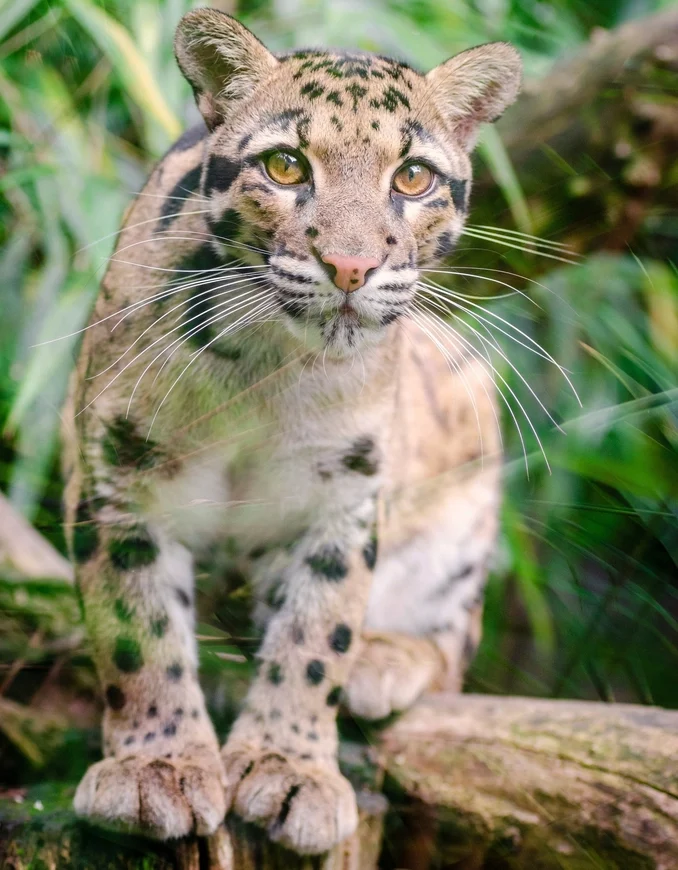 Photo Credit: Rawpixel
In the heart of Southeast Asia’s lush tropical forests, the clouded leopard, known scientifically as Neofelis nebulosa, prowls with an elegance that captivates all who are fortunate enough to catch a glimpse. With its striking coat adorned in large, cloud-like spots, this medium-sized big cat blends seamlessly into the dappled shadows of its environment. The clouded leopard’s unique appearance is not just for show; those beautiful markings help it remain hidden from both prey and potential threats, making it a master of stealth in the dense underbrush.
As the sun dips below the horizon, the forest comes alive with the sounds of rustling leaves and distant calls. The clouded leopard, primarily active during twilight, emerges from its perch high in the trees, showcasing its remarkable climbing skills. With long, flexible limbs and a long tail that aids in balance, this feline is perfectly adapted to life in the canopy. Scientists and nature enthusiasts alike are drawn to the clouded leopard not only for its beauty but also for its elusive nature and vital role in the ecosystem. As a skilled predator, it helps maintain the balance of its habitat, making it a key player in the intricate web of life that thrives in these vibrant jungles.
The clouded leopard, a captivating feline, occupies a special place in the animal kingdom. Scientifically classified under the genus Neofelis, this big cat is not just another member of the Felidae family, which includes lions, tigers, and domestic cats. What sets the clouded leopard apart is its unique blend of physical traits and behaviors. With its striking cloud-like spots and long, flexible body, it is perfectly adapted for life in the trees of Southeast Asia. This arboreal lifestyle, combined with its elusive nature, makes the clouded leopard a fascinating subject for both scientists and wildlife enthusiasts alike.
| Taxonomic Rank | Scientific Name | Meaning & Significance |
|---|---|---|
| Kingdom | Animalia | This name signifies that clouded leopards are part of the vast group of multicellular organisms that are primarily heterotrophic, meaning they consume other organisms for energy. |
| Phylum | Chordata | Chordata refers to animals that have a notochord, a flexible rod that supports the body. In clouded leopards, this structure is present during their early development, showcasing their evolutionary link to other vertebrates. |
| Class | Mammalia | Mammalia indicates that clouded leopards are warm-blooded, endothermic animals that nurse their young with milk, a defining characteristic of mammals. |
| Order | Carnivora | Carnivora is the order that includes meat-eating mammals. Clouded leopards are skilled hunters, primarily preying on birds and small mammals, which aligns with this classification. |
| Family | Felidae | Felidae is the family of cats, and clouded leopards share common traits with other felids, such as retractable claws and keen senses, which aid in their predatory lifestyle. |
| Genus | Neofelis | Neofelis means “new cat” in Greek, highlighting the clouded leopard’s distinct evolutionary path compared to other big cats, as it diverged from the common lineage of modern felids. |
The classification of the clouded leopard reveals much about its evolutionary history. As a member of the Neofelis genus, it represents a unique branch on the tree of life, distinct from the more familiar big cats. This divergence suggests that clouded leopards have adapted to their specific environments in ways that differ from their relatives, showcasing the incredible diversity of life on our planet. Understanding where the clouded leopard fits in the grand scheme of evolution not only highlights its special adaptations but also emphasizes the importance of conserving such unique species in their natural habitats.
The evolutionary journey of the clouded leopard stretches back millions of years, weaving through the dense forests of Southeast Asia. This big cat, belonging to the genus Neofelis, diverged from its closest relatives around 10 to 15 million years ago. As the world changed, so did the clouded leopard, adapting to its environment in ways that would ensure its survival in the lush, mountainous habitats it calls home.
The ancestors of the clouded leopard were part of a larger group of felids that roamed the Earth. Over time, these early cats began to adapt to their surroundings, leading to significant evolutionary changes. One of the most notable transitions was the development of their distinctive cloud-like markings, which provided excellent camouflage among the dappled light of the forest canopy. This adaptation allowed them to stalk prey more effectively, blending seamlessly into their environment. Additionally, their climbing abilities evolved, giving them the agility to navigate trees with ease, a skill that is crucial for both hunting and escaping larger predators.
These adaptations have been vital for the clouded leopard’s survival in its forested habitat. The ability to camouflage allows it to ambush prey, while its climbing prowess provides access to food sources that other predators might miss. With powerful canines and a flexible body, it can tackle a variety of prey, ensuring it thrives in a competitive ecosystem. As the world continues to change, these evolutionary traits remain crucial for the clouded leopard, helping it navigate the challenges of its environment.
The clouded leopard is a stunning sight to behold, with a body that perfectly balances grace and power. Its medium size, typically weighing between 11 to 30 kilograms (24 to 66 pounds), gives it a lithe appearance, allowing for agile movements through its forested habitat. The clouded leopard’s long, muscular tail is almost as long as its body, providing excellent balance as it navigates the treetops. Its limbs are sturdy yet elegant, designed for climbing and leaping with remarkable precision.
| Feature | Description |
|---|---|
| Size | Medium-sized, weighing between 11 kg and 30 kg (24 lbs – 66 lbs) |
| Color | Golden or light brown fur with dark cloud-like markings |
| Skin Type | Soft, dense fur that provides insulation and camouflage |
| Distinctive Feature | Long tail that aids in balance and agility |
These striking features are not just for show; they play vital roles in the clouded leopard’s survival. The dark cloud-like markings on its fur help it blend seamlessly into the dappled light of the forest, making it a stealthy hunter. This camouflage is essential for stalking prey, as it allows the leopard to approach without being seen. Meanwhile, the long tail enhances its ability to maneuver through the trees, where it spends much of its time. Together, these adaptations make the clouded leopard a master of its arboreal domain, showcasing the beauty and functionality of nature’s designs.
The clouded leopard thrives in the lush, dense tropical forests and jungles of Southeast Asia. Imagine towering trees draped in vibrant green vines, where sunlight filters through the thick canopy above, creating a mosaic of light and shadow on the forest floor. This enchanting habitat is filled with the sounds of rustling leaves and distant animal calls, providing the perfect backdrop for this elusive feline. The clouded leopard’s home is a world of rich biodiversity, where every nook and cranny teems with life, from colorful birds to playful monkeys.
To flourish in its environment, the clouded leopard requires a warm, humid climate, typical of tropical regions. These areas experience significant rainfall, which nourishes the diverse plant life and maintains the lush greenery that characterizes its habitat. The temperature in these forests usually remains mild, allowing the clouded leopard to remain active throughout the year. This climate supports a rich ecosystem, providing ample prey and shelter for this stealthy predator.
Adaptation is key to the clouded leopard’s survival in such a complex environment. With its incredible climbing skills, this big cat can navigate the trees with ease, using its long, flexible body and sharp claws to grip branches. Its unique coat, adorned with cloud-like patterns, offers excellent camouflage among the dappled light of the forest, helping it remain hidden from both prey and potential threats. These adaptations not only enhance its hunting prowess but also allow it to thrive in the intricate web of life that defines its tropical home.
The clouded leopard leads a life that is both secretive and captivating, primarily active during the twilight hours of dawn and dusk, known as crepuscular behavior. As night falls, these big cats emerge from their hidden perches in the trees, ready to hunt. Their keen senses help them navigate the dense foliage, where they rely on stealth and agility to stalk their prey. With a diet that includes birds, monkeys, and small deer, they use their sharp claws and powerful jaws to catch dinner. During the day, they often rest in the branches of trees, blending seamlessly into their surroundings, thanks to their beautiful spotted coats.
While clouded leopards are generally solitary animals, they do exhibit interesting social behaviors, especially during mating season. Males and females will come together for a short time to mate, after which they go their separate ways. Communication among these elusive cats is subtle but effective. They use a variety of vocalizations, such as growls and hisses, to express their feelings or establish territory. Scent marking is another important aspect of their social behavior, as they leave their scent on trees and bushes to signal their presence to others.
| Behavior Type | Description |
|---|---|
| Activity Patterns | Clouded leopards are primarily nocturnal and crepuscular, meaning they are most active during the night and twilight hours. |
| Social Structure | These cats are solitary, coming together only for mating and maintaining their own territories. |
| Communication Methods | They communicate through vocalizations like growls and hisses, as well as scent marking to establish territory. |
The behaviors of clouded leopards are finely tuned to ensure their survival in the wild. Their solitary nature allows them to be stealthy hunters, while their crepuscular activity helps them avoid larger predators. By marking their territory and using vocalizations, they maintain a safe distance from others, reducing competition for food. This combination of skills and behaviors makes the clouded leopard a master of its forest domain, perfectly adapted to thrive in its lush, tropical habitat.
The clouded leopard is a carnivore, which means it primarily eats meat. This big cat has a diverse diet that includes a variety of prey, such as rodents, monkeys, and even deer. With its keen senses and stealthy movements, the clouded leopard is an expert hunter, using its agility and sharp claws to catch its meals. It often stalks its prey silently through the trees, taking advantage of its excellent climbing skills to ambush unsuspecting animals from above.
| Dietary Aspect | Details |
|---|---|
| Diet Type | Carnivore |
| Favorite Foods | Rodents, monkeys, and deer |
| Prey Items | Small to medium-sized mammals |
| Hunting/Foraging Strategies | Stalking and ambushing from trees |
The clouded leopard’s diet plays a crucial role in its ecology and daily routine. By preying on various mammals, it helps maintain the balance of the forest ecosystem. This big cat’s hunting habits also influence its movement patterns, as it often travels through its territory in search of food. The clouded leopard’s ability to adapt its diet based on availability ensures its survival in the lush, competitive environments of Southeast Asia.
When it comes to mating, clouded leopards are quite the romantic adventurers. Their breeding season typically peaks during the warmer months, when food is plentiful and the weather is just right. Males will often engage in vocalizations, like growls and roars, to attract females. Once a pair has formed a bond, they may spend several days together, marking their territory and establishing a connection before mating. This courtship is not just a quick affair; it involves a series of playful interactions that help strengthen their relationship.
| Reproductive Aspect | Details |
|---|---|
| Gestation Period | 87 – 102 days |
| Average Litter Size | 3 |
| Age of Sexual Maturity | 2 – 3 years |
| Name of Young | Kitten |
Once the kittens are born, the mother clouded leopard takes on the role of a dedicated caregiver. She typically gives birth in a secluded den, often in a hollow tree or a rocky crevice, providing a safe haven for her young. The kittens are born blind and helpless, relying entirely on their mother for warmth and nourishment. As they grow, the mother teaches them essential survival skills, such as climbing and hunting. By the time they reach sexual maturity at around two to three years old, these young leopards are ready to venture out on their own, equipped with the skills they need to thrive in the wild.
The clouded leopard plays a vital role in its ecosystem, sitting near the top of the food web as a skilled predator. This big cat helps maintain the balance of its environment by controlling the populations of its prey, which includes various mammals and birds. However, despite its prowess, the clouded leopard faces significant dangers that threaten its survival.
To defend itself against these threats, the clouded leopard has developed several survival strategies. Its excellent climbing skills allow it to escape danger by retreating into the trees, where it can remain hidden from both predators and humans. Additionally, its spotted coat provides effective camouflage, blending seamlessly with the dappled light of the forest. By being elusive and nocturnal, the clouded leopard can avoid many of the dangers it faces, showcasing its adaptability in a rapidly changing world.
A keystone species is an organism that has a disproportionately large impact on its environment relative to its abundance. In simpler terms, these species play a crucial role in maintaining the structure of an ecosystem. The clouded leopard, with its unique hunting skills and solitary lifestyle, qualifies as a keystone species in its tropical forest habitat. By controlling the populations of various prey species, it helps maintain a balanced ecosystem.
Clouded leopards are skilled hunters, primarily preying on animals like monkeys, rodents, and even small deer. This predation is essential because it prevents any one species from becoming too numerous, which could lead to overgrazing or depletion of vegetation. For instance, if monkey populations were to explode without the clouded leopard’s presence, they could strip trees of leaves, disrupting the entire forest structure. This balance is vital for the health of the forest, allowing diverse plant and animal life to thrive.
Moreover, clouded leopards are also known to be excellent climbers, often hunting in the trees. This behavior not only helps them catch their prey but also influences the behavior of other animals in the forest. When these big cats are present, smaller mammals may alter their movements to avoid becoming a meal, which can lead to a more diverse range of species coexisting in the same area. This dynamic interaction showcases how the clouded leopard’s presence can ripple through the ecosystem, affecting many other species.
If the clouded leopard were to disappear, the consequences could be severe. Without this apex predator, prey populations could surge, leading to overconsumption of vegetation. This imbalance would not only threaten the plants that provide food and shelter for countless other species but could also disrupt the entire forest ecosystem. The loss of the clouded leopard would echo through the jungle, highlighting the interconnectedness of life and the importance of every species in maintaining the delicate balance of nature.
The clouded leopard occupies a vital ecological niche in the dense tropical forests and jungles of Southeast Asia. As a skilled predator, it plays a crucial role in maintaining the balance of its ecosystem. By controlling the populations of various prey species, the clouded leopard helps ensure that no single species dominates the environment. This balance is essential for the health of the forest, as it allows for a diverse range of plants and animals to thrive.
| Ecosystem Service | Impact |
|---|---|
| Population Control | Regulates prey species, preventing overpopulation and promoting biodiversity. |
| Seed Dispersal | Through their diet, they help in the dispersal of seeds, aiding plant regeneration. |
| Habitat Maintenance | By influencing the behavior of prey, they help maintain the structure of the forest. |
The clouded leopard’s influence extends beyond just hunting. For instance, by preying on animals like monkeys and deer, it helps control their populations, which in turn affects the vegetation in the forest. When herbivores are kept in check, plants have a better chance to grow and flourish. Additionally, as these big cats roam their territory, they inadvertently assist in seed dispersal. When they consume fruits or other plant materials, the seeds pass through their digestive systems and are deposited elsewhere, promoting new plant growth in different areas of the forest.
The broader ecological importance of the clouded leopard cannot be overstated. As a keystone species, its presence is essential for the health of its habitat. Without the clouded leopard, the balance of the ecosystem could be disrupted, leading to overpopulation of certain species and a decline in biodiversity. This intricate web of life highlights how interconnected all species are, reminding us that every animal, no matter how elusive, plays a significant role in the grand tapestry of nature.
In the intricate web of life, symbiosis refers to the close and often long-term interactions between different species. These relationships can take many forms, including mutualism, where both species benefit, parasitism, where one benefits at the expense of the other, and commensalism, where one benefits while the other is neither helped nor harmed. The clouded leopard, a solitary and elusive big cat, engages in various ecological relationships that highlight the interconnectedness of life in its dense tropical forest habitat.
| Species/Type | Relationship Type | Description |
|---|---|---|
| Birds (e.g., drongos) | Commensalism | Clouded leopards may inadvertently help birds by flushing out prey as they move through the underbrush, allowing birds to catch insects or small animals. |
| Parasites (e.g., ticks) | Parasitism | Ticks can latch onto clouded leopards, feeding on their blood and potentially causing health issues for the big cat. |
| Prey species (e.g., deer, monkeys) | Mutualism | While clouded leopards hunt these animals, their presence helps maintain a balanced ecosystem by controlling prey populations, which in turn supports plant growth. |
The evolution of these relationships is a testament to nature’s adaptability and resilience. Over time, species have developed ways to coexist, whether through mutual benefits or the more challenging dynamics of parasitism. For the clouded leopard, these interactions not only shape its survival but also contribute to the health of its entire ecosystem. By understanding these connections, we can appreciate the delicate balance of life in the jungles where these magnificent cats roam.
The clouded leopard is a captivating big cat that often flies under the radar compared to its more famous relatives like lions and tigers. With its striking appearance and elusive nature, this feline is full of surprises that will intrigue nature lovers of all ages.
The clouded leopard has long captured the imagination of people across Southeast Asia, where it has woven itself into the cultural fabric of various communities. Historically, these elusive big cats have been depicted in folklore and art, symbolizing strength and mystery. In some cultures, they are revered as guardians of the forest, embodying the spirit of the wild. This deep-rooted connection highlights humanity’s fascination with the natural world and the respect afforded to such a magnificent creature.
Today, the relationship between clouded leopards and humans is complex and often fraught with challenges. As deforestation and habitat loss continue to threaten their survival, conservation efforts are becoming increasingly vital. Organizations are working tirelessly to protect these big cats and their habitats, often collaborating with local communities to promote coexistence. However, conflicts can arise when clouded leopards venture into agricultural areas in search of food, leading to tensions between farmers and wildlife. Unlike domesticated animals, clouded leopards remain wild and unpredictable, making the prospect of domestication unrealistic and potentially dangerous.
Looking ahead, the future of the clouded leopard and its relationship with humanity hinges on our ability to foster understanding and respect for the natural world. As we learn more about these incredible animals and the ecosystems they inhabit, we can work together to create a sustainable future. By prioritizing conservation and promoting coexistence, we can ensure that the clouded leopard continues to thrive in the wild, inspiring generations to come with its beauty and grace.
The clouded leopard is currently classified as Vulnerable, indicating that this magnificent big cat faces significant risks in the wild. With an estimated population of fewer than 10,000 individuals, the numbers are concerning. While some regions may show slight population stability, overall trends suggest a decline, primarily due to habitat loss and poaching. This means that the future of the clouded leopard hangs in a delicate balance, requiring urgent attention and action.
| Conservation Factor | Status/Details |
|---|---|
| IUCN Status | Vulnerable |
| Estimated Population Size | Less than 10,000 |
| Population Trend | Declining |
The main threats to the clouded leopard are primarily linked to human activities. Deforestation, driven by logging and agricultural expansion, is a significant concern, as it destroys the lush habitats these cats rely on for survival. Additionally, poaching poses a serious risk, as clouded leopards are hunted for their beautiful fur and body parts, which are often sold in illegal wildlife markets. These pressures not only reduce their numbers but also fragment their populations, making it harder for them to find mates and thrive.
Conservation efforts are underway to protect the clouded leopard and its habitat. Organizations are working to establish protected areas and promote sustainable land-use practices that benefit both wildlife and local communities. Education programs are also crucial, raising awareness about the importance of preserving this species and its ecosystem. With continued dedication and support, there is hope that the clouded leopard can recover and once again roam the forests of Southeast Asia with greater security.
| Question | Answer |
|---|---|
| What is the habitat of the Clouded Leopard? | Clouded Leopards thrive in dense tropical forests and jungles. These lush environments provide them with plenty of trees to climb and cover to stalk their prey. |
| What do Clouded Leopards eat? | As carnivores, Clouded Leopards primarily hunt small to medium-sized mammals and birds. Their diet can include animals like deer, monkeys, and even domestic livestock. |
| How do Clouded Leopards behave in the wild? | Clouded Leopards are solitary animals, meaning they prefer to live alone except during mating season or when a mother is raising her cubs. They are also excellent climbers, often resting on branches during the day. |
| How do Clouded Leopards reproduce? | Clouded Leopards typically mate once a year, and after a gestation period of about 93 to 110 days, the female gives birth to one to five cubs. The mother raises the cubs alone, teaching them essential survival skills. |
| What are the main threats to Clouded Leopards? | Clouded Leopards face several threats, including habitat loss due to deforestation and poaching for their beautiful fur. Their vulnerable conservation status highlights the need for protection and conservation efforts. |
| What is a unique characteristic of Clouded Leopards? | One of the most distinctive features of Clouded Leopards is their dark cloud-like markings on their fur, which help them blend into the forest. They also have long tails that aid in balance while climbing. |
| Are Clouded Leopards good climbers? | Yes, Clouded Leopards are exceptional climbers! Their strong limbs and flexible ankles allow them to climb down trees headfirst, a skill that helps them escape predators and hunt for food. |