Taxonomy & Classification
- Kingdom
- Animalia
- Phylum
- Arthropoda
- Class
- Malacostraca
- Order
- Decapoda
- Family
- Coenobitidae
- Genus
- Birgus
- Species
- Birgus latro

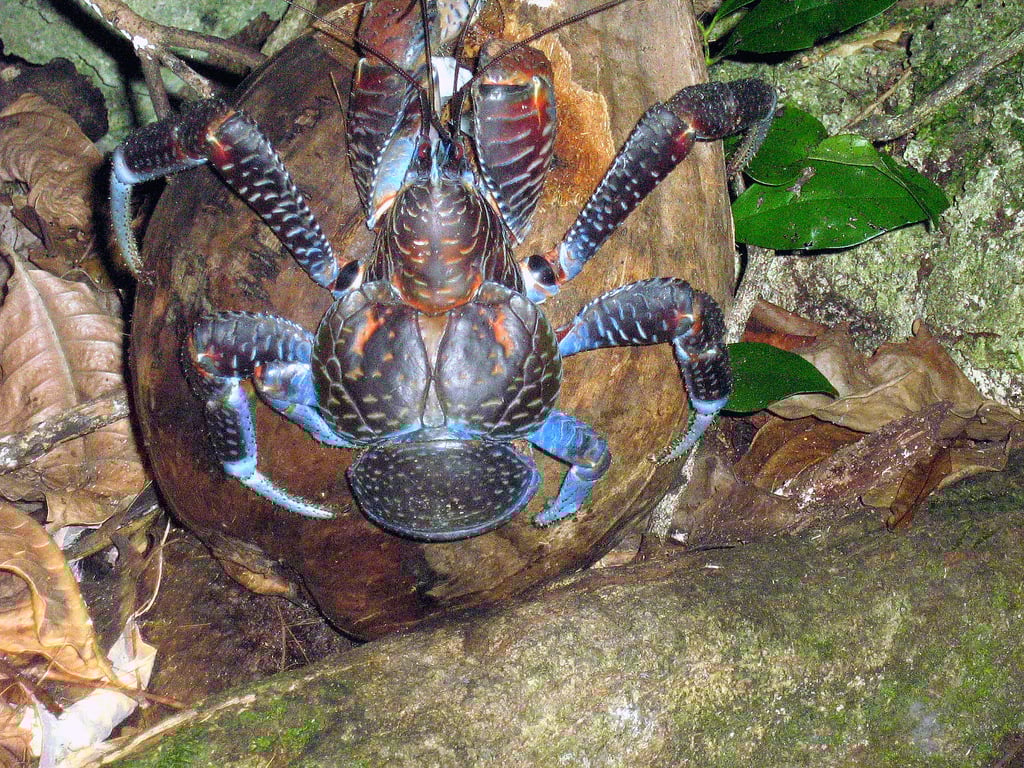 Photo Credit: Arria Belli / Wikimedia Commons
In the warm embrace of tropical islands, the Coconut Crab, or Birgus latro, scuttles across sandy beaches and lush coastal forests, a true giant among its kind. With a body that can grow as large as a small dog, this remarkable crustacean is not just the largest terrestrial arthropod; it is a master of adaptation. Its powerful pincers, capable of cracking open hard coconuts, and its striking blue and orange exoskeleton make it a captivating sight for anyone lucky enough to encounter it. Scientists and nature enthusiasts alike are drawn to the Coconut Crab, intrigued by its unique behaviors and vital role in the ecosystem.
As the sun sets and the sky transforms into a canvas of oranges and purples, the Coconut Crab comes alive, embarking on its nightly adventures. These nocturnal wanderers are not just foragers; they are essential players in their environment, helping to break down organic matter and recycle nutrients. With a life cycle that includes laying up to 250,000 eggs, the Coconut Crab’s journey from hatchling to adult is a fascinating tale of survival and resilience. Join us as we explore the world of Birgus latro, uncovering the secrets of its behavior, diet, and the challenges it faces in a rapidly changing world.
The Coconut Crab, known scientifically as Birgus latro, holds a special place in the animal kingdom due to its impressive size and unique adaptations. As the largest terrestrial arthropod, it can weigh up to 9 pounds and measure over 3 feet from claw to claw. This remarkable crab is not just a land-dweller; it has a fascinating life cycle that includes a larval stage spent in the ocean. Its ability to climb trees and crack open coconuts for food sets it apart from other crabs, showcasing its resourcefulness and adaptability.
| Taxonomic Rank | Scientific Name | Meaning & Significance |
|---|---|---|
| Kingdom | Animalia | This name signifies that Coconut Crabs belong to the broad group of multicellular organisms that are typically motile and consume organic material. |
| Phylum | Arthropoda | Meaning “jointed legs,” this classification highlights the Coconut Crab’s segmented body and jointed appendages, which are characteristic of all arthropods. |
| Class | Malacostraca | This term means “soft-bodied,” referring to the flexible exoskeleton that allows for growth and movement, a key feature of this class of crustaceans. |
| Order | Decapoda | Translating to “ten-footed,” this name reflects the ten limbs that crabs possess, including their powerful claws used for climbing and feeding. |
| Family | Coenobitidae | This family name indicates a group of crabs that are often terrestrial and exhibit unique behaviors, such as living in shells and climbing trees. |
| Genus | Birgus | Named after the Latin word for “thief,” this genus highlights the Coconut Crab’s notorious reputation for stealing food, including coconuts. |
| Species | latro | This species name means “robber” in Latin, further emphasizing its behavior of pilfering food and its clever foraging techniques. |
The classification of the Coconut Crab reveals much about its evolutionary journey. As a member of the arthropods, it shares a common ancestry with insects, spiders, and other crabs, showcasing the incredible diversity within this phylum. Its adaptations for life on land, such as its ability to store water and its strong claws for climbing, illustrate how it has evolved from its marine relatives. Understanding its taxonomic position not only highlights its unique traits but also provides insight into the evolutionary pressures that shaped its development, making it a true marvel of nature.
The evolutionary journey of the Coconut Crab, or Birgus latro, stretches back millions of years, tracing its lineage to ancient crustaceans that first ventured onto land. These remarkable creatures are part of the Coenobitidae family, which includes hermit crabs, and they have adapted over time to thrive in terrestrial environments. This transition from sea to land is a significant chapter in the story of life on Earth, showcasing how species can evolve to conquer new habitats.
The ancestors of Coconut Crabs were likely marine-dwelling crustaceans that began to explore the shoreline. Over time, some of these crabs developed adaptations that allowed them to survive on land. One major evolutionary transition was the development of a more robust exoskeleton, which provided protection against predators and the harsh conditions of terrestrial life. Additionally, they evolved specialized gills that could function in both air and water, allowing them to breathe effectively outside of their aquatic origins. As they continued to adapt, Coconut Crabs also developed powerful claws, enabling them to crack open coconuts, a primary food source that few other animals can access.
The adaptations of the Coconut Crab have been crucial for its survival in a world filled with challenges. By developing strong claws, they can access food that many other animals cannot, while their ability to store water allows them to thrive in arid environments. The evolution of their respiratory system means they can explore land without the constant need for water, and their impressive size acts as a deterrent against potential threats. Together, these traits have enabled the Coconut Crab to flourish in its unique ecological niche, showcasing the wonders of evolution in action.
The Coconut Crab is a striking sight, a true marvel of nature that captures the imagination. With its robust body and long, spindly legs, this giant land-dweller can reach impressive sizes, often measuring up to three feet across. Its exoskeleton, a hard outer shell, glistens in shades of brown and orange, blending seamlessly with the sandy beaches and rocky outcrops it calls home. The most eye-catching feature is its serrated pincers, which are not only formidable but also serve as tools for cracking open coconuts, its favorite snack.
| Feature | Description |
|---|---|
| Size | Can grow up to three feet across |
| Color | Shades of brown and orange |
| Skin Type | Exoskeleton, providing protection and support |
| Most Distinctive Feature | Serrated pincers, ideal for cracking coconuts |
These physical traits work together to ensure the Coconut Crab thrives in its environment. The exoskeleton not only protects it from predators but also helps retain moisture, which is crucial for survival on land. Its impressive pincers are perfectly adapted for its diet, allowing it to access the nutritious flesh of coconuts and other fruits. This combination of size, color, and specialized features makes the Coconut Crab a master of its domain, showcasing the incredible ways animals adapt to their surroundings.
The Coconut Crab thrives in a vibrant world of coastal forests and rocky shores, where the salty air mingles with the scent of tropical vegetation. Picture a sun-drenched beach, fringed with swaying palm trees, their fronds rustling in the gentle breeze. Here, the Coconut Crab scuttles among the underbrush, using its powerful claws to dig into the earth and search for food. This habitat is not just a home; it’s a bustling ecosystem filled with life, where the land meets the sea in a spectacular display of nature’s beauty.
The Coconut Crab prefers warm, humid climates that provide the perfect conditions for its survival. It thrives in areas where temperatures are consistently mild, often ranging from 25 to 30 degrees Celsius (77 to 86 degrees Fahrenheit). These crabs are also found in regions with ample rainfall, which helps maintain the moisture levels they need to keep their gills functioning. While they are primarily land-dwellers, they still require access to the ocean, as they are descendants of marine crabs and need saltwater to reproduce.
Adaptations have allowed the Coconut Crab to flourish in its specific habitats. Its strong legs enable it to climb trees and navigate rocky terrain with ease, while its ability to store water helps it survive in drier conditions. The Coconut Crab has also developed a unique method of breathing, using modified gills that allow it to extract oxygen from the air. This remarkable adaptation means it can venture far from the sea, making it a true master of its coastal domain.
As the sun dips below the horizon, the Coconut Crab begins its nightly adventures. These fascinating creatures are primarily nocturnal, meaning they are most active at night. During the cooler hours, they emerge from their burrows, stretching their long legs and preparing to explore their tropical surroundings. Their nightly activities often include foraging for food, climbing trees, and even cracking open coconuts, which is a favorite treat. With their strong pincers, they can easily break through the hard shell of a coconut, showcasing their impressive strength and dexterity.
While Coconut Crabs are generally solitary, they do have interesting social interactions, especially during mating season. Males and females will come together to mate, but outside of this time, they prefer to keep to themselves. This solitary lifestyle helps them avoid competition for food and territory. However, when they do encounter one another, they communicate through body language, using their pincers and movements to signal their intentions. This subtle form of communication is crucial for maintaining their space and ensuring peaceful coexistence.
| Behavior Type | Description |
|---|---|
| Activity Patterns | Nocturnal foraging, climbing trees, and cracking coconuts. |
| Social Structure | Primarily solitary, with interactions mainly during mating season. |
| Communication Methods | Body language and movements, using pincers to signal intentions. |
The behaviors of the Coconut Crab are finely tuned to ensure their survival in the wild. By being nocturnal, they avoid the heat of the day and reduce the risk of dehydration. Their solitary nature allows them to thrive without competing for resources, while their ability to communicate effectively helps them navigate encounters with others. Together, these behaviors create a successful strategy for living in their tropical habitats, allowing them to flourish as one of nature’s most intriguing land-dwelling arthropods.
The Coconut Crab is an omnivore, which means it enjoys a varied diet that includes both plant and animal matter. This giant land crab has a particular fondness for coconuts, which it skillfully opens using its powerful claws. However, its menu is quite diverse, as it also scavenges for carrion, eats bird eggs, and even hunts small animals like rats. With its keen sense of smell and impressive climbing abilities, the Coconut Crab forages for food both on land and in trees, making it a resourceful and adaptable feeder.
| Dietary Aspect | Details |
|---|---|
| Diet Type | Omnivore |
| Favorite Foods | Coconuts, carrion, bird eggs |
| Prey Items | Rats, turtle eggs |
| Hunting/Foraging Strategies | Climbing trees, using powerful claws to open coconuts, scavenging |
This varied diet plays a crucial role in the Coconut Crab’s ecology and daily routine. By consuming a wide range of foods, it helps maintain the balance of its ecosystem, controlling populations of smaller animals and contributing to nutrient cycling. Its nocturnal foraging habits allow it to avoid daytime predators while taking advantage of the cooler night air. This adaptability not only supports its survival but also enriches the biodiversity of the coastal habitats it calls home.
The Coconut Crab’s mating rituals are as intriguing as the creature itself. During the breeding season, which typically occurs between late spring and early summer, males engage in a captivating courtship dance. They use their large pincers to display strength and attract females. Once a female is ready to mate, she will release pheromones, chemical signals that draw in the males. After successful mating, the female will carry fertilized eggs until they are ready to hatch, showcasing a fascinating blend of care and instinct.
| Reproductive Aspect | Details |
|---|---|
| Gestation Period | About 30 days |
| Litter Size | Up to 100,000 eggs |
| Age of Maturity | About 5 years |
| Name of Young | Zoea |
Once the eggs hatch, the young Coconut Crabs, known as Zoea, enter a planktonic stage, drifting in the ocean currents. This early life phase is crucial for their survival, as they feed on tiny particles in the water. After several weeks, they undergo a transformation, settling on the shore and beginning their journey on land. Parental care is minimal after hatching, but the young crabs are equipped with instincts that guide them as they grow. Over the next few years, they will gradually develop into the impressive adults that roam the beaches and forests, showcasing the wonders of nature’s life cycle.
The Coconut Crab occupies a fascinating position in the food web of its tropical habitat. As a large omnivore, it plays a crucial role in the ecosystem, helping to break down organic matter and recycle nutrients. However, despite its size and strength, the Coconut Crab faces several dangers that threaten its survival.
To defend itself against these threats, the Coconut Crab has developed several clever survival strategies. Its hard exoskeleton provides a tough barrier against predators, while its ability to climb trees helps it escape danger. When threatened, it can also retreat into its burrow, a safe haven from both predators and harsh environmental conditions. By using these tactics, the Coconut Crab continues to thrive in its tropical home, showcasing the resilience of nature.
A keystone species is an organism that has a disproportionately large impact on its environment relative to its abundance. In other words, these species play a critical role in maintaining the structure of an ecosystem. The Coconut Crab, known scientifically as Birgus latro, qualifies as a keystone species due to its significant ecological contributions in its coastal forest habitat.
Coconut Crabs are essential for nutrient cycling in their ecosystems. As omnivores, they consume a wide variety of organic materials, including fallen fruits, decaying plant matter, and even carrion. By breaking down these materials, they help recycle nutrients back into the soil, promoting plant growth. This process is vital for maintaining the health of the coastal forests where they reside. Additionally, their unique ability to crack open coconuts not only provides them with food but also creates openings for other species to access the nutritious contents inside.
Moreover, Coconut Crabs serve as a food source for various predators, including birds and larger mammals. Their presence supports a diverse food web, ensuring that other species can thrive. When they forage for food, they also aerate the soil, which benefits plant roots and enhances water absorption. This activity helps maintain the overall health of their habitat, making it more resilient to environmental changes.
If Coconut Crabs were to disappear from their ecosystems, the consequences could be severe. The breakdown of organic matter would slow down, leading to nutrient depletion in the soil. This could result in reduced plant growth, affecting the entire food web that relies on these plants. Additionally, the loss of a food source for predators could lead to declines in their populations, further destabilizing the ecosystem. In essence, the absence of Coconut Crabs would create a ripple effect, disrupting the delicate balance of life in coastal forests.
The Coconut Crab, or Birgus latro, occupies a vital ecological niche in its tropical habitat. As the largest terrestrial arthropod, it plays a significant role in shaping the environment around it. These crabs are not just scavengers; they are active participants in their ecosystem, influencing the health of coastal forests and rocky shores. By foraging for food and breaking down organic matter, they help maintain the balance of their surroundings, making them essential to the ecosystems they inhabit.
| Ecosystem Service | Impact |
|---|---|
| Decomposing organic matter | Helps recycle nutrients back into the soil |
| Seed dispersal | Assists in the growth of new plants by moving seeds |
| Food source for predators | Provides sustenance for birds and other wildlife |
| Habitat modification | Creates burrows that can benefit other species |
The Coconut Crab’s influence is evident in various ways. By feeding on fallen fruits, nuts, and even carrion, these crabs help decompose organic material, returning vital nutrients to the soil. This process is crucial for plant growth, as healthy soil supports a diverse range of vegetation. Additionally, as they move through their environment, Coconut Crabs inadvertently disperse seeds, promoting the growth of new plants. Their burrowing activities can also create habitats for smaller creatures, enhancing biodiversity in their coastal forest homes.
The broader ecological importance of the Coconut Crab cannot be overstated. As a keystone species, its presence helps maintain the structure and function of its ecosystem. Without these remarkable crabs, the balance of life in coastal forests could be disrupted, leading to a decline in plant diversity and the animals that depend on those plants. By understanding the role of the Coconut Crab, we gain insight into the intricate web of life that sustains our planet’s ecosystems.
In the intricate web of life, symbiosis refers to the close interactions between different species, which can take on various forms. These relationships can be mutualistic, where both species benefit, parasitic, where one benefits at the expense of the other, or commensal, where one benefits while the other is neither helped nor harmed. The Coconut Crab, known scientifically as Birgus latro, engages in several fascinating partnerships with other species, showcasing the diverse ways life can intertwine in nature.
| Species/Type | Relationship Type | Description |
|---|---|---|
| Hermit Crabs | Commensal | Coconut Crabs sometimes share their habitat with hermit crabs, which use empty shells for protection. The hermit crabs benefit from the shelter, while the Coconut Crabs are largely unaffected. |
| Birds (e.g., Frigatebirds) | Mutualistic | Frigatebirds often follow Coconut Crabs to feed on insects and other small creatures disturbed by the crabs’ movements. The birds benefit from easy meals, while the crabs may benefit from reduced pest populations. |
| Plants (Coconut Trees) | Mutualistic | Coconut Crabs help disperse coconut seeds by eating the fruit and moving away from the parent tree. This aids in plant reproduction, while the crabs gain a nutritious food source. |
The evolution of these relationships highlights the interconnectedness of ecosystems. Over time, species like the Coconut Crab have adapted to their environments and the organisms around them, forming partnerships that enhance survival and reproduction. These interactions not only benefit the Coconut Crab but also contribute to the health of their habitats, demonstrating the importance of cooperation in the natural world. By understanding these relationships, we gain insight into the delicate balance of life on our planet.
The Coconut Crab is a captivating creature that holds many surprises for those who take the time to learn about it. From its impressive size to its unique behaviors, this giant land crab is full of intriguing facts that can spark curiosity in nature enthusiasts of all ages.
The Coconut Crab, known scientifically as Birgus latro, has a long and storied relationship with humanity that dates back centuries. Indigenous cultures across the Pacific Islands have revered this giant land crab, often incorporating it into their folklore and traditions. In some regions, it is considered a delicacy, celebrated for its rich flavor and unique texture. Historical encounters between humans and Coconut Crabs have often highlighted their impressive size and strength, leading to tales of bravery and adventure. These crabs have not only been a source of food but also a symbol of resilience and resourcefulness in coastal communities.
Today, the interactions between Coconut Crabs and humans are more complex. As conservation efforts grow, many people are becoming aware of the need to protect these remarkable creatures and their habitats. Unfortunately, conflicts can arise when Coconut Crabs invade gardens or raid crops, leading to tensions between locals and these giant arthropods. Some communities have even explored the idea of domestication, raising Coconut Crabs for food while ensuring their populations remain sustainable. This delicate balance between conservation and human needs is crucial for the future of both the Coconut Crab and the people who share its environment.
Looking ahead, the future of the Coconut Crab and its relationship with humanity hinges on mutual respect and understanding. As awareness of environmental issues grows, there is hope that people will find ways to coexist with these fascinating creatures. By embracing sustainable practices and valuing the Coconut Crab’s role in the ecosystem, we can ensure that future generations will continue to marvel at this extraordinary species. Together, we can create a world where both humans and Coconut Crabs thrive in harmony.
The Coconut Crab, or Birgus latro, is currently classified as Vulnerable according to the International Union for Conservation of Nature (IUCN). This status indicates that the species faces a high risk of extinction in the wild. While exact population estimates are challenging to determine due to their remote habitats, it is believed that their numbers are declining. Factors such as habitat loss and overharvesting contribute to this worrying trend, making conservation efforts increasingly important.
| Conservation Factor | Status/Details |
|---|---|
| IUCN Status | Vulnerable |
| Population Estimates | Unknown, but declining |
| Trend Direction | Decreasing |
The main threats to the Coconut Crab stem from human activities and environmental changes. Habitat destruction, primarily due to coastal development and deforestation, reduces the natural spaces where these crabs thrive. Additionally, overharvesting for food poses a significant risk, as many cultures prize Coconut Crabs as a delicacy. Climate change also plays a role, as rising sea levels and changing weather patterns can disrupt their habitats and food sources.
Conservation efforts are underway to protect the Coconut Crab and its habitats. Various organizations are working to raise awareness about the importance of this species and its role in the ecosystem. Some regions have implemented protective measures, such as establishing marine protected areas and regulating harvesting practices. The outlook for the Coconut Crab can improve with continued conservation initiatives and community involvement, ensuring that future generations can marvel at this extraordinary land-dweller.
| Question | Answer |
|---|---|
| Where do Coconut Crabs live? | Coconut Crabs are found in coastal forests and rocky soils on islands across the Indian and Pacific Oceans. They prefer warm, tropical climates and often make their homes in burrows or under rocks. |
| What do Coconut Crabs eat? | Coconut Crabs are omnivores, meaning they eat both plants and animals. Their diet includes fruits, nuts, seeds, and even carrion, which is the remains of dead animals. |
| How do Coconut Crabs behave? | Coconut Crabs are mostly nocturnal, which means they are active at night. During the day, they often hide in their burrows to avoid the heat and predators. |
| How do Coconut Crabs reproduce? | Coconut Crabs have a unique reproductive process. Females release their eggs into the ocean, where they hatch into larvae. These larvae float in the water for several weeks before settling on land and growing into adult crabs. |
| What threats do Coconut Crabs face? | Coconut Crabs are considered vulnerable due to habitat loss and overharvesting. They are often hunted for their meat, which can lead to declining populations in some areas. |
| What is a distinctive feature of Coconut Crabs? | One of the most distinctive features of Coconut Crabs is their large, serrated pincers. These powerful claws allow them to crack open coconuts, which is a favorite food. |
| Can Coconut Crabs climb trees? | Yes, Coconut Crabs are excellent climbers! They can scale trees to reach coconuts and other fruits, using their strong legs and pincers to grip the bark. |