Taxonomy & Classification
- Kingdom
- Animalia
- Phylum
- Chordata
- Class
- Amphibia
- Order
- Anura
- Family
- Bufonidae
- Genus
- Bufo
- Species
- Bufo Bufo

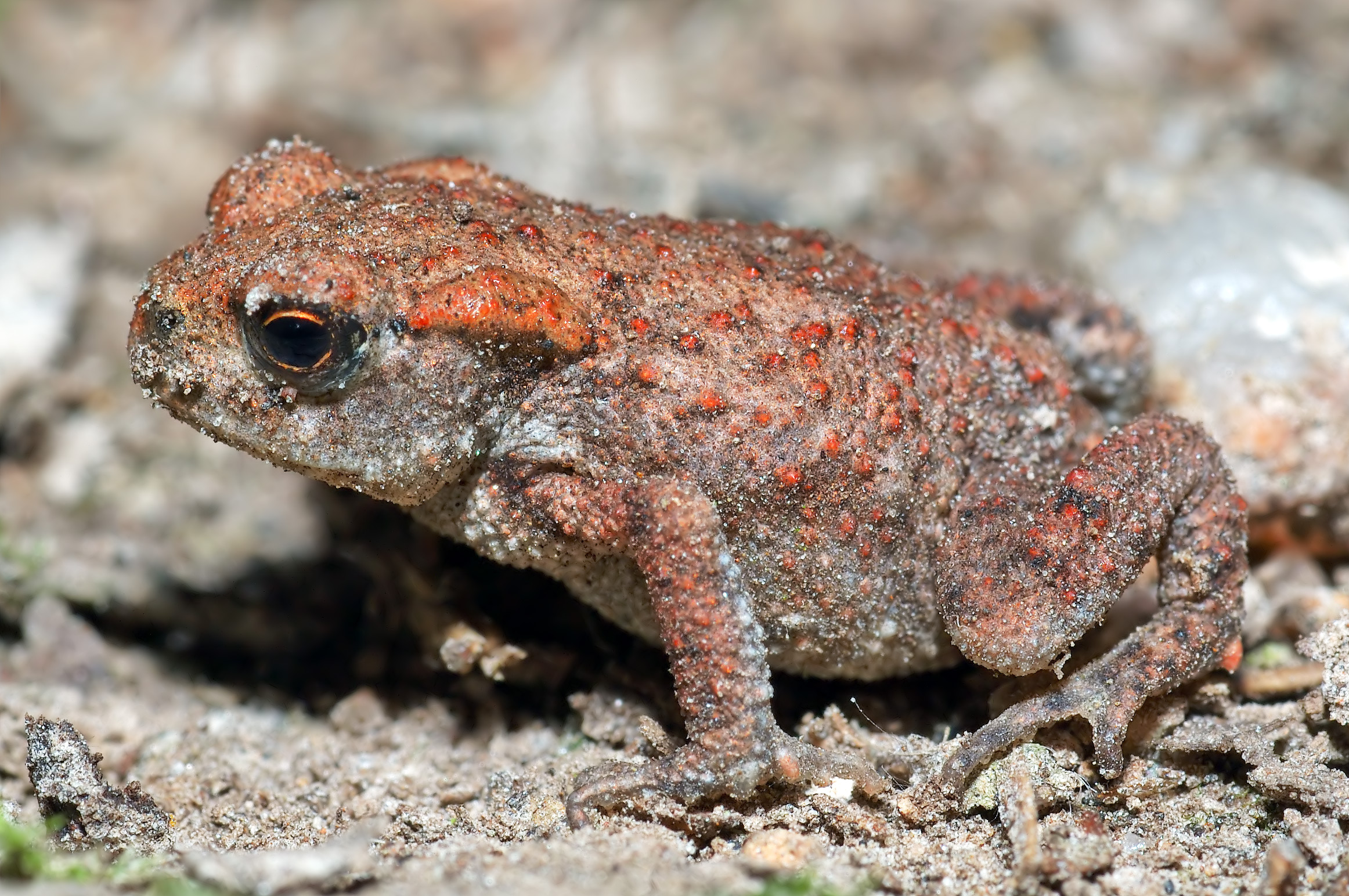 Photo Credit: André Karwath aka Aka / Wikimedia
In the heart of a lush, green forest, the Common Toad, or Bufo bufo, makes its home among the damp leaves and cool shadows. With its stout body and warty skin, this amphibian is a master of camouflage, blending seamlessly into its surroundings. As dusk settles, the toad emerges from its hiding spot, ready to explore the world around it. Its large, bulging eyes glisten in the fading light, revealing a creature that is both curious and cautious. This fascinating animal captivates scientists and nature lovers alike, not just for its unique appearance but also for its vital role in the ecosystem.
The Common Toad is more than just a plump amphibian; it is a key player in the balance of its environment. As a carnivore, it feasts on a variety of small invertebrates, helping to control their populations. This makes the toad an important part of the food web, where it serves as both predator and prey. Its enchanting mating calls in springtime add to its allure, as males croak to attract females, creating a symphony of sounds that fills the night air. With a history that stretches back millions of years, the Common Toad is a living link to the ancient past, reminding us of the wonders of evolution and the intricate connections that bind all life together.
The Common Toad, known scientifically as Bufo bufo, occupies a significant position in the tree of life. It belongs to the kingdom Animalia, which includes all animals, and is classified under the phylum Chordata, meaning it has a backbone. This amphibian is part of the class Amphibia, which encompasses creatures that live both in water and on land. What sets the Common Toad apart is its ability to adapt to various environments, from gardens to forests, showcasing its resilience and versatility. With its warty skin and distinctive croaking calls, this toad is not just another amphibian; it plays a vital role in its ecosystem, helping control insect populations and serving as a food source for various predators.
| Taxonomic Rank | Scientific Name | Meaning & Significance |
|---|---|---|
| Kingdom | Animalia | This name comes from the Latin word “animalis,” meaning “having breath” or “living.” It signifies all living organisms that breathe and move. |
| Phylum | Chordata | Derived from the Greek word “chordē,” meaning “string,” this name refers to animals with a notochord, a flexible rod that supports the body during development. |
| Class | Amphibia | This term comes from the Greek “amphibios,” meaning “both lives,” highlighting the amphibian’s dual life in water and on land. |
| Order | Anura | From the Greek “anouron,” meaning “without a tail,” this name reflects the adult form of frogs and toads, which lose their tails during metamorphosis. |
| Family | Bufonidae | This family name comes from the Latin “bufō,” meaning “toad,” emphasizing the characteristics shared by these warty-skinned amphibians. |
| Genus | Bufo | Also derived from the Latin word for “toad,” this genus includes various species known for their robust bodies and dry, bumpy skin. |
| Species | Bufo bufo | The repetition of “bufo” in the species name emphasizes its identity as a true toad, distinguishing it from other amphibians. |
Understanding the Common Toad’s classification reveals much about its evolutionary journey. As an amphibian, it shares a common ancestor with both frogs and salamanders, showcasing the diverse adaptations that have allowed these animals to thrive in various habitats. The warty skin of the Common Toad, for instance, is not just a quirky feature; it serves as a protective barrier against predators and environmental challenges. This classification not only highlights its biological relationships but also underscores the intricate web of life that connects all living beings, reminding us of the shared history that binds us to the natural world.
The evolutionary journey of the Common Toad, or Bufo bufo, stretches back millions of years, tracing its roots to the early amphibians that first emerged during the Devonian period, around 400 million years ago. These ancient ancestors were among the first vertebrates to venture onto land, marking a significant transition from aquatic to terrestrial life. Over time, amphibians diversified, leading to the rich variety of species we see today, including the adaptable and resilient Common Toad.
The Common Toad’s lineage showcases several key evolutionary transitions. Early amphibians developed limbs that allowed them to navigate land, a crucial adaptation for survival outside of water. As they evolved, they also developed more complex skin, which helps in moisture retention, allowing them to thrive in various environments. The Common Toad’s ancestors gradually adapted to a more terrestrial lifestyle, leading to the development of a robust body and warty skin, which serves as a defense mechanism against predators. These adaptations have enabled the Common Toad to inhabit a wide range of habitats, from forests to gardens.
The adaptations of the Common Toad have played a vital role in its survival across diverse environments. Its warty skin and toxic secretions provide a formidable defense against predators, while strong hind legs enable quick escapes. The ability to retain moisture allows it to thrive in less humid conditions, and burrowing behavior offers protection from harsh weather. Together, these traits have helped the Common Toad not only survive but flourish in a variety of habitats, showcasing the incredible resilience of life on Earth.
The Common Toad is a captivating amphibian that often catches the eye with its stout body and warty skin. These toads have a robust, rounded shape that gives them a somewhat plump appearance. Their limbs are short but strong, allowing them to navigate both land and water with ease. When you spot one, you might notice its wide, flat head and bulging eyes, which lend it a curious and somewhat comical expression. The overall impression is one of resilience and adaptability, perfectly suited for life in a variety of habitats.
| Feature | Description |
|---|---|
| Weight | 20g – 80g (0.7oz – 2.8oz) |
| Skin Type | Permeable, allowing for moisture absorption |
The Common Toad’s physical features are not just for show; they play vital roles in its survival. The warty skin, which is permeable, helps the toad absorb moisture from its environment, crucial for its health, especially in dry conditions. This skin also serves as a protective barrier, deterring predators with its rough texture. The toad’s compact body and strong limbs enable it to burrow into the ground or hide under leaves, providing safety from threats. Together, these characteristics create a well-adapted amphibian that thrives in diverse ecosystems, from gardens to woodlands.
The Common Toad, or Bufo bufo, thrives in a variety of habitats that paint a picture of lush greenery and vibrant ecosystems. Imagine wandering through a serene forest, where dappled sunlight filters through the leaves, creating a mosaic of light and shadow on the forest floor. Here, among the underbrush and beside tranquil ponds, the Common Toad finds its perfect home. It enjoys the cool, moist environments of woodlands and marshes, where it can hide from predators and hunt for tasty insects.
The Common Toad prefers climates that are temperate, meaning they experience distinct seasons, including warm summers and cool winters. These amphibians thrive in areas with plenty of moisture, as they need damp environments to keep their skin hydrated. Their habitats often feature a mix of open spaces and dense vegetation, providing both sun and shade. This balance helps them regulate their body temperature and find shelter from the elements.
Adaptation is key to the Common Toad’s survival in these diverse habitats. Their warty skin not only provides camouflage against predators but also helps retain moisture, which is crucial for their health. During dry spells, they can burrow into the ground to escape the heat and conserve water. Additionally, their ability to thrive in both terrestrial and aquatic environments allows them to take advantage of various food sources, from insects to small invertebrates, making them versatile residents of their woodland and marshy homes.
The daily life of a Common Toad is a blend of quiet solitude and purposeful activity. As dusk falls, these amphibians emerge from their hiding spots, often nestled under leaves or in burrows. Their evenings are filled with foraging for food, which primarily consists of insects, worms, and other small invertebrates. With their keen sense of smell and excellent night vision, they navigate their surroundings with ease. During the warmer months, they may be seen near ponds or streams, where they can find both food and mates. As night gives way to dawn, the toads retreat to their shelters, resting until the next evening.
While Common Toads are generally solitary creatures, they do exhibit interesting social behaviors during the breeding season. Males often gather around water bodies, calling out to attract females with their distinctive croaks. This vocalization is not just a way to communicate; it also establishes territory among competing males. When a female approaches, the male may grasp her in a behavior called amplexus, which is a way to ensure that he fertilizes her eggs as she lays them. Outside of breeding, these toads prefer to keep to themselves, avoiding unnecessary confrontations with others.
| Behavior Type | Description |
|---|---|
| Foraging | Common Toads search for food at night, using their keen sense of smell to locate insects and worms. |
| Breeding Calls | Males croak to attract females and establish territory, creating a lively chorus near breeding sites. |
| Amplexus | During mating, males grasp females to ensure fertilization of eggs, showcasing a unique reproductive behavior. |
| Solitary Behavior | Outside of breeding, Common Toads prefer to live alone, minimizing competition and stress. |
The behaviors of the Common Toad are finely tuned to ensure their survival in the wild. By foraging at night, they avoid many daytime predators while efficiently hunting for food. Their vocalizations during the breeding season not only help them find mates but also establish their presence in a competitive environment. This combination of solitary living and strategic social interactions allows the Common Toad to thrive in diverse habitats, ensuring that they continue to play their vital role in the ecosystem.
The Common Toad, or Bufo bufo, is a dedicated carnivore, meaning it primarily eats meat. Its diet mainly consists of a variety of small invertebrates, which it skillfully hunts down. As night falls, these toads become active, using their keen senses to locate food. They have a fascinating feeding behavior, often waiting patiently for unsuspecting prey to come close before striking with their long, sticky tongues. This method allows them to capture insects, worms, and even spiders with impressive accuracy.
| Dietary Aspect | Details |
|---|---|
| Diet Type | Carnivore |
| Favorite Foods | Insects, worms, spiders |
| Prey Items | Various small invertebrates |
| Hunting/Foraging Strategies | Ambush with sticky tongues, nocturnal activity |
The diet of the Common Toad plays a crucial role in its ecology and daily routine. By consuming a wide range of invertebrates, these toads help control insect populations, contributing to the balance of their ecosystems. Their nocturnal foraging habits also mean they are active when many predators are less likely to be around, allowing them to thrive in their habitats. This clever adaptation not only supports their survival but also highlights their importance in the web of life.
As spring arrives, the Common Toad begins its enchanting mating ritual. During this time, males call out with a series of deep croaks to attract females. This vocal performance is not just for show; it helps establish territory and signals readiness to mate. The breeding season typically occurs from March to June, depending on the climate. Once a female chooses a mate, she lays her eggs in water, often in ponds or shallow streams, creating a mesmerizing spectacle of life.
| Reproductive Aspect | Details |
|---|---|
| Gestation Period | About 2 to 3 weeks |
| Litter Size | Up to 4,000 eggs |
| Age of Maturity | 2 to 3 years |
| Name of Young | Tadpoles |
After the eggs hatch, the young toads, known as tadpoles, begin their journey in the water. These tadpoles are equipped with gills, allowing them to breathe underwater as they grow. Over the next few weeks, they undergo a fascinating transformation called metamorphosis. During this process, they develop legs, lose their tails, and gradually transition to breathing air. While the Common Toad does not provide direct parental care, the sheer number of eggs laid increases the chances of survival. Eventually, the young toads emerge from the water, ready to explore their terrestrial world and continue the cycle of life.
The Common Toad, or Bufo bufo, plays an important role in its ecosystem, sitting comfortably in the middle of the food web. This means it is both a predator and prey, helping to maintain balance in its environment. By consuming insects and other small invertebrates, it helps control their populations. At the same time, it becomes a meal for various predators, making it a vital link in the chain of life.
To defend itself against these threats, the Common Toad has developed several clever survival strategies. One of its most effective defenses is its warty skin, which contains toxic secretions that can deter predators. When threatened, the toad may puff itself up to appear larger and more intimidating. Additionally, it often relies on camouflage, blending into its surroundings to avoid detection. By using these tactics, the Common Toad can navigate the dangers of its world and continue to thrive in diverse habitats.
A keystone species is a vital part of its ecosystem, meaning its presence has a significant impact on the environment and other living things. The Common Toad, or Bufo bufo, qualifies as a keystone species due to its role in controlling insect populations and serving as both predator and prey in its habitat. By maintaining balance in the ecosystem, the Common Toad helps ensure that various species can thrive.
The Common Toad plays a crucial role in controlling insect populations, which can otherwise explode and lead to imbalances in the ecosystem. As a carnivore, it primarily feeds on small invertebrates, such as insects and worms. By consuming these creatures, the toad helps keep their numbers in check, preventing overpopulation that could harm plants and other animals. For example, a single toad can eat thousands of insects in a season, making it a natural pest controller.
Additionally, the Common Toad serves as an important food source for various predators, including birds, snakes, and mammals. This means that the toad is not just a hunter but also a vital link in the food web. Its presence supports a diverse range of wildlife, ensuring that these predators have enough to eat. Without the Common Toad, many of these animals would struggle to find food, which could lead to declines in their populations.
The Common Toad also contributes to soil health. As it burrows and moves through the ground, it helps aerate the soil, allowing water and nutrients to reach plant roots more effectively. This process supports plant growth, which in turn provides habitat and food for countless other species.
If the Common Toad were to disappear, the effects would ripple through the ecosystem. Insect populations could surge, leading to potential crop damage and affecting other animals that rely on plants for food. Predators that depend on the toad for sustenance would face food shortages, possibly leading to their decline. The balance of the ecosystem would be disrupted, highlighting just how important this seemingly simple amphibian is to the health of its environment.
The Common Toad, scientifically known as Bufo bufo, plays a crucial role in shaping its ecosystem. As a keystone species, it influences the balance of its environment in various ways. Found in forests, woodlands, and marshes, this amphibian thrives in habitats rich with moisture and vegetation. Its presence helps maintain the health of these ecosystems, making it an essential player in the intricate web of life.
| Ecosystem Service | Impact |
|---|---|
| Pest Control | By consuming a variety of small invertebrates, the Common Toad helps regulate insect populations, preventing outbreaks that could harm plants and other animals. |
| Soil Aeration | As toads burrow and move through the soil, they help aerate it, which improves water infiltration and nutrient distribution for plants. |
| Food Source | The Common Toad serves as a vital food source for various predators, including birds and mammals, thus supporting the food web. |
| Indicator Species | As sensitive creatures, their health reflects the overall condition of the environment, signaling changes in ecosystem health. |
The influence of the Common Toad extends beyond its immediate actions. For instance, by preying on insects, it helps control populations of pests that could otherwise damage crops and native plants. This natural pest control is especially important in agricultural areas, where farmers rely on healthy ecosystems to support their crops. Additionally, as these toads move through their habitats, they contribute to soil health by aerating it, which allows water and nutrients to reach plant roots more effectively.
The broader ecological importance of the Common Toad cannot be overstated. By maintaining the balance of insect populations and serving as a food source for other animals, it supports a diverse range of life. Furthermore, as an indicator species, the health of the Common Toad can signal changes in environmental conditions, alerting scientists and conservationists to potential issues. In this way, the Common Toad is not just a resident of its ecosystem; it is a vital component that helps sustain the intricate relationships among all living things.
In the intricate web of life, symbiosis refers to the close interactions between different species, which can take on various forms. These relationships can be mutualistic, where both species benefit, parasitic, where one benefits at the expense of the other, or commensal, where one benefits while the other is neither helped nor harmed. The Common Toad, or Bufo bufo, engages in several fascinating partnerships with other organisms, showcasing the diverse ways life on Earth is interconnected.
| Species/Type | Relationship Type | Description |
|---|---|---|
| Fungi (Mycorrhizal fungi) | Mutualistic | The Common Toad benefits from the nutrients that fungi help extract from the soil, while the fungi receive organic compounds from the toad. |
| Birds (e.g., Magpies) | Commensal | Birds may follow toads to catch insects that are disturbed as the toads move through their habitat, benefiting from the toad’s activity without affecting it. |
| Parasites (e.g., nematodes) | Parasitic | Some nematodes live in the toad’s body, feeding on its tissues and nutrients, which can harm the toad’s health. |
These relationships have evolved over time, shaped by the needs and adaptations of each species involved. The mutualistic bond with fungi highlights how the Common Toad thrives in nutrient-rich environments, while the commensal relationship with birds illustrates the interconnectedness of species in their quest for food. On the other hand, parasitic interactions remind us that not all relationships are beneficial. Understanding these dynamics helps us appreciate the delicate balance of ecosystems and the roles that each species plays in maintaining that balance.
The Common Toad, or Bufo bufo, is a fascinating amphibian that often surprises those who take the time to learn about it. With its unique adaptations and behaviors, this toad is more than just a plump little creature hopping around your garden.
Throughout history, the Common Toad, or Bufo bufo, has held a special place in human culture and folklore. Ancient civilizations often viewed these amphibians as symbols of transformation and fertility. In many cultures, toads were associated with magic and mystery, appearing in stories as wise creatures or even as magical beings that could grant wishes. This cultural significance has woven the Common Toad into the fabric of human storytelling, making it a familiar figure in fairy tales and legends.
In modern times, our relationship with the Common Toad has evolved, reflecting both cooperation and conflict. As urban areas expand, these toads face habitat loss, which threatens their populations. However, conservation efforts are underway to protect their natural environments. Many communities are working to create toad-friendly spaces, such as ponds and wetlands, to support their breeding and survival. On the flip side, some people view toads as pests, especially when they invade gardens or yards. This can lead to conflicts, but education about their ecological benefits—like controlling insect populations—can help bridge the gap between humans and these amphibians.
As we look to the future, the relationship between humans and the Common Toad is poised for change. With increasing awareness of environmental issues, more people are recognizing the importance of protecting these amphibians and their habitats. By fostering a sense of stewardship and understanding, we can ensure that the Common Toad continues to thrive alongside us. Together, we can create a world where both humans and toads coexist harmoniously, celebrating the wonders of nature and the stories that connect us.
The Common Toad, known scientifically as Bufo bufo, currently holds a conservation status of “Least Concern” according to the International Union for Conservation of Nature (IUCN). This means that, overall, the species is not facing immediate threats of extinction. However, population trends can vary by region, with some areas experiencing declines due to environmental changes. While the global population remains stable, local populations may fluctuate based on habitat conditions and human activities.
| Conservation Factor | Status/Details |
|---|---|
| IUCN Status | Least Concern |
| Population Estimates | Stable globally, but variable locally |
| Trend Direction | Generally stable, with some local declines |
Despite its overall stable status, the Common Toad faces several significant threats. Habitat loss is one of the primary concerns, as urban development, agriculture, and pollution can destroy the wetlands and forests where these toads thrive. Additionally, climate change poses a risk by altering their breeding cycles and habitats. Road mortality is another danger, as many toads are killed while crossing roads during their migration to breeding sites. These factors can lead to localized declines, even if the species as a whole remains secure.
Conservation efforts are underway to protect the Common Toad and its habitats. Many organizations are working to restore wetlands and create safe passageways for toads crossing roads. Public awareness campaigns also help educate communities about the importance of toads in ecosystems. With continued efforts and a focus on habitat preservation, the outlook for the Common Toad remains hopeful, ensuring that this charming amphibian continues to thrive in the wild.
| Question | Answer |
|---|---|
| What is the habitat of the Common Toad? | The Common Toad is often found in forests, woodlands, and marshes. These environments provide the moist conditions they need to thrive and breed. |
| What does the Common Toad eat? | As a carnivore, the Common Toad primarily feeds on insects, worms, and other small invertebrates. They are skilled hunters, using their sticky tongues to catch prey quickly. |
| How does the Common Toad behave? | Common Toads are mostly nocturnal, meaning they are active at night. During the day, they often hide under leaves or in burrows to stay cool and avoid predators. |
| How do Common Toads reproduce? | During the breeding season, which usually occurs in spring, male Common Toads call to attract females. After mating, females lay their eggs in water, where they hatch into tadpoles. |
| What are the main threats to Common Toads? | Common Toads face threats from habitat loss due to urban development and pollution. Additionally, they are vulnerable to road traffic when migrating to breeding sites. |
| What are some interesting characteristics of the Common Toad? | Common Toads have warty skin, which helps them retain moisture and provides some protection from predators. They can also secrete toxins from their skin, making them unappetizing to many animals. |
| Are Common Toads endangered? | Currently, the Common Toad is classified as "Least Concern" on the conservation status scale. This means they are not facing immediate threats to their survival, although local populations can be affected by environmental changes. |