Taxonomy & Classification
- Kingdom
- Animalia
- Phylum
- Chordata
- Class
- Mammalia
- Order
- Carnivora
- Family
- Pinnipedia
- Genus
- Lobodon
- Species
- Lobodon carcinophaga

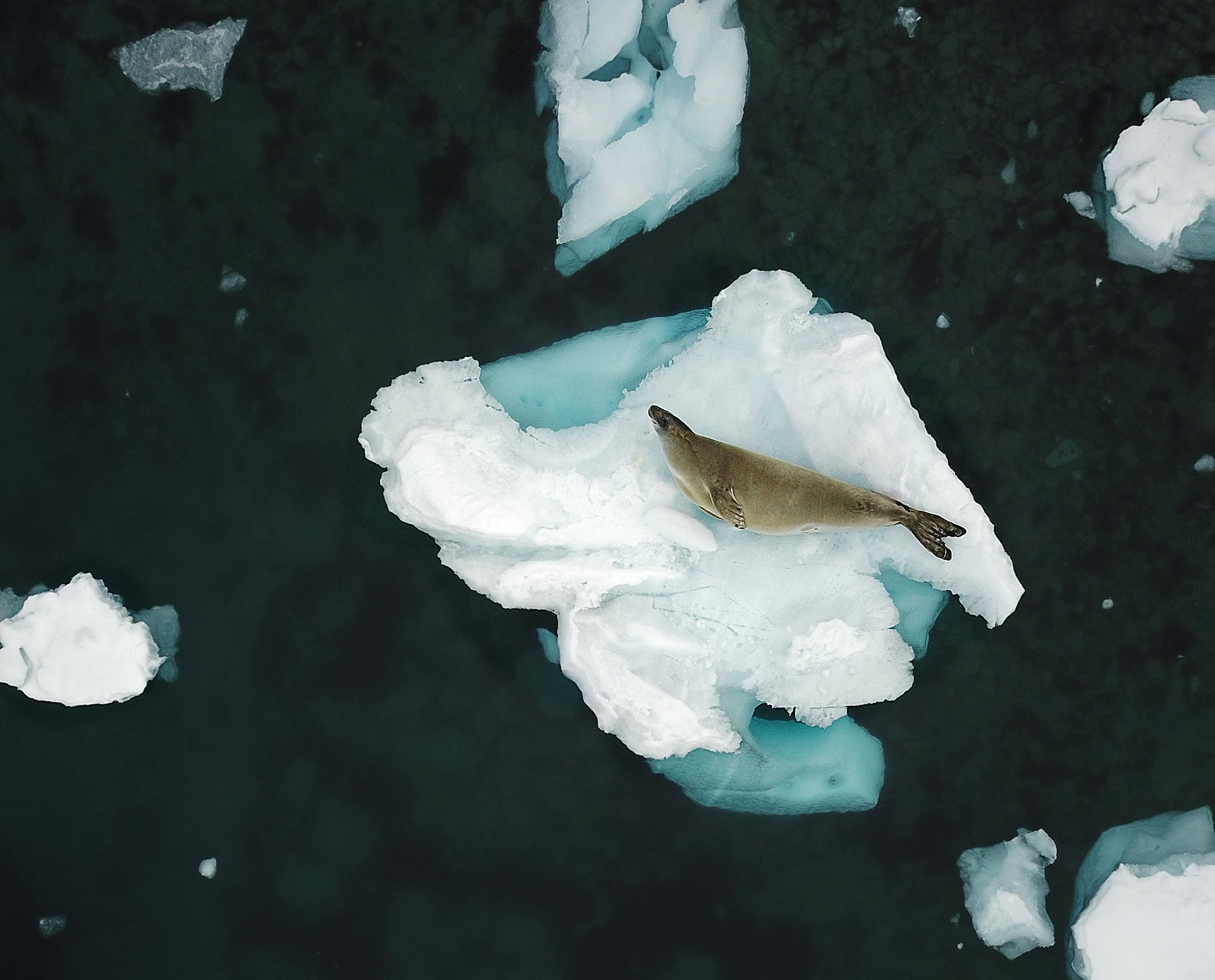 Photo Credit: Taras Kazantsev / Wikimedia
In the icy embrace of the Southern Ocean, the Crabeater Seal, or Lobodon carcinophaga, glides gracefully through the frigid waters, a master of its frozen domain. With a sleek, streamlined body that can stretch up to eight feet long, this remarkable marine mammal is perfectly adapted to life in one of the planet’s most extreme environments. Its unique, serrated teeth are not just for show; they are specialized tools designed to filter out krill, tiny shrimp-like creatures that swarm in the chilly depths. This fascinating feeding technique makes the Crabeater Seal a vital player in the Antarctic ecosystem, where it helps maintain the balance of life beneath the ice.
Imagine a scene where massive icebergs drift lazily, their surfaces glistening under the sun’s rays, while the Crabeater Seal basks on a floating ice floe, soaking in the warmth. As it lounges, the seal’s mottled coat blends seamlessly with the icy backdrop, providing a clever camouflage against predators. Scientists and nature enthusiasts alike are captivated by this animal, not only for its striking appearance but also for its role as a keystone species in the Antarctic food web. By consuming vast amounts of krill, the Crabeater Seal supports the entire marine ecosystem, making it a key player in the survival of many other species. Join us as we dive deeper into the life of this extraordinary seal, exploring its behaviors, habitat, and the challenges it faces in a rapidly changing world.
The Crabeater Seal, known scientifically as Lobodon carcinophaga, holds a special place in the animal kingdom. It belongs to the family Pinnipedia, which includes all seals, sea lions, and walruses. What sets the Crabeater Seal apart is its unique diet; despite its name, it primarily feeds on krill, tiny shrimp-like creatures that swarm in the icy waters of the Antarctic. This adaptation allows it to thrive in one of the most extreme environments on Earth, showcasing the incredible diversity of life and survival strategies within the animal kingdom.
| Taxonomic Rank | Scientific Name | Meaning & Significance |
|---|---|---|
| Kingdom | Animalia | This name signifies that the Crabeater Seal is part of the vast group of multicellular organisms that are primarily heterotrophic, meaning they consume other organisms for energy. |
| Phylum | Chordata | Chordata refers to animals that have a notochord, a flexible rod that supports the body. This group includes all vertebrates, highlighting the Crabeater Seal’s evolutionary lineage. |
| Class | Mammalia | Mammalia indicates that this seal is a mammal, characterized by features like fur and the ability to nurse its young with milk, connecting it to other warm-blooded animals. |
| Order | Carnivora | Carnivora means “meat-eater,” but in the case of the Crabeater Seal, it reflects its ancestry rather than its diet, as it primarily consumes krill. |
| Family | Pinnipedia | Pinnipedia translates to “fin-footed,” which describes the seal’s flipper-like limbs that are perfectly adapted for swimming in cold waters. |
| Genus | Lobodon | Lobodon comes from Greek, meaning “lobed tooth,” referring to the unique shape of its teeth that are adapted for filtering krill from the water. |
Understanding the Crabeater Seal’s classification reveals much about its evolutionary history. As a member of the Pinnipedia family, it shares common ancestors with other marine mammals, showcasing how life has adapted to oceanic environments over millions of years. Its specialized feeding habits and physical adaptations, like its lobed teeth, illustrate the intricate connections between species and their habitats. This classification not only highlights the Crabeater Seal’s unique role in the Antarctic ecosystem but also emphasizes the broader story of evolution and survival in the animal kingdom.
The evolutionary journey of the Crabeater Seal, or Lobodon carcinophaga, stretches back millions of years, tracing its lineage through the icy waters of the Southern Ocean. This fascinating marine mammal is part of the Pinnipedia family, which includes seals, sea lions, and walruses. The Crabeater Seal’s ancestors began to diverge from land-dwelling mammals around 50 million years ago, adapting to life in the frigid seas of Antarctica. Over time, these ancestors evolved into specialized hunters, perfectly suited for their cold, aquatic environment.
The Crabeater Seal’s evolutionary story is marked by significant transitions that allowed it to thrive in its unique habitat. Early pinnipeds were more generalized feeders, but as they adapted to the Antarctic ecosystem, the Crabeater Seal developed a specialized diet primarily consisting of krill, tiny shrimp-like creatures that swarm in the Southern Ocean. This shift in diet was crucial, as it allowed the Crabeater Seal to exploit a food source that many other predators could not. Additionally, their body shape became streamlined, enhancing their swimming efficiency, while their blubber layer thickened, providing insulation against the icy waters.
These adaptations have been vital for the Crabeater Seal’s survival in one of the harshest environments on Earth. By evolving specialized feeding mechanisms and physical traits, it has carved out a niche that allows it to thrive where few others can. The ability to efficiently hunt krill, combined with its streamlined body and insulating blubber, ensures that the Crabeater Seal remains a successful inhabitant of the icy Southern Ocean, showcasing the wonders of evolution in action.
The Crabeater Seal is a striking figure in the icy waters of the Antarctic. With a streamlined body that can reach lengths of up to 8 feet, this marine mammal is built for agility and grace. Its sleek form is complemented by a thick layer of blubber, which not only provides insulation against the frigid temperatures but also contributes to its impressive weight, sometimes tipping the scales at 600 pounds. The seal’s skin is covered in short, coarse hair that appears a light brown or gray, often mottled with darker spots, helping it blend into the rocky, icy environment.
| Feature | Description |
|---|---|
| Height | 1-2 feet at the shoulder |
| Weight | Up to 600 pounds |
| Skin Type | Short, coarse hair |
| Most Distinctive Feature | Irregular, jagged teeth |
These physical characteristics are not just for show; they play vital roles in the Crabeater Seal’s survival. The irregular, jagged teeth are specially adapted for its diet, allowing it to efficiently filter out krill, its primary food source, from the water. This unique feeding mechanism is essential in the nutrient-rich Southern Ocean, where krill are abundant. The seal’s thick blubber and fur keep it warm in icy waters, while its streamlined body allows for swift movement, making it an adept hunter. Together, these features create a perfect blend of form and function, enabling the Crabeater Seal to thrive in one of the planet’s most challenging environments.
The Crabeater Seal thrives in the breathtaking expanse of the Antarctic, where the icy landscape meets the vast, deep blue ocean. Picture a world where massive icebergs float serenely, and the sun casts a shimmering glow on the surface of the water. This seal makes its home among the sprawling ice packs and shallow waters, where it can easily navigate and hunt for its favorite food—krill. The stark beauty of this frozen realm is not just a backdrop; it is a vital part of the Crabeater Seal’s life.
The climate in this region is harsh and unforgiving, characterized by frigid temperatures and strong winds. The Crabeater Seal is well-suited to these conditions, as it relies on the presence of sea ice for resting and breeding. The ice provides a platform for the seals to haul out of the water, while the surrounding cold waters are rich in nutrients, supporting the krill population that the seals depend on for food. During the summer months, when the ice begins to melt, these seals can be found in the open waters, but they always return to the ice as it reforms in winter.
Adaptations have allowed the Crabeater Seal to flourish in this extreme environment. Its thick layer of blubber acts as insulation, keeping it warm in icy waters. The seal’s unique teeth are specially designed to filter krill from the water, making feeding efficient and effective. Additionally, its streamlined body allows for swift movement through the water, helping it evade predators and catch prey. These remarkable adaptations ensure that the Crabeater Seal not only survives but thrives in one of the most challenging habitats on Earth.
The Crabeater Seal leads a life that revolves around the icy waters of the Antarctic. Each day begins with a leisurely bask on the floating ice, soaking up the sun’s rays. As the sun rises higher, these seals slip into the frigid ocean to hunt for their favorite meal: krill. With their specialized teeth, which act like a sieve, they filter these tiny crustaceans from the water. After a satisfying meal, they often return to their ice perch to rest and digest, repeating this cycle throughout the day.
Socially, Crabeater Seals are quite solitary. Unlike some other seal species that gather in large colonies, these seals prefer to keep to themselves. They may be seen lounging alone or in small groups, but they do not form tight-knit communities. When they do come together, it’s often for brief moments, such as during the breeding season. Communication among them is subtle, relying on body language and occasional vocalizations, which helps maintain their personal space in the vast, open ocean.
| Behavior Type | Description |
|---|---|
| Activity Patterns | Crabeater Seals alternate between basking on ice and hunting for krill in the ocean. |
| Social Structure | They are primarily solitary, preferring to spend time alone or in small, loose groups. |
| Communication Methods | They use body language and occasional sounds to communicate, especially during breeding. |
These behaviors are crucial for the Crabeater Seal’s survival in the harsh Antarctic environment. By hunting alone, they can efficiently target their food without competition. Their solitary nature allows them to adapt quickly to changing conditions, ensuring they can find food and evade predators. This balance of rest and activity, combined with their unique feeding adaptations, helps them thrive in one of the planet’s most extreme habitats.
The Crabeater Seal has a diet that primarily consists of krill, tiny shrimp-like crustaceans that swarm in the cold waters of the Antarctic. These seals are specialized feeders, using their unique teeth to filter out krill from the water. When hunting, they often dive beneath the ice, where they can find large schools of krill. Their feeding behavior is quite fascinating; they can consume thousands of these small creatures in a single meal, making them highly efficient foragers in their icy habitat.
| Dietary Aspect | Details |
|---|---|
| Diet Type | Carnivore |
| Favorite Foods | Krill |
| Prey Items | Primarily krill, but may also eat fish and squid occasionally |
| Hunting/Foraging Strategies | Uses specialized teeth to filter krill from the water while swimming |
This diet plays a crucial role in the Crabeater Seal’s ecology and daily routine. By feeding on krill, they help maintain the balance of the Antarctic ecosystem, as krill are a key species in the food web. Their foraging habits also influence their movements and social interactions, as they often gather in groups to hunt. This not only enhances their chances of finding food but also strengthens their social bonds, making the Crabeater Seal an integral part of the vibrant life in the frigid Southern Ocean.
The mating behavior of the Crabeater Seal is a captivating spectacle that unfolds during the breeding season, which typically occurs from late spring to early summer. During this time, males engage in vocal displays and physical contests to attract females. These interactions can be quite lively, as males compete for the attention of potential mates. Once a female selects a partner, they will mate, and the female will carry the developing pup for about 11 months before giving birth.
| Reproductive Aspect | Details |
|---|---|
| Gestation Period | 11 months |
| Litter Size | 1 pup |
| Age of Maturity | 3-4 years |
| Name of Young | Pups |
After giving birth, the mother Crabeater Seal provides attentive care to her pup. The young are born with a thick layer of blubber, which helps them stay warm in the frigid Antarctic waters. For the first few weeks, the mother nurses her pup, providing rich milk that helps it grow quickly. As the pup develops, it learns essential skills like swimming and hunting, gradually becoming more independent. By the time they reach sexual maturity at around 3 to 4 years, these pups are well-equipped to thrive in their icy environment, continuing the cycle of life in the Southern Ocean.
The Crabeater Seal plays a vital role in the Antarctic food web, primarily feeding on krill, which are small, shrimp-like creatures. This seal is not at the top of the food chain, but it is an important link between the tiny organisms it consumes and the larger predators that rely on seals for sustenance. As a prey species, the Crabeater Seal faces various dangers that can impact its survival in the harsh, icy environment it calls home.
To defend against these threats, Crabeater Seals have developed several survival strategies. They often rely on their agility in the water to evade predators, swiftly diving and maneuvering through the icy depths. When resting on ice, they can blend into their surroundings, making it harder for hunters to spot them. Additionally, their social behavior can provide safety in numbers, as they often haul out in groups, which can help alert each other to danger. These adaptations are crucial for navigating the challenges of their environment and ensuring their continued existence in the wild.
A keystone species is an organism that has a disproportionately large impact on its environment relative to its abundance. In other words, these species play a crucial role in maintaining the structure of an ecosystem. The Crabeater Seal, or Lobodon carcinophaga, qualifies as a keystone species in the Antarctic ecosystem due to its significant influence on the population dynamics of krill, a primary food source for many marine animals.
The Crabeater Seal primarily feeds on krill, tiny shrimp-like creatures that thrive in the cold waters of the Southern Ocean. By consuming large quantities of krill, these seals help regulate the krill population, preventing it from exploding and overwhelming the ecosystem. This balance is vital because krill are not only a food source for seals but also for penguins, whales, and various fish species. If the krill population were to grow unchecked, it could lead to a decline in phytoplankton, the microscopic plants that form the base of the marine food web.
Moreover, the presence of Crabeater Seals influences the behavior of other marine animals. For instance, their hunting patterns can affect where krill schools gather, which in turn impacts the feeding strategies of predators like leopard seals and orcas. The seals also contribute to nutrient cycling in the ocean. When they excrete waste, it enriches the water with nutrients that support the growth of phytoplankton, further sustaining the entire marine ecosystem.
If Crabeater Seals were to disappear, the consequences would ripple throughout the Antarctic ecosystem. Without these seals to keep krill populations in check, we could see a dramatic increase in krill numbers. This surge could lead to a decline in phytoplankton, which would affect the entire food web, ultimately threatening the survival of many species that rely on both krill and phytoplankton. The delicate balance of life in the icy waters of the Antarctic would be disrupted, showcasing just how vital the Crabeater Seal is to its environment.
The Crabeater Seal, or Lobodon carcinophaga, occupies a vital ecological niche in the frigid waters of the Antarctic. As a specialized feeder, it primarily consumes krill, tiny crustaceans that thrive in these icy environments. By preying on krill, the Crabeater Seal helps regulate their populations, ensuring a balanced ecosystem. This balance is crucial, as krill are a key food source for many other marine animals, including whales, penguins, and seabirds. Thus, the Crabeater Seal plays a significant role in maintaining the health of its habitat.
| Ecosystem Service | Impact |
|---|---|
| Prey Regulation | Controls krill populations, preventing overpopulation and ensuring food availability for other species. |
| Nutrient Cycling | Contributes to nutrient distribution in the ocean through its feeding and excretion, supporting marine life. |
| Habitat Maintenance | Influences the structure of the ice pack by creating breathing holes, which other animals use for access to air and food. |
The influence of the Crabeater Seal extends beyond its immediate diet. By feeding on krill, these seals help maintain a healthy balance in the marine food web. When krill populations are kept in check, it allows other species, such as blue whales and various seabirds, to thrive. Additionally, the seals create breathing holes in the ice as they surface for air. These openings are essential for other animals, like penguins and seabirds, providing them access to the water below. This interconnectedness highlights how the Crabeater Seal is not just a solitary player but a key participant in a larger community.
The broader ecological importance of the Crabeater Seal cannot be overstated. As a keystone species, its presence and activities significantly shape the Antarctic ecosystem. By regulating krill populations and facilitating nutrient cycling, the Crabeater Seal supports a diverse array of marine life. This intricate web of relationships showcases the delicate balance of nature, where each species, no matter how small, plays a crucial role in sustaining the environment. Understanding the Crabeater Seal’s impact helps us appreciate the complexity of ecosystems and the importance of protecting these remarkable habitats.
In the intricate web of life, symbiosis plays a crucial role in shaping the relationships between different species. Symbiosis refers to the close interactions between organisms, which can be beneficial, harmful, or neutral. These ecological relationships can take many forms, including mutualism, where both species benefit, parasitism, where one benefits at the expense of the other, and commensalism, where one species benefits while the other is neither helped nor harmed. The Crabeater Seal, a fascinating inhabitant of the Antarctic, engages in various partnerships with other species, showcasing the complexity of life in its icy habitat.
| Species/Type | Relationship Type | Description |
|---|---|---|
| Krill | Mutualistic | The Crabeater Seal primarily feeds on krill, which thrive in the same icy waters. While the seal benefits from the abundant food source, the presence of seals helps maintain the krill population by controlling its numbers. |
| Sea Birds | Commensal | Sea birds often follow Crabeater Seals to scavenge leftover scraps from their meals. The birds benefit from an easy food source, while the seals are largely unaffected by their presence. |
| Parasites (e.g., lice) | Parasitic | Some parasites, like lice, live on the Crabeater Seal’s skin, feeding on its blood and skin cells. This relationship harms the seal, as it can lead to irritation and health issues. |
The evolution of these relationships is a testament to the adaptability of species in the harsh Antarctic environment. Over time, the Crabeater Seal has developed specialized feeding habits that not only benefit its own survival but also influence the populations of other species, like krill. The interactions with sea birds highlight a fascinating aspect of commensalism, where both species can coexist without direct competition. Meanwhile, the presence of parasites serves as a reminder of the challenges that come with living in such a dynamic ecosystem. Understanding these relationships helps us appreciate the delicate balance of life in the Antarctic and the importance of each species in maintaining that balance.
The Crabeater Seal is a captivating inhabitant of the Antarctic, known for its unique adaptations and behaviors that help it thrive in one of the harshest environments on Earth. Here are some surprising facts that showcase just how extraordinary this marine mammal truly is.
The Crabeater Seal, or Lobodon carcinophaga, has a long history of encounters with humans, particularly among indigenous peoples of the Antarctic region. These seals have been part of local folklore and cultural narratives, often symbolizing the harsh yet beautiful environment of the icy south. Historically, explorers and whalers have documented their interactions with Crabeater Seals, noting their unique feeding habits and social behaviors. As a species that thrives in the frigid waters of the Southern Ocean, they have captured the imagination of those who venture into their realm, becoming a symbol of the wild, untamed nature of Antarctica.
In modern times, the relationship between Crabeater Seals and humanity has evolved significantly. Conservation efforts are now at the forefront, as scientists and environmentalists work to protect these seals and their habitat from the impacts of climate change and human activity. While there is no widespread conflict between Crabeater Seals and humans, the melting ice due to global warming poses a serious threat to their breeding and feeding grounds. Additionally, researchers study these seals to better understand the health of the Antarctic ecosystem, as they are considered an indicator species, meaning their well-being reflects the overall health of their environment.
As we look to the future, the relationship between Crabeater Seals and humanity will likely continue to shift. With increasing awareness of environmental issues, there is hope that more people will advocate for the protection of these seals and their icy homes. By fostering a deeper understanding of their role in the ecosystem, we can work together to ensure that future generations will also marvel at the beauty and resilience of the Crabeater Seal in the wild.
The Crabeater Seal, scientifically known as Lobodon carcinophaga, currently holds a conservation status of “Least Concern” according to the International Union for Conservation of Nature (IUCN). This means that, overall, the species is not facing immediate threats of extinction. With an estimated population size ranging from 7 to 70 million individuals, the Crabeater Seal is one of the most abundant seal species in the world. While their numbers appear stable, ongoing monitoring is essential to ensure that they remain healthy and thriving in their icy habitat.
| Conservation Factor | Status/Details |
|---|---|
| IUCN Status | Least Concern |
| Estimated Population Size | 7 to 70 million |
| Population Trend | Stable |
Despite their stable status, Crabeater Seals face several threats that could impact their future. Climate change is a significant concern, as rising temperatures can lead to the melting of sea ice, which is crucial for their breeding and resting. Additionally, changes in ocean currents and temperatures can affect the availability of krill, their primary food source. Human activities, such as fishing and shipping, can also pose risks through habitat disturbance and potential entanglement in fishing gear.
Conservation efforts for the Crabeater Seal focus on monitoring their populations and habitats, as well as addressing the impacts of climate change. International agreements and marine protected areas help safeguard their environment, ensuring that these seals can continue to thrive in the Antarctic waters. With ongoing research and conservation initiatives, the outlook for the Crabeater Seal remains positive, allowing future generations to appreciate this remarkable species in its natural habitat.
| Question | Answer |
|---|---|
| Where do Crabeater Seals live? | Crabeater Seals are found primarily in the icy waters of the Antarctic and surrounding regions. They prefer habitats with ice packs and shallow waters, which provide them with the perfect environment for hunting and resting. |
| What do Crabeater Seals eat? | Despite their name, Crabeater Seals mainly feed on krill, tiny shrimp-like creatures that swarm in the cold waters. Their unique, jagged teeth help them filter these small animals from the water, making them efficient hunters. |
| How do Crabeater Seals behave? | Crabeater Seals are social animals and often gather in large groups on ice floes. They are known for their playful nature, frequently engaging in activities like sliding on ice and swimming together. |
| How do Crabeater Seals reproduce? | Crabeater Seals typically breed during the Antarctic summer, from September to December. After a gestation period of about 11 months, females give birth to a single pup, which they nurse for several months before it learns to hunt on its own. |
| What threats do Crabeater Seals face? | While Crabeater Seals are currently classified as Least Concern, they face threats from climate change, which affects their icy habitats. Additionally, human activities like fishing and pollution can impact their food sources and overall health. |
| What is a unique characteristic of Crabeater Seals? | One of the most distinctive features of Crabeater Seals is their irregular, jagged teeth. This unique dental structure is perfectly adapted for their diet, allowing them to efficiently filter krill from the water. |
| How do Crabeater Seals stay warm in cold waters? | Crabeater Seals are endothermic, meaning they generate their own body heat. They have a thick layer of blubber, or fat, beneath their skin that insulates them against the frigid temperatures of their Antarctic environment. |