Taxonomy & Classification
- Kingdom
- Animalia
- Phylum
- Arthropoda
- Class
- Malacostraca
- Order
- Decapoda
- Family
- Cambaridae, Astacidae

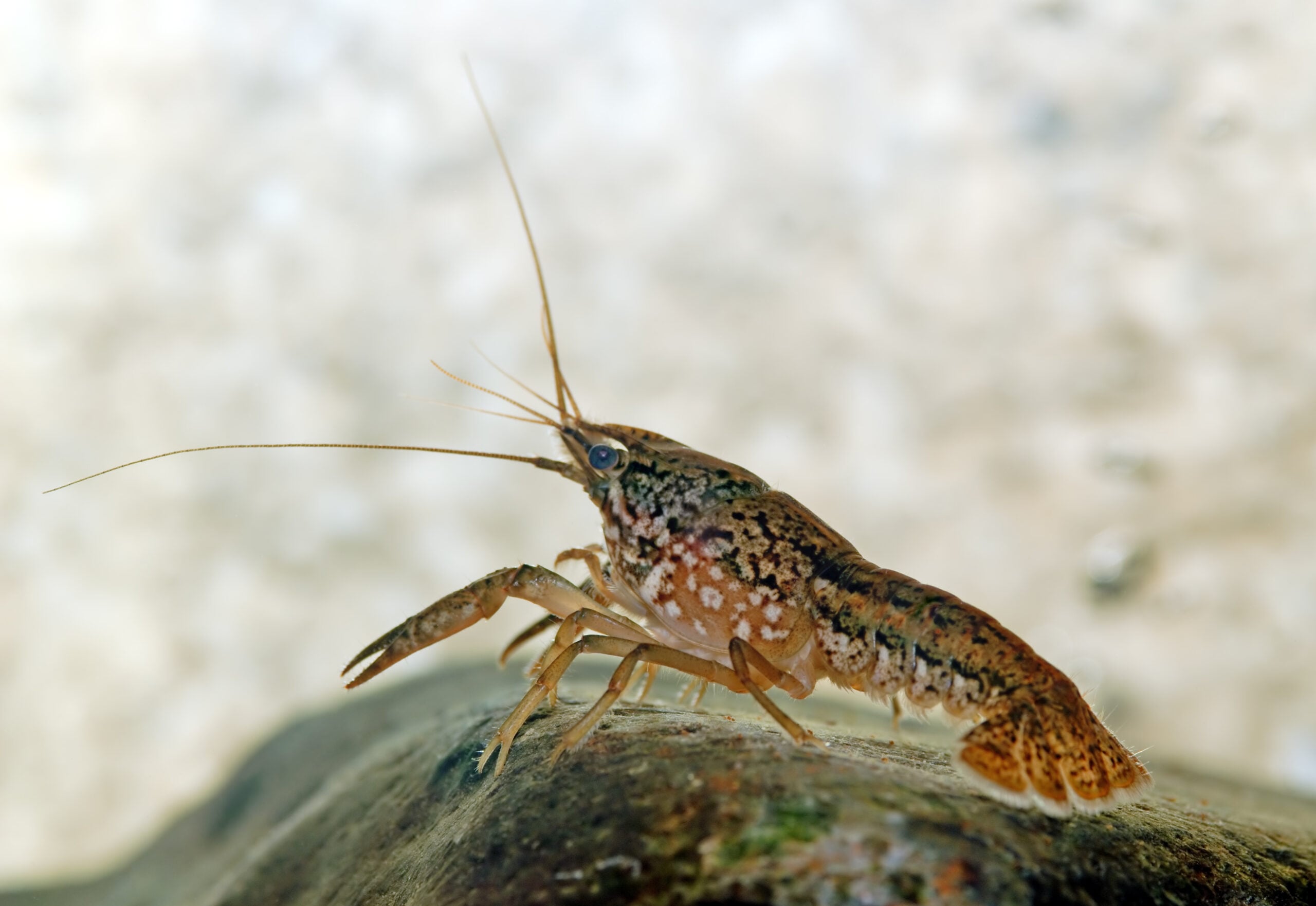 Photo Credit: André Karwath aka Aka / Wikimedia
In the shimmering shallows of a sunlit stream, the crayfish, known scientifically as Procambarus, scuttles along the rocky bottom, its segmented body glistening like a tiny armored knight. With its pincers raised in a curious display, this fascinating crustacean navigates the underwater world, blending seamlessly into its habitat. Crayfish are not just remarkable for their appearance; they play a vital role in freshwater ecosystems, acting as both scavengers and prey, which makes them a key player in the intricate web of life.
As you peer into the clear waters, you might notice the crayfish’s unique ability to regenerate lost limbs, a skill that has intrigued scientists for years. This remarkable trait allows them to survive encounters with predators, showcasing their resilience in the face of danger. Their nocturnal lifestyle adds another layer of intrigue, as they emerge from their hiding spots at night to forage for food, munching on everything from decaying plant matter to small insects. With a history that stretches back over 200 million years, these little creatures are not only survivors but also a testament to the wonders of evolution, captivating nature enthusiasts and researchers alike.
Crayfish, often found scuttling along the bottoms of freshwater lakes and streams, hold a special place in the tree of life. These intriguing animals belong to the Kingdom Animalia, which encompasses all animals, and they are part of the Phylum Arthropoda, known for its joint-legged invertebrates. What sets crayfish apart is their unique combination of features, including a hard exoskeleton, ten legs, and the ability to thrive in both aquatic and terrestrial environments. Their classification reveals not only their biological traits but also their evolutionary journey, connecting them to other crustaceans and even insects.
| Taxonomic Rank | Scientific Name | Meaning & Significance |
|---|---|---|
| Kingdom | Animalia | This name comes from the Latin word “animalis,” meaning “having breath” or “living.” It signifies all living organisms that are not plants or fungi. |
| Phylum | Arthropoda | Derived from the Greek words “arthron,” meaning “joint,” and “pous,” meaning “foot,” this name highlights the jointed limbs that are a hallmark of this diverse group. |
| Class | Malacostraca | This term comes from the Greek “malakos,” meaning “soft,” and “ostrakon,” meaning “shell.” It refers to the soft-bodied nature of these animals before their hard exoskeletons develop. |
| Order | Decapoda | From the Greek “deka,” meaning “ten,” and “pous,” meaning “foot,” this name indicates the ten limbs that characterize this order, which includes crayfish, crabs, and shrimp. |
| Family | Cambaridae, Astacidae | Cambaridae comes from the Latin “cambaro,” meaning “crayfish,” while Astacidae is derived from the Greek “astakos,” meaning “lobster.” Both names reflect their close relationship to other crustaceans. |
Understanding the taxonomic classification of crayfish provides a glimpse into their evolutionary history. As members of the Arthropoda phylum, they share a common ancestor with insects and spiders, showcasing the incredible adaptability of life on Earth. Their classification not only highlights their physical characteristics but also reveals how they have evolved over millions of years to thrive in various environments. Crayfish are not just fascinating residents of freshwater ecosystems; they are a living testament to the intricate web of life that connects all organisms.
Crayfish have a long and fascinating evolutionary history that stretches back over 200 million years. These freshwater dwellers are part of a larger group known as crustaceans, which also includes crabs, lobsters, and shrimp. The story of crayfish begins in the Triassic period, a time when the Earth was a very different place, with lush forests and the first dinosaurs just starting to roam the land.
The ancestors of modern crayfish were small, marine creatures that lived in the oceans. Over millions of years, some of these ancestors began to adapt to life in freshwater environments. This transition was significant, as it allowed them to exploit new habitats and food sources. As they evolved, they developed features that helped them thrive in rivers and lakes, such as gills that could function in low-oxygen waters and a more robust exoskeleton for protection against predators.
These adaptations have been crucial for the survival of crayfish in diverse environments. By transitioning from marine to freshwater habitats, developing specialized gills, and enhancing their physical defenses, crayfish have successfully navigated the challenges of their ecosystems. Their ability to adapt has allowed them to flourish in various freshwater habitats around the world, making them a vital part of the aquatic food web.
Crayfish are captivating little animals that seem to embody the essence of underwater life. With their segmented bodies and jointed limbs, they resemble tiny lobsters, making them both intriguing and somewhat alien. Their overall structure is designed for life in freshwater environments, featuring a hard exoskeleton that provides protection and support. This tough outer shell is not just for show; it plays a crucial role in their survival, allowing them to navigate through rocky crevices and evade predators.
| Feature | Description |
|---|---|
| Size | Typically range from 3 to 6 inches long, though some species can grow larger. |
| Color | Often exhibit shades of green, brown, or even reddish hues, helping them blend into their surroundings. |
| Skin Type | Covered in a hard exoskeleton, which is a tough outer layer that protects their body. |
| Limbs | Equipped with ten limbs, including large pincers (claws) used for defense and capturing prey. |
| Eyes | Have compound eyes that provide a wide field of vision, helping them spot danger from various angles. |
These features work together to create a highly effective survival machine. The exoskeleton not only shields them from predators but also helps them maintain their shape in the water. Their coloration allows them to camouflage among rocks and plants, making it harder for hungry fish to spot them. With their powerful pincers, crayfish can defend themselves and catch food, while their keen eyesight helps them stay alert to threats. Together, these adaptations make crayfish well-suited to thrive in their aquatic habitats, showcasing the wonders of evolution in action.
Crayfish thrive in a world of shimmering waters, where freshwater streams, rivers, and brooks create a vibrant tapestry of life. Picture a sun-dappled stream, its clear waters flowing over smooth stones, with lush vegetation lining the banks. Here, crayfish scuttle along the bottom, seeking shelter among rocks and fallen leaves. Their habitats are often rich in organic material, providing both food and hiding spots from predators.
These fascinating animals prefer environments that are cool and well-oxygenated. They thrive in waters that are not too fast-flowing, as they need calm areas to rest and forage. Crayfish are sensitive to pollution, so they often inhabit clean, clear waters. The ideal temperature for their survival usually ranges from 15 to 25 degrees Celsius (59 to 77 degrees Fahrenheit), making them well-suited for temperate climates.
To survive in their watery homes, crayfish have developed several clever adaptations. Their hard exoskeleton protects them from predators and environmental changes, while their ability to burrow into the mud allows them to escape harsh conditions, such as droughts. Additionally, their gills enable them to extract oxygen from the water, ensuring they can breathe even in low-oxygen environments. These adaptations help them not only survive but thrive in a variety of freshwater habitats around the globe.
Crayfish lead a life filled with activity, especially when the sun dips below the horizon. As nocturnal creatures, they come alive at night, scuttling along the muddy bottoms of streams and lakes. Their daily routine revolves around foraging for food, which includes plants, insects, and even small fish. With their keen sense of touch and taste, they explore their surroundings, using their antennae to detect food and navigate through the murky waters. This nighttime lifestyle helps them avoid predators, allowing them to thrive in their aquatic homes.
While crayfish are primarily solitary, they do exhibit interesting social behaviors during certain times, especially when it comes to mating. During the breeding season, males and females engage in a courtship dance, showcasing their vibrant colors and impressive claws. This interaction is crucial for reproduction, as it helps ensure the continuation of their species. Outside of mating, however, crayfish prefer to keep to themselves, establishing territories that they defend fiercely against intruders. This solitary nature allows them to minimize competition for food and shelter, which is vital for their survival.
| Behavior Type | Description |
|---|---|
| Activity Patterns | Crayfish are nocturnal, meaning they are most active at night, foraging for food and exploring their environment. |
| Social Structure | Primarily solitary, crayfish establish and defend territories, especially outside of mating season. |
| Communication Methods | During mating, crayfish use visual displays and body movements to attract partners, showcasing their claws and colors. |
The behaviors of crayfish are finely tuned to ensure their survival in a world filled with challenges. By being active at night, they reduce the risk of becoming prey for larger animals. Their solitary nature allows them to claim and protect their own space, ensuring they have access to food and shelter. Through their unique mating rituals, they also secure the future of their species, balancing the need for independence with the instinct to reproduce. In this way, crayfish navigate their underwater realm with a blend of caution and purpose, making the most of their environment.
Crayfish are omnivores, meaning they enjoy a varied diet that includes both plant and animal matter. These little scavengers are not picky eaters; they will munch on whatever they can find in their watery homes. Their feeding behavior is quite interesting, as they use their pincers to grasp food and their small, specialized mouthparts to break it down into manageable pieces. This allows them to consume a wide range of foods, from tiny plants to small animals, making them adaptable and resourceful in their quest for nourishment.
| Dietary Aspect | Details |
|---|---|
| Diet Type | Omnivore |
| Favorite Foods | Algae, worms, and insects |
| Prey Items | Fish, plankton, shrimp |
| Hunting/Foraging Strategies | Scavenging and active foraging at night |
This diverse diet plays a crucial role in the ecology of freshwater ecosystems. By consuming both plant and animal matter, crayfish help maintain a balance in their environment. They recycle nutrients and provide a food source for larger predators, such as fish and birds. Their nightly foraging habits also mean they are active participants in the food web, influencing the dynamics of their underwater world. As they scuttle about, they contribute to the health of their habitats, making them essential players in the aquatic ecosystem.
Crayfish have a fascinating mating ritual that takes place during the warmer months, typically in spring and early summer. During this breeding season, males engage in a series of courtship behaviors to attract females. They may wave their claws and perform intricate dances to show off their strength and vitality. Once a female is ready to mate, she will signal her interest, and the male will grasp her with his claws. After mating, the female will carry the fertilized eggs on her abdomen until they are ready to hatch.
| Reproductive Aspect | Details |
|---|---|
| Gestation Period | 4 to 6 weeks |
| Litter Size | 20 to 200 eggs |
| Age of Maturity | 6 to 12 months |
| Name of Young | Hatchlings |
Once the eggs hatch, the young crayfish, known as hatchlings, are quite small and vulnerable. They remain attached to their mother for a short time, receiving protection and nourishment. As they grow, these tiny creatures begin to explore their surroundings, gradually learning to fend for themselves. Crayfish undergo a series of molts, shedding their exoskeletons to grow larger. With time, patience, and a bit of luck, these hatchlings will develop into mature adults, ready to continue the cycle of life in their watery homes.
Crayfish play a vital role in their aquatic ecosystems, serving as both prey and scavengers. They are an important food source for many animals, helping to maintain the balance of the food web. By consuming decaying plant and animal matter, crayfish also contribute to the health of their habitats, ensuring that nutrients are recycled back into the environment. However, their position in the food web makes them vulnerable to a variety of threats.
To survive these dangers, crayfish have developed several clever defensive behaviors. When threatened, they can quickly retreat into their burrows or hide under rocks and vegetation, using their environment to shield themselves. Some species can even shed a claw to escape a predator, a process known as autotomy. This may sound drastic, but it allows them to flee while their predator is distracted. Additionally, crayfish can use their strong pincers to defend themselves if cornered, showcasing their resilience in the face of danger. Through these strategies, they continue to thrive in their watery worlds, despite the challenges they face.
A keystone species is an organism that has a disproportionately large impact on its environment relative to its abundance. In simpler terms, these species play a crucial role in maintaining the structure of an ecosystem. Crayfish, often found in freshwater streams, rivers, and brooks, qualify as a keystone species due to their significant influence on the aquatic habitats they inhabit.
Crayfish contribute to their ecosystems in several important ways. As omnivores, they consume a wide variety of organic materials, including decaying plant matter and small animals. This scavenging behavior helps to recycle nutrients back into the ecosystem, promoting a healthy environment for other organisms. Additionally, crayfish create burrows in the sediment, which can improve water quality by aerating the soil and allowing for better water flow. These burrows also provide shelter for other aquatic creatures, enhancing biodiversity.
Moreover, crayfish serve as a vital food source for many animals, including fish, birds, and mammals. Their presence supports a diverse range of predators, which rely on them for sustenance. This interconnectedness illustrates how the health of the crayfish population can directly affect the entire food web in their habitat.
If crayfish were to disappear from their ecosystems, the consequences could be severe. Without these important scavengers, nutrient recycling would decline, leading to poorer water quality and less healthy habitats. The loss of crayfish would also disrupt the food chain, leaving many predators without a key food source. This could result in a decline in fish populations and other wildlife, ultimately altering the entire ecosystem. The absence of crayfish would create a ripple effect, demonstrating just how vital these small creatures are to the health of their aquatic environments.
Crayfish are fascinating inhabitants of freshwater ecosystems, playing a vital role in shaping their surroundings. These small, armored creatures thrive in streams, rivers, and brooks, where they scuttle along the bottom, contributing to the health and balance of their aquatic environments. As omnivores, they consume a variety of plant and animal matter, helping to recycle nutrients and maintain the ecosystem’s productivity. Their nocturnal lifestyle adds an intriguing layer to their ecological niche, as they become active at night, foraging and interacting with other species.
| Ecosystem Service | Impact |
|---|---|
| Nutrient Recycling | Crayfish break down organic matter, returning nutrients to the water and supporting plant growth. |
| Food Source | They serve as a crucial food source for fish, birds, and other wildlife, supporting the food web. |
| Habitat Modification | By burrowing into the substrate, crayfish create habitats for other organisms and improve water quality. |
| Predator-Prey Dynamics | As both predator and prey, they help regulate populations of other aquatic species, maintaining balance. |
Crayfish influence their ecosystems in several specific ways. For instance, their feeding habits help control algae growth by consuming decaying plant material and detritus, which can otherwise lead to overgrowth and poor water quality. Additionally, when they dig burrows, they aerate the sediment, allowing oxygen to reach the roots of aquatic plants and promoting a healthier environment for fish and other organisms. This burrowing behavior also creates shelter for smaller creatures, enhancing biodiversity in their habitats.
The broader ecological importance of crayfish cannot be overstated. As keystone species, they play a crucial role in maintaining the structure and function of their ecosystems. Their presence supports a diverse array of life, from the smallest microorganisms to larger predators. By contributing to nutrient cycling, providing food, and modifying habitats, crayfish help ensure that freshwater ecosystems remain vibrant and resilient. Understanding their role encourages us to appreciate the delicate balance of nature and the interconnectedness of all living things.
In the intricate web of life, symbiosis refers to the close and often long-term interactions between different species. These relationships can take many forms, including mutualism, where both species benefit, parasitism, where one benefits at the expense of the other, and commensalism, where one species benefits while the other is neither helped nor harmed. Crayfish, those fascinating little crustaceans, engage in various ecological partnerships that highlight the complexity of their freshwater habitats.
| Species/Type | Relationship Type | Description |
|---|---|---|
| Fish (e.g., catfish) | Mutualistic | Crayfish and certain fish species often share habitats. The crayfish help keep the environment clean by scavenging, while fish benefit from the reduced competition for food and the availability of shelter. |
| Freshwater snails | Commensal | Crayfish may share their burrows with freshwater snails. The snails gain a safe place to live, while the crayfish are largely unaffected by their presence. |
| Leeches | Parasitic | Some leeches attach to crayfish to feed on their blood. This relationship benefits the leech but can harm the crayfish, potentially leading to stress or infection. |
These relationships have evolved over time, shaped by the needs and behaviors of the species involved. Mutualistic partnerships, like those with fish, enhance the survival of both parties, while commensal relationships allow for coexistence without direct competition. Parasitic interactions, while harmful to the crayfish, can also drive adaptations that help them cope with such challenges. Understanding these connections not only reveals the beauty of nature’s balance but also emphasizes the importance of preserving these ecosystems for future generations.
Crayfish are often overlooked in the world of aquatic life, but these fascinating creatures have some surprising traits that can captivate anyone interested in nature.
Crayfish have been part of human history for centuries, often appearing in folklore, cuisine, and even art. In many cultures, these small crustaceans symbolize abundance and resourcefulness. Ancient civilizations, such as the Egyptians and Greeks, recognized their value as a food source, while Native American tribes incorporated crayfish into their diets and traditions. The cultural significance of crayfish is evident in various regions, where they are celebrated in festivals and culinary dishes, showcasing their importance in both sustenance and community bonding.
Today, the relationship between crayfish and humanity is multifaceted, involving conservation efforts, ecological challenges, and even domestication. As habitats face threats from pollution and climate change, conservationists work tirelessly to protect crayfish populations and their environments. However, invasive species, such as the red swamp crayfish, can disrupt local ecosystems, leading to conflicts with native species and fishing communities. On the other hand, crayfish farming has gained popularity, providing a sustainable source of food while also raising awareness about the need for responsible aquatic practices.
Looking ahead, the future of the relationship between crayfish and humanity will likely hinge on our ability to balance ecological health with human needs. As we become more aware of the delicate ecosystems that support these creatures, we can foster a deeper appreciation for their role in nature. By promoting sustainable practices and protecting their habitats, we can ensure that crayfish continue to thrive alongside us, enriching our lives and the environments we share.
Crayfish are currently facing significant challenges, with many species classified as endangered. Their populations are declining due to various environmental pressures, and this trend raises concerns about their future. As these small but vital members of freshwater ecosystems struggle to survive, understanding their conservation status becomes increasingly important for both scientists and nature enthusiasts alike.
| Conservation Factor | Status/Details |
|---|---|
| IUCN Status | Endangered |
| Population Estimates | Varies by species; many are in decline |
| Trend Direction | Decreasing |
The main threats to crayfish populations stem from habitat loss, pollution, and invasive species. As rivers and streams are altered for agriculture, urban development, or dam construction, the natural environments that crayfish depend on are disrupted. Pollution from chemicals and waste can contaminate their habitats, making it difficult for them to thrive. Additionally, invasive species, such as certain types of fish or other crustaceans, can outcompete native crayfish for food and space, further endangering their survival.
Conservation efforts are underway to protect crayfish and their habitats. Organizations and researchers are working to restore freshwater ecosystems, monitor populations, and raise awareness about the importance of these creatures. By creating protected areas and implementing sustainable practices, there is hope for the future of crayfish. With continued dedication to conservation, we can help ensure that these fascinating animals remain a vibrant part of our natural world for generations to come.
| Question | Answer |
|---|---|
| Where do crayfish live? | Crayfish are typically found in freshwater habitats like streams, rivers, and brooks. They prefer areas with plenty of hiding spots, such as rocks and vegetation, which help protect them from predators. |
| What do crayfish eat? | Crayfish are omnivores, meaning they eat both plants and animals. Their diet includes algae, aquatic plants, insects, and even small fish, making them important recyclers in their ecosystems. |
| How do crayfish behave? | Crayfish are mostly nocturnal, which means they are active at night. During the day, they often hide in burrows or under rocks to stay safe from predators like fish and birds. |
| How do crayfish reproduce? | Crayfish reproduce by laying eggs, which the female carries under her tail until they hatch. This process usually occurs in the spring, and a single female can produce hundreds of eggs at once! |
| What threats do crayfish face? | Crayfish populations are threatened by habitat loss, pollution, and invasive species. These factors can disrupt their natural environments and make it harder for them to survive. |
| What are some interesting characteristics of crayfish? | Crayfish have a hard exoskeleton that protects their bodies, and they can regenerate lost limbs over time. They also have two large pincers, or claws, which they use for defense and to catch food. |
| Are crayfish endangered? | Yes, some species of crayfish are considered endangered due to declining populations. Conservation efforts are important to help protect their habitats and ensure their survival in the wild. |