Taxonomy & Classification
- Kingdom
- Animalia
- Phylum
- Arthropoda
- Class
- Insecta
- Order
- Coleoptera
- Family
- Chrysomelidae
- Genus
- Diabrotica

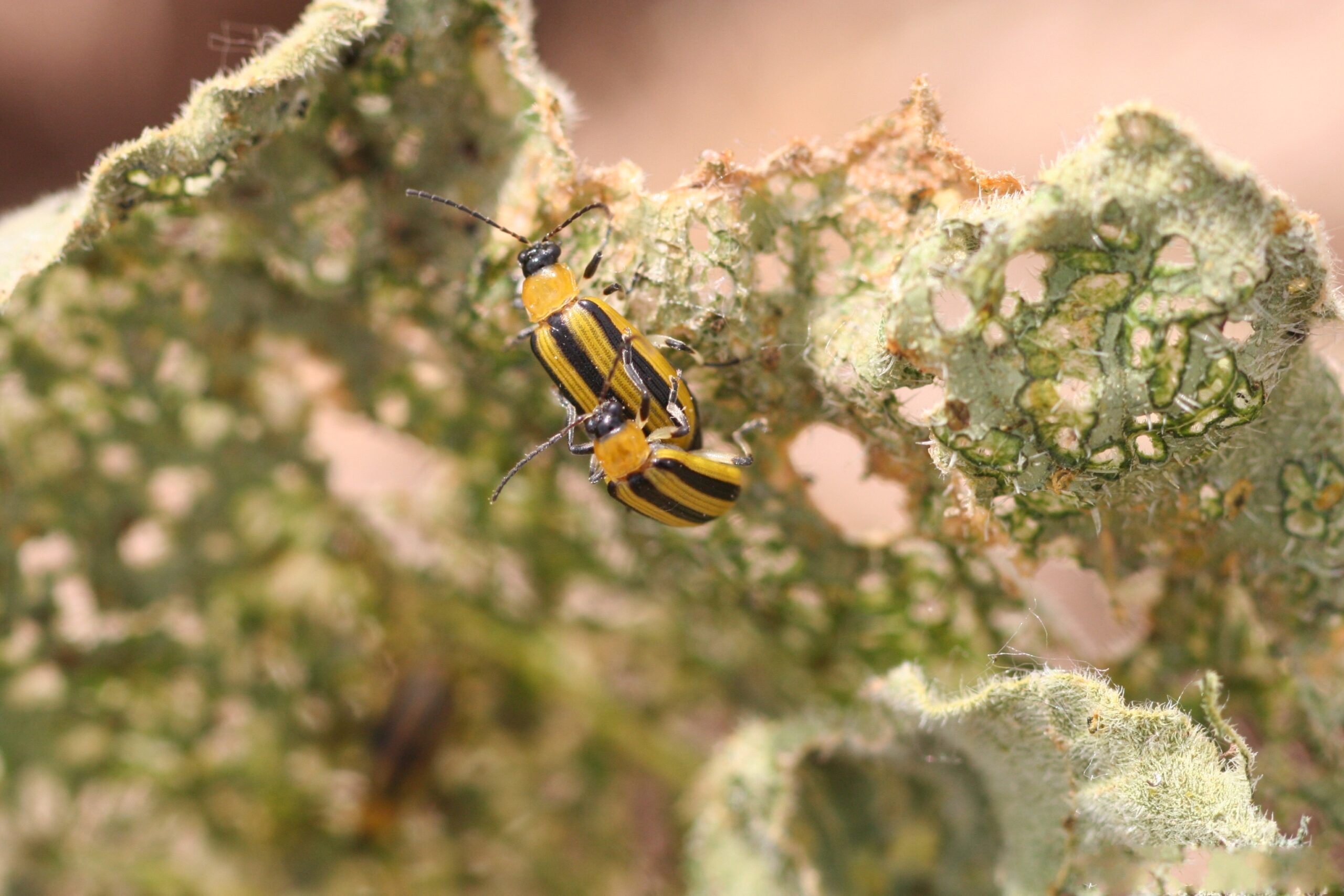 Photo Credit: Whitney Cranshaw, Colorado State University / Wikimedia
In the sun-drenched fields and gardens of North America, the cucumber beetle, known scientifically as Diabrotica, scuttles about with a vibrant flair. These small insects, measuring just a quarter of an inch long, are easily recognized by their bright yellow or green bodies adorned with striking black spots or stripes. As they flit from leaf to leaf, their lively movements and colorful patterns catch the eye, making them a favorite among nature enthusiasts and scientists alike. But don’t let their charming appearance fool you; these beetles play a significant role in the ecosystem, particularly in the world of agriculture.
Cucumber beetles thrive in lush environments where cucurbit plants—like cucumbers, squash, and melons—flourish. These plants not only provide food for the beetles but also serve as a habitat where they can lay their eggs. As they munch on the leaves and stems, they become part of a complex web of life, influencing the health of the plants and the creatures that depend on them. Scientists are captivated by the cucumber beetle’s dual role as both a herbivore and a prey species, making it a key player in the food web. With their fascinating behaviors and ecological importance, cucumber beetles invite us to explore the intricate connections that sustain life in our gardens and fields.
The cucumber beetle, a member of the Chrysomelidae family, holds a special place in the tree of life. This small but significant insect belongs to the order Coleoptera, which is home to all beetles. What sets cucumber beetles apart is their vibrant coloration and their role as both pollinators and pests. With their striking yellow and green patterns, they are not only eye-catching but also play a crucial role in the ecosystems they inhabit, particularly in agricultural settings where they can impact crop health.
| Taxonomic Rank | Scientific Name | Meaning & Significance |
|---|---|---|
| Kingdom | Animalia | This name signifies that cucumber beetles are part of the vast group of multicellular organisms that are primarily heterotrophic, meaning they consume organic material for energy. |
| Phylum | Arthropoda | Arthropoda means “jointed legs,” highlighting the beetle’s segmented body and jointed appendages, which are characteristic of this diverse phylum that includes insects, arachnids, and crustaceans. |
| Class | Insecta | Insecta comes from the Latin word for “cut into sections,” referring to the three-part body structure of insects, which includes the head, thorax, and abdomen. |
| Order | Coleoptera | Coleoptera means “sheath-winged,” a nod to the hard, protective forewings called elytra that cover the beetle’s delicate hind wings and abdomen. |
| Family | Chrysomelidae | This family name is derived from the Greek words for “gold” and “apple,” reflecting the often shiny appearance of many leaf beetles, including cucumber beetles. |
| Genus | Diabrotica | Diabrotica is thought to come from a Greek word meaning “to wander,” which may refer to the beetle’s movement patterns as they search for food and mates. |
Understanding the cucumber beetle’s classification reveals much about its evolutionary journey. As a member of the Coleoptera order, it shares a lineage with a vast array of beetles, showcasing the incredible adaptability and diversity of this group. The unique features that define the cucumber beetle, from its jointed legs to its protective elytra, illustrate how evolution has shaped its survival strategies. This classification not only highlights its ecological roles but also emphasizes the intricate connections between species in the natural world.
The evolutionary journey of the cucumber beetle, belonging to the family Chrysomelidae and the genus Diabrotica, stretches back millions of years. These beetles are part of the vast order Coleoptera, which emerged during the late Permian period, around 250 million years ago. As the Earth transformed through dramatic climate changes and the rise of flowering plants, the ancestors of cucumber beetles adapted to thrive in diverse environments.
The early ancestors of cucumber beetles were likely small, herbivorous insects that fed on various plants. Over time, they developed specialized mouthparts, allowing them to efficiently consume plant material. This adaptation was crucial as it enabled them to exploit a wide range of food sources. As flowering plants became more prevalent, these beetles evolved further, developing vibrant colors and patterns that not only helped them blend into their surroundings but also played a role in attracting mates.
The adaptations of cucumber beetles have been vital for their survival in a world filled with challenges. Their ability to blend into their environment helps them evade predators, while their specialized feeding mechanisms allow them to thrive on various plants, including crops. As they continue to evolve, these beetles demonstrate the incredible resilience of life, showcasing how even the smallest creatures can adapt and flourish in a constantly changing world.
The cucumber beetle presents a striking appearance that captures the eye with its vibrant colors and distinctive patterns. Its body is small and oval-shaped, typically measuring about 1/4 inch long. The exoskeleton, which is the hard outer covering that protects its body, shines with a yellowish-green hue. This bright coloration is often adorned with bold black stripes or spots, creating a pattern that is both beautiful and functional.
| Feature | Description |
|---|---|
| Size | Approximately 1/4 inch long |
| Color | Yellowish-green body with black stripes or spots |
| Skin Type | Exoskeleton, providing protection and support |
The cucumber beetle’s vivid colors serve a dual purpose. The bright yellowish-green body can help it blend into the foliage of cucumber plants, making it less visible to predators. Meanwhile, the black stripes or spots may act as a warning signal, indicating to potential threats that it is not a tasty snack. Together, these features not only enhance its survival in the wild but also make it a captivating subject for anyone curious about the wonders of nature.
The cucumber beetle thrives in lush, green environments where cucurbit plants flourish. These plants include popular crops like cucumbers, squash, and melons, which provide both food and shelter for these beetles. Picture a sunny garden or a sprawling farm, where rows of vibrant vegetables stretch out under the warm sun. Here, the cucumber beetle finds its perfect home, darting among the leaves and flowers, always on the lookout for a tasty meal.
Cucumber beetles prefer warm climates, as they are most active during the sunny days of spring and summer. They thrive in areas with moderate rainfall, which helps keep their favorite plants healthy and growing. These beetles are often found in gardens, fields, and farms where cucurbit plants are abundant. The combination of sunlight and moisture creates an ideal environment for their life cycle, which includes laying eggs on or near these plants.
To survive in their chosen habitats, cucumber beetles have developed several clever adaptations. Their bright colors not only make them stand out but also help them blend in with the vibrant foliage of cucurbit plants. This camouflage protects them from predators while they munch on leaves and flowers. Additionally, their ability to reproduce quickly allows them to take advantage of the growing season, ensuring that their population remains strong in the warm, inviting environments they call home.
As the sun rises, the cucumber beetle begins its daily routine, taking advantage of the warm daylight hours. These diurnal insects are most active during the day, flitting from leaf to leaf in search of food. Their favorite meals include the tender leaves and flowers of cucurbit plants, such as cucumbers and squash. With their small, oval bodies, they navigate through the foliage, munching on the plant material and leaving behind tiny holes as evidence of their feast. Throughout the day, they engage in various activities, including mating and laying eggs, ensuring the continuation of their species.
Cucumber beetles are social insects that often gather in large groups, known as infestations. This behavior can be beneficial, as it helps them find food more easily and provides some protection from predators. When they come together, they communicate through chemical signals, releasing pheromones that convey important information about food sources and mating opportunities. This group dynamic not only enhances their chances of survival but also creates a vibrant community where beetles can thrive together.
| Behavior Type | Description |
|---|---|
| Activity Patterns | Active during the day, feeding on cucurbit plants and engaging in mating rituals. |
| Social Structure | Form large groups called infestations, which help in locating food and avoiding predators. |
| Communication Methods | Use pheromones to share information about food and mating, enhancing group cohesion. |
The behaviors of cucumber beetles are finely tuned to ensure their survival in a world filled with challenges. By being active during the day, they maximize their feeding opportunities while their social structure provides safety in numbers. Their ability to communicate effectively within their groups allows them to thrive in their environments, making them not just survivors, but also integral players in the ecosystems they inhabit.
The cucumber beetle primarily feeds on plant material, making it a herbivore. These beetles have a particular fondness for cucurbit plants, which include cucumbers, squash, and melons. They use their strong mandibles, or jaws, to chew through leaves and stems, allowing them to access the juicy tissues inside. This feeding behavior not only provides them with essential nutrients but also plays a significant role in their daily activities, as they must constantly search for fresh plant material to sustain themselves.
| Dietary Aspect | Details |
|---|---|
| Diet Type | Herbivore |
| Favorite Foods | Cucumbers, squash, melons, and other cucurbit plants |
| Prey Items | None, as they do not consume other animals |
| Hunting/Foraging Strategies | Chewing through leaves and stems to access plant tissues |
This diet shapes the cucumber beetle’s role in its ecosystem. By feeding on plants, they can influence the health of the crops they inhabit. While they help in pollination by moving from flower to flower, their feeding can also lead to damage, making them a double-edged sword in agriculture. Their daily routine revolves around finding food, which is essential for their survival and reproduction, highlighting the intricate balance of life in their green habitats.
When it comes to reproduction, cucumber beetles have a fascinating courtship ritual. During the breeding season, which typically occurs in the warmer months, males perform a series of dances and displays to attract females. These displays often involve fluttering their wings and making specific movements to show off their strength and vitality. Once a female is impressed, she will mate with the male, and together they will lay their eggs in the soil or on the leaves of their favorite plants, particularly cucurbits like cucumbers and squash.
| Reproductive Aspect | Details |
|---|---|
| Gestation Period | Approximately 7 to 10 days |
| Litter Size | 20 to 30 eggs per female |
| Age of Maturity | 3 to 4 weeks |
| Name of Young | Larvae |
After the eggs hatch, the young larvae emerge and begin their journey of growth. These larvae are small, worm-like creatures that feed on the roots and leaves of plants, which provide them with the nutrients they need to develop. As they grow, they undergo several molts, shedding their skin to accommodate their increasing size. This process continues until they are ready to pupate, transforming into adults. Interestingly, the adult cucumber beetles will emerge from the pupal stage, ready to start the cycle anew, continuing the legacy of their vibrant and industrious species.
The cucumber beetle plays a crucial role in the food web, serving as both a herbivore and a prey species. By feeding on plants, particularly cucurbits like cucumbers and squash, these beetles help shape the ecosystem. However, their presence also attracts a variety of predators, making them an important link in the chain of life.
To survive these threats, cucumber beetles have developed several clever defensive behaviors. They often blend into their surroundings, using their green and yellow colors to camouflage against leaves. When threatened, they can drop to the ground and remain still, hoping to avoid detection. Additionally, some species release chemicals that can deter predators, making them less appealing as a meal. These strategies help cucumber beetles navigate the dangers of their environment, allowing them to thrive despite the many challenges they face.
A keystone species is an organism that has a disproportionately large impact on its environment relative to its abundance. This means that if it were removed, the ecosystem would change dramatically. The cucumber beetle, while not a classic keystone species like wolves or sea otters, does play an important role in its ecosystem, particularly in agricultural settings where it interacts with various plants and other organisms.
Cucumber beetles primarily feed on cucurbit plants, which include crops like cucumbers, squash, and melons. By munching on these plants, they can influence plant health and growth. When cucumber beetles are present in large numbers, they can cause significant damage to crops, leading to reduced yields for farmers. This herbivorous behavior can create a ripple effect, impacting not just the plants they feed on but also the animals that rely on those plants for food and shelter. For example, if cucumber beetles weaken a crop, the birds and insects that depend on those plants may struggle to find enough food.
Moreover, cucumber beetles are part of the food web. They serve as prey for various predators, including birds and other insects. Their presence supports these predators, which in turn helps maintain the balance of the ecosystem. Additionally, cucumber beetles can be vectors for plant diseases, such as bacterial wilt, which can further affect plant communities and agricultural productivity. This dual role as both herbivores and disease carriers makes them significant players in their habitats.
If cucumber beetles were to disappear, the consequences could be far-reaching. Without these beetles, the populations of their predators might decline due to a lack of food. This could lead to an imbalance in the ecosystem, as other insects might proliferate unchecked. Additionally, the absence of cucumber beetles could allow certain plants to thrive excessively, potentially choking out other species and reducing biodiversity. In agricultural settings, farmers might initially see a boost in crop yields, but over time, the lack of natural pest control could lead to other pest species becoming more dominant, creating new challenges for crop management. The intricate web of life that includes cucumber beetles highlights how even the smallest creatures can have a big impact on their environment.
The cucumber beetle plays a vital role in its ecosystem, particularly in agricultural settings where it interacts closely with cucurbit plants like cucumbers, squash, and melons. As a herbivore, it feeds on the leaves and stems of these plants, influencing their growth and health. This small insect is not just a simple pest; it also serves as a food source for various predators, creating a dynamic balance in its habitat. By shaping the plant community, cucumber beetles help maintain the ecological integrity of their environment.
| Ecosystem Service | Impact |
|---|---|
| Herbivory | Controls plant growth and diversity by feeding on cucurbit plants. |
| Food Source | Provides nourishment for birds, insects, and other predators. |
| Pollination | Accidentally aids in pollination while moving between flowers. |
| Soil Health | Contributes to nutrient cycling through its life cycle and waste. |
Cucumber beetles influence their environment in several specific ways. For instance, their feeding habits can lead to the stunted growth of cucurbit plants, which may affect the yield of crops in agricultural fields. This can have a ripple effect, impacting farmers’ livelihoods and the availability of fresh produce. Additionally, as these beetles move from plant to plant, they can inadvertently assist in pollination, helping flowers to produce fruits and seeds. This dual role as both a pest and a pollinator highlights the complexity of their interactions within the ecosystem.
The broader ecological importance of cucumber beetles cannot be overstated. As a keystone species, their presence or absence can significantly alter the dynamics of their environment. By influencing plant health and serving as a food source for various animals, cucumber beetles help maintain the balance of their ecosystems. Understanding their role encourages us to appreciate the intricate web of life that connects all organisms, reminding us that even the smallest creatures can have a big impact on the world around us.
In the intricate web of life, symbiosis plays a crucial role in shaping ecosystems. This term refers to the close interactions between different species, which can be beneficial, harmful, or neutral. These relationships can take many forms, such as mutualism, where both species gain advantages, parasitism, where one benefits at the other’s expense, and commensalism, where one species benefits while the other is neither helped nor harmed. The cucumber beetle, a small but impactful insect, engages in various ecological partnerships that highlight the complexity of nature.
| Species/Type | Relationship Type | Description |
|---|---|---|
| Plants (Cucurbitaceae family) | Mutualistic | The cucumber beetle feeds on cucurbit plants, helping to pollinate them while obtaining nourishment. This relationship supports plant reproduction and beetle survival. |
| Predatory insects (e.g., ladybugs) | Commensal | Cucumber beetles may attract predatory insects that feed on them, benefiting the plants by reducing beetle populations without directly affecting the plants. |
| Fungi (e.g., mycorrhizal fungi) | Mutualistic | While cucumber beetles do not directly interact with mycorrhizal fungi, their feeding habits can enhance soil health, indirectly benefiting the fungi and the plants they associate with. |
The evolution of these relationships showcases the dynamic nature of ecosystems. Over time, cucumber beetles have adapted to thrive alongside cucurbit plants, forming mutualistic bonds that enhance their survival. These partnerships not only benefit the beetles but also support the health of the plants they rely on. As they interact with other species, such as predatory insects and fungi, cucumber beetles contribute to a balanced ecosystem, demonstrating how interconnected life truly is. Understanding these relationships helps us appreciate the delicate balance of nature and the importance of every species within it.
Cucumber beetles may seem like simple garden pests, but they are full of surprises that reveal the complexity of nature. These small insects play important roles in their ecosystems, and their behaviors can be quite intriguing.
The cucumber beetle has danced through history alongside humanity, often leaving a mark on our agricultural practices and cultural narratives. These small, colorful insects have been both admired and reviled, depending on the context. In many cultures, they symbolize fertility and abundance due to their association with crops like cucumbers and melons. However, their presence can also signal trouble, as they are notorious for damaging these very plants. This duality has made the cucumber beetle a subject of fascination and concern throughout the ages.
Today, our interactions with cucumber beetles are complex and multifaceted. Farmers often find themselves in conflict with these beetles, as they can devastate crops, leading to significant economic losses. In response, many agricultural practices have evolved to manage their populations, including the use of integrated pest management strategies that combine biological control with environmentally friendly pesticides. On the conservation front, researchers are studying cucumber beetles to understand their role in ecosystems and how they can be managed sustainably. This balance between protecting crops and preserving biodiversity is crucial for future agricultural success.
Looking ahead, the relationship between cucumber beetles and humanity is likely to evolve further. As climate change alters ecosystems, these beetles may adapt in ways that could impact agriculture even more. By fostering a deeper understanding of their biology and behavior, we can develop innovative strategies to coexist with these insects. The future will require a blend of respect for nature and practical solutions to ensure that both our crops and the cucumber beetles thrive in harmony.
The conservation status of the cucumber beetle is currently classified as “Not Listed” by the International Union for Conservation of Nature (IUCN). This means that there is not enough information to determine whether their populations are declining or stable. While some species of cucumber beetles may be abundant in certain areas, others could be facing challenges that are not yet fully understood. Overall, the population trends for cucumber beetles vary widely depending on the specific species and their local environments.
| Conservation Factor | Status/Details |
|---|---|
| IUCN Status | Not Listed |
| Population Estimates | Varies by species; some are abundant, others less so |
| Trend Direction | Uncertain; requires further research |
Despite their vibrant colors and essential roles in ecosystems, cucumber beetles face several threats that could impact their populations. One of the main challenges is habitat loss, often due to agricultural expansion and urban development. As farmers clear land for crops, the natural habitats that cucumber beetles rely on can disappear. Additionally, the use of pesticides in farming can harm these beetles directly or disrupt their food sources, leading to declines in their numbers. Climate change also poses a risk, as shifting weather patterns can affect the availability of the plants they depend on.
Conservation efforts for cucumber beetles are still in their early stages, but there is hope for their future. Researchers are beginning to study their populations more closely, which will help us understand their needs and how to protect them. Sustainable farming practices, such as integrated pest management, can reduce the impact of pesticides and promote healthier ecosystems. By raising awareness about the importance of these beetles in agriculture and the environment, we can work together to ensure that they continue to thrive in our gardens and fields.
| Question | Answer |
|---|---|
| What is the habitat of the Cucumber Beetle? | Cucumber Beetles are commonly found in gardens and fields where cucurbit plants, like cucumbers and squash, grow. They thrive in warm, sunny areas that provide plenty of food and shelter. |
| What do Cucumber Beetles eat? | These beetles are herbivores, meaning they primarily eat plants. Their favorite foods include the leaves, flowers, and fruits of cucurbit plants, which can sometimes lead to significant damage in gardens. |
| How do Cucumber Beetles behave? | Cucumber Beetles are known for their active and sometimes destructive behavior. They often feed in groups, which can make them a serious pest for farmers and gardeners alike. |
| How do Cucumber Beetles reproduce? | During the warmer months, female Cucumber Beetles lay their eggs in the soil near their food sources. Once the eggs hatch, the larvae emerge and begin feeding on the roots of the plants, which can harm the plants' growth. |
| What threats do Cucumber Beetles face? | While Cucumber Beetles are not currently listed as endangered, they face threats from pesticides and habitat loss. Natural predators, like birds and certain insects, also help keep their populations in check. |
| What are some interesting characteristics of Cucumber Beetles? | One of the most distinctive features of Cucumber Beetles is their bright yellowish-green bodies adorned with black stripes or spots. This colorful appearance helps them blend into the plants they inhabit, making them both beautiful and tricky to spot. |
| How can I control Cucumber Beetles in my garden? | To manage Cucumber Beetles, gardeners can use row covers to protect plants or introduce natural predators. Additionally, keeping the garden clean and removing any infested plants can help reduce their numbers. |