Taxonomy & Classification
- Kingdom
- Animalia
- Phylum
- Chordata
- Class
- Reptilia
- Order
- Squamata
- Family
- Colubridae
- Genus
- Zamenis
- Species
- Zamenis longissimus

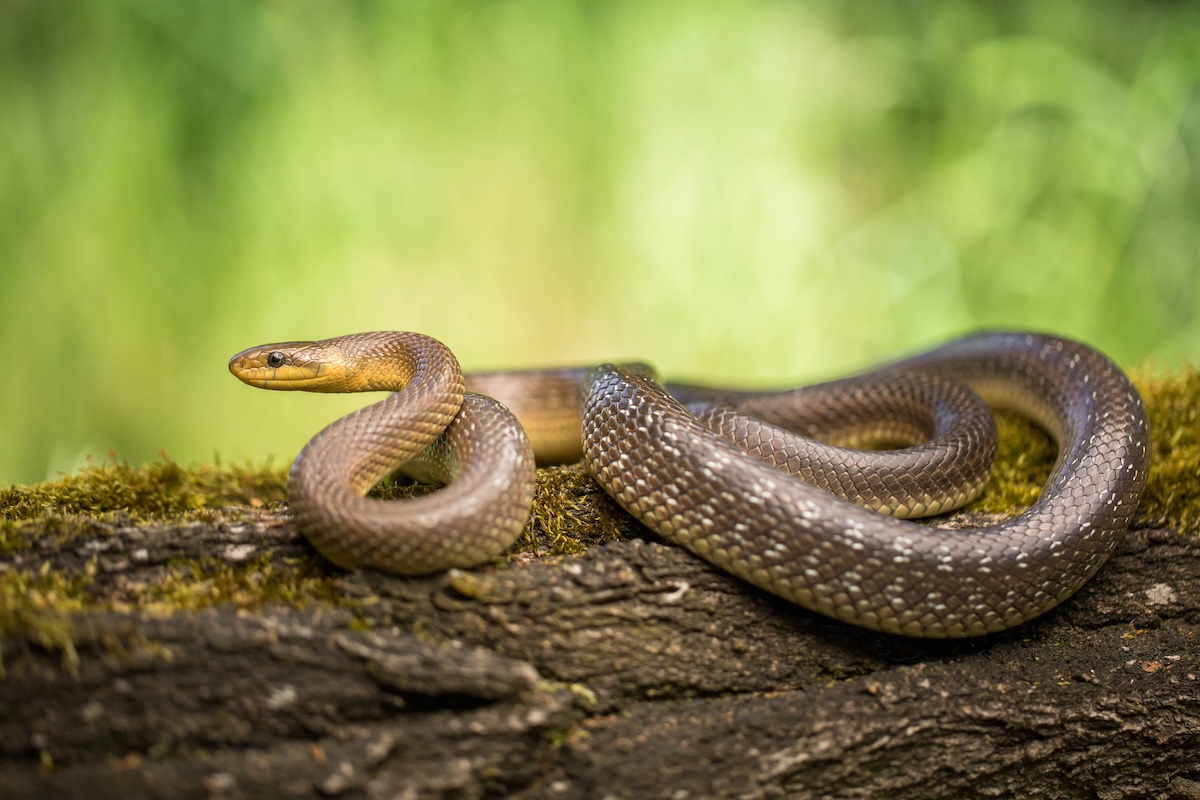 Photo Credit: Aterisdrsny For Deposit Photos
In the heart of Europe, where sun-dappled forests meet rocky outcrops, the Aesculapian snake, or Zamenis longissimus, glides gracefully through its lush habitat. With its long, slender body that can stretch up to 6.5 feet, this striking reptile captivates the eye with smooth, glossy scales that shimmer like jewels in the sunlight. Its vibrant green and yellow hues blend seamlessly with the foliage, making it a master of camouflage. This snake is not just a pretty sight; it plays a crucial role in its ecosystem, helping to keep populations of small mammals and birds in check.
Scientists and nature enthusiasts alike are drawn to the Aesculapian snake for its intriguing behaviors and adaptability. As an ectothermic creature, it relies on the warmth of the sun to regulate its body temperature, often seen basking on warm rocks or branches. This fascinating lifestyle, combined with its impressive hunting skills, makes the Aesculapian snake a subject of study for those eager to understand the delicate balance of life in its forest home. Join us as we explore the world of Zamenis longissimus, uncovering the secrets of its life cycle, diet, and the vital role it plays in the natural world.
The Aesculapian snake, scientifically known as Zamenis longissimus, holds a special place in the tree of life. This elegant reptile belongs to the family Colubridae, which is home to a diverse group of non-venomous snakes. What sets the Aesculapian snake apart is its long, slender body that can reach impressive lengths of up to 2 meters (about 6.5 feet). Found primarily in southern Europe, this snake is often associated with ancient myths and healing, reflecting its connection to the Greek god Aesculapius, who was revered for his knowledge of medicine.
| Taxonomic Rank | Scientific Name | Meaning & Significance |
|---|---|---|
| Kingdom | Animalia | This name signifies that the Aesculapian snake is part of the vast group of multicellular organisms that are typically motile and consume organic material. |
| Phylum | Chordata | Chordata means “having a notochord,” a flexible rod that supports the body, which is a key feature in the development of vertebrates, including this snake. |
| Class | Reptilia | Reptilia refers to reptiles, a class of cold-blooded animals that lay eggs and have scaly skin, highlighting the Aesculapian snake’s adaptation to its environment. |
| Order | Squamata | Squamata means “scaly,” which is fitting for this snake as it has smooth, shiny scales that help it glide through its forested habitat. |
| Family | Colubridae | This family includes many non-venomous snakes, emphasizing the Aesculapian snake’s harmless nature and its role in controlling rodent populations. |
| Genus | Zamenis | The name Zamenis is derived from the Greek word for “to be,” reflecting the snake’s adaptability and presence in various habitats. |
| Species | longissimus | This Latin term means “longest,” aptly describing the snake’s impressive length compared to other species in its family. |
The classification of the Aesculapian snake reveals much about its evolutionary journey. As a member of the Colubridae family, it shares a common ancestry with many other snakes, showcasing the diversity and adaptability of reptiles over millions of years. Its unique features, such as its length and non-venomous nature, highlight how it has evolved to thrive in its environment, making it a fascinating subject for both scientists and nature enthusiasts alike. Understanding its place in the animal kingdom not only enriches our knowledge of biodiversity but also connects us to the ancient stories that have surrounded this snake for centuries.
The Aesculapian snake, known scientifically as Zamenis longissimus, has a rich evolutionary history that stretches back millions of years. This species is part of the Colubridae family, which is one of the largest families of snakes, encompassing a wide variety of non-venomous snakes. The evolutionary journey of the Aesculapian snake can be traced to the late Cretaceous period, around 70 million years ago, when the ancestors of modern snakes began to emerge.
The early ancestors of the Aesculapian snake were likely small, agile reptiles that thrived in lush, forested environments. Over time, these ancestors adapted to various habitats, leading to significant evolutionary changes. One major transition was the development of elongated bodies, which allowed for better movement through dense vegetation. As these snakes evolved, they also developed a keen sense of sight and a specialized diet, primarily feeding on small mammals and birds. This adaptability helped them thrive in diverse ecosystems across Europe and parts of Asia.
The adaptations of the Aesculapian snake have played a crucial role in its survival. Its long, slender body and excellent climbing abilities enable it to explore a variety of habitats, from forest floors to treetops. The snake’s coloration provides effective camouflage, allowing it to avoid detection by both predators and prey. By being non-venomous, it has developed a unique hunting strategy that relies on stealth and strength rather than venom, making it a successful predator in its environment. Together, these traits have allowed the Aesculapian snake to thrive in diverse ecosystems, showcasing the wonders of evolution in action.
The Aesculapian snake is a striking sight, with a long, slender body that can reach impressive lengths of up to 6.5 feet (2 meters). Its smooth, glossy scales shimmer in the sunlight, showcasing a palette of earthy tones that range from olive green to brown. This snake’s form is not just for show; its streamlined shape allows it to glide effortlessly through its forested or rocky habitats. With a head that is slightly wider than its neck, the Aesculapian snake exudes an air of grace and agility, making it a master of both climbing and swimming.
| Feature | Description |
|---|---|
| Size | Can grow up to 6.5 feet (2 meters) in length |
| Weight | Ranges from 1.1 to 2.2 pounds (0.5 to 1.0 kilograms) |
| Color | Typically olive green to brown, with lighter underbellies |
| Skin Type | Smooth, glossy scales that reflect light |
| Head Shape | Wider than the neck, giving it a distinctive profile |
These physical features are not just for aesthetics; they play crucial roles in the Aesculapian snake’s survival. The smooth scales help reduce friction as it moves through vegetation or water, allowing for swift escapes from predators. Its coloration provides excellent camouflage among the leaves and branches, making it harder for both prey and predators to spot. The elongated body is perfect for climbing trees and navigating rocky terrains, while the wider head aids in capturing prey, such as small rodents and birds. Together, these adaptations make the Aesculapian snake a well-equipped inhabitant of its environment, showcasing the beauty of nature’s design.
The Aesculapian snake thrives in a variety of habitats that paint a picture of lush greenery and rocky outcrops. Imagine wandering through a sun-dappled forest, where the trees stretch high into the sky, their leaves whispering in the gentle breeze. This snake often makes its home in woodlands, but it also enjoys the company of rocky hillsides and even the edges of agricultural fields. These environments provide the perfect blend of cover and open space, allowing the Aesculapian snake to hunt and bask in the sun.
The Aesculapian snake prefers a temperate climate, which means it enjoys mild weather with distinct seasons. It thrives in areas where the temperature is neither too hot nor too cold, allowing it to be active throughout the year. These snakes are often found in regions that receive a good amount of rainfall, which helps maintain the lush vegetation they rely on for shelter and hunting. The combination of warm summers and cooler winters creates an ideal environment for their lifestyle.
Adaptation is key for the Aesculapian snake, and it has developed several traits that help it flourish in its chosen habitats. Its slender body allows it to navigate through dense underbrush and climb trees with ease, making it a skilled hunter of small mammals and birds. The snake’s coloration, often a mix of greens and browns, provides excellent camouflage among the leaves and branches, helping it avoid predators. By blending into its surroundings and utilizing the diverse environments it calls home, the Aesculapian snake has become a master of survival in the wild.
The Aesculapian snake begins its day as the sun rises, basking on a warm rock or branch to soak up the heat. This behavior is crucial because, like many reptiles, it is ectothermic, meaning it relies on external sources of heat to regulate its body temperature. After warming up, it becomes active, searching for food, which mainly consists of small mammals, birds, and lizards. The snake uses its keen eyesight and sense of smell to hunt, often moving stealthily through the underbrush. As the day progresses, it may retreat to the safety of trees or rocky crevices, especially during the hottest parts of the afternoon.
Socially, Aesculapian snakes are generally solitary creatures, but they can sometimes be found in small groups, especially during the mating season. Males may engage in displays of strength, such as wrestling, to compete for the attention of females. These interactions are not just about winning a mate; they also help establish dominance within their territory. Communication among these snakes is subtle, relying on body language and scent marking rather than vocalizations. When they feel threatened, they may flatten their bodies and hiss, a behavior that serves as a warning to potential predators.
| Behavior Type | Description |
|---|---|
| Activity Patterns | Aesculapian snakes are diurnal, meaning they are active during the day. They bask in the sun to warm up and hunt for food, primarily small mammals and birds. |
| Social Structure | These snakes are mostly solitary but can gather in small groups during mating season. Males may compete for females through displays of strength. |
| Communication Methods | They communicate through body language and scent marking. When threatened, they may hiss and flatten their bodies to appear larger. |
The behaviors of the Aesculapian snake are finely tuned to ensure its survival in the wild. By basking in the sun, it maintains the energy needed for hunting and evading predators. Its solitary nature allows it to avoid competition for resources, while its social interactions during mating season help ensure the continuation of its species. Through a combination of keen hunting skills and effective communication, the Aesculapian snake thrives in its natural habitat, showcasing the intricate balance of life in the animal kingdom.
The Aesculapian snake is a carnivore, which means it primarily eats meat. This snake has a varied diet that includes small mammals, birds, and even the occasional lizard or insect. It is an adept hunter, using its keen eyesight and quick reflexes to catch its prey. The Aesculapian snake often hunts by ambushing its food, lying in wait until the perfect moment to strike. This stealthy approach allows it to capture a range of animals, making it a versatile predator in its environment.
| Dietary Aspect | Details |
|---|---|
| Diet Type | Carnivore |
| Favorite Foods | Rodents, shrews, moles, birds, eggs, lizards, and insects |
| Prey Items | Small mammals, birds, and reptiles |
| Hunting/Foraging Strategies | Ambush predator, using stealth and quick strikes |
The diet of the Aesculapian snake plays a crucial role in its ecology and daily routine. By preying on a variety of animals, it helps control populations of rodents and insects, contributing to the balance of its ecosystem. This snake’s hunting habits also dictate its movements and behaviors throughout the day, as it must find the right spots to bask in the sun and search for food. In this way, the Aesculapian snake is not just a solitary hunter; it is an integral part of the natural world, influencing the lives of many other creatures around it.
As spring arrives, the Aesculapian snake engages in a captivating courtship ritual. Males often compete for the attention of females, displaying their agility and strength. This breeding season typically occurs from April to June, when temperatures rise and food becomes more abundant. During this time, males may engage in a dance-like behavior, intertwining their bodies in a display of dominance and attraction. Once a female selects a mate, the pair will copulate, setting the stage for the next generation.
| Reproductive Aspect | Details |
|---|---|
| Gestation Period | Approximately 60 to 70 days |
| Litter Size | Average of 10 eggs |
| Age of Maturity | About 2 to 3 years |
| Name of Young | Hatchlings |
After the eggs are laid, the female Aesculapian snake leaves them to develop on their own, showing a fascinating aspect of reptilian life. The hatchlings emerge after a couple of months, fully formed and ready to face the world. These young snakes are independent from the moment they break free from their eggs, relying on their instincts to hunt and survive. As they grow, they will shed their skin several times, a process known as ecdysis, allowing them to grow and adapt. Over the next few years, they will mature into adults, continuing the cycle of life in their lush habitats.
The Aesculapian snake plays a vital role in its ecosystem, sitting comfortably in the middle of the food web. As a skilled predator, it helps control populations of small mammals and birds, while also serving as a meal for larger animals. This balance is crucial for maintaining the health of its habitat, ensuring that no single species overwhelms the environment.
To survive these threats, the Aesculapian snake has developed several clever defensive strategies. When faced with danger, it often relies on its speed and agility to escape, quickly slithering away into the underbrush or climbing trees to evade predators. Additionally, its coloration helps it blend into the environment, making it less visible to those looking for a meal. In some cases, it may even play dead, a tactic that can confuse attackers and give it a chance to escape unharmed. These adaptations showcase the Aesculapian snake’s resilience and ingenuity in the wild.
A keystone species is an organism that has a disproportionately large impact on its environment relative to its abundance. These species help maintain the structure of an ecosystem, influencing the types and numbers of other species present. The Aesculapian snake, or Zamenis longissimus, qualifies as a keystone species due to its role in controlling populations of small mammals and birds, which in turn affects the entire food web.
The Aesculapian snake is a skilled predator, primarily feeding on small mammals, birds, and occasionally lizards. By keeping these populations in check, it helps prevent overgrazing and overpopulation, which can lead to habitat degradation. For example, if the snake’s population were to decline, the number of small mammals could surge, resulting in increased competition for food resources among other species. This imbalance can ripple through the ecosystem, affecting plant life and the animals that depend on those plants for survival.
Additionally, the Aesculapian snake serves as prey for larger predators, such as birds of prey and some mammals. This connection highlights its role in the food web, where it not only regulates the populations of its prey but also supports the species that rely on it for food. The presence of the Aesculapian snake can enhance biodiversity, as a healthy population contributes to a balanced ecosystem.
If the Aesculapian snake were to disappear, the consequences could be significant. Without this predator, small mammal populations could explode, leading to overgrazing of vegetation. This could result in habitat loss for many other species, including plants and insects. The entire ecosystem could become unbalanced, demonstrating just how crucial the Aesculapian snake is to maintaining the health and diversity of its environment.
The Aesculapian snake, known scientifically as Zamenis longissimus, occupies a vital ecological niche in its habitat. This slender, agile reptile is not just a beautiful sight in the forests and rocky outcrops of Europe; it plays a crucial role in maintaining the balance of its ecosystem. As a carnivore, it helps regulate populations of small mammals and birds, ensuring that no single species dominates the environment. By doing so, the Aesculapian snake contributes to the overall health and diversity of its surroundings.
| Ecosystem Service | Impact |
|---|---|
| Population Control | Regulates numbers of small mammals and birds, preventing overpopulation. |
| Prey for Predators | Serves as a food source for larger predators, supporting the food web. |
| Soil Health | Contributes to soil health by influencing the distribution of prey species. |
| Habitat Structure | Helps shape the habitat by controlling vegetation through its predation. |
The influence of the Aesculapian snake can be seen in various ways. For instance, by preying on small mammals like rodents, it helps keep their populations in check. This is important because too many rodents can lead to overgrazing of plants, which can harm the entire ecosystem. Additionally, the snake itself becomes a meal for larger birds of prey, such as hawks and owls, creating a link in the food chain that supports multiple species. Its presence encourages a balanced environment where different animals can thrive together.
The broader ecological importance of the Aesculapian snake cannot be overstated. As a keystone species, it plays a significant role in maintaining the structure of its ecosystem. By controlling prey populations and serving as a food source for predators, the Aesculapian snake helps ensure that the delicate web of life remains intact. This balance is essential for the health of forests and other habitats, making the Aesculapian snake a key player in the natural world. Understanding its role encourages us to appreciate and protect the intricate relationships that sustain our ecosystems.
In the intricate web of life, symbiosis plays a crucial role in shaping the relationships between different species. Symbiosis refers to the close interactions between organisms, which can be beneficial, harmful, or neutral. These ecological relationships can take many forms, such as mutualism, where both species gain advantages, parasitism, where one benefits at the expense of the other, and commensalism, where one species benefits while the other is neither helped nor harmed. The Aesculapian snake, with its graceful movements and keen hunting skills, engages in various partnerships that highlight the complexity of nature.
| Species/Type | Relationship Type | Description |
|---|---|---|
| Birds (e.g., small songbirds) | Commensalism | The Aesculapian snake may share its habitat with small birds, which benefit from the snake’s presence by finding insects disturbed by its movements. The snake is not affected by the birds. |
| Rodents | Predator-Prey | As a carnivore, the Aesculapian snake preys on rodents, helping to control their populations. This relationship is essential for maintaining balance in the ecosystem. |
| Ticks | Parasitism | Ticks can latch onto the Aesculapian snake, feeding on its blood. This relationship is harmful to the snake, as it can lead to health issues if the infestation is severe. |
The evolution of these relationships is a testament to the adaptability of species in their environments. Over time, the Aesculapian snake has developed strategies to thrive alongside other organisms, whether by providing a habitat for birds or serving as a predator to keep rodent populations in check. These interactions not only benefit the Aesculapian snake but also contribute to the overall health of the ecosystem. By understanding these connections, we can appreciate the delicate balance of nature and the importance of every species within it.
The Aesculapian snake, or Zamenis longissimus, is a captivating reptile that weaves its way through the forests and rocky hills of Europe. With its striking appearance and intriguing behaviors, this snake has many secrets waiting to be uncovered.
The Aesculapian snake, known scientifically as Zamenis longissimus, has a long history of interaction with humans that dates back to ancient times. In various cultures, this snake has been associated with healing and wisdom, often linked to the Greek god Asclepius, who was the deity of medicine. This connection has led to the snake being revered in art and literature, symbolizing knowledge and the healing arts. In some regions, it has even been considered a good omen, representing prosperity and health. Such cultural significance highlights the deep-rooted relationship between this reptile and humanity throughout history.
Today, the interactions between the Aesculapian snake and humans are more complex. While these snakes are generally non-aggressive and beneficial to their ecosystems, they sometimes find themselves in conflict with people. As urban areas expand into their natural habitats, encounters become more frequent, leading to misunderstandings. Conservation efforts are underway to protect their populations, as they play a crucial role in controlling pest species. Interestingly, some people have even considered keeping Aesculapian snakes as pets, appreciating their beauty and calm demeanor. However, this practice raises questions about the ethics of domestication and the importance of preserving their wild habitats.
As we look to the future, the relationship between the Aesculapian snake and humanity will likely continue to evolve. With increasing awareness of biodiversity and the importance of conservation, there is hope for a more harmonious coexistence. By understanding and respecting these snakes, we can appreciate their role in our ecosystems while ensuring their survival in the wild. As we learn more about their behaviors and habitats, we can foster a deeper connection that honors both the Aesculapian snake and the natural world it inhabits.
The Aesculapian snake, or Zamenis longissimus, currently holds a conservation status of “Least Concern” according to the International Union for Conservation of Nature (IUCN). This means that, at present, the species is not facing an immediate threat of extinction. Population trends indicate that the Aesculapian snake remains stable across its range, which includes parts of Europe and Asia. While it is not considered endangered, ongoing monitoring is essential to ensure that this beautiful reptile continues to thrive in its natural habitats.
| Conservation Factor | Status/Details |
|---|---|
| IUCN Status | Least Concern |
| Population Estimates | Stable |
| Trend Direction | Stable |
Despite its current stable status, the Aesculapian snake faces several threats that could impact its future. Habitat loss is a significant concern, as urban development and agricultural expansion encroach on its natural environments. Additionally, road mortality poses a danger, as these snakes often cross roads in search of food or mates. Climate change may also affect their habitats, altering the ecosystems they depend on for survival.
Conservation efforts are underway to protect the Aesculapian snake and its habitats. Various organizations are working to raise awareness about the importance of preserving natural spaces and minimizing human impact. By promoting sustainable land use and creating wildlife corridors, these initiatives aim to ensure that the Aesculapian snake can continue to flourish. With ongoing efforts and public support, the outlook for this elegant snake remains hopeful, allowing future generations to appreciate its beauty and ecological role.
| Question | Answer |
|---|---|
| What is the habitat of the Aesculapian snake? | The Aesculapian snake is commonly found in forests, woodlands, and rocky areas across Europe and parts of Asia. They prefer warm, humid environments where they can easily find shelter among trees and shrubs. |
| What does the Aesculapian snake eat? | This snake is a carnivore, meaning it primarily eats other animals. Its diet mainly consists of small mammals, birds, and lizards, which it hunts using its keen sense of smell and excellent climbing skills. |
| How does the Aesculapian snake behave? | Aesculapian snakes are known for their calm demeanor and are often seen basking in the sun. They are excellent climbers and can often be found in trees, where they hunt for birds and their eggs. |
| How does the Aesculapian snake reproduce? | This species is oviparous, which means it lays eggs. The female typically lays between 5 to 20 eggs in warm, moist locations, and the eggs hatch after about two months, producing small, independent snakes. |
| What threats do Aesculapian snakes face? | While the Aesculapian snake is currently classified as Least Concern, it still faces threats from habitat destruction and pollution. Additionally, they can be affected by climate change, which alters their natural habitats. |
| What are some interesting characteristics of the Aesculapian snake? | One fascinating feature of the Aesculapian snake is its ability to climb trees with ease, thanks to its slender body and strong muscles. They also have a distinctive coloration, often featuring a mix of green and yellow, which helps them blend into their leafy surroundings. |
| Are Aesculapian snakes dangerous to humans? | No, Aesculapian snakes are not considered dangerous to humans. They are non-venomous and tend to avoid confrontation, preferring to escape rather than bite when threatened. |