Taxonomy & Classification
- Kingdom
- Animalia
- Phylum
- Chordata
- Class
- Amphibia
- Order
- Anura
- Family
- Pyxicephalidae
- Genus
- Pyxicephalus
- Species
- Pyxicephalus adspersus

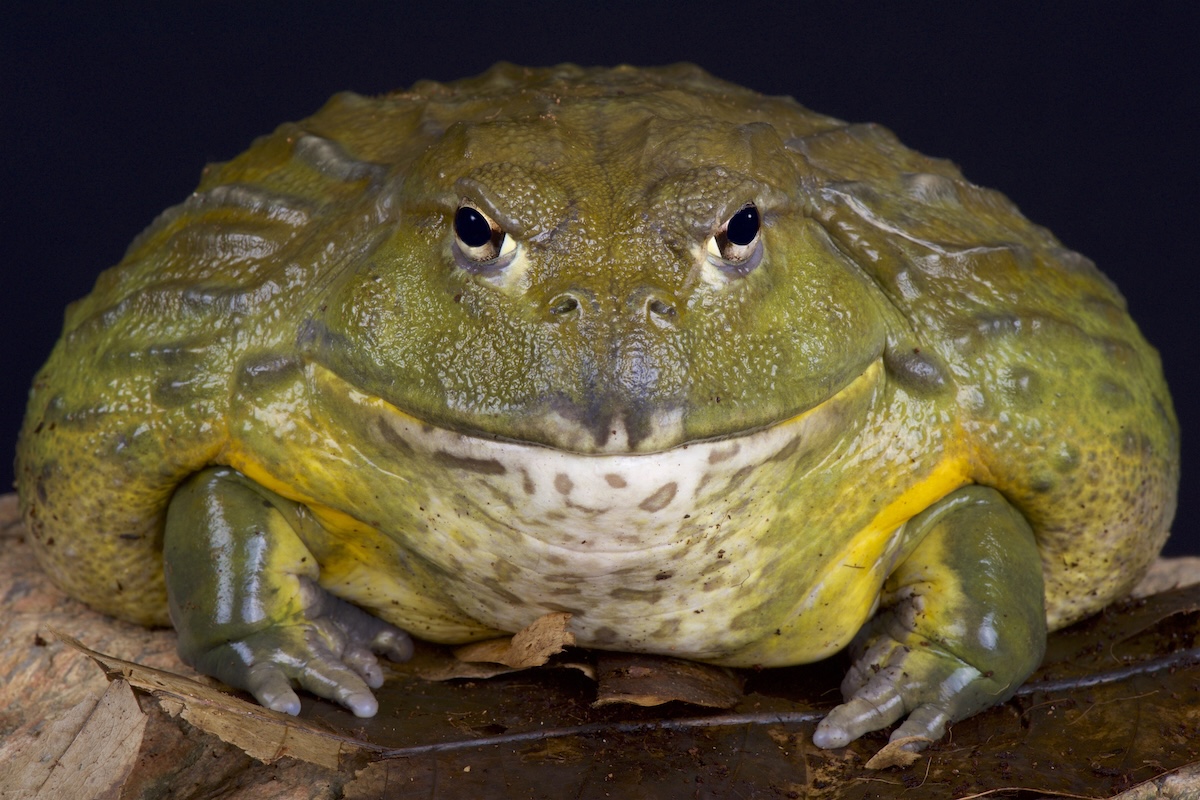 Photo Credit: REPTILES4ALL on Deposit Photos
In the heart of Sub-Saharan Africa, where the sun casts golden rays over vast grasslands and shimmering wetlands, lives the African Bullfrog, known scientifically as Pyxicephalus adspersus. This impressive amphibian is hard to miss, with its robust body that can grow to the size of a small dog, making it one of the largest frogs in the world. Its skin, a vibrant green adorned with darker spots, helps it blend into the lush surroundings, while its powerful legs are built for both impressive leaps and swift swimming. The African Bullfrog is not just a sight to behold; it is a creature of intrigue, captivating scientists and nature lovers alike with its unique behaviors and adaptations.
As the sun rises, the African Bullfrog emerges from its burrow, ready to greet the day. These frogs are known for their carnivorous diet, feasting on everything from insects to small rodents, showcasing their role as fierce predators in their ecosystem. During the rainy season, the air fills with the deep, resonant croaks of male bullfrogs calling out to attract mates, creating a symphony of sounds that echoes across the wetlands. This mating ritual is not only a spectacle of nature but also a vital part of their life cycle, ensuring the continuation of their species. With their fascinating behaviors and significant ecological role, the African Bullfrog invites us to explore the wonders of the natural world, reminding us of the intricate connections that bind all living things.
The African Bullfrog, scientifically known as Pyxicephalus adspersus, occupies a fascinating niche in the tree of life. This amphibian belongs to the kingdom Animalia, which includes all animals, and is classified under the phylum Chordata, meaning it has a backbone. As a member of the class Amphibia, the African Bullfrog showcases the unique characteristics of amphibians, such as a life cycle that includes both aquatic and terrestrial stages. What sets this species apart is its impressive size and robust build, making it one of the largest frogs in Africa. Its powerful legs and vocal abilities add to its distinctiveness, allowing it to thrive in various habitats, from wetlands to savannas.
| Taxonomic Rank | Scientific Name | Meaning & Significance |
|---|---|---|
| Kingdom | Animalia | This name signifies that the African Bullfrog is part of the vast group of multicellular organisms known as animals. |
| Phylum | Chordata | Chordata means “having a notochord,” which is a flexible rod that supports the body, a feature present in all vertebrates, including this bullfrog. |
| Class | Amphibia | Amphibia translates to “double life,” highlighting the frog’s ability to live both in water and on land during different life stages. |
| Order | Anura | Anura means “without a tail,” a defining characteristic of frogs and toads, including the African Bullfrog, as adults. |
| Family | Pyxicephalidae | This family name comes from the genus Pyxicephalus, which refers to the bullfrog’s boxy head shape, a notable feature of its appearance. |
| Genus | Pyxicephalus | Pyxicephalus means “box-headed,” emphasizing the broad, flat head that aids in its powerful vocalizations and hunting techniques. |
Understanding the African Bullfrog’s classification reveals much about its evolutionary journey. As a member of the amphibians, it shares a common ancestry with other frogs and toads, showcasing adaptations that have allowed it to thrive in diverse environments. Its size and strength suggest a lineage that has evolved to be both a predator and a survivor in the wild. The unique features highlighted in its taxonomic naming reflect not only its physical traits but also its ecological role, making the African Bullfrog a captivating subject for those interested in the wonders of evolution and biodiversity.
The African Bullfrog, or Pyxicephalus adspersus, has a captivating evolutionary history that stretches back millions of years. This amphibian is part of a lineage that has adapted to the diverse and often challenging environments of Africa. The story of the African Bullfrog is one of survival, showcasing how species evolve over time to meet the demands of their habitats.
The ancestors of the African Bullfrog were likely small, aquatic frogs that thrived in freshwater environments. Over time, as the climate and landscapes of Africa changed, these frogs began to adapt to a more terrestrial lifestyle. This transition involved developing stronger limbs for hopping and burrowing, allowing them to escape predators and find food more effectively. The African Bullfrog’s ability to endure dry seasons by burrowing into the ground and entering a state of dormancy is a significant evolutionary leap, enabling it to survive in fluctuating environments.
These adaptations have played a vital role in the African Bullfrog’s survival. By developing powerful limbs and the ability to burrow, they can navigate both wet and dry environments, ensuring they have access to food and shelter. Their vocalizations not only facilitate reproduction but also help establish dominance in their territory. With a varied diet and impressive size, these frogs can take advantage of different food sources, making them resilient in the face of environmental changes. The evolutionary journey of the African Bullfrog is a testament to nature’s ingenuity, showcasing how life can adapt and thrive against the odds.
The African Bullfrog is an impressive sight, standing out in the world of amphibians with its robust and hefty body. This bullfrog can grow to be quite large, with some individuals weighing as much as 18 kilograms, which is about the same as a small dog! Its body is muscular and stocky, giving it a powerful appearance. The skin is permeable, meaning it can absorb water and oxygen, which is essential for its survival in various habitats. With a broad, flat head and large, bulging eyes, this frog is perfectly designed for both hunting and evading predators.
| Feature | Description |
|---|---|
| Weight | 0.9-18 kg (2-4 lbs) |
| Skin Type | Permeable |
| Most Distinctive Feature | Size |
The African Bullfrog’s impressive size and permeable skin play crucial roles in its survival. The large body allows it to store energy and water, which is vital in the often dry environments of Africa. Its permeable skin helps it absorb moisture from its surroundings, enabling it to thrive in both wet and arid conditions. Together, these features not only make the African Bullfrog a formidable predator but also a resilient survivor in the wild.
The African Bullfrog thrives in a variety of habitats across Sub-Saharan Africa, showcasing its adaptability to different environments. Picture vast grasslands dotted with wildflowers, expansive floodplains teeming with life, and serene ponds reflecting the sky. This amphibian can also be found in marshes, where the air is rich with the sounds of nature, and in the dry, sun-baked areas of the high veld. Whether in the lush greenery of a farm or the open savanna, the African Bullfrog makes its home in places where water is nearby, allowing it to thrive.
The African Bullfrog prefers warm climates, often found in areas where temperatures can soar during the day. It thrives in regions that experience seasonal rains, which create temporary pools and ponds. These bodies of water are crucial for breeding and feeding. The bullfrog’s habitat can range from the humid conditions of marshes to the drier environments of savannas, showcasing its ability to adapt to varying moisture levels.
To survive in these diverse habitats, the African Bullfrog has developed several remarkable adaptations. Its strong legs allow it to leap great distances, helping it escape predators and navigate its environment. During dry spells, it can burrow into the ground, entering a state of dormancy until the rains return. This ability to withstand harsh conditions ensures that the African Bullfrog can thrive in both wet and dry seasons, making it a true survivor in the wild.
The African Bullfrog leads a life that is both intriguing and dynamic, filled with daily activities that revolve around its environment. As the sun rises, these amphibians emerge from their burrows, which they dig to escape the heat and dryness of the day. Their mornings are often spent basking in the sun, soaking up warmth to kickstart their metabolism. As the day progresses, they become more active, hunting for food. Their diet mainly consists of insects, small rodents, and even other frogs, showcasing their opportunistic feeding habits. When the sun sets, the African Bullfrog becomes even more lively, engaging in calls that echo through the night, signaling their presence to potential mates and rivals.
Socially, African Bullfrogs are quite solitary, preferring to live alone rather than in groups. This behavior is somewhat unusual for amphibians, as many species thrive in social settings. During the breeding season, however, they do gather in larger numbers near water sources. Males will call out to attract females, creating a chorus that can be heard from a distance. These vocalizations are not just for mating; they also serve to establish territory and ward off other males. Once a female chooses a mate, she will lay her eggs in the water, and the male will guard the area, ensuring the safety of the next generation.
| Behavior Type | Description |
|---|---|
| Activity Patterns | Active during the day and night, with increased activity at dusk for hunting and calling. |
| Social Structure | Primarily solitary, with gatherings during the breeding season for mating. |
| Communication Methods | Vocalizations are used for attracting mates and establishing territory, especially during the breeding season. |
The behaviors of the African Bullfrog are finely tuned to ensure its survival in the wild. By being solitary, it reduces competition for food and resources, allowing it to thrive in various habitats. The strategic use of vocalizations not only aids in reproduction but also helps maintain its territory, ensuring that it has access to the best resources. This combination of solitary living and effective communication makes the African Bullfrog a resilient and adaptable species in the ever-changing landscapes of Sub-Saharan Africa.
The African Bullfrog is a true carnivore, meaning it primarily eats meat. This amphibian has a hearty appetite and is known for its aggressive feeding behavior. With its powerful jaws and sharp teeth, it hunts a variety of prey, including insects, small mammals, reptiles, and even other frogs. The bullfrog’s keen eyesight and quick reflexes help it catch its meals, making it a formidable predator in its habitat.
| Dietary Aspect | Details |
|---|---|
| Diet Type | Carnivore |
| Favorite Foods | Insects, small mammals, reptiles, small birds, and other amphibians |
| Prey Items | Crickets, grasshoppers, small rodents, lizards, and even other frogs |
| Hunting/Foraging Strategies | Uses keen eyesight and quick reflexes to ambush prey; often waits patiently for food to come close |
This diverse diet plays a crucial role in the African Bullfrog’s ecology and daily routine. By consuming a wide range of prey, it helps control populations of insects and small animals, contributing to the balance of its ecosystem. The bullfrog’s hunting habits also influence its activity patterns, as it often hunts during the night when many of its prey are most active. This adaptability not only ensures its survival but also highlights the interconnectedness of life in its environment.
The African Bullfrog’s mating behavior is a spectacular event that takes place during the rainy season, when the air is filled with the sounds of croaking males. These males call out to attract females, creating a chorus that can be heard from quite a distance. Once a female chooses a mate, she lays her eggs in shallow water, where the male fertilizes them. This breeding season is crucial for the survival of the species, as the rainy months provide the perfect conditions for the eggs to develop.
| Reproductive Aspect | Details |
|---|---|
| Gestation Period | About 3-5 days |
| Litter Size | Up to 4,000 eggs |
| Age of Maturity | 1.5-2 years |
| Name of Young | Tadpole, polliwog, larva |
After the eggs hatch, the young African Bullfrogs, known as tadpoles, begin their journey in the water. These tadpoles are equipped with gills, allowing them to breathe underwater as they grow. Over time, they undergo a transformation called metamorphosis, where they develop legs and lungs, preparing them for life on land. Interestingly, the African Bullfrog exhibits a level of parental care that is not common among amphibians. Males often guard the tadpoles, ensuring their safety from predators. As the tadpoles mature into adults, they leave the water and venture into their terrestrial habitat, ready to start the cycle anew.
The African Bullfrog plays a vital role in its ecosystem, sitting comfortably in the middle of the food web. As a carnivore, it preys on a variety of smaller animals, including insects and even small mammals. However, it is not without its own set of challenges. This amphibian faces numerous predators and threats that can impact its survival in the wild.
To defend itself against these dangers, the African Bullfrog has developed several survival strategies. When threatened, it can inflate its body to appear larger and more intimidating. This puffing up can deter potential predators. Additionally, the bullfrog’s tough skin helps protect it from bites and scratches. It also has a remarkable ability to burrow into the ground, allowing it to escape harsh conditions and avoid detection. These clever adaptations help the African Bullfrog navigate the challenges of its environment, ensuring its place in the wild.
A keystone species is an organism that has a disproportionately large impact on its environment relative to its abundance. In other words, if it were removed, the ecosystem would change dramatically. The African Bullfrog, or Pyxicephalus adspersus, qualifies as a keystone species due to its significant role in the food web and its influence on the populations of other species in its habitat.
The African Bullfrog is a powerful predator in its ecosystem, primarily feeding on insects and small animals. By controlling the populations of these creatures, it helps maintain a balance in the ecosystem. For example, if the bullfrog were to decline in numbers, the insect population could explode, leading to overgrazing of vegetation and disrupting the habitat for other animals. Additionally, the bullfrog serves as prey for larger predators, such as birds of prey and snakes, linking different levels of the food web together.
Moreover, the African Bullfrog’s breeding habits contribute to the health of its environment. During the rainy season, these frogs gather in large numbers to breed in temporary ponds. This not only creates a vibrant spectacle but also provides a food source for other animals that rely on these breeding events. The presence of bullfrogs can also indicate the health of their aquatic habitats, as they are sensitive to changes in water quality.
If the African Bullfrog were to disappear, the consequences would ripple through its ecosystem. The sudden increase in insect populations could lead to significant vegetation loss, affecting not only plants but also the animals that depend on them for food and shelter. Larger predators that rely on bullfrogs for sustenance would face food shortages, potentially leading to their decline as well. In essence, the absence of this remarkable amphibian would create a cascade of changes, highlighting its vital role in maintaining ecological balance.
The African Bullfrog, known scientifically as Pyxicephalus adspersus, plays a vital role in shaping its ecosystem. This amphibian thrives in diverse habitats, including grasslands, marshes, and floodplains across Sub-Saharan Africa. As a carnivore, it helps maintain the balance of its environment by controlling the populations of smaller animals. By doing so, the African Bullfrog ensures that no single species dominates, allowing for a rich tapestry of life to flourish around it.
| Ecosystem Service | Impact |
|---|---|
| Predation | Controls populations of insects and small animals, preventing overpopulation. |
| Soil Aeration | Burrowing behavior helps aerate the soil, promoting plant growth. |
| Nutrient Cycling | Contributes to nutrient cycling through its waste, enriching the soil. |
| Food Source | Serves as prey for larger animals, supporting the food web. |
The African Bullfrog’s influence is evident in various ways. For instance, its predation on insects helps keep pest populations in check, which is crucial for farmers and the overall health of the ecosystem. Additionally, when these frogs burrow into the ground, they create channels that allow air and water to penetrate the soil more effectively. This aeration is essential for plant roots, promoting a healthier environment for vegetation to thrive. Furthermore, the nutrients from their waste enrich the soil, benefiting the plants that grow in their habitats.
The broader ecological importance of the African Bullfrog cannot be overstated. As a keystone species, its presence is crucial for maintaining the balance of its ecosystem. If the African Bullfrog were to disappear, the effects would ripple through the food web, potentially leading to overpopulation of certain species and a decline in plant health. By understanding the role of this remarkable amphibian, we gain insight into the intricate connections that sustain life in the wild, reminding us of the delicate balance that exists in nature.
In the intricate web of life, symbiosis refers to the close and often long-term interactions between different species. These relationships can take many forms, including mutualism, where both species benefit, parasitism, where one benefits at the expense of the other, and commensalism, where one benefits while the other is neither helped nor harmed. The African Bullfrog, known scientifically as Pyxicephalus adspersus, engages in various ecological relationships that highlight the complexity of its environment and the interconnectedness of life.
| Species/Type | Relationship Type | Description |
|---|---|---|
| Small fish | Mutualistic | The African Bullfrog may benefit from the presence of small fish in its habitat, as these fish help keep the water clean by eating algae, which can improve the bullfrog’s living conditions. |
| Insects | Mutualistic | Insects, which are a primary food source for the bullfrog, benefit from the bullfrog’s presence as it helps control their populations, creating a balance in the ecosystem. |
| Frogs and toads | Commensal | Other smaller frogs and toads may share the same habitat as the African Bullfrog, benefiting from the shelter and protection it provides without affecting the bullfrog. |
The evolution of these relationships showcases the adaptability and resilience of the African Bullfrog and its companions. Over time, these species have developed ways to coexist, benefiting from one another in a delicate balance. The mutualistic relationships enhance the bullfrog’s survival by ensuring a cleaner habitat and a steady food supply, while commensal relationships allow other species to thrive in the safety of the bullfrog’s presence. This interconnectedness is a beautiful reminder of how life on Earth is woven together, with each species playing a role in the grand tapestry of nature.
The African Bullfrog is a captivating amphibian that showcases some truly surprising traits and behaviors. Here are a few intriguing facts that highlight just how remarkable this species is.
The African Bullfrog, known scientifically as Pyxicephalus adspersus, has a long history of interaction with humans, deeply rooted in various cultures across Sub-Saharan Africa. Historically, these amphibians have been featured in folklore and traditional stories, often symbolizing strength and resilience. In some communities, their croaking calls during the rainy season are seen as a sign of good fortune, heralding the arrival of life-giving rains. Additionally, the bullfrog has been a source of food for many, with its meaty legs considered a delicacy in certain regions. This connection between the African Bullfrog and humanity highlights not only the animal’s ecological importance but also its cultural significance.
In contemporary times, the relationship between humans and African Bullfrogs has evolved, reflecting both conservation efforts and challenges. As habitats are threatened by urbanization and agriculture, conservationists are working to protect these amphibians and their ecosystems. However, conflicts arise when bullfrogs invade agricultural lands, leading to tensions between farmers and wildlife. Interestingly, some communities have begun to domesticate African Bullfrogs for farming, recognizing their potential as a sustainable food source. This duality of conservation and conflict illustrates the complex dynamics at play in our interactions with this remarkable species.
Looking ahead, the future of the African Bullfrog and its relationship with humanity will depend on our ability to balance conservation with the needs of local communities. As awareness grows about the ecological importance of this species, there is hope for more sustainable practices that benefit both the bullfrog and the people who share its habitat. By fostering a deeper understanding of these amphibians, we can ensure that they continue to thrive alongside us, enriching our lives and ecosystems for generations to come.
The African Bullfrog, or Pyxicephalus adspersus, currently holds a conservation status of “Least Concern” according to the International Union for Conservation of Nature (IUCN). This means that, at present, the species is not facing an immediate threat of extinction. However, specific population estimates remain unknown, making it difficult to assess trends accurately. While the overall status is stable, ongoing monitoring is essential to ensure that this amphibian continues to thrive in its natural habitats.
| Conservation Factor | Status/Details |
|---|---|
| IUCN Status | Least Concern |
| Estimated Population Size | Unknown |
| Population Trend | Stable |
Despite its current stable status, the African Bullfrog faces several threats that could impact its future. Habitat loss is a significant concern, primarily due to agricultural expansion and urban development. As wetlands and grasslands are drained or altered for farming and construction, the bullfrog’s breeding and feeding grounds diminish. Additionally, pollution from pesticides and fertilizers can harm their delicate ecosystems, affecting not only the bullfrogs but also the myriad of other species that share their habitat.
Conservation efforts are underway to protect the African Bullfrog and its environment. Initiatives focus on habitat preservation and restoration, ensuring that these amphibians have safe places to live and breed. Education programs are also vital, raising awareness about the importance of wetlands and the role of bullfrogs in their ecosystems. With continued efforts and community involvement, the outlook for the African Bullfrog remains hopeful, allowing future generations to appreciate this fascinating amphibian.
| Question | Answer |
|---|---|
| What is the habitat of the African Bullfrog? | The African Bullfrog is quite adaptable and can be found in a variety of habitats. These include deserts, high veld, floodplains, grasslands, savannas, farms, marshes, ponds, and lakes. This wide range allows them to thrive in different environments across Africa. |
| What does the African Bullfrog eat? | As a carnivore, the African Bullfrog has a diet that mainly consists of insects, small mammals, and other amphibians. They are known for their impressive hunting skills, using their long, sticky tongues to catch prey. This diet helps them grow to their impressive size, making them one of the largest frogs in the world. |
| How does the African Bullfrog behave? | The African Bullfrog is known for its bold and aggressive behavior, especially during the breeding season. Males can be quite territorial, often engaging in loud calls to attract females and ward off rivals. They are also social creatures, sometimes found in groups, especially when they gather around water sources. |
| How does reproduction occur in African Bullfrogs? | During the rainy season, male African Bullfrogs call to attract females to breeding sites, usually in shallow water. After mating, females lay thousands of eggs, which hatch into tadpoles. These tadpoles grow quickly, often transforming into frogs within a few months, ready to face the world. |
| What threats do African Bullfrogs face? | While the African Bullfrog is currently listed as Least Concern, they still face threats from habitat destruction and pollution. As wetlands and natural habitats are altered for agriculture and urban development, their living spaces shrink. Additionally, climate change can impact their breeding cycles and food availability. |
| What is an interesting characteristic of the African Bullfrog? | One of the most distinctive features of the African Bullfrog is its size; they can grow up to 10 inches long! This makes them one of the largest frogs in the world. Their size, combined with their powerful legs, allows them to jump great distances, making them impressive hunters. |
| How do African Bullfrogs survive in dry conditions? | African Bullfrogs have a unique ability to survive in dry conditions by burrowing into the ground. They can enter a state of dormancy, slowing their metabolism until the rains return. This adaptation allows them to endure long periods without water, emerging when conditions are favorable. |