Taxonomy & Classification
- Kingdom
- Animalia
- Phylum
- Chordata
- Class
- Aves
- Order
- Accipitriformes
- Family
- Accipitridae
- Genus
- Haliaeetus
- Species
- Haliaeetus Vocifer

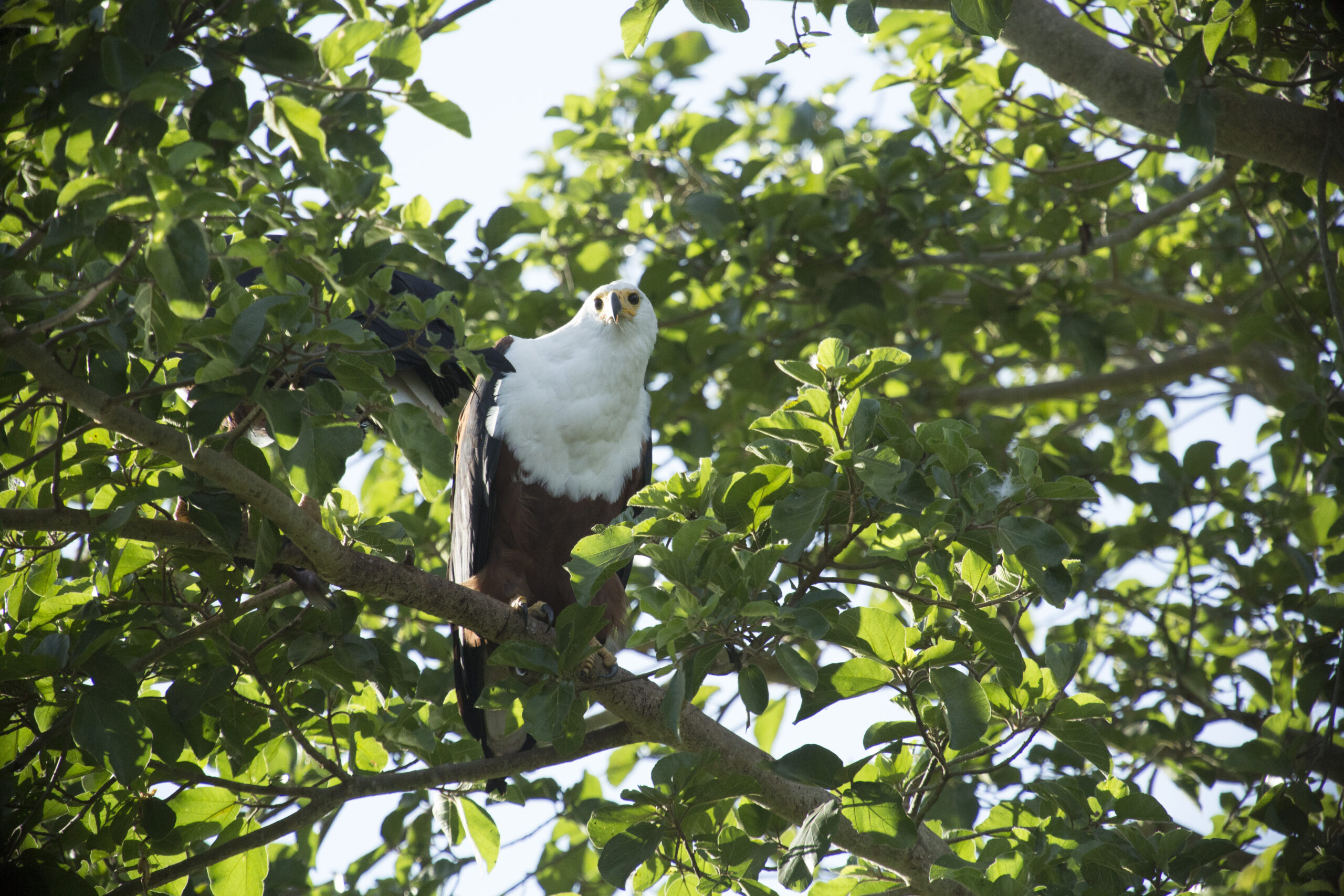 Photo Credit: Thomas Fuhrmann / Wikimedia
In the shimmering light of dawn, the African Fish Eagle, or Haliaeetus vocifer, takes to the skies above the vast lakes and winding rivers of Sub-Saharan Africa. With its striking white head and tail contrasting against a rich brown body, this majestic bird is a true icon of the continent’s waterways. Its impressive wingspan, stretching between 6.6 to 8 feet, allows it to soar gracefully, scanning the water below for its next meal. The eagle’s sharp, yellow beak and piercing eyes are perfectly designed for spotting fish from great heights, making it a masterful hunter in its aquatic domain.
What makes the African Fish Eagle particularly captivating is not just its beauty, but also its role in the ecosystem. As a top predator, it helps maintain the balance of life around the water, influencing the populations of fish and other species. Scientists and nature enthusiasts alike are drawn to this bird, not only for its impressive hunting skills but also for its distinctive, echoing call that resonates across the landscape, a sound that has become synonymous with the African wilderness. As we explore the life of the African Fish Eagle, we will uncover its fascinating behaviors, its vital role in the ecosystem, and the deep connections it shares with the cultures of the people living alongside it.
The African Fish Eagle holds a prominent place in the tree of life, showcasing its unique adaptations and behaviors that set it apart in the animal kingdom. This majestic bird, known for its striking appearance and powerful presence, belongs to the family Accipitridae, which includes other raptors like hawks and kites. With its keen eyesight and impressive hunting skills, the African Fish Eagle is a master of its aquatic environment, primarily feeding on fish. Its distinctive call, often described as a series of high-pitched whistles, echoes across the lakes and rivers of Africa, making it a symbol of the continent’s rich biodiversity.
| Taxonomic Rank | Scientific Name | Meaning & Significance |
|---|---|---|
| Kingdom | Animalia | This classification includes all animals, highlighting the African Fish Eagle as a member of the diverse animal kingdom. |
| Phylum | Chordata | Chordata refers to animals with a backbone, emphasizing the structural complexity and support that allows the eagle to soar gracefully. |
| Class | Aves | Aves is the class of birds, indicating that the African Fish Eagle possesses feathers, lays eggs, and has adaptations for flight. |
| Order | Accipitriformes | This order includes birds of prey, showcasing the eagle’s predatory nature and its role as a top hunter in its ecosystem. |
| Family | Accipitridae | Accipitridae encompasses hawks, eagles, and kites, linking the African Fish Eagle to other powerful raptors known for their sharp talons and beaks. |
| Genus | Haliaeetus | Haliaeetus means “sea eagle,” reflecting the bird’s affinity for aquatic habitats and its primary diet of fish. |
The classification of the African Fish Eagle reveals much about its evolutionary history and ecological niche. As a member of the Accipitridae family, it shares common ancestry with other birds of prey, which have evolved specialized traits for hunting and survival. Its genus, Haliaeetus, underscores its adaptation to life near water, where it has developed remarkable skills for catching fish. This evolutionary journey highlights the intricate connections between species and their environments, illustrating how the African Fish Eagle has become a vital part of the ecosystems it inhabits.
The African Fish Eagle, a symbol of strength and grace, has a rich evolutionary history that stretches back millions of years. This bird belongs to the family Accipitridae, which includes hawks, kites, and other eagles. Its lineage can be traced to the early ancestors of birds of prey, which emerged during the late Cretaceous period, around 70 million years ago. Over time, these ancestors adapted to various environments, leading to the diverse raptors we see today.
The African Fish Eagle’s evolutionary journey is marked by significant transitions that shaped its current form. Early birds of prey were primarily scavengers, but as they evolved, they developed sharper talons and stronger beaks, allowing them to hunt more effectively. The African Fish Eagle, specifically, adapted to a life near water, honing its skills to catch fish with remarkable precision. Its keen eyesight, which allows it to spot prey from great heights, is a direct result of this adaptation. Additionally, its powerful wings enable it to soar effortlessly over lakes and rivers, searching for its next meal.
These adaptations have been crucial for the African Fish Eagle’s survival in its aquatic habitats. By developing specialized hunting tools and techniques, it has become a master fisherman, thriving in environments where food is abundant. Its ability to spot prey from afar and its social nature further enhance its chances of success, allowing this magnificent bird to flourish across the African continent. The African Fish Eagle is not just a survivor; it is a testament to the power of evolution and adaptation in the natural world.
The African Fish Eagle is a stunning sight to behold, embodying the spirit of the African waterways it calls home. With a wingspan that can stretch up to 7 feet, this bird commands attention as it soars gracefully above lakes and rivers. Its body is robust and powerful, designed for both hunting and gliding effortlessly through the air. The contrast of its striking white head and tail against the deep brown of its body creates a visual spectacle that is hard to forget.
| Feature | Description |
|---|---|
| Weight | 4.4 to 7.9 pounds |
| Color | White head and tail, dark brown body, and yellow beak |
| Skin Type | Feathers |
| Wingspan | Up to 7 feet |
These striking features are not just for show; they play vital roles in the eagle’s survival. The white head and tail help it stand out against the blue sky, making it easier for mates to spot each other during courtship. The dark brown body provides excellent camouflage when perched among the trees, allowing it to blend into its surroundings while hunting. Its powerful wings enable it to soar high above the water, scanning for fish with keen eyesight. The African Fish Eagle’s design is a perfect blend of beauty and function, making it a true master of its aquatic domain.
The African Fish Eagle thrives in the vibrant ecosystems of Sub-Saharan Africa, where large bodies of water create a perfect backdrop for its life. Picture expansive lakes, winding rivers, and lush wetlands, all teeming with life. These habitats are not just beautiful; they are bustling with fish and other aquatic creatures, making them ideal for this bird of prey. The African Fish Eagle often perches majestically on tall trees or rocky outcrops, scanning the waters below for its next meal.
This eagle prefers warm climates, typically found in regions where temperatures are mild to hot. The environmental conditions are crucial for its survival, as it relies on the availability of fish, its primary food source. These areas often experience seasonal changes, with wet and dry periods that influence the abundance of fish. The African Fish Eagle is well-suited to these environments, as it can adapt to varying water levels and the shifting dynamics of its habitat.
Adaptation is key to the African Fish Eagle’s success in these diverse habitats. Its keen eyesight allows it to spot fish from great heights, while its powerful talons are perfectly designed for catching slippery prey. The eagle’s strong wings enable it to soar effortlessly over the water, and its distinctive call echoes across the landscape, marking its territory. These adaptations not only help it thrive but also make it a symbol of the rich biodiversity found in Africa’s waterways.
The African Fish Eagle leads a vibrant and active life, primarily during the day, as it is a diurnal bird. Each morning, it greets the sun with a loud, distinctive call that echoes across the waterways it inhabits. After a hearty breakfast of fish, which it skillfully snatches from the water with its sharp talons, the eagle spends its day soaring gracefully above lakes and rivers. It often perches on tall trees or rocky outcrops, scanning the water for its next meal. This daily routine is not just about feeding; it also involves maintaining its territory and engaging in courtship displays, which are essential for attracting a mate.
Socially, African Fish Eagles are known for their strong pair bonds. Typically, they form monogamous pairs that work together to defend their territory and raise their young. These pairs communicate through a series of calls and visual displays, reinforcing their connection and coordinating their activities. While they are primarily seen in pairs, they can sometimes be found in small groups, especially during the breeding season when they gather around abundant food sources. This social structure helps them thrive in their environment, as they can rely on each other for support and protection.
| Behavior Type | Description |
|---|---|
| Activity Patterns | Diurnal lifestyle with a focus on hunting, feeding, and territory maintenance during daylight hours. |
| Social Structure | Typically forms monogamous pairs that work together to defend their territory and raise young. |
| Communication Methods | Uses a variety of calls and visual displays to communicate with its mate and assert territorial claims. |
The behaviors of the African Fish Eagle are finely tuned to ensure its survival in the wild. By working closely with its mate, it can effectively defend its territory from intruders and secure a steady food supply. The strong bond between partners not only aids in raising their young but also enhances their hunting success. This combination of teamwork and communication is vital, allowing them to thrive in the diverse ecosystems of Africa, where competition for resources can be fierce.
The African Fish Eagle is a carnivore, which means it primarily eats meat. This magnificent bird has a diet that mainly consists of fish, but it doesn’t stop there. It also enjoys a variety of other foods, including small mammals, amphibians, reptiles, and even birds. With its keen eyesight and impressive hunting skills, the African Fish Eagle is a master at spotting its prey from high above, often soaring gracefully over lakes and rivers in search of a meal.
| Dietary Aspect | Details |
|---|---|
| Diet Type | Carnivore |
| Favorite Foods | Fish, small mammals, amphibians, reptiles, and birds |
| Prey Items | Various fish species, frogs, small rodents, and other birds |
| Hunting/Foraging Strategies | Soars high to spot prey, dives to catch fish, and may scavenge |
The diet of the African Fish Eagle plays a crucial role in its ecology and daily routine. By primarily feeding on fish, it helps maintain the balance of aquatic ecosystems, ensuring that fish populations remain healthy. This bird’s hunting habits also influence the behavior of other animals in its habitat, as it often competes with other predators for food. With its impressive skills and adaptability, the African Fish Eagle not only thrives in its environment but also contributes to the vibrant tapestry of life in the African waterways.
The African Fish Eagle is not just a stunning bird; it also has a captivating mating ritual that sets the stage for its breeding season. Typically, this season occurs between May and August, coinciding with the abundance of fish in the waters they inhabit. During courtship, males perform impressive aerial displays, soaring high and diving dramatically to impress potential mates. Once a pair forms a bond, they often return to the same nesting site year after year, reinforcing their partnership and commitment to raising their young together.
| Reproductive Aspect | Details |
|---|---|
| Gestation Period | Approximately 45 days |
| Litter Size | 1 to 3 eggs |
| Age of Maturity | About 3 to 4 years |
| Name of Young | Eaglets |
Once the eggs hatch, the real adventure begins. The parents share the responsibility of caring for their eaglets, providing them with food and protection. The young birds are covered in soft down feathers and are quite helpless at first, relying entirely on their parents. As they grow, they develop their feathers and learn essential skills like hunting and flying. By the time they reach maturity, they are ready to take on the world, soaring through the skies just like their parents. This nurturing process not only strengthens the family bond but also ensures that the next generation of African Fish Eagles is prepared to thrive in their aquatic habitats.
The African Fish Eagle occupies a vital role in its ecosystem, sitting at the top of the food web as a skilled predator. With its keen eyesight and powerful talons, it expertly hunts fish and other aquatic creatures, helping to maintain the balance of life in its watery habitats. However, this majestic bird faces several dangers that threaten its survival.
To defend itself against these threats, the African Fish Eagle employs a variety of survival strategies. It often nests in tall trees near water, providing a safe vantage point to spot danger. When threatened, it can be quite aggressive, using its sharp beak and talons to fend off intruders. Additionally, its ability to soar high in the sky allows it to survey large areas for food and potential threats, ensuring it remains one step ahead in the wild.
A keystone species is an organism that plays a critical role in maintaining the structure of its ecosystem. Its presence and activities significantly influence the types and numbers of other species in that environment. The African Fish Eagle qualifies as a keystone species due to its pivotal role in aquatic ecosystems across Sub-Saharan Africa. By regulating fish populations and influencing the behavior of other animals, this majestic bird helps maintain the balance of its habitat.
The African Fish Eagle primarily feeds on fish, which makes it a top predator in its environment. By hunting and consuming fish, it helps control fish populations, preventing any one species from becoming too dominant. This balance is crucial for the health of aquatic ecosystems, as diverse fish populations support a variety of other wildlife. For example, when the eagle catches fish, it also indirectly supports the populations of smaller birds and mammals that rely on fish for food.
Moreover, the African Fish Eagle’s nesting habits contribute to the ecosystem’s health. These birds build large nests near water bodies, often in tall trees. When they abandon these nests, they provide homes for other species, such as owls and various insects. This nesting behavior fosters biodiversity, allowing different organisms to thrive in the same area.
The eagle’s presence also influences the behavior of other animals. For instance, smaller birds often change their feeding patterns when the eagle is nearby, which can lead to shifts in the entire food web. This dynamic interaction showcases how the African Fish Eagle is not just a solitary hunter but a vital player in the intricate web of life around water sources.
If the African Fish Eagle were to disappear, the effects would ripple through its ecosystem. Fish populations could surge unchecked, leading to imbalances that could harm aquatic plants and other species dependent on those fish. The loss of this eagle would also mean fewer nesting opportunities for other birds, potentially reducing their populations. Overall, the absence of the African Fish Eagle would disrupt the delicate balance of life in its habitat, highlighting just how essential this magnificent bird is to the health of its ecosystem.
The African Fish Eagle is a vital player in its ecosystem, primarily found around large bodies of water in Sub-Saharan Africa. This magnificent bird not only captivates with its striking appearance but also fulfills an essential ecological niche. As a top predator, it helps regulate fish populations and influences the dynamics of aquatic ecosystems. By maintaining a balance in these environments, the African Fish Eagle ensures that various species can thrive, showcasing the interconnectedness of life in its habitat.
| Ecosystem Service | Impact |
|---|---|
| Predation | Controls fish populations, preventing overpopulation and promoting biodiversity. |
| Scavenging | Clears away dead fish and other organic matter, contributing to nutrient cycling. |
| Habitat Creation | Nests built in trees provide shelter for other species, enhancing local biodiversity. |
| Indicator Species | Reflects the health of aquatic ecosystems, signaling changes in environmental conditions. |
The influence of the African Fish Eagle extends beyond its role as a predator. For instance, when it hunts, it often targets specific fish species, which can lead to a healthier population of those fish. This selective predation helps maintain a balanced ecosystem, allowing other aquatic organisms to flourish. Additionally, the eagle’s nests, often built high in trees, provide safe havens for various birds and small mammals, creating a microhabitat that supports diverse life forms. Its presence can even indicate the overall health of the waterway, as a decline in their numbers may signal environmental issues.
The broader ecological importance of the African Fish Eagle cannot be overstated. As a keystone species, its activities shape the structure of its ecosystem, influencing not just fish populations but also the entire community of organisms that depend on these waterways. By ensuring a balanced environment, the African Fish Eagle plays a crucial role in sustaining the rich biodiversity of Sub-Saharan Africa. Its majestic calls and graceful flights remind us of the intricate web of life that thrives in these vibrant ecosystems, urging us to protect and cherish the natural world around us.
In the intricate web of life, symbiosis plays a crucial role in shaping the relationships between different species. Symbiosis refers to the close interactions between organisms, which can be beneficial, harmful, or neutral. These ecological relationships can take many forms, such as mutualism, where both species gain advantages, parasitism, where one benefits at the expense of the other, and commensalism, where one species benefits while the other is neither helped nor harmed. The African Fish Eagle, a striking bird of prey, engages in various partnerships with other species, showcasing the dynamic interactions that occur in its habitat.
| Species/Type | Relationship Type | Description |
|---|---|---|
| Fish | Mutualistic | The African Fish Eagle relies on fish for food, while the presence of the eagle can help keep fish populations healthy by preying on the weaker individuals. |
| Water Hyacinth | Commensal | The eagle often perches on water hyacinth plants, which provide a vantage point for hunting without harming the plants. |
| Other Birds | Commensal | Smaller birds may follow the eagle to scavenge leftovers from its meals, benefiting from the eagle’s hunting success without affecting it. |
These relationships have evolved over time, shaped by the needs and behaviors of the species involved. The African Fish Eagle’s role as a predator not only helps maintain the balance of fish populations but also creates opportunities for other species to thrive. By understanding these connections, we can appreciate the complexity of ecosystems and the importance of each species in maintaining the health of their environment. The partnerships formed by the African Fish Eagle illustrate the beauty of nature’s interdependence, reminding us that every creature plays a part in the grand tapestry of life.
The African Fish Eagle is a captivating bird that embodies the spirit of Africa’s waterways. With its striking appearance and impressive hunting skills, this bird has earned a special place in the hearts of nature enthusiasts. Here are some surprising facts that showcase just how extraordinary this eagle truly is.
The African Fish Eagle has long been intertwined with human culture and history, serving as a powerful symbol across various African societies. Ancient tribes revered this majestic bird, often associating it with strength, freedom, and the spirit of the waters. Its distinctive call, reminiscent of a human scream, has inspired folklore and stories, making it a prominent figure in local traditions. In many cultures, the eagle is seen as a messenger between the earthly realm and the divine, embodying the connection between nature and humanity.
Today, the relationship between the African Fish Eagle and people is complex and multifaceted. As conservation efforts grow, many communities recognize the importance of protecting this iconic bird and its habitat. However, conflicts can arise, particularly when eagles prey on fish that local fishermen rely on for their livelihoods. Some communities have even attempted to domesticate or train these birds for hunting, showcasing a blend of admiration and practical interaction. Balancing conservation with the needs of local populations remains a challenge, as both the eagles and humans strive to coexist in shared environments.
Looking ahead, the future of the African Fish Eagle and its relationship with humanity hinges on mutual respect and understanding. As awareness of environmental issues grows, more people are recognizing the eagle’s role in maintaining healthy ecosystems. By fostering a sense of stewardship and promoting sustainable practices, communities can work together to protect this magnificent bird while ensuring that human needs are met. The journey forward is one of collaboration, where both the African Fish Eagle and humanity can thrive side by side.
The African Fish Eagle is currently classified as “Least Concern” by the International Union for Conservation of Nature (IUCN). This status indicates that, while the species is not facing immediate threats of extinction, it is essential to monitor its population trends. With an estimated population size of around 300,000 individuals, the African Fish Eagle remains relatively stable across its range in Sub-Saharan Africa. However, ongoing observation is crucial to ensure that this majestic bird continues to thrive in its natural habitat.
| Conservation Factor | Status/Details |
|---|---|
| IUCN Status | Least Concern |
| Estimated Population Size | Approximately 300,000 |
| Population Trend | Stable |
One of the main threats to the African Fish Eagle comes from habitat loss, primarily due to human activities such as agriculture and urban development. As wetlands and riverbanks are altered or destroyed, the eagle’s hunting grounds shrink, making it harder for them to find food. Pollution in water bodies can also impact fish populations, which are a primary food source for these birds. Additionally, climate change poses a long-term risk, as shifting weather patterns can affect the availability of suitable habitats and food sources.
Conservation efforts for the African Fish Eagle are underway, focusing on habitat protection and restoration. Organizations and local communities are working together to safeguard wetlands and river ecosystems, ensuring that these birds have the resources they need to thrive. Education and awareness programs are also vital, helping people understand the importance of preserving these magnificent birds and their habitats. With continued efforts, the outlook for the African Fish Eagle remains positive, allowing future generations to enjoy the sight and sound of this iconic species soaring above Africa’s waterways.
| Question | Answer |
|---|---|
| What is the habitat of the African Fish Eagle? | The African Fish Eagle is commonly found near large bodies of water, such as lakes, rivers, and wetlands in Sub-Saharan Africa. These areas provide the perfect environment for hunting and nesting. |
| What does the African Fish Eagle eat? | This majestic bird is a carnivore, primarily feeding on fish. It uses its sharp talons to catch fish swimming near the surface of the water, but it may also eat small birds and mammals when fish are scarce. |
| How does the African Fish Eagle behave? | African Fish Eagles are known for their distinctive, loud calls that echo around their habitats. They are often seen soaring high in the sky or perched on trees, scanning the water for prey. |
| How do African Fish Eagles reproduce? | These eagles typically mate for life and build large nests near water. The female lays one to three eggs, and both parents take turns incubating them until they hatch, usually after about 45 days. |
| What threats do African Fish Eagles face? | While the African Fish Eagle is currently classified as Least Concern, it still faces threats from habitat destruction and pollution. Changes in water quality can affect fish populations, which in turn impacts the eagles' food supply. |
| What are some interesting characteristics of the African Fish Eagle? | One of the most striking features of the African Fish Eagle is its white head and tail, contrasting with its dark brown body. They are also known for their impressive wingspan, which can reach up to 2.4 meters, making them powerful fliers. |
| How do African Fish Eagles communicate? | African Fish Eagles have a variety of vocalizations, including their iconic, high-pitched call that sounds like a series of "weee-eee." This call is used to establish territory and communicate with their mate. |