Taxonomy & Classification
- Kingdom
- Animalia
- Phylum
- Chordata
- Class
- Reptilia
- Order
- Testudines
- Family
- Emydidae
- Genus
- Terrapene
- Species
- Terrapene carolina carolina

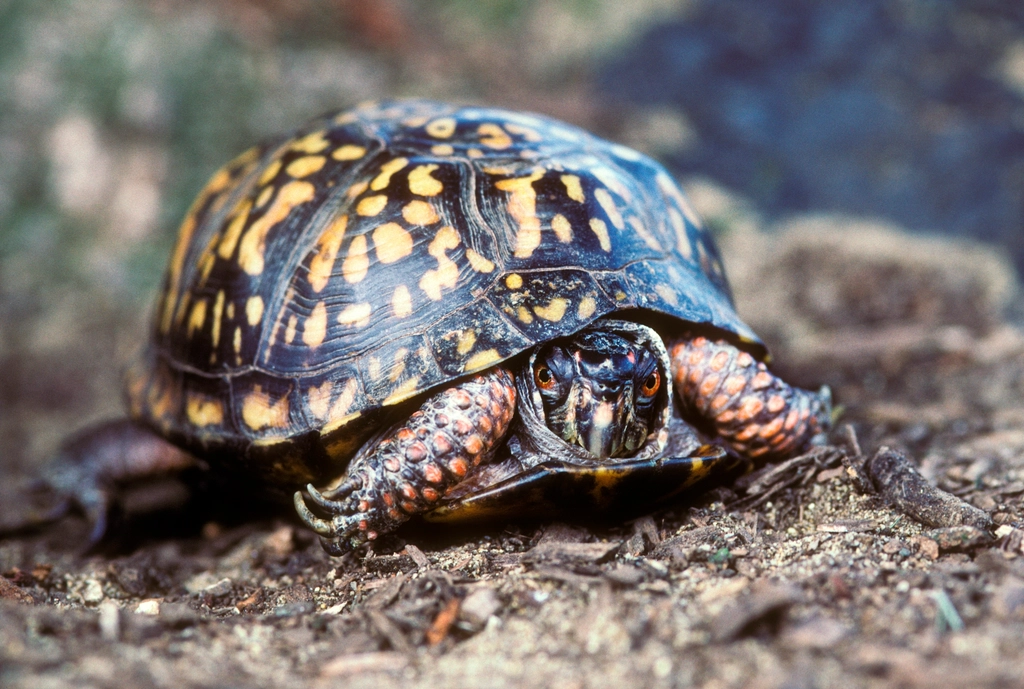 Photo Credit: Rawpixel
In the heart of North America’s lush woodlands, the Eastern Box Turtle, scientifically known as Terrapene carolina, ambles through a world of dappled sunlight and vibrant greenery. With its distinctive, dome-shaped shell adorned in rich hues of orange and yellow, this charming reptile captures the imagination of both scientists and nature lovers alike. Its shell is not just a protective home; it’s a living canvas that tells the story of its life, with each unique pattern reflecting its individual journey.
As the Eastern Box Turtle navigates the forest floor, it showcases its fascinating behavior, from basking in the sun to foraging for a delightful mix of plants and insects. This turtle is a true omnivore, meaning it enjoys a varied diet that keeps it healthy and thriving. What makes the Eastern Box Turtle particularly intriguing is its ability to live for decades, with some individuals reaching over 100 years old! This longevity, combined with its role in the ecosystem as both a herbivore and a prey species, highlights its importance in maintaining the balance of its habitat. Join us as we explore the life of the Eastern Box Turtle, uncovering the secrets of its survival and the challenges it faces in a changing world.
The Eastern Box Turtle, a captivating member of the animal kingdom, holds a special place in the tree of life. This turtle is classified within the Kingdom Animalia, which includes all animals, and it belongs to the Phylum Chordata, known for animals with a backbone. As a member of the Class Reptilia, it shares traits with other reptiles like snakes and lizards. What sets the Eastern Box Turtle apart is its ability to completely close its shell, a unique feature that provides excellent protection from predators. This remarkable adaptation not only showcases its evolutionary ingenuity but also highlights its long-standing presence in North American ecosystems.
| Taxonomic Rank | Scientific Name | Meaning & Significance |
|---|---|---|
| Kingdom | Animalia | This name comes from the Latin word for “animal,” emphasizing that these organisms are living beings that can move and respond to their environment. |
| Phylum | Chordata | Derived from the Greek word “chordē,” meaning “string,” this term refers to the notochord, a flexible rod that supports the body in all chordates during some stage of development. |
| Class | Reptilia | This classification comes from the Latin word “reptilis,” meaning “creeping,” which describes the way many reptiles move along the ground. |
| Order | Testudines | From the Latin “testudo,” meaning “tortoise,” this name highlights the distinctive shell that protects these animals, a key feature of their identity. |
| Family | Emydidae | This name is derived from the Greek word “emys,” meaning “freshwater turtle,” indicating that members of this family are often found in aquatic environments. |
| Genus | Terrapene | From the Latin word “terra,” meaning “earth,” this name reflects the box turtle’s terrestrial habits, as they are primarily land-dwelling. |
Understanding the Eastern Box Turtle’s classification reveals much about its evolutionary journey. This turtle has adapted to a variety of habitats, from forests to grasslands, showcasing its resilience and versatility. Its unique shell structure and behavior have allowed it to thrive in diverse environments for millions of years. By tracing its lineage through the taxonomic ranks, we can appreciate how this species has evolved and adapted, making it a living testament to the wonders of nature’s design.
The Eastern Box Turtle, a fascinating inhabitant of North American woodlands, has a rich evolutionary history that stretches back millions of years. This species belongs to the family Emydidae, which includes many freshwater turtles. The story of the Eastern Box Turtle begins in the late Cretaceous period, around 100 million years ago, when the first turtles emerged. Over time, these ancient reptiles adapted to various environments, leading to the diverse forms we see today.
The ancestors of the Eastern Box Turtle were likely similar to other early turtles, which had a more streamlined body and less protective shells. As they evolved, they developed a more domed shell, which is a key feature of the box turtle. This change allowed them to retreat into their shells for protection against predators. Another significant transition was the development of their unique hinged shell, which enables them to close up tightly, providing an extra layer of defense. This adaptation is particularly useful in their forest habitats, where they face threats from larger animals.
These evolutionary adaptations have played a crucial role in the survival of the Eastern Box Turtle. The hinged shell not only provides safety but also allows them to remain hidden from predators, while their flexible diet ensures they can find food in different habitats. Their long lifespan means they have ample opportunities to reproduce, helping to sustain their populations. Together, these traits have enabled the Eastern Box Turtle to thrive in the ever-changing landscapes of North America, making it a true survivor in the animal kingdom.
The Eastern Box Turtle is a charming little reptile that captures the imagination with its sturdy, rounded shell and vibrant colors. This turtle typically weighs between 1 to 2 pounds, making it light enough to carry but robust enough to withstand the challenges of its woodland habitat. Its shell, a hard outer covering, is not just for show; it serves as a protective fortress. The turtle can withdraw completely into its shell, a remarkable ability that provides safety from predators. With a slightly domed shape, the shell is adorned with intricate patterns that can vary in color, creating a beautiful mosaic of earthy tones.
| Feature | Description |
|---|---|
| Size | Typically weighs between 1-2 lbs |
| Color | Shell features a mix of brown, black, and yellow patterns |
| Skin Type | Hard outer shell that protects the body |
| Distinctive Feature | Can withdraw completely into its shell for protection |
These physical traits work together to create a well-adapted survivor in the wild. The hard shell not only shields the Eastern Box Turtle from potential threats but also helps it retain moisture in its often humid forest environment. The colorful patterns on its shell can serve as camouflage, blending into the dappled light of the forest floor, making it harder for predators to spot. This combination of features allows the Eastern Box Turtle to thrive in its habitat, showcasing the beauty and ingenuity of nature’s designs.
The Eastern Box Turtle thrives in a world of lush greenery and gentle sunlight. Picture a serene landscape where dappled light filters through the leaves of towering trees, and the ground is carpeted with soft moss and fallen leaves. This turtle prefers terrestrial habitats, often found near ponds and wetlands, where it can bask in the sun and take refreshing dips in the water. The combination of rich soil, diverse plant life, and nearby water sources creates a perfect home for this delightful reptile.
The Eastern Box Turtle enjoys a climate that is warm and temperate, which means it experiences four distinct seasons. It thrives in areas where the temperature can range from mild to hot, allowing it to bask in the sun during the day. These turtles prefer environments with plenty of moisture, as they need to stay hydrated. The presence of ponds and wetlands not only provides drinking water but also supports the rich plant life that forms their diet.
Adaptation is key to the Eastern Box Turtle’s survival in its chosen habitats. Its hard, domed shell offers protection from predators, while its ability to retract its head and limbs into its shell provides an extra layer of safety. This turtle is also a master of camouflage, blending seamlessly into the forest floor with its earthy colors. By being active during the day, it can take advantage of the warm sun while foraging for food, such as fruits, insects, and plants. These adaptations help the Eastern Box Turtle thrive in its vibrant, yet challenging, environment.
The Eastern Box Turtle leads a life filled with simple yet essential daily activities. As a diurnal creature, it is most active during the day, basking in the warm sunlight and foraging for food. These turtles enjoy a varied diet, munching on everything from juicy berries to crunchy insects and even tender leaves. Their day often involves a leisurely stroll through their habitat, where they explore the underbrush and search for tasty treats. When the sun sets, they retreat into their shells, which serve as a protective home, ensuring they stay safe from nighttime predators.
While Eastern Box Turtles are primarily solitary animals, they do have interesting social behaviors. They may occasionally cross paths with other turtles, especially during the breeding season. When they do meet, they communicate through subtle body language and movements. For instance, a turtle might extend its neck or bob its head to signal interest or assert dominance. However, these encounters are usually brief, as each turtle prefers to maintain its own space and territory. This solitary lifestyle allows them to thrive in their environment without the competition for resources that comes with living in groups.
| Behavior Type | Description |
|---|---|
| Activity Patterns | Active during the day, foraging for food and basking in the sun. |
| Social Structure | Primarily solitary, with occasional interactions during breeding season. |
| Communication Methods | Uses body language, such as neck extension and head bobbing, to communicate. |
The behaviors of the Eastern Box Turtle are finely tuned to ensure its survival in the wild. By being active during the day, it can take advantage of the warmth and light to find food and stay alert to potential threats. Its solitary nature reduces competition for resources, allowing each turtle to thrive in its own territory. The ability to communicate, even in brief encounters, helps them navigate their interactions with others. Together, these behaviors create a balanced lifestyle that supports their health and longevity in the diverse ecosystems they inhabit.
The Eastern Box Turtle has a varied diet that reflects its omnivorous nature, meaning it enjoys both plant and animal foods. This turtle is known for its opportunistic feeding behavior, which allows it to adapt to the availability of food in its environment. It often forages during the day, using its keen sense of smell to locate tasty treats hidden among the leaves and soil.
| Dietary Aspect | Details |
|---|---|
| Diet Type | Omnivore |
| Favorite Foods | Fruits, berries, mushrooms, and leafy greens |
| Prey Items | Insects, worms, and small invertebrates |
| Hunting/Foraging Strategies | Uses smell and sight to find food; often digs in the ground |
This diverse diet plays a crucial role in the Eastern Box Turtle’s ecology. By consuming a wide range of foods, it helps to control insect populations and disperse seeds, contributing to the health of its habitat. Its daily routine revolves around foraging, which not only sustains its energy but also allows it to interact with its environment in meaningful ways. This connection to its surroundings highlights the importance of the Eastern Box Turtle in maintaining the balance of its ecosystem.
As spring arrives, the Eastern Box Turtle begins its courtship rituals, marking the start of the breeding season. Males engage in a series of displays to attract females, including head bobbing and gentle nudging. Once a female is receptive, mating occurs, often in the warm months of April through June. This is a crucial time for these turtles, as the warmth of the season helps ensure the survival of their future offspring.
| Reproductive Aspect | Details |
|---|---|
| Gestation Period | Approximately 60 days |
| Litter Size | 3 to 8 eggs |
| Age of Maturity | 10 to 20 years |
| Name of Young | Hatchlings |
After laying her eggs in a carefully chosen nest, the female Eastern Box Turtle leaves them to develop on their own. The eggs incubate in the warm soil, and after about two months, tiny hatchlings emerge. These young turtles are independent from the moment they break free from their eggs, instinctively knowing how to find food and shelter. As they grow, they will face various challenges in their environment, but with time, they will mature into adults, continuing the cycle of life in their woodland homes.
The Eastern Box Turtle plays a vital role in its ecosystem, serving as both a herbivore and a prey species. This means it helps control plant populations while also being a food source for various predators. Its presence in the food web highlights the interconnectedness of life, where each species, including the Eastern Box Turtle, contributes to the balance of nature.
To defend itself against these threats, the Eastern Box Turtle has developed some clever survival strategies. When faced with danger, it can retreat into its hard shell, which acts like a fortress, protecting it from many predators. Additionally, its ability to camouflage with the forest floor helps it avoid detection. This turtle also has a slow and steady lifestyle, allowing it to blend into its surroundings and evade potential threats. By using these tactics, the Eastern Box Turtle continues to thrive in its natural habitat, despite the challenges it faces.
A keystone species is an organism that has a disproportionately large impact on its environment relative to its abundance. In simpler terms, these species play a crucial role in maintaining the structure of an ecosystem. The Eastern Box Turtle qualifies as a keystone species due to its unique interactions with the environment and other organisms. By influencing plant growth and serving as a food source for various predators, this turtle helps shape its habitat in significant ways.
The Eastern Box Turtle contributes to its ecosystem primarily through its foraging habits. As an omnivore, it consumes a wide variety of foods, including fruits, insects, and plants. This feeding behavior helps control plant populations, allowing for a diverse range of vegetation to thrive. For example, by eating certain fruits, the turtle aids in seed dispersal. When it consumes berries and then moves to a different location, it excretes the seeds, which can grow into new plants. This process is vital for maintaining healthy plant communities.
Additionally, the Eastern Box Turtle serves as a food source for various predators, including raccoons and foxes. By being part of the food web, it supports the survival of these animals. The turtle’s presence helps sustain the balance of predator and prey relationships, which is essential for a healthy ecosystem. Furthermore, its burrowing behavior can aerate the soil, promoting better water absorption and nutrient cycling, which benefits other organisms in the habitat.
If the Eastern Box Turtle were to disappear, the effects on its ecosystem would be profound. Without this turtle, plant populations could become unbalanced, leading to overgrowth of certain species and a decline in others. This imbalance would affect the animals that rely on those plants for food and shelter. Additionally, the loss of a food source for predators could lead to declines in their populations, disrupting the entire food web. The absence of the Eastern Box Turtle would ripple through the ecosystem, highlighting just how vital this small creature is to the health and stability of its environment.
The Eastern Box Turtle occupies a vital ecological niche in its habitat, primarily found in terrestrial areas near ponds and wetlands. This charming reptile plays a significant role in maintaining the balance of its ecosystem. As an omnivore, it consumes a variety of foods, including plants, insects, and small animals, which helps regulate populations of both flora and fauna. By foraging and feeding, the Eastern Box Turtle contributes to nutrient cycling and supports the health of its environment.
| Ecosystem Service | Impact |
|---|---|
| Seed Dispersal | Helps spread plant seeds, promoting plant diversity. |
| Soil Aeration | Burrowing behavior improves soil quality and drainage. |
| Prey for Predators | Serves as a food source for larger animals, supporting the food web. |
| Decomposition | Feeds on decaying matter, aiding in nutrient recycling. |
The Eastern Box Turtle’s influence on its ecosystem is evident in several ways. For instance, as it munches on fruits and berries, it inadvertently helps disperse seeds across the landscape. This process encourages the growth of new plants, which in turn provides food and shelter for other wildlife. Additionally, when these turtles dig into the soil, they aerate it, allowing water and nutrients to penetrate more effectively. This activity not only benefits the plants but also creates a healthier environment for countless organisms living in the soil.
The broader ecological importance of the Eastern Box Turtle cannot be overstated. As a keystone species, its presence helps maintain the structure and function of its ecosystem. By supporting plant diversity and serving as a food source for various predators, the Eastern Box Turtle plays a crucial role in the intricate web of life. Protecting this remarkable turtle is essential for preserving the health of its habitat and the many species that depend on it.
In the intricate web of life, symbiosis refers to the close and often long-term interactions between different species. These relationships can take many forms, including mutualism, where both species benefit, parasitism, where one benefits at the expense of the other, and commensalism, where one benefits while the other is neither helped nor harmed. The Eastern Box Turtle, with its charming presence in North American woodlands, engages in various ecological partnerships that highlight the interconnectedness of nature.
| Species/Type | Relationship Type | Description |
|---|---|---|
| Fungi | Mutualistic | The Eastern Box Turtle helps disperse fungal spores through its movement, while the fungi provide nutrients that benefit the turtle’s health. |
| Birds (e.g., Blue Jays) | Commensal | Birds may follow the turtle to scavenge insects and other food items stirred up by its movements, benefiting from the turtle’s foraging without affecting it. |
| Ticks | Parasitic | Ticks attach to the turtle’s skin, feeding on its blood, which can weaken the turtle and potentially transmit diseases. |
The evolution of these relationships showcases the dynamic nature of ecosystems. Over time, the Eastern Box Turtle has adapted to interact with various species, forming partnerships that enhance its survival and well-being. These connections not only benefit the turtle but also contribute to the health of the environment, illustrating how every creature plays a role in the grand tapestry of life. Understanding these relationships deepens our appreciation for the delicate balance of nature and the importance of preserving these ecosystems for future generations.
The Eastern Box Turtle is a captivating reptile that holds many secrets within its shell. This charming creature is not just a pretty face; it has some surprising traits that make it truly special.
The Eastern Box Turtle has a long and storied relationship with humanity, woven into the fabric of various cultures throughout history. Native American tribes revered these turtles, often seeing them as symbols of longevity and wisdom. In some traditions, they were believed to carry the earth on their backs, embodying the connection between land and life. As settlers arrived in North America, they too recognized the turtle’s significance, sometimes using its shell for tools or decoration. This historical bond highlights how the Eastern Box Turtle has been more than just a creature of the wild; it has been a part of human storytelling and cultural identity.
Today, the interactions between Eastern Box Turtles and people are complex and multifaceted. On one hand, conservation efforts are underway to protect these turtles from habitat loss and the dangers of the pet trade. Many organizations are working to educate the public about the importance of preserving their natural habitats. However, conflicts arise as urban development encroaches on their environments, leading to road fatalities and habitat fragmentation. Some people even attempt to domesticate these turtles, which can disrupt their natural behaviors and health. Balancing the needs of these turtles with human activities is a challenge that requires careful consideration and action.
As we look to the future, the relationship between Eastern Box Turtles and humanity holds both promise and challenges. With increased awareness and education, there is hope for a more harmonious coexistence. By prioritizing conservation and respecting their natural habitats, we can ensure that these turtles continue to thrive alongside us. The journey ahead will require collaboration and commitment, but together, we can create a world where both humans and Eastern Box Turtles flourish.
The Eastern Box Turtle is currently classified as Vulnerable, indicating that its populations are at risk of decline. While exact population estimates are challenging to determine, it is clear that these turtles are facing significant pressures in their natural habitats. As urban development and habitat destruction continue, the Eastern Box Turtle’s numbers are becoming increasingly concerning, prompting conservationists to take action.
| Conservation Factor | Status/Details |
|---|---|
| IUCN Status | Vulnerable |
| Population Estimates | Exact numbers are unknown, but populations are declining |
| Trend Direction | Decreasing |
One of the main threats to the Eastern Box Turtle is habitat loss, primarily due to urbanization and agricultural expansion. As forests and wetlands are cleared for development, these turtles lose their homes and the resources they need to survive. Additionally, road mortality poses a significant risk, as many turtles are struck by vehicles while crossing roads. Other dangers include illegal collection for the pet trade and the introduction of invasive species that compete for food and habitat.
Conservation efforts are underway to help protect the Eastern Box Turtle and its habitats. Organizations are working to raise awareness about the importance of preserving natural spaces and implementing measures to reduce road mortality, such as wildlife crossings. By fostering a greater understanding of these turtles and their ecological role, conservationists hope to improve their outlook. With continued efforts, there is hope that the Eastern Box Turtle can thrive once more in the wild, ensuring that future generations can enjoy this charming reptile.
| Question | Answer |
|---|---|
| What is the habitat of the Eastern Box Turtle? | Eastern box turtles thrive in terrestrial habitats, which means they live on land rather than in water. They are often found near ponds and wetlands, where they can access both land and water for their needs. |
| What do Eastern Box Turtles eat? | These turtles are omnivores, meaning they eat both plants and animals. Their diet includes fruits, berries, insects, and even small amphibians, making them quite adaptable in their food choices. |
| How do Eastern Box Turtles behave? | Eastern box turtles are known for their slow and deliberate movements. They are mostly active during the day and can often be seen basking in the sun or foraging for food. |
| How do Eastern Box Turtles reproduce? | During the breeding season, which typically occurs in spring and early summer, male turtles will court females through a series of displays. After mating, the female lays eggs in a nest dug into the ground, usually in sandy or loose soil. |
| What threats do Eastern Box Turtles face? | These turtles are considered vulnerable due to habitat loss, road mortality, and illegal collection for the pet trade. Their slow reproduction rate makes it difficult for populations to recover from these threats. |
| What is a unique characteristic of Eastern Box Turtles? | One of the most distinctive features of Eastern box turtles is their ability to withdraw completely into their shell. This behavior provides them with protection from predators and harsh environmental conditions. |
| How long do Eastern Box Turtles live? | Eastern box turtles are known for their longevity, often living for over 50 years in the wild. Some individuals have been recorded to live even longer, making them one of the longest-lived turtle species. |