Taxonomy & Classification
- Kingdom
- Animalia
- Phylum
- Chordata
- Class
- Reptilia
- Order
- Squamata
- Family
- Viperidae
- Genus
- Crotalus
- Species
- C. adamanteus

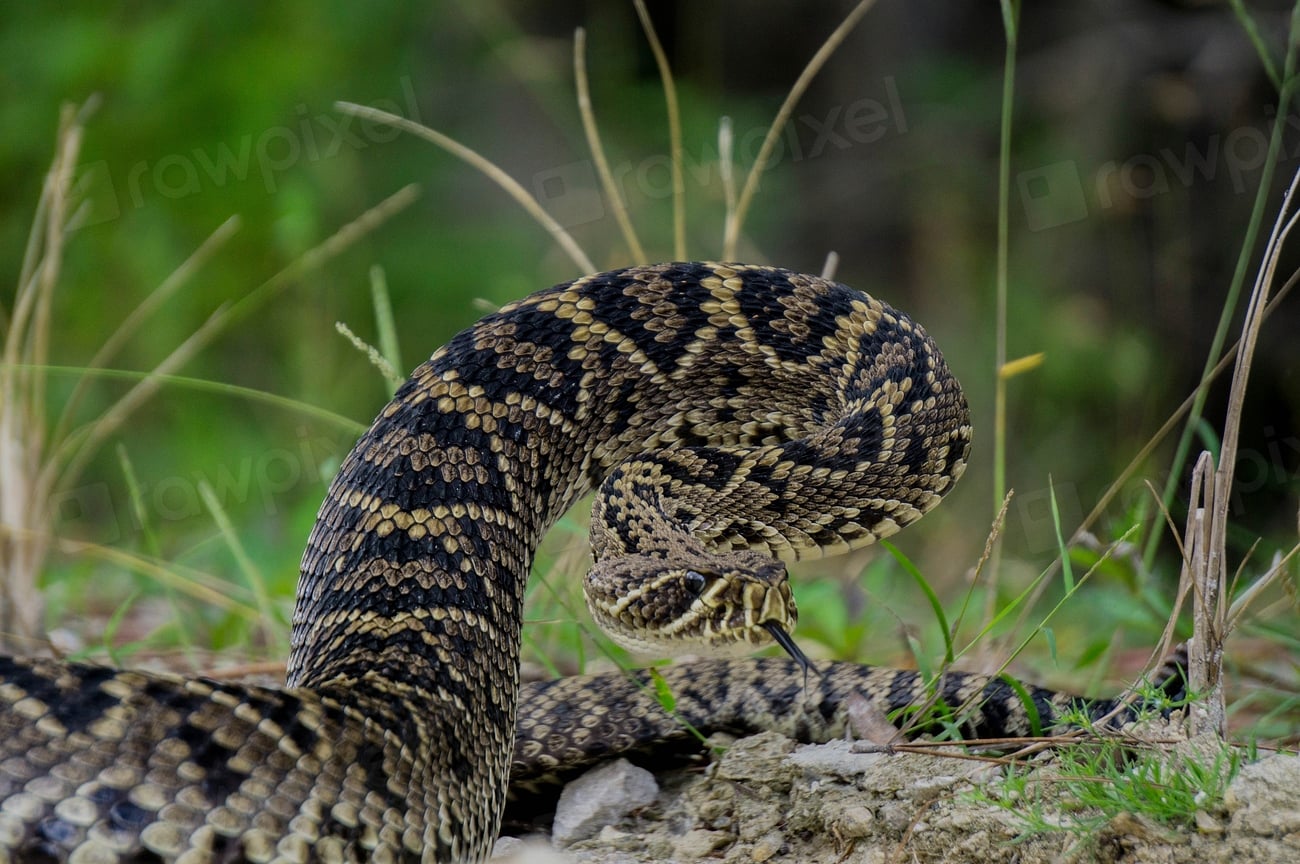 Photo Credit: National Park Service / Rawpixel
In the sun-drenched landscapes of the southeastern United States, the Eastern Diamondback Rattlesnake, known scientifically as Crotalus adamanteus, glides silently through its habitat. With its striking pattern of dark diamonds against a sandy background, this snake is a master of camouflage, blending seamlessly into the tall grasses and scattered pines of its environment. As one of the largest rattlesnakes in North America, it can grow up to eight feet long, showcasing a muscular body that speaks to its prowess as a predator. The rattle at the end of its tail serves as a warning signal, a unique feature that has fascinated both scientists and nature enthusiasts alike.
What makes the Eastern Diamondback truly captivating is not just its appearance but its role in the ecosystem. As a top predator, it helps maintain the balance of its environment by controlling populations of small mammals, which can otherwise become too numerous. This snake is primarily crepuscular, meaning it is most active during the twilight hours, adding an air of mystery to its already intriguing lifestyle. With a rich evolutionary history and a vital role in its habitat, the Eastern Diamondback Rattlesnake invites us to explore the delicate interplay of life in the wild, reminding us of the beauty and complexity of nature.
The Eastern Diamondback Rattlesnake holds a significant place in the animal kingdom, showcasing a blend of beauty and danger. As a member of the Viperidae family, which includes many venomous snakes, it is known for its distinctive diamond-patterned scales and impressive size, making it the largest rattlesnake in North America. This striking reptile is not just a marvel of nature; it also plays a crucial role in its ecosystem, helping to control rodent populations. Its unique adaptations, such as the rattle on its tail, serve as both a warning to potential threats and a fascinating example of evolutionary ingenuity.
| Taxonomic Rank | Scientific Name | Meaning & Significance |
|---|---|---|
| Kingdom | Animalia | This classification includes all animals, highlighting the Eastern Diamondback’s status as a living organism that moves, eats, and interacts with its environment. |
| Phylum | Chordata | Chordates are animals with a backbone. The Eastern Diamondback, like all snakes, has a spinal column that supports its body and allows for flexibility. |
| Class | Reptilia | This class includes reptiles, which are cold-blooded and have scaly skin. The Eastern Diamondback’s scales help it retain moisture and regulate its body temperature. |
| Order | Squamata | Squamates are characterized by their scaly skin and include snakes and lizards. The Eastern Diamondback’s scales are not just for protection; they also play a role in its movement. |
| Family | Viperidae | This family consists of venomous snakes known for their long, hinged fangs. The Eastern Diamondback’s venom is a powerful tool for subduing prey and defending itself. |
| Genus | Crotalus | The name Crotalus comes from the Greek word for “bell,” referring to the rattle on its tail, which produces a warning sound when threatened. |
Understanding the Eastern Diamondback Rattlesnake’s classification reveals much about its evolutionary journey. As a member of the Viperidae family, it shares common ancestry with other venomous snakes, showcasing adaptations that have allowed it to thrive in diverse habitats. Its unique features, from its rattle to its striking coloration, are not just for show; they are the result of millions of years of evolution, fine-tuning its survival strategies. This fascinating lineage connects the Eastern Diamondback to a broader story of life on Earth, illustrating how species adapt and evolve in response to their environments.
The Eastern Diamondback Rattlesnake, scientifically known as Crotalus adamanteus, has a rich evolutionary history that stretches back millions of years. This snake is part of the Viperidae family, which has been around since the late Eocene epoch, roughly 34 to 56 million years ago. Over time, these snakes have adapted to their environments, developing traits that have allowed them to thrive in the diverse habitats of the southeastern United States.
The ancestors of the Eastern Diamondback were likely small, non-venomous snakes that roamed the earth long before the age of dinosaurs. As they evolved, they began to develop venom, a powerful tool for hunting and self-defense. This transition marked a significant evolutionary leap, allowing them to immobilize prey quickly and efficiently. The development of the rattle, a unique feature of rattlesnakes, came later. This adaptation serves as a warning signal to potential threats, helping to prevent confrontations with larger animals.
The adaptations of the Eastern Diamondback Rattlesnake have been crucial for its survival in the wild. The potent venom not only aids in capturing prey but also deters potential predators. The rattle serves as an effective warning system, allowing the snake to avoid unnecessary confrontations. Camouflage helps it remain hidden from both prey and threats, while heat-sensing pits enhance its hunting capabilities, especially at dusk or dawn. Together, these features have enabled the Eastern Diamondback to thrive in its environment, showcasing the wonders of evolution in action.
The Eastern Diamondback Rattlesnake is a striking sight, embodying both elegance and a hint of danger. Its long, muscular body can reach impressive lengths of up to eight feet, making it one of the largest rattlesnakes in North America. The snake’s head is broad and triangular, a shape that helps it deliver its venom effectively. With a series of distinctive diamond-shaped patterns running down its back, this reptile is not just a master of camouflage but also a stunning example of nature’s artistry.
| Feature | Description |
|---|---|
| Size | Can grow up to 8 feet long |
| Color | Typically brown or gray with dark diamond patterns |
| Skin Type | Covered in tough, protective scales |
| Most Distinctive Feature | The rattle at the end of its tail, used as a warning |
The combination of its size, coloration, and rattle serves multiple purposes in the wild. The earthy tones of the Eastern Diamondback help it blend seamlessly into its surroundings, making it less visible to both predators and prey. Its rattle, a unique adaptation, acts as a warning signal, alerting potential threats to its presence. This clever mix of features not only aids in survival but also showcases the intricate balance of beauty and function in the animal kingdom.
The Eastern Diamondback Rattlesnake thrives in a variety of habitats that paint a vivid picture of the southeastern United States. Imagine sun-drenched landscapes filled with tall grasses, scattered shrubs, and the occasional pine tree. This snake often makes its home in dry, sandy areas, where it can easily blend into the environment. The warm, open spaces provide the perfect backdrop for this striking reptile, allowing it to bask in the sun and hunt for its favorite meals.
The Eastern Diamondback prefers a climate that is warm and humid, typical of the southeastern U.S. It enjoys temperatures that can soar into the 80s and 90s Fahrenheit during the day. These snakes are often found in areas that experience a mix of wet and dry seasons, which helps support the diverse plant life they rely on for shelter and hunting. They thrive in environments where they can find plenty of small mammals, birds, and other prey, which are essential for their diet.
Over time, the Eastern Diamondback has developed several adaptations that help it survive in its specific habitats. Its coloration, with dark diamonds against a lighter background, provides excellent camouflage among the leaves and grasses, making it harder for predators and prey to spot it. Additionally, its ability to regulate body temperature by basking in the sun or seeking shade allows it to remain active and hunt effectively. These adaptations not only enhance its survival but also showcase the incredible ways animals can thrive in their environments.
The Eastern Diamondback Rattlesnake leads a life that is both intriguing and essential to its survival. These snakes are primarily crepuscular, meaning they are most active during the twilight hours of dawn and dusk. During the day, they often seek refuge in the cool shade of bushes or under logs, conserving energy and avoiding the heat. As the sun begins to set, they emerge to hunt for food, which mainly consists of small mammals, birds, and occasionally other reptiles. Their keen sense of smell, aided by a special organ called the Jacobson’s organ, helps them detect prey even from a distance.
While the Eastern Diamondback is generally solitary, it does exhibit some interesting social behaviors, especially during the mating season. Males may engage in combat rituals to establish dominance and attract females. These encounters can be quite dramatic, with snakes coiling and striking at each other in a display of strength. Outside of mating, these snakes prefer to keep to themselves, using their camouflage to blend into their surroundings and avoid potential threats. Communication among them is subtle, often relying on body language and the vibrations they create in their environment.
| Behavior Type | Description |
|---|---|
| Activity Patterns | Active during twilight hours, resting during the heat of the day. |
| Social Structure | Primarily solitary, with brief interactions during mating season. |
| Communication Methods | Uses body language and environmental vibrations to communicate. |
The behaviors of the Eastern Diamondback Rattlesnake are finely tuned to ensure its survival in the wild. By being crepuscular, it avoids the harshest temperatures and maximizes its hunting opportunities. Its solitary nature allows it to minimize competition for food and reduce the risk of predation. The occasional social interactions during mating season help maintain genetic diversity, ensuring that this magnificent species continues to thrive in its natural habitat. Each aspect of its daily life is a testament to the intricate balance of nature, where every behavior plays a crucial role in the survival of the species.
The Eastern Diamondback Rattlesnake is a carnivore, which means it primarily eats meat. This snake has a varied diet that includes small mammals like rats, mice, and rabbits, as well as squirrels and occasionally birds. To catch its prey, the Eastern Diamondback uses a combination of stealth and speed. It often lies in wait, camouflaged among the leaves and grasses, ready to strike when an unsuspecting animal comes too close. With its keen sense of smell and heat-sensing pits, it can detect warm-blooded creatures even in the dark.
| Dietary Aspect | Details |
|---|---|
| Diet Type | Carnivore |
| Favorite Foods | Rats, mice, rabbits, squirrels, and sometimes birds |
| Prey Items | Small mammals and birds |
| Hunting Strategies | Stealthy ambush and quick strikes |
The diet of the Eastern Diamondback Rattlesnake plays a crucial role in its ecology and daily routine. By preying on small mammals, it helps control their populations, which can prevent overgrazing and maintain a balanced ecosystem. This snake’s hunting habits also dictate its activity patterns, as it must be alert and ready to strike during its most active hours. In this way, the Eastern Diamondback not only survives but also contributes to the health of its environment.
The Eastern Diamondback Rattlesnake has a fascinating mating ritual that takes place during the warmer months, typically from late spring to early summer. Males engage in a dramatic courtship dance, where they may intertwine their bodies and rattle their tails to attract females. This display is not just for show; it helps establish dominance among competing males. Once a female selects a mate, the two snakes will copulate, and the female will store the male’s sperm until she is ready to fertilize her eggs.
| Reproductive Aspect | Details |
|---|---|
| Gestation Period | 6-7 months |
| Litter Size | 10-20 neonates |
| Age of Maturity | 2-3 years |
| Name of Young | Neonate |
After a gestation period of about six to seven months, the female gives birth to live young, known as neonates. These tiny snakes are fully formed and ready to fend for themselves right from the start. Unlike many other reptiles that lay eggs, Eastern Diamondbacks are viviparous, meaning they give birth to live young. Once born, the neonates are independent and must quickly learn to hunt and avoid predators. While the mother does not provide direct care after giving birth, the young snakes carry the skills they need to survive, growing into formidable adults within just a few years.
The Eastern Diamondback Rattlesnake plays a crucial role in its ecosystem, sitting near the top of the food web. As a predator, it helps control populations of small mammals and other creatures, maintaining a balance in its environment. However, this impressive snake is not without its challenges. It faces various threats that can impact its survival.
To defend itself against these dangers, the Eastern Diamondback Rattlesnake has developed several survival strategies. Its striking coloration provides excellent camouflage among the leaves and grasses, allowing it to blend into its surroundings. When threatened, it can rattle its tail, producing a loud warning sound that often deters potential predators. If that doesn’t work, it can strike quickly, using its venom to subdue prey or defend itself. These adaptations help ensure that this magnificent snake continues to thrive in its natural habitat.
A keystone species is an organism that has a disproportionately large impact on its environment relative to its abundance. The Eastern Diamondback Rattlesnake, with its role as a top predator in the southeastern United States, qualifies as a keystone species. By regulating the populations of small mammals and other prey, this snake helps maintain the balance of its ecosystem, ensuring that no single species dominates the landscape.
The Eastern Diamondback Rattlesnake plays a vital role in controlling the populations of rodents and other small mammals. By preying on these animals, it prevents overpopulation, which can lead to habitat degradation and competition for resources. For example, if the snake’s population were to decline, the number of rodents could surge, resulting in increased herbivory on plants. This could disrupt the entire plant community, affecting other species that rely on those plants for food and shelter.
Additionally, the Eastern Diamondback serves as a food source for larger predators, such as hawks and coyotes. Its presence in the food web supports these animals, which in turn helps maintain the balance of predator and prey dynamics. The snake’s venomous bite also plays a role in its ecosystem; it allows the snake to subdue its prey quickly, ensuring efficient energy transfer within the food web.
If the Eastern Diamondback Rattlesnake were to disappear, the consequences could be severe. Rodent populations would likely explode, leading to overconsumption of plants and destabilizing the ecosystem. This imbalance could trigger a cascade of effects, harming not only the plant life but also the animals that depend on those plants for survival. The loss of this snake would ripple through the food web, demonstrating just how crucial it is to the health of its environment.
The Eastern Diamondback Rattlesnake plays a vital role in shaping its ecosystem, acting as both predator and prey within the intricate web of life. This impressive snake, found primarily in the southeastern United States, occupies a unique ecological niche. By controlling the populations of small mammals and other creatures, it helps maintain a balance in its environment. This balance is crucial for the health of the ecosystems it inhabits, ensuring that no single species overwhelms the others.
| Ecosystem Service | Impact |
|---|---|
| Population Control | Regulates numbers of small mammals, preventing overpopulation. |
| Food Source | Serves as prey for larger predators, contributing to the food web. |
| Soil Health | Promotes biodiversity by influencing the distribution of prey species. |
| Seed Dispersal | Indirectly aids in plant growth by controlling herbivore populations. |
The Eastern Diamondback Rattlesnake’s influence can be seen in various ways. For instance, by preying on rodents like rats and mice, it helps keep their populations in check. This is important because too many rodents can lead to overgrazing of vegetation, which can harm plant life and disrupt the entire ecosystem. Additionally, as a food source for larger animals such as hawks and coyotes, the rattlesnake supports the survival of these predators, further intertwining its role in the food web.
The broader ecological importance of the Eastern Diamondback Rattlesnake cannot be overstated. As a keystone species, its presence is essential for maintaining the health and stability of its habitat. By regulating prey populations and serving as a food source for other animals, it helps create a balanced ecosystem where various species can thrive. Protecting this remarkable snake is crucial, not just for its survival, but for the overall health of the ecosystems it inhabits.
In the intricate tapestry of nature, symbiosis refers to the close relationships between different species that can benefit one or both parties involved. These ecological partnerships can take many forms, including mutualism, where both species gain advantages; commensalism, where one benefits while the other is neither helped nor harmed; and parasitism, where one species benefits at the expense of the other. The Eastern Diamondback Rattlesnake, a fascinating inhabitant of the southeastern United States, engages in various relationships that highlight the interconnectedness of life.
| Species/Type | Relationship Type | Description |
|---|---|---|
| Burrowing Owls | Commensalism | Burrowing owls often use abandoned burrows made by Eastern Diamondback Rattlesnakes for nesting, benefiting from the shelter while the snakes are unaffected. |
| Ticks | Parasitism | Ticks can latch onto Eastern Diamondback Rattlesnakes, feeding on their blood and potentially harming the snakes by causing irritation or transmitting diseases. |
| Small Mammals | Mutualism | While not a direct partnership, the presence of small mammals like rodents can benefit the rattlesnake by providing a food source, while the snakes help control their populations. |
The evolution of these relationships showcases the dynamic nature of ecosystems. Over time, species have adapted to rely on one another for survival, whether through shared habitats or food sources. The Eastern Diamondback Rattlesnake, with its role as both predator and prey, exemplifies how these interactions can shape behaviors and habitats. By understanding these connections, we gain insight into the delicate balance of nature, where every species plays a part in the grand story of life on Earth.
The Eastern Diamondback Rattlesnake is a captivating creature that embodies the wild spirit of the southeastern United States. With its striking appearance and intriguing behaviors, this snake has many surprises that even seasoned nature enthusiasts might not know.
The Eastern Diamondback Rattlesnake has long been a part of human history, weaving its way into the cultural fabric of the southeastern United States. Native American tribes revered this snake, often incorporating it into their folklore and art. The rattlesnake’s distinctive warning rattle became a symbol of caution and respect, reminding people of the delicate balance between humans and nature. As settlers moved into the region, encounters with this striking snake were both feared and respected, leading to a complex relationship that has evolved over time.
Today, interactions between humans and Eastern Diamondback Rattlesnakes are multifaceted. While some people view these snakes as dangerous pests, others recognize their ecological importance. Conservation efforts are underway to protect their habitats, as urban development and habitat loss threaten their populations. Unfortunately, conflicts can arise when these snakes venture into residential areas, leading to fear and sometimes lethal encounters. Unlike domesticated animals, Eastern Diamondbacks cannot be tamed, but education about their role in the ecosystem can help foster a more harmonious coexistence.
As we look to the future, the relationship between humans and Eastern Diamondback Rattlesnakes holds promise. With increased awareness and education, we can learn to appreciate these magnificent reptiles for their ecological contributions rather than fear them. By fostering a sense of respect and understanding, we can ensure that both humans and Eastern Diamondbacks thrive in the vibrant ecosystems of the southeastern United States. Together, we can create a world where these remarkable snakes continue to rattle their way through the wild, reminding us of the beauty and complexity of nature.
The Eastern Diamondback Rattlesnake is currently classified as a species of concern, with its population facing various challenges. While it remains one of the most iconic snakes in the southeastern United States, its numbers have been declining in certain areas. This decline is attributed to habitat loss and other environmental pressures, leading to increased scrutiny regarding its conservation status.
| Conservation Factor | Status/Details |
|---|---|
| IUCN Status | Near Threatened |
| Population Estimates | Unknown, but declining in some regions |
| Trend Direction | Decreasing |
The main threats to the Eastern Diamondback Rattlesnake include habitat destruction due to urban development, agriculture, and logging. As forests and grasslands are cleared for human use, these snakes lose their natural homes and hunting grounds. Additionally, road mortality poses a significant risk, as many snakes are killed while crossing roads. Climate change also plays a role, altering the ecosystems that support their survival.
Conservation efforts are underway to protect the Eastern Diamondback Rattlesnake and its habitat. Organizations are working to restore natural areas and create wildlife corridors that allow these snakes to move safely between habitats. Public education campaigns aim to reduce fear and misunderstanding about rattlesnakes, promoting coexistence. With continued efforts, there is hope that the Eastern Diamondback Rattlesnake can stabilize its population and thrive in the wild once more.
| Question | Answer |
|---|---|
| What is the habitat of the Eastern Diamondback Rattlesnake? | The Eastern Diamondback Rattlesnake is commonly found in the southeastern United States, particularly in areas like Florida and Georgia. They prefer habitats such as pine forests, swamps, and coastal dunes, where they can easily find shelter and hunt for food. |
| What does the Eastern Diamondback Rattlesnake eat? | This snake is a carnivore, meaning it primarily eats other animals. Its diet mainly consists of small mammals, such as rabbits and rodents, but it can also consume birds and other reptiles when the opportunity arises. |
| How does the Eastern Diamondback Rattlesnake behave? | Eastern Diamondbacks are generally solitary creatures, preferring to live alone except during mating season. They are known for their defensive behavior; when threatened, they will rattle their distinctive tail to warn potential predators. |
| How do Eastern Diamondback Rattlesnakes reproduce? | These snakes are ovoviviparous, which means they give birth to live young rather than laying eggs. Mating typically occurs in the spring, and females can give birth to 10 to 20 baby snakes in late summer or early fall. |
| What are the main threats to the Eastern Diamondback Rattlesnake? | Habitat loss due to urban development and agriculture poses a significant threat to these snakes. Additionally, they are often killed out of fear or misunderstanding, as many people mistakenly believe they are more dangerous than they actually are. |
| What is an interesting characteristic of the Eastern Diamondback Rattlesnake? | One of the most distinctive features of the Eastern Diamondback is its rattle, which it uses as a warning signal. The rattle is made of keratin, the same material as human nails, and grows longer with each shedding of the skin, making it a unique identifier for individual snakes. |
| How can you identify an Eastern Diamondback Rattlesnake? | This snake is easily recognized by its large size, often reaching lengths of 6 to 8 feet. It has a pattern of dark diamonds on a lighter background, which helps it blend into its surroundings, making it a master of camouflage. |