Taxonomy & Classification
- Kingdom
- Animalia
- Phylum
- Chordata
- Class
- Mammalia
- Order
- Carnivora
- Family
- Phocidae
- Genus
- Mirounga
- Species
- Mirounga

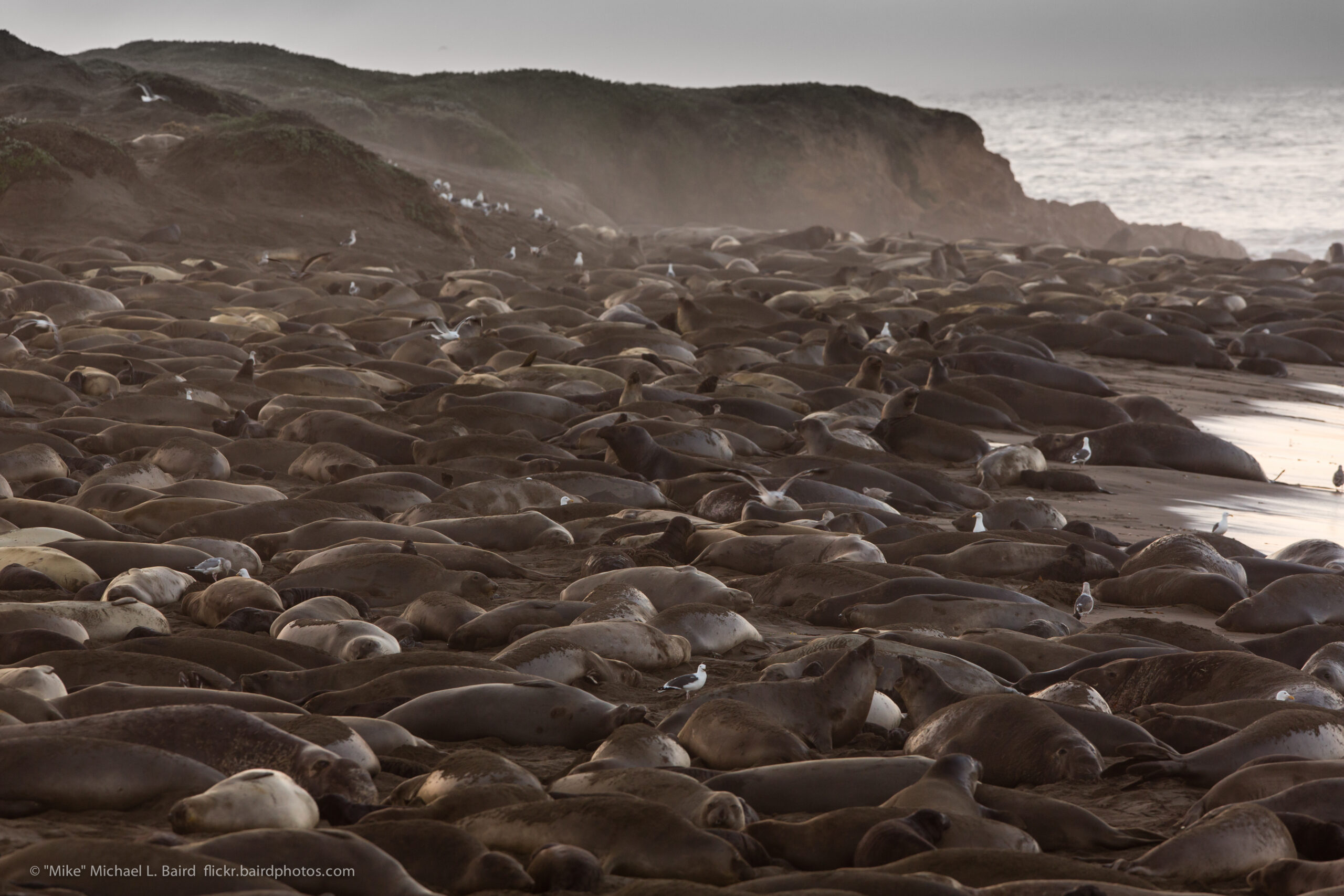 Photo Credit: Mike Baird from Morro Bay, USA / Wikimedia
In the sun-drenched coastal waters of the Pacific Ocean, the elephant seal, scientifically known as Mirounga angustirostris, reigns as a true giant of the sea. With males weighing up to 3,000 kilograms, or about 6,000 pounds, these remarkable marine mammals are not just impressive in size; they are also known for their distinctive, elongated snouts that resemble an elephant’s trunk. This unique feature is not just for show; it plays a crucial role in their vocalizations, allowing males to produce deep, resonant calls that echo across the beaches during the breeding season.
Imagine a sandy shore where these massive creatures bask lazily under the warm sun, their sleek bodies glistening with ocean spray. As they lounge, the air fills with the sounds of their grunts and bellows, creating a symphony of life that captivates both scientists and nature enthusiasts alike. The elephant seal’s fascinating behaviors, from their impressive diving abilities to their dramatic social interactions, offer a glimpse into a world that is both wild and wondrous. As we dive deeper into the life of the elephant seal, we will explore their habitat, diet, and the vital role they play in the marine ecosystem, revealing just how extraordinary these creatures truly are.
The elephant seal holds a special place in the animal kingdom, showcasing a fascinating blend of size, behavior, and adaptation. Belonging to the family Phocidae, which includes true seals, these marine mammals are known for their impressive size, with males often weighing over 4,000 pounds! Their scientific classification reveals much about their evolutionary journey, highlighting their adaptations to life in the ocean and their unique breeding behaviors. With their large, blubbery bodies and distinctive, trunk-like noses in males, elephant seals are not just remarkable for their appearance but also for their incredible diving abilities and social structures.
| Taxonomic Rank | Scientific Name | Meaning & Significance |
|---|---|---|
| Kingdom | Animalia | This name signifies that elephant seals are part of the vast group of multicellular organisms that are primarily heterotrophic, meaning they consume other organisms for energy. |
| Phylum | Chordata | Chordata refers to animals that have a notochord, a flexible rod that supports the body. In elephant seals, this structure is present during their early development. |
| Class | Mammalia | Mammalia indicates that these animals are warm-blooded and have mammary glands, which allow females to nurse their young with rich milk. |
| Order | Carnivora | Carnivora means “meat-eaters,” highlighting their diet that primarily consists of fish and squid, showcasing their role as predators in the marine ecosystem. |
| Family | Phocidae | Phocidae, or true seals, emphasizes their adaptations for life in water, including their streamlined bodies and lack of external ear flaps. |
| Genus | Mirounga | Mirounga is derived from a word in the indigenous language of the South Pacific, meaning “to be fat,” which perfectly describes the elephant seal’s blubbery physique. |
The classification of the elephant seal not only highlights its physical characteristics but also tells a story of adaptation and survival. As members of the order Carnivora, they have evolved to thrive in the ocean, developing unique traits that allow them to dive deep and hunt effectively. Their lineage connects them to other marine mammals, revealing a rich evolutionary history that spans millions of years. Understanding where they fit in the tree of life helps us appreciate the intricate web of relationships among species and the importance of conserving these magnificent animals and their habitats.
The evolutionary journey of the elephant seal stretches back millions of years, tracing its roots to a time when the ancestors of modern seals began to adapt to life in the ocean. These marine mammals belong to the family Phocidae, which includes true seals, and their lineage diverged from land-dwelling mammals around 20 to 30 million years ago. As they evolved, they developed remarkable traits that allowed them to thrive in the challenging marine environment.
The earliest ancestors of elephant seals were likely similar to other pinnipeds, a group that includes seals, sea lions, and walruses. These ancestors were semi-aquatic, spending time both on land and in the water. Over time, they transitioned to a more fully aquatic lifestyle, leading to significant changes in their body structure. One of the most notable shifts was the development of a streamlined body shape, which helps them swim efficiently through the ocean. Additionally, their limbs evolved into flippers, allowing for powerful propulsion in the water.
These adaptations have been vital for the survival of elephant seals in their oceanic habitat. Their impressive size and blubber not only protect them from the cold but also provide energy reserves during long migrations. The ability to dive deeply allows them to access a rich food supply, while their vocalizations play a key role in social interactions and reproduction. Together, these traits have enabled elephant seals to thrive in the vast and often harsh marine environment, making them a true testament to the power of evolution.
The elephant seal is an awe-inspiring sight, a true giant of the ocean. With its massive body, it can weigh between 900 and 3,000 kilograms, which is about 2,000 to 6,000 pounds! This hefty size gives it a commanding presence on the beach, where it often rests in large groups. The seal’s skin is covered in a layer of fur, which can vary in color from a light gray to a darker brown, helping it blend into the rocky shores and sandy beaches where it spends much of its time.
| Feature | Description |
|---|---|
| Size | Can weigh between 900 kg and 3,000 kg (2,000 lbs – 6,000 lbs) |
| Color | Fur ranges from light gray to dark brown |
| Skin Type | Covered in fur |
These impressive features are not just for show; they play vital roles in the elephant seal’s survival. The thick layer of blubber beneath their fur helps insulate them against the cold ocean waters, keeping them warm during long dives. Their large size also serves as a deterrent against predators, while their coloration provides camouflage against the rocky and sandy environments they inhabit. Together, these characteristics make the elephant seal a well-adapted marine mammal, perfectly suited to thrive in its oceanic habitat.
The elephant seal thrives in warm coastal waters, where the land meets the sea in a dramatic display of nature’s beauty. Picture sandy beaches kissed by gentle waves, rocky shorelines, and the salty breeze that carries the sounds of the ocean. These marine mammals often haul out on beaches to rest, breed, and molt, creating a lively scene as they bask in the sun or engage in playful sparring. Their habitats are not just any beaches; they are often remote and undisturbed, providing the perfect sanctuary for these massive animals.
The climate in these regions is typically mild, with temperatures that rarely dip too low. Elephant seals prefer areas where the water is warm enough to support their needs, yet cool enough to keep them comfortable while swimming. They are often found in places with a mix of sunny days and cooler ocean breezes, which helps them regulate their body temperature. The coastal environment is crucial for their breeding and molting cycles, as they need safe, sandy spots to give birth and shed their old skin.
Adaptation is key to the elephant seal’s success in these habitats. Their thick layer of blubber, which can be up to 10 centimeters (about 4 inches) thick, not only keeps them warm in cooler waters but also provides energy reserves during long migrations. Their ability to dive deep into the ocean—sometimes reaching depths of over 1,500 meters (about 4,900 feet)—allows them to hunt for food in nutrient-rich waters. This combination of physical traits and behavioral strategies enables them to thrive in their coastal homes, making them one of the ocean’s most impressive inhabitants.
The daily life of an elephant seal is a blend of rest, social interaction, and foraging. These marine mammals spend a significant portion of their day lounging on sandy beaches, soaking up the sun. When they’re not basking, they dive into the ocean to hunt for food, primarily feasting on fish and squid. Their foraging trips can last several minutes to over an hour, depending on how far they need to go to find a meal. After a satisfying meal, they return to the beach to rest and socialize, creating a rhythm that balances energy expenditure with relaxation.
Social behavior among elephant seals is quite dynamic and fascinating. They are known to form large groups, called herds, where they interact with one another through vocalizations and physical displays. Males often engage in competitive behaviors, such as vocal duels and displays of size, to establish dominance and attract females. These interactions are crucial during the breeding season, as they help maintain social hierarchies and ensure that the strongest males have the opportunity to mate. The bonds formed within these groups can be essential for protection against predators and for nurturing young pups.
| Behavior Type | Description |
|---|---|
| Resting | Elephant seals spend a large part of their day resting on beaches, which helps them conserve energy. |
| Foraging | They dive into the ocean to hunt for fish and squid, often going on long trips to find food. |
| Socializing | In herds, they communicate through vocalizations and physical displays, especially during breeding season. |
| Dominance Displays | Males engage in competitive behaviors to establish hierarchy, which is vital for mating opportunities. |
The behaviors of elephant seals are not just interesting; they are vital for their survival. By resting and socializing in groups, they create a supportive environment that helps protect against threats. Their foraging skills ensure they get the nutrition they need to thrive, while social interactions strengthen bonds that can be crucial during breeding. Each activity plays a role in their overall health and success in the wild, showcasing the intricate balance of life in the ocean.
The elephant seal is a true carnivore, meaning it primarily eats meat. These impressive marine mammals have a diet that mainly consists of fish, squid, and octopus. To find their food, elephant seals dive deep into the ocean, sometimes reaching depths of over 1,500 meters (about 4,900 feet). They are skilled hunters, using their keen sense of hearing and ability to hold their breath for long periods to locate and catch their prey.
| Dietary Aspect | Details |
|---|---|
| Diet Type | Carnivore |
| Favorite Foods | Fish, squid, octopus |
| Prey Items | Various species of fish, large squid, and octopus |
| Hunting/Foraging Strategies | Dives deep into the ocean, using keen hearing to locate prey |
This diet plays a crucial role in the elephant seal’s ecology and daily routine. By consuming a variety of marine life, they help maintain the balance of the ocean ecosystem. Their foraging habits also dictate their behavior, as they spend significant time hunting in the water, followed by long periods of rest on the beach to recover. This cycle of feeding and resting is essential for their survival, allowing them to thrive in their coastal habitats.
During the breeding season, which typically occurs from late December to early March, male elephant seals engage in a dramatic display of dominance. These massive males, known for their loud vocalizations and aggressive posturing, gather on beaches to establish territories. The strongest males attract females, who come ashore to give birth and mate. This competition can be fierce, as males fight for the right to mate with females, showcasing their size and strength. Once a female selects a mate, she will give birth to a single pup after a lengthy gestation period.
| Reproductive Aspect | Details |
|---|---|
| Gestation Period | 11 months |
| Litter Size | 1 |
| Age of Maturity | 3 to 4 years |
| Name of Young | Pup |
After giving birth, the mother elephant seal nurses her pup for about four to six weeks. During this time, the pup gains weight rapidly, often doubling its size thanks to the rich milk provided by its mother. Once weaned, the young seal must learn to fend for itself, which involves mastering the art of swimming and hunting. As they grow, these pups develop the skills necessary to thrive in the ocean, eventually reaching maturity at around three to four years of age. The bond between mother and pup is crucial, as it lays the foundation for the young seal’s survival in the vast and sometimes perilous marine environment.
The elephant seal occupies a crucial role in the marine food web, acting as both predator and prey. As a top predator, it hunts for fish, squid, and octopus, showcasing its impressive diving abilities. However, despite its size and strength, the elephant seal is not without its dangers. Various predators and environmental threats loom, reminding us that even the mightiest creatures face challenges in their quest for survival.
To defend against these threats, elephant seals have developed several survival strategies. When they sense danger, they can dive deep into the ocean, reaching depths of over 1,500 meters (about 4,900 feet) to evade predators. Their thick blubber provides insulation and buoyancy, making it harder for attackers to catch them. Additionally, during the breeding season, males display aggressive behaviors to protect their territory and mates, showcasing their strength and determination. These adaptations help ensure that elephant seals continue to thrive in their oceanic realm.
A keystone species is an organism that plays a critical role in maintaining the structure of its ecosystem. Its presence and activities significantly influence the environment and the other species that inhabit it. The elephant seal qualifies as a keystone species due to its substantial impact on marine ecosystems, particularly in coastal areas where it resides.
Elephant seals are top predators in their oceanic habitats, primarily feeding on fish, squid, and octopus. By controlling the populations of these prey species, they help maintain a balance in the marine food web. For instance, if elephant seals were to decline in number, the fish and squid populations could explode, leading to overgrazing of plankton and other marine plants. This imbalance could disrupt the entire ecosystem, affecting not just the seals but also countless other marine organisms that rely on these plants for survival.
Moreover, elephant seals contribute to nutrient cycling in their habitats. When they haul out on beaches to rest and breed, their waste enriches the surrounding sand and water with nutrients. This process supports the growth of algae and other marine plants, which are essential for the health of the ecosystem. Additionally, their presence attracts scavengers like seabirds and other marine mammals, creating a dynamic community that thrives on the resources provided by the seals.
If elephant seals were to disappear from their ecosystems, the consequences would be profound. The balance of marine life would be disrupted, leading to overpopulation of their prey species and a decline in the health of marine plants. This could trigger a chain reaction, affecting not only the seals’ immediate environment but also the broader ocean ecosystem. The loss of such a vital species would diminish biodiversity and alter the intricate web of life that thrives in coastal waters.
The elephant seal occupies a vital ecological niche in its marine environment, acting as both a predator and a prey. These massive mammals thrive in warm coastal waters, where they spend much of their time on sandy beaches and rocky shorelines. Their presence influences the dynamics of the ecosystem, shaping the habitats they inhabit and the species that share their environment. By foraging for fish, squid, and octopus, they help regulate the populations of these marine creatures, ensuring a balanced food web.
| Ecosystem Service | Impact |
|---|---|
| Predation | Controls fish and squid populations, preventing overpopulation. |
| Nutrient Cycling | Contributes to nutrient distribution through waste, enriching marine habitats. |
| Habitat Creation | Creates space for other species by occupying and using coastal areas. |
| Food Source | Serves as prey for larger predators, such as sharks and orcas. |
The influence of elephant seals extends beyond their immediate actions. For example, when they haul out on beaches, they create a unique environment that can benefit various organisms. Their presence can attract scavengers like seagulls and crabs, which feed on leftover scraps. Additionally, their waste enriches the sand and water, promoting the growth of algae and other marine plants. This nutrient cycling is essential for maintaining the health of coastal ecosystems, supporting a diverse array of life.
The broader ecological importance of elephant seals cannot be overstated. As a keystone species, their activities help maintain the balance of marine ecosystems. By regulating prey populations and contributing to nutrient cycling, they support the health of their habitats. The decline or absence of elephant seals could lead to significant changes in the ecosystem, affecting not only the species that rely on them but also the overall health of the marine environment. Understanding their role helps us appreciate the intricate connections that sustain life in our oceans.
In the intricate web of life, symbiosis refers to the close and often long-term interactions between different species. These relationships can take many forms, including mutualism, where both species benefit, parasitism, where one benefits at the expense of the other, and commensalism, where one benefits while the other is neither helped nor harmed. Understanding these ecological relationships helps us appreciate how species like the elephant seal interact with their environment and other organisms, creating a dynamic balance in their ecosystems.
| Species/Type | Relationship Type | Description |
|---|---|---|
| Remoras | Commensal | Remoras, also known as suckerfish, attach themselves to the bodies of elephant seals. They benefit by getting a free ride and access to food scraps, while the seals are generally unaffected. |
| Sea Lice | Parasitic | Sea lice are small parasites that can infest elephant seals, feeding on their skin and blood. This relationship can harm the seals, leading to irritation and potential health issues. |
| Seabirds | Mutualistic | Seabirds often nest near elephant seal colonies. The seals provide a safe environment from land predators, while the birds help keep the area clean by scavenging on leftover food. |
These relationships have evolved over time, shaped by the needs and behaviors of the species involved. The remoras have adapted to hitch a ride on the seals, gaining mobility and food without harming their hosts. In contrast, sea lice have developed a parasitic lifestyle that can negatively impact the health of the seals. Meanwhile, seabirds benefit from the protection offered by the seals, creating a win-win situation. Such interactions highlight the complexity of ecosystems, where every species plays a role, and the balance of these relationships is crucial for the survival of all involved.
Elephant seals are truly captivating animals, known for their impressive size and unique behaviors. Here are some surprising facts that showcase just how extraordinary these marine mammals are.
The relationship between elephant seals and humanity has evolved over centuries, marked by both admiration and exploitation. Historically, these magnificent marine mammals were hunted extensively for their blubber, which was valuable for oil production in the 19th century. This led to a dramatic decline in their populations, pushing them to the brink of extinction. However, their sheer size and unique behaviors captured the imagination of many cultures, leading to their representation in art and literature. Today, elephant seals symbolize the resilience of nature, reminding us of the importance of conservation.
In modern times, interactions between elephant seals and humans have shifted towards conservation efforts and wildlife tourism. Organizations and governments have recognized the need to protect these animals, leading to the establishment of marine protected areas where they can thrive without human interference. However, conflicts still arise, particularly in coastal regions where human activities, such as fishing and beach development, can disrupt their habitats. While domestication is not applicable to elephant seals, their presence in marine parks and educational programs helps raise awareness about their plight and the importance of marine ecosystems.
As we look to the future, the relationship between elephant seals and humanity holds promise. With continued efforts in conservation and education, we can ensure that these incredible animals not only survive but thrive in their natural habitats. By fostering a deeper understanding of their role in the ecosystem, we can inspire future generations to protect the ocean and its inhabitants. The journey of the elephant seal is a testament to the power of resilience and the potential for harmony between humans and wildlife.
The elephant seal currently enjoys a conservation status of “Least Concern,” according to the International Union for Conservation of Nature (IUCN). This means that, while they are not facing immediate threats of extinction, their populations are being monitored closely. In fact, the population of northern elephant seals has rebounded significantly from the brink of extinction in the 20th century, with estimates now reaching around 200,000 individuals. This recovery is a testament to successful conservation efforts, but ongoing vigilance is essential to ensure their continued survival.
| Conservation Factor | Status/Details |
|---|---|
| IUCN Status | Least Concern |
| Population Estimates | Approximately 200,000 northern elephant seals |
| Trend Direction | Increasing |
Despite their current stable status, elephant seals face several threats that could impact their future. One of the main challenges is entanglement in fishing gear, which can lead to injury or death. Additionally, climate change poses a significant risk, as rising ocean temperatures can affect the availability of their prey, such as fish and squid. Human activities, including pollution and habitat disturbance, also threaten their coastal breeding grounds. These factors highlight the importance of continued conservation efforts to protect these magnificent marine mammals.
Conservation initiatives have played a crucial role in the recovery of elephant seal populations. Legal protections, such as the Marine Mammal Protection Act in the United States, have helped safeguard their habitats and reduce hunting pressures. Public awareness campaigns have also educated communities about the importance of these animals and their ecosystems. As a result, the outlook for elephant seals remains positive, but ongoing efforts are necessary to ensure that they continue to thrive in their natural habitats for generations to come.
| Question | Answer |
|---|---|
| Where do elephant seals live? | Elephant seals are found in warm coastal waters close to land. They prefer sandy beaches and rocky shores, where they can haul out to rest and breed. |
| What do elephant seals eat? | As carnivores, elephant seals primarily feed on fish and squid. They are excellent divers and can hunt at great depths, sometimes reaching over a mile underwater! |
| How do elephant seals behave? | Elephant seals are known for their loud vocalizations, especially during the breeding season. Males can be quite aggressive, establishing dominance through displays of size and sound. |
| How do elephant seals reproduce? | During the breeding season, male elephant seals gather on beaches to compete for females. After a gestation period of about 11 months, females give birth to a single pup, which they nurse for several weeks. |
| What threats do elephant seals face? | While elephant seals are currently listed as Least Concern, they face threats from climate change, entanglement in fishing gear, and habitat loss. Conservation efforts have helped their populations recover since they were once hunted nearly to extinction. |
| What is an interesting fact about elephant seals? | One fascinating characteristic of elephant seals is their size. Males can weigh up to 4,500 pounds, making them one of the largest pinnipeds, or fin-footed mammals, in the world! |
| How do elephant seals stay warm in cold water? | Elephant seals have a thick layer of blubber, which is a type of fat that insulates their bodies. This helps them maintain their body heat even in chilly ocean waters. |