Taxonomy & Classification
- Kingdom
- Animalia
- Phylum
- Chordata
- Class
- Aves
- Order
- Passeriformes
- Family
- Corvidae
- Genus
- Garrulus
- Species
- Garrulus glandarius

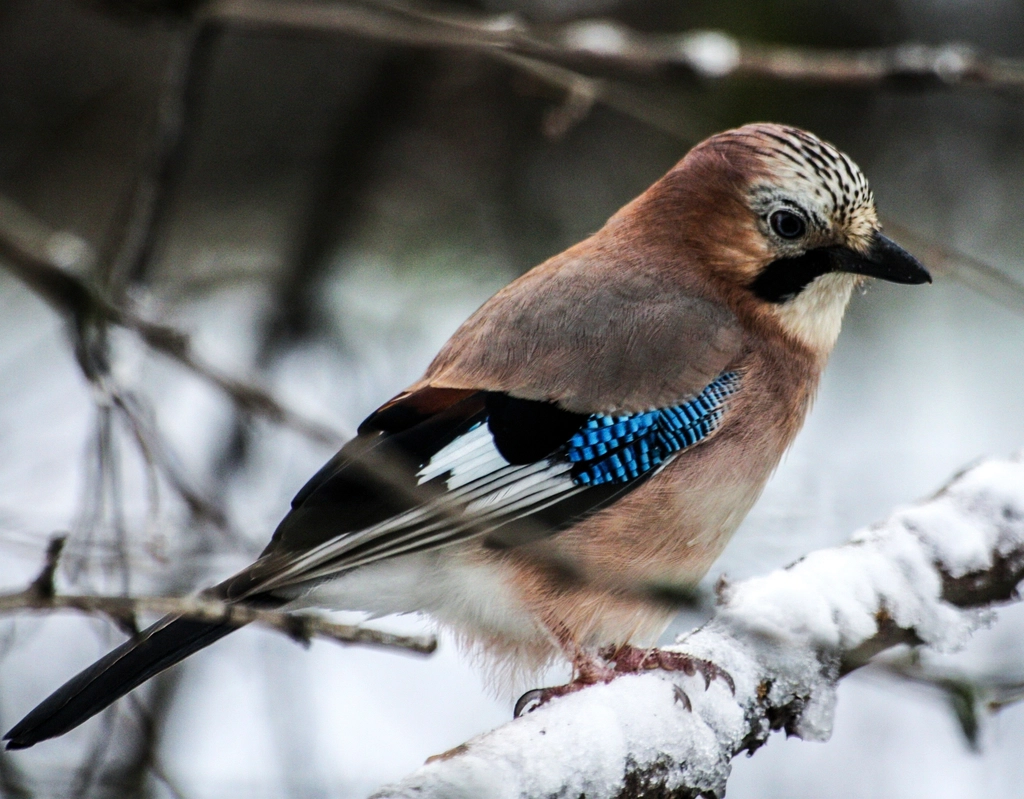 Photo Credit: Rawpixel
In the heart of Europe’s lush woodlands, the Eurasian Jay, or Garrulus glandarius, flits gracefully among the branches, a splash of color against the green backdrop. With its striking blue wing patches and soft pinkish-brown body, this bird is a true visual delight. As it hops from tree to tree, its sharp, intelligent eyes scan the ground below, ever alert for acorns and other tasty treats. The Eurasian Jay is not just a pretty face; it is a clever member of the Corvidae family, which includes some of the smartest birds on the planet. This intelligence, combined with its vibrant appearance, makes the Eurasian Jay a favorite among birdwatchers and nature enthusiasts alike.
As the sun filters through the leaves, casting playful shadows on the forest floor, the Eurasian Jay engages in a lively dance of life. It communicates with a variety of calls, from soft coos to loud, raucous squawks, each sound serving a purpose in its social interactions. These birds are known for their remarkable ability to mimic the calls of other species, showcasing their adaptability and cunning. Scientists are particularly fascinated by the Eurasian Jay’s role in the ecosystem, as it helps disperse seeds and maintain the health of its forest home. With each flutter of its wings, this enchanting bird invites us to explore the wonders of nature and the intricate connections that bind all living things together.
The Eurasian Jay, known scientifically as Garrulus glandarius, occupies a significant position in the animal kingdom. This vibrant bird belongs to the family Corvidae, which includes other intelligent and social birds like crows and ravens. What sets the Eurasian Jay apart is its striking plumage, featuring a mix of soft browns, blues, and whites, along with its playful behavior and remarkable vocal abilities. These traits not only make it visually appealing but also highlight its adaptability and intelligence, traits that are essential for survival in diverse habitats across Europe and Asia.
| Taxonomic Rank | Scientific Name | Meaning & Significance |
|---|---|---|
| Kingdom | Animalia | This name signifies that the Eurasian Jay is part of the vast group of multicellular organisms that are primarily heterotrophic, meaning they consume organic material for energy. |
| Phylum | Chordata | Chordata refers to animals that have a notochord, a flexible rod that supports the body. In jays, this structure is present during early development, showcasing their evolutionary link to vertebrates. |
| Class | Aves | Aves is the class that includes all birds. This classification highlights the Eurasian Jay’s feathers, beak, and ability to lay eggs, which are key characteristics of birds. |
| Order | Passeriformes | Passeriformes, or perching birds, emphasizes the Eurasian Jay’s ability to perch on branches and its diverse vocalizations, which are essential for communication and territory establishment. |
| Family | Corvidae | The name Corvidae indicates that the Eurasian Jay is part of a family known for its intelligence and complex social structures, traits that are evident in their problem-solving abilities and social interactions. |
| Genus | Garrulus | Garrulus means “talkative” in Latin, reflecting the Eurasian Jay’s vocal nature and its ability to mimic sounds from its environment, showcasing its adaptability and intelligence. |
| Species | glandarius | This species name is derived from the Latin word for “acorn,” linking the Eurasian Jay to its diet, which often includes acorns and other nuts, essential for its survival and role in forest ecosystems. |
Understanding the taxonomic classification of the Eurasian Jay reveals much about its evolutionary journey. As a member of the Corvidae family, it shares a lineage with some of the most intelligent birds on the planet, showcasing traits that have evolved over millions of years. Its ability to adapt to various environments and its complex social behaviors are not just fascinating; they are a testament to the evolutionary pressures that have shaped this bird into a successful inhabitant of forests, parks, and gardens across its range. The Eurasian Jay is not just a beautiful bird; it is a living link to the intricate web of life that connects all species on Earth.
The evolutionary journey of the Eurasian Jay stretches back millions of years, intertwining with the history of the Corvidae family, which includes some of the most intelligent birds on the planet. This lineage began to take shape during the late Eocene epoch, around 34 to 56 million years ago, when the ancestors of modern jays began to diverge from other bird families. Over time, these birds adapted to various environments across Europe and Asia, leading to the emergence of the Eurasian Jay we recognize today.
The ancestral forms of the Eurasian Jay were likely small, forest-dwelling birds that thrived in the lush woodlands of ancient Europe. As the climate changed and forests expanded and contracted, these birds underwent significant evolutionary transitions. They developed a range of adaptations that allowed them to exploit new habitats and food sources. For instance, their diet evolved to include a variety of nuts, seeds, and insects, which required them to develop strong, versatile beaks. Additionally, their plumage became more colorful and varied, aiding in communication and mating displays.
The adaptations of the Eurasian Jay have been vital for its survival in diverse habitats. Their ability to camouflage helps them evade predators, while their intelligence allows them to navigate challenges in their environment. Social behaviors enhance their foraging success, and their remarkable memory ensures they can store food for leaner times. Together, these traits have enabled the Eurasian Jay to thrive across a wide range of ecosystems, showcasing the power of evolution in shaping life on Earth.
The Eurasian Jay is a striking bird that captures attention with its colorful plumage and graceful form. Standing at about 34 to 35 centimeters tall, it has a sleek body that balances elegance with a robust build. Its rounded head and long tail give it a distinctive silhouette, while its overall size makes it a noticeable presence in the woodlands and parks it calls home.
| Feature | Description |
|---|---|
| Height | 34-35 cm (13-14 in) |
| Weight | 170 g (6 oz) |
| Skin Type | Feathers |
| Most Distinctive Feature | Bright blue wing feathers |
The combination of the Eurasian Jay’s features serves multiple purposes in its life. The vibrant blue wing feathers not only make it visually stunning but also play a crucial role in communication and mating displays. These colors can signal health and vitality to potential mates. Additionally, its size and weight allow it to navigate through trees with agility, helping it evade predators and forage for food. Together, these characteristics create a bird that is not just beautiful but also well-adapted to thrive in its environment.
The Eurasian Jay thrives in a tapestry of mixed forests and grasslands, where the dappled sunlight filters through the leaves, creating a mosaic of light and shadow. These birds are often found flitting between the trees, their vibrant feathers contrasting beautifully with the earthy tones of their surroundings. The rustling of leaves and the soft calls of other woodland creatures provide a lively backdrop to their daily activities. This habitat is not just a home; it’s a bustling community filled with life, where the Eurasian Jay plays an important role in the ecosystem.
The climate in these regions varies widely, but the Eurasian Jay prefers areas with a temperate climate. This means it enjoys four distinct seasons, including warm summers and cold winters. The bird is adaptable, often found in areas that receive adequate rainfall, which supports the lush vegetation it relies on for food and shelter. The mix of trees and open spaces allows the Eurasian Jay to thrive, as it can forage for acorns, insects, and berries while also finding safe nesting spots.
Adaptation is key to the survival of the Eurasian Jay in its chosen habitats. With its keen intelligence, this bird has developed clever strategies to find food and avoid predators. It can store acorns in the ground, hiding them away for later use, which is a smart way to ensure it has enough to eat during the harsher months. Its ability to navigate both dense forests and open grasslands showcases its versatility, allowing it to make the most of the diverse environments it calls home.
The Eurasian Jay leads a lively and dynamic daily life, filled with a variety of activities that showcase its intelligence and adaptability. As dawn breaks, these birds begin their day with a chorus of calls, signaling the start of their foraging adventures. They are often seen hopping through the underbrush, searching for acorns, seeds, and insects. Their keen eyesight helps them spot food hidden beneath leaves or in tree crevices. Throughout the day, they engage in playful antics, flitting from branch to branch, and occasionally taking to the air in short, acrobatic flights.
Socially, Eurasian Jays are quite engaging and often form small groups, especially during the non-breeding season. These groups can consist of family members or friends, and they communicate through a variety of calls and body language. They are known for their playful behavior, which includes chasing each other and engaging in mock battles. This social structure not only strengthens bonds among the jays but also enhances their ability to find food and protect each other from predators. Their interactions are filled with a mix of cooperation and competition, making their social dynamics both complex and fascinating.
| Behavior Type | Description |
|---|---|
| Foraging | Eurasian Jays search for food like acorns and insects, using their sharp eyesight to locate hidden treasures. |
| Social Structure | They often form small groups, consisting of family or friends, which helps them find food and stay safe. |
| Communication | These birds use a variety of calls and body language to communicate, signaling danger or sharing information about food sources. |
| Playful Behavior | They engage in playful activities, such as chasing each other and mock fighting, which strengthens social bonds. |
The behaviors of the Eurasian Jay are not just entertaining; they play a crucial role in their survival. By foraging in groups, they increase their chances of finding food and can alert each other to potential dangers. Their playful interactions help develop skills that are essential for navigating their environment. This combination of social cooperation and individual intelligence ensures that these vibrant birds thrive in their habitats, making them a vital part of the ecosystem.
The Eurasian Jay is an omnivorous bird, meaning it enjoys a varied diet that includes both plant and animal matter. This adaptability allows it to thrive in diverse environments. The jay is particularly fond of fruits, grains, and nuts, which it often forages for in the underbrush or among tree branches. In addition to these plant-based foods, it also consumes snails, slugs, worms, insects, and even small birds. With its keen eyesight and sharp beak, the Eurasian Jay is skilled at locating and obtaining food, often using clever strategies to outsmart its prey.
| Dietary Aspect | Details |
|---|---|
| Diet Type | Omnivore |
| Favorite Foods | Fruits, grains, nuts |
| Prey Items | Snails, slugs, worms, insects, small birds |
| Hunting/Foraging Strategies | Forages in underbrush and trees, uses keen eyesight to locate food |
The diet of the Eurasian Jay plays a crucial role in its ecology and daily routine. By consuming a wide range of foods, it helps to disperse seeds, contributing to the growth of plants in its habitat. This not only supports the local ecosystem but also ensures that the jay has a steady supply of food throughout the seasons. Its foraging behavior is not just about survival; it also showcases the bird’s intelligence and adaptability, making it a vital player in the intricate web of life in its forest home.
As spring arrives, the Eurasian Jay begins its courtship rituals, which are as lively as the season itself. Males perform a series of acrobatic displays, showcasing their vibrant feathers and calling out to attract a mate. These birds are monogamous, meaning they typically form lasting pairs for the breeding season. Nesting usually occurs between March and June, depending on the region, with both partners working together to build a cozy nest in the branches of trees.
| Reproductive Aspect | Details |
|---|---|
| Gestation Period | Approximately 16 to 18 days |
| Litter Size | 3 to 7 eggs |
| Age of Maturity | About 1 year |
| Name of Young | Chicks or fledglings |
After the eggs hatch, both parents take on the important role of caring for their young. The chicks are born blind and helpless, relying entirely on their parents for food and warmth. The parents work tirelessly, bringing insects, seeds, and other nutritious morsels to the nest. As the days pass, the chicks grow stronger and begin to develop their feathers. By the time they are ready to leave the nest, usually around 3 to 4 weeks after hatching, they are well-prepared to face the world. The parents continue to support their fledglings even after they leave the nest, teaching them essential survival skills as they transition into adulthood.
The Eurasian Jay plays a vital role in its ecosystem, acting as both a seed disperser and a prey species. Positioned in the middle of the food web, it helps maintain the balance of its environment. While it contributes to the health of forests by spreading seeds, it also faces various dangers that threaten its survival.
To defend itself against these threats, the Eurasian Jay employs a range of clever strategies. It often relies on its keen eyesight and acute hearing to detect danger from afar. When threatened, it can blend into its surroundings, using its colorful feathers to camouflage among the leaves. Additionally, the jay is known for its intelligence, often using alarm calls to warn other jays of approaching predators. By staying alert and adapting to its environment, the Eurasian Jay continues to thrive despite the challenges it faces.
A keystone species is an organism that has a disproportionately large impact on its environment relative to its abundance. In other words, if it were removed, the ecosystem would change dramatically. The Eurasian Jay, known scientifically as Garrulus glandarius, qualifies as a keystone species due to its significant role in seed dispersal and its influence on the structure of its habitat.
One of the most important ways the Eurasian Jay impacts its ecosystem is through its diet. As an omnivore, it consumes a variety of foods, including insects, fruits, and nuts. This bird is particularly fond of acorns, which it collects and buries in the ground. By doing this, the jay not only stores food for itself but also helps to plant new oak trees. This behavior promotes forest growth and biodiversity, as oak trees provide habitat and food for many other species.
Additionally, the Eurasian Jay is known for its intelligence and adaptability. It can mimic the calls of other birds, which can help it avoid predators or even deceive other animals. This cleverness allows it to thrive in various environments, from mixed forests to grasslands. Its presence in these habitats supports a complex web of interactions among different species, contributing to the overall health of the ecosystem.
The Eurasian Jay also serves as a prey species for larger birds of prey, such as hawks and owls. This role is crucial in maintaining the balance of the food web. By being part of the diet of these predators, the jay helps regulate their populations, ensuring that no single species dominates the ecosystem.
If the Eurasian Jay were to disappear, the effects would ripple through its ecosystem. Without this bird, the acorns it buries would not be planted, leading to fewer oak trees. This decline would affect countless other species that rely on oaks for food and shelter. Additionally, the absence of the jay would disrupt the balance of predator and prey relationships, potentially leading to overpopulation of certain species and a decline in others. The loss of the Eurasian Jay would not only diminish the beauty of our forests but also threaten the intricate connections that sustain life within them.
The Eurasian Jay, a vibrant member of the Corvidae family, plays a crucial role in shaping its ecosystem. This bird thrives in mixed forests and grasslands, where it forages for food and interacts with various plant and animal species. By doing so, the Eurasian Jay helps maintain the balance of its habitat, making it an essential player in the ecological community. Its behaviors and habits influence not just its immediate surroundings but also the broader environment, showcasing the interconnectedness of life.
| Ecosystem Service | Impact |
|---|---|
| Seed Dispersal | Helps in the growth of new plants by spreading seeds, particularly acorns. |
| Pest Control | Reduces insect populations by feeding on them, which can help protect plants. |
| Food Source | Serves as prey for larger birds and mammals, contributing to the food web. |
| Habitat Creation | Creates nesting sites that can benefit other species, enhancing biodiversity. |
The Eurasian Jay’s influence is particularly evident in its role as a seed disperser. When it collects acorns and other seeds to store for later, it often forgets some of its hidden treasures. These forgotten seeds can sprout into new trees, contributing to forest regeneration. Additionally, by feeding on insects, the jay helps control pest populations, which can be beneficial for the health of plants in its habitat. This bird’s activities not only support its survival but also promote a thriving ecosystem.
The broader ecological importance of the Eurasian Jay cannot be overstated. As a keystone species, its presence is vital for maintaining the structure of its environment. If the Eurasian Jay were to disappear, the effects would ripple through the ecosystem, potentially leading to a decline in plant diversity and an imbalance in the food web. By understanding the role of the Eurasian Jay, we gain insight into the delicate balance of nature and the importance of every species in sustaining life on Earth.
In the intricate web of nature, symbiosis refers to the close and often long-term interactions between different species. These relationships can take many forms, including mutualism, where both species benefit, commensalism, where one benefits while the other is neither helped nor harmed, and parasitism, where one species benefits at the expense of the other. The Eurasian Jay, a clever and colorful bird, engages in various ecological partnerships that highlight the interconnectedness of life in its habitat.
| Species/Type | Relationship Type | Description |
|---|---|---|
| Oak Trees | Mutualistic | The Eurasian Jay helps disperse acorns, which grow into new oak trees, while the jays benefit from the food source. |
| Other Birds | Commensal | Jays often follow flocks of other birds, benefiting from the disturbance of insects without affecting the other birds. |
| Parasites (like mites) | Parasitic | Some mites may live on jays, feeding on their skin or feathers, which can harm the birds. |
These relationships have evolved over time, shaped by the needs and behaviors of the species involved. The mutualistic bond between the Eurasian Jay and oak trees is a prime example of how cooperation can lead to thriving ecosystems. As jays bury acorns for later consumption, they inadvertently plant new trees, ensuring a future food supply. Meanwhile, the commensal interactions with other birds allow jays to find food more easily without disrupting their companions. Understanding these connections not only highlights the importance of the Eurasian Jay in its environment but also reminds us of the delicate balance that sustains life on our planet.
The Eurasian Jay is a captivating bird that often surprises those who take the time to learn about it. With its vibrant colors and clever behaviors, this member of the Corvidae family has much more to offer than meets the eye.
The Eurasian Jay, a colorful member of the Corvidae family, has long been intertwined with human culture and history. In many European folklore traditions, this bird is seen as a symbol of intelligence and adaptability. Ancient texts often mention the jay’s striking appearance and clever behavior, leading to its representation in art and literature. From the tales of trickster figures to its role in local myths, the Eurasian Jay has captured the imagination of people for centuries, serving as a reminder of the beauty and complexity of the natural world.
Today, the relationship between the Eurasian Jay and humanity is multifaceted. While these birds are admired for their beauty and intelligence, they can also be seen as a nuisance in some areas. Their habit of raiding gardens and bird feeders can lead to conflicts with homeowners. However, conservation efforts are underway to protect their habitats and ensure their populations remain stable. Many people are also discovering the joy of birdwatching, which fosters a deeper appreciation for these creatures and their role in the ecosystem. By understanding the importance of the Eurasian Jay, we can work towards a more harmonious coexistence.
As we look to the future, the relationship between the Eurasian Jay and humanity holds promise. With increasing awareness of environmental issues, more people are recognizing the importance of protecting wildlife and their habitats. By fostering a sense of stewardship, we can ensure that future generations will continue to enjoy the beauty and intelligence of the Eurasian Jay. Through education, conservation, and a shared love for nature, we can build a future where humans and jays thrive together in harmony.
The Eurasian Jay, known for its striking plumage and lively personality, currently holds a conservation status of “Least Concern.” This means that, overall, the species is not facing immediate threats of extinction. With an estimated population size ranging from 30 to 65 million mature individuals, the Eurasian Jay is thriving in various habitats across Europe and parts of Asia. While some local populations may experience fluctuations, the overall trend for this bird remains stable.
| Conservation Factor | Status/Details |
|---|---|
| IUCN Status | Least Concern |
| Estimated Population Size | 30-65 million mature individuals |
| Population Trend | Stable |
Despite its stable status, the Eurasian Jay faces several challenges that could impact its future. Habitat loss is a significant threat, as forests are cleared for agriculture and urban development. Additionally, climate change can alter the availability of food sources and nesting sites, making survival more difficult. Predation by larger birds and mammals also poses a risk, especially for young jays. These factors highlight the importance of monitoring and protecting their habitats to ensure their continued success.
Conservation efforts for the Eurasian Jay are underway, focusing on habitat preservation and restoration. Many organizations are working to protect forests and promote sustainable land use practices. Public awareness campaigns also play a crucial role in educating communities about the importance of this vibrant bird and its ecological contributions. With ongoing efforts and a stable population, the outlook for the Eurasian Jay remains positive, allowing future generations to enjoy its beauty and intelligence in the wild.
| Question | Answer |
|---|---|
| What is the habitat of the Eurasian Jay? | The Eurasian Jay prefers mixed forests and grasslands. These environments provide plenty of trees for nesting and open areas for foraging. |
| What does the Eurasian Jay eat? | This bird is an omnivore, meaning it eats both plants and animals. Its diet includes acorns, insects, and small fruits, making it a versatile forager. |
| How does the Eurasian Jay behave? | Eurasian Jays are known for their intelligence and playful nature. They often engage in social behaviors, such as playing with each other and mimicking sounds from their environment. |
| How does the Eurasian Jay reproduce? | During the breeding season, which typically occurs in spring, the female lays about 4 to 6 eggs. Both parents take turns incubating the eggs and caring for the chicks once they hatch. |
| What threats do Eurasian Jays face? | While the Eurasian Jay is currently listed as Least Concern, it can face threats from habitat loss and predation. Changes in forest management and urban development can impact their living spaces. |
| What is a distinctive feature of the Eurasian Jay? | The most striking feature of the Eurasian Jay is its bright blue wing feathers. These vibrant colors not only make it beautiful but also help it blend into its forested habitat. |
| Are Eurasian Jays social birds? | Yes, Eurasian Jays are quite social and often found in small groups. They communicate with each other using a variety of calls and can even recognize individual birds. |