
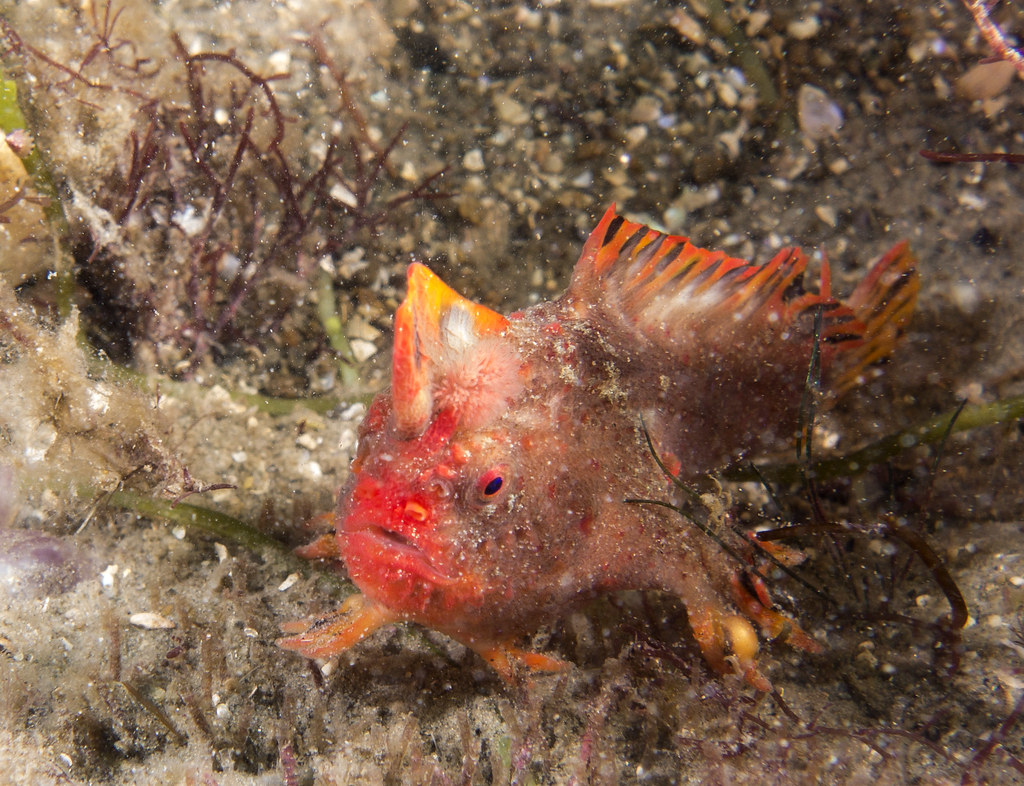

The release of 65 captive-raised red handfish into the wild near Hobart, Tasmania, marks a significant milestone in marine conservation. This effort aims to bolster the population of one of Australia’s most endangered fish species, the red handfish, which is critically endangered with fewer than 250 individuals remaining in the wild.
Understanding the Red Handfish
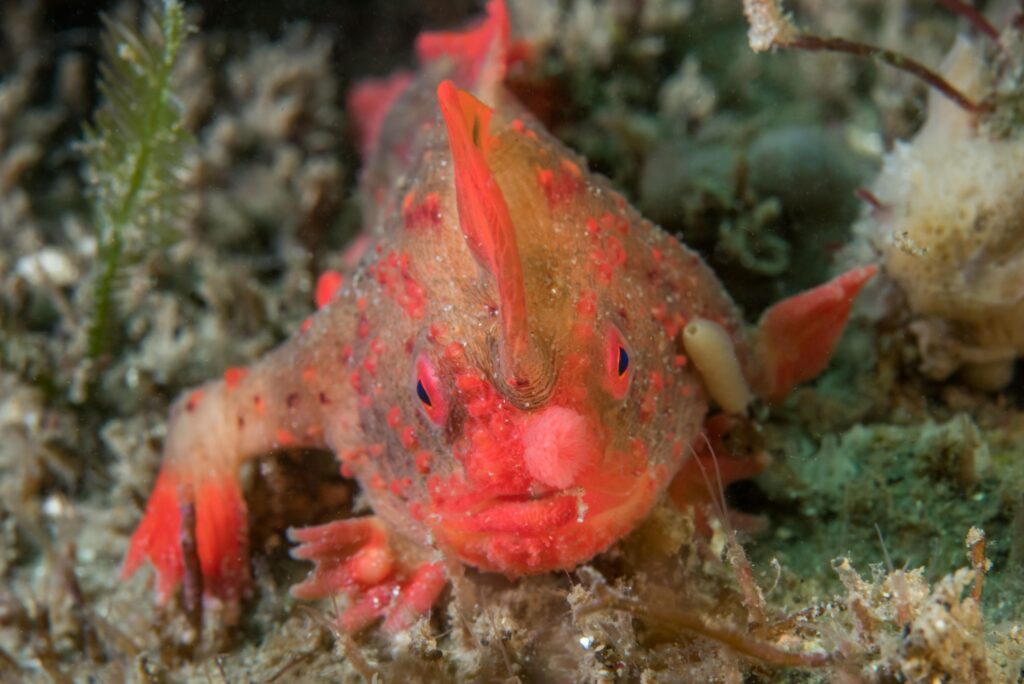
The red handfish, scientifically known as Thymichthys politus, is a small anglerfish that grows to about 6 to 8 centimeters long. It is known for its bright red to light pink or brown color and its unique hand-like pectoral fins, which it uses to walk along the sea floor.
This species is critically endangered and is one of 110 priority species under the Australian Government’s Threatened Species Action Plan 2022-2032. The red handfish’s limited population is confined to two small patches of rocky reef in Frederick Henry Bay, southeast of Hobart.
Conservation Efforts and Collaborative Initiatives
The conservation program for the red handfish is led by the University of Tasmania’s Institute for Marine and Antarctic Studies (IMAS). This initiative is part of a broader recovery effort under the Handfish Conservation Project, which began in 2018.
The program is funded by the Foundation for Australia’s Most Endangered Species (FAME) and supported by the Australian Government Department of Climate Change, Energy, the Environment and Water (DCCEEW). The project also involves collaboration with the Department of Natural Resources and Environment Tasmania, Seahorse World, and Sorell Council.
Dr Jemina Stuart-Smith, a marine ecologist at IMAS, emphasized the importance of this release, stating, “We’ve given the red handfish the best possible chance of survival, and every release helps us learn more and work towards recovering the species.”
Threats and Challenges Facing the Red Handfish
The red handfish faces numerous threats, including habitat loss and destruction caused by native sea urchins overgrazing seaweeds, pollution, siltation, and coastal development. Human activities such as boating and diving, along with climate change, further exacerbate these challenges. The species’ small, fragmented populations and limited dispersal capabilities make it particularly vulnerable to extinction.
Captive Breeding and the “Handfish School”
The captive breeding program is a crucial component of the conservation effort. It creates a safe population to support wild recovery. The “handfish school” initiative trains captive fish to survive in the wild before their release. This training is essential for ensuring that the fish can adapt to their natural habitat and thrive.
Associate Professor Andrew Trotter, who leads the conservation breeding program at IMAS, expressed his excitement about the release, saying, “They’re wild animals and belong in the sea.” He added that this step is vital for the species’ recovery.
Statements From Key Figures
The success of this conservation effort is a testament to the dedication of the IMAS team and its partners. Tracy McNamara, CEO of FAME, praised the team’s work, stating, “This achievement is a testament to the IMAS team, whose dedication is proving that even a species as close to extinction as the red handfish can be given a future.”
Dr Fiona Fraser, the Threatened Species Commissioner, highlighted the significance of this milestone, saying, “This is a significant milestone towards the recovery of the Critically Endangered red handfish.”
Future Plans for Red Handfish Recovery
The IMAS team will continue to monitor the red handfish in the wild to track their behavior and survival. Ongoing captive breeding efforts will allow for more releases in the future, supporting the recovery of wild populations. Habitat restoration and management at red handfish sites are also critical components of the conservation strategy. This comprehensive approach aims to ensure the long-term survival of the red handfish and has significant benefits for other species in the area.
The collaborative efforts of scientists, government agencies, and conservation organizations offer hope for the future of the red handfish, demonstrating that even species on the brink of extinction can be given a chance to thrive.
