Taxonomy & Classification
- Kingdom
- Animalia
- Phylum
- Chordata
- Class
- Aves
- Order
- Passeriformes
- Family
- Tyrannidae
- Genus
- Empidonax
- Species
- Empidonax virescens

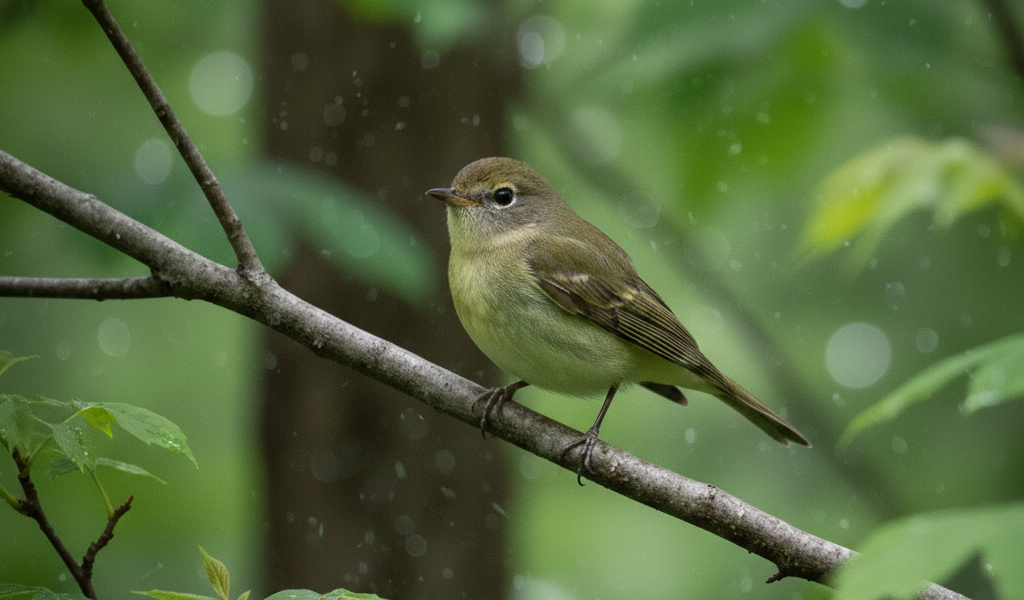 Photo Credit: Animals Discovered
In the lush, sun-dappled forests of eastern North America, the Acadian Flycatcher, known scientifically as Empidonax virescens, flits about with a spry energy that captivates birdwatchers and nature lovers alike. This small bird, cloaked in soft olive green feathers, is adorned with delicate white wingbars that stand out against its earthy tones. It thrives in the shady understory of deciduous woods, where the dappled light filters through leaves, creating a serene backdrop for its charming antics. As it perches on low branches, its sharp, alert eyes scan the surroundings, ready to snap up insects that flit through the air—its quick movements almost like a playful dance.
Scientists and enthusiasts are drawn to the Acadian Flycatcher not just for its striking appearance, but also for its intriguing behaviors and vocalizations. This species is known for its distinctive call, a sharp “pee pee pee” that resonates through the woods, marking its territory and attracting potential mates. Observing these birds in their natural habitat reveals a world of complex interactions, from their nesting habits to their role in the ecosystem as insect controllers. The Acadian Flycatcher is not just a picturesque element of the forest; it is a vital part of the web of life that keeps these ecosystems thriving. As we delve deeper into the life of this captivating bird, we’ll uncover the secrets of its survival, migration patterns, and the challenges it faces in a changing world.
The Acadian Flycatcher, classified as Empidonax virescens, holds a special place in the tree of life, showcasing the rich diversity of the avian world. Belonging to the family Tyrannidae, which includes a variety of small insect-eating birds known as tyrant flycatchers, this species is notable for its distinct, melodic call and its preference for moist woodland habitats. With a compact body and a slightly rounded head, the Acadian Flycatcher is a master of blending into its surroundings, making it a fascinating subject for bird enthusiasts and ecologists alike.
| Taxonomic Rank | Scientific Name | Meaning & Significance |
|---|---|---|
| Kingdom | Animalia | This term indicates that the Acadian Flycatcher is part of the animal kingdom, encompassing all animals, from the smallest insects to the largest mammals. |
| Phylum | Chordata | Chordata means “having a notochord,” a flexible rod that in many animals develops into the backbone. This highlights the Flycatcher’s place among vertebrates, creatures with a spinal column. |
| Class | Aves | Aves is the class that includes all birds, recognized for their feathers, beaks, and ability to lay eggs. The Acadian Flycatcher shares this classification with over 10,000 bird species! |
| Order | Passeriformes | This order, often called perching birds or songbirds, is characterized by their strong feet adapted for grasping branches, which is vital for their lifestyle of singing and nesting in trees. |
| Family | Tyrannidae | The name Tyrannidae translates to “tyrant flycatchers,” a nod to their aggressive behavior in defending their territories and their skillful hunting of insects. |
| Genus | Empidonax | This genus name comes from Greek roots meaning “to catch,” reflecting the flycatcher’s adeptness at capturing insects on the wing. |
| Species | virescens | Virescens is Latin for “greenish,” a reference to the bird’s olive-green plumage that helps it blend seamlessly into its forest environment. |
The classification of the Acadian Flycatcher offers a glimpse into its evolutionary journey, revealing connections to a lineage of birds that have adapted brilliantly to their environments. As a member of the Tyrannidae family, it shares traits with its relatives, such as robust hunting techniques and a diverse diet primarily consisting of insects. Understanding where the Acadian Flycatcher sits in the tree of life not only enhances our appreciation for this charming bird but also underscores the intricate web of relationships among species that have evolved over millions of years. Through these connections, we see how adaptation and survival shape the natural world, reminding us of the beauty and complexity of life on Earth.
The story of the Acadian Flycatcher stretches back millions of years, revealing a tale of adaptation and survival in the ever-changing landscapes of North America. This small, energetic bird is a member of the Tyrannidae family, which has roots tracing back to the late Eocene epoch, around 34 to 56 million years ago. Over time, as the world transformed with shifting climates and new habitats, these birds evolved to thrive in various environments, leading to the vibrant diversity we see today.
Ancestral forms of the Acadian Flycatcher likely resembled early flycatchers, which were small, insect-eating birds that adapted to different ecological niches. As forests expanded and diversified, these ancestors developed new characteristics to exploit the abundant insect populations. One major evolutionary transition occurred when these birds evolved their distinctive call—a sharp “pee pee pee”—which not only helps them communicate but also aids in attracting mates. Another significant change was the shift towards a more specialized diet, allowing them to hunt insects more efficiently by perching quietly and pouncing when prey came close.
These adaptations have been crucial for the Acadian Flycatcher’s survival. By blending into their surroundings, they minimize the risk of becoming a meal for larger predators. With a high metabolic rate, they can efficiently capture and process the insects they rely on, ensuring they have plenty of energy for foraging and nesting. Their territorial instincts not only secure the best feeding grounds but also provide a safe space for raising their chicks, ultimately contributing to the ongoing legacy of this charming bird in North America’s rich tapestry of wildlife.
The Acadian Flycatcher presents a delightful sight, embodying the essence of a small, vibrant bird that harmonizes beautifully with its forested surroundings. This petite avian measures just a few inches from beak to tail, weighing in at a mere 0.4 to 0.5 ounces. Its overall shape is compact and streamlined, allowing it to flit swiftly through the dense foliage. With an olive green hue that blends seamlessly into the leaves above, this bird is a master of camouflage, making it a less visible target for predators.
| Feature | Description |
|---|---|
| Weight | 0.4 to 0.5 ounces |
| Skin Type | Feathers |
| Color | Olive green with white wingbars |
| Size | About 5.5 to 6.3 inches long |
The combination of olive green coloring and striking white wingbars not only serves as an effective disguise among the leaves but also plays a role in communication during mating season. The flycatcher’s petite size, paired with its agile body, allows it to dart between branches and snatch up insects mid-air, showcasing its remarkable hunting skills. Each feature, from its delicate feathers to its vibrant yet subtle coloration, works in concert to ensure the Acadian Flycatcher thrives in its woodland home, a testament to nature’s artistry in evolution.
The Acadian Flycatcher thrives in the serene embrace of wet deciduous forests, where sunlight filters through a leafy canopy, creating a patchwork of light and shadow. These vibrant woodlands are often alive with the sounds of rustling leaves and the gentle trickle of nearby streams. Here, the air is filled with the scent of damp earth and the chorus of various birds, each contributing to the natural symphony. It’s in these lush environments that the Acadian Flycatcher finds the perfect combination of shelter and food, making it a charming resident of this vibrant ecosystem.
– North America
– South America
This little bird prefers places where it can find plenty of insects to eat, which thrive in warm, humid climates. The wet deciduous forests are rich in biodiversity, meaning they support various plants and animals. These habitats typically experience a mix of warm summers and cool winters, with plenty of rainfall to keep the foliage lush and vibrant. The moisture in the air helps sustain the insects that the Acadian Flycatcher hunts, making these forests a perfect home.
To thrive in these specific habitats, the Acadian Flycatcher has developed several clever adaptations. Its soft, muted colors allow it to blend seamlessly into the dappled light of the forest, providing a natural camouflage against potential predators. This tiny bird is also skilled at navigating the dense underbrush, darting from branch to branch with agility as it hunts for tasty insects. By nesting in the sheltered canopies, it ensures a safe space for its young, protecting them from the elements and predators alike. These traits highlight how perfectly the Acadian Flycatcher fits into its lush, leafy world.
The Acadian Flycatcher begins its day just as the sun peeks over the horizon, filling the forest with soft, golden light. As a diurnal bird, it is most active during daylight hours, darting among the branches in search of tasty insects to fuel its energetic lifestyle. With quick, agile movements, it captures small prey mid-flight, showcasing remarkable precision. Throughout the day, it can be found perched quietly, listening intently, or calling out to establish its territory. The soft, whistled notes of its song echo through the trees, adding a melodic touch to the vibrant forest atmosphere.
Socially, Acadian Flycatchers are generally solitary or found in pairs, especially during the breeding season. While they may not form large flocks like some other birds, they do engage in interesting interactions with their partners. Mating pairs work together to build their nests, carefully selecting hidden spots within the foliage to keep their future chicks safe. Communication between mates is crucial, with soft calls and subtle body language helping them stay connected. During the non-breeding season, they may be seen resting alone, but their strong bond during nesting time is vital for raising healthy offspring.
| Behavior Type | Description |
|---|---|
| Daily Activity | Active during the day, catching insects in flight and perching quietly to listen for prey. |
| Social Structure | Typically solitary or in pairs, especially during breeding season. |
| Communication Methods | Uses soft calls and body language to communicate with mates and establish territory. |
These daily behaviors are essential for the Acadian Flycatcher’s survival. By actively hunting during the day, they maximize their chances of catching insects when they are most abundant. Their ability to communicate and collaborate with a mate ensures that they can successfully raise their young in a safe environment. Whether perched quietly or zipping through the trees, every action contributes to their resilience in the wild, allowing them to thrive in the enchanting world of the forest.
The Acadian Flycatcher is a dedicated insectivore, meaning it primarily eats insects. This petite bird has a remarkable ability to spot its favorite foods while perched quietly on branches or flitting through the trees. With its sharp eyesight, it hunts for a wide variety of insects, swooping down to catch them mid-air or picking them off leaves and branches. This method not only showcases its agility but also allows it to be an efficient forager in the bustling forest ecosystem.
| Dietary Aspect | Details |
|---|---|
| Diet Type | Insectivore |
| Favorite Foods | Wasps, bees, caterpillars, ants, flies, beetles, moths, spiders, and millipedes |
| Hunting/Foraging Strategies | Perches quietly to spot insects, then darts out to catch them mid-flight or picks them off foliage |
This diet not only nourishes the Acadian Flycatcher but also plays a vital role in its habitat. By keeping insect populations in check, the flycatcher helps maintain a balanced ecosystem. Each day, as it flits about in search of food, it contributes to the health of the forest, ensuring that its vibrant home remains a haven for countless other creatures. The flycatcher’s feeding habits are a beautiful reminder of the interconnectedness of life in the wild.
As spring unfolds its vibrant colors, the Acadian Flycatcher enters a lively mating season, where the males display their charming courtship behaviors. They sing a sweet, melodic tune to attract potential mates, their calls echoing through the trees. Once a female is drawn to a male’s song, they perform a dance of sorts, showcasing their agility as they flit about, demonstrating their strength and fitness. This ritual is crucial for establishing a bond, paving the way for a successful breeding partnership.
| Reproductive Aspect | Details |
|---|---|
| Gestation Period | About 14 days |
| Litter Size | 3 to 5 eggs |
| Age of Maturity | One year |
| Name of Young | Chicks |
After the female lays her eggs, she settles in to incubate them for about two weeks. During this time, both parents engage in feeding and protecting their territory, ensuring a safe environment for their future chicks. Once the eggs hatch, the young are born helpless, blind, and covered in fluffy down feathers. The parents work tirelessly to provide food, mainly insects, to their growing chicks. As days pass, the chicks develop quickly, gaining strength and feathers, preparing for the exciting moment when they will take their first flight into the world, ready to embark on their own adventures.
In the intricate web of life, the Acadian Flycatcher occupies a vital role as both predator and prey. This lively little bird feasts on a variety of insects, helping to control their populations while also providing sustenance for larger animals. As it flits through its forest home, the Acadian Flycatcher faces various dangers that threaten its survival and the delicate balance of its ecosystem.
To combat these threats, the Acadian Flycatcher employs several clever survival strategies. When nesting, it often chooses hidden spots in dense foliage, making it harder for predators to spot their eggs or young chicks. Additionally, its quick, agile flight patterns allow it to evade danger with surprising speed. By staying alert and using its keen senses, this small bird demonstrates a remarkable ability to navigate challenges in its environment, showcasing the resilience of nature’s creatures.
A keystone species is an organism that has a disproportionately large impact on its ecosystem relative to its abundance. In simpler terms, if you were to remove this one species, the entire environment around it could change dramatically. While the Acadian Flycatcher may not be the first animal that comes to mind when thinking of keystone species, it does play a significant role in its wet deciduous forest habitats.
As a dedicated insectivore, the Acadian Flycatcher helps maintain the balance of insect populations in its environment. By consuming a variety of insects, it contributes to controlling pest numbers, which, in turn, benefits the health of the trees and plants around it. For example, a decrease in insect populations could lead to unchecked growth of certain species, which may outcompete others, altering the forest structure over time. This small bird acts like a natural pest control agent, ensuring that the ecosystem remains in harmony.
Moreover, during the breeding season, the Acadian Flycatcher attracts various insects to its territory, creating a lively hub of activity that supports other wildlife. When these birds sing their sweet calls, they not only attract potential mates but also signal to other species that food is plentiful in the area. This creates a bustling environment where other birds and animals can thrive as well. Their nesting habits further influence the forest dynamics, as the materials they use to build their nests can affect the local plant life.
In summary, the Acadian Flycatcher, while perhaps not a classic keystone species, certainly plays a crucial role in its ecosystem by controlling insect populations and fostering biodiversity.
If the Acadian Flycatcher were to disappear, the effects could ripple throughout the ecosystem. Without this bird’s insect control, certain insect populations could explode, leading to overgrazing on young plants and trees. This could diminish forest health and diversity, affecting not just plants but also the many animals that rely on these habitats for food and shelter. The delicate balance of the wet deciduous forests would be disrupted, showcasing how even the smallest players in nature can hold significant power over the environment.
In the vibrant tapestry of wet deciduous forests, the Acadian Flycatcher plays a crucial role in maintaining ecological balance. This small, energetic bird is more than just a fluttering delight; it acts as a natural regulator within its habitat. By primarily feeding on insects, the Acadian Flycatcher helps control pest populations, ensuring that the delicate balance of food webs remains intact. Its presence contributes to a healthier ecosystem, making it an essential player in the forest community.
| Ecosystem Service | Impact |
|---|---|
| Insect Population Control | Reduces pests that can harm plants and trees |
| Seed Dispersal | Helps in the spread of certain plant species |
| Food Source for Predators | Supports a variety of other wildlife, including larger birds and mammals |
| Indicator of Ecosystem Health | Reflects the overall well-being of forest environments |
For instance, by munching on caterpillars and beetles, the Acadian Flycatcher keeps these populations in check, preventing them from overwhelming the forest’s foliage. This not only protects the trees but also supports other species that rely on those plants for food and shelter. Furthermore, as it flits from branch to branch, the flycatcher aids in seed dispersal through its foraging activities, playing a role in the growth of new plants. In this way, the bird contributes to the regeneration and diversity of its forest home.
The broader ecological importance of the Acadian Flycatcher cannot be overstated. As a keystone species, its presence helps ensure the health of the entire ecosystem. When the flycatcher thrives, it signals a balanced and vibrant environment, while its decline can indicate larger issues affecting the forest. By understanding this little bird’s role, we gain insight into the intricate connections that sustain life in our forests, reminding us of the delicate balance that exists in nature and the need to protect it.
In the intricate dance of nature, various species often develop partnerships that can significantly influence their survival and wellbeing. These relationships, known as symbiosis, vary widely and can be mutually beneficial, harmful, or neutral. As the Acadian Flycatcher flits through the wet deciduous forests, it engages in several ecological interactions that showcase the interconnectedness of life. Understanding these relationships reveals not just the flycatcher’s role in its habitat but also illuminates the broader dynamics of forest ecosystems.
| Species/Type | Relationship Type | Description |
|---|---|---|
| Tree species (like oaks and maples) | Mutualistic | The Acadian Flycatcher nests in the branches, which provide protection and a stable environment, while the bird helps control insect populations that could harm the trees. |
| Brood parasites (like the Brown-headed Cowbird) | Parasitic | Brown-headed Cowbirds lay their eggs in the nests of the Acadian Flycatcher, which can lead to competition for resources and potential harm to the flycatcher’s chicks. |
| Other insectivorous birds | Commensal | When foraging in the same areas, the Acadian Flycatcher and other insect-eating birds can benefit from the presence of each other, as they help flush out insects, making feeding easier. |
These diverse relationships have evolved over time, shaped by the needs and behaviors of each species involved. The mutualistic interactions, such as those with trees, not only support the flycatcher’s nesting habits but also contribute to the health of the forest ecosystem. On the other hand, parasitic relationships can pose challenges, highlighting the delicate balance of survival in nature. Commensal relationships allow species to coexist and thrive together, further enriching the tapestry of life in the forests. As the Acadian Flycatcher navigates its world, it exemplifies how interconnected and interdependent our natural ecosystems truly are.
The Acadian Flycatcher is an enchanting little bird that thrives in the lush forests of eastern North America. Despite its small size, this lively creature is full of surprises that reveal the wonders of nature.
The Acadian Flycatcher has danced through the pages of American history, often symbolizing the vitality of the natural world. Indigenous peoples revered this lively bird, weaving it into their stories and spiritual practices. Early European settlers, too, encountered the Acadian Flycatcher in the dense forests of the East, marveling at its melodious calls and agile hunting skills. This bird has often been a reminder of the wild beauty that once thrived in unspoiled landscapes, inspiring artists and poets alike. Its presence in folklore and culture reflects humanity’s deep-rooted connection to nature, where each chirp and flutter speaks to the unbreakable bond between species.
Today, the relationship between the Acadian Flycatcher and humans has evolved, shaped by both admiration and the challenges of modern life. Conservation efforts have become paramount as habitat loss and climate change threaten the forests that nurture these birds. Organizations work tirelessly to protect their habitats, engaging local communities in educational activities that promote awareness of the Acadian Flycatcher’s plight. However, conflicts also arise, as urban expansion encroaches on their woodland homes. Understanding how to coexist with these birds is crucial, reminding us that our actions can either nurture or harm the delicate balance of nature.
As we look to the future, the relationship between the Acadian Flycatcher and humanity holds both promise and responsibility. By continuing to support conservation efforts and fostering a deeper understanding of this small bird’s ecological role, we can ensure that future generations experience the joy of spotting an Acadian Flycatcher flitting through the trees. Nurturing this bond will not only benefit the flycatcher but also enrich our lives, reminding us of the beauty and complexity of the natural world that surrounds us.
The Acadian Flycatcher, with its lively presence in the forests of eastern North America, currently enjoys a conservation status of “Least Concern.” This means that, for now, the species is not facing immediate threats that could lead to extinction. Interestingly, it boasts an estimated population of around 5.2 million individuals, indicating a stable population trend overall. While it’s important to keep an eye on changing environmental conditions, this small bird’s numbers suggest a healthy and thriving presence in its natural habitat.
| Conservation Factor | Status/Details |
|---|---|
| IUCN Status | Least Concern |
| Estimated Population Size | 5.2 million |
| Population Trend | Stable |
Despite its current stability, the Acadian Flycatcher faces several challenges that threaten its future. Habitat loss is one of the most significant concerns, primarily due to deforestation and land development. As wetlands and deciduous forests shrink, the spaces where these birds nest and feed become increasingly limited. Additionally, climate change poses a looming threat, causing shifts in weather patterns that could disrupt their breeding cycles and food availability.
Conservation efforts are underway to ensure that the Acadian Flycatcher continues to thrive. Organizations are working to protect and restore its natural habitats, focusing on preserving the rich ecosystems where these birds flourish. Public awareness campaigns also play a vital role in educating communities about the importance of maintaining biodiversity. With ongoing efforts and a watchful eye on environmental changes, there is hope that the Acadian Flycatcher will remain a cherished part of our woodlands for generations to come.
| Question | Answer |
|---|---|
| What kind of habitat does the Acadian Flycatcher prefer? | The Acadian Flycatcher thrives in wet deciduous forests, which are woodlands that experience a lot of moisture. These areas are filled with leafy trees, providing both shelter and food for these birds. |
| What does the Acadian Flycatcher eat? | This bird is an insectivore, meaning it primarily eats insects. Its diet includes a variety of bugs like flies, beetles, and moths, which it catches in mid-air or snatches off leaves. |
| How does the Acadian Flycatcher behave? | Acadian Flycatchers are known for their distinctive call, a sharp "pip" sound that echoes through the forest. They are generally solitary or found in pairs, often seen perched quietly, waiting to catch insects. |
| How does the Acadian Flycatcher reproduce? | During the breeding season, which usually peaks in late spring, females build nests in shrubs or low trees. They lay about 3 to 5 eggs, and both parents help care for the young once they hatch. |
| What threats does the Acadian Flycatcher face? | While the Acadian Flycatcher is currently listed as "Least Concern," it faces habitat loss from logging and land development. Climate change also poses a potential threat as it can affect their breeding and food availability. |
| What are some interesting characteristics of the Acadian Flycatcher? | This bird is easily recognized by its olive green coloring and distinctive white wingbars that stand out in the forest. They are also known for their acrobatic flying skills, which help them catch insects mid-flight. |
| How can I attract Acadian Flycatchers to my yard? | To attract Acadian Flycatchers, consider planting native trees and shrubs that provide both food and shelter. Creating a natural, dense area with plenty of insects will make your yard a welcoming spot for these charming birds. |