Taxonomy & Classification
- Kingdom
- Animalia
- Phylum
- Arthropoda
- Class
- Insecta
- Order
- Phasmatodea
- Family
- Phasmatidae
- Genus
- Achrioptera
- Species
- Achrioptera manga

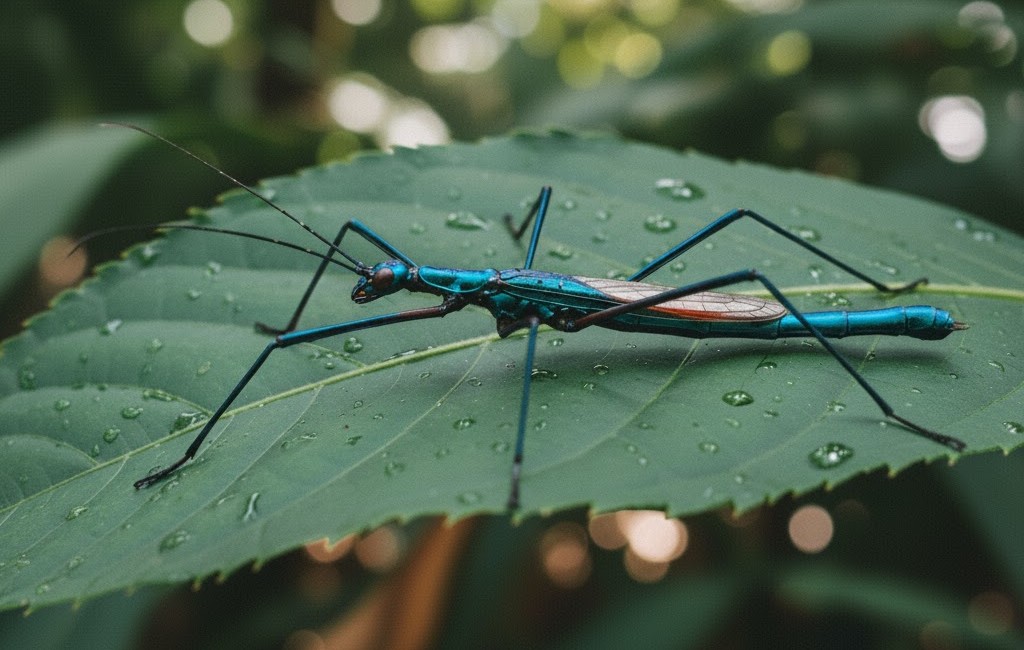 Photo Credit: Animals Discovered
In the lush forests of Madagascar, where the air is thick with the scent of damp earth and vibrant blooms, lives a remarkable insect known as Achrioptera manga. This striking stick insect, often called the Madagascar giant stick insect, is a master of disguise, blending seamlessly with the branches and twigs it calls home. With its long, slender body that can grow over four inches, Achrioptera manga is not just a visual marvel; it captivates scientists and nature enthusiasts alike with its incredible ability to mimic the very environment around it.
As you wander through the dappled sunlight filtering through the canopy, you might catch a glimpse of this creature, its dark brown or green exoskeleton camouflaged against the foliage. This adaptation helps it avoid predators, making it a true survivor in the wild. But there’s more to Achrioptera manga than just its stealth. Its life cycle is equally enchanting, with young nymphs resembling tiny versions of their adult selves, ready to start the art of camouflage from a young age. Join us as we explore the fascinating world of Achrioptera manga, uncovering the secrets behind its survival strategies, unique reproductive habits, and the important role it plays in its ecosystem.
Achrioptera manga occupies a fascinating niche in the sprawling tree of life. This stick insect, a member of the Phasmatodea order, is known for its incredible ability to blend into its surroundings, resembling twigs and branches. This remarkable camouflage helps it evade predators in the forests of Madagascar, showcasing an evolutionary adaptation that has made it a true survivor. With its long, slender body and the ability to sway gently in the breeze, Achrioptera manga is more than just a master of disguise; it also plays an important role in its ecosystem, contributing to the biodiversity of its habitat.
| Taxonomic Rank | Scientific Name | Meaning & Significance |
|---|---|---|
| Kingdom | Animalia | This name represents all animals, highlighting the diversity and complexity of life forms that share this classification. |
| Phylum | Arthropoda | Meaning “jointed legs,” this name reflects the defining characteristic of arthropods, which includes insects, arachnids, and crustaceans. |
| Class | Insecta | Derived from the Latin word for “cut,” this class is defined by its segmented bodies and exoskeletons, traits that are essential for insects. |
| Order | Phasmatodea | This comes from the Greek word “phasmatos,” meaning “ghost,” highlighting how many stick insects, including Achrioptera manga, appear spectral in their natural habitats. |
| Family | Phasmatidae | This name signifies the family of stick and leaf insects, emphasizing their unique morphology and adaptations for camouflage. |
| Genus | Achrioptera | Meaning “unarmed” in Greek, this genus name refers to the lack of defensive structures like spines or stingers, relying instead on camouflage for protection. |
The classification of Achrioptera manga reveals much about its evolutionary journey. Being part of the Phasmatodea order indicates a long history of adaptation to arboreal life, with ancestors that developed incredible mimicry to survive in dense foliage. Its classification within the broader framework of arthropods showcases the interconnectedness of life on Earth, reminding us that even the most seemingly simple creatures have rich histories and play crucial roles in their ecosystems. Understanding where Achrioptera manga sits in the tree of life enriches our appreciation for the diversity of forms that have emerged over millions of years, each uniquely adapted to thrive in its environment.
The evolutionary journey of Achrioptera manga stretches back millions of years, tracing its lineage through the ancient forests of Madagascar. This captivating stick insect belongs to a long line of ancestors dating back to the Carboniferous period, around 300 million years ago. Over time, these early insects adapted to their environments, evolving a variety of forms and functions that would eventually lead to the unique species we see today.
The ancestors of Achrioptera manga were likely more robust and less specialized than their modern descendants. As forests began to flourish, these insects underwent significant changes to thrive in their leafy habitats. One major transition was the development of camouflage, allowing them to blend seamlessly with twigs and leaves. This adaptation helped them evade predators and has persisted through generations. Additionally, the evolution of their elongated bodies and limbs provided not just disguise, but also enhanced mobility through dense vegetation, allowing them to navigate their complex ecosystem with ease.
These adaptations have played a crucial role in the survival of Achrioptera manga over the ages. By blending into its surroundings, it avoids becoming a meal for hungry predators, while its unique reproductive strategy helps maintain its numbers in the fragile ecosystems of Madagascar. The intricate dance of evolution has equipped this stick insect not just to endure, but to flourish within its vibrant, green world.
When you first catch a glimpse of Achrioptera manga, the vibrant blue male stands out like a jewel against the rich greens of Madagascar’s foliage. This stick insect isn’t just a master of disguise; it’s also a colorful spectacle. Its elongated body resembles a twig, which is a clever trick for evading predators. The exoskeleton, a hard outer covering that protects its body, is not only sturdy but also plays a crucial role in its survival strategy. Achrioptera manga can grow quite long, giving it an impressive and almost fantastical appearance among the leaves and branches.
| Feature | Description |
|—————————|————————————————————–|
| Size | Up to 4.3 inches (11 cm) in length |
| Weight | Up to 0.003 pounds (up to 1.5 grams) |
| Color | Bright blue in males, brownish-green in females |
| Skin Type | Exoskeleton, providing protection and camouflage |
| Distinctive Feature | Males exhibit striking blue coloration, enhancing visibility |
The interplay of these features makes Achrioptera manga both visually stunning and evolutionarily savvy. The bright blue of the males is not just for show; it may attract mates while also serving to confuse predators in the dappled light of the forest. Meanwhile, the exoskeleton provides a tough shield against threats, and the stick-like appearance helps them blend seamlessly into their environment. Together, these characteristics create a balance of beauty and survival, allowing this fascinating insect to thrive in its vibrant habitat.
In the heart of Madagascar, Achrioptera manga finds its sanctuary among the towering trees and dense underbrush of the island’s tropical rainforests. Here, the air buzzes with life, and sunlight filters through the intertwining leaves, creating a mosaic of light and shadow on the forest floor. The rich biodiversity of this unique habitat provides not just shelter but also an abundance of food for this extraordinary insect. As it clings to branches, its incredible camouflage allows it to blend seamlessly into the surrounding greenery, making it a true master of disguise.
Achrioptera manga thrives in a warm, humid climate, where temperatures typically range from 20 to 30 degrees Celsius (68 to 86 degrees Fahrenheit). These conditions foster the lush plant life that the stick insect relies on for both food and cover. The forest experiences a seasonal pattern of rainfall, ensuring that the environment remains vibrant and rich in resources. The humidity levels provide the moisture crucial for its survival and the growth of its preferred food sources—leaves from various trees.
Over time, Achrioptera manga has developed fascinating adaptations to thrive in these specific habitats. Its elongated body and twig-like appearance are perfect for evading predators, allowing it to remain hidden from birds and other hungry animals. Additionally, its ability to remain motionless for long periods helps it avoid detection. This camouflage is not just a cool trick; it’s essential for survival in a world where being seen can mean becoming someone else’s lunch. By perfectly blending into its surroundings, Achrioptera manga demonstrates how life in the rainforest has shaped its very being.
As the sun rises over Madagascar’s lush landscapes, Achrioptera manga begins its daily activities in a world of green. This stick insect is mostly solitary, spending its mornings basking on leaves, where it can take advantage of the sunlight to warm up. As the day unfolds, it engages in a leisurely routine of munching on foliage, primarily feasting on the leaves of various plants. This diet is essential for growth and energy, and Achrioptera manga is especially fond of the leaves from the native Cassia tree. With its impressive camouflage, it remains largely undetected by potential predators as it goes about its day.
Though Achrioptera manga is generally solitary, it does have some interesting interactions. During the mating season, males and females come together, their vibrant colors contrasting against the greenery. Males often display their bright hues in an effort to attract a mate, while females are more subdued in coloration, offering better camouflage. These courtship rituals are fascinating to observe, as they involve gentle movements and sometimes even a little dance. Once paired, the duo may remain together for a short period, but after mating, they typically go their separate ways, resuming their solitary lifestyles.
| Behavior Type | Description |
|---|---|
| Daily Activity Patterns | Primarily solitary, Achrioptera manga spends its days basking in sunlight and munching on leaves, particularly from the Cassia tree. |
| Social Structure | Generally solitary; interactions mainly occur during the mating season. |
| Communication Methods | Uses visual displays, especially males showcasing their bright colors to attract females during courtship. |
These behaviors are crucial for the survival of Achrioptera manga in its vibrant environment. By blending into the forest backdrop and maintaining a solitary lifestyle, it minimizes the risk of predation. Feeding on specific plant leaves ensures that it has the necessary nutrients to thrive. Meanwhile, the brief courtship interactions allow for reproduction, ensuring the continuation of this species while still maintaining the overall strategy of solitude that keeps them safe in the wild. Each day in the life of Achrioptera manga is a testament to the delicate balance of nature, where every action counts in the quest for survival.
Achrioptera manga, the enchanting stick insect of Madagascar, has a diet that primarily consists of leaves. As a herbivore, it thrives on a variety of plant materials, skillfully navigating its forest home to find its favorite meals. This insect’s feeding behavior is not just about munching on any greenery it encounters; it has developed a taste for specific plants, showcasing a discerning palate that helps it avoid less nutritious or potentially harmful foliage. With its ability to blend seamlessly into its surroundings, Achrioptera manga can munch away on leaves without drawing attention from predators.
| Dietary Aspect | Details |
|---|---|
| Diet Type | Herbivore |
| Favorite Foods | Leaves from various trees and shrubs, particularly those abundant in Madagascar’s rainforests |
| Prey Items | As a herbivore, Achrioptera manga does not hunt prey but instead focuses on plant material. |
| Hunting/Foraging Strategies | It uses its excellent camouflage to blend into foliage while slowly moving to find and consume leaves, often feeding during the day. |
The diet of Achrioptera manga not only influences its daily routine but also plays a crucial role in the ecosystem of Madagascar’s rainforests. By feeding on leaves, this stick insect helps control plant growth and contributes to the balance of its environment. Its slow and careful foraging allows it to remain hidden from predators, ensuring its survival while it munches away. This delicate dance between feeding and evading danger shapes both its behavior and the health of the forest, demonstrating the interconnectedness of all living things in this vibrant ecosystem.
When it comes to the mating rituals of Achrioptera manga, the vibrant blue males put on quite a show to attract their partners. During the breeding season, which typically aligns with the warm, humid months in Madagascar, these males engage in a dance-like display, using their bright colors and gentle movements to woo the females. Once a female is interested, she will often receive the male on a leaf, where they will mate for several hours. This courtship can be both a beautiful and strategic process, as the male must also be wary of potential predators that lurk nearby.
| Reproductive Aspect | Details |
|---|---|
| Gestation Period | 4-5 months |
| Litter Size | Typically 10-20 eggs |
| Age of Maturity | 4-6 months |
| Name of Young | Nymphs |
After mating, the female lays her eggs in the soil or among the leaf litter, ensuring they are well-hidden from predators. These eggs will hatch into tiny nymphs, which are miniature versions of the adults but without the vibrant coloration. The nymphs will begin their journey of growth, shedding their skins several times as they mature. During this process, parental care is minimal, as these insects are born with the instinct to fend for themselves. As the nymphs grow, they will gradually develop their striking colors and camouflage abilities, becoming masters of disguise just like their parents. By the time they reach sexual maturity at around four to six months, they will be fully equipped to continue the cycle of life in Madagascar’s enchanted forests.
In the intricate web of Madagascar’s ecosystem, Achrioptera manga plays a delicate role. This stick insect, with its impressive camouflage, often becomes both prey and protector of the forest. While it expertly disguises itself among branches, its vibrant coloration can also attract attention from various predators. Understanding its position in the food web helps us appreciate the challenges it faces in a world filled with hungry eyes.
To survive these threats, Achrioptera manga has developed some clever defensive strategies. When faced with danger, it often remains perfectly still, blending seamlessly into the environment. This ability to mimic twigs and branches allows it to evade predators that rely on sight. Additionally, its tough exoskeleton offers a layer of protection. By adopting a defensive posture or even playing dead, Achrioptera manga increases its chances of outsmarting potential threats and continuing its life amongst Madagascar’s vibrant foliage.
A keystone species is an organism that plays a critical role in maintaining the structure of its ecological community. Without these species, the ecosystem could drastically change or even collapse. Achrioptera manga, with its unique position in Madagascar’s forests, is not a classic keystone species. However, it does exert significant influence over its environment, making it a key player in its own right.
The ecological impact of Achrioptera manga can be seen in various ways. As a herbivore, it primarily feeds on leaves, and in doing so, it helps control plant growth. By munching on certain leaves, it prevents any single species from dominating the forest floor. This allows for a diverse array of plants to flourish, promoting a rich tapestry of life. Its feeding habits also create openings in the foliage, allowing sunlight to reach the lower layers of the forest, which benefits smaller plants and saplings.
Moreover, Achrioptera manga serves as a food source for various predators. Birds and other insects rely on these stick insects to meet their dietary needs, highlighting the interdependence of species within the ecosystem. When its population is stable, it helps support these predator species, which in turn maintains balance in the food web. Additionally, its remarkable camouflage not only protects it from being easily spotted by predators but also influences the hunting strategies of these predators, showcasing a fascinating interplay between species.
If Achrioptera manga were to disappear, the effects could ripple throughout its ecosystem. Without this stick insect, certain plants might become overabundant, overshadowing others and reducing overall biodiversity. This could lead to fewer food resources for herbivores and, subsequently, a decline in predator populations that rely on them for sustenance. The delicate balance of Madagascar’s forests would be at risk, underscoring the interconnectedness of all species within these vibrant ecosystems.
Achrioptera manga, the mesmerizing stick insect of Madagascar, plays a vital role in its ecosystem, acting as both a herbivore and a source of food for various predators. By feeding on leaves, it helps control plant growth and supports the health of its forest habitat. This insect is not just a resident of the forest; it contributes to the balance of life in its unique ecological niche, where every organism has a part to play.
| Ecosystem Service | Impact |
|---|---|
| Herbivory | Controls plant growth and promotes biodiversity |
| Food Source | Provides nutrition for predators like birds and reptiles |
| Camouflage | Helps maintain predator-prey dynamics |
| Seed Dispersal | Contributes to the spread of certain plant species |
One specific example of Achrioptera manga’s influence is its role in herbivory. By munching on leaves, it prevents any single plant species from dominating the landscape, allowing various plants to thrive, which in turn supports a range of other wildlife. This balance is crucial; when a plant species becomes too prevalent, it can overshadow others, reducing biodiversity. Furthermore, as a food source for birds and other animals, Achrioptera manga’s presence helps sustain the populations of those predators, creating a dynamic web of life in their forest home.
The broader ecological importance of Achrioptera manga cannot be overstated. As a keystone species, it helps maintain the structure and health of its ecosystem. Its interactions with plants and animals foster a rich, interconnected environment where many species can coexist. By ensuring diversity and stability in Madagascar’s forests, Achrioptera manga contributes to the resilience of its ecosystem, demonstrating how even the smallest of creatures can have a significant impact on their surroundings. Every leaf it eats and every shadow it casts plays a part in the grand tapestry of life in Madagascar.
In the vibrant world of Madagascar’s rainforests, the relationships between species are a tapestry of interconnections that help sustain life. These ecological partnerships can take many forms, ranging from mutualism, where both species benefit, to parasitism, where one species thrives at the expense of another. Understanding these relationships not only sheds light on the role of Achrioptera manga but also illustrates the delicate balance of the ecosystem it inhabits.
| Species/Type | Relationship Type | Description |
|---|---|---|
| Various plants (e.g., leaves) | Mutualistic | Achrioptera manga feeds on leaves, helping to prune and promote new growth, which can benefit the plants by encouraging a healthier ecosystem. |
| Predators (e.g., birds, reptiles) | Parasitic | While Achrioptera manga employs camouflage for protection, it still faces threats from predators that rely on it and other insects for food. |
| Fungi and bacteria in the soil | Commensal | As Achrioptera manga feeds and moves through the forest, it contributes to the distribution of spores and nutrients, benefiting fungi and soil microbes without directly affecting them. |
These partnerships have evolved over time as species adapted to their environments and learned how to coexist. Achrioptera manga, with its herbivorous diet, plays an essential role in maintaining plant health, while simultaneously becoming part of the food web. The intricate relationships it forms with plants, predators, and microorganisms illustrate how interconnected life can be, showcasing the resilience and complexity of Madagascar’s unique ecosystems. By studying these connections, we gain insight into the importance of preserving such habitats for future generations.
In the captivating realm of Madagascar, Achrioptera manga stands out not only for its striking appearance but also for its intriguing behaviors and adaptations. This enchanting stick insect is a true marvel of nature, surprising us with its unique traits and ecological significance.
Historically, Achrioptera manga has woven itself into the cultural tapestry of Madagascar, where it is often admired for its beauty and fascinating behavior. Indigenous communities have encountered these stunning stick insects for generations, sometimes using them as a symbol of nature’s artistry. Their unique ability to mimic twigs and branches has inspired stories and folklore, highlighting humanity’s long-standing fascination with the natural world. The intricate relationship between this insect and the people of Madagascar symbolizes a respect for biodiversity, showcasing how wildlife can inspire creativity and reverence.
Today, the interactions between Achrioptera manga and humans are evolving, especially concerning conservation efforts. As deforestation threatens their habitat, local communities and environmental organizations are stepping in to protect these insects and their ecosystems. However, conflicts can arise, particularly as agricultural expansion encroaches upon the forests where these stick insects thrive. Domestication has also come into play, with some enthusiasts keeping Achrioptera manga as exotic pets, which can help raise awareness about their conservation but also poses challenges regarding their care and proper habitat maintenance.
Looking ahead, the future of the relationship between Achrioptera manga and humanity hinges on our ability to balance environmental needs with human development. Continued education and awareness will be essential in fostering a deeper understanding of the importance of biodiversity and the role that species like Achrioptera manga play in maintaining healthy ecosystems. By prioritizing sustainable practices and conservation efforts, we can ensure that these enchanting stick insects not only thrive in their natural habitat but also continue to inspire future generations.
Achrioptera manga currently holds a conservation status that is not formally listed by organizations like the International Union for Conservation of Nature (IUCN). This means there isn’t an official assessment of its population trends or overall risk level, which can make it tricky to gauge its long-term survival. However, researchers believe that its populations may be declining due to various environmental pressures, particularly those affecting its natural habitat in Madagascar.
| Conservation Factor | Status/Details |
|---|---|
| IUCN Status | Not Listed |
| Population Estimates | Unknown |
| Trend Direction | Likely Declining |
The main threats facing Achrioptera manga primarily stem from habitat loss. As Madagascar continues to experience deforestation, primarily due to agriculture and logging, the forests these stick insects rely on are shrinking. Additionally, invasive species and climate change further exacerbate their struggle for survival. These factors disrupt their food sources and nesting areas, putting their populations at risk.
Conservation efforts for Achrioptera manga are still in the early stages, but there is hope on the horizon. Various organizations and researchers are working to protect Madagascar’s unique ecosystems, which include the habitats of this vibrant stick insect. By promoting sustainable practices and raising awareness, these efforts aim to ensure that Achrioptera manga and its fellow forest dwellers can thrive in their native landscapes for generations to come. The future of Achrioptera manga hinges on our ability to preserve the intricate web of life in Madagascar.
| Question | Answer |
|---|---|
| What is Achrioptera Manga's habitat? | Achrioptera Manga, commonly known as the Madagascar giant stick insect, thrives in the lush rainforests of Madagascar. These insects prefer areas with abundant foliage where they can easily camouflage themselves among the leaves and branches. |
| What does Achrioptera Manga eat? | This fascinating insect is a herbivore, meaning it primarily feeds on plant material. Their diet mainly consists of leaves from various trees and bushes, particularly those of the cassava plant. |
| How does Achrioptera Manga behave? | Achrioptera Manga is known for its docile nature, often remaining still to blend into its surroundings. They are mostly nocturnal, which means they come alive at night to feed and explore their environment. |
| How does Achrioptera Manga reproduce? | During mating, males and females perform a courtship dance, often involving gentle movements and touches. After mating, females lay eggs that resemble small seeds, which helps protect them from predators. |
| What are the threats to Achrioptera Manga? | While Achrioptera Manga is not currently listed as endangered, they face threats from habitat loss due to deforestation. As Madagascar's rainforests shrink, these stick insects lose their homes and food sources. |
| What makes Achrioptera Manga unique? | One of the most distinctive features of Achrioptera Manga is the bright blue coloring of the males. This striking color not only makes them stand out but also plays a role in attracting mates during the breeding season. |
| Can Achrioptera Manga change color? | While Achrioptera Manga cannot change color like a chameleon, their colors can darken or lighten slightly depending on their environment and stress levels. This ability helps them with camouflage, making it harder for predators to spot them. |