Taxonomy & Classification
- Kingdom
- Animalia
- Phylum
- Chordata
- Class
- Reptilia
- Order
- Squamata
- Family
- Varanidae
- Genus
- Varanus
- Species
- Varanthus acanthurus

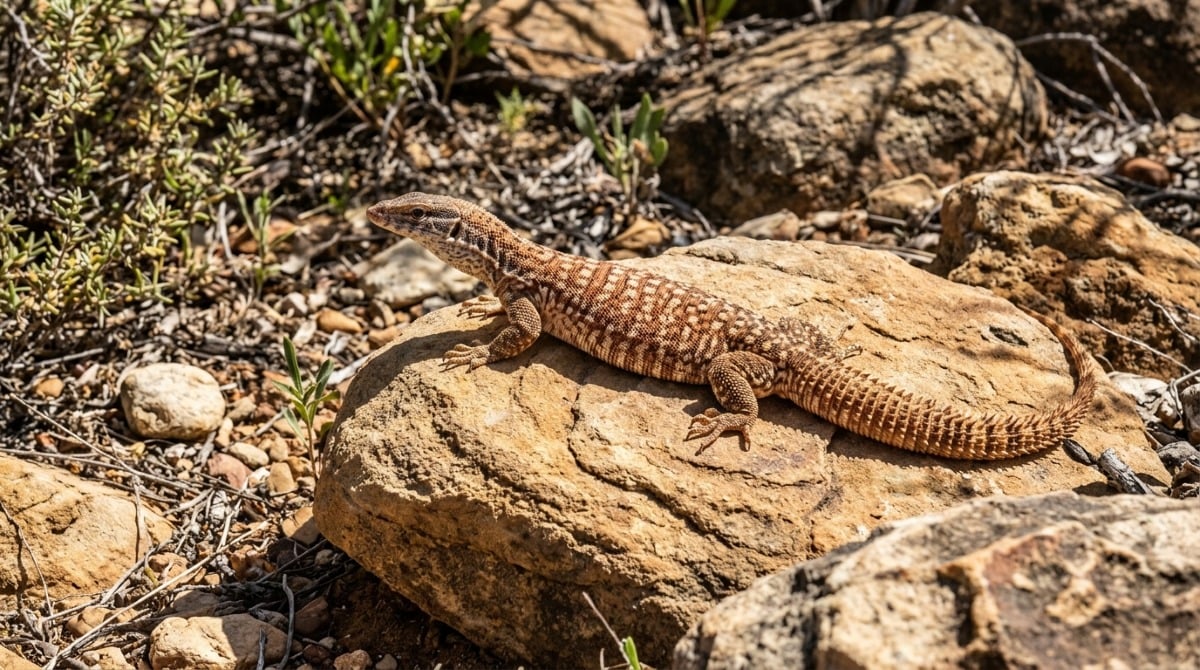 Photo Credit: Animals Discovered
In the sun-drenched landscapes of Australia, the Ackie Monitor, or Varanus acanthurus, weaves through the arid scrublands and woodlands with a grace that captivates all who encounter it. This striking lizard, with its sleek, elongated body and vibrant patterns, can grow up to three feet long, making it a remarkable sight against the backdrop of rocky outcrops and scattered bushes. Its scales shimmer in hues of yellow and brown, allowing it to blend seamlessly into its environment, a clever adaptation that helps it evade predators while hunting for its next meal.
What makes the Ackie Monitor particularly intriguing to scientists and nature lovers alike is its unique behavior and role in the ecosystem. As a carnivore, it plays a vital part in controlling populations of smaller animals, showcasing the delicate balance of life in its habitat. With a diet that includes everything from insects to small rodents, this agile reptile is not just a predator but also a key player in the food web. Observing an Ackie Monitor in action is like watching a masterful performance, as it darts and climbs with impressive agility, embodying the spirit of survival in the wild. Whether basking in the sun or engaging in elaborate courtship displays, the Ackie Monitor invites us to explore the wonders of nature and the intricate connections that bind all living things.
The Ackie Monitor, scientifically known as Varanus acanthurus, occupies a distinctive position in the animal kingdom. This lizard belongs to the family Varanidae, which includes the well-known Komodo dragon and other monitor lizards. What sets the Ackie Monitor apart is its vibrant coloration and relatively small size compared to its larger relatives. These lizards are native to the arid regions of Australia, where they thrive in rocky outcrops and scrublands. Their adaptability and unique behaviors, such as their ability to climb and burrow, make them a captivating subject of study in the reptilian world.
| Taxonomic Rank | Scientific Name | Meaning & Significance |
|---|---|---|
| Kingdom | Animalia | This name signifies that Ackie Monitors are part of the vast group of multicellular organisms known as animals, which are characterized by their ability to move and respond to their environment. |
| Phylum | Chordata | Chordata means “having a notochord,” a flexible rod that provides support. In Ackie Monitors, this structure is present during their early development, linking them to all vertebrates, including mammals and birds. |
| Class | Reptilia | Reptilia refers to reptiles, a class of cold-blooded animals that typically have scaly skin. This classification highlights the Ackie Monitor’s adaptations for life in warm environments. |
| Order | Squamata | Squamata means “scaly,” which is fitting for the Ackie Monitor, as its skin is covered in tough, protective scales that help it survive in its harsh habitat. |
| Family | Varanidae | This family includes monitor lizards, known for their keen senses and intelligence. The Ackie Monitor’s place here emphasizes its advanced hunting skills and adaptability. |
| Genus | Varanus | Varanus is derived from the Arabic word “waran,” meaning “monitor.” This name reflects the lizards’ vigilant nature and their ability to observe their surroundings closely. |
| Species | acanthurus | Acanthurus translates to “spiny tail,” which describes the distinctive spiny scales found on the Ackie Monitor’s tail, aiding in its defense against predators. |
Understanding the Ackie Monitor’s classification reveals much about its evolutionary journey. As a member of the Varanidae family, it shares a common ancestor with other monitor lizards, showcasing a lineage that has adapted to various environments over millions of years. The unique features and behaviors of the Ackie Monitor, from its spiny tail to its climbing abilities, are not just random traits; they are the result of evolutionary pressures that have shaped its survival strategies. This fascinating lizard is a living testament to the diversity and adaptability of life on Earth.
The evolutionary journey of the Ackie Monitor, or Varanus acanthurus, stretches back millions of years, tracing its lineage through the rich tapestry of reptilian history. This lizard is part of the Varanidae family, which has been around since the late Cretaceous period, roughly 70 million years ago. As the world changed, so did the ancestors of the Ackie Monitor, adapting to new environments and challenges.
The ancestors of the Ackie Monitor were likely small, agile reptiles that roamed the Earth alongside dinosaurs. Over time, these early lizards evolved into larger, more specialized forms. One significant transition was the development of a more elongated body and a powerful tail, which allowed them to navigate diverse habitats, from arid deserts to lush forests. As they adapted to their surroundings, they also developed keen hunting skills, becoming proficient predators. This shift was crucial for survival, as it enabled them to exploit a variety of food sources, including insects and small mammals.
These evolutionary adaptations have played a vital role in the survival of the Ackie Monitor. Their keen eyesight and strong limbs allow them to be agile hunters, while their adaptable diet ensures they can find food in different environments. The long, muscular tail not only aids in balance but also serves as a defense mechanism against potential threats. Together, these traits have helped the Ackie Monitor thrive in the wild, showcasing the incredible power of evolution in shaping life on Earth.
The Ackie Monitor is a striking lizard that captures attention with its sleek, elongated body and vibrant colors. This agile reptile can grow up to 3 feet long, showcasing a blend of grace and power. Its slender form is supported by strong limbs, allowing it to navigate its environment with ease. The Ackie Monitor’s head is slightly flattened, giving it a streamlined appearance, while its long, whip-like tail adds to its overall elegance.
| Feature | Description |
|---|---|
| Size | Up to 3 feet (about 0.9 meters) in length |
| Weight | 0.44 to 1.1 pounds (0.2 to 0.5 kilograms) |
| Skin Type | Covered in smooth, shiny scales |
| Color | Typically features a mix of brown, yellow, and black patterns |
The Ackie Monitor’s physical features are not just for show; they play vital roles in its survival. The smooth scales help reduce friction as it moves through its habitat, making it an efficient climber and burrower. Its coloration provides excellent camouflage among the rocks and foliage, allowing it to blend in and avoid predators. With its agile body and keen senses, the Ackie Monitor is well-equipped to hunt for insects and small animals, showcasing the perfect blend of beauty and functionality in the wild.
The Ackie Monitor thrives in the sun-drenched landscapes of arid scrublands and woodlands. Picture a warm, dry environment where the sun casts long shadows over rocky outcrops and scattered bushes. These habitats are often dotted with low vegetation, providing both shelter and hunting grounds for this agile lizard. The Ackie Monitor is perfectly at home in these rugged terrains, where it can bask on sunlit rocks or dart through the underbrush in search of food.
To flourish in its chosen habitat, the Ackie Monitor requires a climate that is generally warm and dry. These lizards are well-suited to environments with low humidity, which helps them avoid the risks of overheating. The temperature in their habitats can vary, but they often prefer areas where the sun shines brightly, allowing them to regulate their body temperature effectively. This need for warmth is crucial, as it helps them stay active and hunt for food.
Adaptations have finely tuned the Ackie Monitor to its environment. Its long, slender body allows for quick movements through the underbrush, while its sharp claws help it climb and dig. The lizard’s coloration, often a mix of browns and yellows, provides excellent camouflage against the earthy tones of its surroundings, making it less visible to both predators and prey. These features enable the Ackie Monitor to thrive in the challenging conditions of its habitat, showcasing the incredible ways life can adapt to the environment.
The Ackie Monitor leads a life that is both active and solitary, filled with a variety of daily activities. As the sun rises, these lizards emerge from their hiding spots, ready to bask in the warmth. They spend their mornings soaking up the sun, which helps them regulate their body temperature. After a good bask, they venture out to hunt for food, primarily insects and small rodents. Their keen eyesight and swift movements make them effective hunters, allowing them to dart after prey with agility. Throughout the day, they may also engage in digging and exploring their surroundings, using their strong claws to burrow into the ground or investigate crevices.
While Ackie Monitors are generally solitary creatures, they do exhibit interesting behaviors when it comes to territory and communication. Each lizard claims its own space, which it defends from intruders. They use a variety of signals to communicate, including body postures and tail movements. When feeling threatened, an Ackie Monitor may puff up its body and display its vibrant colors to appear larger and more intimidating. Although they prefer to live alone, these lizards can sometimes be seen in close proximity, especially during the breeding season when males may compete for the attention of females.
| Behavior Type | Description |
|---|---|
| Activity Patterns | Active during the day, basking in the sun, hunting for insects and small rodents, and exploring their environment. |
| Social Structure | Primarily solitary, with each lizard maintaining its own territory and defending it from others. |
| Communication Methods | Utilizes body postures, tail movements, and color displays to convey messages, especially when threatened or during mating. |
These behaviors are crucial for the Ackie Monitor’s survival in the wild. By basking in the sun, they ensure their bodies are warm enough to be active and hunt effectively. Their solitary nature helps them avoid competition for food and reduces the risk of attracting predators. The ability to communicate through body language allows them to establish boundaries and find mates when the time is right. All these elements work together, enabling the Ackie Monitor to thrive in its arid habitat.
The Ackie Monitor is a carnivore, which means it primarily eats meat. This agile lizard has a diverse diet that includes a variety of prey items. It is known to hunt down arthropods like cockroaches, beetles, and crickets, as well as caterpillars. In addition to these smaller creatures, Ackie Monitors will also take advantage of small rodents and even other small lizards when the opportunity arises. Their feeding behavior is quite dynamic; they actively forage and hunt, using their keen eyesight and quick reflexes to catch their meals.
| Dietary Aspect | Details |
|---|---|
| Diet Type | Carnivore |
| Favorite Foods | Arthropods, small rodents, small lizards |
| Prey Items | Cockroaches, beetles, crickets, caterpillars |
| Hunting/Foraging Strategies | Active foraging, keen eyesight, quick reflexes |
The Ackie Monitor’s diet plays a crucial role in its ecology and daily routine. By preying on a variety of small animals, it helps control their populations, contributing to the balance of its ecosystem. This lizard’s active foraging behavior means it spends a significant part of its day searching for food, which keeps it agile and alert. The need to hunt also influences its habitat choices, as it seeks out areas rich in prey, ensuring it has the energy needed to thrive in its sun-soaked environment.
As the breeding season approaches, Ackie Monitors engage in a captivating courtship ritual. Males display their strength and agility, often performing elaborate movements to attract females. This period typically occurs during the warmer months when food is plentiful, allowing these lizards to focus on reproduction. Once a female selects a mate, the pair will mate multiple times to ensure successful fertilization of the eggs.
| Reproductive Aspect | Details |
|---|---|
| Gestation Period | Approximately 60 days |
| Litter Size | 6-18 eggs |
| Age of Maturity | About 2 years |
| Name of Young | Hatchling |
After the eggs are laid, the female Ackie Monitor takes on a crucial role in ensuring the survival of her young. She often buries the eggs in a warm, sandy nest, providing a safe environment for the developing hatchlings. Once the eggs hatch, the tiny hatchlings emerge, ready to face the world. They are independent from the moment they break free from their eggs, relying on their instincts to find food and shelter. As they grow, these young lizards develop the skills they need to thrive in their arid habitats, eventually reaching maturity and continuing the cycle of life.
The Ackie Monitor, or Varanus acanthurus, plays a vital role in its ecosystem, sitting comfortably in the middle of the food web. As a carnivore, it helps control populations of smaller animals, while also being a target for larger predators. This balance is crucial for maintaining the health of its habitat, where every species has its part to play.
To survive these threats, the Ackie Monitor has developed several clever defensive behaviors. When faced with danger, it can quickly retreat to the safety of crevices or burrows, using its agility to escape. Additionally, its keen eyesight helps it spot predators from a distance, allowing it to make a hasty exit. In some cases, it may even display aggressive postures to deter attackers. These strategies, combined with its ability to blend into the environment, help the Ackie Monitor navigate the challenges of its wild world.
A keystone species is an organism that has a disproportionately large impact on its environment relative to its abundance. These species help maintain the structure of an ecosystem, influencing the types and numbers of various other organisms. The Ackie Monitor, or Varanus acanthurus, qualifies as a keystone species due to its role in controlling prey populations and contributing to the health of its habitat.
In the arid scrublands and woodlands where the Ackie Monitor resides, it plays a crucial role in maintaining balance within the ecosystem. As a carnivore, it primarily feeds on smaller animals, including insects and other invertebrates. By keeping these populations in check, the Ackie Monitor prevents overpopulation, which could lead to resource depletion. For example, if insect populations were to explode unchecked, they could damage vegetation, disrupting the entire food web.
Moreover, the Ackie Monitor serves as prey for larger predators, such as birds of prey and snakes. This connection highlights its importance in the food chain, as it provides sustenance for these higher-level predators. The presence of the Ackie Monitor can also influence the behavior of other species in its habitat, as they may alter their foraging patterns to avoid competition or predation.
If the Ackie Monitor were to disappear from its ecosystem, the consequences could be significant. Without this lizard, insect populations could surge, leading to overconsumption of plants and a decline in vegetation health. This, in turn, would affect other animals that rely on those plants for food and shelter. The ripple effects could destabilize the entire ecosystem, demonstrating just how vital the Ackie Monitor is to its environment.
The Ackie Monitor, or Varanus acanthurus, plays a crucial role in its ecosystem, particularly in the arid scrublands and woodlands where it resides. As a carnivorous lizard, it occupies an important ecological niche, helping to regulate populations of smaller animals. This not only maintains balance within its habitat but also supports the overall health of the ecosystem. By controlling prey species, the Ackie Monitor ensures that no single group becomes too dominant, which can lead to overgrazing or depletion of resources.
| Ecosystem Service | Impact |
|---|---|
| Population Control | Regulates numbers of smaller animals, preventing overpopulation. |
| Soil Aeration | Burrowing behavior helps aerate the soil, promoting plant growth. |
| Food Source | Serves as prey for larger predators, contributing to the food web. |
| Seed Dispersal | May inadvertently aid in seed dispersal through its movement. |
The Ackie Monitor influences its environment in several specific ways. For instance, by preying on insects and small mammals, it helps keep their populations in check. This is vital because an unchecked insect population can lead to crop damage and affect other wildlife. Additionally, as these lizards move through their habitat, they dig and burrow, which aerates the soil. This process is essential for plant health, allowing roots to access air and nutrients more easily. Furthermore, the Ackie Monitor itself becomes a food source for larger predators, such as birds of prey, thus linking various levels of the food web.
The broader ecological importance of the Ackie Monitor cannot be overstated. As a keystone species, its presence helps maintain the structure and diversity of its ecosystem. By regulating prey populations and contributing to soil health, the Ackie Monitor supports a balanced environment where various species can thrive. This interconnectedness highlights the delicate balance of nature, reminding us that even the smallest creatures can have a significant impact on their surroundings. Understanding and protecting such species is vital for preserving the rich tapestry of life on our planet.
In the intricate web of life, symbiosis plays a vital role in shaping ecosystems. This term refers to the close interactions between different species, which can be beneficial, harmful, or neutral. These relationships can be classified into three main types: mutualism, where both species gain; parasitism, where one benefits at the other’s expense; and commensalism, where one benefits while the other is neither helped nor harmed. Understanding these connections helps us appreciate the delicate balance of nature and the ways in which species, like the Ackie Monitor, interact with their environment and each other.
| Species/Type | Relationship Type | Description |
|---|---|---|
| Termites | Mutualistic | Ackie Monitors may benefit from the presence of termites, as they can feed on these insects while the termites help aerate the soil, promoting a healthier habitat. |
| Birds (e.g., oxpeckers) | Commensal | While not a primary relationship, Ackie Monitors may occasionally share their habitat with birds that feed on parasites found on their skin, benefiting the birds without affecting the lizards. |
| Fleas | Parasitic | Fleas can infest Ackie Monitors, feeding on their blood and potentially causing discomfort or health issues for the lizards. |
These relationships have evolved over time, shaped by the needs and behaviors of the species involved. Mutualistic partnerships, like that with termites, highlight how cooperation can lead to shared benefits, while parasitic interactions remind us of the challenges that can arise in nature. The Ackie Monitor’s ability to adapt to its surroundings and engage in these various relationships showcases the complexity of life in arid scrublands and woodlands. By understanding these connections, we gain insight into the survival strategies of the Ackie Monitor and the broader ecological community it inhabits.
The Ackie Monitor, or Varanus acanthurus, is a captivating lizard that offers a treasure trove of surprises for nature enthusiasts. From its unique adaptations to its intriguing behaviors, this reptile is more than just a pretty face in the wild.
The Ackie Monitor, known scientifically as Varanus acanthurus, has a rich history of interaction with humans that dates back centuries. Indigenous peoples of Australia have long recognized this lizard’s presence in their environment, often incorporating it into their cultural narratives and traditional practices. The Ackie Monitor has been admired for its agility and striking appearance, leading to its representation in local folklore. As humans began to explore and settle in the regions where these lizards thrive, encounters became more frequent, shaping a complex relationship that blends respect, curiosity, and sometimes conflict.
In contemporary times, the relationship between Ackie Monitors and humans has evolved significantly. While these lizards are often kept as exotic pets due to their manageable size and captivating behavior, this has raised concerns about their welfare and conservation. Habitat destruction and illegal wildlife trade pose serious threats to their populations. However, conservation efforts are underway to protect their natural habitats and educate pet owners about responsible care. In some areas, humans and Ackie Monitors coexist peacefully, with people appreciating their role in the ecosystem as natural pest controllers.
Looking ahead, the future of the Ackie Monitor and its relationship with humanity hinges on our ability to balance our fascination with these lizards and the need to protect their natural environments. As awareness grows about the importance of biodiversity and the roles species play in their ecosystems, there is hope for a more harmonious coexistence. By fostering respect and understanding, we can ensure that the Ackie Monitor continues to thrive in the wild while also captivating the hearts of those who encounter it.
The Ackie Monitor, or Varanus acanthurus, currently holds a conservation status of “Not Listed” according to the International Union for Conservation of Nature (IUCN). This means that there is not enough information to determine if the species is facing significant threats or if its population is declining. While population estimates are not precisely known, the Ackie Monitor appears to be relatively stable in its natural habitat, which includes the arid scrublands and woodlands of Australia. However, ongoing monitoring is essential to ensure that any potential changes in their status are promptly addressed.
| Conservation Factor | Status/Details |
|---|---|
| IUCN Status | Not Listed |
| Population Estimates | Not precisely known |
| Trend Direction | Stable |
Despite their current stable status, Ackie Monitors face several threats that could impact their future. Habitat loss is a significant concern, primarily due to land development and agriculture, which can destroy the natural environments these lizards rely on. Additionally, illegal pet trade poses a risk, as these lizards are sometimes captured for the exotic pet market. Climate change also looms as a potential threat, altering their habitats and food sources, which could disrupt their populations over time.
Conservation efforts for the Ackie Monitor are crucial to ensure their continued survival. While they are not currently listed as endangered, habitat protection and responsible pet ownership are vital. Organizations and local communities are encouraged to monitor populations and educate the public about the importance of preserving these unique lizards. With proactive measures and awareness, the outlook for the Ackie Monitor remains hopeful, allowing future generations to appreciate this fascinating species in the wild.
| Question | Answer |
|---|---|
| What is the natural habitat of the Ackie Monitor? | Ackie Monitors thrive in arid scrublands and woodlands. These environments provide them with plenty of hiding spots and places to bask in the sun, which is essential for their well-being. |
| What do Ackie Monitors eat? | As carnivores, Ackie Monitors primarily feast on insects, small mammals, and other reptiles. Their sharp teeth and agile bodies help them catch and consume their prey efficiently. |
| How do Ackie Monitors behave in the wild? | Ackie Monitors are known for their curious and active nature. They are often seen climbing trees or basking on rocks, and they can be quite social with other monitors, especially during the breeding season. |
| How do Ackie Monitors reproduce? | During the breeding season, female Ackie Monitors lay eggs in burrows or hidden spots. After about 60 to 90 days, the eggs hatch, and the young are independent from the moment they emerge. |
| What threats do Ackie Monitors face? | While Ackie Monitors are not currently listed as endangered, they face threats from habitat destruction and the pet trade. As their natural habitats shrink, their populations can become vulnerable. |
| What are some interesting characteristics of Ackie Monitors? | Ackie Monitors are known for their striking coloration, often featuring vibrant patterns that help them blend into their surroundings. They are also quite intelligent, capable of learning and adapting to their environment. |
| Can Ackie Monitors be kept as pets? | Yes, Ackie Monitors can be kept as pets, but they require specific care and a suitable habitat. Potential owners should research their needs thoroughly to ensure a healthy and happy life for these fascinating reptiles. |