Taxonomy & Classification
- Kingdom
- Animalia
- Phylum
- Chordata
- Class
- Mammalia
- Order
- Carnivora
- Family
- Felidae
- Genus
- Caracal
- Species
- Caracal aurata

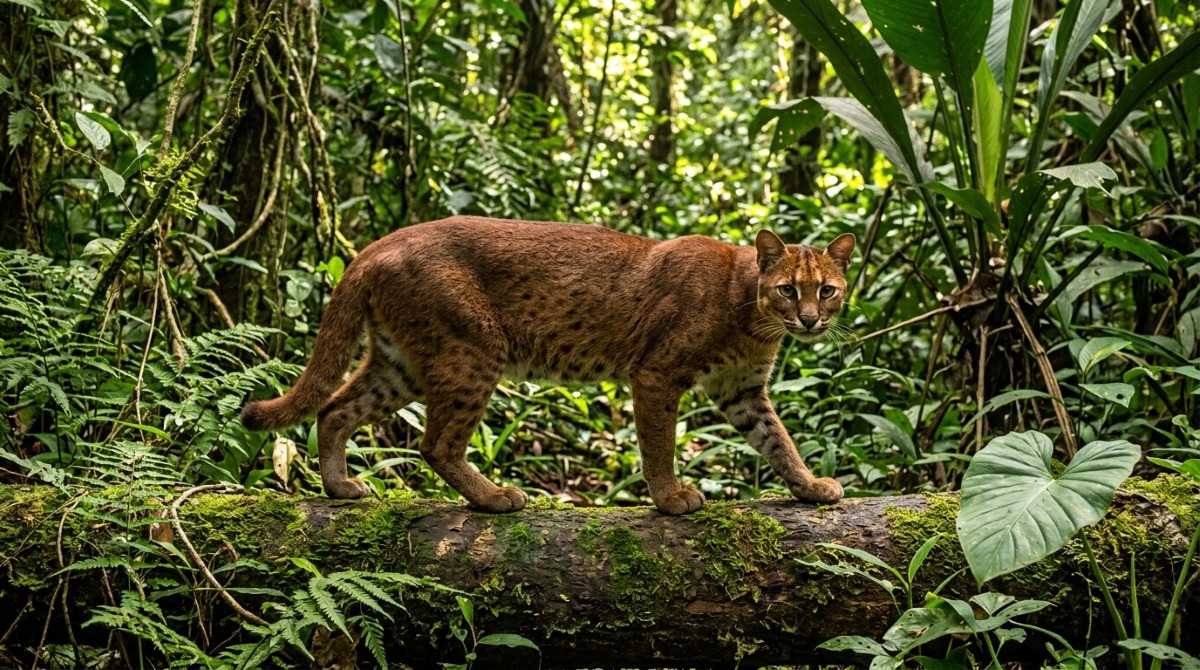 Photo Credit: Animals Discovered
In the heart of Africa’s lush, dense forests, the African Golden Cat, known scientifically as Caracal aurata, prowls with an air of mystery. Imagine stepping into a world where sunlight filters through a thick canopy, casting dappled shadows on the forest floor. Here, this medium-sized feline moves with a grace that belies its muscular build, its rich golden fur blending seamlessly with the sunlit patches of the underbrush. With striking amber eyes that seem to glow in the twilight, the African Golden Cat is not just a beautiful creature; it is a master of stealth, making it one of the most elusive cats on the continent.
Scientists and nature enthusiasts alike are captivated by this remarkable animal, not only for its stunning appearance but also for its secretive lifestyle. The African Golden Cat is primarily active during the dawn and dusk hours, a behavior known as crepuscular, which adds to its enigmatic charm. As a skilled predator, it plays a crucial role in its ecosystem, helping to maintain the balance of life in its forest home. With a diet that includes a variety of small mammals and birds, this feline showcases the intricate connections within its habitat. As we delve deeper into the world of Caracal aurata, we will explore its fascinating behaviors, the challenges it faces, and the vital role it plays in the rich tapestry of African wildlife.
The African Golden Cat, scientifically known as Caracal aurata, occupies a special place in the tree of life. This elusive feline is a member of the Felidae family, which includes all cats, from the mighty lion to the playful house cat. What sets the African Golden Cat apart is its striking golden-brown fur, which helps it blend seamlessly into the dense forests of West and Central Africa. Unlike many of its relatives, this cat is primarily arboreal, meaning it spends a lot of time in trees, showcasing its agility and adaptability in a unique habitat.
| Taxonomic Rank | Scientific Name | Meaning & Significance |
|---|---|---|
| Kingdom | Animalia | This name signifies that the African Golden Cat is part of the vast group of multicellular organisms that are primarily heterotrophic, meaning they consume other organisms for energy. |
| Phylum | Chordata | Chordata refers to animals that have a notochord, a flexible rod that supports the body. This group includes all vertebrates, like the African Golden Cat, which has a backbone. |
| Class | Mammalia | Mammalia indicates that this species is warm-blooded and has fur or hair, along with mammary glands that allow females to nurse their young. |
| Order | Carnivora | Carnivora is the order that includes meat-eating mammals. The African Golden Cat is a skilled hunter, primarily preying on small mammals and birds. |
| Family | Felidae | Felidae is the family of cats, known for their retractable claws and keen senses. The African Golden Cat shares this family with other big and small cats, showcasing its predatory prowess. |
| Genus | Caracal | The genus name Caracal is derived from a Turkish word meaning “black ear,” referring to the distinctive tufted ears that help with communication and hearing. |
| Species | aurata | Aurata comes from Latin, meaning “golden,” which perfectly describes the cat’s beautiful fur that glimmers in the dappled sunlight of its forest home. |
Understanding the African Golden Cat’s classification reveals much about its evolutionary journey. As a member of the Felidae family, it shares a common ancestor with other cats, adapting over time to thrive in its specific environment. Its unique adaptations, such as its golden coat and arboreal lifestyle, highlight the incredible diversity within the animal kingdom. This classification not only helps scientists study its biology and behavior but also emphasizes the importance of conserving its forest habitat, ensuring that this extraordinary species continues to roam the wilds of Africa.
The African Golden Cat, known scientifically as Caracal aurata, has a captivating evolutionary history that stretches back millions of years. This feline is part of the Felidae family, which has been evolving since the late Eocene epoch, around 34 million years ago. As the world changed, so did the ancestors of today’s cats, adapting to new environments and challenges.
The journey of the African Golden Cat begins with its ancestors, who were small, tree-dwelling mammals. Over time, these early felids adapted to various habitats, leading to the emergence of distinct lineages. The African Golden Cat branched off from its relatives, like the serval and the caracal, around 2 to 3 million years ago. This divergence allowed it to develop traits suited for the dense forests of West and Central Africa, where it primarily resides.
These adaptations have been crucial for the African Golden Cat’s survival in its challenging environment. The ability to camouflage itself allows it to ambush prey effectively, while its agility helps it escape threats and navigate its forest home. By being flexible in its diet, it can thrive even when certain food sources are scarce. Together, these traits make the African Golden Cat a master of its domain, showcasing the wonders of evolution in action.
The African Golden Cat is a striking and elusive feline that captures the imagination with its sleek and agile form. This medium-sized cat boasts a body that is both muscular and graceful, designed for stealth and agility in its dense forest habitat. With a small rounded head that gives it a distinctive appearance, the African Golden Cat is built for both hunting and evasion, making it a master of its environment.
| Feature | Description |
|---|---|
| Weight | 15 to 35 pounds |
| Skin Type | Fur |
| Most Distinctive Feature | Small rounded head |
The combination of its lightweight frame and powerful muscles allows the African Golden Cat to navigate through thick underbrush with ease. Its fur, which provides warmth and camouflage, helps it blend seamlessly into the dappled light of the forest. This clever adaptation not only aids in hunting but also protects it from potential threats. Each feature of this remarkable cat works in harmony, showcasing nature’s ingenuity in crafting a creature perfectly suited for survival in its lush, challenging habitat.
The African Golden Cat thrives in the heart of Africa’s lush, dense forests. Imagine walking through a vibrant green world where sunlight filters through a thick canopy of leaves, creating a mosaic of light and shadow on the forest floor. This habitat is rich with towering trees, tangled vines, and a variety of underbrush, providing the perfect setting for this elusive feline to roam and hunt. The sounds of chirping birds and rustling leaves fill the air, making it a lively yet secretive environment where the African Golden Cat can remain hidden from both prey and predators.
The African Golden Cat prefers a humid, tropical climate that supports its forest home. These regions typically experience warm temperatures and significant rainfall throughout the year, creating a rich ecosystem teeming with life. The dense foliage not only provides shelter but also offers a variety of prey, from small mammals to birds. This environment is crucial for the cat’s survival, as it relies on the cover of the forest to stalk and ambush its food.
Over time, the African Golden Cat has developed several adaptations that help it thrive in this specific habitat. Its sleek, muscular body allows for agile movement through the underbrush, while its keen senses enable it to detect even the slightest sounds or movements. The cat’s coat, which ranges from golden to reddish-brown, helps it blend seamlessly into the dappled light of the forest, making it a master of stealth. These adaptations not only enhance its hunting skills but also ensure its survival in a world where every day is a challenge.
The African Golden Cat leads a life that is both secretive and intriguing, primarily active during the twilight hours of dawn and dusk. This nocturnal and crepuscular lifestyle means that it prefers to hunt and explore when the world is dimly lit, allowing it to blend into the shadows of its forest home. During the day, these cats often find a cozy spot to rest, hidden among the dense foliage. As night falls, they become alert and agile, prowling through their territory in search of small mammals, birds, and even reptiles to satisfy their hunger.
While the African Golden Cat is mostly solitary, it does exhibit some interesting social behaviors. These cats are known to be territorial, marking their domains with scent markings to communicate their presence to others. Although they prefer to live alone, they may occasionally come together during mating season or when a mother is raising her young. This solitary nature allows them to be stealthy hunters, relying on their keen senses and agility to navigate their environment without the distraction of a group.
| Behavior Type | Description |
|---|---|
| Activity Patterns | Nocturnal and crepuscular, primarily active during dawn and dusk. |
| Social Structure | Solitary, with occasional interactions during mating or with mothers and their young. |
| Communication Methods | Uses scent markings and vocalizations to establish territory and communicate with others. |
The behaviors of the African Golden Cat are finely tuned to ensure its survival in the wild. By being active during twilight, it avoids many larger predators and takes advantage of the cover provided by the forest. Its solitary nature allows it to hunt effectively without competition, while its territorial instincts help it maintain a safe space for feeding and resting. These adaptations are essential for thriving in the lush, yet challenging, environments of Africa’s forests.
The African Golden Cat is a carnivore, meaning it primarily eats meat. This agile hunter has a varied diet that includes a range of prey, from small mammals to birds. It is known for its stealthy hunting techniques, often stalking its prey through the dense underbrush of its forest home. With keen senses and a patient approach, the African Golden Cat can ambush its targets, making it a skilled predator in its environment.
| Dietary Aspect | Details |
|---|---|
| Diet Type | Carnivore |
| Favorite Foods | Rodents, small antelope, tree hyraxes, monkeys, red duikers, birds |
| Prey Items | Fish, small mammals, and various birds |
| Hunting/Foraging Strategies | Stealthy stalking and ambush techniques |
The diet of the African Golden Cat plays a crucial role in its ecology and daily routine. By preying on a variety of animals, it helps maintain the balance of its forest ecosystem. This cat’s hunting habits also dictate its activity patterns, as it is most active during the early morning and late evening when its prey is on the move. This adaptability not only showcases its role as a predator but also highlights the intricate connections within its habitat.
The African Golden Cat has a fascinating mating ritual that takes place during specific times of the year, often influenced by the availability of food and environmental conditions. Mating typically occurs between September and December, when the forest is alive with activity. During this period, males will engage in vocalizations and scent marking to attract females. Once a female is ready to mate, she will signal her interest through various behaviors, including vocal calls and body postures. This courtship can be quite competitive, as males may engage in displays of strength to win the attention of a female.
| Reproductive Aspect | Details |
|---|---|
| Gestation Period | 75 to 78 days |
| Average Litter Size | 1-2 |
| Age of Sexual Maturity | 11 to 18 months |
| Name of Young | Cubs |
Once the cubs are born, the mother takes on the vital role of caregiver. She typically gives birth in a secluded den, which could be a hollow tree or a dense thicket, providing safety for her young. The cubs are born blind and helpless, relying entirely on their mother for warmth, food, and protection. As they grow, the mother teaches them essential survival skills, such as hunting and climbing. By the time they reach maturity at around 11 to 18 months, these young cats are ready to venture out on their own, equipped with the knowledge and instincts needed to thrive in their lush forest home.
The African Golden Cat plays a vital role in its ecosystem, sitting near the top of the food web in its forest habitat. As a skilled predator, it helps control the populations of smaller mammals and birds, maintaining a balance in the environment. However, this elusive feline faces numerous dangers that threaten its survival.
To defend itself against these threats, the African Golden Cat has developed several survival strategies. Its natural camouflage allows it to blend seamlessly into the forest, making it harder for both predators and humans to spot. This cat is also an expert at climbing trees, which provides a safe retreat from danger. By being primarily nocturnal, it avoids many daytime threats, hunting under the cover of darkness when it is less likely to encounter larger predators. These adaptations are crucial for its survival in a world filled with challenges.
A keystone species is an organism that has a disproportionately large impact on its environment relative to its abundance. These species play a crucial role in maintaining the structure of an ecosystem. The African Golden Cat, known scientifically as Caracal aurata, qualifies as a keystone species due to its role as a top predator in the dense forests of Africa. By controlling the populations of various prey species, it helps maintain the balance of its ecosystem.
The African Golden Cat primarily hunts small mammals and birds, which keeps these populations in check. For instance, by preying on rodents, it prevents these animals from overpopulating, which could lead to the depletion of vegetation as they consume large amounts of plant material. This balance is essential for the health of the forest, as it allows various plant species to thrive, providing habitat and food for other animals. Additionally, the cat’s hunting behavior can influence the behavior of its prey, leading to a more diverse and dynamic ecosystem.
Moreover, the presence of the African Golden Cat can affect the distribution of other species in its habitat. When this feline is active, it can create opportunities for other animals to forage and thrive in areas that might otherwise be dominated by its prey. This interaction fosters a rich tapestry of life within the forest, where each species plays its part in the grand ecological play.
If the African Golden Cat were to disappear from its ecosystem, the consequences could be severe. Without this top predator, populations of small mammals could explode, leading to overgrazing and a decline in plant diversity. This shift would not only affect the plants but also the myriad of species that rely on those plants for food and shelter. The delicate balance of the forest would be disrupted, potentially leading to a less resilient ecosystem that struggles to support the diverse life forms that call it home.
The African Golden Cat, known scientifically as Caracal aurata, plays a vital role in its dense forest habitat. As a carnivore, this elusive feline occupies an important ecological niche, acting as a predator that helps maintain the balance of its ecosystem. By hunting various small mammals and birds, the African Golden Cat regulates prey populations, ensuring that no single species dominates the environment. This balance is crucial for the health of the forest, as it allows for a diverse range of plants and animals to thrive.
| Ecosystem Service | Impact |
|---|---|
| Population Control | Regulates the numbers of small mammals and birds, preventing overpopulation. |
| Prey Selection | Encourages the survival of the fittest, promoting genetic diversity among prey species. |
| Habitat Maintenance | Influences the distribution of plant species by controlling herbivore populations. |
| Food Web Dynamics | Acts as a key predator, supporting the overall structure of the forest food web. |
The African Golden Cat’s influence extends beyond just its immediate hunting activities. For instance, by preying on rodents, it helps control their populations, which in turn affects the growth of vegetation. When rodent numbers are kept in check, plants have a better chance to flourish, creating a healthier forest ecosystem. Additionally, the cat’s hunting habits can lead to a more balanced distribution of other species, as the presence of a top predator often encourages a variety of animals to coexist in the same area.
The broader ecological importance of the African Golden Cat cannot be overstated. As a keystone species, its presence is essential for maintaining the structure and health of its forest environment. Without this remarkable feline, the delicate balance of the ecosystem could be disrupted, leading to potential declines in biodiversity. By understanding and protecting the African Golden Cat, we also safeguard the intricate web of life that thrives in the lush forests of Africa.
In the intricate web of life, symbiosis refers to the close relationships between different species that can benefit one or both parties involved. These ecological partnerships can take many forms, including mutualism, where both species gain advantages; commensalism, where one benefits while the other is neither helped nor harmed; and parasitism, where one species benefits at the expense of the other. The African Golden Cat, a solitary hunter of the dense forests of Africa, engages in various ecological relationships that highlight the interconnectedness of life in its habitat.
| Species/Type | Relationship Type | Description |
|---|---|---|
| Birds (e.g., oxpeckers) | Commensal | These birds may follow the African Golden Cat, feeding on insects disturbed by its movements. The cat is unaffected by their presence. |
| Small mammals (prey) | Predatory | The African Golden Cat hunts small mammals, maintaining a balance in the ecosystem by controlling their populations. |
| Parasites (e.g., ticks) | Parasitic | Ticks may latch onto the African Golden Cat, feeding on its blood, which can harm the cat’s health. |
These relationships have evolved over time, shaped by the needs and behaviors of the species involved. The African Golden Cat’s role as a predator helps regulate prey populations, ensuring a balanced ecosystem. Meanwhile, its interactions with other species, whether beneficial or harmful, illustrate the delicate dance of survival in the wild. Understanding these connections not only enriches our knowledge of the African Golden Cat but also highlights the importance of preserving its forest habitat, where these relationships thrive.
The African Golden Cat is a captivating and elusive feline that roams the dense forests of Central and West Africa. With its striking appearance and secretive lifestyle, this remarkable animal has many surprising traits that will intrigue nature enthusiasts of all ages.
The African Golden Cat, known scientifically as Caracal aurata, has long been woven into the cultural fabric of the regions it inhabits. Historically, this elusive feline has been both revered and feared by local communities. In some cultures, it is seen as a symbol of strength and agility, often featured in folklore and traditional stories. However, its secretive nature and hunting prowess have also led to misunderstandings, with some viewing it as a threat to livestock. This complex relationship highlights how humans have interacted with the African Golden Cat throughout history, shaping perceptions and cultural significance.
In contemporary times, the relationship between the African Golden Cat and humanity has evolved, particularly in the context of conservation efforts. As deforestation and habitat loss threaten this species, various organizations are working to protect its natural environment. However, conflicts can arise when these cats prey on livestock, leading to tensions between farmers and conservationists. While domestication is not a viable option for this wild cat, understanding its behavior and ecology is crucial for fostering coexistence. Education and community engagement play vital roles in promoting harmony between humans and this elusive feline.
Looking ahead, the future of the relationship between the African Golden Cat and humanity hinges on mutual understanding and respect. As conservation efforts gain momentum, there is hope for a more harmonious coexistence. By valuing the ecological role of this fascinating feline and addressing the challenges it faces, we can foster a relationship that benefits both the African Golden Cat and the communities that share its habitat. Together, we can ensure that this remarkable species continues to thrive in the wild for generations to come.
The African Golden Cat, or Caracal aurata, is currently classified as Vulnerable by the International Union for Conservation of Nature (IUCN). This means that the species faces a high risk of extinction in the wild. With an estimated population of around 10,000 individuals, the numbers are concerning, as they are believed to be declining. The combination of habitat loss and other threats has made it increasingly difficult for these elusive cats to thrive in their natural environments.
| Conservation Factor | Status/Details |
|---|---|
| IUCN Status | Vulnerable |
| Estimated Population Size | Approximately 10,000 |
| Population Trend | Declining |
The main threats to the African Golden Cat are habitat destruction and poaching. As forests are cleared for agriculture and logging, these cats lose their homes and hunting grounds. Additionally, they are often caught in snares set for other animals or hunted for their beautiful fur. This combination of factors puts immense pressure on their already dwindling population, making it harder for them to survive and reproduce.
Conservation efforts are underway to protect the African Golden Cat and its habitat. Organizations are working to establish protected areas and promote sustainable land-use practices that benefit both wildlife and local communities. Education and awareness campaigns are also crucial in helping people understand the importance of preserving this unique species. With continued efforts, there is hope that the African Golden Cat can recover and thrive in the wild once more.
| Question | Answer |
|---|---|
| What is the habitat of the African Golden Cat? | The African Golden Cat primarily lives in dense forests across West and Central Africa. These lush environments provide the cover and hunting grounds they need to thrive. |
| What does the African Golden Cat eat? | This cat is a carnivore, meaning it primarily eats meat. Its diet includes small mammals, birds, and sometimes even reptiles, showcasing its adaptability as a hunter. |
| How does the African Golden Cat behave? | African Golden Cats are generally solitary animals, preferring to hunt and roam alone. They are most active during dawn and dusk, a behavior known as crepuscular, which helps them avoid competition and predators. |
| How do African Golden Cats reproduce? | These cats typically mate in the wild during the rainy season. After a gestation period of about 70 to 75 days, a female usually gives birth to one to three kittens, which she raises alone. |
| What threats do African Golden Cats face? | African Golden Cats are classified as vulnerable, facing threats from habitat loss due to deforestation and hunting. Their populations are declining, making conservation efforts crucial for their survival. |
| What is a distinctive feature of the African Golden Cat? | One of the most distinctive features of the African Golden Cat is its small rounded head. This unique shape, along with its beautiful coat, helps it blend into the forest environment. |
| Are African Golden Cats social animals? | Generally, African Golden Cats are not very social and prefer to live alone. However, they may come together during mating season or when a mother is raising her young. |