Taxonomy & Classification
- Kingdom
- Animalia
- Phylum
- Chordata
- Class
- Reptilia
- Order
- Squamata
- Family
- Viperidae
- Genus
- Agkistrodon
- Species
- Agkistrodon contortrix

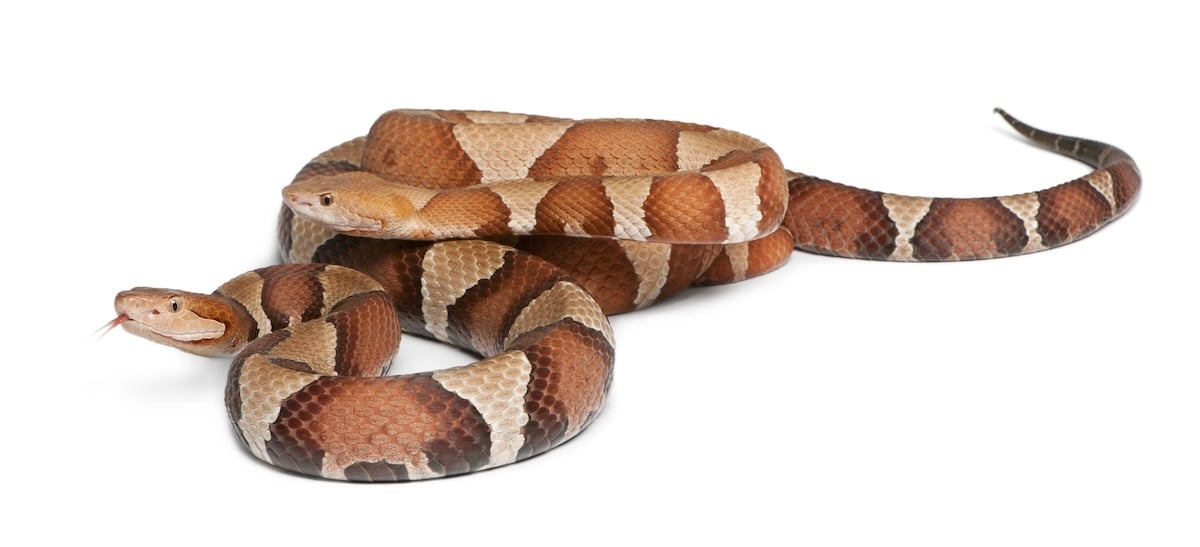 Photo Credit: lifeonwhite on Deposit Photos
In the heart of North America’s woodlands, the copperhead, scientifically known as Agkistrodon contortrix, glides silently through the underbrush, its warm, coppery hues blending seamlessly with the fallen leaves. This striking snake, with its distinctive hourglass patterns, is not just a marvel of nature’s artistry; it also plays a crucial role in its ecosystem. As it basks in the dappled sunlight filtering through the trees, the copperhead embodies both beauty and danger, captivating the imaginations of scientists and nature lovers alike.
What makes Agkistrodon contortrix particularly intriguing is its unique adaptations. With a slender body that can reach lengths of up to three feet, this snake is perfectly designed for stealth. Its heat-sensing pits, located between its eyes and nostrils, allow it to detect warm-blooded prey even in the dark, making it a skilled hunter. The copperhead’s venom, while not lethal to humans, is a powerful tool for subduing its meals, showcasing the delicate balance of nature where every creature has its place. As we explore the life of the copperhead, we will uncover its fascinating behaviors, habitat preferences, and the vital role it plays in maintaining the health of its environment.
Agkistrodon contortrix, commonly known as the copperhead, occupies a fascinating niche in the tree of life. This snake is part of the Viperidae family, which includes many of the world’s most well-known venomous snakes. What sets the copperhead apart is its distinctive coloration and pattern, which provides excellent camouflage among the leaf litter of its forested habitat. This clever adaptation not only helps it avoid predators but also allows it to ambush unsuspecting prey. With its unique blend of beauty and danger, the copperhead is a striking example of nature’s ingenuity.
| Taxonomic Rank | Scientific Name | Meaning & Significance |
|---|---|---|
| Kingdom | Animalia | This name signifies that copperheads are part of the vast group of multicellular organisms known as animals, which are characterized by their ability to move and respond to their environment. |
| Phylum | Chordata | Chordata means “having a notochord,” a flexible rod that supports the body. In copperheads, this structure is present during their early development, showcasing their connection to all vertebrates. |
| Class | Reptilia | Reptilia refers to reptiles, a class of cold-blooded animals that lay eggs and have scaly skin. Copperheads, like other reptiles, are ectothermic, meaning they rely on external heat sources to regulate their body temperature. |
| Order | Squamata | Squamata means “scaly,” which is fitting for snakes and lizards. Copperheads have smooth, overlapping scales that help them glide through their environment with ease. |
| Family | Viperidae | This family includes vipers and pit vipers, known for their long, hinged fangs that allow them to deliver venom effectively. The copperhead’s venom is used primarily for subduing prey. |
| Genus | Agkistrodon | Agkistrodon comes from Greek roots meaning “hook” and “tooth,” referring to the snake’s distinctive fangs that are shaped like hooks, perfect for injecting venom. |
| Species | contortrix | Contortrix means “twisted” in Latin, likely describing the snake’s coiled body posture when threatened or resting, which adds to its unique appearance. |
Understanding the taxonomic classification of Agkistrodon contortrix reveals much about its evolutionary journey. As a member of the Viperidae family, the copperhead shares a common ancestor with other venomous snakes, highlighting the adaptive strategies that have evolved over millions of years. Its specialized features, from its unique coloration to its venomous fangs, illustrate how this species has successfully adapted to its environment. By studying the copperhead’s place in the tree of life, we gain insight into the intricate web of relationships that connect all living organisms, showcasing the beauty and complexity of the natural world.
The evolutionary journey of Agkistrodon contortrix, better known as the copperhead, stretches back millions of years. This snake is a member of the Viperidae family, which has a rich history that dates back to the late Cretaceous period, around 100 million years ago. As the Earth transformed through various geological epochs, so too did the ancestors of the copperhead, adapting to changing environments and climates.
The lineage of Agkistrodon contortrix can be traced to ancient serpents that roamed the Earth long before the dinosaurs disappeared. These early snakes were likely non-venomous and relied on their speed and camouflage to survive. Over time, as they evolved into the Viperidae family, they developed specialized features, including heat-sensing pits that allow them to detect warm-blooded prey. This adaptation was crucial for hunting in the dim light of their forest habitats. The copperhead’s distinctive coloration, which mimics the leaf litter of its environment, also emerged as a key survival strategy, helping it avoid predators and ambush unsuspecting prey.
The adaptations of Agkistrodon contortrix have played a vital role in its survival. The combination of heat-sensing pits and venom allows it to effectively hunt and capture prey, while its camouflaged appearance helps it evade predators. By giving birth to live young, copperheads ensure that their offspring have a better chance of survival in the wild. Overall, these evolutionary traits have enabled the copperhead to thrive in diverse environments, making it a successful inhabitant of North America’s ecosystems.
The copperhead, or Agkistrodon contortrix, presents a striking appearance that captures the eye and sparks curiosity. With a body that can reach lengths of up to three feet, this snake is slender yet robust, showcasing a blend of elegance and strength. Its most notable feature is the distinctive hourglass-shaped markings that run along its back, creating a mesmerizing pattern against its warm, coppery hue. This coloration not only adds to its beauty but also serves as a clever form of camouflage in its natural habitat, allowing it to blend seamlessly with the forest floor.
| Feature | Description |
|---|---|
| Weight | 0.25 to 1.5 pounds (0.1 to 0.7 kilograms) |
| Skin Type | Scales |
| Color | Copper-colored head with brown and tan hourglass markings |
| Body Structure | Slender and robust, typically reaching up to three feet in length |
The combination of the copperhead’s coloration and its hourglass patterns plays a vital role in its survival. These features allow it to remain hidden among the leaves and branches, making it less visible to both predators and prey. When threatened, the copperhead can remain motionless, relying on its excellent camouflage to avoid detection. This clever adaptation not only enhances its hunting strategy but also helps it evade danger, showcasing the intricate balance of beauty and functionality in the natural world.
The copperhead, or Agkistrodon contortrix, thrives in a variety of habitats that paint a picture of natural beauty and diversity. Imagine walking through sun-dappled forests, where the light filters through the leaves, creating a warm, inviting atmosphere. These snakes often make their homes in open woods, where they can bask in the sun and blend seamlessly with the earthy tones of their surroundings. Rocky crevices provide perfect hiding spots, allowing them to stay safe from predators while also being close to their favorite hunting grounds.
Copperheads prefer climates that offer a mix of warmth and moisture. They are often found in areas with a temperate climate, which means they experience four distinct seasons. These snakes enjoy environments that provide plenty of cover, such as leaf litter and underbrush, which help them stay hidden from both prey and potential threats. The humidity levels in their habitats also play a crucial role, as they help keep the snakes hydrated and comfortable.
Adaptation is key to the copperhead’s survival in these specific environments. Their coloration, a blend of browns and tans, allows them to camouflage perfectly against the forest floor, making it difficult for both predators and prey to spot them. This clever disguise is not just for show; it helps them ambush small mammals and birds, which make up a significant part of their diet. Additionally, their ability to thrive in both wooded areas and rocky terrains showcases their versatility, allowing them to navigate and exploit various niches within their habitats.
As the sun rises over the forest, Agkistrodon contortrix, or the copperhead, begins its day. Depending on the season and region, this snake may be nocturnal, meaning it is most active at night, or it might venture out during the day. Copperheads are known for their hunting prowess, often lying in wait for small mammals, birds, and amphibians to pass by. They use their excellent camouflage to blend into the leaf litter and rocks, making them nearly invisible to both prey and predators. When the temperature rises, they may seek out cooler spots, such as under rocks or in shaded areas, to regulate their body temperature.
Socially, copperheads are primarily solitary creatures. They prefer to live alone, which helps them avoid competition for food and reduces the risk of being detected by predators. However, during the mating season, males may engage in a bit of competition, displaying their strength and agility to attract females. Communication among copperheads is subtle; they rely on body language and scent marking to convey their presence to others. This solitary lifestyle allows them to be stealthy hunters, but it also means they must be cautious and aware of their surroundings at all times.
| Behavior Type | Description |
|---|---|
| Activity Patterns | Active mainly at night or during cooler parts of the day, depending on the season and region. |
| Social Structure | Primarily solitary, with brief interactions during mating season. |
| Communication Methods | Uses body language and scent marking to communicate with other copperheads. |
The behaviors of the copperhead are finely tuned to ensure its survival in the wild. By being mostly solitary, it minimizes competition for food and reduces the chances of attracting unwanted attention from larger predators. Its ability to adapt its activity patterns to the environment allows it to hunt effectively while avoiding the heat of the day. These strategies, combined with its impressive camouflage, make the copperhead a master of survival in its natural habitat.
Agkistrodon contortrix, commonly known as the copperhead, is a carnivore, which means it primarily eats meat. This snake has developed a keen sense of hunting, allowing it to capture a variety of prey. Copperheads are opportunistic feeders, meaning they will take advantage of whatever food is available. Their diet mainly consists of small mammals, birds, and insects, making them versatile hunters in their environment. With their excellent camouflage, they can blend into their surroundings, waiting patiently for unsuspecting prey to come too close.
| Dietary Aspect | Details |
|---|---|
| Diet Type | Carnivore |
| Favorite Foods | Rodents, birds, and insects |
| Prey Items | Rabbits, small mammals, and various insects |
| Hunting Strategies | Ambush predator, using camouflage to blend into surroundings |
The diet of the copperhead plays a crucial role in its ecology and daily routine. By preying on small mammals and birds, it helps control their populations, contributing to the balance of its ecosystem. This snake’s hunting behavior also influences its activity patterns, as it must be alert and patient while waiting for the right moment to strike. The copperhead’s ability to adapt its diet based on availability ensures its survival in diverse habitats, showcasing the intricate connections between species in the natural world.
As the warm days of spring and summer approach, Agkistrodon contortrix, or the copperhead, engages in a captivating courtship ritual. Mating typically occurs in the spring, when males seek out females to establish their territory and attract a mate. During this time, males may engage in a dance-like display, intertwining their bodies and using their scent to communicate. This behavior not only helps them find a partner but also establishes dominance among competing males. Once a female is successfully courted, she will mate and begin the process of gestation.
| Reproductive Aspect | Details |
|---|---|
| Gestation Period | 80-150 days |
| Litter Size | Typically 5-15 young |
| Age of Maturity | Three and a half years |
| Name of Young | Snakes |
After a gestation period that can last anywhere from 80 to 150 days, the female copperhead gives birth to live young, a fascinating trait known as viviparity. Unlike many reptiles that lay eggs, copperheads bring their young into the world fully formed and ready to start their lives. The young snakes, often numbering between five and fifteen, are independent from the moment they are born. They quickly learn to hunt and survive on their own, developing into adults over the next few years. While the mother does not provide direct care after giving birth, the young copperheads benefit from the protective instincts of their species, as they often find refuge in the same habitats where they were born.
Agkistrodon contortrix, or the copperhead, plays a vital role in its ecosystem, sitting comfortably in the middle of the food web. As a predator, it helps control populations of small mammals and insects, while also serving as prey for larger animals. This balance is crucial for maintaining the health of its habitat, which includes forests, swamps, and rocky areas.
To survive against these threats, the copperhead has developed several clever defensive strategies. Its excellent camouflage allows it to blend seamlessly into the leaf litter and forest floor, making it hard for predators to spot. When threatened, the copperhead may freeze in place, relying on its natural coloration to avoid detection. If that doesn’t work, it can deliver a painful bite, using its venom to deter attackers. This combination of stealth and defense helps the copperhead navigate the dangers of its environment, ensuring its survival in the wild.
A keystone species is an organism that has a disproportionately large impact on its environment relative to its abundance. In the case of Agkistrodon contortrix, or the copperhead, this snake does indeed play a keystone role in its ecosystem. By regulating populations of prey and serving as a food source for other animals, the copperhead helps maintain the balance of its habitat, which includes forests, open woods, and rocky crevices.
The ecological impact of the copperhead is significant. As a carnivore, it primarily feeds on small mammals and insects, such as mice and grasshoppers. By preying on these animals, the copperhead helps control their populations, preventing overgrazing and allowing plant life to thrive. This balance is crucial for maintaining healthy ecosystems, as an overabundance of herbivores can lead to habitat degradation.
Moreover, the copperhead itself is a food source for larger predators, including birds of prey and some mammals. This means that the copperhead not only influences the populations of its prey but also supports the species that rely on it for sustenance. In this way, the copperhead is woven into the intricate web of life, contributing to the overall health and diversity of its environment.
If the copperhead were to disappear from its ecosystem, the consequences could be profound. Without this snake to keep small mammal populations in check, these animals could multiply rapidly, leading to overgrazing and a decline in plant diversity. This, in turn, would affect other species that rely on those plants for food and shelter. The ripple effects could destabilize the entire ecosystem, demonstrating just how vital the copperhead is to the health of its environment.
Agkistrodon contortrix, commonly known as the copperhead, plays a vital role in shaping its ecosystem. This snake occupies a unique ecological niche, primarily as a predator of small mammals and insects. By controlling these populations, the copperhead helps maintain a balance in its environment. Its presence influences the behavior and distribution of other species, making it an essential player in the intricate web of life found in forests and open woods.
| Ecosystem Service | Impact |
|---|---|
| Population Control | Regulates numbers of small mammals and insects, preventing overpopulation. |
| Prey for Other Species | Serves as a food source for larger predators, contributing to the food web. |
| Soil Health | Through its hunting activities, it helps aerate the soil and promote nutrient cycling. |
| Indicator Species | Reflects the health of its environment, signaling changes in ecosystem conditions. |
The copperhead’s influence can be seen in various ways. For instance, by preying on rodents, it helps keep their populations in check, which in turn affects the plants those rodents might otherwise overgraze. Additionally, the copperhead itself is prey for larger animals, such as hawks and foxes, creating a dynamic balance in the food web. This interaction not only supports the survival of these predators but also ensures that the ecosystem remains diverse and resilient.
Understanding the broader ecological importance of Agkistrodon contortrix reveals how interconnected life truly is. As a keystone species, the copperhead’s role extends beyond its immediate surroundings. Its presence can indicate the overall health of the forest ecosystem, serving as a reminder of the delicate balance that sustains life. By protecting this fascinating snake, we also safeguard the intricate relationships that support countless other species, highlighting the importance of every creature in our natural world.
In the intricate web of life, symbiosis refers to the close interactions between different species, which can take on various forms. These relationships can be mutualistic, where both species benefit, parasitic, where one benefits at the other’s expense, or commensal, where one benefits while the other is neither helped nor harmed. Understanding these connections helps us appreciate the delicate balance of ecosystems, where every creature, including Agkistrodon contortrix, or the copperhead, plays a role.
| Species/Type | Relationship Type | Description |
|---|---|---|
| Small mammals (e.g., mice) | Predatory | The copperhead preys on small mammals, helping to control their populations and maintain ecological balance. |
| Birds (e.g., jays) | Commensal | Birds may benefit from the copperhead’s presence by feeding on the insects disturbed by the snake’s movements, while the snake remains unaffected. |
| Parasites (e.g., ticks) | Parasitic | Ticks can latch onto the copperhead, feeding on its blood, which can weaken the snake but does not usually lead to its death. |
These relationships have evolved over time, shaped by the needs and behaviors of the species involved. The copperhead’s role as a predator is crucial for keeping the populations of small mammals in check, which in turn supports the health of the forest ecosystem. Meanwhile, the interactions with birds and parasites illustrate the complexity of life, where even a solitary snake can be part of a larger community. By understanding these connections, we gain insight into how species adapt and thrive together in their environments.
The copperhead, scientifically known as Agkistrodon contortrix, is a captivating snake that often surprises those who take the time to learn about it. With its striking appearance and intriguing behaviors, this species has much more to offer than meets the eye.
Throughout history, the copperhead snake, or Agkistrodon contortrix, has held a significant place in human culture and folklore. Native American tribes often viewed this snake with a mix of reverence and caution, recognizing its role in the ecosystem while also fearing its venomous bite. In various stories and legends, the copperhead symbolizes both danger and wisdom, teaching lessons about respect for nature. As settlers moved across North America, encounters with copperheads became common, leading to a blend of fascination and fear that continues to this day.
In modern times, interactions between humans and copperheads have evolved, reflecting a complex relationship. While some people still fear these snakes due to their venomous nature, others advocate for their conservation. Copperheads play a crucial role in controlling rodent populations, making them valuable allies in maintaining ecological balance. Unfortunately, conflicts arise when humans encroach on their habitats, leading to accidental encounters. Education about the importance of these snakes is vital, as it can help reduce unnecessary killings and promote coexistence. Unlike domesticated animals, copperheads cannot be tamed, but understanding their behavior can foster a safer environment for both species.
Looking ahead, the future of the relationship between Agkistrodon contortrix and humanity hinges on education and understanding. As urban areas expand, it is essential to promote awareness about the ecological importance of copperheads and the need for their conservation. By fostering a sense of respect and curiosity, we can create a world where humans and copperheads coexist harmoniously, ensuring that these fascinating snakes continue to thrive in their natural environments.
The conservation status of Agkistrodon contortrix, commonly known as the copperhead, is currently classified as Least Concern by the International Union for Conservation of Nature (IUCN). This means that, at present, the species is not facing an immediate threat of extinction. Population trends indicate that copperheads are stable across their range, which includes various habitats in the eastern United States. Their adaptability to different environments has helped them maintain a healthy population.
| Conservation Factor | Status/Details |
|---|---|
| IUCN Status | Least Concern |
| Population Estimates | Stable |
| Trend Direction | Stable |
Despite their stable status, copperheads face several threats that could impact their populations in the future. Habitat loss due to urban development and agriculture is a significant concern, as it reduces the natural spaces where these snakes thrive. Additionally, road mortality is a common danger, as copperheads often cross roads in search of food or mates. Human fear and misunderstanding of snakes can also lead to unnecessary killings, further threatening their numbers.
Conservation efforts for Agkistrodon contortrix focus on habitat preservation and public education. By protecting natural habitats and promoting awareness about the ecological role of copperheads, conservationists aim to ensure that these snakes continue to thrive. The outlook for the species remains positive, as long as efforts to mitigate threats and foster coexistence with humans continue. With ongoing support, the copperhead can maintain its place in the ecosystem, contributing to the balance of nature.
| Question | Answer |
|---|---|
| What is the habitat of Agkistrodon contortrix? | Agkistrodon contortrix, commonly known as the copperhead, prefers habitats like forests, open woods, and rocky crevices. These areas provide the perfect mix of shelter and hunting grounds for this snake. |
| What does Agkistrodon contortrix eat? | This snake is a carnivore, meaning it primarily eats other animals. Its diet mainly consists of small mammals, birds, and amphibians, which it hunts using its excellent camouflage and ambush tactics. |
| How does Agkistrodon contortrix behave? | Copperheads are generally solitary and prefer to stay hidden during the day, becoming more active at dusk and dawn. They are known for their calm demeanor, but they will defend themselves if threatened. |
| How does Agkistrodon contortrix reproduce? | Copperheads are ovoviviparous, which means they give birth to live young rather than laying eggs. The female typically gives birth to 5 to 15 baby snakes in late summer, and these young are fully independent right from birth. |
| What threats does Agkistrodon contortrix face? | While the copperhead is currently listed as Least Concern, it still faces threats from habitat destruction and human activities. Road mortality and persecution due to fear of snakes also pose risks to their populations. |
| What are some interesting characteristics of Agkistrodon contortrix? | One of the most distinctive features of the copperhead is its hourglass-shaped markings and copper-colored head, which help it blend into its surroundings. This camouflage is crucial for both hunting and avoiding predators. |
| How can you identify Agkistrodon contortrix? | In addition to its unique markings, the copperhead has a stout body and a triangular-shaped head. Its coloration can vary, but it typically has a mix of brown and tan, making it look like fallen leaves or tree bark. |