Taxonomy & Classification
- Kingdom
- Animalia
- Phylum
- Chordata
- Class
- Mammalia
- Order
- Carnivora
- Family
- Canidae
- Genus
- Canis
- Species
- Canis lupus

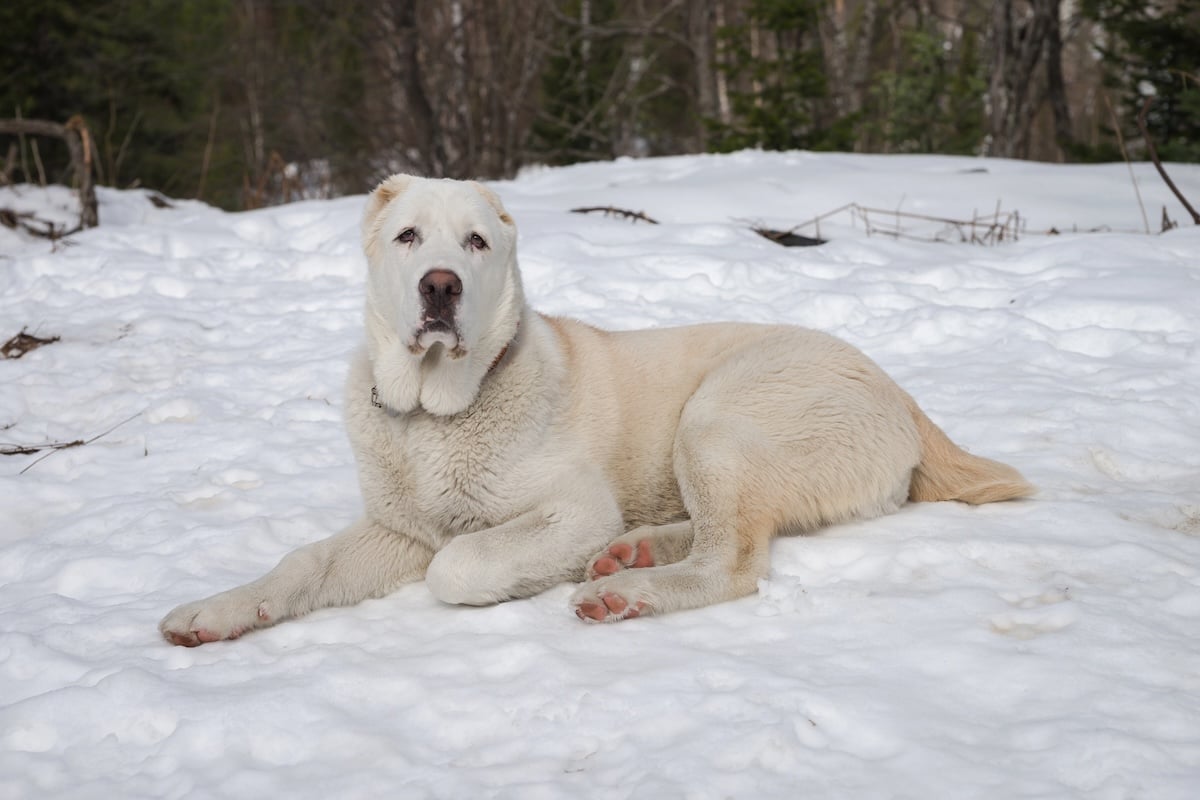 Photo Credit: Papava on Deposit Photos
In the heart of Central Asia, where the vast steppes meet rugged mountains, roams the Alabai, or Central Asian Shepherd (Canis lupus familiaris). This majestic breed stands as a testament to the enduring bond between humans and dogs, having served as loyal guardians for nomadic tribes for thousands of years. With its powerful build, often exceeding 110 pounds, and a thick, weather-resistant coat, the Alabai is perfectly adapted to the harsh climates of its homeland. Its striking appearance, marked by a broad head and strong jaws, captures the attention of both scientists and nature enthusiasts alike, who are drawn to its impressive size and noble demeanor.
As the sun rises over the expansive grasslands, the Alabai patrols its territory with a watchful eye, embodying the spirit of a true protector. These dogs are not just companions; they are vital guardians of livestock, standing firm against threats from wolves and other predators. Their keen instincts and unwavering loyalty make them fascinating subjects for study, as researchers explore their unique behaviors and the deep-rooted history that connects them to human civilization. The Alabai’s role in the ecosystem is significant, as it helps maintain the balance between wildlife and domesticated animals, showcasing the intricate relationships that exist in nature. As we delve deeper into the world of the Alabai, we uncover the remarkable traits and stories that make this breed a true marvel of the animal kingdom.
The Alabai, also known as the Central Asian Shepherd, holds a special place in the animal kingdom, particularly within the family of dogs. This breed is classified under the genus Canis, which includes all modern dogs, wolves, and foxes. What sets the Alabai apart is its impressive size, strength, and protective instincts, making it a revered guardian in its native regions. With a history that stretches back thousands of years, the Alabai has been bred for its ability to protect livestock from predators, showcasing a unique blend of loyalty and independence.
| Taxonomic Rank | Scientific Name | Meaning & Significance |
|---|---|---|
| Kingdom | Animalia | This name signifies that the Alabai belongs to the broad group of multicellular organisms that are heterotrophic, meaning they consume organic material for energy. |
| Phylum | Chordata | Chordata refers to animals that have a notochord, a flexible rod that supports the body. In the case of the Alabai, this structure is present during its early development, highlighting its vertebrate lineage. |
| Class | Mammalia | Mammalia indicates that the Alabai is a mammal, characterized by features such as fur and the ability to nurse its young with milk, which is essential for their early development. |
| Order | Carnivora | Carnivora is the order that includes meat-eating mammals. The Alabai, while primarily a guardian, has ancestors that were hunters, showcasing its connection to this predatory lineage. |
| Family | Canidae | Canidae is the family that encompasses dogs, wolves, and foxes. The Alabai shares traits with these relatives, such as keen senses and social behaviors, which are vital for its role as a protector. |
| Genus | Canis | Canis means “dog” in Latin, and it reflects the Alabai’s close relationship with domestic dogs and their wild ancestors, emphasizing its role in human society as a loyal companion and protector. |
Understanding the Alabai’s taxonomic classification reveals much about its evolutionary journey. As a member of the Canidae family, it shares a common ancestry with wolves, which explains its strong instincts and protective nature. This lineage has been shaped by thousands of years of domestication and selective breeding, allowing the Alabai to thrive in harsh environments while serving as a steadfast guardian. Its classification not only highlights its physical attributes but also underscores the deep bond between humans and dogs throughout history.
The evolutionary journey of the Alabai, or Central Asian Shepherd, stretches back thousands of years, intertwining with the history of human civilization. This breed is believed to have originated in Central Asia, where nomadic tribes relied on these dogs for protection and herding. The timeline of their evolution reflects a blend of natural selection and human influence, shaping them into the formidable guardians they are today.
The ancestors of the Alabai were likely large, wolf-like canids that roamed the vast steppes of Central Asia. Over time, these early dogs adapted to their environment, developing traits that made them excellent companions for humans. As they began to assist in herding livestock and guarding against predators, selective breeding favored dogs with specific characteristics, such as strength, loyalty, and a protective nature. This process led to the emergence of the Alabai as a distinct breed, showcasing a blend of physical prowess and intelligence.
These adaptations have been crucial for the Alabai’s survival in the harsh environments of Central Asia. Their thick coats protect them from the elements, while their muscular bodies enable them to confront threats head-on. With their sharp minds and natural guarding instincts, they not only protect livestock but also foster strong relationships with their human companions. This blend of traits has allowed the Alabai to thrive alongside humans for centuries, making them a vital part of the cultural and ecological landscape of their homeland.
The Alabai, or Central Asian Shepherd, commands attention with its impressive stature and robust build. This breed is a true guardian, standing tall and proud, often weighing over 110 pounds. Its muscular frame is designed for strength and endurance, making it an ideal protector of livestock and property. With a broad head and strong jaws, the Alabai exudes a sense of power and confidence. Its thick, dense coat not only adds to its imposing appearance but also serves as insulation against harsh weather conditions, showcasing its adaptability to the rugged landscapes of Central Asia.
| Feature | Description |
|---|---|
| Size | Large, typically over 110 lbs |
| Skin Type | Thick, dense hairs |
| Color | Varies widely, including white, brindle, and various shades of brown |
| Body Structure | Muscular and powerful with a broad head |
| Temperament | Protective, loyal, and intelligent |
The Alabai’s physical features are not just for show; they play crucial roles in its survival. The thick coat protects against extreme temperatures, while its large size and muscular build enable it to fend off predators and defend its territory. This breed’s strong jaws are perfect for gripping and holding, essential for its role as a guardian. Together, these characteristics create a formidable protector, perfectly suited to the challenges of its environment, ensuring that the Alabai remains a respected and vital part of its ecosystem.
The Alabai, or Central Asian Shepherd, thrives in the vast, rugged landscapes of Central Asia. Picture rolling steppes, expansive grasslands, and towering mountain ranges that stretch as far as the eye can see. This breed is perfectly suited to the open spaces of its homeland, where it can roam freely and keep watch over livestock. The terrain is often dotted with rocky outcrops and sparse vegetation, creating a dramatic backdrop for this noble guardian.
The climate in these regions can be quite extreme, with hot summers and frigid winters. The Alabai is well-equipped to handle these temperature swings, as it has a thick double coat that provides insulation against the cold and protection from the sun’s rays. The dry air and occasional harsh winds are also part of its environment, making resilience a key trait for survival.
Adapted to these challenging habitats, the Alabai has developed a strong, sturdy physique that allows it to navigate rocky terrains with ease. Its keen senses and alert nature make it an excellent protector of livestock, capable of detecting potential threats from afar. This breed’s ability to thrive in such diverse conditions showcases its remarkable adaptability, ensuring it remains a steadfast companion and guardian in the heart of Central Asia.
The daily life of an Alabai, or Central Asian Shepherd, is a blend of vigilance, playfulness, and strong instincts. These dogs are known for their impressive guarding abilities, which means they spend a significant part of their day patrolling their territory. Early mornings often find them surveying their surroundings, ears perked and eyes alert, ready to respond to any potential threats. As the sun rises higher, they may engage in playful interactions with their human companions or other animals, showcasing their affectionate side. Throughout the day, they alternate between periods of rest and active engagement, ensuring they remain both alert and well-rested.
Social behavior is a key aspect of the Alabai’s life. These dogs are naturally protective and form strong bonds with their families, often viewing them as part of their pack. Within their social structure, they exhibit a clear hierarchy, which helps maintain order and cooperation. Alabai communicate through a variety of vocalizations, including barks and growls, as well as body language, such as tail positioning and ear movements. This communication is essential for expressing their needs and emotions, whether they are signaling a warning or inviting play. Their social dynamics are not just limited to their human families; they also interact with other animals, establishing relationships that can range from friendly to cautious, depending on the situation.
| Behavior Type | Description |
|---|---|
| Activity Patterns | Alabai engage in regular patrols of their territory, balancing periods of alertness with play and rest. |
| Social Structure | They form strong bonds with their human families and establish a clear hierarchy within their pack. |
| Communication Methods | Alabai use vocalizations like barks and growls, along with body language, to express their needs and emotions. |
The behaviors of the Alabai are not just fascinating; they are crucial for survival. Their protective instincts ensure the safety of their territory and loved ones, while their social bonds foster cooperation and loyalty. By understanding their environment and communicating effectively, Alabai can navigate the challenges of their daily lives, making them not only excellent guardians but also cherished companions.
The Alabai, or Central Asian Shepherd, has a diverse diet that reflects its role as a guardian and protector in the rugged landscapes of Central Asia. As an omnivore, this breed enjoys a mix of plant and animal foods, which allows it to adapt to various environments and food availability. Alabai are known to forage for food, using their keen senses to locate both vegetation and prey. Their strong instincts guide them in hunting smaller animals, while they also benefit from the scraps and leftovers provided by human companions.
| Dietary Aspect | Details |
|---|---|
| Diet Type | Omnivore |
| Favorite Foods | Grains, vegetables, and meat |
| Prey Items | Small mammals, birds, and livestock |
| Hunting/Foraging Strategies | Using keen senses to locate food, often working in packs or alone |
The Alabai’s varied diet not only supports its health but also shapes its daily routine and ecological role. By foraging and hunting, these dogs help maintain the balance of their environment, controlling populations of smaller animals. Their ability to adapt to different food sources ensures they thrive in the challenging terrains of Central Asia, making them not just guardians of livestock but also integral players in their ecosystems. This adaptability is a testament to their resilience and intelligence, allowing them to flourish alongside humans and in the wild.
The mating behavior of the Alabai, or Central Asian Shepherd, is a captivating aspect of their life cycle. Breeding typically occurs once a year, usually in the spring. During this time, males become particularly attentive and protective, showcasing their strength and agility to attract females. The female, when in heat, emits pheromones, which signal her readiness to mate. This period can last for about three weeks, during which the male and female engage in a series of courtship behaviors, including playful interactions and vocalizations.
| Reproductive Aspect | Details |
|---|---|
| Gestation Period | Approximately 63 days |
| Litter Size | Typically 5 to 10 puppies |
| Age of Maturity | About 12 to 18 months |
| Name of Young | Puppies |
Once the puppies are born, the Alabai parents take their roles seriously. The mother is especially nurturing, providing warmth and nourishment to her young. She will stay close to the litter, ensuring they are safe and well-fed. The father also plays a crucial role, often guarding the den and watching over the family. As the puppies grow, they begin to explore their surroundings, learning essential skills through play and interaction with their parents. By the time they reach maturity, these young Alabai are well-prepared to take on the responsibilities of adulthood, embodying the protective instincts and loyalty that define this remarkable breed.
The Alabai, or Central Asian Shepherd, occupies a significant role in the food web as a formidable guardian and protector. While it is primarily a domesticated breed, its size and strength allow it to fend off various threats in its environment. However, like all animals, the Alabai faces dangers that can impact its survival. These threats can come from both natural predators and human-related activities, making its life a constant balancing act between safety and risk.
To defend itself against these dangers, the Alabai employs a range of survival strategies. Its natural instincts drive it to be vigilant, always on the lookout for potential threats. When faced with danger, the Alabai can display impressive defensive behaviors, such as barking loudly to warn off intruders or standing its ground to protect its territory. This breed is also known for its loyalty and protective nature, often forming strong bonds with its human companions and livestock. By combining its physical prowess with keen awareness, the Alabai effectively navigates the challenges of its environment, ensuring its role as a guardian remains intact.
A keystone species is an organism that plays a critical role in maintaining the structure of an ecosystem. Its presence or absence can significantly impact the environment and the other species that inhabit it. The Alabai, or Central Asian Shepherd, qualifies as a keystone species due to its unique role as a guardian and protector in its native habitat. This breed not only influences the populations of other animals but also helps shape the landscape in which it lives.
The Alabai’s primary function is to protect livestock from predators, such as wolves and bears. By keeping these predators at bay, the Alabai helps maintain a balance in the ecosystem. For instance, without the presence of the Alabai, predator populations could grow unchecked, leading to a decline in herbivore numbers. This imbalance can result in overgrazing, which can damage vegetation and disrupt the entire ecosystem. The Alabai’s protective instincts ensure that both livestock and wild herbivores can coexist, promoting biodiversity in the region.
Additionally, the Alabai’s omnivorous diet allows it to adapt to various food sources, which can include small mammals, plants, and carrion. This adaptability helps control the populations of smaller animals, preventing them from overwhelming the ecosystem. By scavenging and hunting, the Alabai contributes to nutrient cycling, which is essential for healthy soil and plant growth. Its presence encourages a diverse range of species to thrive, creating a more resilient ecosystem.
If the Alabai were to disappear from its ecosystem, the consequences could be severe. Without this guardian, predator populations might surge, leading to a decline in herbivore numbers. This could result in overgrazing, which would harm plant life and disrupt the entire food web. The loss of the Alabai would not only affect livestock farmers but also the delicate balance of nature in Central Asia. The interconnected web of life would be altered, highlighting just how vital this breed is to its environment.
The Alabai, or Central Asian Shepherd, occupies a vital ecological niche as a guardian and protector in its native landscapes. This breed is not just a companion for humans; it plays a significant role in maintaining the balance of its ecosystem. By managing livestock and deterring predators, the Alabai helps to regulate animal populations, ensuring that no single species overwhelms the environment. Its presence contributes to the health of grasslands and steppes, where it has lived alongside humans for centuries.
| Ecosystem Service | Impact |
|---|---|
| Predator Control | Helps manage populations of wild predators, protecting livestock and promoting biodiversity. |
| Livestock Protection | Safeguards herds from threats, allowing for sustainable farming practices. |
| Soil Health | Encourages healthy grazing patterns, which can prevent overgrazing and promote soil fertility. |
| Habitat Maintenance | Supports the balance of species in its environment, contributing to overall ecosystem stability. |
The Alabai’s influence extends beyond its immediate role as a protector. For instance, by keeping predator numbers in check, it allows herbivores to thrive without overpopulating. This balance is crucial for the health of grasslands, where overgrazing can lead to soil erosion and loss of plant diversity. Additionally, the Alabai’s presence encourages farmers to adopt more sustainable practices, as they can rely on these dogs to protect their livestock without resorting to harmful methods. This symbiotic relationship between the Alabai and its human companions fosters a healthier ecosystem.
In a broader ecological context, the Alabai serves as a keystone species, meaning its role is essential for the stability of its environment. The absence of such a guardian could lead to an imbalance, where predator populations might rise unchecked, threatening both livestock and local wildlife. By maintaining this delicate balance, the Alabai not only supports agricultural practices but also contributes to the overall health of the ecosystem. Its legacy is one of harmony between nature and human needs, showcasing the profound connections that exist within our natural world.
In the intricate web of life, symbiosis refers to the close and often long-term interactions between different species. These relationships can take many forms, including mutualism, where both species benefit, parasitism, where one benefits at the expense of the other, and commensalism, where one benefits while the other is neither helped nor harmed. The Alabai, or Central Asian Shepherd, engages in various ecological relationships that highlight its role in the environment, showcasing how interconnected life can be.
| Species/Type | Relationship Type | Description |
|---|---|---|
| Livestock (sheep, goats) | Mutualistic | The Alabai protects livestock from predators, ensuring their safety while receiving food and companionship in return. |
| Humans | Mutualistic | Humans provide care and shelter for the Alabai, while the dog offers protection and assistance in herding and guarding. |
| Parasites (fleas, ticks) | Parasitic | These organisms live on the Alabai, feeding on its blood, which can lead to health issues for the dog. |
| Birds (like crows) | Commensal | Birds may follow the Alabai to scavenge leftover food, benefiting from the dog’s presence without affecting it. |
The evolution of these relationships has been shaped by the needs and behaviors of the Alabai and the species it interacts with. Over time, the Alabai has developed strong bonds with humans and livestock, enhancing its role as a guardian. These partnerships not only provide the Alabai with food and shelter but also allow it to fulfill its instinctual drive to protect. Meanwhile, the presence of parasites serves as a reminder of the challenges that come with living in close quarters with other species. Understanding these relationships helps us appreciate the delicate balance of ecosystems and the vital roles that each species plays within them.
The Alabai, or Central Asian Shepherd, is a breed steeped in history and tradition, known for its impressive size and protective instincts. This remarkable dog has been a loyal guardian for nomadic herders for centuries, and its unique traits make it a fascinating subject for nature enthusiasts.
The Alabai, or Central Asian Shepherd, has a rich history intertwined with human civilization, dating back thousands of years. These magnificent dogs were bred by nomadic tribes in Central Asia to protect livestock from predators like wolves and bears. Their loyalty and strength made them invaluable companions, not just as guardians but also as symbols of cultural heritage. In many regions, the Alabai is celebrated in folklore and art, representing bravery and resilience. This deep-rooted connection has shaped the identity of communities, showcasing how humans and animals can share a profound bond.
Today, the relationship between the Alabai and humanity continues to evolve. While these dogs are still revered for their protective instincts, they also face challenges in modern society. As urbanization spreads, conflicts can arise when Alabai are kept in environments that do not suit their needs. However, many people are working to ensure their well-being through responsible breeding and training practices. Conservation efforts are also underway to preserve the breed’s unique traits, ensuring that the Alabai remains a vital part of Central Asian culture and heritage.
Looking ahead, the future of the Alabai and its relationship with humans holds promise. As awareness grows about the breed’s needs and capabilities, more people are likely to appreciate their role beyond mere guardians. By fostering understanding and respect, we can ensure that the Alabai continues to thrive alongside humanity, enriching our lives with their loyalty and strength. Together, we can build a future where both humans and Alabai coexist harmoniously, celebrating the unique bond that has lasted for centuries.
The Alabai, or Central Asian Shepherd, currently holds a conservation status of “Not Listed” according to the International Union for Conservation of Nature (IUCN). This means that there are no specific conservation measures in place for this breed, and its population trends are not closely monitored. While the Alabai is not considered endangered, its numbers can fluctuate based on various factors, including breeding practices and demand for working dogs in its native regions.
| Conservation Factor | Status/Details |
|---|---|
| IUCN Status | Not Listed |
| Population Estimates | Not specifically quantified |
| Trend Direction | Stable, but not actively monitored |
Despite its stable status, the Alabai faces several threats that could impact its future. One of the main challenges is the decline in traditional pastoral lifestyles, which reduces the demand for these dogs as livestock guardians. Additionally, urbanization and habitat loss can lead to fewer opportunities for Alabai to fulfill their natural roles. There is also the risk of overbreeding, which can dilute the breed’s unique characteristics and lead to health issues.
Conservation efforts for the Alabai are not formally organized, but there is a growing awareness of the breed’s importance in its native regions. Local breeders and enthusiasts are working to maintain the breed’s integrity and promote responsible breeding practices. As interest in the Alabai continues to rise, especially among those seeking loyal and protective companions, there is hope that this magnificent breed will thrive. With the right support and awareness, the Alabai can continue to play its vital role in the landscapes of Central Asia and beyond.
| Question | Answer |
|---|---|
| What is the natural habitat of the Alabai? | The Alabai, or Central Asian Shepherd, is originally from the vast steppes and mountainous regions of Central Asia. These dogs are well-adapted to harsh climates, thriving in both hot summers and cold winters. |
| What do Alabai dogs eat? | Alabai are omnivores, meaning they eat both plants and animals. Their diet typically includes meat, grains, and vegetables, which helps them maintain their strength and energy levels. |
| How do Alabai behave around people and other animals? | Alabai are known for their loyalty and protective nature, making them excellent guardians. They can be reserved with strangers but are usually affectionate with their families. Early socialization is important to help them get along with other pets. |
| How do Alabai reproduce? | Like most dogs, Alabai reproduce through mating between a male and a female. The female typically goes into heat twice a year, and after a gestation period of about 63 days, she gives birth to a litter of puppies, usually ranging from 5 to 10. |
| What threats do Alabai face in the wild? | While Alabai are not currently listed as endangered, they can face threats from habitat loss and human encroachment. Additionally, irresponsible breeding practices can lead to health issues in the breed. |
| What are some interesting characteristics of the Alabai? | Alabai are known for their impressive size and strength, often weighing between 90 to 150 pounds. They have a thick double coat that helps protect them from extreme weather, and their strong instincts make them natural protectors of livestock. |
| How long do Alabai typically live? | Alabai generally have a lifespan of about 12 to 15 years. With proper care, including a balanced diet and regular exercise, they can live healthy and fulfilling lives. |