Taxonomy & Classification
- Kingdom
- Animalia
- Phylum
- Chordata
- Class
- Reptilia
- Order
- Plesiosauria
- Family
- Elasmosauridae
- Genus
- Albertonectes
- Species
- Albertonectes vanderveldei

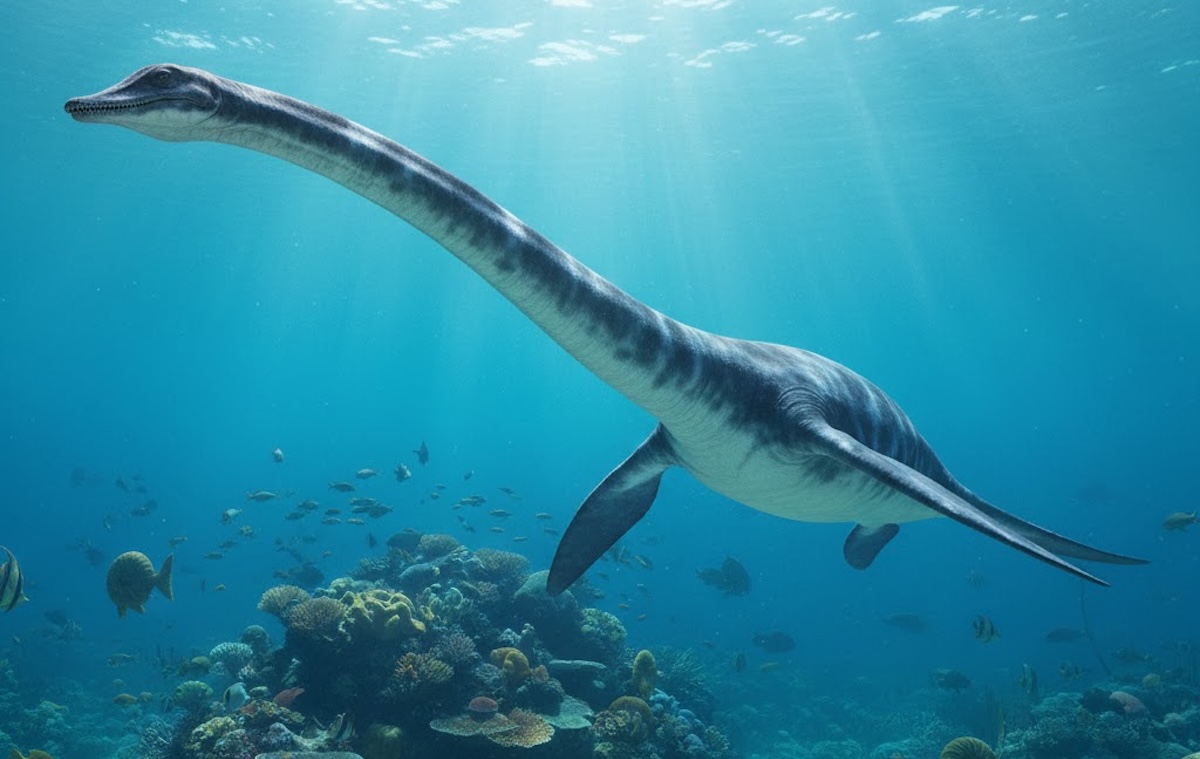 Photo Credit: AnimalsDiscovered
In the warm, shallow seas of the Late Cretaceous period, around 70 million years ago, a remarkable marine reptile named Albertonectes, or Albertonectes nesmoi, glided gracefully through the water. With its long, serpentine neck stretching up to 15 feet, this ancient creature was a sight to behold. Imagine a gentle giant, its body sleek and streamlined, moving effortlessly among vibrant coral reefs and schools of fish. The sun’s rays filtered down through the clear blue water, illuminating the rich tapestry of life that surrounded this fascinating inhabitant of the prehistoric oceans.
Albertonectes is particularly intriguing to scientists and nature enthusiasts alike due to its unique adaptations. As a member of the Elasmosauridae family, it possessed an elongated neck that allowed it to reach for food in the depths of the ocean while keeping its body hidden from predators. This feature not only made it an efficient forager but also a captivating subject for researchers studying the evolution of marine reptiles. The combination of its impressive size and specialized feeding habits paints a vivid picture of a creature perfectly adapted to its environment, sparking curiosity about how it thrived in a world teeming with life. As we dive deeper into the story of Albertonectes, we uncover the secrets of its existence and the role it played in the ancient marine ecosystem.
Albertonectes is a captivating member of the animal kingdom, nestled within the vast tree of life. This ancient marine reptile belongs to the family Elasmosauridae, a group of long-necked plesiosaurs that thrived during the Late Cretaceous period. What sets Albertonectes apart is its extraordinary length, with some individuals reaching up to 13 meters (about 43 feet) long, making it one of the longest known plesiosaurs. Its elongated neck, which could contain up to 76 vertebrae, allowed it to gracefully navigate the oceans, hunting for fish and other prey. This unique adaptation highlights the diversity of life forms that have evolved to fill various ecological niches in our planet’s history.
| Taxonomic Rank | Scientific Name | Meaning & Significance |
|---|---|---|
| Kingdom | Animalia | This name signifies that Albertonectes is part of the animal kingdom, which includes all multicellular organisms that are not plants, fungi, or bacteria. |
| Phylum | Chordata | Chordata means “having a notochord,” a flexible rod that provides support. In Albertonectes, this structure evolved into a backbone, a key feature of vertebrates. |
| Class | Reptilia | Reptilia refers to reptiles, a class of cold-blooded vertebrates. Albertonectes shares this classification with modern turtles, lizards, and snakes. |
| Order | Plesiosauria | Plesiosauria means “near lizard,” reflecting the lizard-like appearance of these marine reptiles, which adapted to life in the water. |
| Family | Elasmosauridae | Elasmosauridae translates to “thin lizard,” highlighting the long, slender bodies and necks of its members, including Albertonectes. |
| Genus | Albertonectes | This name honors Alberta, Canada, where fossils of this species were discovered, and “nectes,” meaning swimmer, emphasizing its aquatic lifestyle. |
The classification of Albertonectes reveals a rich evolutionary history that connects it to both ancient and modern species. As a member of the Elasmosauridae family, it showcases the incredible adaptations that have occurred over millions of years, allowing reptiles to thrive in marine environments. This lineage not only highlights the diversity of life forms that have existed but also underscores the intricate relationships between species as they evolve and adapt to their surroundings. Understanding where Albertonectes fits in the tree of life helps us appreciate the complex tapestry of evolution that has shaped the natural world we see today.
The story of Albertonectes unfolds during the Late Cretaceous period, around 70 million years ago. This was a time when the Earth was teeming with diverse life forms, both on land and in the oceans. As the planet’s climate shifted and continents drifted, marine reptiles like Albertonectes adapted to their aquatic environments, evolving unique features that set them apart from their ancestors.
Albertonectes is part of the Elasmosauridae family, which includes long-necked plesiosaurs. Its ancestors were likely more compact and less specialized for life in the water. Over millions of years, these early marine reptiles underwent significant changes. They developed elongated necks, which allowed them to reach prey in the water column without having to swim too far. This adaptation was crucial for survival, as it enabled them to exploit a variety of food sources, from small fish to squid. Additionally, their bodies became streamlined, enhancing their swimming efficiency and agility in the ocean.
These adaptations were vital for Albertonectes’ survival in the competitive marine ecosystems of its time. The long neck allowed it to access food sources that other predators could not reach, while its streamlined body and powerful flippers made it an efficient swimmer. By evolving these traits, Albertonectes thrived in the oceans, showcasing the incredible ways life can adapt to changing environments.
Albertonectes presents an awe-inspiring silhouette that captures the imagination of anyone who gazes upon its form. This ancient marine reptile boasts an elongated neck that can stretch impressively, making it one of the longest-necked creatures of its time. Its body is robust and streamlined, designed for graceful movement through the water. With a broad, flat head and large, paddle-like limbs, Albertonectes is perfectly adapted to its aquatic environment, allowing it to navigate the depths with ease and agility.
| Feature | Description |
|---|---|
| Size | Approximately 13 meters (43 feet) long, with a neck that can account for nearly half of its total length. |
| Color | Likely a mix of muted greens and browns, providing camouflage against the ocean floor and helping it blend in with its surroundings. |
| Skin Type | Covered in smooth, scaly skin that reduces drag while swimming, allowing for swift movements through the water. |
| Limbs | Four large, paddle-like flippers that aid in propulsion and steering, making it an efficient swimmer. |
| Head Shape | Broad and flat, with a long snout filled with sharp teeth, ideal for catching slippery prey like fish and squid. |
These distinctive features of Albertonectes work in harmony to create a highly effective predator of the ancient seas. Its long neck allows it to reach into tight spaces among underwater vegetation, while its powerful flippers enable it to swim swiftly and change direction with ease. The coloration of its skin not only helps it avoid detection by both prey and predators but also enhances its ability to thrive in a variety of marine environments. Together, these adaptations illustrate the incredible ways in which life evolves to meet the challenges of survival in a dynamic world.
Albertonectes once roamed the warm, shallow seas of the Late Cretaceous period, a time when the oceans were rich with life. Picture a vibrant underwater world filled with colorful corals, schools of fish, and the gentle sway of seaweed. These ancient waters provided a perfect playground for Albertonectes, allowing it to glide gracefully through the depths, using its long neck to reach for prey and navigate its surroundings.
The climate during this period was generally warm, with tropical and subtropical conditions dominating the landscape. The seas were teeming with nutrients, creating a rich ecosystem that supported a variety of marine life. Albertonectes thrived in these warm waters, where the temperature was just right for its survival. The gentle currents and shallow depths allowed for easy access to food sources, making it an ideal habitat for this ancient reptile.
To adapt to its specific environment, Albertonectes developed a long neck that helped it reach prey in the water column, such as jellyfish and small fish. This unique feature allowed it to be an efficient forager, gliding through the water with ease. Its streamlined body and powerful flippers enabled it to navigate the currents, while its endothermic nature, meaning it could maintain its body heat, helped it thrive in the warm seas. These adaptations made Albertonectes a successful inhabitant of its marine world, showcasing the wonders of evolution in action.
Albertonectes led a life filled with activity in the warm, shallow seas of the Late Cretaceous period. Each day began with the gentle rise of the sun, casting shimmering light across the water. As a marine reptile, Albertonectes spent much of its time swimming gracefully through the ocean, using its long neck to navigate and forage for food. It would often dive to the ocean floor, searching for soft-bodied prey like jellyfish and small fish. This daily routine was not just about feeding; it also involved basking in the sun near the surface, where it could warm its body and recharge for the day ahead.
Socially, Albertonectes exhibited intriguing group dynamics. These creatures were not solitary; they often swam in small pods, which provided safety in numbers. Within these groups, they communicated through a series of clicks and body movements, helping to maintain social bonds and coordinate hunting efforts. The presence of others also allowed them to share information about food sources and potential dangers lurking in the depths. This social structure was vital for their survival, as it enhanced their ability to find food and avoid predators.
| Behavior Type | Description |
|---|---|
| Activity Patterns | Albertonectes spent its days swimming, foraging for soft-bodied prey, and basking in the sun. |
| Social Structure | These marine reptiles often formed small pods, providing safety and enhancing hunting success. |
| Communication Methods | They communicated through clicks and body movements, which helped maintain social bonds and coordinate activities. |
The behaviors of Albertonectes were finely tuned to ensure their survival in a dynamic marine environment. By swimming in groups, they could protect themselves from larger predators and increase their chances of finding food. Their communication methods allowed them to work together effectively, making them more successful hunters. In this way, the daily life of Albertonectes was not just about individual survival; it was a complex interplay of social interactions and environmental awareness that helped them thrive in their ancient ocean home.
Albertonectes had a diverse diet that allowed it to thrive in the rich marine environments of the Late Cretaceous period. As an omnivore, it consumed both plant and animal matter, which provided it with a wide range of nutrients. This adaptability in feeding behavior meant that Albertonectes could take advantage of whatever food sources were available, whether it was small fish, crustaceans, or even aquatic plants. Its long neck likely helped it reach food in various parts of the water column, making it a versatile forager in its underwater world.
| Dietary Aspect | Details |
|---|---|
| Diet Type | Omnivore |
| Favorite Foods | Small fish, crustaceans, aquatic plants |
| Prey Items | Fish, mollusks, and other marine organisms |
| Hunting/Foraging Strategies | Using its long neck to reach food in different water layers |
The diet of Albertonectes played a crucial role in shaping its ecology and daily routine. By being an omnivore, it could adapt to changes in food availability, which was essential in a dynamic marine environment. This flexibility allowed it to explore various feeding grounds, ensuring it could find sustenance regardless of the season or competition. As it foraged for food, Albertonectes also contributed to the balance of its ecosystem, helping to control populations of smaller marine creatures while promoting the growth of aquatic plants.
Mating behavior in Albertonectes likely revolved around the warm waters of the Late Cretaceous seas, where these ancient marine reptiles would gather during the breeding season. During this time, males may have engaged in displays to attract females, showcasing their impressive size and strength. The exact details of their courtship rituals remain a mystery, but it is believed that these interactions were crucial for successful reproduction.
| Reproductive Aspect | Details |
|---|---|
| Gestation Period | Approximately 12 months |
| Litter Size | 1 to 3 young |
| Age of Maturity | Around 10 to 15 years |
| Name of Young | Hatchlings |
Once the young hatchlings emerge, they are relatively independent, but they still rely on their parents for protection in the early stages of life. Parental care in Albertonectes likely involved guarding the young from predators and providing a safe environment as they grew. As the hatchlings matured, they would gradually learn to hunt and navigate their underwater world, eventually becoming skilled adults capable of thriving in the rich marine ecosystems of their time. This nurturing phase was essential for ensuring the survival of the next generation of these magnificent creatures.
Albertonectes occupies a fascinating position in the food web of its time, swimming gracefully through the warm, shallow seas of the Late Cretaceous period. As a large marine reptile, it likely found itself both predator and prey. With its long neck and agile body, Albertonectes could reach for a variety of food sources, but this also made it vulnerable to larger predators lurking in the depths.
To survive against these threats, Albertonectes would have relied on a combination of defensive behaviors and clever strategies. Its long neck allowed it to reach food while keeping its body hidden among underwater vegetation, making it harder for predators to spot. Additionally, its size and speed would have helped it evade attacks, darting away quickly when danger approached. By staying aware of its surroundings and using its agility, Albertonectes could navigate the challenges of its ancient ocean home.
A keystone species is a vital part of its ecosystem, playing a unique role that helps maintain the structure and balance of the environment. If removed, the entire ecosystem could change dramatically. Albertonectes, an extinct genus of marine reptiles from the Late Cretaceous period, is believed to have held a keystone role in its underwater world. Its presence likely influenced the populations of other marine organisms, shaping the community dynamics of its time.
Albertonectes was an omnivore, meaning it fed on both plants and animals. This diverse diet allowed it to interact with various species, from tiny marine plants to larger fish and invertebrates. By consuming a range of food sources, it helped regulate the populations of these organisms, preventing any one species from becoming too dominant. For example, if Albertonectes primarily fed on certain types of fish, it would keep those populations in check, allowing other species to thrive alongside them.
Moreover, Albertonectes likely served as prey for larger predators in its ecosystem. Its size and position in the food web would have made it an important food source for carnivorous marine reptiles and possibly even large fish. This relationship illustrates how interconnected life was in the oceans of the Late Cretaceous, with each species relying on others for survival. The presence of Albertonectes would have contributed to a balanced ecosystem, where energy flowed smoothly from one organism to another.
If Albertonectes had disappeared from its environment, the consequences could have been significant. Without this marine reptile to help control the populations of its prey, certain species might have exploded in numbers, leading to overgrazing of underwater vegetation. This could have resulted in a decline in plant life, which would, in turn, affect the entire food web. The loss of Albertonectes would not only have altered the dynamics of its ecosystem but could have also led to the extinction of other species that depended on a balanced environment. The interconnectedness of life is a delicate dance, and every participant plays a crucial role.
Albertonectes, an ancient marine reptile from the Late Cretaceous period, played a crucial role in its ecosystem. As an omnivore, it thrived in the warm, shallow seas, where it consumed a variety of plant and animal matter. This diverse diet allowed Albertonectes to influence the populations of both flora and fauna, shaping the underwater community in significant ways. By feeding on different organisms, it helped maintain a balance in the ecosystem, ensuring that no single species dominated the environment.
| Ecosystem Service | Impact |
|---|---|
| Population Control | Regulates the numbers of prey species, preventing overpopulation. |
| Nutrient Cycling | Contributes to the breakdown of organic material, enriching the marine environment. |
| Habitat Formation | Influences the growth of aquatic plants, which provide shelter for other marine life. |
| Food Source | Serves as prey for larger marine predators, supporting the food web. |
Albertonectes had a direct impact on its surroundings through its feeding habits. By consuming a mix of plants and smaller animals, it helped control the populations of these species, ensuring that the ecosystem remained balanced. For instance, if it fed on certain types of algae or small fish, it would prevent these organisms from overwhelming the environment. Additionally, as it moved through the water, Albertonectes likely stirred up sediments, which could promote the growth of aquatic plants. These plants, in turn, provided essential habitats for various marine creatures, creating a thriving underwater community.
The broader ecological importance of Albertonectes cannot be overstated. As a keystone species, its presence was vital for maintaining the structure and health of its ecosystem. Without it, the delicate balance of life in the Late Cretaceous seas could have been disrupted, leading to significant changes in species composition and abundance. By understanding the role of Albertonectes, we gain insight into the intricate web of life that existed millions of years ago, reminding us of the interconnectedness of all living things in our planet’s history.
In the intricate web of life, symbiosis plays a vital role in shaping ecosystems. This term refers to the close interactions between different species, which can be beneficial, harmful, or neutral. These relationships can take many forms, such as mutualism, where both species gain advantages, parasitism, where one benefits at the expense of the other, and commensalism, where one species benefits while the other is neither helped nor harmed. Understanding these connections helps us appreciate the delicate balance of nature and the ways in which species, like Albertonectes, interact with their environment and each other.
| Species/Type | Relationship Type | Description |
|---|---|---|
| Small fish | Mutualistic | Small fish may have benefited from Albertonectes by feeding on parasites found on its skin, while the marine reptile enjoyed a cleaner surface. |
| Plankton | Commensal | Plankton drifting in the water column may have found shelter near Albertonectes, gaining protection without affecting the reptile. |
| Predatory sharks | Parasitic | While not a direct relationship, predatory sharks could have posed a threat to juvenile Albertonectes, impacting their survival. |
These relationships evolved over millions of years, shaped by the needs and behaviors of the species involved. Mutualistic partnerships, like that between Albertonectes and small fish, highlight how cooperation can enhance survival for both parties. Meanwhile, the presence of predators like sharks illustrates the challenges that ancient marine reptiles faced in their environment. By understanding these interactions, we gain insight into the complex dynamics of ecosystems, revealing how each species, including Albertonectes, contributes to the rich tapestry of life in the oceans.
Albertonectes is a fascinating marine reptile that swam through the warm seas of the Late Cretaceous period, around 70 million years ago. This ancient creature, part of the Elasmosauridae family, is known for its long neck and unique adaptations that make it a captivating subject for nature enthusiasts.
Albertonectes, an ancient marine reptile from the Late Cretaceous period, has captured the imagination of many throughout history. While it swam in the warm seas around 70 million years ago, its fossils have been discovered in places like Alberta, Canada. These discoveries have sparked interest in the cultural significance of this creature. Ancient peoples may have viewed such massive beings as symbols of power or mystery, inspiring stories and legends that echo through time. The allure of Albertonectes continues to resonate today, reminding us of the deep connections between humanity and the natural world.
In modern times, our interactions with Albertonectes are primarily through the study of its fossils and the ongoing quest to understand marine ecosystems. While we cannot directly interact with this long-extinct creature, its existence informs our conservation efforts. By learning about the ecosystems of the past, we can better protect the oceans today. However, the legacy of marine reptiles like Albertonectes also serves as a cautionary tale. As we face challenges like climate change and habitat destruction, the lessons from these ancient beings remind us of the delicate balance of life in our oceans.
Looking ahead, the relationship between Albertonectes and humanity will continue to evolve. As we uncover more about this ancient marine reptile, we gain insights that can guide our stewardship of the oceans. By fostering a sense of wonder and responsibility towards marine life, we can ensure that the lessons of the past inform a sustainable future. The story of Albertonectes is not just a tale of extinction; it is a reminder of the interconnectedness of all life and the importance of preserving our planet’s rich biodiversity.
The conservation status of Albertonectes is classified as extinct. This means that there are no living individuals of this ancient marine reptile left on Earth. Once a prominent inhabitant of the warm, shallow seas during the Late Cretaceous period, Albertonectes has not been seen for millions of years. Its disappearance marks a significant loss in the diversity of marine life that once thrived in prehistoric oceans.
| Conservation Factor | Status/Details |
|---|---|
| IUCN Status | Extinct |
| Population Estimates | None (extinct) |
| Trend Direction | Declining to extinct |
The main threats that led to the extinction of Albertonectes are not entirely clear, but they likely included significant environmental changes during the Late Cretaceous period. These changes could have been caused by factors such as climate shifts, sea level fluctuations, and the impact of asteroids. Such dramatic alterations in their habitat would have disrupted food sources and breeding grounds, making survival increasingly difficult for these magnificent marine reptiles.
Despite Albertonectes being long gone, its story continues to inspire conservation efforts aimed at protecting marine ecosystems today. By studying ancient species like Albertonectes, scientists gain valuable insights into the importance of biodiversity and the delicate balance of marine life. While we cannot bring back this ancient creature, we can learn from its history to help safeguard the future of our oceans and the myriad of species that call them home.
| Question | Answer |
|---|---|
| What is Albertonectes? | Albertonectes is an extinct genus of marine reptiles that lived during the Late Cretaceous period. These fascinating creatures are part of a group known as plesiosaurs, which are characterized by their long necks and small heads. |
| Where did Albertonectes live? | Albertonectes inhabited the oceans that covered parts of what is now North America. Fossils have been found in areas that were once shallow seas, indicating they thrived in marine environments. |
| What did Albertonectes eat? | Albertonectes was an omnivore, meaning it ate both plants and animals. Its diet likely included fish, squid, and possibly even seaweed, allowing it to adapt to various food sources in its environment. |
| How did Albertonectes behave? | While we can't observe Albertonectes directly, scientists believe it was a skilled swimmer, using its long neck to reach for prey. Its body structure suggests it may have been social, possibly hunting in groups or at least interacting with others of its kind. |
| How did Albertonectes reproduce? | Like other reptiles, Albertonectes likely laid eggs, although the exact details of its reproductive behavior are not well understood. Fossil evidence suggests that many marine reptiles gave birth to live young, but for Albertonectes, we can only speculate. |
| What threats did Albertonectes face? | As an extinct species, Albertonectes faced natural threats like changes in climate and habitat loss due to geological events. Predation by larger marine animals could also have posed a risk, especially for younger individuals. |
| What is an interesting characteristic of Albertonectes? | One of the most intriguing features of Albertonectes is its exceptionally long neck, which could have been over 10 feet long! This unique adaptation may have allowed it to reach prey in tight spaces or to spot predators from a distance. |