Taxonomy & Classification
- Kingdom
- Animalia
- Phylum
- Chordata
- Class
- Actinopterygii
- Order
- Lepisosteiformes
- Family
- Lepisosteidae
- Genus
- Atractosteus
- Species
- Atractosteus spatula

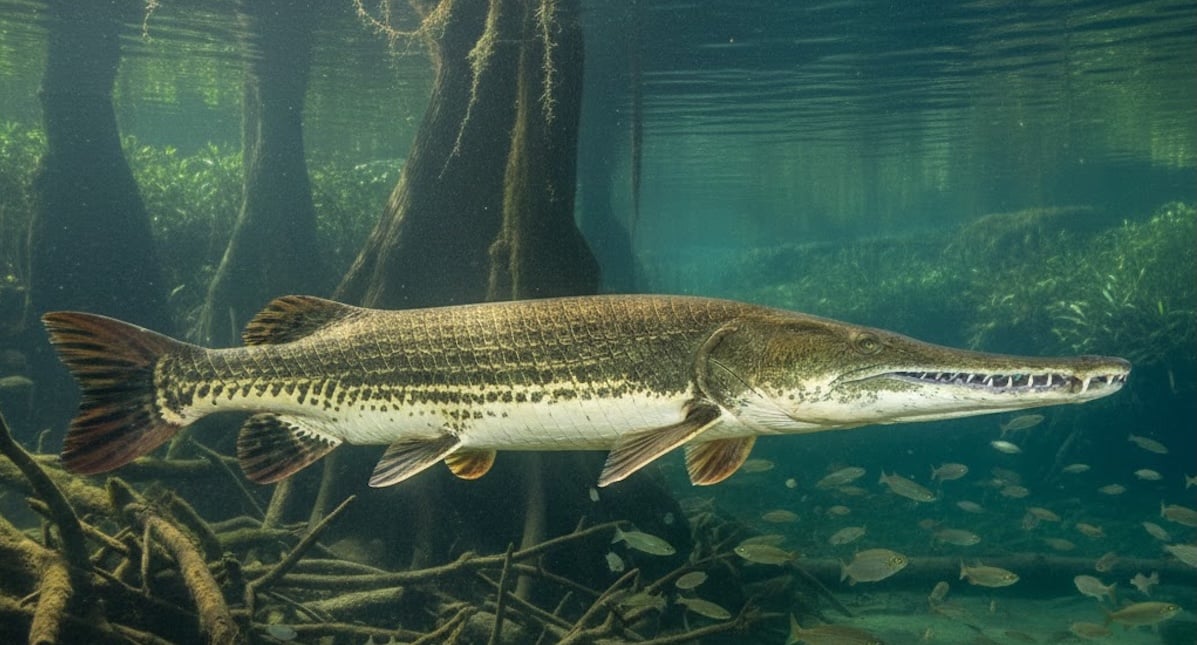 Photo Credit: AnimalsDiscovered
In the murky waters of North America’s rivers and swamps swims the Alligator Gar, or Atractosteus spatula, a fish that seems to have leaped straight from the pages of a prehistoric storybook. With its long, sleek body and a mouth full of sharp teeth, this ancient predator glides silently through the water, blending seamlessly with its surroundings. Imagine a sun-dappled riverbank where the Alligator Gar lurks just beneath the surface, its armored scales glinting like jewels as it waits patiently for its next meal. This remarkable fish can grow up to 10 feet long and weigh as much as 350 pounds, making it one of the largest freshwater fish in North America.
What makes the Alligator Gar so captivating to scientists and nature lovers alike is not just its size, but its incredible evolutionary history. This fish has been swimming in our waters for over 150 million years, making it a living link to the age of dinosaurs. Its unique adaptations, such as a specialized swim bladder that allows it to breathe air, enable it to thrive in low-oxygen environments where other fish might struggle. As we dive deeper into the world of the Alligator Gar, we will explore its fascinating behaviors, diet, and the vital role it plays in maintaining the balance of its aquatic ecosystem. Join us on this adventure to uncover the secrets of this extraordinary fish and the watery realms it calls home.
The Alligator Gar is a captivating fish that holds a special place in the tree of life. Belonging to the kingdom Animalia, this ancient species is part of the phylum Chordata, which includes all animals with a backbone. What sets the Alligator Gar apart is its unique combination of features, such as a long, slender body and a mouth filled with sharp teeth, reminiscent of its reptilian namesake. This fish is not just a survivor; it has been swimming in our waters for over 100 million years, making it a living fossil that offers a glimpse into the past.
| Taxonomic Rank | Scientific Name | Meaning & Significance |
|---|---|---|
| Kingdom | Animalia | This name means “animals” in Latin, highlighting that the Alligator Gar is part of the vast group of multicellular organisms that are typically motile and consume organic material. |
| Phylum | Chordata | Derived from the Greek word “chordē,” meaning “string,” this classification indicates that members have a notochord, a flexible rod that supports the body during development. |
| Class | Actinopterygii | This term means “ray-finned fish,” referring to the bony spines that support the fins, a feature that distinguishes these fish from others. |
| Order | Lepisosteiformes | From the Greek “lepis,” meaning “scale,” and “osteon,” meaning “bone,” this order includes fish with hard, bony scales, which are a key characteristic of the Alligator Gar. |
| Family | Lepisosteidae | This family name also comes from the Greek “lepis” for “scale,” emphasizing the tough, protective scales that cover the Alligator Gar’s body. |
| Genus | Atractosteus | Meaning “to catch” in Greek, this name reflects the Alligator Gar’s predatory nature, as it is an adept hunter in its aquatic habitat. |
The classification of the Alligator Gar reveals much about its evolutionary journey. As a member of the Actinopterygii class, it shares a lineage with many modern fish, yet its ancient lineage connects it to the time when dinosaurs roamed the Earth. The unique features that define its taxonomy, such as its bony scales and predatory habits, highlight adaptations that have allowed it to thrive in freshwater environments for millions of years. Understanding where the Alligator Gar fits in the tree of life not only enriches our knowledge of biodiversity but also underscores the importance of preserving such extraordinary species that have witnessed the changing world around them.
The evolutionary journey of the Alligator Gar stretches back millions of years, making it one of the oldest fish species still swimming in our waters today. This remarkable fish belongs to a lineage that dates back to the Late Cretaceous period, around 100 million years ago. During this time, the Earth was a very different place, with dinosaurs roaming the land and ancient seas teeming with life. The Alligator Gar’s ancestors were among the first bony fish, evolving in a world where survival depended on adaptability and resilience.
The Alligator Gar’s evolutionary story is marked by significant transitions that have shaped its current form. Early ancestors of the Alligator Gar were primitive fish that thrived in freshwater environments. Over time, these fish developed unique adaptations that allowed them to become efficient predators. One major transition was the development of a long, streamlined body and a powerful jaw filled with sharp teeth, enabling them to catch slippery prey like fish and crustaceans. Another key change was the evolution of a specialized swim bladder, which functions like a lung, allowing the Alligator Gar to gulp air and survive in low-oxygen waters. This adaptation is particularly useful in the warm, shallow rivers and swamps where they often reside.
These adaptations have played a crucial role in the Alligator Gar’s survival over the ages. The combination of a tough exterior, specialized feeding mechanisms, and the ability to thrive in various environments has allowed this ancient fish to endure through dramatic changes in climate and habitat. As ecosystems evolved, so did the Alligator Gar, proving that sometimes, the oldest strategies are the most effective for survival. Today, it continues to be a symbol of resilience in the ever-changing tapestry of life on Earth.
The Alligator Gar is a striking fish that commands attention with its elongated body and formidable presence. Growing up to 10 feet long and weighing as much as 350 pounds, this ancient predator glides through freshwater rivers and lakes with an air of grace. Its long, narrow snout is filled with sharp teeth, giving it a fearsome appearance that reflects its carnivorous diet. The gar’s body is covered in tough, diamond-shaped scales that shimmer in shades of green and brown, allowing it to blend seamlessly into its aquatic surroundings.
| Feature | Description |
|---|---|
| Size | Up to 10 feet long |
| Weight | Can weigh up to 350 pounds |
| Skin Type | Covered in tough, diamond-shaped scales |
| Color | Shades of green and brown for camouflage |
| Most Distinctive Feature | Sharp teeth for catching prey |
These physical features work together to make the Alligator Gar a master of its environment. Its impressive size and sharp teeth allow it to hunt effectively, while its camouflaged skin helps it remain hidden from both prey and potential threats. The tough scales not only protect it from predators but also reduce drag as it swims, making it an efficient hunter in the murky waters it calls home. This combination of attributes has allowed the Alligator Gar to thrive for millions of years, showcasing the wonders of evolution in action.
The Alligator Gar thrives in a variety of watery environments that paint a vivid picture of its natural habitat. Imagine slow-moving rivers, expansive lakes, and mysterious swamps, where the water is often stained with the rich colors of decaying leaves and organic matter. These habitats are often surrounded by lush vegetation, providing both shelter and hunting grounds for this ancient fish. The murky waters of bayous and estuaries, where fresh and saltwater mix, create a perfect playground for the Alligator Gar, allowing it to navigate and hunt with ease.
The Alligator Gar prefers warm, shallow waters, typically found in areas with plenty of cover, such as submerged logs and dense aquatic plants. These environments often experience a subtropical to tropical climate, where temperatures can rise significantly during the summer months. The fish is well-suited to thrive in both freshwater and brackish waters, which are slightly salty. This adaptability allows it to inhabit a range of ecosystems, from the calm waters of lakes to the dynamic environments of estuaries.
Over time, the Alligator Gar has developed several adaptations that help it survive in these specific habitats. Its long, streamlined body allows it to glide effortlessly through the water, while its powerful jaws are equipped with sharp teeth, perfect for catching prey. The fish also has a unique swim bladder that functions like a lung, enabling it to gulp air and survive in low-oxygen environments. These features not only enhance its hunting skills but also ensure that it can thrive in the diverse and often challenging conditions of its watery home.
The Alligator Gar leads a life that is both intriguing and purposeful. As a solitary fish, it spends much of its day gliding through the waters of rivers, lakes, and swamps, often lurking near the surface or in shallow areas. This ancient predator is most active during dawn and dusk, a time known as crepuscular activity. During these hours, it hunts for prey, which includes fish and smaller aquatic animals. With its keen eyesight and sharp teeth, the Alligator Gar is a master at ambushing unsuspecting meals.
While the Alligator Gar is primarily a solitary creature, it does exhibit some interesting social behaviors during specific times of the year, particularly during spawning season. During this period, multiple individuals may gather in shallow waters to mate. This temporary grouping allows for the exchange of genetic material, ensuring the continuation of the species. Outside of breeding, however, these fish prefer to keep to themselves, patrolling their territories with a sense of calm confidence.
| Behavior Type | Description |
|---|---|
| Activity Patterns | Active during dawn and dusk, hunting for prey in shallow waters. |
| Social Structure | Primarily solitary, but may gather during spawning season. |
| Communication Methods | Uses body language and subtle movements to communicate, as they lack vocal cords. |
The behaviors of the Alligator Gar are finely tuned to ensure its survival in the wild. By being active during twilight hours, it takes advantage of low light to hunt effectively while avoiding larger predators. Its solitary nature allows it to maintain a low profile, reducing competition for food and minimizing the risk of confrontation. When the time comes to reproduce, the brief gatherings for spawning ensure genetic diversity, which is crucial for the health of the population. Each of these behaviors plays a vital role in the life of the Alligator Gar, helping it thrive in its aquatic world.
The Alligator Gar is a carnivore, meaning it primarily eats meat. This impressive fish has a varied diet that includes fish, turtles, birds, and even small mammals. With its sharp teeth and powerful jaws, the Alligator Gar is an adept hunter, often lurking stealthily in the water before launching a surprise attack on its unsuspecting prey. Its feeding behavior is a blend of patience and precision, allowing it to capture a wide range of animals that share its watery habitat.
| Dietary Aspect | Details |
|---|---|
| Diet Type | Carnivore |
| Favorite Foods | Fish, turtles, birds, and small mammals |
| Prey Items | Various species of fish, aquatic turtles, and occasionally birds and small mammals |
| Hunting/Foraging Strategies | Stealthy ambush, using its sharp teeth to grasp prey |
The diet of the Alligator Gar plays a crucial role in its ecological niche. By preying on a variety of animals, it helps maintain the balance of the aquatic ecosystem. This predator not only controls fish populations but also influences the behavior of other species in its habitat. Its daily routine revolves around hunting, which requires both energy and skill, making the Alligator Gar a vital player in the intricate web of life in rivers, lakes, and swamps.
As the warm days of spring arrive, the Alligator Gar begins its mating ritual, a captivating display of courtship. During this time, males become particularly active, swimming in circles around females to attract their attention. This breeding season typically occurs in shallow waters, where the fish can find suitable nesting sites. The males may also engage in gentle nudging and chasing, showcasing their strength and vigor. Once a female is ready to mate, she will lay her eggs, and the male will fertilize them shortly after.
| Reproductive Aspect | Details |
|---|---|
| Gestation Period | 6-8 days |
| Litter Size | Up to 200,000 eggs |
| Age of Maturity | 3-4 years |
| Name of Young | Fry |
After the eggs are fertilized, they adhere to vegetation in the water, providing a safe haven for the developing embryos. The fry, or young Alligator Gar, hatch after about a week and are initially very small, measuring just a few inches long. These tiny fish are independent from the moment they emerge, relying on their instincts to find food and avoid predators. As they grow, they gradually develop the impressive features of their species, including their elongated bodies and sharp teeth. While the Alligator Gar does not provide parental care after the eggs are laid, the sheer number of eggs ensures that some fry will survive to adulthood, continuing the cycle of life in their aquatic world.
The Alligator Gar occupies a vital role in its aquatic ecosystem, acting as both predator and prey. As a top predator, it helps maintain the balance of fish populations in its habitat. However, this ancient fish is not without its challenges. Despite its size and strength, the Alligator Gar faces various dangers that threaten its survival.
To defend itself against these threats, the Alligator Gar has developed several survival strategies. Its tough, armored scales act like a natural shield, making it difficult for predators to bite. Additionally, its ability to breathe air allows it to survive in low-oxygen environments, giving it an edge when other fish might struggle. By staying hidden in murky waters and using its stealthy swimming style, the Alligator Gar can evade many dangers, ensuring its place in the food web for generations to come.
A keystone species is a vital part of its ecosystem, playing a crucial role in maintaining the structure and health of that environment. The Alligator Gar, with its impressive size and predatory nature, qualifies as a keystone species in the aquatic ecosystems it inhabits. By regulating fish populations and influencing the dynamics of its habitat, this ancient fish helps ensure a balanced ecosystem.
The Alligator Gar primarily feeds on fish, turtles, and even small mammals, making it a top predator in its environment. This predatory behavior is essential for controlling the populations of other species, preventing any one group from overwhelming the ecosystem. For example, by keeping smaller fish populations in check, the Alligator Gar allows for a diverse range of species to thrive, which contributes to the overall health of the aquatic community.
Moreover, the Alligator Gar’s presence can influence the behavior of other animals. Smaller fish often change their feeding habits or habitats to avoid becoming a meal for this formidable predator. This ripple effect can lead to shifts in the entire food web, showcasing how interconnected life in these ecosystems truly is.
The Alligator Gar also plays a role in nutrient cycling. As it consumes prey, it contributes to the energy flow within the ecosystem. When it excretes waste, it returns nutrients to the water, which can benefit plant life and other organisms. This process is vital for maintaining the productivity of its habitat.
If the Alligator Gar were to disappear, the consequences could be severe. Without this top predator, smaller fish populations could explode, leading to overgrazing of aquatic plants and a decline in water quality. This imbalance could ultimately harm other species, including those that rely on healthy plant life for food and shelter. The loss of the Alligator Gar would not only disrupt the delicate balance of its ecosystem but could also lead to a decline in biodiversity, affecting the entire aquatic community.
The Alligator Gar is a fascinating player in its ecosystem, serving as a keystone species that helps maintain the balance of aquatic life. Found in rivers, lakes, swamps, and estuaries, this ancient fish plays a crucial role in shaping its environment. By being both a predator and prey, the Alligator Gar influences the populations of various species, ensuring that no single group dominates the ecosystem. Its presence is vital for the health of the waters it inhabits, making it an essential part of the food web.
| Ecosystem Service | Impact |
|---|---|
| Population Control | Regulates the numbers of smaller fish and aquatic animals, preventing overpopulation. |
| Nutrient Cycling | Contributes to the breakdown of organic matter, enriching the water and supporting plant life. |
| Habitat Structure | Creates spaces for other species by influencing the distribution of aquatic plants and animals. |
| Food Source | Serves as prey for larger predators, linking different levels of the food web. |
The Alligator Gar’s influence can be seen in various ways. For instance, by preying on smaller fish, it helps keep their populations in check, which in turn allows aquatic plants to thrive. This balance is crucial because healthy plant life provides oxygen and habitat for countless other species. Additionally, as the Alligator Gar consumes its prey, it contributes to nutrient cycling, breaking down organic matter and returning essential nutrients to the water. This process supports the growth of algae and aquatic plants, which are vital for the overall health of the ecosystem.
The broader ecological importance of the Alligator Gar cannot be overstated. As a keystone species, its presence helps maintain the structure and diversity of its habitat. Without the Alligator Gar, the delicate balance of the aquatic ecosystem could be disrupted, leading to overpopulation of certain species and a decline in others. By understanding the role of this ancient fish, we gain insight into the intricate web of life that exists beneath the water’s surface, reminding us of the interconnectedness of all living things.
In the intricate web of life, symbiosis plays a vital role in shaping ecosystems. Symbiosis refers to the close interactions between different species, which can be beneficial, harmful, or neutral. These relationships can take many forms, such as mutualism, where both species gain advantages, parasitism, where one benefits at the other’s expense, and commensalism, where one species benefits while the other is neither helped nor harmed. The Alligator Gar, an ancient fish, engages in various ecological relationships that highlight the complexity of its environment.
| Species/Type | Relationship Type | Description |
|---|---|---|
| Remora Fish | Commensal | Remoras attach themselves to the Alligator Gar, gaining transportation and access to food scraps without affecting the gar. |
| Leeches | Parasitic | Leeches may attach to the Alligator Gar, feeding on its blood, which can weaken the fish over time. |
| Smaller Fish | Mutualistic | Small fish may swim near the Alligator Gar, benefiting from the protection it offers while helping to keep the gar’s skin clean by eating parasites. |
These relationships have evolved over time, shaped by the needs and behaviors of the species involved. The Alligator Gar, with its formidable size and predatory nature, provides a safe haven for smaller fish while also being a host for leeches. This dynamic illustrates the balance of nature, where each species plays a role in the ecosystem. By understanding these connections, we can appreciate how the Alligator Gar and its partners contribute to the health and stability of their aquatic environments.
The Alligator Gar is a fascinating fish that has been swimming in our waters for millions of years. With its ancient lineage and impressive adaptations, this remarkable creature is full of surprises that even seasoned nature enthusiasts might not know.
The Alligator Gar has a long and storied relationship with humanity, dating back to ancient times. Indigenous peoples of North America revered this impressive fish, often incorporating it into their cultural practices and folklore. The gar’s formidable size and unique appearance made it a subject of fascination and respect. Many tribes utilized its tough, bony scales for tools and ornaments, while its meat provided sustenance. This historical connection highlights the deep-rooted significance of the Alligator Gar in the lives of those who lived alongside it.
In modern times, the interactions between humans and Alligator Gar have evolved, reflecting both conservation efforts and challenges. As habitats have been altered and fishing practices have changed, the Alligator Gar has faced threats to its population. Conservationists are now working to protect this ancient species, recognizing its role as a keystone species in aquatic ecosystems. However, conflicts can arise, particularly in areas where the gar is seen as a competitor for sport fish or a threat to local fisheries. Some enthusiasts have even taken to domestication efforts, raising Alligator Gar in controlled environments to promote awareness and appreciation for this unique fish.
Looking ahead, the future of the relationship between Alligator Gar and humanity will depend on our ability to balance conservation with recreational interests. As awareness grows about the ecological importance of this ancient fish, there is hope for a more harmonious coexistence. By fostering respect and understanding, we can ensure that the Alligator Gar continues to thrive in our waters, enriching both our ecosystems and our cultural heritage for generations to come.
The Alligator Gar, a remarkable fish that has roamed the waters for millions of years, currently holds a conservation status of “Least Concern” according to the International Union for Conservation of Nature (IUCN). This means that, at present, the species is not facing an immediate threat of extinction. However, while the overall population is considered stable, specific population estimates remain unknown, making it difficult to assess local trends accurately.
| Conservation Factor | Status/Details |
|---|---|
| IUCN Status | Least Concern |
| Estimated Population Size | Unknown |
| Population Trend | Stable |
Despite its current status, the Alligator Gar faces several threats that could impact its future. Habitat loss is a significant concern, as wetlands and river systems are altered or destroyed for development and agriculture. Additionally, overfishing and the introduction of invasive species can disrupt the delicate balance of its ecosystem. These factors can lead to localized declines, even if the overall population appears stable.
Conservation efforts are underway to ensure the Alligator Gar continues to thrive in its natural habitat. Various organizations are working to protect wetlands and restore river systems, which are crucial for the survival of this ancient fish. Public awareness campaigns also aim to educate communities about the importance of the Alligator Gar in maintaining healthy aquatic ecosystems. With continued efforts, there is hope that this fascinating species will remain a vital part of our waterways for generations to come.
| Question | Answer |
|---|---|
| What is the habitat of the Alligator Gar? | Alligator Gars are found in a variety of freshwater environments, including rivers, lakes, swamps, bayous, and estuaries. They prefer slow-moving waters where they can easily hunt for food and find shelter among vegetation. |
| What do Alligator Gars eat? | Alligator Gars are carnivores, meaning they primarily eat meat. Their diet consists of fish, crustaceans, and even small mammals that venture too close to the water's edge. |
| How do Alligator Gars behave? | These fascinating fish are known for their stealthy hunting techniques. They often lie in wait, using their sharp teeth to catch prey quickly and efficiently. |
| How do Alligator Gars reproduce? | Alligator Gars typically spawn in shallow waters during the spring. The female lays thousands of eggs, which are fertilized by the male, and the young hatch after a few days, ready to start their lives in the water. |
| What threats do Alligator Gars face? | While Alligator Gars are currently listed as Least Concern, they face threats from habitat loss and pollution. Overfishing and the destruction of their natural environments can also impact their populations. |
| What is an interesting characteristic of Alligator Gars? | One of the most distinctive features of Alligator Gars is their sharp teeth, which help them catch slippery fish. They also have a unique ability to breathe air, thanks to a specialized swim bladder that functions like a lung. |
| How long can Alligator Gars live? | Alligator Gars can live for several decades, with some individuals reaching ages of over 50 years. This longevity makes them one of the oldest species of fish still swimming in our waters today. |