Taxonomy & Classification
- Kingdom
- Animalia
- Class
- Aves
- Family
- Tityridae
- Genus
- Onychorhynchus

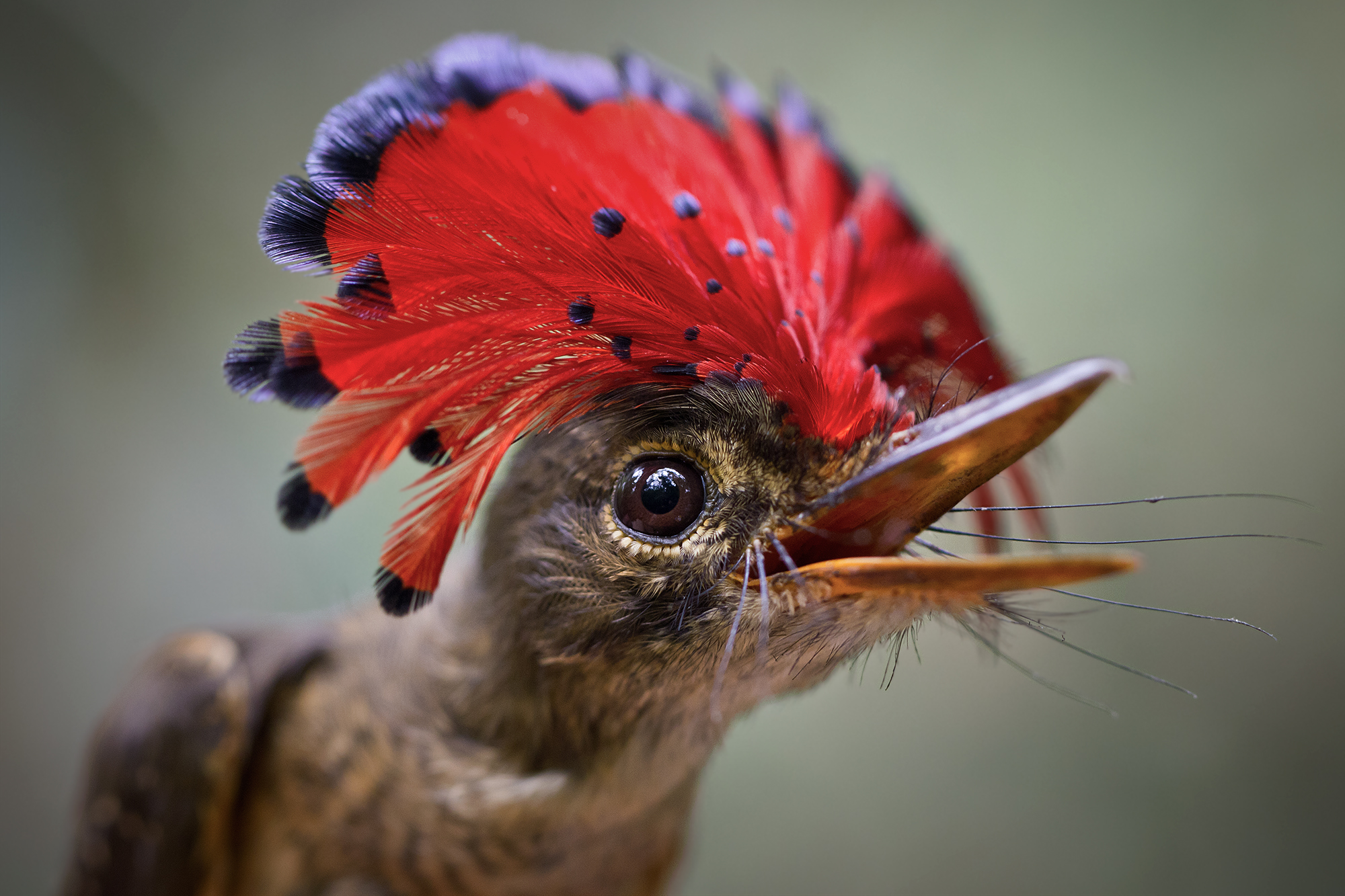 "Royal-Flycatcher - TA" by Tom Ambrose is licensed under CC BY-SA 4.0
In the heart of the Amazon rainforest, where the air is thick with humidity and the sounds of nature create a symphony, lives the Amazonian Royal Flycatcher, known scientifically as Onychorhynchus coronatus. This enchanting bird is a true jewel of the jungle, easily recognized by its striking fan-shaped crest that can unfurl like a colorful flag when it’s excited. With its vibrant plumage, ranging from deep blues to bright yellows, the Royal Flycatcher captures the attention of anyone lucky enough to spot it flitting among the lush green leaves.
As the sun filters through the dense canopy, illuminating the forest floor, the Amazonian Royal Flycatcher begins its day, darting through the underbrush in search of insects. This small bird, weighing only about the same as a handful of coins, plays a crucial role in its ecosystem by helping to control insect populations. Scientists and nature enthusiasts alike are drawn to this bird not just for its beauty, but also for its fascinating behaviors and the vital role it plays in the intricate web of life in the Amazon. With each flutter of its wings, the Royal Flycatcher reminds us of the wonders of nature and the importance of preserving these vibrant habitats.
The Amazonian Royal Flycatcher is a captivating bird that holds a special place in the tree of life. It belongs to the kingdom Animalia, which includes all animals, and is classified under the family Tityridae. This family is known for its diverse group of birds that often inhabit tropical regions. What sets the Amazonian Royal Flycatcher apart is its striking appearance, particularly the vibrant crest that can be raised or lowered, much like a crown. This feature not only makes it visually stunning but also plays a role in communication and mating displays, showcasing the intricate behaviors that birds have developed over time.
| Taxonomic Rank | Scientific Name | Meaning & Significance |
|---|---|---|
| Kingdom | Animalia | This term comes from the Latin word “animalis,” meaning “having breath” or “living.” It signifies all living organisms that are not plants, fungi, or bacteria. |
| Family | Tityridae | The name Tityridae is derived from the genus Tityra, which is thought to come from the Greek word “tityros,” referring to a type of songbird. This highlights the family’s connection to vocalization and their role in the ecosystem. |
| Species | Onychorhynchus coronatus | The genus name Onychorhynchus combines Greek words meaning “claw” and “beak,” reflecting the bird’s unique physical adaptations. The species name coronatus means “crowned,” referring to the bird’s distinctive crest. |
The classification of the Amazonian Royal Flycatcher reveals much about its evolutionary journey. Being part of the Tityridae family indicates that it shares a common ancestry with other birds that thrive in similar habitats, showcasing the adaptability and diversity of life in the Amazon rainforest. Its unique features, such as the impressive crest and specialized vocalizations, are not just for show; they are adaptations that have evolved to help it survive and thrive in a complex ecosystem. Understanding its place in the tree of life helps us appreciate the intricate connections between species and the environments they inhabit.
The evolutionary journey of the Amazonian Royal Flycatcher stretches back millions of years, weaving through the lush landscapes of South America. This vibrant bird, known for its striking appearance and melodious calls, is a product of a long history of adaptation and survival in the diverse ecosystems of the Amazon rainforest. As the climate and environment shifted over time, so too did the ancestors of this flycatcher, leading to the unique species we see today.
The Amazonian Royal Flycatcher is part of the Tityridae family, which includes a variety of birds that have adapted to life in tropical forests. Its ancestors likely resembled other small insectivorous birds, which thrived in the dense foliage of ancient woodlands. Over time, these birds developed specialized traits to help them catch insects more efficiently. One major transition in their evolution was the development of a more pronounced bill, allowing them to snatch prey from the air or among leaves. Additionally, their vibrant plumage evolved not just for beauty but also for communication and mating displays, crucial for attracting partners in the competitive rainforest environment.
These adaptations have been vital for the Amazonian Royal Flycatcher’s survival in the ever-changing rainforest. The bright colors not only attract mates but also help the bird blend into the vibrant environment, making it less visible to predators. Its specialized bill and adaptable feeding habits ensure it can find food even when resources are scarce. Together, these traits have allowed the Amazonian Royal Flycatcher to thrive in one of the most biodiverse places on Earth, showcasing the incredible power of evolution in shaping life.
The Amazonian Royal Flycatcher is a dazzling spectacle of nature, captivating anyone lucky enough to catch a glimpse. This small bird, weighing between 0.34 to 0.49 ounces, boasts a slender body that is perfectly designed for life among the branches of the rainforest. Its most striking feature is the fan-shaped crest atop its head, which can be raised or lowered, adding an element of drama to its already vibrant appearance. With its delicate frame and lively movements, this bird embodies the spirit of the Amazon, where every detail is a testament to the beauty of evolution.
| Feature | Description |
|---|---|
| Size | Small, typically weighing between 0.34 to 0.49 ounces |
| Color | Brightly colored plumage, often featuring shades of green, yellow, and blue |
| Skin Type | Feathers, providing insulation and waterproofing |
| Distinctive Feature | Fan-shaped crest that can be raised or lowered |
The combination of its lightweight body and vibrant feathers serves multiple purposes in the wild. The bright colors not only attract potential mates but also help the bird blend into the colorful foliage of its rainforest home, providing camouflage from predators. The fan-shaped crest is not just for show; it plays a role in communication, signaling to other birds during courtship or territorial displays. Together, these features create a stunning visual that is both functional and beautiful, allowing the Amazonian Royal Flycatcher to thrive in its lush environment.
The Amazonian Royal Flycatcher thrives in the heart of South America’s lush, humid lowland evergreen forests. Picture towering trees draped in vibrant green vines, their leaves filtering sunlight into a soft, dappled glow. This enchanting environment is alive with the sounds of chirping insects and rustling leaves, creating a symphony of nature. The flycatcher flits among the branches, expertly navigating the dense foliage, where it finds both shelter and food.
This bird prefers a warm and humid climate, which is typical of tropical rainforests. The average temperature in these regions often hovers around 75 to 90 degrees Fahrenheit (24 to 32 degrees Celsius). The high humidity levels, often exceeding 80%, create a perfect environment for the rich biodiversity that the Amazonian Royal Flycatcher relies on. These conditions support a variety of insects and small fruits, which are essential for its diet.
To thrive in such a specific habitat, the Amazonian Royal Flycatcher has developed remarkable adaptations. Its slender body and agile flight allow it to dart through the dense underbrush with ease. The bird’s keen eyesight helps it spot insects from afar, while its unique call can be heard echoing through the forest, attracting mates and marking territory. These traits ensure that the flycatcher not only survives but flourishes in its vibrant, green home.
As the sun rises over the Amazon rainforest, the Amazonian Royal Flycatcher begins its day. This diurnal bird, meaning it is active during the day, flits through the dense foliage in search of food. Its diet mainly consists of insects, which it skillfully catches mid-air with its quick reflexes. Throughout the day, the flycatcher can be seen perched on branches, scanning its surroundings for potential meals. When it spots a tasty insect, it launches into a swift dive, showcasing its agility and precision.
Socially, the Amazonian Royal Flycatcher tends to be solitary or found in pairs. This means you might see one bird enjoying its own company or a couple working together to find food. While they are not known for forming large flocks, these birds communicate with each other through a series of soft calls and whistles. This vocalization helps them maintain their bond, especially when they are in pairs. Their interactions are often brief but meaningful, allowing them to share information about food sources or potential threats in their environment.
| Behavior Type | Description |
|---|---|
| Activity Patterns | Active during the day, hunting for insects and resting on branches. |
| Social Structure | Primarily solitary or in pairs, with minimal group interactions. |
| Communication Methods | Uses soft calls and whistles to communicate with mates and signal presence. |
The behaviors of the Amazonian Royal Flycatcher are finely tuned to ensure its survival in the vibrant yet challenging environment of the rainforest. By being active during the day, it can take advantage of the abundant food supply while avoiding some nocturnal predators. Its solitary or paired lifestyle allows for efficient hunting and reduces competition for resources. Through their subtle communication, these birds can alert each other to dangers, enhancing their chances of thriving in the lush canopy of their home.
The Amazonian Royal Flycatcher is an insectivore, which means its diet primarily consists of insects. This vibrant bird has developed specialized feeding behaviors that allow it to thrive in its lush rainforest habitat. With its keen eyesight, it expertly spots flying insects like flies, cicadas, dragonflies, and moths as they flit through the air. The flycatcher often perches quietly on a branch, waiting patiently for the perfect moment to swoop down and snatch its prey with precision.
| Dietary Aspect | Details |
|---|---|
| Diet Type | Insectivore |
| Favorite Foods | Flies, cicadas, dragonflies, moths |
| Prey Items | Flying insects |
| Hunting/Foraging Strategies | Perches quietly and waits to catch insects in mid-air |
The diet of the Amazonian Royal Flycatcher plays a crucial role in its ecology and daily routine. By feeding on a variety of flying insects, it helps control insect populations in its environment, contributing to the balance of the rainforest ecosystem. This not only supports the health of the forest but also ensures that the flycatcher has a steady supply of food. Its hunting techniques, combined with its vibrant presence, make it an essential player in the intricate web of life in the Amazon.
During the breeding season, which typically occurs from late spring to early summer, the Amazonian Royal Flycatcher engages in elaborate courtship displays. Males are known for their strikingly colorful crests, which they raise to attract potential mates. These displays are not just for show; they play a crucial role in establishing dominance and attracting females. Once a pair has formed, they work together to find a suitable nesting site, often in the dense foliage of their forest habitat.
| Reproductive Aspect | Details |
|---|---|
| Gestation Period | Approximately 14 days |
| Litter Size | 2 to 4 eggs |
| Age of Maturity | About 6 months |
| Name of Young | Chicks |
After the eggs hatch, both parents take an active role in caring for their chicks. They feed them a diet rich in insects, which helps the young birds grow strong and healthy. The chicks remain in the nest for several weeks, relying on their parents for warmth and nourishment. As they develop, they begin to exercise their wings and explore their surroundings. By the time they reach about six months of age, they are ready to leave the nest and start their own adventures in the vibrant world of the Amazon rainforest.
The Amazonian Royal Flycatcher plays a vital role in its ecosystem, perched within the intricate web of life in the Amazon rainforest. As an insectivore, it helps control insect populations, ensuring a balance in the food web. This small bird, with its vibrant plumage, is not only a beautiful sight but also a key player in the health of its habitat. However, like many species in the Amazon, it faces significant dangers that threaten its survival.
To combat these threats, the Amazonian Royal Flycatcher has developed several defensive behaviors. It often relies on its ability to blend into the dense foliage, using camouflage to avoid detection by predators. When threatened, it can quickly dart away, showcasing its agility and speed. Additionally, by nesting in hard-to-reach locations, it minimizes the risk of predation. These survival strategies are crucial for the flycatcher, allowing it to navigate the challenges of its vibrant yet perilous environment.
A keystone species is an organism that has a disproportionately large impact on its environment relative to its abundance. These species play critical roles in maintaining the structure of an ecosystem. The Amazonian Royal Flycatcher, with its unique feeding habits and ecological interactions, qualifies as a keystone species in its rainforest habitat. By controlling insect populations and influencing the dynamics of plant life, this vibrant bird helps sustain the delicate balance of its ecosystem.
The Amazonian Royal Flycatcher primarily feeds on insects, which means it plays a crucial role in regulating insect populations. By keeping these populations in check, the flycatcher helps prevent outbreaks that could harm plant life and disrupt the food web. For example, if the flycatcher were to decline in numbers, the insects it preys upon could multiply unchecked, leading to overgrazing of vegetation. This, in turn, would affect other species that rely on those plants for food and shelter.
Additionally, the flycatcher’s presence can influence the distribution of certain plant species. As it flits through the forest, it may inadvertently assist in pollination or seed dispersal, contributing to the growth of diverse plant life. This diversity is essential for providing habitat and food for countless other organisms, from mammals to insects. The flycatcher’s role in this intricate web of life highlights its importance beyond just its own survival.
If the Amazonian Royal Flycatcher were to disappear, the consequences could be severe. Without this bird to manage insect populations, we could see a surge in pests that damage vegetation. This would not only threaten the plants but also the animals that depend on them for food and shelter. The ripple effects could lead to a decline in biodiversity, altering the entire ecosystem. The loss of such a key player would disrupt the balance of life in the Amazon rainforest, showcasing just how interconnected all species truly are.
The Amazonian Royal Flycatcher occupies a vital ecological niche in the lush rainforests of South America. This small, vibrant bird is not just a beautiful sight; it plays a significant role in maintaining the health of its environment. By feeding primarily on insects, the flycatcher helps regulate insect populations, preventing outbreaks that could harm plant life and disrupt the delicate balance of the ecosystem. Its presence indicates a thriving habitat, as it relies on the rich biodiversity of the rainforest to survive.
| Ecosystem Service | Impact |
|---|---|
| Insect population control | Prevents overpopulation of harmful insects, protecting plant life. |
| Seed dispersal | Facilitates the growth of new plants by spreading seeds through its droppings. |
| Food source for predators | Serves as a crucial food source for larger birds and mammals, supporting the food web. |
The Amazonian Royal Flycatcher influences its ecosystem in several specific ways. For instance, by consuming a variety of insects, it helps keep pest populations in check, which is essential for the health of the trees and plants that make up its habitat. Additionally, as it moves through the forest, it may inadvertently assist in seed dispersal. When the flycatcher eats fruits or seeds, it can carry them to new locations, allowing for the growth of new plants and contributing to the forest’s diversity. This interconnectedness highlights how even small creatures can have a big impact on their surroundings.
The broader ecological importance of the Amazonian Royal Flycatcher cannot be overstated. As a keystone species, its activities help maintain the structure and function of the rainforest ecosystem. By controlling insect populations and aiding in plant reproduction, the flycatcher supports a complex web of life that includes countless other species. Protecting this vibrant bird and its habitat is crucial for preserving the rich biodiversity of the Amazon, ensuring that future generations can marvel at the wonders of this extraordinary environment.
In the intricate tapestry of the Amazon rainforest, the Amazonian Royal Flycatcher engages in various ecological relationships that highlight the beauty of symbiosis. Symbiosis refers to the close interactions between different species, which can be beneficial, harmful, or neutral. These relationships are essential for the survival and thriving of many organisms, as they often help species find food, shelter, or protection. The Amazonian Royal Flycatcher, with its vibrant plumage and insect-eating habits, forms connections with other species that enhance its life in the lush, humid forests it calls home.
| Species/Type | Relationship Type | Description |
|---|---|---|
| Ants | Mutualistic | The Amazonian Royal Flycatcher may benefit from the presence of ants, which help control insect populations. In return, the flycatcher may provide protection to the ants by keeping larger predators at bay. |
| Fungi | Commensal | Fungi growing on decaying wood in the forest can provide a habitat for insects, which are a food source for the flycatcher. The fungi benefit from the decaying wood, while the flycatcher gains food without affecting the fungi. |
| Other Birds | Commensal | When foraging, the Amazonian Royal Flycatcher may follow larger birds that disturb insects. The larger birds benefit from their own foraging, while the flycatcher gets an easy meal without impacting the other birds. |
These relationships have evolved over time, shaped by the needs and behaviors of the species involved. The Amazonian Royal Flycatcher has adapted to take advantage of the resources available in its environment, forming partnerships that enhance its survival. By working together with other species, whether through mutual benefits or simply coexisting, the flycatcher plays a vital role in the ecosystem. This interconnectedness not only supports the flycatcher but also contributes to the overall health of the rainforest, showcasing the delicate balance of life in one of the most biodiverse places on Earth.
The Amazonian Royal Flycatcher is a dazzling bird that enchants anyone lucky enough to spot it in the lush rainforests of South America. With its vibrant colors and unique behaviors, this little avian wonder has some surprising traits that even seasoned nature enthusiasts might not know.
The Amazonian Royal Flycatcher has long captured the imagination of those who venture into the heart of the Amazon rainforest. Historically, indigenous peoples have revered this striking bird, often associating it with various cultural beliefs and stories. Its vibrant plumage and unique courtship displays have made it a symbol of beauty and vitality in many local traditions. As explorers and naturalists began to document the rich biodiversity of the Amazon, the Royal Flycatcher emerged as a favorite subject, showcasing the intricate connections between nature and human culture.
In contemporary times, the relationship between the Amazonian Royal Flycatcher and humanity has evolved, particularly in the context of conservation efforts. As deforestation and habitat loss threaten the delicate ecosystems of the Amazon, conservationists are working tirelessly to protect the habitats that sustain this beautiful bird. However, conflicts can arise when local communities rely on the same forests for their livelihoods. Balancing the needs of people and wildlife is crucial, as both depend on the health of the rainforest. While the Royal Flycatcher is not domesticated, its presence in ecotourism initiatives highlights the potential for positive human-animal interactions that benefit both the species and local economies.
As we look to the future, the relationship between the Amazonian Royal Flycatcher and humanity holds both challenges and opportunities. With increasing awareness of environmental issues, there is hope that more people will recognize the importance of preserving the Amazon’s rich biodiversity. By fostering a deeper understanding of the interconnectedness of all living things, we can work together to ensure that this dazzling bird continues to thrive in its natural habitat, enriching the lives of future generations.
The Amazonian Royal Flycatcher currently holds a conservation status of “Least Concern,” which means it is not considered at immediate risk of extinction. With an estimated population ranging from 500,000 to 5 million individuals, this vibrant bird appears to be relatively stable. However, ongoing monitoring is essential to ensure that its numbers remain healthy, especially as environmental changes continue to impact its habitat.
| Conservation Factor | Status/Details |
|---|---|
| IUCN Status | Least Concern |
| Estimated Population Size | 500,000 to 5 million |
| Population Trend | Stable |
Despite its current stable status, the Amazonian Royal Flycatcher faces several threats that could impact its future. Habitat loss is a significant concern, primarily due to deforestation and land conversion for agriculture. As trees are cut down, the lush environments that these birds rely on for food and nesting sites are diminished. Additionally, climate change poses a risk by altering rainfall patterns and temperatures, which can affect the delicate balance of the ecosystems where these birds thrive.
Conservation efforts are underway to protect the Amazonian Royal Flycatcher and its habitat. Organizations are working to promote sustainable land use practices and reforestation initiatives in the Amazon rainforest. By raising awareness about the importance of preserving these vibrant ecosystems, conservationists hope to ensure that the Amazonian Royal Flycatcher continues to flourish in its natural home. With continued efforts, there is optimism that this stunning bird will remain a part of the Amazon’s rich biodiversity for generations to come.
| Question | Answer |
|---|---|
| What is the habitat of the Amazonian Royal Flycatcher? | The Amazonian Royal Flycatcher thrives in humid lowland evergreen forests and second-growth forests. These lush environments provide the perfect cover and food sources for this vibrant bird. |
| What does the Amazonian Royal Flycatcher eat? | This bird is an insectivore, meaning it primarily feeds on insects. It catches its meals by snatching them from leaves or mid-air, showcasing its impressive agility. |
| How does the Amazonian Royal Flycatcher behave? | The Amazonian Royal Flycatcher is known for its lively and active behavior. It often flits around the forest, using its keen eyesight to spot insects and other small prey. |
| How does the Amazonian Royal Flycatcher reproduce? | During the breeding season, the male performs elaborate displays to attract a mate, showcasing its stunning fan-shaped crest. After mating, the female lays eggs in a nest, which she typically builds in a tree. |
| What threats does the Amazonian Royal Flycatcher face? | While currently listed as Least Concern, the Amazonian Royal Flycatcher faces threats from habitat loss due to deforestation and human encroachment. These changes can disrupt their nesting sites and food availability. |
| What is a unique characteristic of the Amazonian Royal Flycatcher? | One of the most distinctive features of this bird is its striking fan-shaped crest, which it can raise or lower. This colorful crest not only makes it visually stunning but also plays a role in communication and mating displays. |
| Where can I find the Amazonian Royal Flycatcher? | The Amazonian Royal Flycatcher is primarily found in the Amazon Basin, which spans several countries in South America. Its preference for dense forests means it is often hidden from view, making it a delightful find for birdwatchers. |